Skip to content
  • Students & Alumni
    • Career Services
    • Alumni Relations
    • Student Support
    • Graduate Resource Library
    • For Employers
  • News
  • Events
    • Events Calendar
    • Luskin Summit
    • Luskin Lecture Series
    • California Policy Briefing
    • Commencement
  • Students & Alumni
    • Career Services
    • Alumni Relations
    • Student Support
    • Graduate Resource Library
    • For Employers
  • News
  • Events
    • Events Calendar
    • Luskin Summit
    • Luskin Lecture Series
    • California Policy Briefing
    • Commencement
Giving
UCLA Luskin School of Public Affairs Logo
  • Academics
    Departments & Programs
    • Global Public Affairs
    • Public Policy
    • Real Estate Development
    • Social Welfare
    • Urban Planning
    • Undergraduate Program
    • Global Public Affairs
    • Public Policy
    • Real Estate Development
    • Social Welfare
    • Urban Planning
    • Undergraduate Program
    Graduate Degrees
    • Master of Global Public Affairs (MGPA)
    • Master of Public Policy (MPP)
    • Master of Real Estate Development (MRED)
    • Master of Social Welfare (MSW)
    • Master of Urban and Regional Planning (MURP)
    • PhD in Social Welfare
    • PhD in Urban Planning
    • Master of Global Public Affairs (MGPA)
    • Master of Public Policy (MPP)
    • Master of Real Estate Development (MRED)
    • Master of Social Welfare (MSW)
    • Master of Urban and Regional Planning (MURP)
    • PhD in Social Welfare
    • PhD in Urban Planning
    Undergraduate Degrees
    • BA in Public Affairs
    • Minor in Urban and Regional Studies
    • Minor in Gerontology
    • Minor in Public Affairs
    • BA in Public Affairs
    • Minor in Urban and Regional Studies
    • Minor in Gerontology
    • Minor in Public Affairs
    Professional Certificates
    • AI in Public Affairs Certificate
    • AI in Public Affairs Certificate
  • Admissions
    Program Specific Admissions
    • Global Public Affairs
    • Public Policy
    • Real Estate Development
    • Social Welfare
    • Urban Planning
    • Undergraduate Program
    • Global Public Affairs
    • Public Policy
    • Real Estate Development
    • Social Welfare
    • Urban Planning
    • Undergraduate Program
  • Faculty
    Our Faculty
    • All Faculty
    • Public Policy
    • Real Estate Development
    • Social Welfare
    • Urban Planning
    • All Faculty
    • Public Policy
    • Real Estate Development
    • Social Welfare
    • Urban Planning
    Leadership
    • Our Dean
    • Board of Advisors
    • Faculty Executive Committee
    • Our Dean
    • Board of Advisors
    • Faculty Executive Committee
  • Research Centers
    • Agile Visual Analytics Lab (AVAL)

      Empowers stakeholders with data to make informed decisions for children, families, and communities.

    • Berggruen Governance Index

      Evaluates the quality of political governance and democracy worldwide.

    • Center for Neighborhood Knowledge (CNK)

      Specializes in spatial analysis of socioeconomic disparities in neighborhoods.

    • Center for Policy Research on Aging (CPRA)

      Explores the societal and policy implications of an aging population.

    • Institute of Transportation Studies (ITS)

      Advances research, education, and meaningful civic engagement on transportation issues.

    • Institute on Inequality and Democracy

      Advances scholarship that confronts threats to democracy in America and around the world.

    • Latin American Cities Initiative

      Connects urban planning and policy networks across the Americas.

    • Latino Policy & Politics Institute (LPPI)

      Addresses policy challenges facing Latinos and communities of color.

    • Lewis Center for Regional Policy Studies

      Studying housing affordability and transportation equity in the L.A. region.

    • Los Angeles Education Research Institute (LAERI)

      Collaborates with schools to improve educational outcomes for L.A. students.

    • Luskin Center for Innovation

      Informing effective and equitable environmental policy that improves lives.

    • UCLA Voting Rights Project

      The flagship project for voting rights litigation and policy research.

    All Research Centers
  • Outcomes
Home / News / UCLA Study Finds Strong Support for LAPD’s Community Policing Program

UCLA Study Finds Strong Support for LAPD’s Community Policing Program

Researchers say crime declines and trust increases when officers work alongside residents to build relationships
The UCLA research team led by Jorja Leap (lower right, with a staff member at Nickerson Gardens), spent hundreds of hours observing LAPD officers as they
The UCLA research team led by Jorja Leap (lower right, with a staff member at Nickerson Gardens), spent hundreds of hours observing LAPD officers as they engaged with residents in programs that included sporting events and a soapbox derby in which vehicles were built by officers. Photos by LAPD and UCLA

Posted in

  • Alumni, Education, Research, School of Public Affairs, Social Welfare, Undergraduates

Published on

  • May 22, 2020
  • education, government, housing, LAPD, low-income

Share this Article

By Les Dunseith

Families living in public housing developments with a history of gang violence and troubled relationships with law enforcement are seeing less crime and feeling safer because of a policing program launched in 2011 by the Los Angeles Police Department, according to a comprehensive analysis led by Jorja Leap, an adjunct professor of social welfare at the UCLA Luskin School of Public Affairs.

The Community Safety Partnership, or CSP, began in the Jordan Downs public housing development and later expanded to two other Watts locations, Nickerson Gardens and Imperial Courts, as well as Ramona Gardens in Boyle Heights. The program assigns specially trained LAPD officers to work alongside residents to reduce crime by developing youth outreach, sports, recreational and other programs tailored specifically to their communities.

The yearlong UCLA-led evaluation compared crime rates in Jordan Downs and Nickerson Gardens with computer-generated, synthetic models of demographically similar neighborhoods that did not receive CSP services. The research team also conducted community-based research with officers and residents, logging 425 hours of observation, conducting 110 interviews and 28 focus groups, and completing close to 800 surveys as part of a mixed-methods research effort at Nickerson Gardens and Ramona Gardens. Clear majorities at both sites expressed support for this innovative program.

“Their lives were literally changed by CSP,” Leap said during a May 12 online meeting of the Los Angeles Police Commission at which the study was publicly unveiled.

Leap is an expert on gangs whose academic research and community engagement in Watts spans four decades, including the Watts Leadership Institute, a 10-year initiative based at UCLA Luskin. She told the five members of the civilian commission that people interviewed by the UCLA team “felt it was safer to go outside, mingle with people, use green spaces.”

As part of the LAPD program, extra effort is made to bridge communication between officers and residents, many of whom have deep-seated distrust of the police. Leap said a critical component involves officers apologizing to community residents for past mistakes and incidents of brutality.

“We were the enemy — pure and simple — if you had the LAPD uniform on, it was as if you had a target on your back. If there were reports of a shooting, officers were not supposed to come in without back-up,” said one officer interviewed for the report. “That’s all changed. The residents of this community want CSP here, they want this community to be safe. They welcome us.”

The impact on crime is significant. According to the analysis, in a one-year period, CSP has led to seven fewer homicides, 93 fewer aggravated assaults and 122 fewer robberies than would otherwise have been expected at Jordan Downs and Nickerson Gardens.

Statistics like those, plus the high level of resident support found by researchers, encouraged Leap to recommend to the commission that CSP serve as a model for department-wide LAPD policing efforts. The relationship-based focus could also be helpful in other crisis situations, including public health problems such as opioid abuse or the current coronavirus pandemic, she said.

“It could be extremely useful for epidemic crises, including homelessness and the pandemic,” Leap told the commission. “This is the type of approach that represents a new and important paradigm in law enforcement.”

The program has already expanded beyond Watts and Boyle Heights to housing developments in South Park and San Fernando Gardens, as well as the neighborhood surrounding Harvard Park. That expansion was funded by the Ballmer Group, co-founded by Clippers owner Steve Ballmer, and the Weingart Foundation, which, along with The California Endowment and several private donors, were among the seven funders of the $500,000 UCLA study.

The report describes many positive outcomes related to CSP, but it also identified several shortcomings.

“It is not all sunshine and roses,” Leap warned the commission, adding that the community was skeptical regarding the department’s commitment. “This must become part of the DNA of the LAPD and not a hit-and-run program that is gone in a few months.”

Some respondents questioned the level of community involvement in CSP activities, for example, saying that the officers implemented some programs without first seeking resident participation. Many residents — and even some of the officers — also expressed confusion about the specifics of the program.

“Everyone understood it was about relationships. Pretty much everyone understood it was about building trust,” Leap said. “Nevertheless, there was tremendous confusion” about the CSP model and a strong desire from all parties for better documentation of the program’s components.

Leap said the level of support for CSP in the study differed according to demographic characteristics.

Overall, she said, women were the leaders in both of the housing developments that were studied, and women were slightly more supportive of CSP than men. On the other hand, she noted, there were major differences in terms of ethnicity.

Latino residents predominantly supported CSP, Leap said. “Where we got push-back and mixed results,” particularly on community surveys, was among African Americans. The researchers were able to delve into the underlying reasons for this response during their interviews and focus groups.

“It should come as no surprise — African Americans have had the most tumultuous history” with law enforcement in Los Angeles, said Leap, who noted that incidents of police violence against blacks in other parts of the country in recent years have only added to longstanding tensions between the community and the LAPD. “There are many individuals who carry this history and this mistrust.”

In the report, one interviewee said: “Don’t say everyone loves CSP because not everyone loves CSP. There’s some people who think it’s a bunch of bull. There’s some people who are never gonna trust the police. And there’s some people who are waiting to be convinced. They’re waiting to see if the CSP sticks around or — if once all the publicity goes away — then [the CSP officers] go away.”

That concern was echoed in the report, which included a recommendation to increase funding for CSP and a designation of the program as a permanent part of the LAPD’s law enforcement strategy.

Staying the course over time is important to Leap. She pledged that this study will be just one part of an ongoing effort by her research team, which included UCLA Luskin social welfare professor Todd Franke, a methodological and systems expert, and UCLA anthropology professor P. Jeffrey Brantingham, who is a lead researcher for the Los Angeles Mayor’s Office Gang Reduction and Youth Development program. Also on the research team were UCLA research associate Susana Bonis and UCLA Luskin alumna Karrah Lompa, who served as the project manager. Several students, some of whom grew up in Watts and Boyle Heights, joined project staff in conducting field research and data analysis. A multicultural advisory board helped guide the study and will contribute to follow-up efforts.

The key to the program’s success is cooperation. Leap told the commissioners something she has repeated in public meetings: “The community truly partners with the police — this is not rhetoric but a meaningful model.”
Faculty Mentioned in this Article
jorja

Jorja Leap

Adjunct Professor of Social Welfare; Executive Director, Social Justice Partnership; Co-Founder and Director, Watts Leadership Institute

Jorja Leap has been on the faculty UCLA Luskin School Social Welfare Department faculty since 1992 and serves as the...

Related Articles

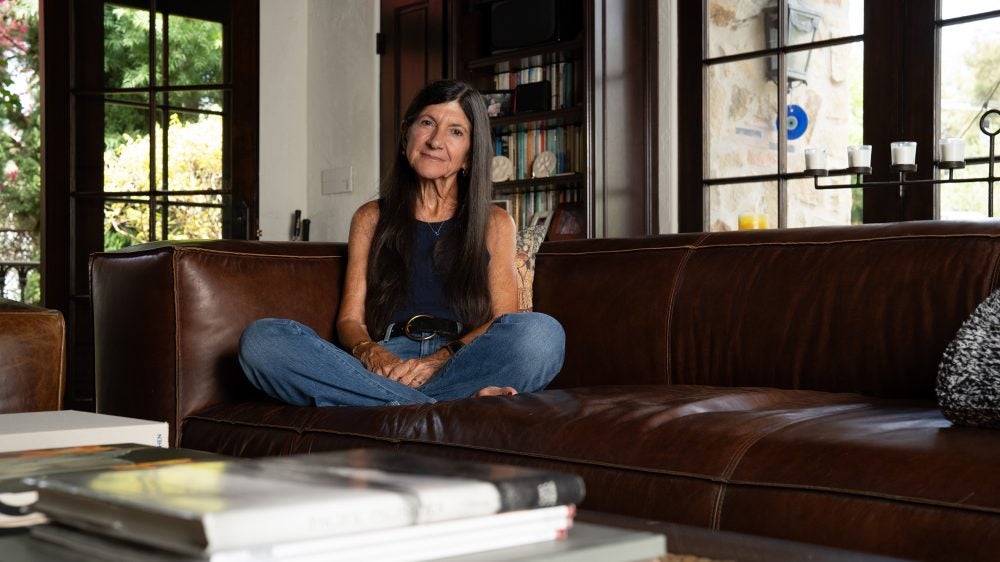
Leap, photographed at her home near Rustic Canyon. She says we need to treat research as exciting, not merely scholarly: “I can construct a soap opera based on some of my work.”

Little Mama’s House

October 21, 2026
Luskin's Latest Blog

This article originally appeared in the Fall 2026 issue of UCLA Magazine. View the original story....

Read More
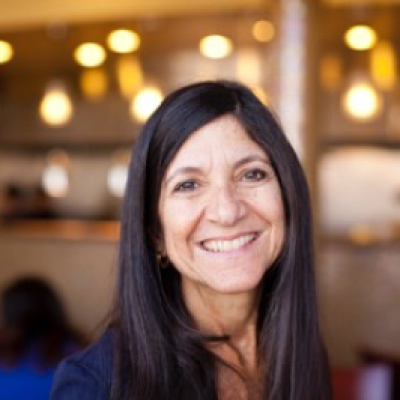
Photo of Jorja Leap professor of social work smiling on the left with "What we get wrong about gangs" on the right which is the thumbnail for the podcast episode

Jorja Leap on What Homeboy Industries Taught Her About Transformation

October 1, 2026
Luskin's Latest Blog

UCLA Luskin Social Welfare Professor Jorja Leap reflected on nearly four decades of research, friendship and...

Read More
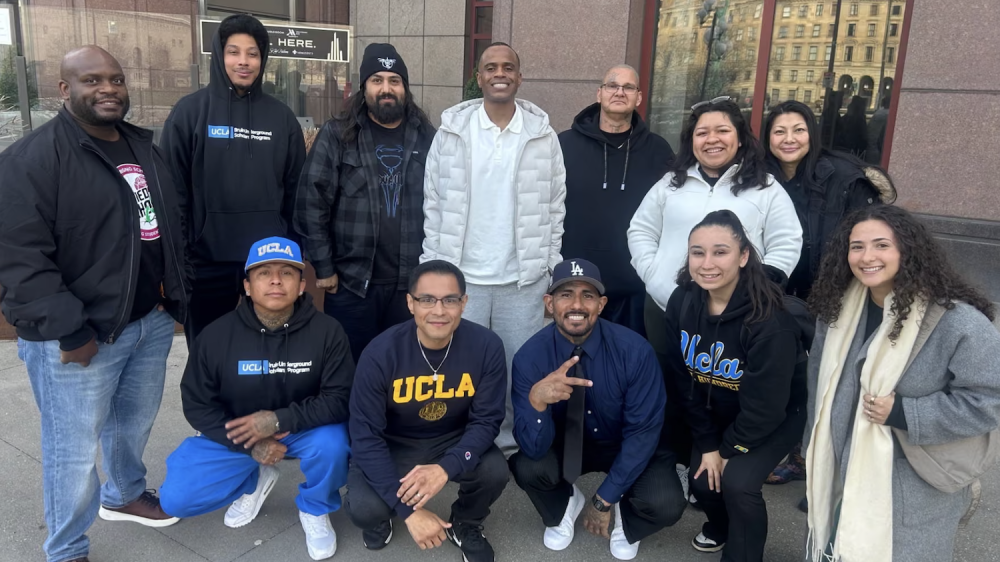
Group of men and women outside building

Jorja Leap on Breaking the Cycle of Gang Violence

August 28, 2026
Luskin in the News
Read More
Jorja Leap Ford Foundation|Jorja Leap Ford Foundation

UCLA Luskin’s Two-Year Evaluation of Community-Led Violence Intervention in Newark

February 24, 2026
Luskin in the News
UCLA’s two-year evaluation shows Newark’s Community Street Team reduces violent crime, builds trust, and strengthens sustainable,...
Read More
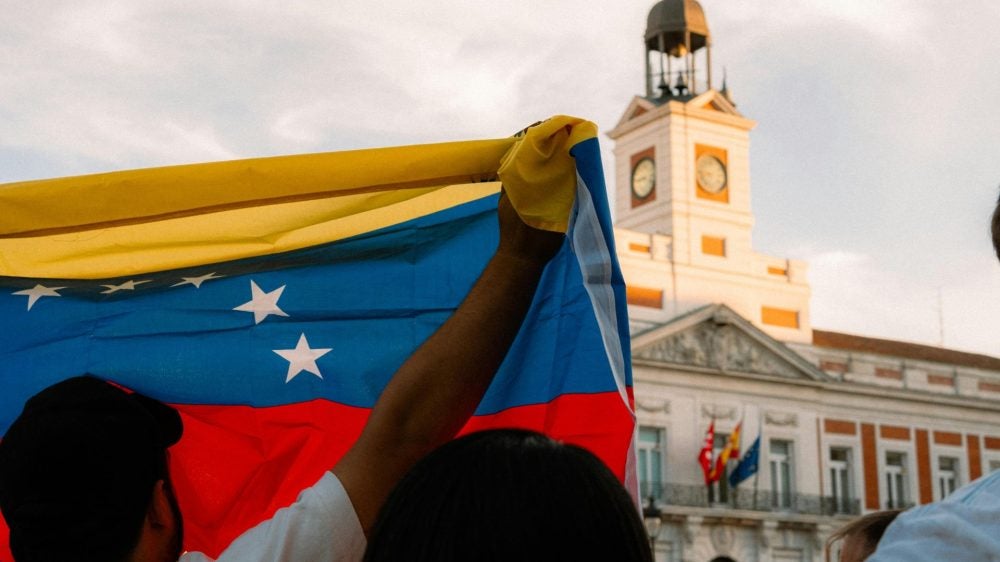
Photo of a man raising up the venezuelan flag in front of a political building in venezuela.

Experts Question Trump’s ‘Narco-Terrorist’ Claims Against Venezuela’s Maduro

January 16, 2026
Luskin in the News
After the U.S. capture of Nicolás Maduro, experts challenge President Trump’s claims, calling the narrative unsupported...
Read More
Crime scene yellow tape in the forefront with a detective in a white suit examining something on the ground in a forested area.

Perception vs. Reality: UCLA Luskin’s Jorja Leap Talks Crime Coverage with ABC7

September 4, 2025
Luskin in the News
While data shows violent crimes are down, Leap explained that the rise of social media is...
Read More
Learn more about UCLA Luskin

Find contact information and get answers to your questions.

Contact Us

Public Affairs Building
337 Charles E. Young Drive East
Los Angeles, California 90095

Linkedin Youtube Instagram Facebook X-twitter
Campus Resources
  • Map, Directions, Parking
  • Directory
  • Academic Calendar
  • Careers
  • Map, Directions, Parking
  • Directory
  • Academic Calendar
  • Careers
School Resources
  • About
  • Our Dean
  • Administration
  • Luskin School Intranet
  • Board of Advisors
  • Contact Us
  • Visit Us
  • About
  • Our Dean
  • Administration
  • Luskin School Intranet
  • Board of Advisors
  • Contact Us
  • Visit Us
UCLA logo
© 2026 Regents of the University of California
  • Emergency
  • Accessibility
  • Privacy & Terms of Use
  • Emergency
  • Accessibility
  • Privacy & Terms of Use
Facebook Instagram Linkedin X-twitter Youtube Threads
UCLA Luskin School of Public Affairs Logo
Academics
Departments
  • Global Public Affairs
  • Public Policy
  • Real Estate Development
  • Social Welfare
  • Urban Planning
  • Undergraduate Program
  • Global Public Affairs
  • Public Policy
  • Real Estate Development
  • Social Welfare
  • Urban Planning
  • Undergraduate Program
Graduate Programs
  • Master of Global Public Affairs (MGPA)
  • Master of Public Policy (MPP)
  • Master of Real Estate Development (MRED)
  • Master of Social Welfare (MSW)
  • Master of Urban and Regional Planning (MURP)
  • PhD in Social Welfare
  • PhD in Urban Planning
  • Master of Global Public Affairs (MGPA)
  • Master of Public Policy (MPP)
  • Master of Real Estate Development (MRED)
  • Master of Social Welfare (MSW)
  • Master of Urban and Regional Planning (MURP)
  • PhD in Social Welfare
  • PhD in Urban Planning
Undergraduate Programs
  • BA in Public Affairs
  • Minor in Urban and Regional Studies
  • Minor in Gerontology
  • Minor in Public Affairs
  • BA in Public Affairs
  • Minor in Urban and Regional Studies
  • Minor in Gerontology
  • Minor in Public Affairs
Professional Certificates
  • AI in Public Affairs Certificate
  • AI in Public Affairs Certificate
Admissions
Program Specific Admissions
  • Global Public Affairs
  • Public Policy
  • Real Estate Development
  • Social Welfare
  • Urban Planning
  • Undergraduate Program
  • Global Public Affairs
  • Public Policy
  • Real Estate Development
  • Social Welfare
  • Urban Planning
  • Undergraduate Program
Faculty
Our Faculty
  • All Faculty
  • Public Policy
  • Real Estate Development
  • Social Welfare
  • Urban Planning
  • All Faculty
  • Public Policy
  • Real Estate Development
  • Social Welfare
  • Urban Planning
Leadership
  • Our Dean
  • Board of Advisors
  • Faculty Executive Committee
  • Our Dean
  • Board of Advisors
  • Faculty Executive Committee
Research Centers
  • Agile Visual Analytics Lab (AVAL)

    Empowers stakeholders with data to make informed decisions for children, families, and communities.

  • Berggruen Governance Index

    Evaluates the quality of political governance and democracy worldwide.

  • Center for Neighborhood Knowledge (CNK)

    Specializes in spatial analysis of socioeconomic disparities in neighborhoods.

  • Center for Policy Research on Aging (CPRA)

    Explores the societal and policy implications of an aging population.

  • Institute of Transportation Studies (ITS)

    Advances research, education, and meaningful civic engagement on transportation issues.

  • Institute on Inequality and Democracy

    Advances scholarship that confronts threats to democracy in America and around the world.

  • Latin American Cities Initiative

    Connects urban planning and policy networks across the Americas.

  • Latino Policy & Politics Institute (LPPI)

    Addresses policy challenges facing Latinos and communities of color.

  • Lewis Center for Regional Policy Studies

    Studying housing affordability and transportation equity in the L.A. region.

  • Los Angeles Education Research Institute (LAERI)

    Collaborates with schools to improve educational outcomes for L.A. students.

  • Luskin Center for Innovation

    Informing effective and equitable environmental policy that improves lives.

  • UCLA Voting Rights Project

    The flagship project for voting rights litigation and policy research.

All Research Centers
Outcomes
Common Search Terms

Results will show as you type.