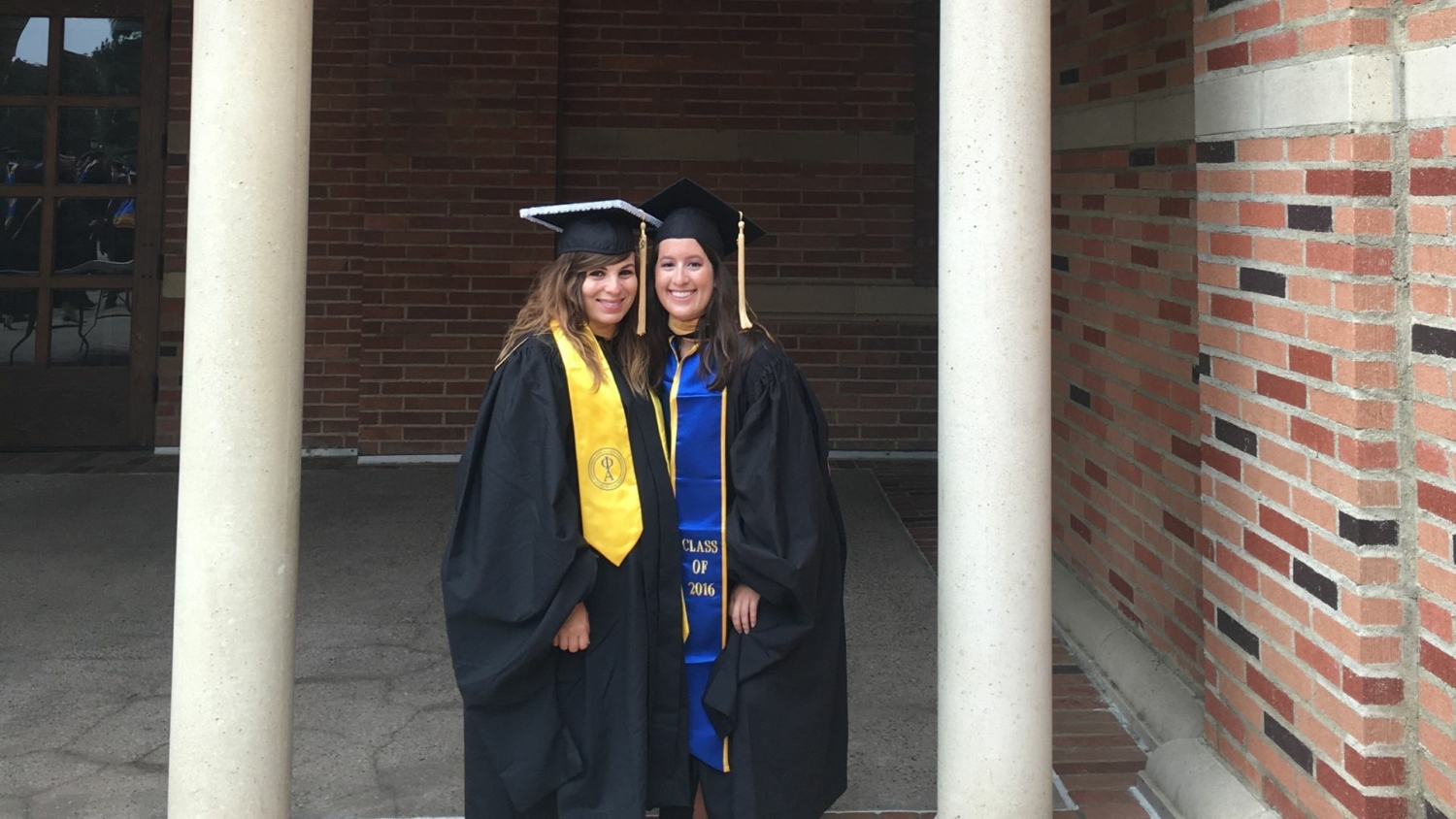
From School Social Worker to Founder: Emily Dillon MSW ’16 on Transforming Mental Health Care
From supporting students in one of the nation’s largest school districts to founding her own psychotherapy practice, UCLA Luskin alumna Emily Dillon is setting a new standard for compassionate, evidence-based mental health care.. In this Q&A, she shares how her Luskin education, years in public service, and commitment to well-being continue to shape her work and her advice for the next generation of social workers.
You worked with LAUSD students for many years before launching your private practice, Wildflower Mental Health and Wellness. What lessons did you take from working in schools that you now bring into your practice?
My years as a Psychiatric Social Worker with LAUSD gave me an incredibly strong clinical foundation. Because of the diversity of the students, families, and school communities I served, I was exposed to a breadth of experiences early in my career that shaped the clinician I am today. I gained experience in crisis intervention, trauma work, group facilitation, consultation, advocacy, and working alongside families navigating complex challenges.

Emily Dillon MSW ’16
Beyond clinical skills, LAUSD taught me how to collaborate effectively across disciplines, navigate systems that don’t always function the way we wish they would, and advocate for meaningful change while still working within those systems. I learned how to be a teacher, leader, mentor, and advocate—not just for students, but for the broader school community.
Most importantly, it taught me humility. Some of the best social workers, teachers, and administrators I worked with understood that real change starts with listening. It reinforced my belief that clients are the experts on their own experiences. Our role isn’t to have all the answers, but to bring curiosity, humility, and clinical expertise while creating space for people to make sense of their own stories. That perspective continues to shape my work every day in private practice.
Balancing a thriving practice, family life, and personal health is no small feat. What has helped you navigate the transitions of your career while juggling work and life and your own mental health?
Honestly, a lot of trial and error.
Like many social workers, I entered the field because I care deeply about helping people. For a long time, I thought being a good clinician meant constantly pushing through, taking on more, and putting everyone else’s needs ahead of my own. As a crisis worker, especially during the pandemic, I spent years supporting others through incredibly difficult circumstances. While that work was meaningful, it also took a toll.
Looking back, I can see that my mind and body were asking for a change long before I was consciously ready to make one. As my children got older, I found myself wanting to be more present with my family while also recognizing that I needed a different level of balance and flexibility for my own health and well-being. Leaving the district was not an easy decision. I loved being a school social worker and gained some of the most formative experiences of my career there. At the same time, I knew I couldn’t ignore what my nervous system had been telling me for years.
Opening my private practice felt like a leap of faith, but it was one of the best decisions I’ve made. Running a business comes with its own challenges, but it has allowed me to build a career that aligns with my values, supports my family, and gives me the flexibility to care for myself in a way I couldn’t before. In many ways, that experience has also deepened my work as a therapist. Today, many of the people I work with are navigating their own versions of that same question: how do I stop pushing through and create a life that feels more sustainable? I’ve learned that balance isn’t something you achieve once—it’s something you continue to revisit and  adjust as life changes.
For current Luskin students or new social workers entering the field, what advice would you give about building a sustainable career in social work while also protecting your own well-being?
I would tell them that it’s okay for their definition of success to evolve over time. When I graduated from Luskin, I had a certain vision of what my career would look like. Some parts of that vision came true, while other parts changed in ways I never could have predicted. Some of the most meaningful opportunities in my career came from staying open, following my curiosity, and trusting myself when it was time to grow in a new direction.
I would also encourage new social workers to remember that there is no single “right” way to build a career in this field. Social work can be incredibly meaningful work, but it can also be demanding. Many of us work within systems that are under-resourced, stretched thin, and ask a lot of the people working in them. While those realities are important to acknowledge, I think it’s equally important to regularly check in with yourself about what you need to stay healthy, engaged, and effective over the long term.
One of the biggest lessons I’ve learned is that helping others shouldn’t require losing yourself in the process. The more grounded, balanced, and supported I am in my own life, the better I’m able to show up for my clients, my family, and my community. Give yourself permission to grow, change course when needed, and build a career that supports the life you want to live.







Leave a Reply
Want to join the discussion?Feel free to contribute!