New Center for Neighborhood Knowledge Analysis Undercuts “Worst of the Worst” Deportation Claims
A new report from the UCLA Center for Neighborhood Knowledge (CNK), produced in partnership with Unseen, examines recent trends in federal immigration enforcement and finds a dramatic increase in ICE arrests, detentions and deportations of Latinos during the first 13 months of President Trump’s second administration.
The report “Latino ICE Arrests, Detentions, and Removals: Updates“ builds on previous CNK analyses and draws on federal immigration enforcement data from January 2024 through February 2026. Researchers found that Latino ICE arrests increased fivefold during that period, while Latino detentions peaked in December 2025 at more than three times the levels seen under the Biden administration.
According to the report, non-criminal immigrants increasingly became the focus of enforcement operations. Non-criminals represented 36% of Latino arrests, 33% of detentions and 32% of deportations under the Trump administration — significantly higher shares than in previous years. Meanwhile, the proportion of deportees categorized as violent offenders or “worst of the worst” declined substantially.
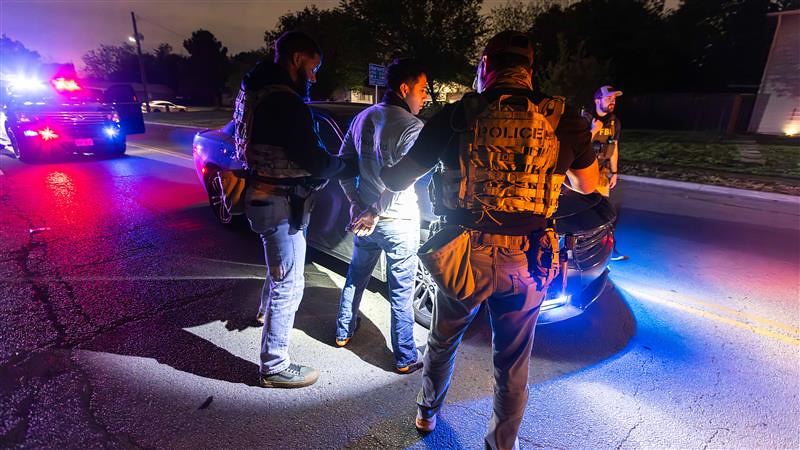
The report also highlights a major increase in community enforcement operations, including arrests in neighborhoods, workplaces and public spaces. Researchers found that nearly half of Latino arrests occurred through these highly visible interior enforcement tactics, contributing to a sharp rise in non-criminal detentions.
“This report shows a mass deportation apparatus targeting working people, families, and long-term community members with no criminal histories,” said CNK Director Paul Ong. “What we are witnessing is the normalization of an immigration system driven by volume, fear, and spectacle, not public safety.”
The report draws from data compiled by the Deportation Data Project, which is based at UCLA and UC Berkeley School of Law, and provides one of the most detailed analyses to date of immigration enforcement trends affecting Latino communities.
The full report is available here.







Leave a Reply
Want to join the discussion?Feel free to contribute!