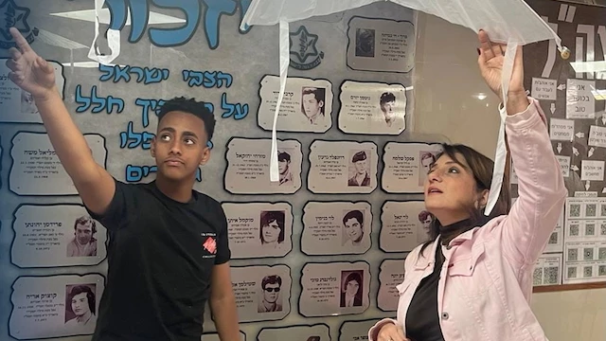
Supporting Democracy, Coexistence and Cultural Identity in Israeli Education UCLA research explores how schools can foster empathy, reduce violence and build long-term coexistence through inclusive learning environments.
Organized by the UCLA Y&S Nazarian Center for Israel Studies and co-sponsored by multiple UCLA departments, including the UCLA Luskin School of Public Affairs, lecture “Supporting Democracy, Coexistence and Cultural Identity in Israeli Education” explored how education can foster coexistence during periods of war and heightened conflict. The event brought together Karen Tal, Director General of Amal Educational Network; Mona Khoury, professor of social work and Vice President for Strategy and Diversity at the Hebrew University; and Ron Avi Astor, UCLA professor of social welfare, who presented a collaborative initiative with the Amal Educational Network.
The lecture highlighted research and practice designed to help students see the humanity in one another through curriculum, dialogue and school-based exchanges. Speakers emphasized that education systems can either reinforce division or cultivate empathy, mutual understanding and social justice. By implementing structured interactions and inclusive policies, schools can reduce prejudice and foster a shared civic identity.
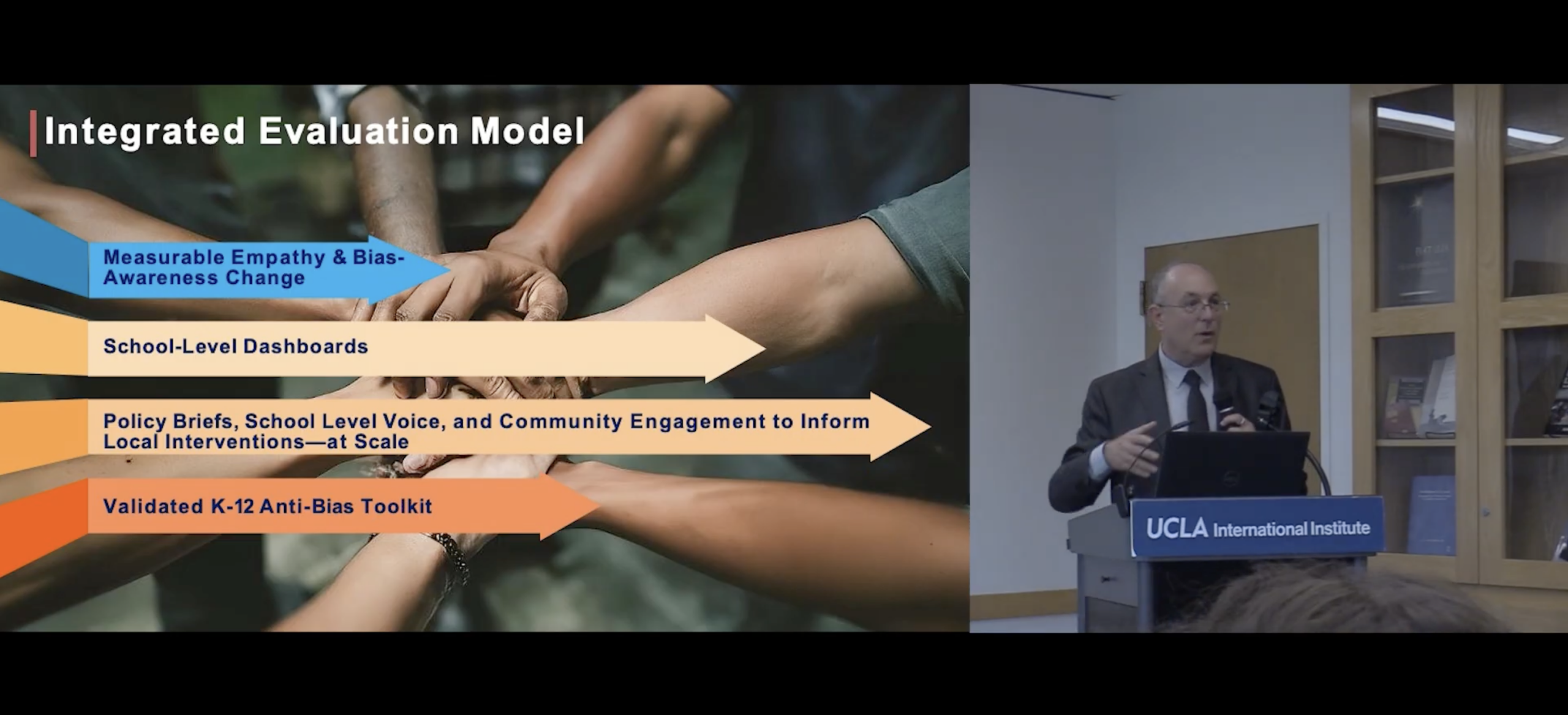
Astor’s large-scale research project, involving 30,000 students and 100,000 adults, examined how school environments influence bullying, violence, and social cohesion.
“Through decades of study, we’ve seen that when schools create positive, welcoming climates, students thrive,” said Astor.
“The Israeli Ministry of Education adopted our program and implemented it across schools. Over time, even amid ongoing violence, war, and the challenges students face outside the classroom, there has been a 50% to 70% reduction in violence—including serious incidents as well as the day-to-day experiences students face. This demonstrates that when schools teach in intentional, supportive ways, children are better equipped to navigate the outside world—even when that world can be incredibly difficult.”
The lecture underscored that schools are critical spaces not only for academic learning but also for shaping the social and moral frameworks necessary for long-term peace and coexistence. To watch the full lecture, visit here.







Leave a Reply
Want to join the discussion?Feel free to contribute!