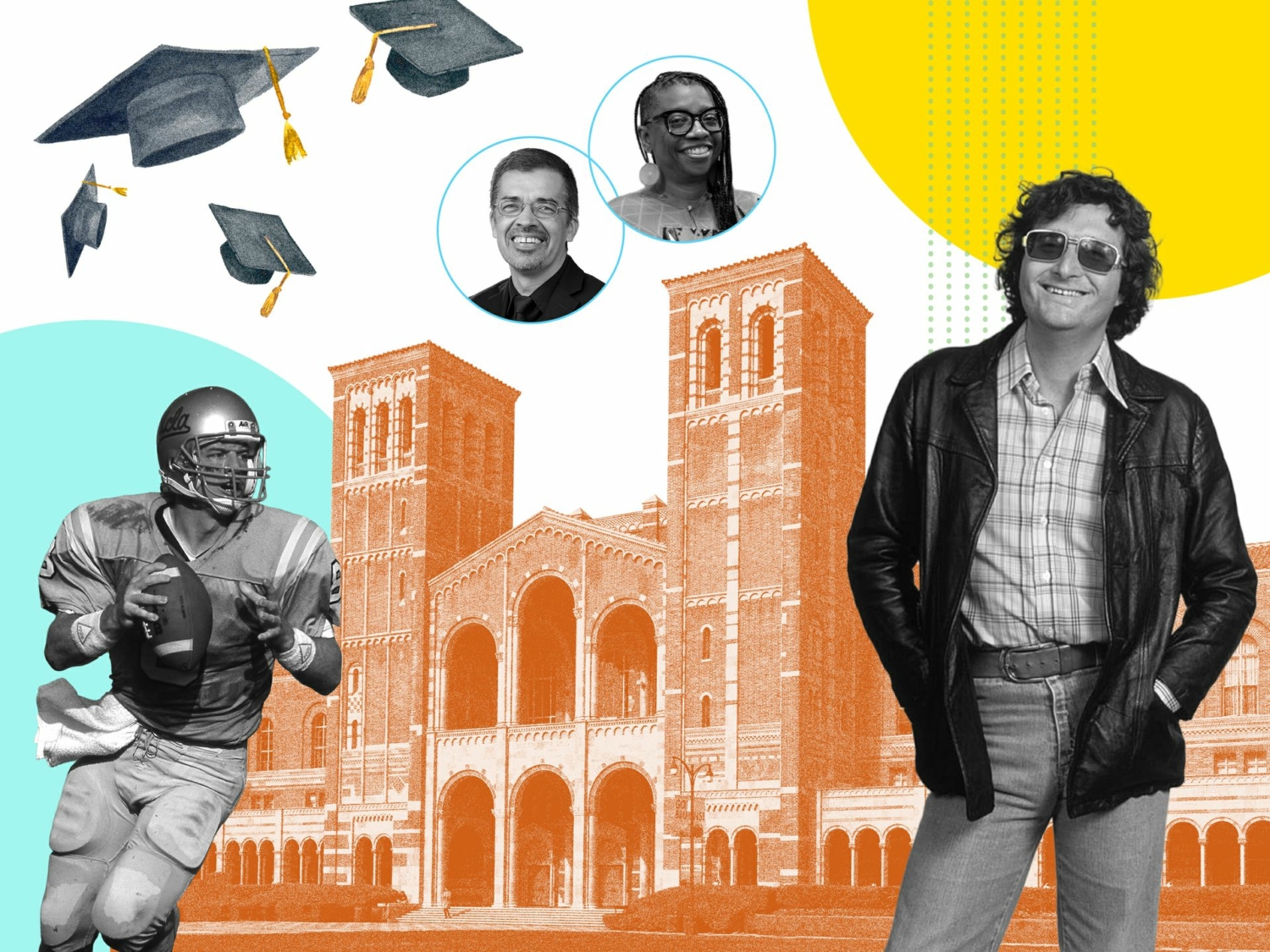
The Bruins Who Come Back: Álvaro Huerta He left UCLA for activism, then returned to complete his degree — launching a career in teaching and advocacy
This excerpt originally appeared in UCLA Magazine, “The Bruins Who Come Back,” by John Harlow (April 28, 2026). Read the full story here.
Making Good Trouble
For some, stepping away from the pursuit of a degree is nothing short of a moral imperative.
In the mid-1980s, Sacramento-born Álvaro Huerta ’03, M.A. ’06 was two years into his studies at UCLA, on track to graduate with a degree in mathematics. But then the campus roiled with protests, climaxing in a seven-day hunger strike against a state clampdown on financial support for undocumented students. Huerta felt he needed to do more for the poor and racially victimized community he knew so well. Putting activism first, he dropped out.
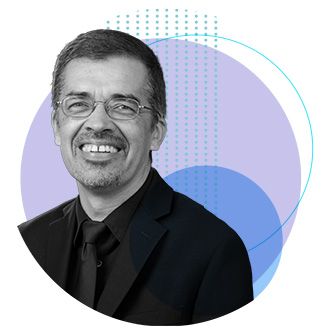
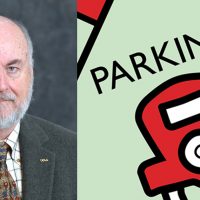
Feeling he needed to do more for poor and underserved communities, Álvaro Huerta decided to leave UCLA two years into his studies so he could pursue activism. He returned to graduate in 2003.
For the next 13 years, he went on to make what he calls “good trouble,” speaking out against and fighting racial injustice in Los Angeles. He stood up for Latino gardeners when the city threatened to jail them for using leaf blowers; he helped defeat plans to build a toxin-spewing power plant in South Gate that would have never been considered for a wealthier area. He was proud of his work. But it gnawed at him that he was often overlooked for promotions at nonprofits because he didn’t have a degree.
“Even in the revolution, the higher educated will get a better view,” he jokes wryly.
The final straw, he says, was losing a job to a Bruin graduate. By then, in the late 1990s, he had a young family of his own. His Bruin wife, Antonia Montes ’91, urged him to overcome any feelings of awkwardness and discomfort and return to UCLA. “I was a very different person than that 17-year-old know-it-all,” he recalls. “I had taught myself to read and write to university level, and I knew how things worked at college — something other students take for granted, but that my mom, who cleaned houses all her life, could not help me with.”
Huerta says the first key was finding out that you could, in fact, come back to campus to finish. In 1987, instead of abruptly quitting like some of his peers, he had filed an “incomplete” so he could be readmitted without applying from scratch. “Fill in the paperwork,” he urges anyone who may be facing the tough call to pause their degree. “UCLA wants you to finish your studies.”
The second key was to find someone who understood his background and lived experience. “Like many, I was mentored by Juan Gómez-Quiñones [’62, M.A. ’64, Ph.D. ’72] in history, and later Leo Estrada in urban planning,” Huerta says. “They helped many people navigate not just with their studies — they could be very stern — but also life in higher education, and with cultural empathy.”
Huerta graduated with a B.A. in history in 2003 and a master’s in urban planning in 2006. After that, there was no stopping him. He went on to UC Berkeley for his Ph.D. in city and regional planning, then taught classes about the intersection of religious and community organizing values at Harvard Divinity School. He is now a professor of urban planning and ethnic studies at California State Polytechnic University, Pomona.
“My roots are deep at UCLA,” he says. Those roots include not only his own degrees and his professional roles on campus, but also his wife’s economics degree and the degree his brother, the lauded portraitist Salomón Huerta M.F.A. ’98, received from UCLA in 1998.
Huerta is now a visiting scholar at the Chicano Studies Research Center. Last year, UCLA Alumni Affairs recognized him with the Bruin Excellence in Civic Engagement Award for his work as a teacher and community influencer. It has been a long journey for the former hunger striker. But, he says, he’s glad he listened to his wife — and came home to UCLA.




Leave a Reply
Want to join the discussion?Feel free to contribute!