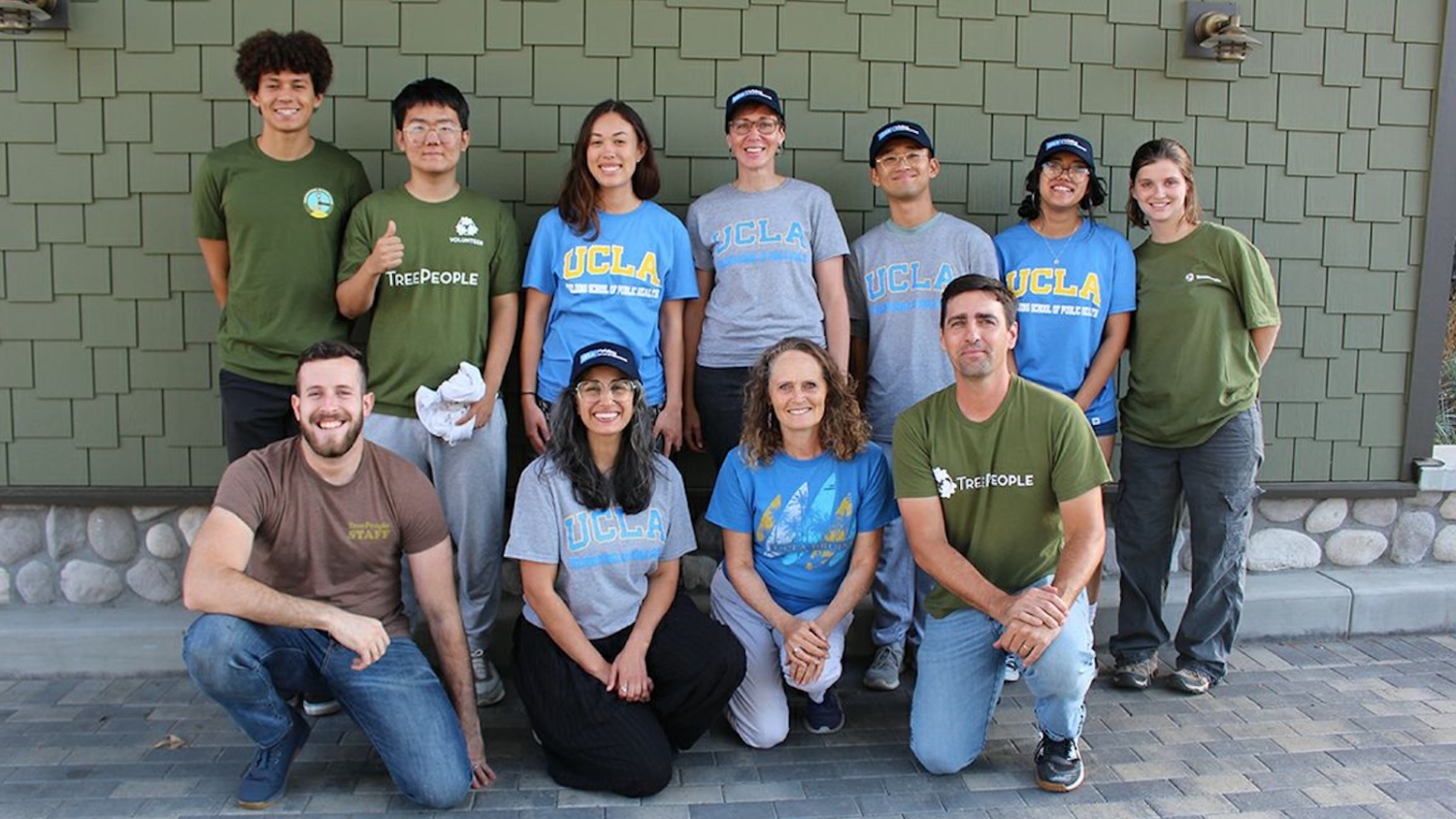
UCLA, Community Partners Help Fire Recovery Through Free Soil Testing
In an effort to support the region’s recovery in the aftermath of the 2025 Los Angeles County wildfires, a team of UCLA researchers is joining with community partners to test soil samples from neighborhoods hit hard by the blazes.
The fires in the Pacific Palisades-Malibu area and the Altadena-Pasadena communities claimed at least 31 lives and damaged or destroyed more than 18,000 structures, according to county officials.
It also left many residents wondering what was in their soil.
“Soil screening is a necessary first step, but it’s not a solution,” said Kirsten Schwarz, an associate professor of environmental health sciences and urban planning with joint appointments at the UCLA Fielding School of Public Health and UCLA Luskin School of Public Affairs.
“Fire-impacted communities are eager for actionable solutions and soil amendments, like compost and mulch — low-cost, accessible options that help us manage risk,” she said.
Schwarz and Jennifer Jay, a professor of civil and environmental engineering at the UCLA Samueli School of Engineering, co-lead the LA Urban Soil Social Impact Collaborative, which is hosting pop-up soil testing events, workshops and remediation projects across the region.
At an Oct. 4 event at the Washington Park Community Center in Pasadena, the collaborative welcomed more than 80 residents and screened more than 200 soil samples using portable X-ray fluorescence analyzers to detect heavy metals, including lead, a known cause of significant illness. Participants were able to have up to three soil samples screened and received personalized consultations on how to improve soil health and safety in their yards and gardens.
The collaborative, which includes UCLA researchers and community-based, tribal, private, and academic partners from across Los Angeles, is funded by UCLA’s Center for Community Engagement. The group aims to leverage university research and resources and apply local and Indigenous knowledge to advance equitable access to healthy soils.







Leave a Reply
Want to join the discussion?Feel free to contribute!