Taylor on Why Traffic Is Getting Worse
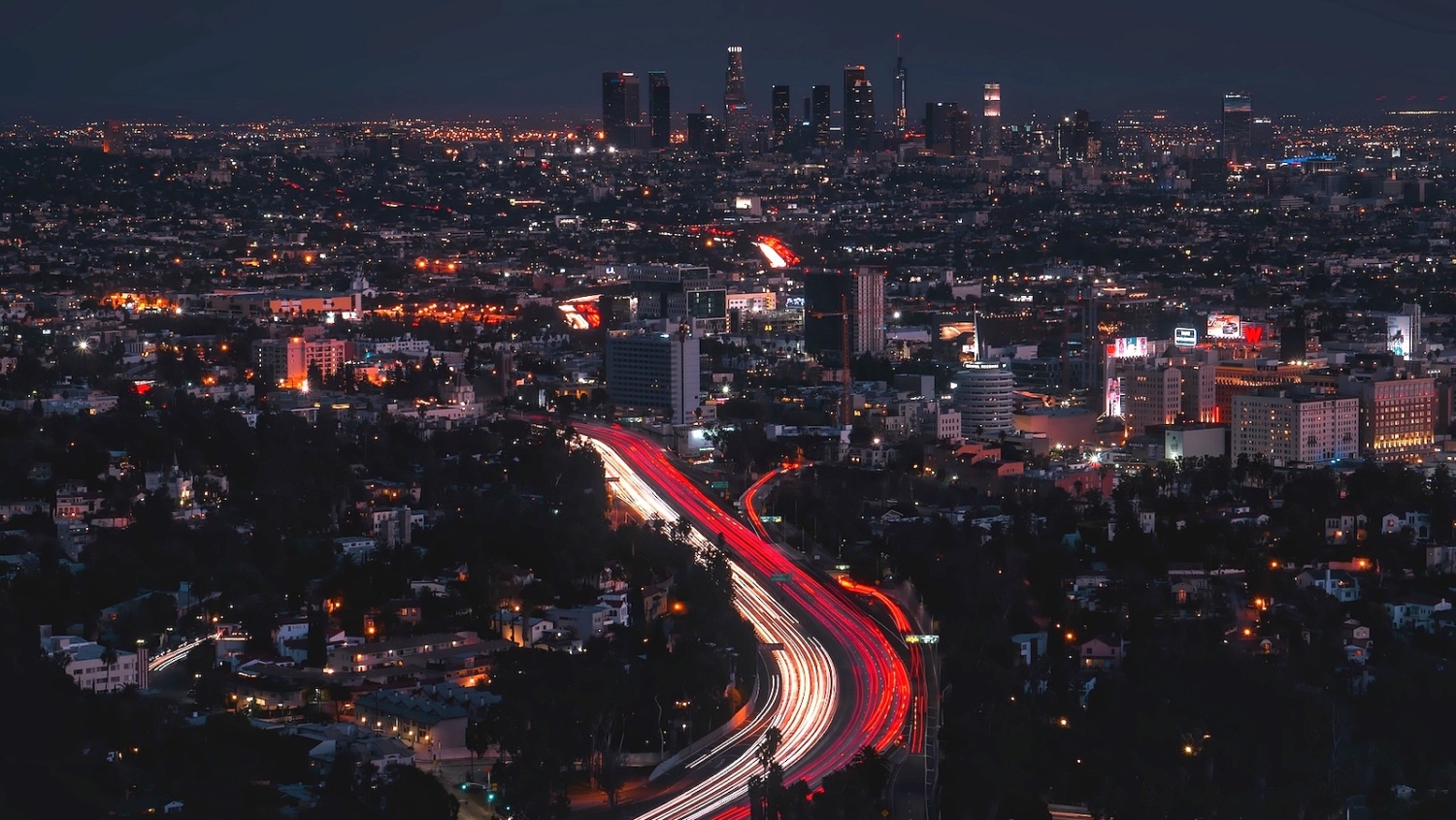
UCLA Luskin’s Brian Taylor spoke to LAist’s AirTalk about traffic congestion that in some places has equaled or surpassed pre-pandemic levels.
Personal travel has waned, but delivery trucks and other commercial transportation have increased. And hybrid work schedules have added unpredictability to rush-hour traffic patterns.
Taylor shared the counterintuitive fact that Angelenos actually drive fewer vehicle miles per capita than most motorists in the nation’s 70 largest urbanized areas.
Southern California has a moderate level of density over a very big area, he explained. While the region is much denser than areas such as Memphis, Dallas or Kansas City, it is not dense enough to be walkable and transit-focused like San Francisco, New York and Boston.
“We actually have modest levels of driving but a very large number of people on a relatively limited road system, and that results in high levels of congestion,” said Taylor, a professor of urban planning and public policy.
In a megalopolis as enormous as the LA region, “there’s traffic because there’s 18 and a half million people who are trying to move around along with lots of goods.”





Prof. Taylor rightly posted that LA has low walkable streets. Our sidewalks need major upgrades and require substantial resources. He blames congestion on the lack of transit and an inadequate street network along with hybrid work schedules for spreading congestion over longer time periods. Additionally he right that there are more trucks on the road and more often they stop in traffic lanes to make deliveries. Those momentary delays cause enormous disruption to traffic flow. So what to do. For one idea, put transit in the center lanes of streets not the right lanes where they can be disrupted by right turns, parking vehicles, and delivery vehicles. Give transit priority in development projects (see Washington DC for example), develop housing near transit stops, and make connections easier. We still have a long way to go to realize these actions.