
New Research Shows Global Impact of Extreme Heat on Learning
Extreme heat deepens educational inequities for students around the world, according to new research by R. Jisung Park, associate director of economic research at the UCLA Luskin Center for Innovation. Just published in the journal Nature Human Behaviour, Park’s study analyzed standardized achievement data for more than 144 million 15- to 19-year-olds in 58 countries, as well as detailed weather and academic calendar information. The findings showed that the rate of learning decreases with an increase in the number of hot school days. “Temperature is a surprisingly disruptive factor for students — both for high-stakes test-taking and for learning over the longer term,” said Park, an assistant professor of public policy specializing in environmental and labor economics. The new study broadens Park’s body of research into the effect of extreme heat on learning. Previous analyses of U.S. data showed that high temperatures can diminish student performance on standardized exams. In addition, minority and low-income students who attend U.S. schools that lack air conditioning are particularly vulnerable to the negative effects of heat, the research found. The latest study measured the effects on a global scale, showing that “heat disrupts learning across a wide range of climates and levels of development,” Park said. The research underscores the importance of policies aimed at improving physical learning environments. More broadly, it demonstrates that the impact of climate change on personal development can add up over time, possibly putting a brake on national economic growth and individual economic mobility.

UCLA Research Center Develops Online Anti-Racism Hub Focusing on Asian Americans
A new website known as the Movement Hub was developed by the UCLA Center for Neighborhood Knowledge (CNK) to serve as a centralized platform to amplify on-the-ground activism and organizing by Asian Americans and Pacific Islanders. The website offers resources for and by AAPI organizations to promote cross-racial unity. “It’s our hope that this site will be a useful tool to raise awareness on the intersectional issues impacting the AAPI community and other communities of color,” said Paul Ong, UCLA Luskin research professor and CNK director. The hub’s resources, developed by CNK Senior Researcher Silvia R. González in conjunction with the AAPI Civic Engagement Fund, will facilitate connections between people’s experiences and data. For example, the hub allows people to report hate crimes against AAPI people and find resources to help victims. From March to early August of 2020, more than 2,500 hate crimes against AAPI people were reported to Stop AAPI Hate, which tracks and responds to incidents of hate, violence, harassment, discrimination, shunning and child bullying involving AAPI people. “Anti-Asian rhetoric in the midst of the COVID-19 pandemic has led to violence and hate crimes against our communities, repeating historical racist and xenophobic patterns,” said Bo Thao-Urabe, senior program strategist at the AAPI Civic Engagement Fund, which provided $2 million toward an anti-racism response network in 20 states. “We have to find ways to participate in the global uprising for justice and radical transformation. Our anti-racism response network and the Movement Hub are resources to help AAPI organizations do that.”

Millions of Latinos at Risk of Job Displacement by Automation
The potential acceleration of job automation spurred by COVID-19 will disproportionately affect Latinos in U.S. service sector jobs, according to a new report from the Latino Policy and Politics Initiative at UCLA Luskin. The report calls on state and local officials to start planning now to implement programs to support and retrain these workers. Researchers looked at occupational data from the six states with the largest Latino populations and found an overrepresentation of Latinos in industries where jobs are more susceptible to automation, including construction, leisure and hospitality, agriculture, and wholesale or retail trade. More than 7.1 million Latinos, representing almost 40% of the Latino workforce in those six states — Arizona, California, Florida, Illinois, New York and Texas — are at high risk of being displaced by automation, the report shows. “As Latinos take a disproportionate financial hit from the COVID-19 crisis, now is a good time to focus on increasing training opportunities and to strengthen the social safety net to catch workers who are left behind,” said Rodrigo Dominguez-Villegas, the report’s author and director of research at the policy initiative. A failure to prepare Latinos for jobs in the digital economy and other growing sectors will come with economic repercussions to the U.S. by creating a shortage of skilled workers in an aging and shrinking labor force, the report says. The research will be used as a baseline for discussion at a convening this month of policymakers, industry leaders, training organizations and higher education administrators organized by the Aspen Institute’s Latinos and Society Program. — Eliza Moreno
Astor Briefs Congress on Social Work and Student Well-Being
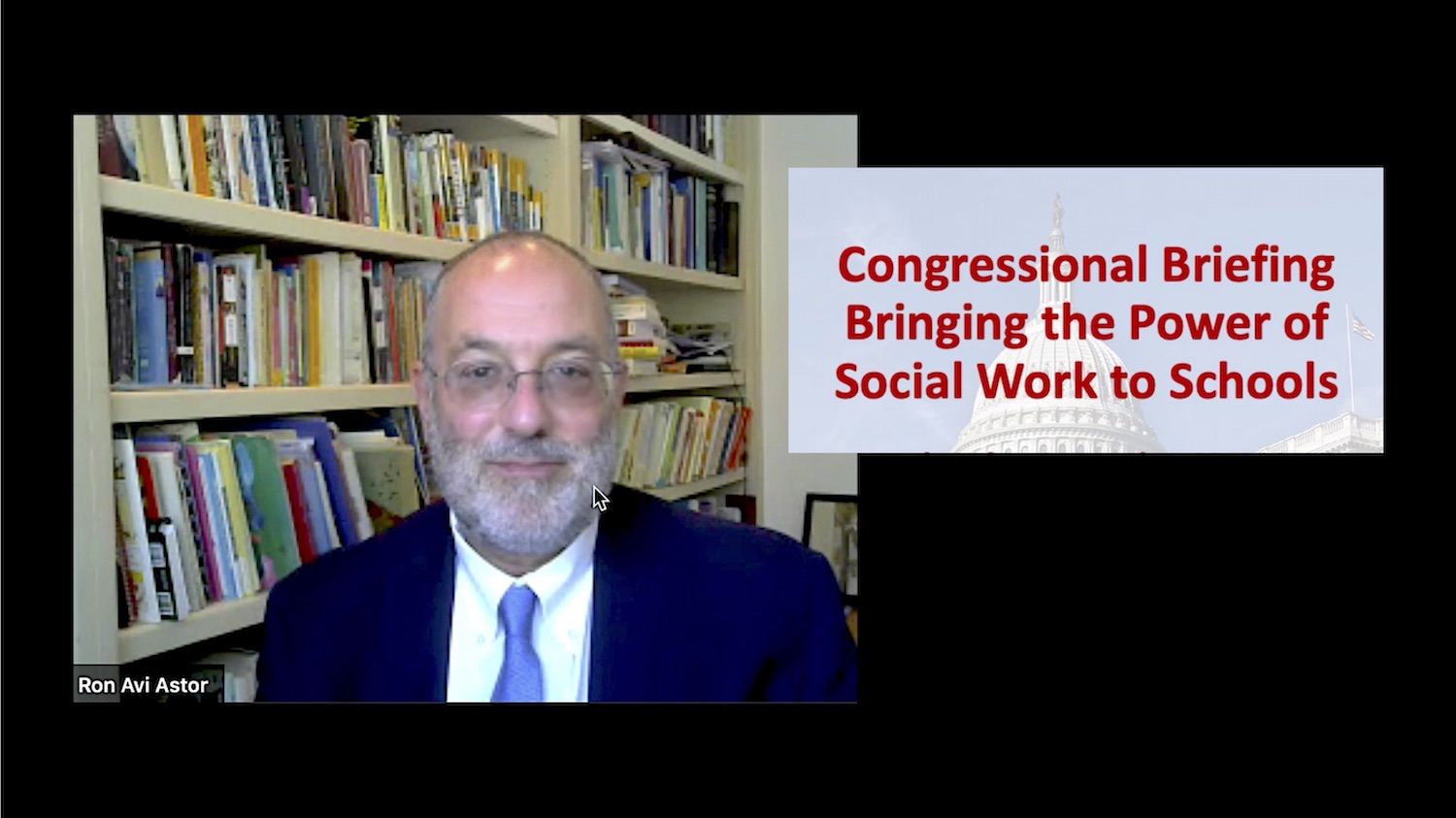
Social Welfare Professor Ron Avi Astor appeared at a congressional briefing focused on how social workers can help provide for the safety and educational achievement of students in light of calls to remove police from public schools. Many U.S. schools are patrolled by safety officers yet have no counselors, nurses or social workers on staff, adding to inequities that are deeply felt by Black, Latino, Native American and rural communities, Astor said. He called for a holistic national plan that re-envisions the role of schools in providing key social services to families struggling to feed, house and provide health care to their children. “There are needs at a mass scale that we probably haven’t seen in our country since the Great Depression,” said Astor, citing a recent policy brief he co-authored. Astor urged policymakers, education professionals, social workers and scholars to work together on a master plan that considers these core questions: “What do want our schools to look like in our country? What kind of democracy do we want to have? Should the zip code of a child dictate the kind of resources and opportunities they have?” The Sept. 23 online briefing was sponsored by a broad coalition of national social work organizations in conjunction with the Congressional Social Work Caucus, chaired by Rep. Barbara Lee of California. “We’ve got to bring the power of social work back to the schools,” Lee said during the briefing. “It is a matter of justice, and social workers are known for fighting for justice for everyone, especially our children.”
Park Awarded Equitable Growth Research Grant
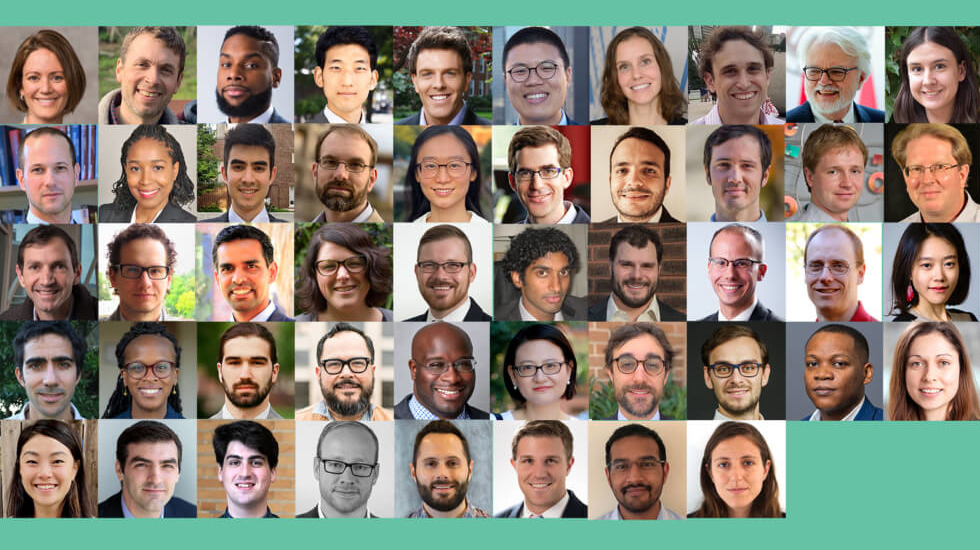
Assistant Professor of Public Policy R. Jisung Park was awarded a research grant by the Washington Center for Equitable Growth for a project investigating the impact of climate change on rising income inequality and declining labor market prospects in the United States. Park is one of 46 economists, postdoctoral scholars and other social scientists who received funding from the center this year to research the intersections between economic inequality and economic growth. Park’s award of $49,000 will support research into whether climate change exacerbates recent trends in economic inequality and will include recommendations for workplace adaptation and policy reforms. Growing evidence indicates that temperature stress may have significant impacts on cognitive performance, labor capacity and workplace safety, suggesting that extreme heat due to climate change may significantly reduce earnings and job quality for many low-skilled workers. Park, associate director of economic research at the UCLA Luskin Center for Innovation, will use administrative data on 11 million workplace injuries in California; injury and fatality data from the federal Office of Safety and Health Administration and the U.S. Bureau of Labor Statistics; and daily temperature variation data from the National Climatic Data Center. The Washington Center for Equitable Growth is a nonprofit research and grant-making organization dedicated to advancing policies that promote broad-based economic growth. The grant program aims to build a stronger bridge between academics and policymakers to bring relevant, accessible new research to the policymaking process.
Deans Respond to Government Attack on Critical Race Theory
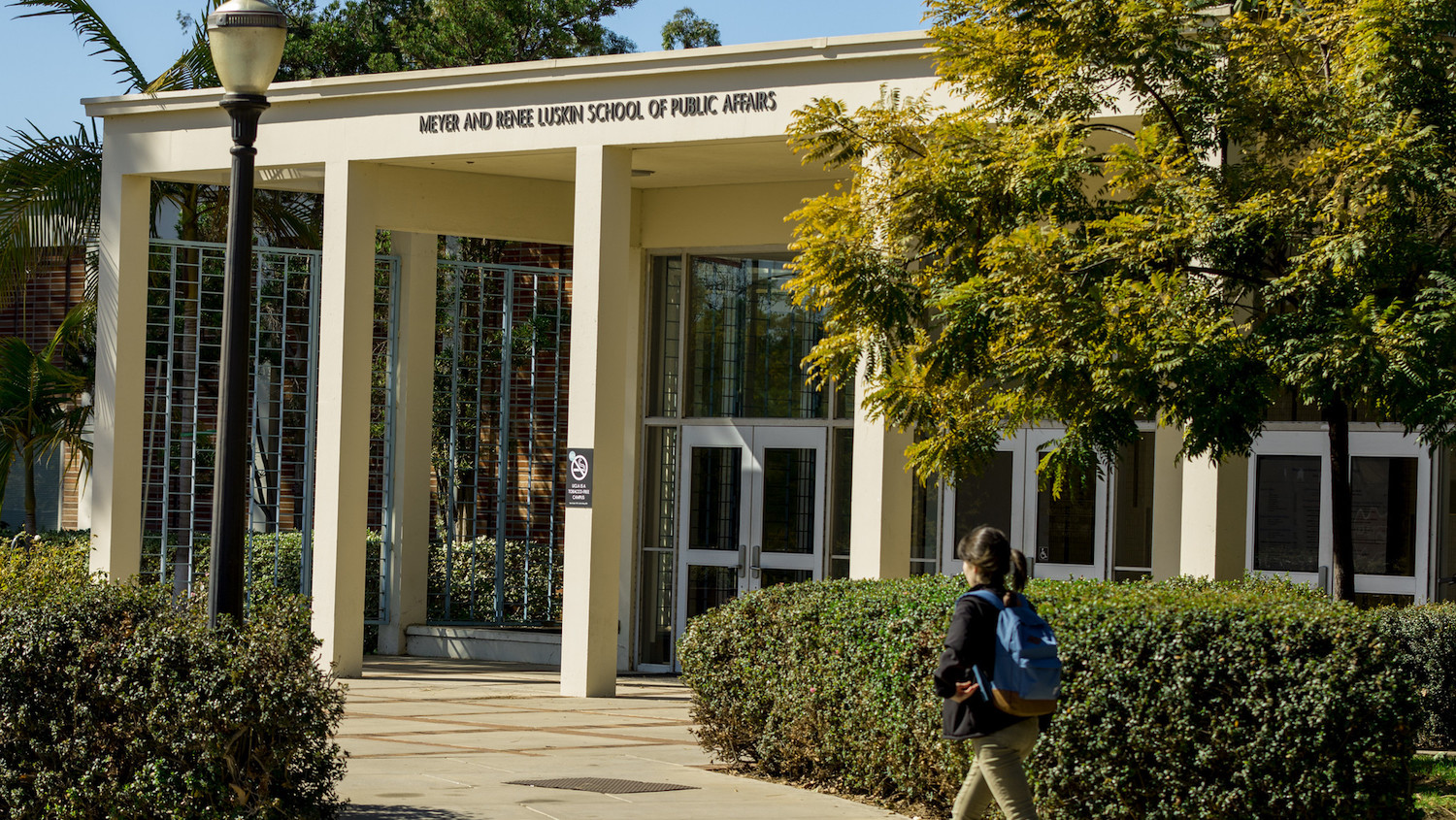
UCLA Luskin Dean Gary Segura joined colleagues from three other University of California public affairs schools to defend the interdisciplinary field of critical race theory against attacks from the Trump Administration. “Becoming anti-racist is a core tenet of the American creed. … America is still trying to perfect itself, and scholars in our schools use multiple perspectives, including critical race theory, to understand racism and racial oppression in America,” said the statement signed by Segura and deans of the public policy schools at UC Berkeley, UC Riverside and UC San Diego. The statement came in response to a recent U.S. Office of Management and Budget memorandum calling for an end to training sessions for federal employees that draw on critical race theory, which the memo termed divisive, false, demeaning and un-American. The deans’ statement countered that exposure to critical race theory “helps our students have a deeper understanding of what is required for America to live up to its promise of equality for all.” Noting that many public affairs students go on to work in government, the deans said, “An understanding of the ongoing role of race in America is important for them to be successful public sector employees. We believe that critical race theory and other academic research helps them to develop this understanding.” Deans from UCLA Law and four other UC law schools issued a separate statement expressing deep distress at the Trump Administration’s attack on critical race theory.
Roy Awarded ‘Freedom Scholar’ Grant to Advance Social Justice
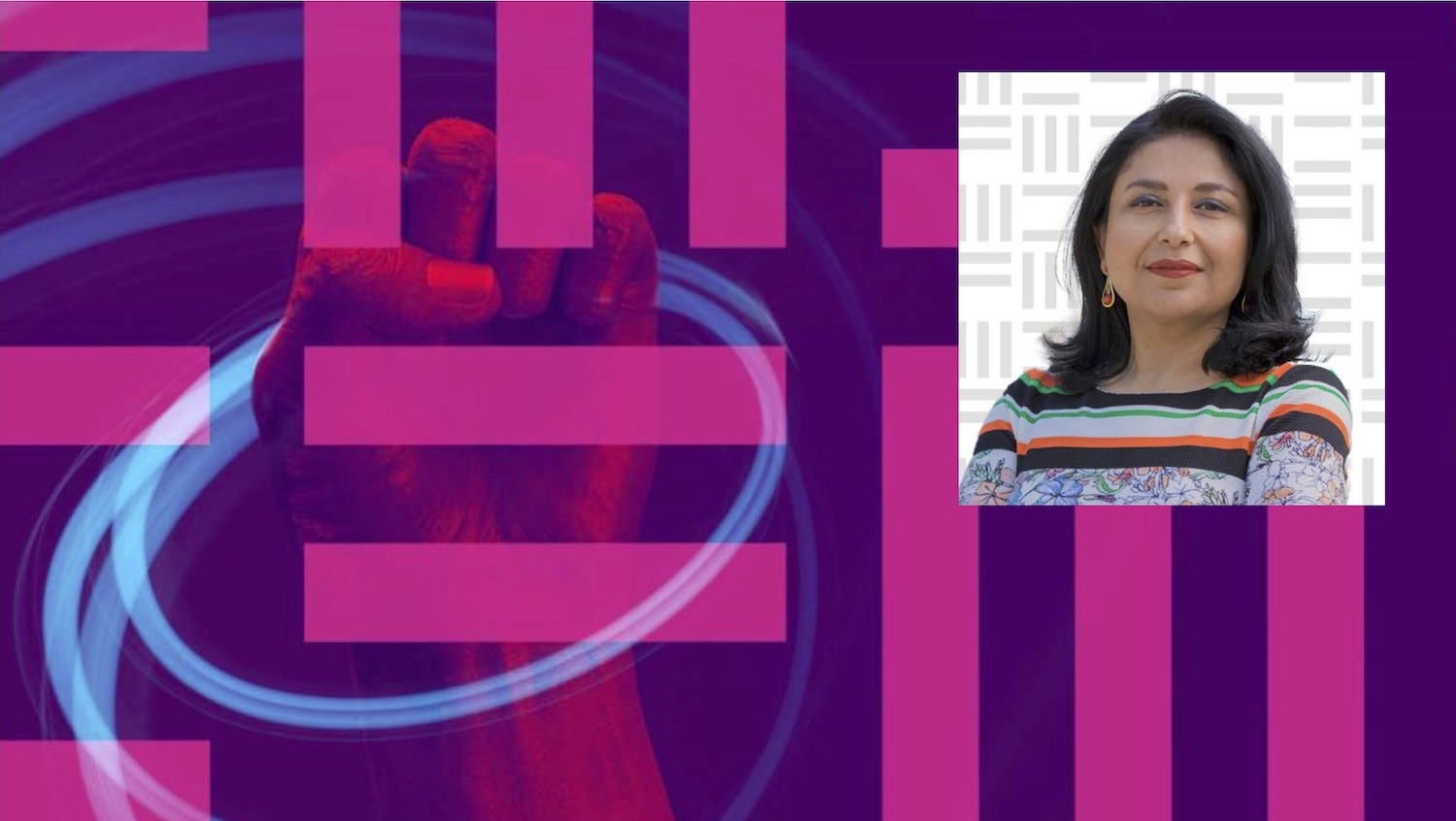
Professor Ananya Roy, founding director of the UCLA Luskin Institute on Inequality and Democracy, has been named a Freedom Scholar as part of a new philanthropic initiative to support progressive academics at the forefront of movements for economic and social justice. Marguerite Casey Foundation and Group Health Foundation launched the $3 million Freedom Scholars initiative to advance work in critical fields of research that are often underfunded or ignored. The 12 academics in the inaugural class of Freedom Scholars are leaders in abolitionist, Black, feminist, queer, radical and anti-colonialist studies. Each will receive $250,000 over two years. “These Freedom Scholars are shifting the balance of power to families and communities that have been historically excluded from the resources and benefits of society,” said Carmen Rojas, CEO and president of Marguerite Casey Foundation. “Support for their research, organizing and academic work is pivotal in this moment where there is a groundswell of support to hold our political and economic leaders accountable.” Roy, a professor of urban planning, social welfare and geography, holds the Meyer and Renee Luskin Chair in Inequality and Democracy. Her research has focused on urban transformations and land grabs, as well as global capital and predatory financialization, with a focus on poor people’s movements. The Freedom Scholar award, which will be administered through the Luskin Institute on Inequality and Democracy, is designed to advance “a new vision and new ideas for what it means for our society to be just, fair and free,” said Nichole June Maher, CEO of Group Health Foundation.
