

This election year has seen a drumbeat of policies, proposals, and court rulings that could change the way Americans vote.
To make sense of the swirl of news surrounding the landmark Voting Rights Act, evolving rules about how we register to vote, the prospect that federal agents will monitor polling stations, and more, UCLA Luskin Public Policy Professor Gary Segura offered context and insights grounded in his 35 years as a scholar of political behavior.
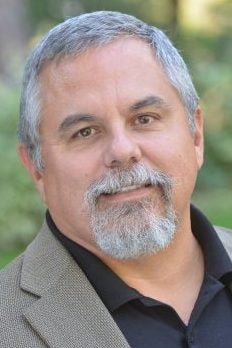
Segura’s research and teaching focuses on political representation and social cleavages. He also serves as founding partner and president of the political polling and data analysis firm BSP Research. Formerly the principal investigator of the American Action Election Study, the largest federally funded study of the U.S. electorate, Segura has also testified as an expert witness in voting rights lawsuits and constitutional cases.
Segura weighed in on the current state of free and fair voting and how citizens can prepare for the current election season. His comments have been condensed for space.
Last week, the U.S. Supreme Court put limits on the 1965 Voting Rights Act in a decision split along ideological lines. Help us understand the impact of these changes.
The Voting Rights Act was designed to protect the right to vote and the quality of representation for people of color who were not being elected to public office. And that’s because of a phenomenon we call racially polarized block voting. So if white citizens won’t vote for candidates of color, and you draw districts in such a way that there’s no place where those people of color are a concentration, then you would end up with all-white legislatures, all-white city councils, all-white county boards, and so forth.
The Voting Rights Act did two principal things. The first thing is it made illegal efforts to thwart the vote: poll taxes; literacy tests; character assessments by the local registrar of voters, which was really just a racial test; intimidating voters; blocking access to polls — all of those things are illegal.
The second thing it did is it said that the quality of representation, the chance that each citizen will have his or her views reflected in public space, should be more or less equal. And that has been interpreted since as a way to create districts that allow people of color to elect first-choice candidates.
Now in the past, two forms of gerrymandering called “cracking” and “packing” have had the effect of excluding minority candidates for public office. Cracking is when we take a community and, instead of drawing a congressional district around it, we crack them into little bits, into three or four different districts. And that has the effect of rendering them voiceless.
Packing is when you take as many minority voters as possible and you put them into a single district. That district will elect a minority representative, but there will never be a second one because you’ve cracked the remaining minority population so thinly that they don’t have a chance.
That’s really what was at issue in the case that the Supreme Court handed down. Those forms of racially polarized block voting are called “minority vote dilution,” and under Section 2 of the Voting Rights Act, lawsuits were designed to undo that, to make that actionable or illegal. In Louisiana versus Callais, the Supreme Court made that very, very difficult to do. They didn’t make it impossible. They made it nearly impossible.
And that’s the second big change to the enforcement of the Voting Rights Act that the Roberts Court has undertaken. What’s going to happen is, in the ’26 and ’28 congressional elections, the number of Black elected officials from the South is going to drop like a stone.
Efforts to regulate access to the ballot are cropping up at the state and federal level. How might they affect voting in this year’s election and beyond?
The Constitution is very specific that the states regulate the time, place, and manner of elections. As a consequence, states are very different.
States like Colorado and Oregon have 100% mail-in ballots. Other states have almost no mail-in ballots. Some states have partisan primaries, which nominate one Democrat and one Republican to face each other in the general election. California has what we call jungle primaries, where all candidates, regardless of party, run together and the top two vote-getters go to the general election.
Many of the voting rights and voting security concerns have arisen from attempts to nationalize this. There are some pieces of legislation that nationally affect how we conduct elections, but one of the issues is whether or not any of those have effect, given that the states ultimately are the arbiters of how elections are conducted.
One issue that we should talk about is the federal legislation known as the SAVE America Act, voter ID, and the general question that elections are not secure. So let me preface this by saying there is not a shred of evidence that there’s ever been any electoral shenanigans that changed any outcomes in the United States.
The number of non-citizens who are alleged to have voted illegally? A handful you can count on your fingers in any given election year, never to have affected an outcome. And that’s because it’s illegal for someone who is not a citizen to register and vote in a federal or state election. So those protections are already in place.
The SAVE America Act is particularly concerning. It’s an attempt to nationalize regulations on elections in a way designed to make it harder to vote, limit mail-in voting, limit earlier voting, have some form of voter ID requirement, and hype up voter registration requirements. Now that’s where things get really sticky, because the documents needed to register under the SAVE America Act would include a birth certificate with a name that matches your current name or a passport.
Many Americans don’t have passports, and if you are, for example, a married woman who took your husband’s name, your birth certificate does not match your name and therefore you would have trouble registering to vote. So this is really a way, once again, to reduce the number of people who have a chance to vote. So that’s why it’s very, very controversial.
In addition to the federal legislation moving through Congress, a statewide voter ID initiative will appear on the California ballot this fall. How have similar measures adopted in other states affected the vote?
Voter ID laws may have a number of different parts. One might be whether or not you have to present a valid identification when you show up to vote, but what constitutes an acceptable ID?
And there is also a question of whether statutes require “exact matches” of the signatures on your ID and your voter registration. Wow. How many of you sign your name exactly the same way? You probably sign it mostly the same way. But if it’s not exactly the same way, it’s at the discretion of the election poll worker whether or not you have a valid identification. In some states, student IDs are not valid, but gun registrations are. That’s true in Texas. Why would that be? Because they don’t want college students voting and they do want gun owners.
So you can you can use these identification requirements to mold the electorate. And the underlying question of this is true for both political parties, which is that both have an interest in an electorate that has more of the people who like them and fewer of the people who don’t like them.
The Democrats’ approach to this has been trying to enlarge the electorate, trying to get more people to come to vote because they feel that that’s their way of winning. The GOP approach is to keep people away from the ballot box because they don’t believe that their manifesto is a majoritarian position.
Some elected officials and activists have floated the idea of deploying federal law enforcement, possibly including Immigration and Customs Enforcement (ICE) agents, to polling sites. If this comes to pass, how might the voting public be affected?
The concern here is whether or not the administration will attempt to put ICE agents at polling stations in states and in locations where there’s a large Hispanic population. And the idea, according to them, is that they would be used to prevent undocumented residents from voting. Again, almost no evidence that there’s ever been such a thing.
But really, what it’s about is intimidation. So folks who don’t agree that this is a problem would say, “If everyone’s a U.S. citizen, then ICE won’t arrest anyone.” Except that ICE has arrested dozens and dozens of U.S. citizens. And under the Supreme Court’s decision regarding racial profiling that Justice Kavanaugh wrote, they can engage in what we now call Kavanaugh stops, which is if someone has an accent or is dressed in a particular type of clothing or so forth, that can be the basis for being taken into custody. So there’s nothing to prevent mass arrests of U.S. citizens at polling places.
Latinos know this because they are aware of people who’ve been taken into custody who have green cards or have U.S. citizenship. It’s an old form of intimidation going back decades, including when the GOP in Orange County would dress people up in Border Patrol uniforms, fake uniforms, and put them at polling stations to try to drive down Latino turnout.
With all these changes you’ve mentioned, where do we go from here?
A single elected official of good conscience — I’m thinking, for example, of the secretary of state in Georgia who refused to change vote totals in 2020 — can make the difference between a fair and an unfair election. So think carefully when you choose people and think carefully when you vote on matters having to do with elections.
For the average person, the best thing you can do is turn out to vote — and be prepared. Even if there’s no ID requirement now, bring an ID with you. Be prepared to stand in line. There are all sorts of efforts to try to drive voters out of an election by having fewer voting machines, fewer voting booths in places where the party you don’t like has a lot of voters. And so the lines get long.
Be persistent. Go. Go with an ID, bring a friend, bring two friends, go vote. That’s the way average people of any political persuasion can resist efforts to manipulate elections.


