
Astor Links ‘Opportunity Structures’ to School Safety and Equity
Social Welfare Professor Ron Avi Astor co-authored an article for School Psychology Review that delineates the need for new studies on how opportunity structures — factors such as geographic location, gender, race, religion, nationality, ethnicity and family background — influence and shape patterns that impact school safety, school climate and bullying. The concept of opportunity structures has historically been used to study equity in the labor market. In education, it has been used to describe systemic racism in educational inequality. The authors apply school-centered ecological theory as a conceptual framework that links opportunity structures and school safety. They recommend further research on communities and families, creating positive school cultures and climates, and different types of educator bias that restrict opportunities and result in less safe environments. Astor, the Crump Professor of Social Welfare at UCLA Luskin, also holds an appointment with the UCLA School of Education and Information Studies. His work examines the role of the physical, social-organizational and cultural contexts in schools related to different kinds of bullying and school violence, including sexual harassment, cyberbullying, discrimination hate acts, school fights, emotional abuse, weapon use and teacher-child violence. Astor’s co-authors are Pedro Noguera, dean of USC’s Rossier School of Education; Temple University Associate Professor Edward Fergus; University of Pennsylvania Professor Vivian L. Gadsden; and Rami Benbenishty, professor emeritus at Hebrew University of Jerusalem. — Joanie Harmon
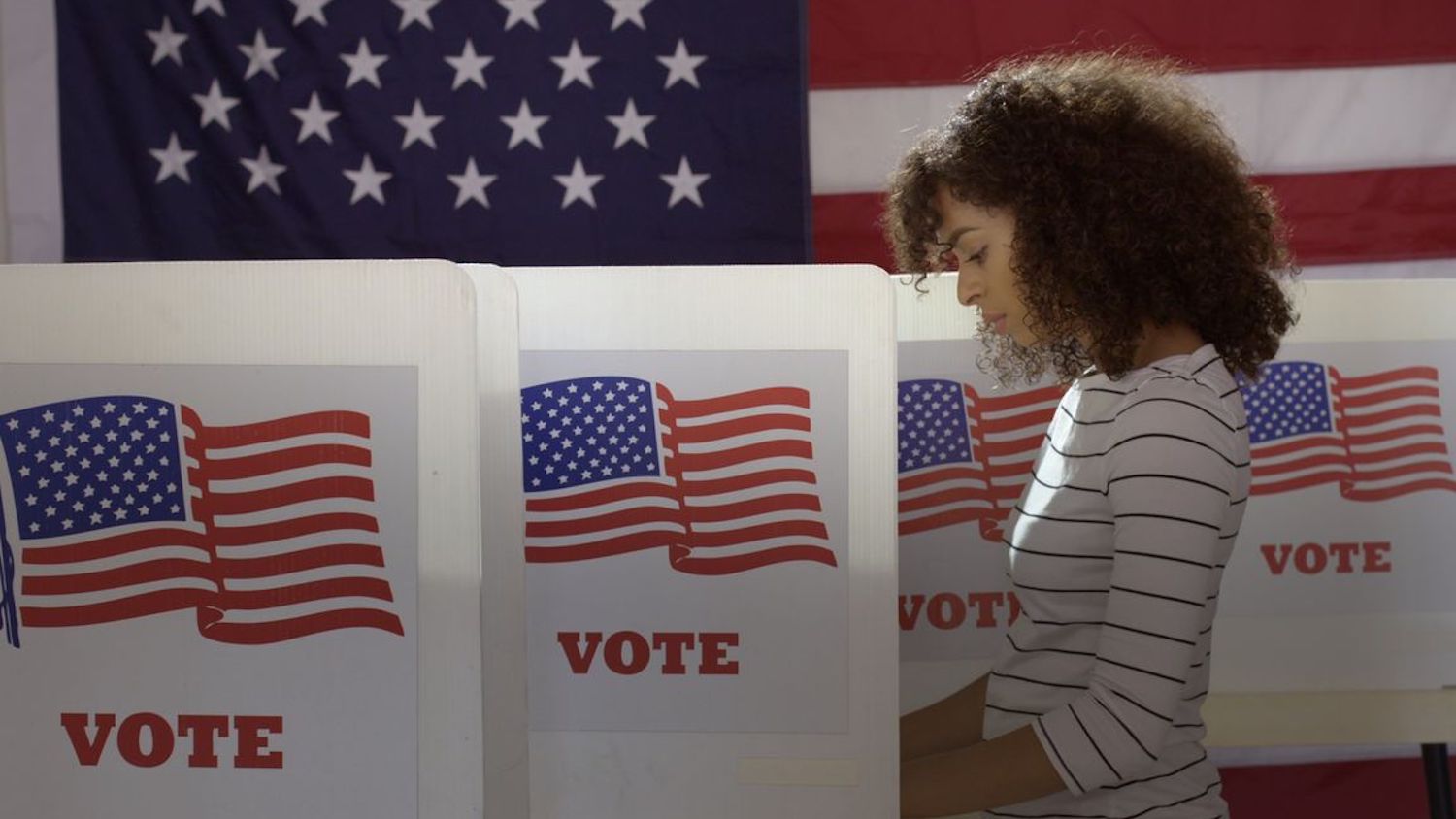
Latino Voters Were Decisive in 2020 Presidential Election
A new report by the UCLA Latino Policy and Politics Initiative shows that Latino voters were decisive in sending President-elect Joe Biden to the White House. Researchers analyzed votes cast in 13 states — Arizona, California, Colorado, Florida, Georgia, Illinois, New Mexico, Nevada, New York, Pennsylvania, Texas, Washington and Wisconsin — that collectively are home to about 80% of the Latino electorate. Researchers estimated that nationwide Latino voter turnout increased 30.9% compared with the 2016 presidential election. Among voters of all races, turnout was 15.9% greater. The impact of the growing Latino electorate was evident in battleground states. In Arizona, where Latinos represent 25.2% of all registered voters, the electorate’s size and turnout helped secure Biden’s victory. Even in Wisconsin and Georgia, where Latinos make up less than 5% of registered voters, their strong support of the Democratic candidate helped tip the scales to victory by margins of less than a single percentage point. The report also provides context for a prominent post-election talking point. Many observers said that results in Miami-Dade County, Florida — where Trump got support from a majority of Latino voters — was evidence of a wider Latino swing toward the president. Trump did win the state, but the UCLA report found that in all Florida counties outside of Miami-Dade, Latino voters favored Biden by a margin of 2 to 1. By looking at votes cast and demographic data at the precinct level, the report offers a more accurate analysis of the impact of Latino voters than other studies that have relied on exit polls, which do not capture enough Latino voters.

Vulnerable Communities Slow to Adopt Key Strategy to Stop HIV’s Spread
Taking a daily pill to prevent HIV transmission is one of the most effective biomedical strategies available to combat the virus’ spread, yet use of this health regimen remains low among vulnerable communities, according to a new paper by Ian Holloway, associate professor of social welfare. The research showed that more than 90% of sexually active gay and bisexual men are familiar with the regimen, known as PrEP, or pre-exposure prophylaxis, yet fewer than 8% use it. Black and Latino men have particularly low usage rates, according to the paper just published in PLOS ONE. To measure attitudes toward PrEP, researchers commissioned the Gallup analytics firm to conduct three surveys of gay and bisexual men across the United States between 2016 and 2018. During this time, the study found:
- Awareness of the regimen increased from 59.8% to 92%.
- Uptake by those eligible for PrEP rose from 4.1% to 7.8% — a rate that remains disappointingly low.
- Of those who reported using PrEP, 33.3% discontinued the regimen.
While further research is needed to fully understand reasons for low usage and high discontinuation rates, factors likely include stigma, medication costs, concerns about side effects and lack of access to health care. In addition, “the COVID-19 pandemic has created further obstacles to PrEP access but also opportunities to talk about the sexual health and well-being of gay and bisexual men,” said Holloway, faculty director of the Gay Sexuality and Social Policy Initiative at UCLA Luskin. Data for Holloway’s paper came from the Generations Study focusing on LGBTQ health and well-being, which is led by Ilan H. Meyer of UCLA Law’s Williams Institute.

Study Finds Inequities in Distribution of Federal Stimulus Assistance
Neighborhoods in California whose populations are majority Black, Latino or Asian benefitted less from the $500 billion in forgivable loans distributed nationwide through the Paycheck Protection Program amid the pandemic, according to a new UCLA report. The findings, published by the Latino Policy and Politics Initiative and the Center for Neighborhood Knowledge at UCLA Luskin, found that the lack of federal support will likely widen economic inequality in communities of color, which already had fewer small businesses and jobs than majority-white neighborhoods. The analysis was based on data from the Small Business Administration, the Census Bureau ZIP Code Business Patterns Dataset and the American Community Survey. The researchers write that future federal pandemic relief efforts should earmark a percentage of funds to directly benefit businesses in disadvantaged communities, which the report finds generally have higher concentrations of residents of color. The report found that stimulus funds helped majority-white neighborhoods retain 51% of their pre-pandemic jobs, compared to 44% in majority-Latino neighborhoods and 45% in majority-Asian neighborhoods. Although the program helped retain 54% of pre-pandemic jobs in Black neighborhoods, that figure is somewhat misleading because those neighborhoods typically had a smaller job base to begin with. When standardized on a per-resident basis, the federal loans supported 5.8 jobs per 100 residents in Black neighborhoods, compared with 8.1 per 100 residents in white communities. The authors also found that Latino and Black neighborhoods received less funding per capita than white neighborhoods. Latino neighborhoods received $367 per resident; Black neighborhoods received $445 per resident; white neighborhoods received $666 per resident; and Asian neighborhoods received $670 per resident, the study found.

Holloway Wins Grant to Study Cannabis Marketing to LGBTQ Youth
Ian Holloway, associate professor of social welfare, has received a grant of more than $400,000 from the California Bureau of Cannabis Control to advance his research into the impact of cannabis marketing targeting sexual and gender minority youth. The growing cannabis industry is aggressively pitching its products to lesbian, gay, bisexual and transgender youth through online and print media, Holloway said. His research will seek to measure the reach of that messaging and determine whether it leads to greater cannabis use among this group of young people. Filling these knowledge gaps could help explain cannabis-related health disparities among LGBTQ youth and identify targets for regulation of cannabis marketing, he said. Holloway is director of the Hub for Health Intervention, Policy and Practice at UCLA Luskin and a member of the Cannabis Research Initiative at the UCLA Semel Institute for Neuroscience and Human Behavior. He and Evan Krueger, a post-doctoral scholar at USC’s Health, Emotion & Addiction Laboratory, are principal investigators of the study. Their grant from the Bureau of Cannabis Control is a portion of nearly $30 million recently awarded to California universities to study the impact of Proposition 64, which legalized the recreational use of cannabis for people 21 or older. Across UCLA, faculty and research centers have been awarded $6.4 million from the bureau to study topics including the toxicity of inhaled and second-hand cannabis smoke and employment conditions in California’s cannabis industry. UCLA’s extended track record for cutting-edge cannabis research dates as far back as the 1970s.
Thanksgiving Wishes From Dean Segura
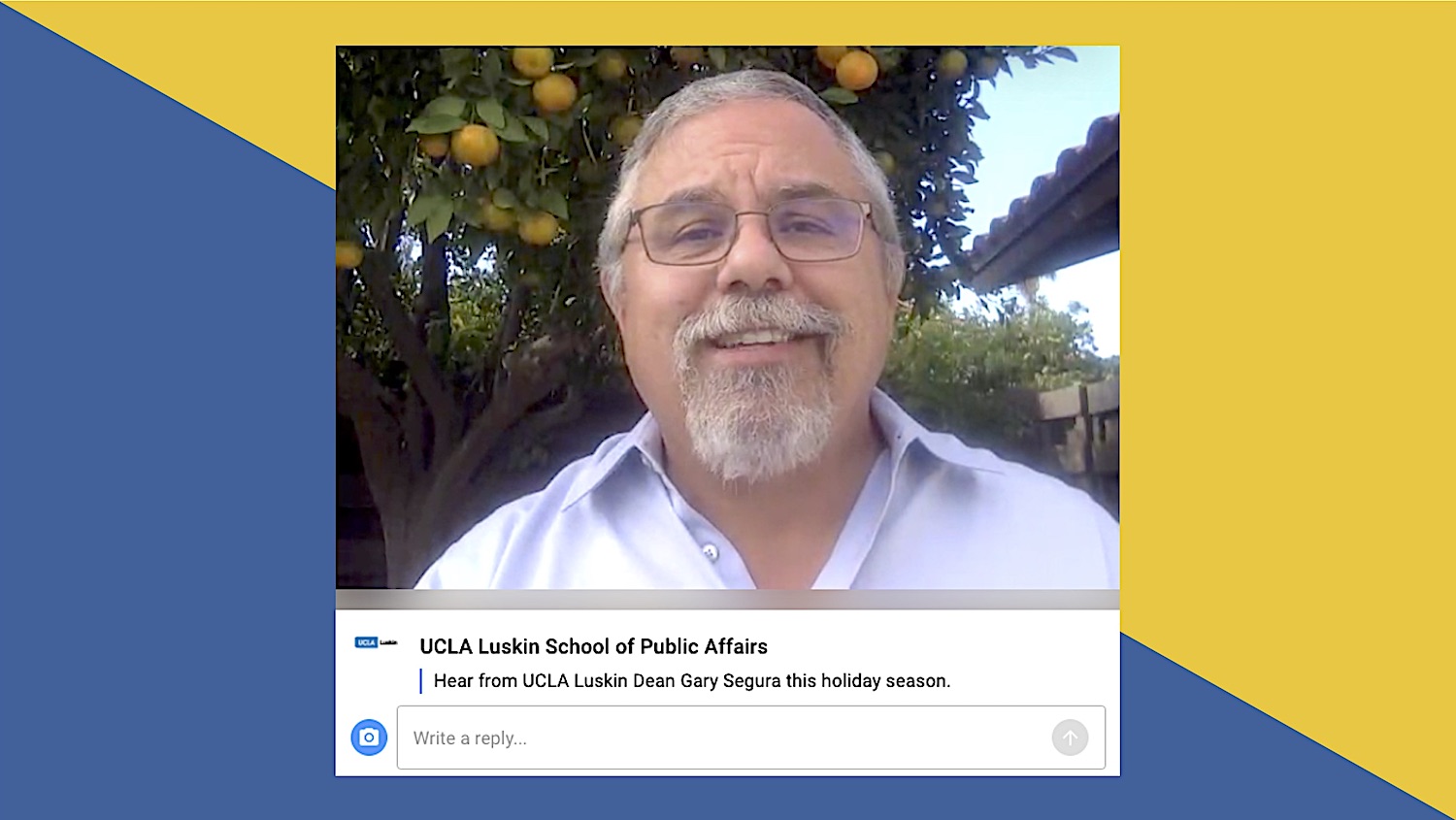
UCLA Luskin Dean Gary Segura shared a Thanksgiving message with the UCLA Luskin family, expressing gratitude for the students, alumni, benefactors, faculty and staff who have created an “intellectual and mission-driven community of which I am deeply, deeply proud.” View the message.
