
Luskin Summit Breaks Down Housing Injustice
A UCLA Luskin Summit webinar on the exacerbation of housing injustice and mass evictions during the COVID-19 pandemic drew a virtual crowd of more than 400 participants. Moderated by Michael Lens, associate professor of urban planning and public policy, “The Threat of Mass Evictions and an Opportunity to Rethink Housing” was the third segment of this year’s virtual Luskin Summit series. The COVID-19 pandemic has shed light on housing injustice in Los Angeles, with hundreds of thousands of renters facing joblessness, debt and the looming threat of eviction. “When the pandemic is laid upon the current housing crisis, it becomes clear that going back to normal is not enough,” Lens said. “We need a renewed commitment to the subsidization of housing, and we need to allow more homes of all types to be built.” Ananya Roy, professor of urban planning and social welfare, noted that working-class communities of color bear the brunt of evictions. “As billionaires have accumulated massive wealth during the pandemic, renters have accumulated debt,” she said. Housing and community development consultant Sandra McNeill discussed the growth of the Community Land Trust movement, which uses a model of collective land ownership to combat systemic racism and gentrification. “We share a fundamental belief that land and housing should not be treated as a commodity but as a common good,” she said. Marques Vestal, incoming assistant professor of urban planning, argued that this is an opportunity to completely rethink housing policy governance. “If we’re going to talk about housing redevelopment, let’s get creative about it,” Vestal said. — Zoe Day

Study Finds Challenges in Identifying Smaller At-Risk Groups for Pandemic Relief
Delivering COVID-19 vaccines and other pandemic relief to certain small ethnic populations in California may be a particular challenge for a somewhat ironic reason: Many members of those groups do not live in neighborhoods that have been identified as being highly vulnerable to virus transmission. A new UCLA study looked at five ethnic groups — American Indians, Pacific Islanders, Cambodians, Filipinos and Koreans — which, current data suggests, have higher-than-average rates of COVID-19 infections or deaths. Led by Paul Ong, director of the Center for Neighborhood Knowledge at UCLA Luskin, the study examined four data models that public policy and health policy officials typically rely on to decide how to distribute resources. Researchers found that the models do not properly consider factors such as underlying racial inequities and socioeconomic status. “The data we’ve been compiling show that Pacific Islander and other smaller Asian groups are two to three times more likely than non-Latinx white workers to be essential workers, who are at a higher risk of being exposed during a pandemic,” said Ninez Ponce, director of the UCLA Center for Health Policy Research, a partner in the study. “But they have received less attention because their numbers are fewer.” The study concluded that officials should look beyond geographic measures to address specific pandemic-related goals and relief efforts. “It would be great to pinpoint for state and local policymakers where the vaccines should go to help these vulnerable populations,” Ong said. ”Unfortunately, it’s not that easy, because they are a hidden diaspora and not tied to a geographic place.” — Elaiza Torralba

Experts Reimagine Wildfire Preparedness at Luskin Summit Session
Over 500 participants joined the Luskin Summit 2021 webinar “Preparing for Even Wilder Wildfires” on Feb. 4 to learn about the impacts of wildfires on health, housing and infrastructure, particularly in low-income communities. The webinar was moderated by JR DeShazo, director of the UCLA Luskin Center for Innovation, and featured a panel of experts from government, nonprofits and academia. Calling 2020 a year of disastrous wildfires, Professor Michael Jerrett of the UCLA Fielding School of Public Health pointed to an indelible human fingerprint on forest mismanagement. He identified wildfires as an environmental justice issue due to the disproportionate impact on people of lower socioeconomic status. In addition to the destruction of housing and infrastructure, wildfires emit complicated mixtures of pollutants that can have negative health consequences on human populations, he said. DeShazo explained that even in an ideal wildfire management scenario, we will still face small wildfires, reinforcing the importance of developing policies to mitigate their impact on our health and environment. Gregory Pierce, associate director of the Center for Innovation, spoke about the housing affordability crisis that has led to a pattern of building homes in fire-prone areas. He suggested increasing the supply of affordable housing in areas that are not prone to wildfires, updating zoning and urban design standards, and implementing policies to increase the fire resistance of buildings. Justin Knighten, advisor to the California Governor’s Office of Emergency Services, highlighted the importance of infusing equity into the conversation and reimagining what it means to be prepared for wildfires while working with vulnerable communities. — Zoe Day

Images of Pepper-Sprayed Girl Underscore Urgency of Minimum-Age Laws
Video footage of a 9-year-old girl being handcuffed and pepper-sprayed by police in Rochester, N.Y., has put a spotlight on a key question for policymakers: At what age should a child be shielded from detention, prosecution and incarceration in the criminal justice system? That question is the focus of scholarship by Social Welfare Chair Laura Abrams and Elizabeth Barnert, assistant professor of pediatrics at UCLA’s David Geffen School of Medicine. Their collaborative research at the intersection of child health and juvenile justice has led to data-driven recommendations about the minimum age of criminal responsibility, factoring in brain development, competency and childhood experiences. Abrams and Barnert recently worked with the National Juvenile Justice Network (NJJN) to form a broad coalition of advocates and health professionals working to raise the age at which children can be processed on criminal charges. Internationally, that age is most commonly set at 14; in the United States, more than half of states have no minimum age at all. “Processing and confining children in the juvenile justice system is traumatic and exposes them to damaging collateral consequences,” including disruptions to education, employment, and mental and physical development, argues NJJN, which released a policy platform and other resources on the issue in January. The incident in Rochester, captured on police body cameras and viewed widely, illustrates the urgency of this advocacy, Abrams said. “No child should ever be cuffed or arrested. Period,” she said. “Our work on minimum age laws shows that criminalizing childhood is racist and has adverse outcomes on children’s health.”

Study Assesses Tools Used to Prioritize COVID-19 Resources
A new study by the Center for Neighborhood Knowledge (CNK) at UCLA Luskin assesses four vulnerability indicators used by public agencies to identify neighborhoods most in need of pandemic-related resources and services. The choice of indicators used in prioritizing the COVID-19 interventions has implications for how many people of color and minority neighborhoods are served, the study found. Race and ethnicity are important because people of color encounter multiple dimensions of inequality that are only partially reflected in the indicators, said CNK Director Paul Ong, who led the research. The study aims to help ameliorate a policy dilemma. “Despite the reality that African Americans and Hispanics have suffered disproportionately from COVID-19, the 1996 Proposition 209 prohibits the state from explicitly using race as a factor in the provision and distribution of pandemic relief and coronavirus vaccines,” Ong said. Of the four indicators assessed, an index measuring pre-existing health vulnerabilities is the most likely to be inclusive of people and neighborhoods of color, the study found. It also recommended that public agencies develop new indicators tailored to the unique policy goals created by the pandemic. The research was conducted in partnership with the UCLA Center for Health Policy Research, the UCLA BRITE Center for Science, Research and Policy, and the public interest research group Ong & Associates.
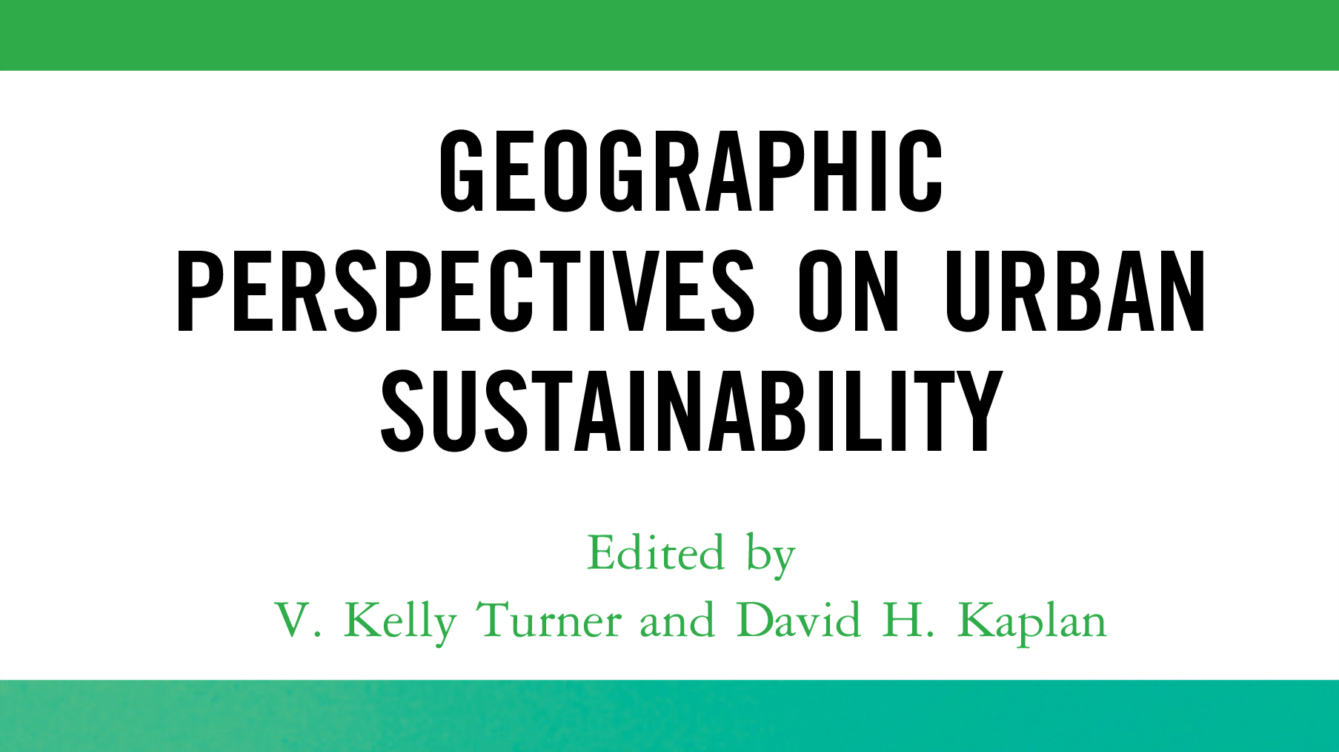
New Book by Turner Focuses on Urban Sustainability
A new book by Assistant Professor of Urban Planning V. Kelly Turner highlights contributions to urban sustainability scholarship made by geographers in the 21st century. Co-edited by Turner and Professor David Kaplan of Kent State University and published by Routledge in December, “Geographic Perspectives on Urban Sustainability” delves into issues of transportation, green infrastructure and gentrification and analyzes the intersections of social theory, spatial science and geography. Exponential and uneven growth of urban areas and the growing threat of climate change have prompted concerns that current urbanization patterns are unsustainable. Experts in the field have recognized the need for increased scholarship on urban sustainability, including human-environment interactions and emerging urbanization patterns. Through chapters originally published in the journal Urban Geography, Turner and Kaplan raise questions of urban resilience, environmental justice, political ecology and planning from a geographic perspective. “Contributions [to the field of urbanization science] should embrace systems thinking, empirically connect social constructs to biophysical patterns and processes, and use the city as a laboratory to generate new theories,” they write. The book is a resource for scholars, students and policymakers interested in urban and city planning, political ecology and sustainable urbanism.
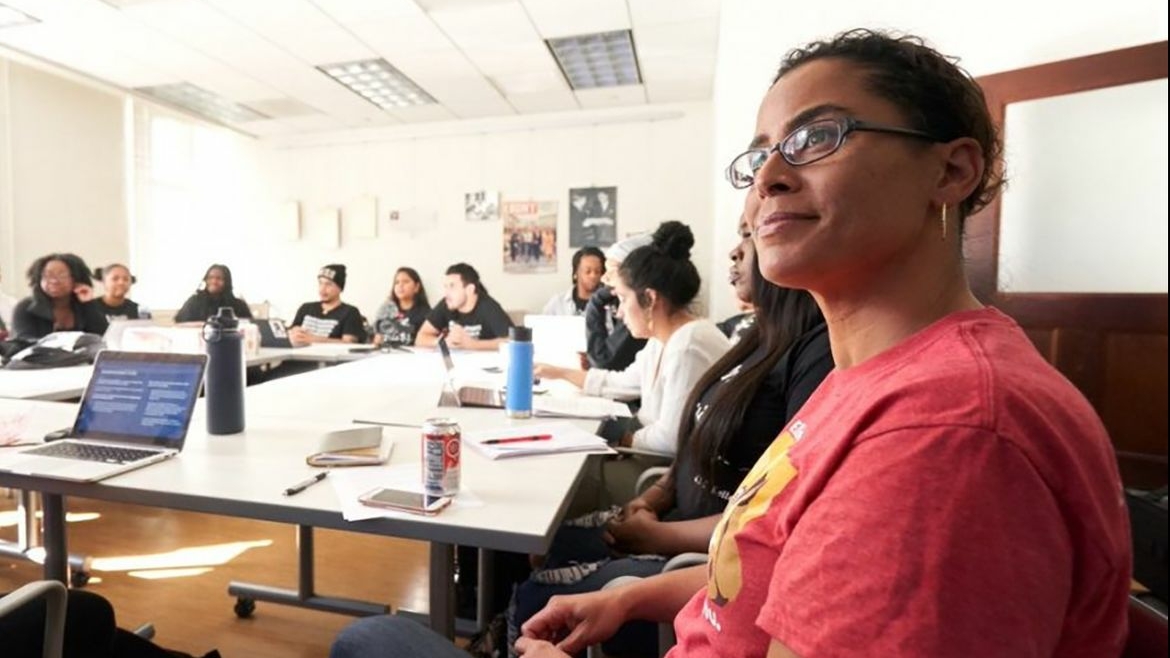
Urban Planning Faculty Spearhead Mass Incarceration Archive Project
Urban Planning Professors Kelly Lytle Hernández and Karen Umemoto as well as incoming Urban Planning Assistant Professor Marques Vestal are collaborating on a new initiative to create an archive on policing and mass incarceration in Los Angeles. The project, called “Archiving the Age of Mass Incarceration,” aims to collect, digitize and preserve a sustainable archive of data, testimonies, artifacts and police files for the next generation of research on racial and social justice. “The new platform will catapult our centers into the digital future in knowledge-sharing and knowledge production,” said Umemoto, director of the UCLA Asian American Studies Center. The archive will build off the work of the UCLA-based Million Dollar Hoods research project, a community-driven initiative that began in 2016 to quantify the fiscal and human cost of mass incarceration in Los Angeles. Scholars from UCLA ethnic studies centers and the Million Dollar Hoods project will train UCLA students to work with the digital archives. “This new collaboration between Million Dollar Hoods and UCLA’s ethnic studies centers will preserve the documentary evidence of mass incarceration and its impact on people’s lives in Los Angeles while building a new digital bedrock for racial justice scholars and scholarship at UCLA,” said Lytle Hernández, director of the Ralph J. Bunche Center for African American Studies. The project will encompass research across several communities of color, highlighting ways in which they are disproportionately affected by mass incarceration. “Archiving the Age of Mass Incarceration” is made possible by funding from a three-year, $3.65 million grant from the Andrew W. Mellon Foundation.
