‘Halfway Home’ Book Talk Explores the Afterlife of Mass Incarceration
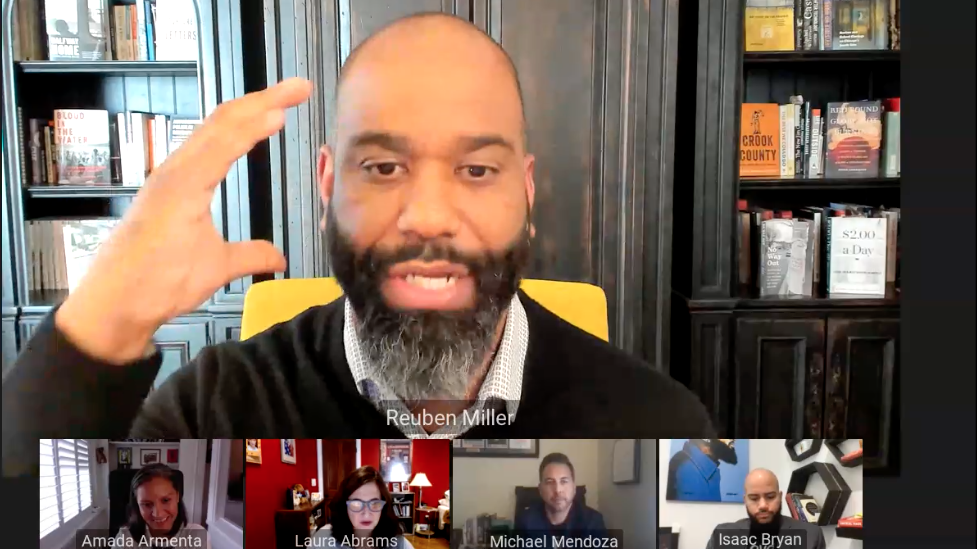
Sociologist Reuben J. Miller shared highlights from his new book on the inequities of the U.S. criminal justice system during a virtual dialogue on March 11, part of the Transdisciplinary Speaker Series at UCLA Luskin. “Halfway Home: Race, Punishment and the Afterlife of Mass Incarceration” is the culmination of Miller’s years of research in Chicago and Detroit, including over 250 interviews with prisoners, former prisoners, and their friends and families. “It takes more than a few hours and a few cups of coffee to learn about a person,” said Miller, explaining that he wanted to move past the caricatures we have learned to embrace. In the second half of the event, Social Welfare Chair Laura Abrams moderated a discussion about the repercussions of mass incarceration. Michael Mendoza, director of national advocacy for the Anti-Recidivism Coalition, said prison is like a ghost that follows you throughout your life. “The prison-industrial complex doesn’t just punish people physically but emotionally and mentally as people try to get their footing on the ground,” he said. Amada Armenta Ph.D. sociology ’11, associate professor of urban planning, noted the importance of producing research on criminal justice that is accessible for readers in order to facilitate a dialogue. Isaac Bryan MPP ’18, director of the Black Policy Project at UCLA, spoke about making a radical commitment to recognizing the full humanity of people and the role that policy can play in mitigating systems of harm. “This book uplifts voices that need to be heard,” Bryan said. “This book can propel us forward and was made for a moment like this.” — Zoe Day

California Households Owe $1 Billion in Water Bills, Highlighting Affordability Crisis
For many Californians, water bills are piling up at unprecedented rates during the pandemic, exacerbating water affordability issues that disproportionately impact low-income residents and communities of color. A recent survey by the California State Water Resources Board, which was supported by research from the UCLA Luskin Center for Innovation, shows the extent of water bill debt accumulation during the COVID-19 pandemic. Households owe a combined $1 billion in unpaid bills, which has increased substantially since the pandemic. The report finds that roughly 12% of Californians have overdue payments on their water bills. The average debt amounts to $500, but about 155,000 households owe more than $1,000 in unpaid bills. The data illuminates racial inequalities in access to affordable drinking water. Households in Black and Latino neighborhoods are more likely to have unpaid bills and have disproportionately higher amounts of debt. These racial disparities exist even after adjusting for income and housing. “Many of these communities already faced challenges pre-COVID, and now they are most heavily impacted by the water debt,” said Peter Roquemore, a researcher on the study and water project manager at the Luskin Center for Innovation. Los Angeles County contains the highest concentration of debt within the state, especially among residents in South L.A. Many of these neighborhoods also lack equitable access to safe and clean water, largely because the small water systems in the region struggle to serve these neighborhoods. Without immediate government support, many of these small water systems risk failure.

Examining the Science Behind Decriminalizing Sex Work
Governments have cited protection of public health as a rationale for outlawing sex work, yet evidence shows that decriminalizing the trade increases health and safety and reduces the risk of disease, according to a new policy brief from researchers at UCLA. Released on International Sex Worker Rights Day, the brief reviews global data showing that the public health justification for criminalization and regulation of sex work is not supported by science. “There is scant evidence that criminalizing the sex trade has any positive effects on public health and the health of sex workers,” the brief states. Instead, it cites empirical studies linking criminalization to a rise in sexually transmitted infection and HIV transmission, as well as an increased risk of violence against sex workers. The authors draw a distinction between sex work, which is consensual, and sex trafficking, which is based on force, fraud or coercion or involves the participation of minors. The policy brief calls for further study on how laws and policies related to the sex trade can improve public health. While decriminalization may not fully eliminate the stigma and victimization of sex workers, the authors argue that “by removing criminal liability from the picture, approaches that seek to integrate sex workers into society can advance both human rights and labor rights of communities made vulnerable by multiple systems of oppression.” The policy brief was issued by researchers from UCLA’s Center for HIV Identification, Prevention and Treatment Services, Southern California HIV/AIDS Policy Research Center and Global Lab for Research in Action in partnership with the Sex Workers Outreach Project — Los Angeles.

Luskin Summit Looks at Sexual Health in the COVID-19 Era
The sixth Luskin Summit webinar, “Sexual Health: Hooking Up With Home-Based Testing and Telemedicine,” featured a panel of experts in health care, medicine, research and policy. Moderator Ayako Miyashita Ochoa, adjunct assistant professor of social welfare, explained that while the COVID-19 pandemic has presented new challenges for health care delivery, it has also served as an opportunity to integrate remote practices into sexual health care services. Associate Professor of Social Welfare Ian Holloway highlighted the resilience of sexual health care providers in their ability to pivot to remote care during the pandemic. “Telehealth is here to stay,” he said. Leah Millheiser, senior vice president of medical affairs for the telemedicine company Hims & Hers, noted that many patients who avoided physician offices out of fear of judgment or embarrassment are now taking advantage of telehealth services. Sonali Kulkarni, medical director of the Division of HIV/STD Programs for the Los Angeles County Department of Public Health, said that testing is an essential part of the strategy to address rising rates of sexually transmitted diseases. According to Holloway, physical distancing measures in place around the world have had a significant impact on the mental health of gay and bisexual men. Alex Garner of the Gay Sexuality and Social Policy Initiative at UCLA Luskin has been working on ways to promote and provide public health information on gay social networking apps while still respecting them as unique, cultivated spaces for men to connect with one another and to mitigate experiences of loneliness and isolation during the pandemic. — Zoe Day
Luskin Summit on COVID, Public Transit and Homelessness
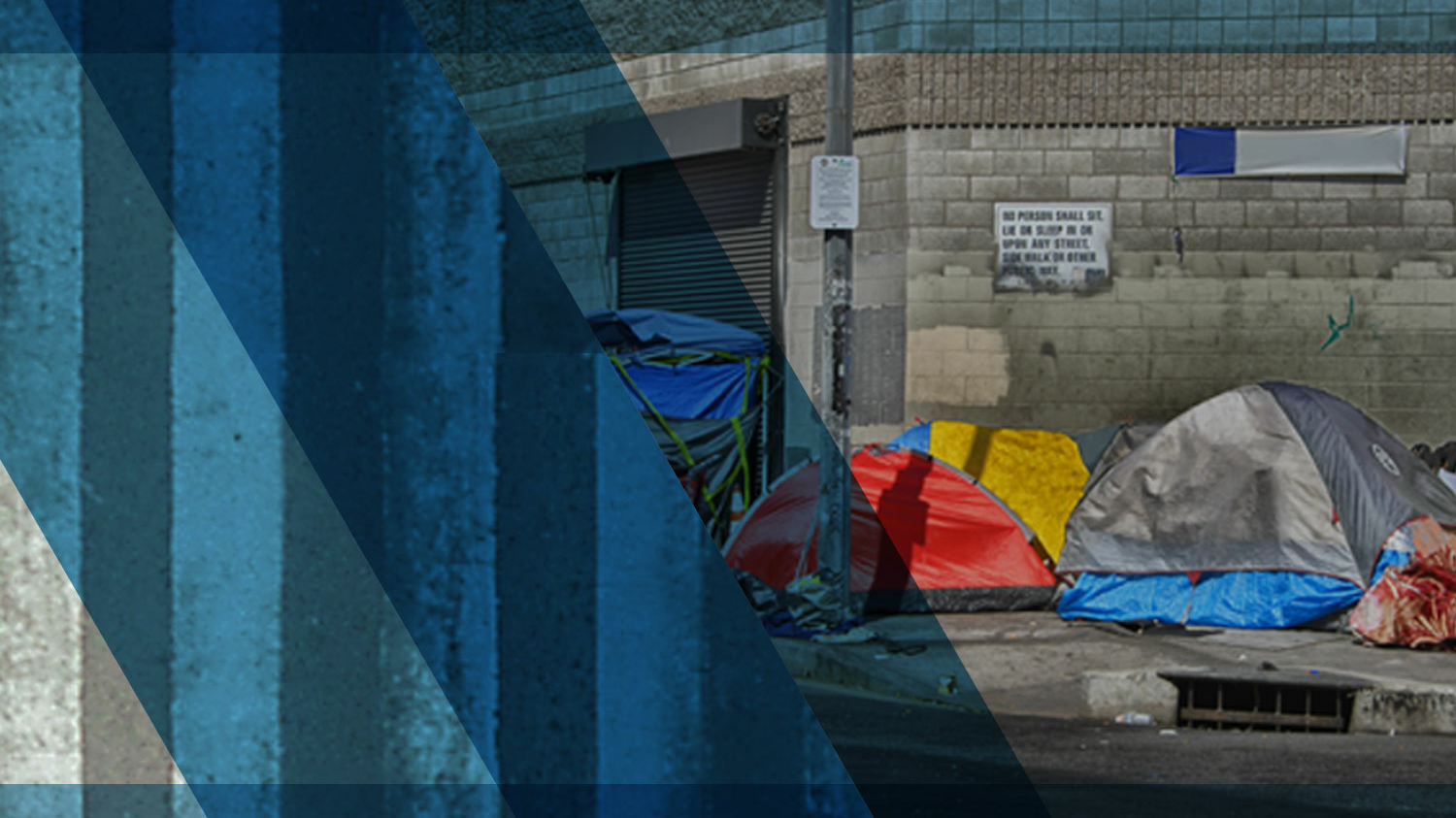
In the Luskin Summit session “Transit Impacts: Fewer Riders, More Homelessness,” experts in urban planning and public policy discussed how the COVID-19 pandemic has affected the intersection of public transit and homelessness. Brian Taylor, director of the Institute of Transportation Studies at UCLA Luskin, spoke about the social service role of public transit and how the pandemic has affected ridership among different groups. Public transit ridership dropped suddenly and dramatically at the beginning of the pandemic but has been increasing slowly since, with returning riders more likely to be low-income and people of color, Taylor said. Conan Cheung, a senior executive at LA Metro, explained that the agency has made frequent service and fare adjustments based on changes in ridership and revenue during the pandemic. In a study of U.S. and Canadian transit systems, Associate Dean and Professor of Urban Planning Anastasia Loukaitou-Sideris found that over half of the agencies reported that they see at least 100 individuals who are unhoused per day. Many agencies also noted the lack of clear policies and training on how to respond to and interact with unhoused people, as well as a lack of support from local and state governments in addressing homelessness. Steve Martingano of Denver’s Regional Transportation District shared how his department redirected funds from the police division to hire mental health clinicians, form a homelessness task force and hire a full-time outreach coordinator to address the issue of homelessness in public transit. — Zoe Day
UCLA Helps Civic Leaders Address ‘Vexing Issues’ During Annual Mayoral Summit
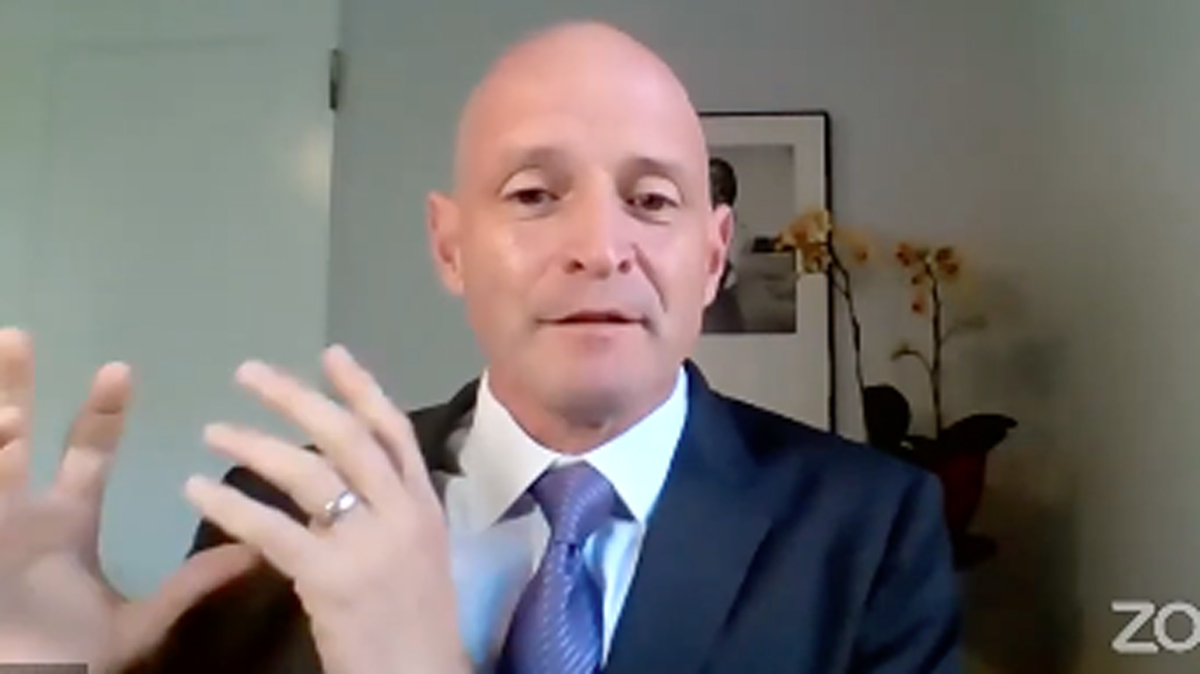
The setting was virtual this time, but UCLA again figured prominently when the Los Angeles Business Council convened a who’s who of California elected officials and civic leaders for its annual Mayoral Summit on Housing, Transportation and Jobs, an event that UCLA has co-hosted for 18 of its 19 years. “This event is near and dear to our hearts,” Chancellor Gene Block said in welcoming remarks. “As a public institution with a deeply rooted service mission, we view it as our obligation to help address the vexing issues facing our city.” Academic research figured prominently in the daylong event presented in partnership with the UCLA Ziman Center for Real Estate and the UCLA Luskin Center for Innovation directed by JR DeShazo, professor of public policy. He moderated a panel focusing on how to promote zero-emission vehicles in an equitable manner, noting that California’s policy investments have brought low-emission vehicles to 10% of sales, a notable accomplishment. “But we have failed miserably to make those policies beneficial to our low-income communities and communities of color,” DeShazo said. Richard Ziman, who is founding chair of the Los Angeles Business Council, opened the virtual summit, and Stuart Gabriel, professor of finance and director of the Ziman Center, led a session on economic recovery efforts. Jacqueline Waggoner, Miguel A. Santana and Michael Mahdesian of the UCLA Luskin School of Public Affairs Board of Advisors also spoke, as did public officials that included Los Angeles Mayor Eric Garcetti, Senate President pro Tempore Toni G. Atkins and Assembly Speaker Anthony Rendon.

Luskin Summit Illuminates Pathway to Park Equity
“A Landmark Opportunity for Park Equity,” the fourth webinar in the 2021 Luskin Summit series, focused on the importance of public parks and other outdoor spaces for the physical, mental and environmental well-being of communities. The Feb. 17 panel was moderated by Jon Christensen, an affiliate faculty member of the UCLA Luskin Center for Innovation. Angela Barranco, undersecretary at the California Natural Resources Agency, explained that the “COVID-19 pandemic has elevated and revealed the importance of access to the outdoors for all.” She noted that 1 in 4 Californians has zero access to parks within walking distance, and 6 in 10 Californians live in park-poor neighborhoods. These inequities can lead to severe health consequences and in some cases could be the difference between life and death, she said. California voters have approved multiple statewide environmental bonds recently, making this a “watershed moment for park access,” said Alfredo Gonzalez, Southern California director of the Resources Legacy Fund. Norma García-Gonzalez BA ’95 MA UP ’99, director of the Los Angeles County Department of Parks and Recreation, highlighted the important role that the public park system has taken on during the pandemic, including serving as winter shelters and vaccination sites, and providing 40,000 households with food through a partnership with Los Angeles Food Bank. “Investing in parks for Black and brown youth is justice reform,” García-Gonzalez said. “This is a call to action that we must work with local and state leaders to make critical investments to support Black and brown students and their futures.” — Zoe Day
