Undergrads Share Feedback at Forum
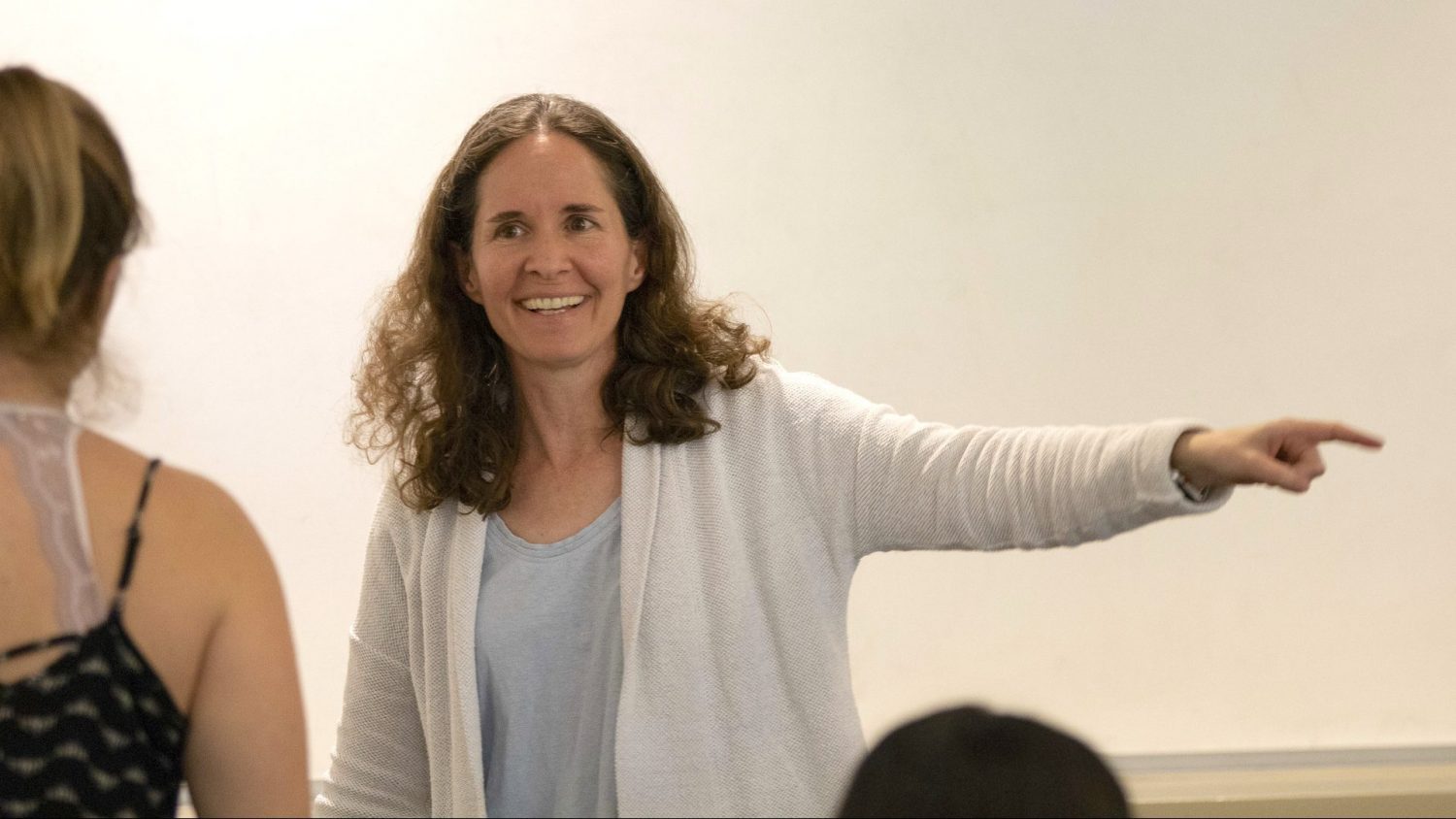
UCLA Luskin Dean Gary Segura responded to questions and concerns raised by Public Affairs pre-majors at this year’s Annual Undergraduate Forum held Wednesday, May 22. Chair Meredith Phillips and the Public Affairs staff were also on hand to answer questions. Prior to the event, the team conducted a survey to gather feedback from pre-major students about their experience. The undergraduates expressed appreciation for the interdisciplinary nature of the major, the close-knit environment and staff enthusiasm, and raised some concerns about curricular coordination, enrollment issues and reciprocal agreements on course requirements between UCLA Luskin and the College of Letters and Sciences. Segura addressed the issues raised in the undergraduate survey and fielded questions from students in attendance about upper-division courses and the experiential capstone projects that Public Affairs majors will complete in their senior year. The undergraduate major in Public Affairs was launched in fall 2018. As its first year comes to a close, the staff thanked students for their patience as they finalize the nuts and bolts of the program. The entire university has responded to the creation of the Public Affairs major, they noted, adding that UCLA Luskin staff are engaged in an ongoing dialogue with other programs, including the Honors College and Academic Advancement Program, as they smooth out the details of the major. Students collectively expressed appreciation for the undergraduate program’s responsiveness to their feedback. — Zoe Day
View a Flickr album of images from the Annual Undergraduate Forum.
Looking at the Life and Legacy of Nipsey Hussle
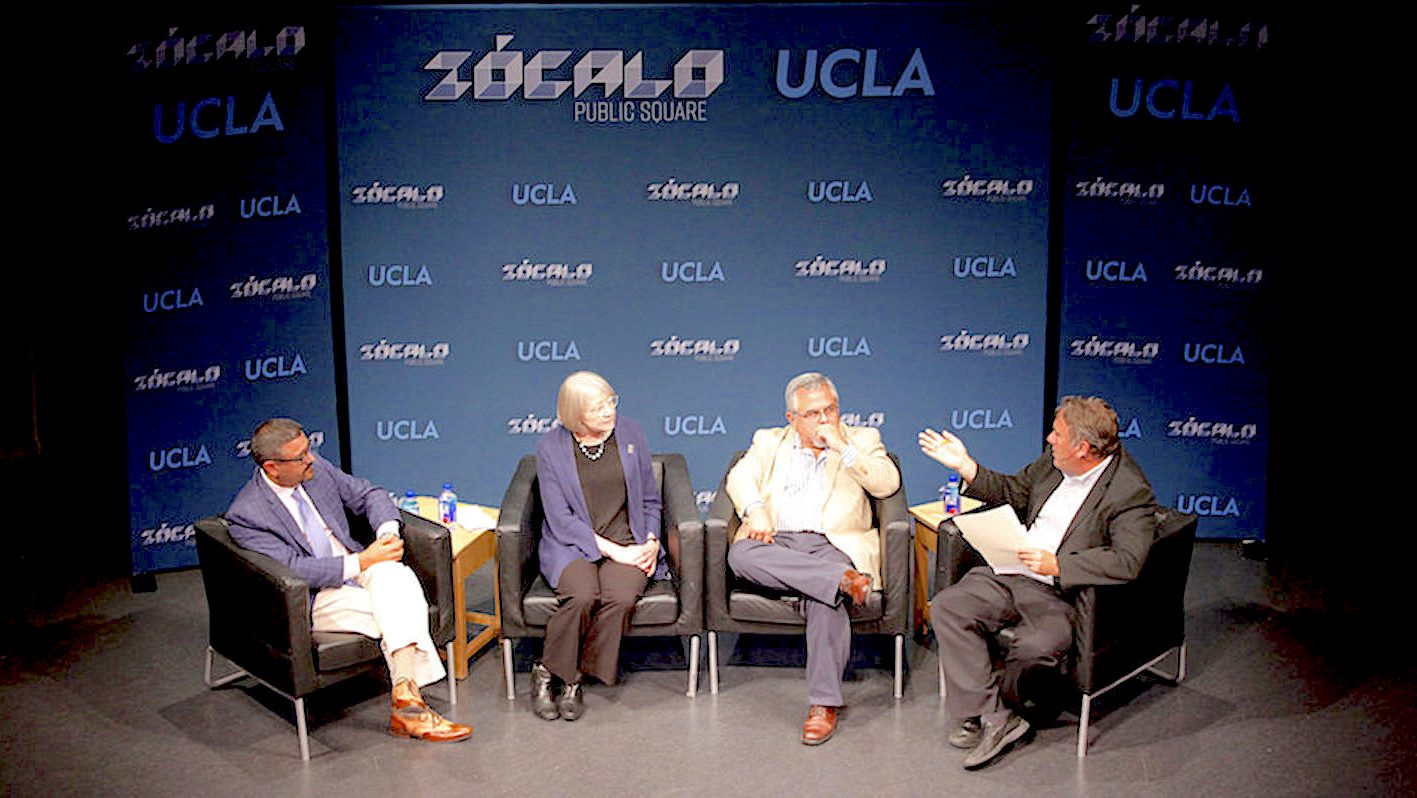
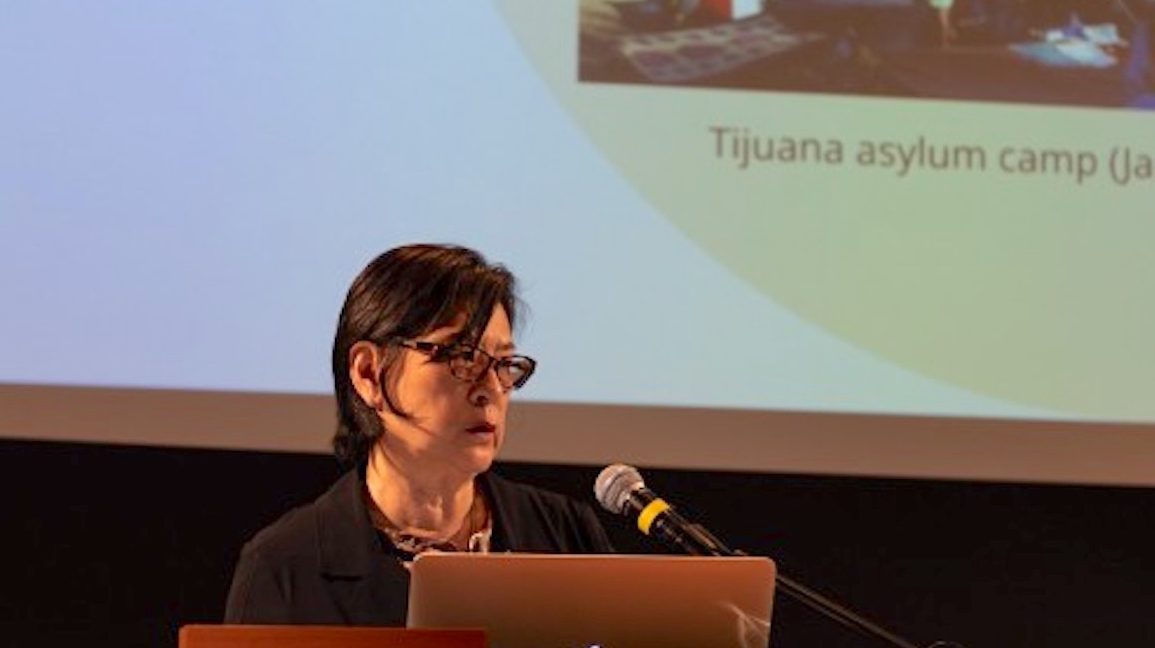
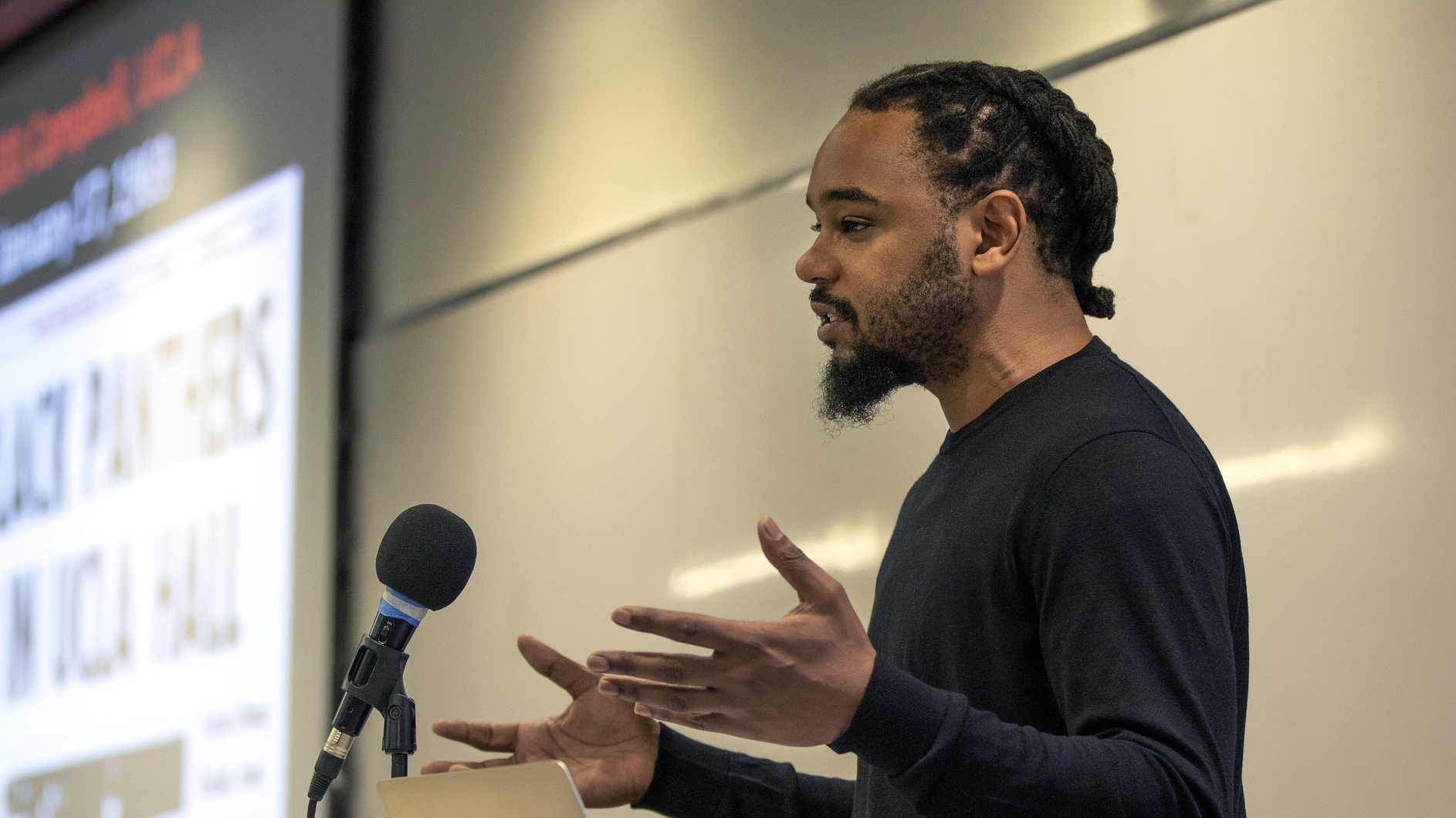
“The Hussle Is Real,” a conversation inspired by the life and work of Nipsey Hussle, was held May 14 at the UCLA Luskin School of Public Affairs. The event, organized by the student-run Luskin Black Caucus and UCLA Luskin’s Social Welfare Diversity Committee, included presentations by Latoya Small, assistant professor of social welfare; Michael Lens, associate faculty director of the UCLA Lewis Center for Regional Policy Studies; and Marcus Hunter, associate professor of sociology and chair of African American Studies at UCLA. The discussion went beyond the “gangster-rapper” label to examine Hussle’s contributions to the community and impact in the context of public affairs and urban space. “When you think about Nipsey Hussle, it’s not just the gangster rap, it’s also the entrepreneurship,” Small said. “He didn’t rent a shop, he purchased the building. He hired people that were undesirable to others and talked about promoting commerce … and building business legitimately.” Lens, associate professor of urban planning and public policy, provided “numbers and history” on South L.A.’s environment and long legacy of segregation to provide a framework for Hussle’s community work. “Nipsey was the embodiment of the power to affect positive change from the ground up, and his death undoubtedly leaves a hole,” Lens said of the rapper, who was slain in March. Hussle, who was born in 1985, during America’s “War on Drugs” era and its aftermath, was a survivor, Hunter said. He played samples of Hussle’s music, asking the audience to “consider what questions come up when you meditate on Nipsey’s contributions and tragic murder.” View photos of the event on Flickr.
Former Congresswoman Discusses Path to Political Office
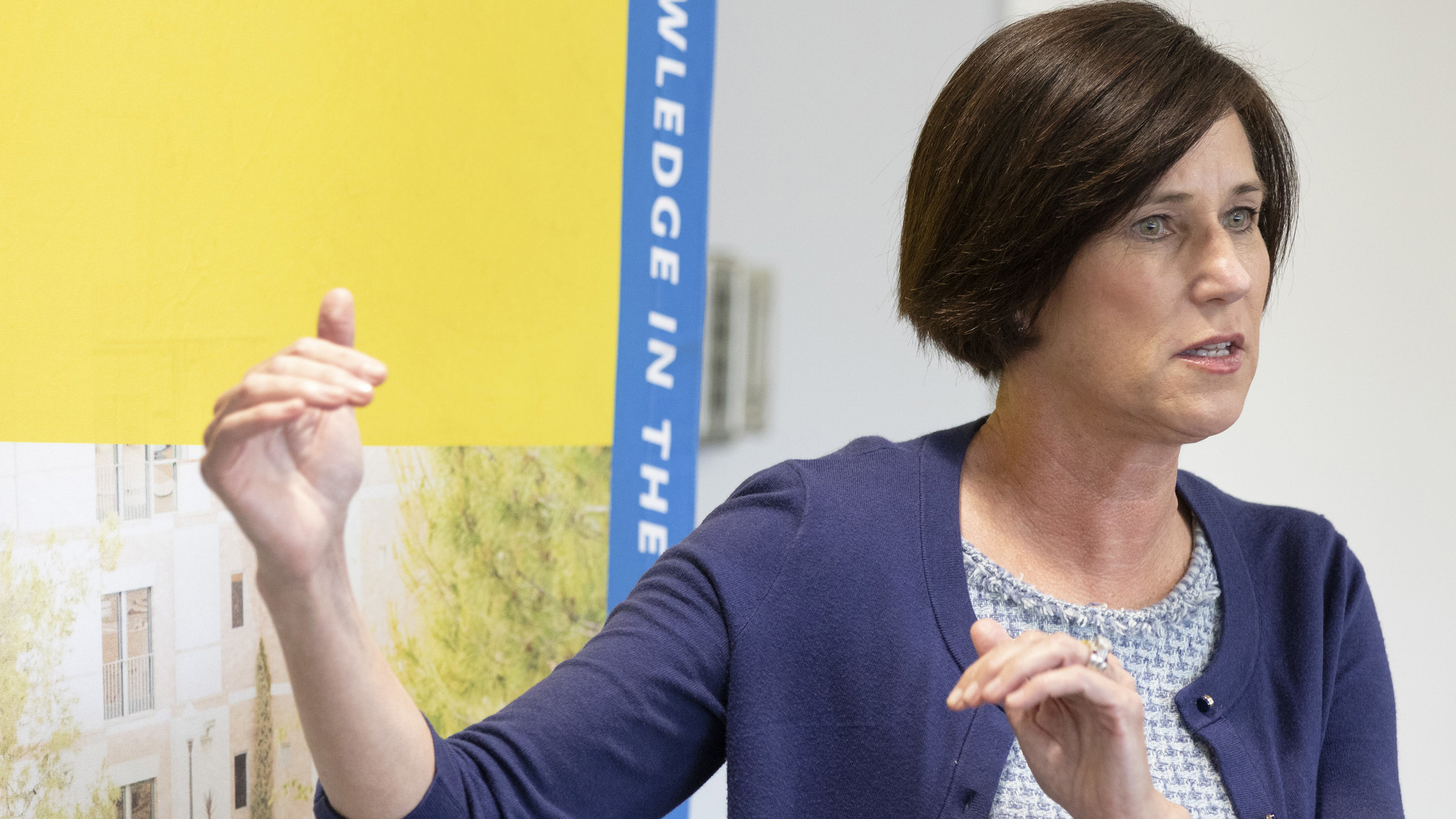
Mimi Walters, a member of the U.S. House of Representatives from 2014 to 2019, shared her personal pathway to political office, “From Orange County to Washington, D.C.,” at a noontime talk May 9 to an audience that included graduate students and undergraduates from the UCLA Luskin School of Public Affairs. The Republican former lawmaker, who represented California’s 45th district, also served previously in both the California State Senate and State Assembly. Walters talked about what it took to win campaigns from student government in high school to a seat on her local city council in Laguna Niguel to state and federal seats. For Walters, success has come through preparation that included volunteer work, participation in and support for other candidates, and fundraising. “I said, ‘If I really want to do this, I better learn how to campaign.’ So I got involved in other people’s races. I worked on other people’s campaigns. That is how I learned how to run a race.” She added, “The other thing … when you go and volunteer for somebody’s campaign and you someday want to run, they remember.” Navkaran Gurm, a first-year pre-major in Public Affairs, said he was impressed by Walter’s talk and how candid she was about what is required to seek elected office. “It was a good intellectual exchange. She gave us the facts and inside look at the life of a politician,” Gurm said.
Minority Fellowship Recipients Advocate in D.C.
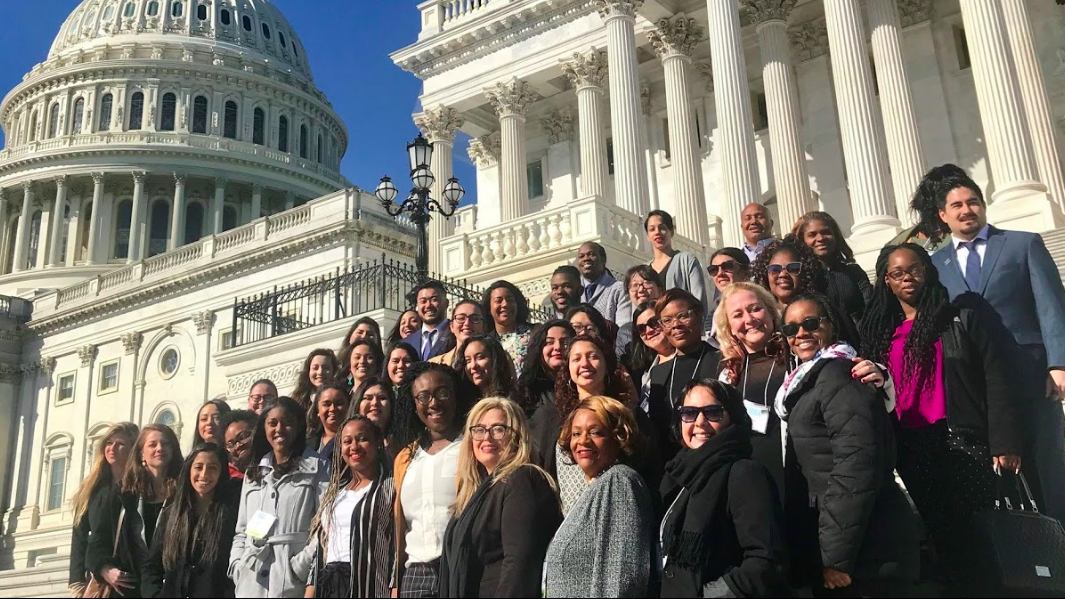
As awardees of the Council on Social Work Education’s (CSWE) master’s Minority Fellowship Program (MFP), UCLA Luskin MSW candidates Michelé Jones, Desiree Lopez and Jennifer Grijalva traveled this past March to Washington, D.C., where they gained valuable experience in policy and advocacy. The program aims to reduce health disparities and improve behavioral health care outcomes for racially and ethnically diverse populations by increasing the number of culturally competent master’s-level behavioral health professionals serving racial/ethnic minority populations. Recipients of the one-year fellowship receive specialized training, a monetary stipend and other professional development support. “The MFP program has provided me with professional development and access to mental health practitioners of color, which have been invaluable to my second year of social work education,” explained recipient Desiree Lopez. The 41 fellows gathered in Alexandria, Virginia, for the annual spring training and spent a morning on Capitol Hill, where they educated Congressional staff members about the importance of the MFP program. Grijalva described the spring conference as “a space filled with MSW students of color who were passionate about social justice issues around the country,” an experience that was “inspirational and empowering.” Jones was excited to use her skills as an advocate and gain a better understanding of policy during the training. “I was able to discuss the importance of having more mental health professionals of color in the field with members of the Senate in my own district. I left the training in D.C. extremely empowered and more prepared to begin my career,” she said.
Loukaitou-Sideris and González Study Link Between Gentrification and Traffic Collisions
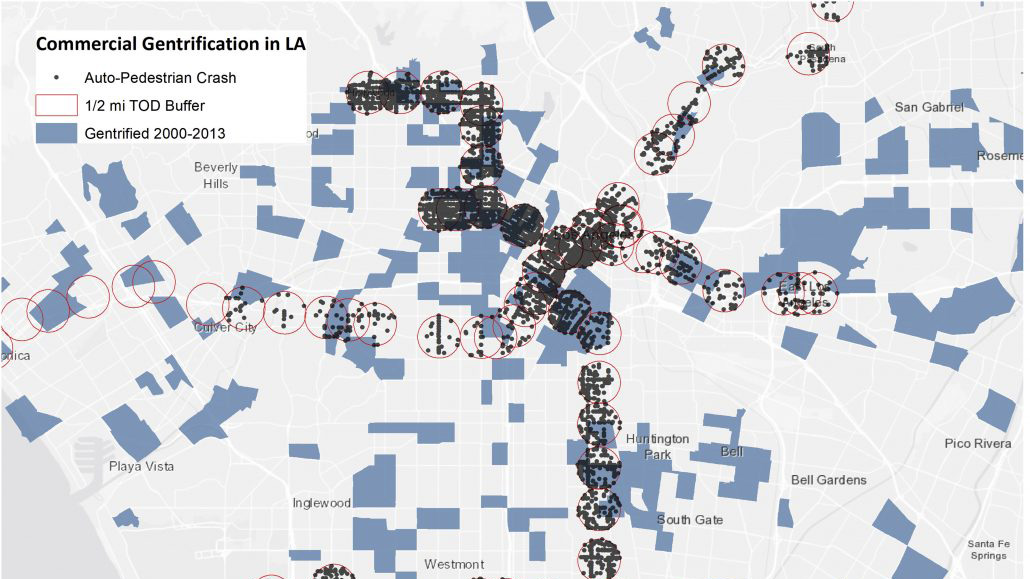
Anastasia Loukaitou-Sideris, professor of urban planning and associate provost for academic planning at UCLA; Silvia R. González, a doctoral student and researcher at the Center for Neighborhood Knowledge; and Karen Chapple of UC Berkeley conducted a study to analyze the relationship between gentrification, traffic safety and transit-oriented development (TOD). The study, “Transit Neighborhoods, Commercial, Gentrification, and Traffic Crashes: Exploring the Linkages in Los Angeles and the Bay Area,” analyzed the number of collisions near rail stations in L.A. County and the San Francisco Bay Area in both gentrified and non-gentrified areas. The authors had hypothesized that residential and/or commercial gentrification leads to more traffic collision due to increased traffic and increased use of two or more modes of transportation, but the study did not find a significant relationship between residential gentrification and traffic safety in Los Angeles County or the Bay Area. It did, however, find that pedestrians and cyclists are at a higher risk of collision around commercially gentrified stations. Loukaitou-Sideris, González and Chapple suggest that policymakers and urban planners pay special attention to commercially gentrified areas. They conclude that “complete street strategies, traffic calming measures, protected bike lanes, controlled intersections, and other traffic safety improvements and regulations can help respond to this threat” of traffic collisions around commercially gentrified TOD stations. The study is part of an ongoing research partnership with the Urban Displacement Project, a research and action initiative at UC Berkeley.
