UCLA Luskin Planning Team Receives National Award Project about age-friendly outdoor environments is honored by American Planning Association

A project by a team from the UCLA Luskin School of Public Affairs about age-friendly outdoor environments has picked up another honor — this time an Achievement Award presented by the American Planning Association (APA).

The winner is among 12 Achievement Award recipients chosen by a jury of planners as examples of good planning work. The recipients are recognized collectively at an awards luncheon held during APA’s National Planning Conference, which is set for May 6-9, 2017, in New York City.

The UCLA Luskin project was designated as a silver winner in the category: National Planning Achievement Award for a Best Practice. It had qualified for consideration at the national level by previously being honored in 2016 by the APA Los Angeles Section, which recognizes the “best of planning” from cities, agencies and nonprofits to consulting firms and individuals.

Anastasia Louaitou-Sideris

“Placemaking for an Aging Population,” funded by the Rosalinde and Arthur Gilbert Foundation and the Archstone Foundation, was led by principal investigator and Urban Planning professor Anastasia Loukaitou-Sideris. It provides information about the park needs and preferences of older, low-income adults living in inner-city neighborhoods.

Loukaitou-Sideris, who is also associate provost for academic planning at UCLA, worked on the study with Social Welfare professor Lené Levy-Storms and Madeline Brozen, associate director for external relations for the UCLA Lewis Center and the Institute of Transportation Studies, and program manager of the Complete Streets Initiative. Brozen is also an alumna of the Luskin Urban Planning program.

“Older adults represent a fast growing segment of the population, and U.S. cities are now beginning to realize the imperative of creating age-friendly environments,” Loukaitou-Sideris said in a previous story about the project. She said that while parks can offer many benefits to seniors, “if planners wish to see more seniors visiting parks, they should carefully consider their needs and tastes, and incorporate their voices in park design and programming. Our study seeks to do just that.”

Luskin graduate student researchers — and now alumni — for the project were Lynn Chen SW Ph.D. ’13 and Master of Urban and Regional Planning (MURP) graduates Liz Devietti, Hannah Gustafson and Lucia Phan. Lia Marshall, a doctoral student in Social Welfare, also was on the research team.

More information about the UCLA Luskin project and a list of all 2017 APA award winners may be found on the APA website.

Disadvantages Persist in Neighborhoods Impacted by 1992 L.A. Riots Little economic progress is found in areas most impacted 25 years ago by civil uprisings, UCLA Luskin researchers report

By Stan Paul

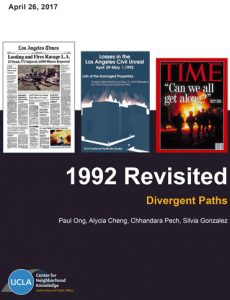
A new report by UCLA Luskin researchers finds that despite initiatives launched by community groups, foundations and governmental agencies in the aftermath of the 1992 Los Angeles riots, little has changed economically within the city’s most-damaged areas.

It has been 25 years since the tumultuous events that followed the acquittal of LAPD officers in the beating of Rodney King. In addition to more than 50 people who died and thousands of arrests, there was an estimated more than $1 billion in damage in and around South Los Angeles during the days-long riots, which garnered worldwide attention.

“By and large, these areas have not gotten better; in some instances, they have actually gotten worse,” said Paul Ong, director of the UCLA Center for Neighborhood Knowledge (CNK), who led a research team in assessing the condition of these areas over 25 years. The CNK is based at the UCLA Luskin School of Public Affairs.

Ong said the team examined demographic and economic data related to the area of the Rebuild L.A. program boundaries that were drawn up in 1992 in the aftermath of the civil unrest. These were based in part on curfew boundaries from the Watts riots in 1965, said Ong, also a professor of urban planning and social welfare in the UCLA Luskin School of Public Affairs.

The study is based on analysis of multiple data sources, and the researchers conducted separate analyses for six sub-regions. The work required extensive efforts to reconcile changes in census boundaries during the past two-and-a-half decades to ensure accurate statistics. The report, which was co-sponsored by the UCLA Institute for Research on Labor and Employment, shows that with the exception of the northeast section of South Los Angeles, unemployment and poverty have worsened in the remaining areas — traditionally among the most disadvantaged areas of the city.

In these areas, Ong said he suspects that “bigger forces were working against them,” such as lingering effects of the recession and growing inequality, which has affected L.A. County in general.

According to the report, per capita retail sales in these areas have fallen, due in part to a relative paucity of larger retailers in the area.

The team also noted that in 1992 South Los Angeles was predominantly African-American but is now home to Hispanics in higher proportions.

Ong said the study is unique in compiling statistics from three sources: the Los Angeles Department of Building and Safety, the Korea Central Daily newspaper in Los Angeles and the California Department of Insurance. This information showed that all areas were not affected equally.

The data focuses on communities in which organizations seeking to improve neighborhoods have energized and encouraged change, Ong said. “Without these efforts, the neighborhoods would likely be in far worse economic shape,” according to the report.

Findings and recommendations from the report include:

  • A renewed commitment to revitalizing the affected areas is critical to reshaping their future economic trajectories.
  • Renewed stakeholder efforts to address development challenges are integral.
  • People and place strategies should be inclusive, driven by local residents, leaders, businesses and organizations.

“The lesson of the last quarter-century is that much more work is needed,” Ong said.

View and download the report


A Speedy Solution to Networking A new format for the UCLA Luskin career event gives students direct access to alumni in their fields and fosters ideas about what they can do after graduation

By Zev Hurwitz

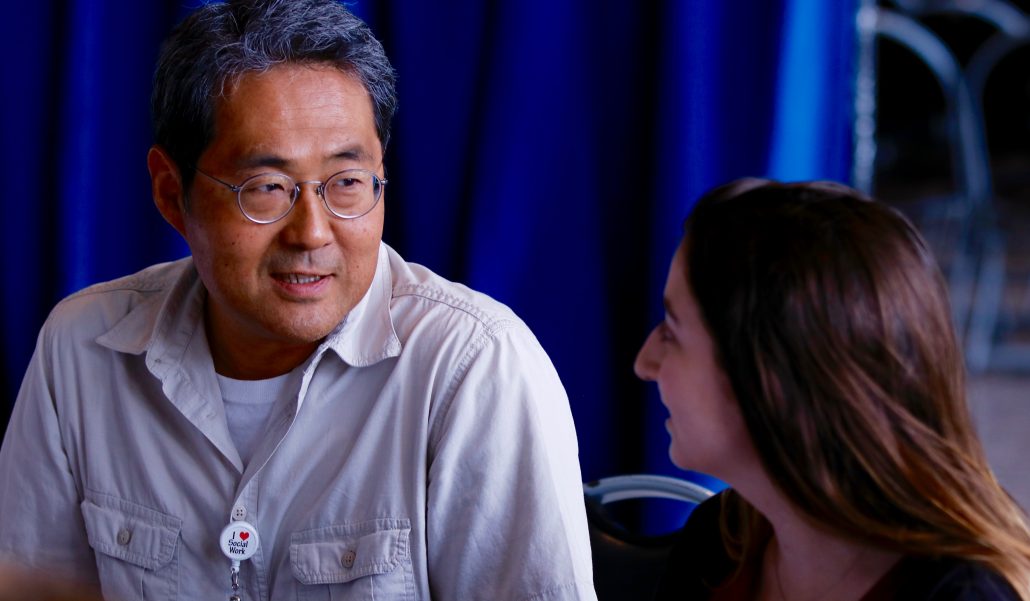
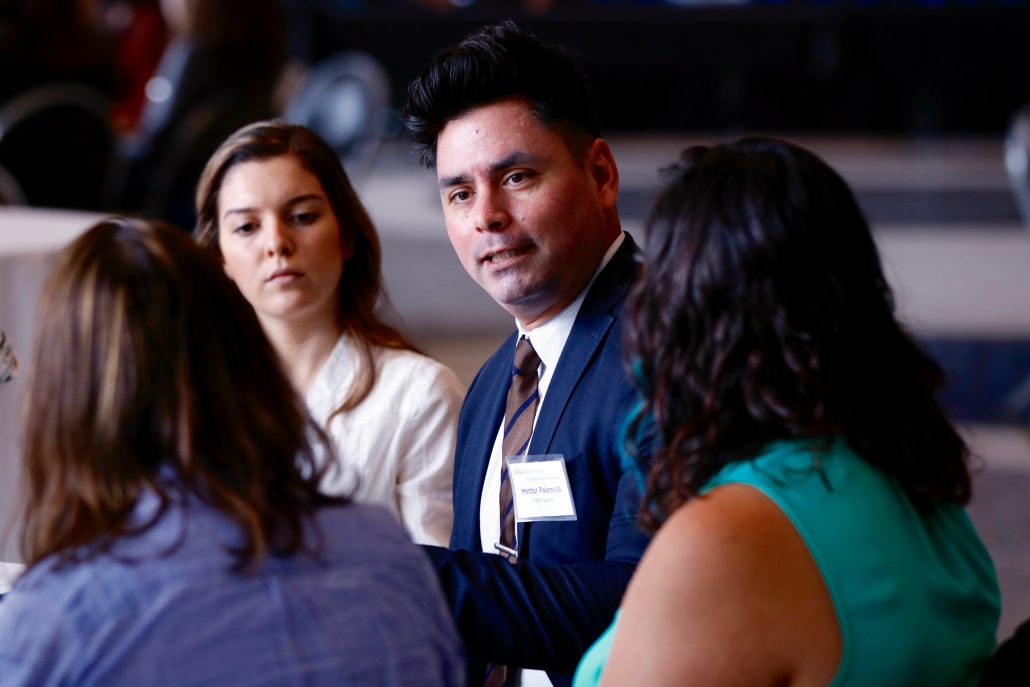
Taking a cue from speed dating, the UCLA Luskin School of Public Affairs held its first alumni career networking event in which graduates of the school’s three departments met with current students about professional opportunities.

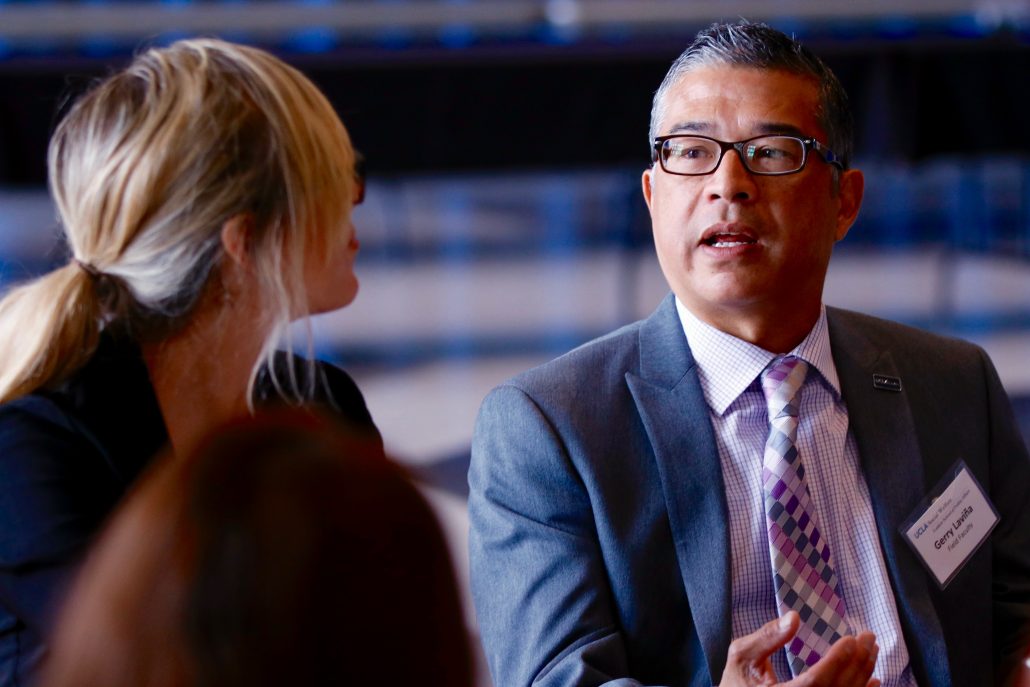
The event, held April 20, 2017, at the UCLA Faculty Center, was the first career development opportunity for students in which each employer was represented by an alumnus or alumna of the Luskin School.

Edon Cohanim, a first-year MPP student, said he appreciated the directness with which alumni provided tips on best practices.

“Alumni are more willing to help us and are more down-to-earth with us,” he said. “I got some advice on my career and how to pursue it, and they helped me understand what good moves are.”

Barbara Andrade-Dubransky MSW `00, director of program support at First 5 LA, said she hoped to help students understand more about career options in social welfare.

“There’s interest for students in knowing what’s going on out in the field, and I’m happy to share not only what I know about my organization, but I have relationships with other organizations, so I’m happy to share information to help students find other opportunities as well,” Andrade-Dubransky said.

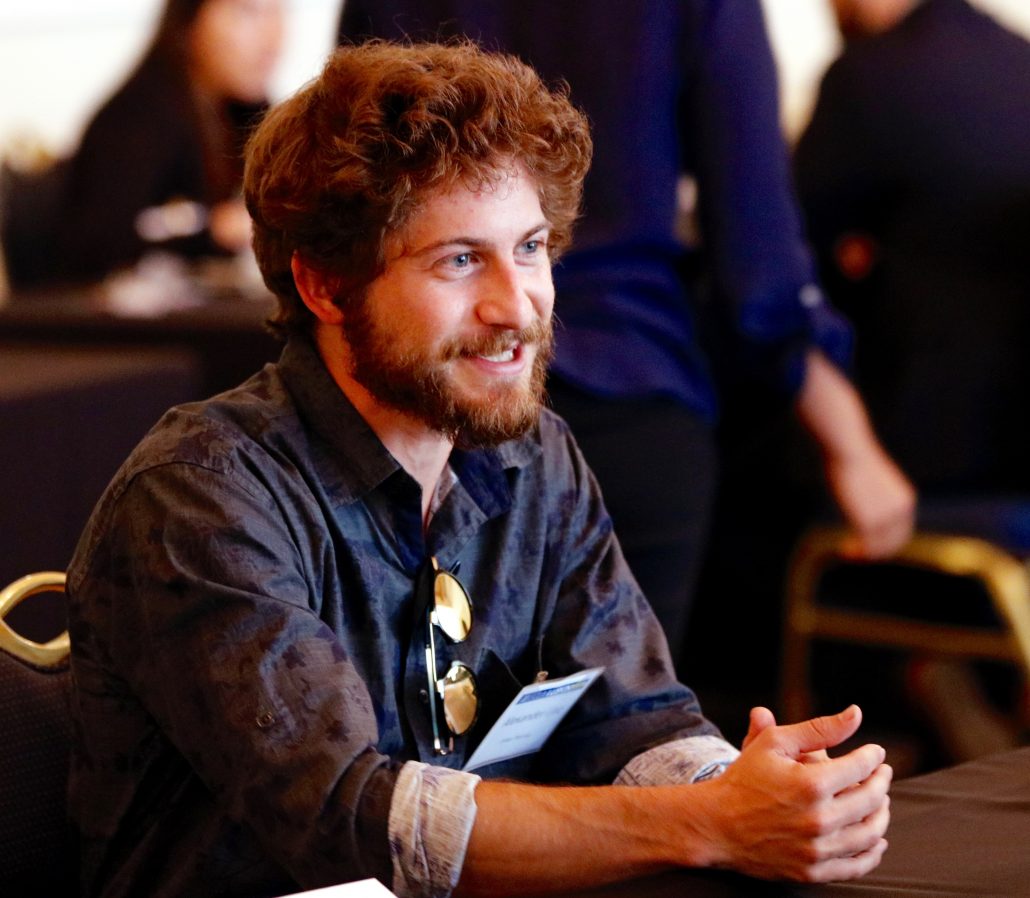
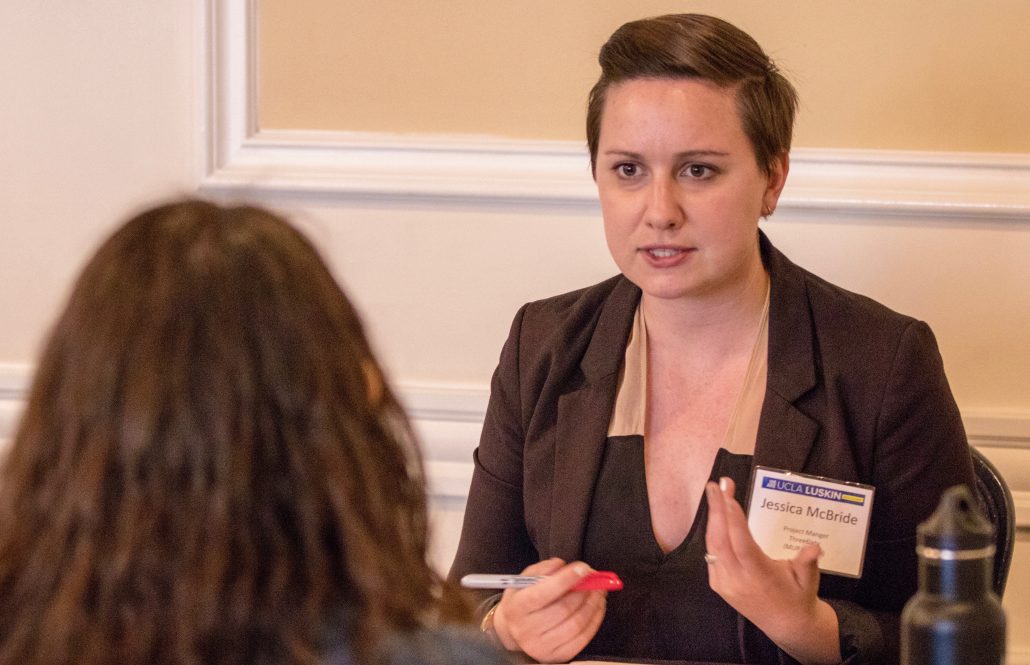
UCLA Luskin Career Services launched Alumni Career Connections in lieu of its annual career fair. In past years, Luskin had held career events that more closely resembled traditional job fairs. This year, students met one-on-one with alumni who graduated from the same department or who currently work in the student’s desired field. Each student had the opportunity to meet with up to three alumni over the course of an hour.

VC Powe, director of career services and leadership development at UCLA Luskin, said the change was in response to feedback from employers whose participation in the annual job fair had dwindled in recent years.

“For many employers, these small career fairs are passé,” she said. “I shared that with my student advisory committee, and one of the students said, ‘I want an alumni career fair.’ I lit up at the thought of that and said, ‘That’s a great idea!’”

Although many students attend career fairs in the hopes of finding a job, Powe noted that most UCLA Luskin students end up securing employment through networking.

“Networking, especially with alumni from your program, is extremely important,” she said. “This is more of a ‘We share a career-field, and am I prepared to do what you’re doing?’ kind of event.”

Alumni met with as many as eight students over the course of the evening. In all, 105 students and 42 alumni participated.

Jasneet Bains, a second-year, dual-degree graduate student in urban planning and public health, said she attended because she liked the structure of meeting with alumni from her programs and wanted to broaden her professional network.

“We were matched up with alumni who share our interests, and that’s very valuable,” Bains said. “They’re able to provide specific insight. Having gone through that process, they’re able to teach us about how to take knowledge from our program and apply that in the field.”

Adrian Cotta, a second-year MSW student, said he had no expectations about leaving the event with a job offer, but she hoped to learn from alumni who had the same educational experience as he did.

“I’m hoping to get some advice from people in the field to see how to begin a career — and make a new friend, if nothing else,” he said.

Wendy Yan MA UP `97, vice president of underwriting at affordable housing syndicator WNC and Associates, said that she attended not only to inform students about the field but also to recruit for summer internships and possibly full-time jobs.

“We’re always looking for good people,” Yan said. “Being an alum of the urban planning program, I know there are a lot of students who specialize in affordable housing, and so we’d love to have good people from Luskin work with us.”

Rima Zobayan MPP `01 currently works at Westat, focusing on an implementation project for national assessment on educational progress for the U.S. Department of Education.

“I was in the fourth class of public policy students, so there weren’t a lot of alumni who could participate in something like this for us,” Zobayan said. “It’s great for alums to have a chance to talk to current students, to share what we’re doing and to see what students’ interests might be.”

UCLA Luskin Urban Planning Students Help Solve Real-World Problems At annual springtime welcome day and networking event, MURP students showcase their research in capstone projects designed to help clients

By Stan Paul

Master of Urban and Regional Planning (MURP) students don’t have to wait until they graduate to identify and solve real-world problems. Working with clients and agencies, the students tackle issues in their respective fields long before receiving their diplomas from the UCLA Luskin School of Public Affairs.

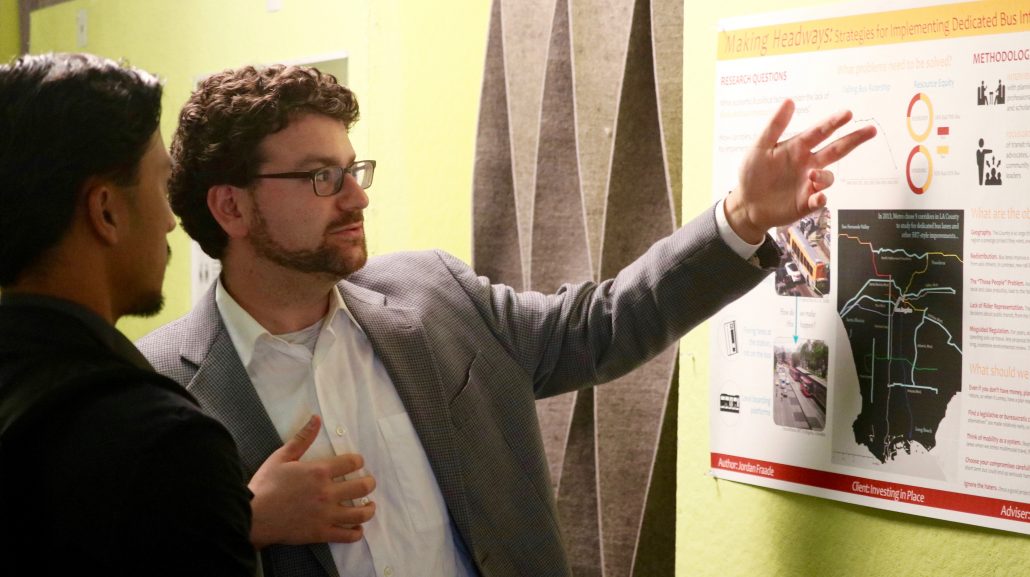
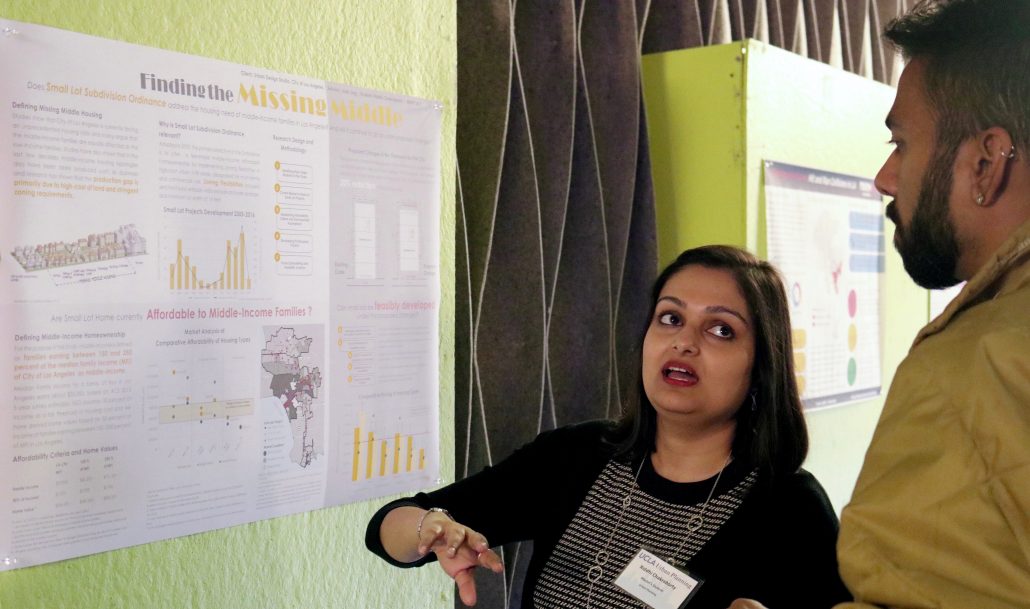
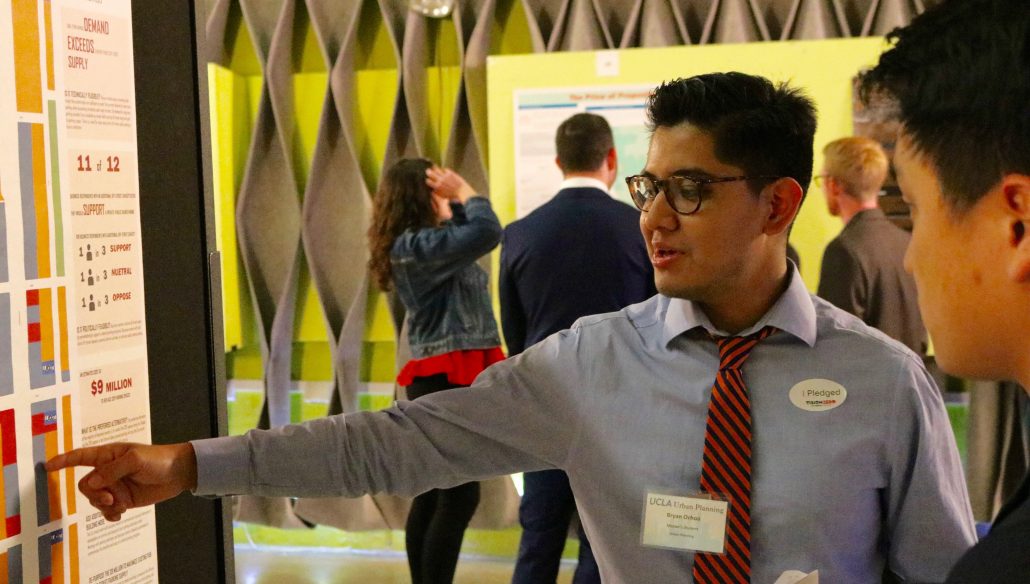
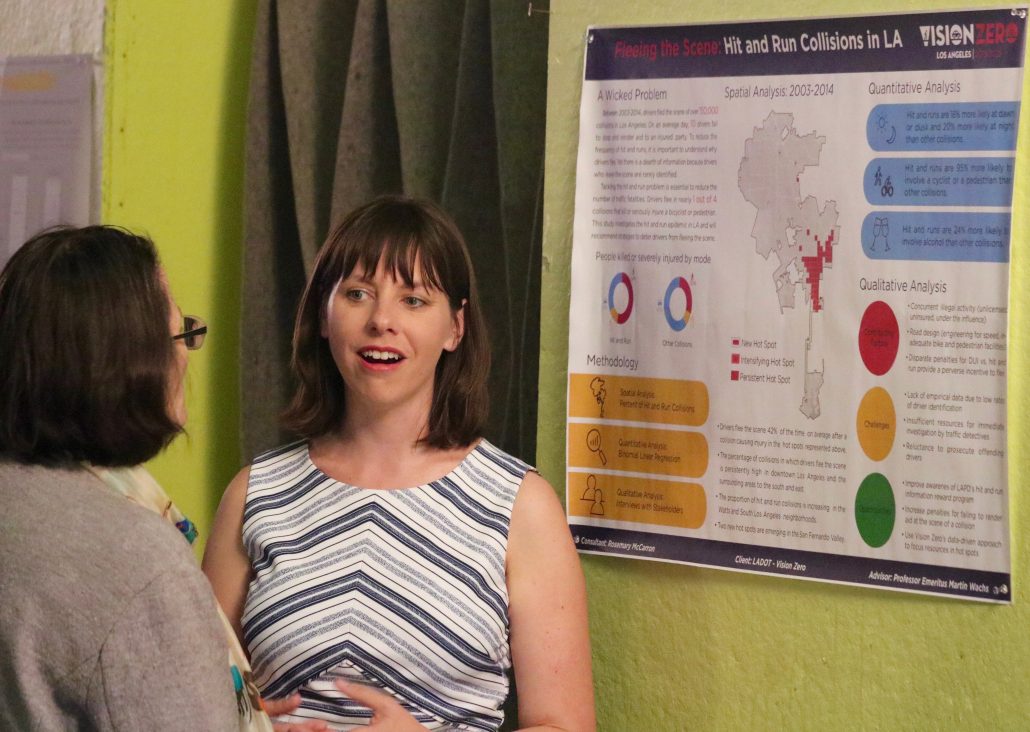
The capstone projects — yearlong research efforts — were on display April 6, 2017, at the department’s annual open house, during which prospective students are invited to meet current students, alumni, faculty and project clients. Each student project was represented by a poster that, to be effective, needed to easily convey information and be attention-grabbing.

“We have some students investigating the impact of a potential new bus line, looking at the role that accessory dwelling units might play in addressing the housing crisis,” said urban planning capstone instructor Brady Collins UP PhD ’16, citing a few examples of the nearly 40 displays. “One student is looking at the often overlooked, but important, role of women planners and planners of color in the history of Los Angeles. So there’s a really wide spectrum of different types of projects and different types of problems that the students are addressing.”

During the fall and winter quarters, Collins guides the second-year students from concept to completion. During the spring quarter, the students, who also work with urban planning faculty mentors, prepare their presentations for clients.

“It’s an intensive course,” Collins said. “We spend the first quarter looking at research design and research methods, how to write a literature review, how to conduct research. And we look at different ways of writing a policy report, or writing something that’s a little bit more focused.”

The projects can be based in Los Angeles or elsewhere, and may be with a planning firm, public agency or a nonprofit group. “UCLA has a reputation in the City of Los Angeles, so a number of organizations actually put their name in the hat and say: ‘We want a student from the master’s program to work with us. This is the problem or the research need that we have. And if there’s a student in the group that meets that, we would love to have them on board.’”

The reports and accompanying posters may also serve as a pathway to a job, Collins said, demonstrating to potential employers that “this is the knowledge and expertise that I have — this is what I am capable of doing as a planner.”

Alumnus David De Rosa MURP ’10, who works as a senior urban and transportation planner in Los Angeles, served as an evaluator for the projects. De Rosa said he was impressed by the quality of the posters, which seem to improve each year. “It’s an important skill in urban planning to communicate a complex issue in a simple way to be understood,” he said.

One example was “Planes, Trains, and Storm Drains: The Effects of Transportation Infrastructure on Water Runoff in Los Angeles County,” a project examining the region’s many transportation modes. Student Aviv Kleinman, whose client is the Southern California Association of Governments (SCAG), looked at ways the county can recapture storm water, and at policies that can be more sustainable.

“Water is precious,” Kleinman said. “Even though we had a really wet year this year we’re certainly going to be facing drought in the future. We already know what that’s like and it’s really important to recharge the ground water.”

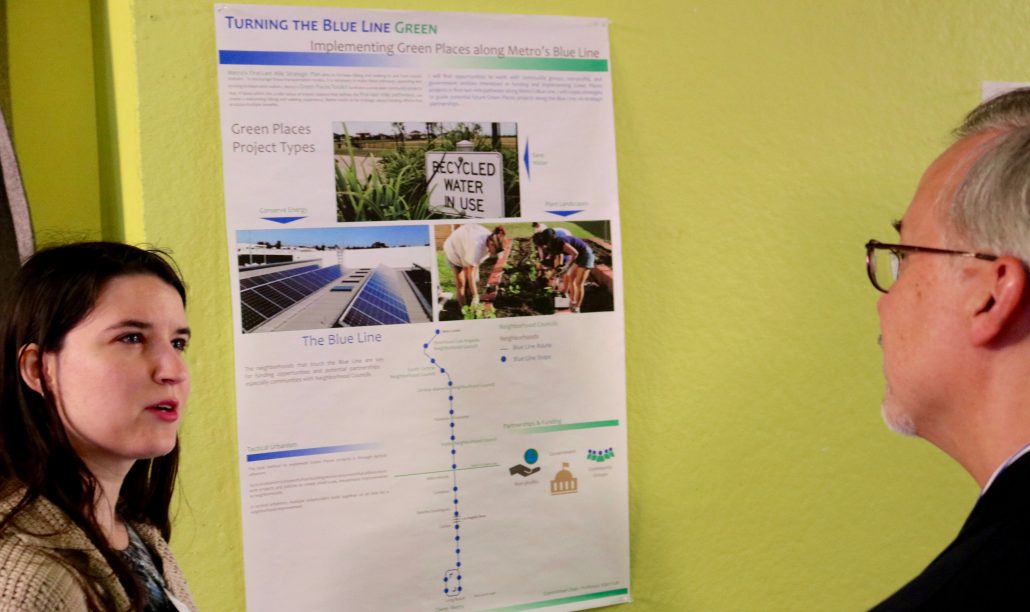
Caitlin Dawson’s project, “Turning the Blue Line Green: Implementing Green Places along Metro’s Blue Line,” is designed to help Los Angeles County Metro implement sustainable projects along pathways. Dawson wants to improve the experience for people on bikes and on foot who commute to transit centers. Solving this so-called “first last mile” problem will involve partnerships with communities, she said.

“Basically, what I’ve been looking at is how they can implement them through ‘tactical urbanism,’” Dawson said. “That’s a way to implement projects that are short term, and kind of try out strategies to see if it’s a long-term thing a community might want to do. It’s coordinating with a lot of community stakeholders.”

Among the faculty touring the displays was Vinit Mukjiha, chair of urban planning.

“I enjoyed seeing how our students were able to address real-world challenges and practical planning problems through sophisticated research projects,” said Mukhija, who also served as a student project adviser. “Their work was a good representation of both the range of challenges planners face and the wide array of research methods available to help address them.”

He also noted the interaction of current and future students.

“It was also nice to see the exchange of ideas between graduating second-year students, first-year students who are getting ready to think about their capstone projects, and admitted students who are raring to start their professional studies,” Mukhija said.

In other welcome day events, the UCLA Luskin’s Department of Social Welfare hosted newly admitted students at UCLA’s Ackerman Grand Ballroom on the same day. And the Department of Public Policy welcomed its admitted students on Monday, April 10, 2017, with a full slate of activities.

Prospective students for all three departments had the opportunity to tour the UCLA campus and hear from current students about the Luskin experience. They also were offered the opportunity to sit in on alumni panels and learn about student groups and resources, from financial aid to alumni services.
Eric Garcetti Named 2017 Commencement Speaker Mayor of Los Angeles will deliver keynote address at UCLA Luskin School of Public Affairs ceremony on June 16

By George Foulsham

Eric Garcetti, the 42nd mayor of Los Angeles, has been named the 2017 Commencement speaker for the UCLA Luskin School of Public Affairs.

Garcetti will speak during the Luskin ceremony at 9 a.m. on June 16 at Royce Hall on the UCLA campus.

“Mayor Eric Garcetti’s pathbreaking efforts on behalf of transportation infrastructure, livable Los Angeles communities and forward-thinking governance has had transformative impact on the City of Los Angeles and, indeed, the entire region,” said Gary Segura, dean of the UCLA Luskin School of Public Affairs. “Beyond his passionate work on the expansion of the region’s transportation network, he has used the office of the mayor to advance focused efforts toward reducing homelessness, enhancing environmental sustainability, and creating a safer and more just Los Angeles.

“This form of governance is a perfect reflection of the Luskin School’s intellectual commitment to human well-being at all levels,” Segura added. “It is our privilege to welcome him as our 2017 Commencement Speaker.”

Garcetti was first elected mayor of L.A. in 2013 and won re-election in this year’s municipal election. According to the mayor’s website, his “back to basics” agenda is focused on job creation and solving everyday problems for L.A. residents.

Garcetti was elected four times by his peers to serve as president of the Los Angeles City Council from 2006 to 2012. From 2001 until taking office as mayor, he served as the councilmember representing the 13th District, which includes Hollywood, Echo Park, Silver Lake and Atwater Village.

Garcetti was raised in the San Fernando Valley and earned his B.A. and M.A. from Columbia University. He is the son of former L.A. County District Attorney Gil Garcetti.

Eric Garcetti studied as a Rhodes Scholar at Oxford and the London School of Economics and has taught at Occidental College and USC. A fourth-generation Angeleno, he and his wife, Amy Elaine Wakeland, have a young daughter. He is a lieutenant in the U.S. Navy Reserve and is an avid jazz pianist and photographer.

Learn more about the 2017 Commencement at UCLA Luskin.


UCLA Researchers Seek Juvenile Justice Alternatives for Children Under 12 UC study indicates that a minimum-age standard is needed to protect California children from prosecution in the juvenile court system

By Stan Paul

Dr. Elizabeth Barnert, left, and Laura Abrams. Photo by George Foulsham

Although Laura Abrams and Dr. Elizabeth Barnert come from opposite ends of the UCLA campus, their work in their respective academic professions meets at the intersection of health and juvenile justice.

A recent University of California study led by Abrams, professor of social welfare in the UCLA Luskin School of Public Affairs, and Barnert, an assistant professor of pediatrics in the David Geffen School of Medicine at UCLA, offers a powerful rationale for shielding children 11 years old and younger from prosecution and incarceration in the state’s juvenile justice system.

“Children in the juvenile justice system literally meet the definition of children with special health care needs,” said Barnert, who worked with Abrams as members of a team affiliated with the University of California Criminal Justice and Health Consortium. Prior to their study, which was recently published in International Journal of Prisoner Health, the issue in California was not on anyone’s radar, they said.

“Kids in conflict with the law are kids that typically have unmet health needs. We see a lot of undiagnosed depression, ADHD and learning disabilities — or absentee parents who can’t support their children due to working three jobs, deportation, imprisonment or substance abuse,” Barnert said. “When we prosecute these children or lock them away, we’re putting them in a system that traumatizes them further and often makes their problems worse.”

The UCLA study brought together UC experts from social welfare, medicine, psychology and psychiatry, law and criminology, as well as community partners from organizations such as the Children’s Defense Fund-California and the National Center for Youth Law.

“Our findings provide a rationale for why California should have a minimum age for entering the juvenile justice system and why children 11 and younger should be excluded,” Barnert said. “The study recommendations are based on international human rights standards, guidelines from organizations like the American Academy of Pediatricians, and medical evidence that children’s brains do not fully mature until their mid-20s.”

Added Abrams: “The United Nations Convention on the Rights of the Child has established a standard on children in conflict with the law. The convention states that every country should have a minimum age of criminal responsibility, or what we refer to as a minimum age of juvenile justice jurisdiction. The United States does not have this type of law at the federal level, however, so it is up to the states to determine.”

Abrams pointed out that protections for minors already built into current state law are based on the capacity or the intent to commit a crime, as well as the competency to stand trial. California’s 58 counties, however, set many of their own juvenile probation standards. Therefore, “there’s no way to insure, without a minimum-age law, that state laws around capacity and competency are being implemented fairly and without geographic or racial disparities. There is no statewide oversight of these mechanisms for protecting children,” Abrams said.

Findings and recommendations from the UC study and related policy briefs prepared by the researchers include:

  • Children should be held less culpable under criminal law, given their expected developmental immaturity, as repeatedly recognized in recent U.S. Supreme Court decisions.
  • Children have a diminished capacity to make intentional decisions regarding participation in crimes or to understand that an act was morally wrong.
  • Children have less developed abilities to understand court proceedings and meaningfully participate, emotionally or cognitively, in working with attorneys to wage their own defense.

California currently has no law that specifies a minimum age for prosecuting and imprisoning minors. But a new state senate bill, SB 439, which incorporates the research and recommendations in the UC study, would change that by amending sections 601 and 602 of the California Welfare and Institutions Code related to juvenile court jurisdiction. In particular, the bill would substitute current references to “any person under 18 years of age” with language specifying individuals “ages 12 to 18.”

In its first hearing on April 4, the senate’s committee on public safety passed the bill, which was then referred to the senate appropriations committee, the next step in the legislative process. The bill is part of a package of criminal justice reform bills put forth by the legislators in March.

Proposed amendments and revisions to SB 439 can be found online.

Despite Ongoing Meningitis Outbreak, Vaccination Among Gay Men Remains Low Limited 2-dose completion among HIV-positive men puts them at particular risk, new study shows

Despite a yearlong outbreak of invasive meningococcal disease in Southern California primarily affecting gay and bisexual men, less than 27 percent of men who have sex with men (MSM) in Los Angeles County have been vaccinated for meningitis.

The findings released Thursday, March 30, 2017, by the California HIV/AIDS Policy Research Centers in collaboration with the UCLA Luskin School of Public Affairs, the Los Angeles LGBT Center and APLA Health call for more education about the disease and more places offering immunization throughout Southern California at venues where gay and bisexual men socialize.

More than 500 men were interviewed about their knowledge of the meningitis outbreak by UCLA Luskin’s Ian Holloway, an assistant professor in the Department of Social Welfare, and teams of researchers who visited venues throughout Los Angeles County. Most of the canvassers were current UCLA students or recent graduates.

“Our rapid-response research suggests that coordinated efforts to standardize data collection about sexual practices in conjunction with immunization will enable better tracking of meningitis vaccination among gay and bisexual men,” said Holloway, who is also the director of the Southern California HIV/AIDS Policy Research Center.

Meningococcal disease is often characterized with sudden onset of high fever, headache, nausea, vomiting, rash, stiff neck and confusion, which can lead to rapid septic shock and death if not treated quickly. Vaccination is highly effective and can prevent the disease. The current outbreak in Southern California is the second in the area in recent history. A 2014 meningitis outbreak led to the deaths of three gay men in their 20s.

Despite the outbreak and vaccination recommendations from the California Department of Public Health, the majority of respondents interviewed by the UCLA team were not protected against meningitis.

Holloway noted that HIV-positive people are at particular risk for developing serious health issues if infected with meningitis and are recommended to receive a two-dose primary series of meningitis vaccination. Few HIV-positive men surveyed by Holloway’s team had received two doses of the vaccination.

“Primary care doctors who treat gay and bisexual men and HIV-positive people should talk to their patients about the ongoing outbreak and make sure they receive the full recommended dosing,” said Phil Curtis, director of government affairs at APLA Health.

The study praises the efforts of the Los Angeles County Department of Public Health Immunization Program, which distributed free vaccines, and of participating community-based organizations such as AIDS Healthcare Foundation and the LA LGBT Center, but researchers concluded that more needs to be done.

In addition to Holloway, study authors include Elizabeth Wu and Jennifer Gildner from the Southern California HIV/AIDS Policy Research Center, and Vincent Fenimore and Paula Frew from Emory University.

Learn more about Ian Holloway and the meningitis study in this video:

Honored for Contributions to Gerontology and Geriatrics Education UCLA Luskin adjunct professor emerita JoAnn Damron-Rodriguez is recognized as a leading educator in the field of aging

By Stan Paul

JoAnn Damron-Rodriguez, adjunct professor emerita of social welfare at the UCLA Luskin School of Public Affairs, has become the first UCLA faculty member to receive the Clark Tibbitts Award from the Association for Gerontology in Higher Education (AGHE).

Damron-Rodriguez received the 2017 award, which is given each year to an individual who has made an outstanding contribution to the advancement of gerontology and geriatrics education, at the Washington, D.C.-based AGHE’s annual meeting held March 10, 2017, in Miami. The award honors Clark Tibbetts (1903-1985) as an architect of the field of gerontological education.

AGHE, which has bestowed the award annually since 1981, is dedicated to education, training and research programs in the field of aging, and counts more than 160 institutional members throughout the United States, Canada and abroad.

In accepting the award, Damron-Rodriguez, a licensed clinical social worker who earned master’s and Ph.D. degrees in social welfare at UCLA, delivered a lecture titled, “Gerontology: Cultural Change, Competence and Creativity.”

“Gerontologists are taking the lead worldwide to build, with our communities, the future of purposeful living for the 50-plus population,” said Damron-Rodriguez, who has previously received UCLA’s Distinguished Teaching Award. She is a federally appointed member of the Veteran’s Health Administration Gerontology and Geriatrics Advisory Committee.

On the Job Training UCLA Luskin alumni return to campus to share career insights and tips with students seeking full-time and summer work

By Zev Hurwitz

With second-year Luskin students searching for career opportunities and first-year students looking to lock in summer placements, the UCLA Luskin School of Public Affairs presented an alumni panel to give timely advice about what types of jobs might be out there in the public service sector.

At an evening panel discussion hosted by Luskin School Career Services on March 9, 2017, alumni of all three UCLA Luskin master’s programs spoke about working professionally with local governments and how their degrees opened those careers as possibilities.


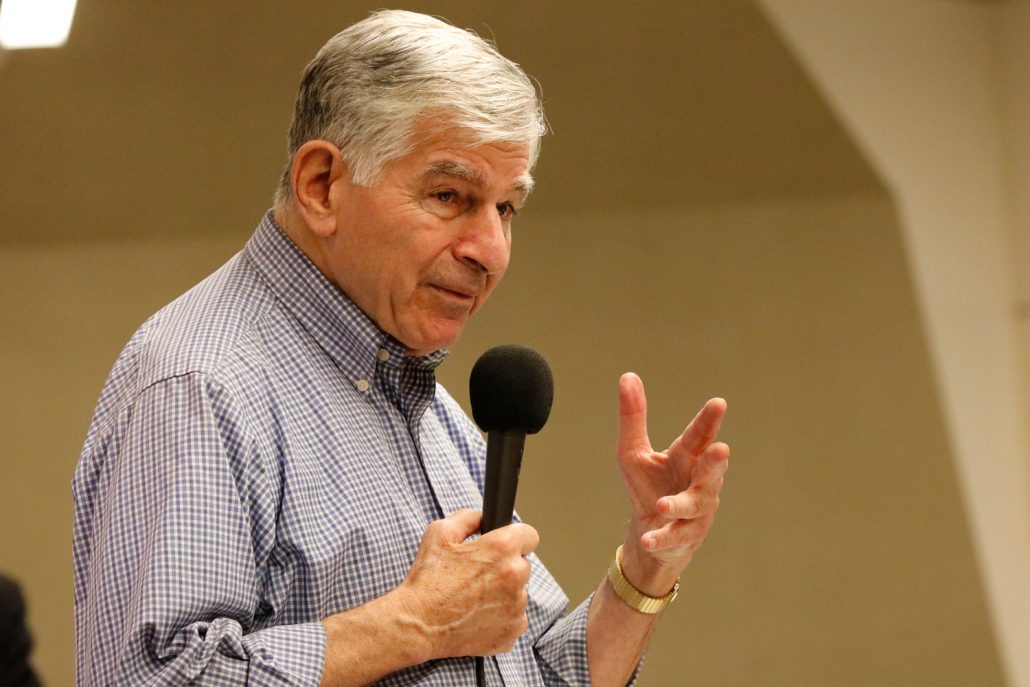
Former Massachusetts Gov. Michael Dukakis, who has taught as a visiting professor at the Luskin School each winter for more than 20 years, spoke about the opportunities for Luskin students to engage in public service, and he challenged the audience — mostly current Luskin students — to make strides in addressing the world’s issues.

“Five-sixths of the world today is conflict-free,“ Dukakis said. “The challenge now is how do we get the remaining one-sixth to join the other five-sixths? I just hope that, in addition to everything else you’re doing, you’ll be working hard for that kind of future.”

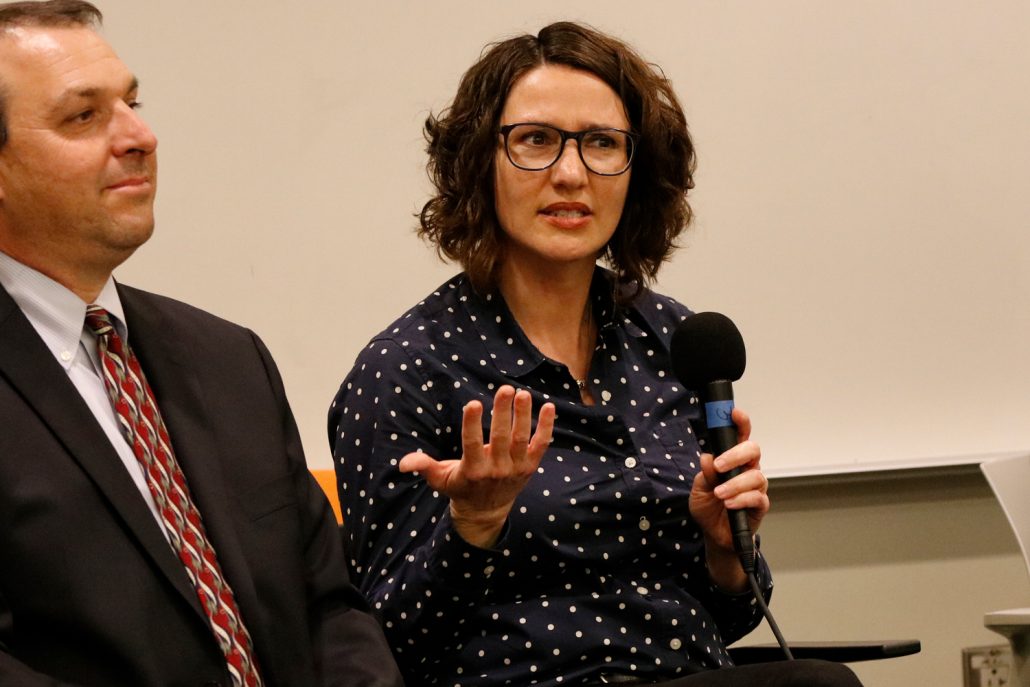
Five UCLA Luskin alumni spoke on the panel, which was moderated by Emily C. Williams MPP ’98, a member of Luskin’s first-ever graduating Master of Public Policy class. Williams noted that the panel’s academic diversity demonstrated the value in having cross-educational opportunities for current students, and she encouraged the audience to enroll in courses in other disciplines.

“It’s really nice that we have this great array of talent from all three departments in the school,” Williams said. “What was nice, for those of us who took classes outside our department, is that we really got to know some of the people outside of our programs, which lends itself to great working relationships.”

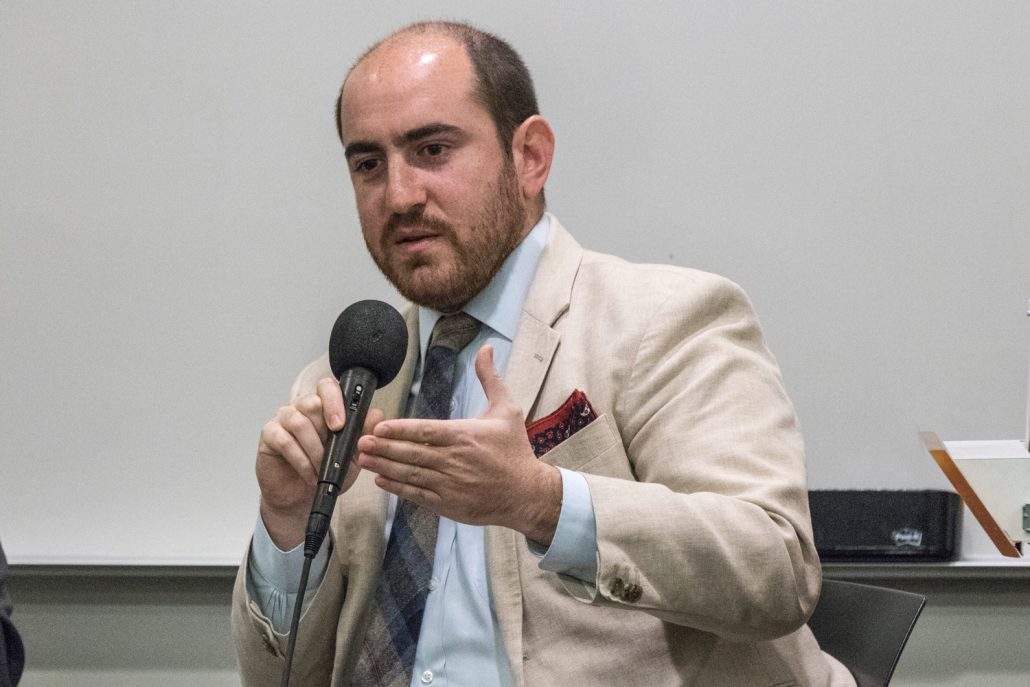
Paul Weinberg MPP ’98 is now emergency services administrator in the Office of Emergency Management for the City of Santa Monica. Weinberg spoke about how his schooling — Dukakis’ course in particular — gave him important insight into professionalism.

“Always return your phone calls — I cannot tell you how important that is,” Weinberg said. “You’ve got to find a way to acknowledge people reaching out to you,” attributing that advice to Dukakis. “Also, never say or write anything you don’t want to see on the cover of the L.A. Times. If you think about that now, that is more important than ever because [if] you put something out there in social media, it’s everywhere.”

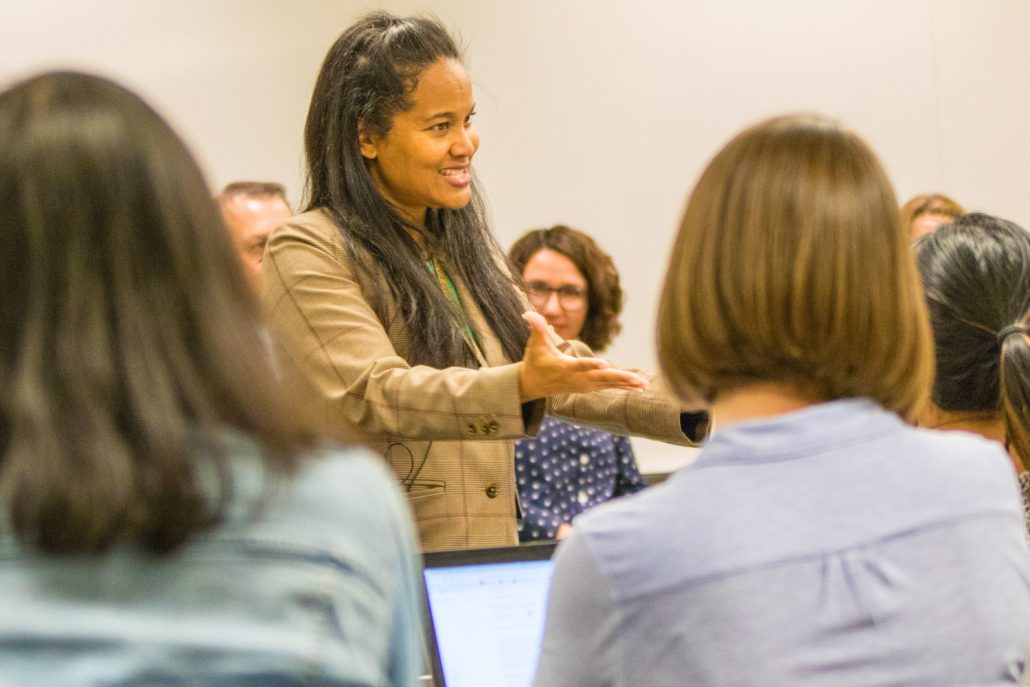
Nahatahna Cabanes MSW ’13 is director of the Retired and Senior Volunteer Program at L.A. Works. As a former Bohnett Fellow, Cabanes had the opportunity to work in the administration of former L.A. Mayor Antonio Villaraigosa while a student at Luskin. She said her current job is different from her role in the mayor’s office, but both jobs speak to her interests.

“It’s because I’m a little bit bipolar in term of my interests that I still have the compassion that drove me to social work, but at the same time, I’m a community organizer at heart and I love the world of politics,” Cabanes said. “I sort of balance between the macro and the micro.”

Molly Rysman MA UP ’05 is now the housing and homelessness deputy for Los Angeles County Supervisor Sheila Kuehl. Rysman discussed her experience bringing a priority issue to the mainstream of local politics.

“When I joined [Rysman’s] office, I worked really hard during her campaign to educate both her and her challenger that homelessness was an important issue — because back then you had to actually tell elected officials to care about homelessness,” she said. “Now I get to work on an issue that’s top of the agenda.”

Also serving on the panel were Daniel Rodman MURP ’14, now transportation manager in Mayor Eric Garcetti’s office, and Everado Alvizo MSW ’08, a former Bohnett Fellow who now works as a project coordinator and registered associate clinical social worker for Special Service for Groups.

VC Powe, director of career services and leadership development at Luskin, said that giving opportunities for current students to engage with alumni is critical in providing a realistic idea of what life after UCLA will be like.

“When we have representatives from an organization talk about their work, they’re going to give you all of the formal, appropriate ‘yes-you-need-to-know’ detailed background about the organization,” Powe said. “When you’re talking to an alum, they’re also going to give you the inside story and they’re going to be honest. The alum knows what the students have learned here, so they can tell them how to tailor their experience to the jobs they’re seeking. I think that’s a very important difference.”


Language, Power and What Resistance Looks Like Institute on Inequality and Democracy at the UCLA Luskin School of Public Affairs co-sponsors talk by UC Berkeley scholar Judith Butler

By Stan Paul

“We are the people. The mighty, mighty people. Fighting for justice and liberation …”

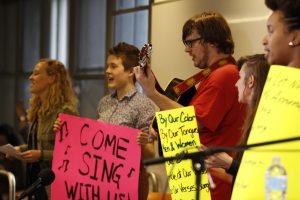
Signs and songs preceded the talk at the UCLA Luskin School of Public Affairs. Photo by Aaron Julian

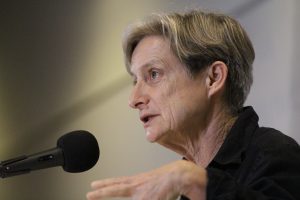
Signs and song — the trappings of traditional protest — served as prelude to a talk by UC Berkeley scholar Judith Butler at a gathering titled, “This is What Resistance Looks Like,” on Feb. 15, 2017, at the UCLA Luskin School of Public Affairs.

For Butler, the Maxine Elliot Professor in the Department of Comparative Literature and the Program of Critical Theory at Berkeley, contemporary resistance in a time of “shared uncertainty” may not look exactly like your parent’s or grandparent’s form of protest.

“The de-politicized public needs to be re-politicized,” she said, arguing that “the people have to consent … and have the power to withdraw consent.”

Citing the recent presidential election’s low overall voter turnout, Butler emphasized the importance of figuring out how to “bring the non-voter back into politics.” For her it raised further questions such as, “Who are the people and what is the popular will?”

Butler, who is active in human rights issues, as well as gender and sexual politics, also joined a panel of scholars to provide her “thoughts in progress” about the possible forms that resistance might take in a new political era.

In pondering this, Butler said traditional protests and the presence of large crowds in the streets — such as during the January Women’s March on Washington — may continue, but resistance may also come from unexpected places. “We will have to fight for a very strong freedom of the press,” she said, noting that news media have been under attack from the new president.

UC Berkeley scholar Judith Butler spoke about the resistance movement and recent political events. Photo by Les Dunseith

“Opposition is one term that suggests that our political structures are basically intact,” she said. “Now we’re in some different kind of trouble. The fear we have, I think, is that we’re actually fighting now for the conditions in which oppositional parties and movements still make sense. … That’s why the name of this fight has to be resistance.”

The other panelists who joined Butler after her talk are all members of a UCLA faculty group known as RAVE (Resistance Against Violence Through Education): Gil Hochberg, professor of comparative literature and gender studies at UCLA; Laure Murat, director of the Center for European and Russian Studies at UCLA and professor in the Department of French and Francophone Studies; and Ananya Roy, professor of social welfare and urban planning and director of the Institute for Inequality and Democracy at the Luskin School.

“Authoritarianism finds its home in language but has not yet found itself in law and policy,” Roy said. “How should we think about the ways in which we have already, in these first few moments, come to rely on the law or come to rely on the lack of accomplishment of authoritarian power in law and policy? It’s a broad question.”