
David C. Turner III Receives 2025 Marie O. Weil Best Article Award Award recognizes Turner’s research on the lived experiences of Black youth and systems of punishment.
David C. Turner III is an Assistant Professor of Black Life and Racial Justice in the Department of Social Welfare at the UCLA Luskin School of Public Affairs. He is also a faculty affiliate with the Ralph J. Bunche Center for African American Studies, and the faculty director of the Million Dollar Hoods Project on campus. Turner is this year’s winner of the Marie O. Weil Outstanding Scholarship Award, co-sponsored by the Association of Community Organizations and Social Administration (ACOSA) and Taylor & Francis Publishing.
Turner’s article, “To Me, it Kind of Felt Normal”-Defining the Normalcy of Carcerality with Black Men, Boys, and Youth Workers,” draws on dozens of interviews with Black male youth activists and examines how Black boys and young men experience the normalcy of carcerality—the everyday presence of carceral power and control in their lives.
 “This award is an incredible honor and a testament to the value of community-driven research. I’d like to thank the selection committee, and I’d especially like to thank the young people and community partners who participated in this project. Oftentimes, the experiences of Black male youth are told through the lens of others, especially with a framing that positions them as just “receiving” the impact of social institutions. This article, and my work more broadly, speaks to how important agency is in transforming the punishment-driven conditions that Black boys and young men who work to change their communities have declared as normal. Those young people and their peers are unnormalizing carceral culture every day.”
The Marie O. Weil Outstanding Scholarship Award recognizes outstanding scholarship published in the Journal of Community Practice and is based on contributions to the field, scholarly approach, and promotion of macro practice values.
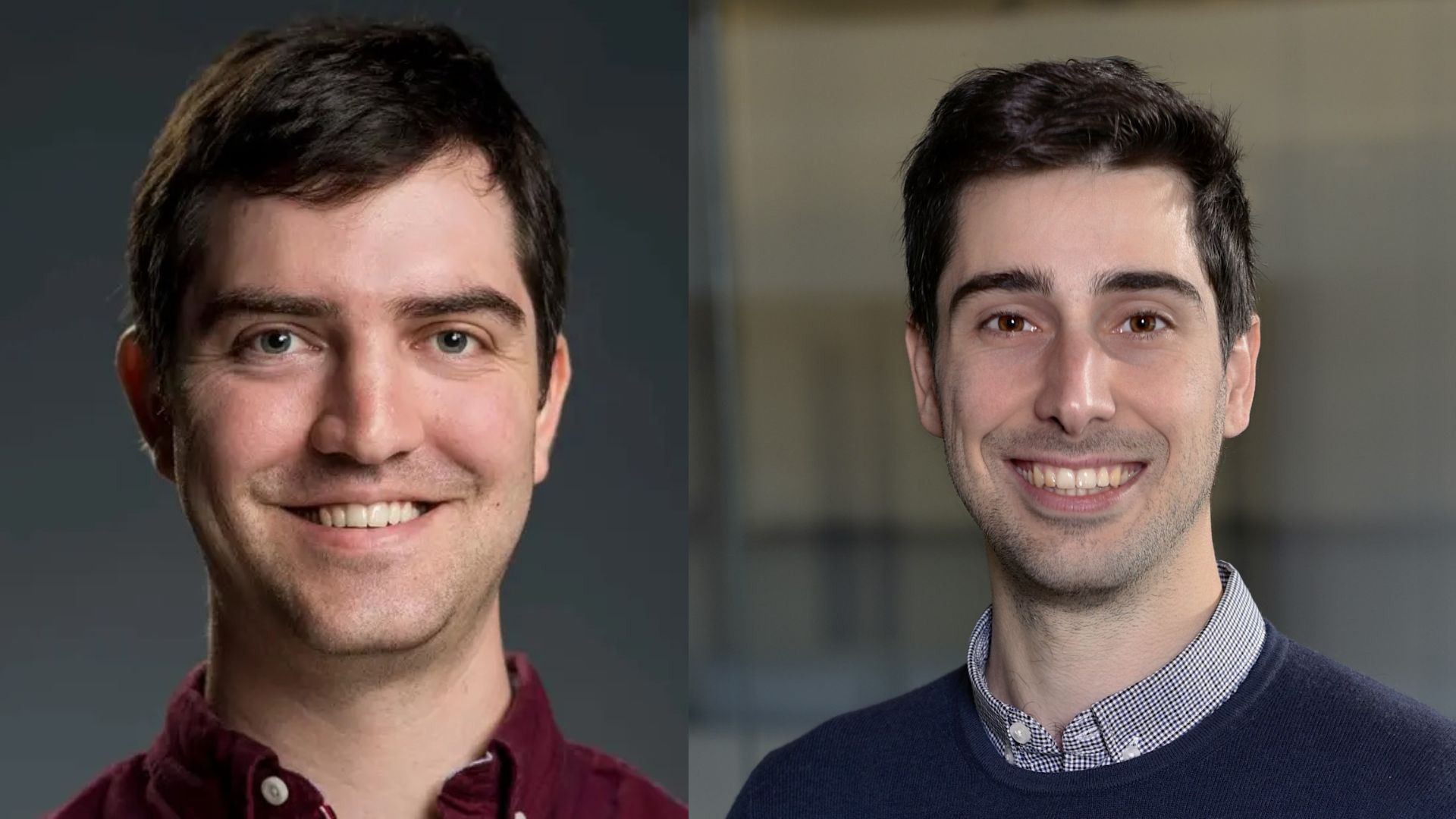
Two New Faculty Members Join UCLA Luskin Department of Public Policy
This fall, the UCLA Luskin School of Public Affairs welcomes two new assistant professors to its Department of Public Policy: Isaac Opper and Carlo Medici. Both scholars are economists who use empirical research and data-driven methods to explore policy-relevant questions that shape education, labor markets, and public institutions.
“We are excited to have recruited two extremely talented economists who we expect will not only contribute to scholarly research but also contribute to informing policy,” says Robert Fairlie, professor and chair of the public policy department. “They are both studying topics of utmost relevance. Students in our program and more broadly at UCLA will benefit from their expertise in microeconomics, statistics, and policy topics around immigration, labor, education, and other topics.”
Isaac Opper, an applied microeconomist, focuses on education policy and the statistical methods used to evaluate its effectiveness. “My largest body of work studies how education policy can be designed to improve student outcomes,” he said. This year, he will teach required statistics courses for both undergraduate Public Affairs and Master of Public Policy students. Opper added that he’s eager to “move from evaluating specific policy interventions to thinking more broadly about public policy,” continuing a career devoted to evidence-based reform.
Carlo Medici, whose expertise spans labor economics, political economy, and economic history, studies the interaction between immigration, labor markets, and institutions. “I’m especially looking forward to working with colleagues and students who are passionate about how institutions and policies shape the economy,” Medici said. His research draws on both contemporary and historical data to illuminate the roots of modern policy challenges.
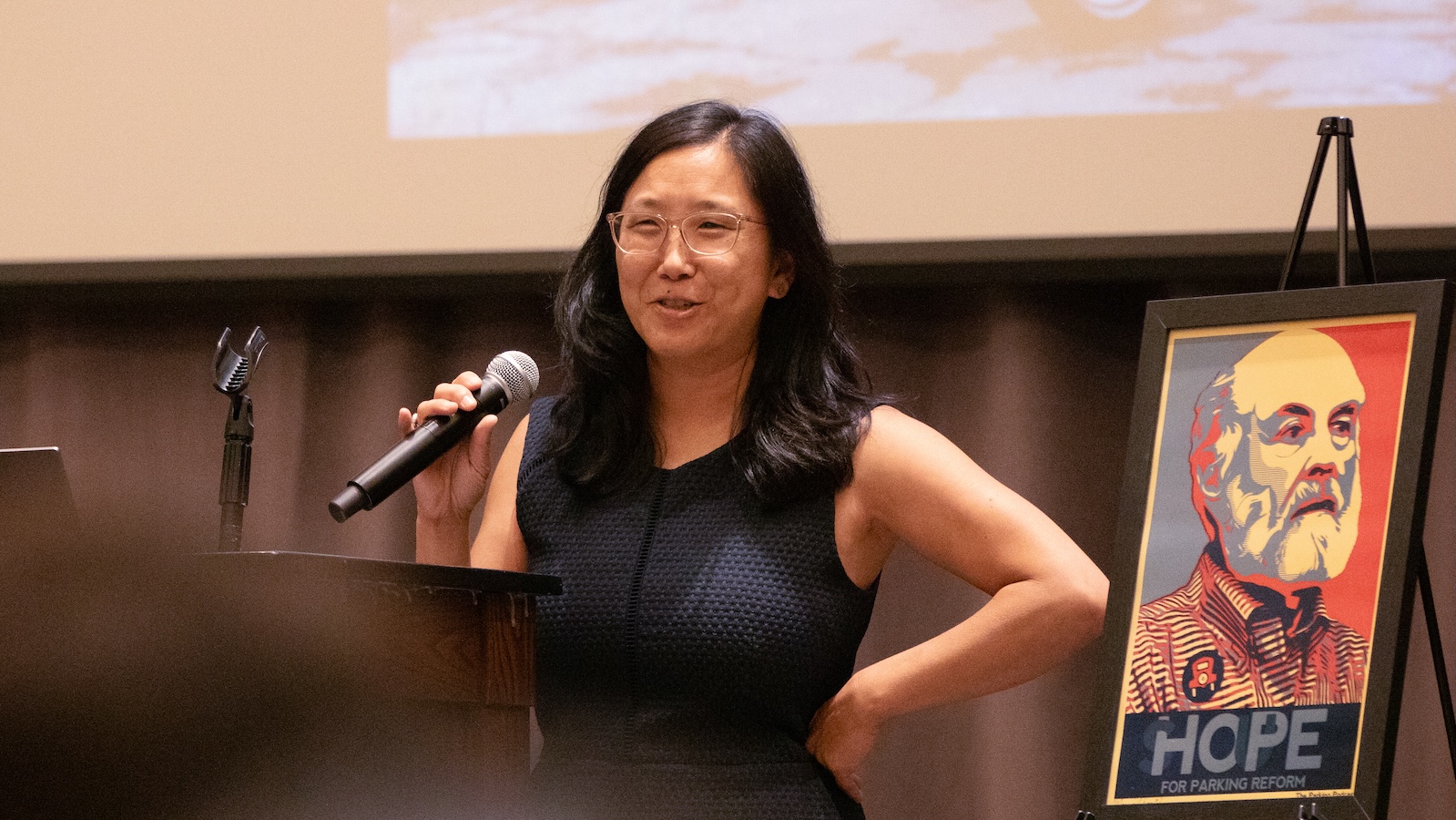
Celebrating the Life and Legacy of Donald Shoup Hundreds gather to honor the visionary urban planner whose groundbreaking ideas on parking reform transformed cities worldwide.
The UCLA Luskin School of Public Affairs’ Department of Urban Planning and the UCLA Institute of Transportation Studies welcomed hundreds of attendees to the Meyer and Renee Luskin Conference Center to celebrate the life and legacy of Distinguished Professor Donald Shoup.
The Oct. 3 event was filled to capacity — standing room only — as current students, alumni, faculty, staff, community activists, and parking enthusiasts gathered to honor one of the most influential figures in urban planning, who passed away in February.
The afternoon began with a book talk on “The Shoup Doctrine: Essays Celebrating Donald Shoup and Parking Reforms” and the official launch of the UCLA Center for Parking Policy. This new center, inspired by Shoup’s groundbreaking work on parking reform, will serve as a hub for research, education, and policy innovation.
Later in the day, speakers took the stage in the Centennial Ballroom to share their stories about his legendary wit and his uncanny ability to steer nearly any conversation toward parking — always with humor, insight, and enthusiasm. Many reflected on his hallmark humility and kindness. Their heartfelt tributes reflected the lasting influence of a scholar whose groundbreaking work on parking reform inspired generations of “Shoupistas” and reshaped urban policy around the world.
An endowment for the UCLA Center for Parking Policy will help ensure that Shoup’s ideas continue to influence urban policy and guide the next generation of planners and scholars. To date, more than $29,000 has been raised toward the endowment’s $100,000 goal, including a $10,000 matching gift from Shoup’s wife, Pat Shoup, which has now been fully met.
More information about Shoup’s life, accomplishments, and tributes from around the world can be found on this UCLA Luskin tribute page. To view photos from the event, please visit our Flickr page.

Closing Gaps in Mental Health Care: Tamika Lewis MSW ’05 on Creating Healing Spaces for Women of Color UCLA Luskin alumna transforms personal loss into a mission-driven practice to empower women.
by Peaches Chung
Walking into Women of Color Therapy (WOC Therapy), you feel a sense of peace, as if you’ve arrived somewhere that knows you. The living spaces, infused with color, texture and life, mirror the holistic approach Tamika Lewis MSW ’05 brings to her work: healing that honors both mind and soul, culture and community.
Walk up the brick pathway and into a charming home, where a spacious living room centers around a grand fireplace. Colorful artwork adorns the walls, paying homage to ancestral heritage and healing. In the backyard, the garden serves as a gathering place for yoga retreats and healing workshops.
This is WOC Therapy, the intentional, communal wellness center founded by Tamika Lewis.

As the founder and clinical director, Lewis leads a holistic practice dedicated to providing culturally competent mental health care for women and teens of color. Her approach blends evidence-based modalities like Cognitive Behavioral Therapy, EMDR and Somatic Therapy with ancestral healing, storytelling and movement. For Lewis, the mission of WOC Therapy is deeply personal.
“The inspiration for WOC Therapy came from my own personal struggles with mental health,” Lewis says. “In college, two of my closest friends died by suicide. One of those students was Jennifer Paek, a fellow MSW student at UCLA. The grief of losing her made me ask hard questions.”
That moment of loss became a catalyst for Lewis’ work. What was an experience of profound grief transformed into a calling.
“I felt driven to create a space where women of color could put down the facade of perfection and show up authentically,” she says. “How can I be honest with myself about the mental health challenges I battled in secret? Why aren’t we talking about mental health in our communities?”
Those questions became the framework for her work at WOC Therapy, located in the San Fernando Valley. “WOC Therapy was my answer to that gap — a space rooted in clinical excellence, as well as cultural wisdom, community and joy.”
The wellness center feels more like a home than a clinic, where each room has been thoughtfully transformed into a space for conversation and community. Gone are the sterile walls of a traditional counseling office; in their place is a setting that feels familiar, inviting and safe.
“Imagine being able to heal and release trauma that no longer belongs to you,” says Lewis — a guiding vision that shapes every corner of her practice.

Lewis’ path to social work began at Westmont College, where she studied English and sociology, and continued through her master’s in social work at UCLA. At UCLA Luskin, she was recognized with the National Association of Social Workers Student Award and the UCLA MSW Excellence Award, honors that highlighted both her academic dedication and her commitment to social equity.
“My experience as an MSW student at UCLA shaped so much of who I am today,” she says. “I felt at home among my peers and professors, who welcomed my ambitious ideas and desire to drive change in my community. It was an empowering experience.”
Launching her own wellness center, however, was not without challenges. Stepping away from a stable job as a school counselor, Lewis navigated the uncertainties of entrepreneurship while being a single mom. She credits the “Tiny Moves” approach — the focus of her upcoming book “Tiny Moves: The Defining Moments that Change Us” — for helping her make small, consistent steps toward her goals. “Success isn’t always about big leaps. It’s about staying true to your vision and action, even when fear is present.”
To current social work students at Luskin dreaming of creating community-centered practices, she advises: “Trust your body wisdom. Those quiet nudges you feel are often the beginnings of your most powerful work. Don’t wait until everything feels perfect — take tiny moves in the direction of your vision.”
For Lewis, social work is not just a career but a responsibility — to her community and to the future of mental health equity. Through WOC Therapy, she has turned personal pain into a powerful purpose, proving that even in the wake of incredible loss, healing and hope are possible.

Building Resilient Utilities: UCLA Issues Report on Key Water and Power Infrastructure Needs
More than 100 engineers, utility leaders, scientists and public officials came together in the wake of January’s catastrophic Los Angeles firestorms to identify innovative strategies and emerging technologies that could build more resilient infrastructure, recognizing the broader challenges of growing climate and disaster risks.
The intensive June 9 workshop — commissioned by the Los Angeles Department of Water and Power and developed, organized and hosted by the UCLA Luskin Center for Innovation with programmatic and logistical support from the Sustainable LA Grand Challenge (SLAGC) — created a unique opportunity for decision-makers to talk frankly and collaboratively to advance broader industry knowledge and capacity.
The resulting report, “Innovation Opportunities for a Resilient L.A.,” emphasizes that no single strategy is sufficient. Instead, Los Angeles must pursue a mix of approaches, from upgrading infrastructure to improving coordination across agencies.
“Our partnership with UCLA is helping drive innovation that will help all utilities adapt to the challenges of climate change and shape future resilience policies and strategies,” said LADWP CEO and Chief Engineer Janisse Quiñones.
Four areas of innovation
The workshop and report synthesize ideas and pilot concepts in these areas:
- Undergrounding power lines: Moving utility lines below ground can reduce wildfire ignition risk and improve reliability. Participants weighed the benefits against high costs, earthquake vulnerabilities and permitting challenges, emphasizing the need for clear goals, cost-sharing strategies and strong community engagement.
- Strengthening water infrastructure: While water systems alone cannot stop wildfires, they play a critical role in emergency response. Experts considered potential upgrades such as fire-hardened valves, backup reservoirs, the use of “smart hydrants” to better deploy resources in real time and even drawing on ocean water in coastal areas. Collaboration with fire departments and better communication during emergencies were key themes.
- Advanced metering infrastructure (AMI): Smart meters give utilities and customers real-time data on energy and water use. During disasters, AMI can support outage tracking and grid management. LADWP plans to deploy 1.5 million smart energy meters by 2031, aiming to modernize service and align with California’s clean energy transition.
- Wildfire risk assessment and detection: The January 2025 fires exposed limits in existing risk management tools. Participants called for advanced modeling, real-time monitoring and risk-based prioritization to help utilities target investments in grid hardening, vegetation management and emergency planning.
Learn more about the Luskin Center for Innovation’s research on water and fire, and UCLA’s partnership with LADWP, stewarded by SLAGC.

Latinas Remain the Lowest-Paid Group in the U.S. Workforce
Latinas are one of the fastest-growing demographic groups in the United States, and the share of Latinas with a bachelor’s degree or higher has more than doubled over the past two decades.
Yet Latinas have the lowest median hourly wage of any racial or ethnic group — $17 in 2023, compared to $25 for all men, $28 for white men and $34 for Asian American and Pacific Islander men.
These are some of the findings from a nationwide data analysis by the UCLA Latino Policy and Politics Institute. It was released in advance of Latina Equal Pay Day, Oct. 8, which marks how far into the current year Latinas must work to earn what their white male peers earned the previous year. Among the report’s insights:
- Younger Latinas are closer to wage equality. In 2023, for every dollar earned by white men in the same age group, Latinas ages 16 to 24 earned 92 cents while Latinas ages 55 to 64 earned 53 cents.
- National descent is a factor. Latinas with Guatemalan and Honduran roots earned 54 cents per dollar made by white male counterparts. Those with Chilean and Argentine backgrounds made 79 cents and 82 cents, respectively.
- California is the U.S. state with the largest pay gap for Latinas. Vermont, which has the smallest Latina population, is the closest to reaching pay equality.
“Latinas remain systematically undervalued, even as their role in powering the U.S. workforce grows,” said LPPI faculty director Amada Armenta, associate professor of urban planning at UCLA Luskin.
“When Latinas and all women are paid what they deserve, families are stronger, communities thrive, and the future is brighter for our nation.”
View the full report on LPPI’s Latino Data Hub.

5 UCLA Luskin Alumni Honored for Civic Leadership
Five alumni of the UCLA Luskin School of Public Affairs received the 2025 Bruin Excellence in Civic Engagement distinction, recognizing their work to improve the quality of life in their communities.
Cameron Carrasquillo MURP ’18, Alex Fung MPP ’18, Edgar Garcia MA UP ’06, Álvaro M. Huerta MA UP ’03 and Sarah Letts MA UP ’91 are among 40 Bruin public servants who were honored by UCLA Alumni Affairs this year for their impact as visionaries, volunteers and leaders seeking solutions to today’s civic issues.
Here is a closer look at the UCLA Luskin alumni’s contributions:
Cameron Carrasquillo is an urban planner whose career has focused on centering the perspectives of communities who have been harmed and underserved by traditional planning processes.
In her position at Los Angeles City Planning, Carrasquillo supports the restructuring of the department to improve development services. She has also helped institute the Office of Racial Justice, Equity and Transformative Planning, with the goal of addressing the legacy of racial inequity in planning and reimagining land use practices.
In addition to her MURP from UCLA Luskin, she has a certificate in urban humanities.
Alexander Fung is part of the City of Eastvale’s Executive Team, where he oversees economic development, workforce development, government relations and community growth projects, including regional preparations for the 2028 Los Angeles Olympics.
Previously, Fung advanced major regional initiatives in transportation, sustainability and public outreach at the San Gabriel Valley Council of Governments.
Beyond his local government role, Fung serves as the vice chair/commissioner for the City of Cupertino’s Sustainability Commission and board member for the California Chapter of International City/County Management Association.
He gives lectures at UCLA and USC on local government leadership topics.
Edgar García is interim general manager for El Pueblo de Los Angeles Historical Monument and has over 25 years’ experience in cultural policy, arts administration, historic preservation and urban planning.
Born in Los Angeles to Mexican immigrants, he was raised in the communities of Lincoln Heights and Chinatown.
García began his public service with the City of Los Angeles as preservation planner for the Office of Historic Resources, overseeing thousands of L.A.’s most cherished historic buildings and cultural sites. He went on to serve as arts and culture deputy for the administration of former Mayor Eric Garcetti.
Álvaro Huerta came to UCLA as a freshman mathematics major in 1985. His involvement in student activism compelled him to a life of civic engagement in Los Angeles and beyond, advocating for marginalized Latina/o communities.
Huerta took a break from (and later returned to) his undergraduate studies to take leadership roles in campaigns to protect Latino gardeners targeted by the city of Los Angeles and to advocate for environmental justice at a power plant in Southeast Los Angeles, among others.
After completing his bachelor’s and master’s at UCLA, Huerta went on to earn a PhD in city and regional planning from UC Berkeley. The scholar-activist is now a professor of urban and regional planning and ethnic and women’s studies at Cal Poly Pomona.
Sarah Letts has 35 years of experience in the development and operation of affordable rental housing and the delivery of critically needed services.
Since joining Hollywood Community Housing Corporation (HCHC) in 2016, Sarah has directed the organization toward significant growth. HCHC is building affordable and permanent supportive housing at the fastest rate in the organization’s history to help address the housing and homelessness crisis throughout Los Angeles County.
She has also brought property management in-house to reinforce HCHC’s commitment to the principles of trauma-informed care and to better serve the thousands of residents living in HCHC properties.
Read more about the 2025 Bruin Excellence in Civic Engagement award.
