• Public Policy
  • Social Welfare
  • Real Estate Development
  • Urban Planning
  • Luskin Home
  • Undergraduate Program
  • Stay in Touch
  • Events Calendar
  • Give Now
  • About
    • Our Dean
    • Board of Advisors
    • Contact Us
    • Visit Us
    • Diversity, Disparities and Difference
    • Communications
      • UCLA Luskin in the News
      • Luskin Forum Online
  • Departments
    • Public Policy
    • Real Estate Development
    • Social Welfare
    • Undergraduate Program
    • Urban Planning
  • Apply
    • Master of Public Policy
    • Master of Real Estate Development
    • Master of Social Welfare
    • Master of Urban and Regional Planning
      • Double Degree With Sciences Po
    • PhD in Social Welfare
    • PhD in Urban Planning
    • Undergraduate Programs
  • Faculty
    • All
    • Public Policy
    • Social Welfare
    • Urban Planning
    • Real Estate Development
    • Faculty Executive Committee
    • Open Positions
  • Student Affairs & Alumni
    • Career Services
      • Employers
      • Fellowships
    • Student Support
    • Graduate Resource Library
    • Alumni Relations
  • Support
  • Programs
    • Research Centers & Affiliated Research
    • CA Title IV-E Education Program
    • Global Public Affairs (GPA)
    • Data Analytics Certificate
    • Luskin Lecture Series
    • Luskin Summit
    • UCLA Luskin California Policy Briefing
    • Public Service Weekend
    • Commencement
  • Administration
    • Financial Services
    • Events Office
    • Information Technology
  • Search
  • Menu Menu

Archive for category: Luskin’s Latest Blog

Use this category ONLY for short items intended for the Luskin’s Latest blog. Do NOT tag the entries with any other categories.

Reinvigorating the Memory of Public Housing in Los Angeles

February 19, 2020/0 Comments/in Luskin's Latest Blog /by Mary Braswell

Public housing was once a project of hope and inspiration in Los Angeles, Judy Branfman said at a Feb. 12 book talk on “Public Los Angeles: A Private City’s Activist Futures,” co-hosted by the Lewis Center for Regional Policy Studies and Institute for Research on Labor and Employment. Branfman, co-editor of the book of essays by scholar Don Parson and colleagues, was joined on the panel by Greg Goldin, co-author of “Never Built Los Angeles,” and Elizabeth Blaney and Leonardo Vilchis, activists-in-residence with the Institute on Inequality and Democracy. Vilchis discussed the role public housing has played in the poor people’s movement in Los Angeles, in communities like Aliso Village, where mothers developed their own systems to mitigate crime without outside policing. Vilchis and Blaney co-founded Union de Vecinos, which arose from a movement in 1996 by residents of Pico Aliso public housing projects to oppose the demolition of their homes. In the book — which includes chapters from UCLA faculty and alumni Jackie Leavitt, Mike Davis, Sue Ruddick, Dana Cuff and Edward Soja — Branfman notes that thousands of public housing units were built across Los Angeles from 1939-1953. For proponents and residents, public housing was seen as an opportunity to house the vulnerable and initiate a project of interracial community among residents. While the mission to build a movement to reinvest in the public control of housing appears to be a politically arduous task now, Blaney said, “if we keep saying things are unrealistic, they’ll never become realistic.” — Lauren Hiller

View more photos from the book talk.

Adaptability and Open-Mindedness Key to Foreign Service

February 18, 2020/0 Comments/in Luskin's Latest Blog Cecilia Choi /by Mary Braswell

Global Public Affairs at UCLA Luskin hosted representatives from the State Department and Peace Corps to discuss careers in U.S. foreign service and diplomacy. At the Feb. 13 event, UCLA’s diplomat-in-residence, Cecilia Choi of the U.S. State Department, and the Peace Corps’ Jeffrey Janis recounted their paths to foreign service and shared stories with students in attendance. The enduring theme of the discussion was the need for international public servants to remain adaptable and open-minded. Janis recounted his experiences as a Peace Corps volunteer in Ukraine for over two years. “You need to be a proactive self-starter. You’ll show up to your site and might be told they don’t need you for two or three weeks. Things like that happen all the time.” He advised those considering a foreign service career, “Take what you’re given and make something from it. I was planning on working with nonprofits in Ukraine. Never did I think I would be teaching sign language, but an opportunity presented itself and I took full advantage.” Choi said the diversity of opportunities in the foreign service not only demands adaptability but also makes it hard to leave because there are so many interesting types of work. “I go into every post thinking it may be my last but always commit to one more because an interesting opportunity presents itself,” she said. “After concluding my time here and finishing language training, I’m headed to Beijing to represent the U.S. on trade. Maybe that’ll be my last post…” — John Danly

Expert on Africa Presents Senior Fellows Talk

February 13, 2020/0 Comments/in Luskin's Latest Blog Stephen Commins /by Les Dunseith

The big story of the 21st century will be Africa, according to international policy expert Kate Almquist Knopf, who spoke Feb. 6 as part of the Senior Fellows Speaker Series at UCLA Luskin. “If we look at demographic growth rates, Africa’s population is projected to more than double between now and 2050, when 25 percent — a quarter of the world’s population — will be African,” she said. Knopf works for the U.S. Department of Defense as the director of the Africa Center for Strategic Studies, which aims to be an objective source of strategic analysis on issues in Africa. The audience for her presentation, which was co-hosted by Global Public Affairs, included local civic and business professionals who serve as mentors for UCLA Luskin students as part of the Senior Fellows Leadership program. The talk focused not only on demography but also on issues related to climate, economics, governance and security. Knopf cited statistics that show how issues such as poverty and authoritarianism contribute to violence and humanitarian crises in African countries such as South Sudan. “The violent conflict that we are seeing — and the violent extremism — I think portends the possibility of quite significant state collapse on the continent,” Knopf said. Some encouraging signs are evident, however. Because the youth of the continent are increasingly making their voices heard, “all is not lost,” she said. “It’s really fragile change at this point … but the great hope is that the youth across the continent want governments that work … and they are out there fighting for it — nonviolently, peacefully — and making a difference in big, profound ways.”

View additional photos on Flickr

Africa Expert Gives Sr. Fellows Talk

A Fresh Vision for the Financing of Higher Education

February 12, 2020/in Luskin's Latest Blog Ananya Roy /by Mary Braswell

A daylong conference hosted by the Institute on Inequality and Democracy at UCLA Luskin focused on a fresh vision for the financing of higher education, even as U.S. student debt has climbed to $1.6 trillion. The Feb. 7 event brought together 150 students, scholars and activists from across the country, many wearing small red squares as a symbol of solidarity. Hannah Appel, the institute’s associate faculty director, said student loans are crippling many households, particularly in communities of color. However, she said, “We are not here to talk about the student debt crisis. Instead, … we are here at a moment of possibility” thanks to a series of victories scored by a burgeoning social movement and intervention by engaged scholars. The conference featured two keynote speakers: economist Stephanie Kelton, and historian and author Barbara Ransby. Kelton, a professor at Stony Brook University and advisor to Sen. Bernie Sanders’ presidential campaign, presented research showing that cancellation of all U.S. student debt would boost the economy, adding $8.6 billion to $108 billion a year to the real gross domestic product. Ransby, a professor at the University of Illinois and leader in the Scholars for Social Justice movement, said the intertwining of race and capitalism have turned many universities into “bad actors or silent partners in the growing debt crisis that many of our students face.” Other panelists included members of the activist group Debt Collective, who shared how they struggled to make loan payments for years before turning to collective action. Joining together into the nation’s first student debtors’ union has so far won over $1.5 billion in student debt cancellation. At a ceremony closing the conference, individuals were invited to burn slips of specially treated paper symbolizing collection notices to protest predatory loan practices.

View a video and photos of the conference.


Yaroslavsky on Building L.A.’s Future With Lessons From Its Past

February 12, 2020/0 Comments/in Luskin's Latest Blog Zev Yaroslavsky /by Mary Braswell

Watch the video

Armenta Selected as Russell Sage Foundation Visiting Scholar

February 7, 2020/0 Comments/in Luskin's Latest Blog Amada Armenta /by Zoe Day

Assistant Professor of Urban Planning Amada Armenta was chosen by the Russell Sage Foundation as one of 17 visiting scholars for the 2020-2021 academic year. Armenta will pursue her research on race, ethnicity and immigration while in residence at the foundation’s headquarters in New York City starting in September. The selection of Visiting Scholars is based on an individual’s demonstrated record of research accomplishment and the merit of the proposed project. Armenta will study the legal attitudes of immigrants, focusing on how they understand and make decisions about migration, driving, working, calling the police, securing identification and paying taxes. Her research will culminate in a book analyzing the experiences of undocumented Mexican immigrants in Philadelphia. This will be Armenta’s second book, following the award-winning “Protect, Serve, and Deport: The Rise of Policing as Immigration Enforcement” (2017), which analyzed the role that local police and jail employees played in immigration enforcement in Nashville, Tennessee. The Russell Sage Foundation’s Visiting Scholars Program supports research into the social and behavioral sciences with the goal of improving living conditions in the United States. Research topics have included immigration, race and diversity, poverty, labor practices, gender inequality, climate change and natural disaster recovery.


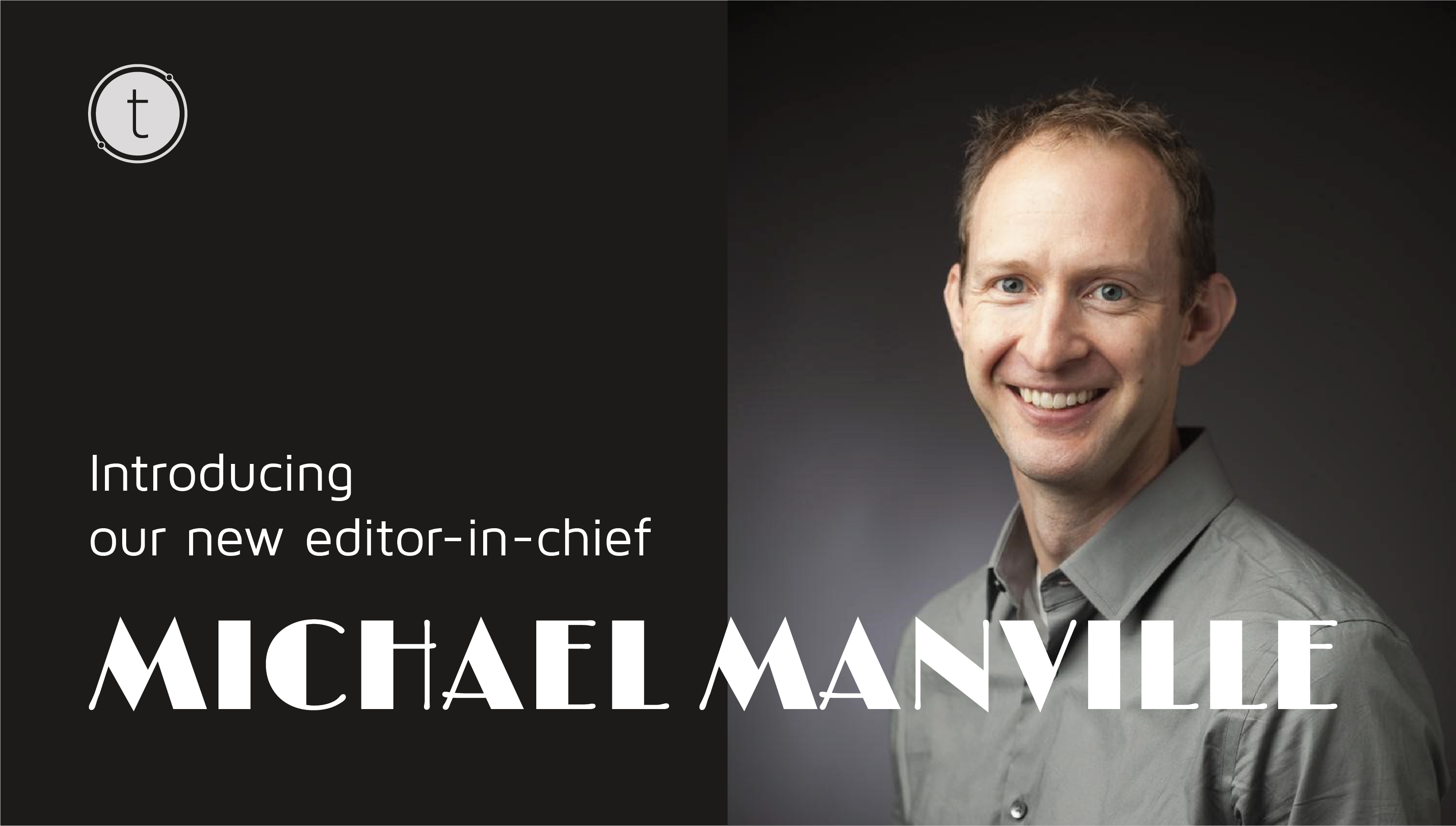
Manville Takes Reins of Transfers Magazine

February 7, 2020/0 Comments/in Luskin's Latest Blog Michael Manville /by Mary Braswell


Q&A: Getting to know our new editor-in-chief

By Transfers Staff | February 5, 2020


We rang in the New Year at Transfers with a brand new editor-in-chief — Michael Manville. Manville is an associate professor of urban planning at the UCLA Luskin School of Public Affairs, and he’s no stranger to Transfers. We recently sat down with him to ask about his views on transportation today as well as his hopes for Transfers in the future. 

Q: Tell us a little more about your research interests.

MM: In essence, I study the fact that driving is too cheap and housing is too expensive. So one part of my research focuses on the mispricing of vehicle travel: this includes the study of our decisions to underprice roads and curb parking. In the other part, I examine how land use regulations that are inspired and impacted by travel behavior actually distort the housing market. For example, cities everywhere require parking spaces with new developments. At least on paper, these rules are supposed to make the transportation system work better, by providing more parking. In reality, they probably exacerbate congestion and make it harder to build more housing, which of course drives up housing prices. 

Q: You are constantly sought after as an expert on congestion pricing. Why do you think now is the time to discuss and continue forward on this issue? 

MM: I think a lot of city governments in very congested places have concluded that they both need a lot of money, and they have already tapped most of the obvious sources for that money. For example, New York City needs an incredible amount to repair its subway system, and — in the minds of its leaders, at least — it cannot go back to more conventional tax instruments to raise that money. So it has turned to congestion pricing, which not long ago would’ve been off the table. Adding to that is the fact that congestion is now, by most metrics, as bad as it’s ever been, and may be at its worst. Cities do feel pressure to deal with that, and more officials are realizing that what they’ve tried in the past — whether that’s widening roads, building more transit or hoping people telecommute — isn’t very effective. So there’s more openness to pricing as a result.

The fact that people are even talking about pricing is undeniable progress. If you’re someone like me, I think there’s a lot of cause for optimism because 10 years ago barely anyone outside of academia would discuss it. However, it remains to be seen how much of this emerging conversation will lead to implementation. 

Q: If there’s one misconception about traffic that you wish you could set straight, what would it be? 

MM: Do I have to pick one? Congestion as a concept comes pretty loaded with misunderstanding. But here is one. Any car can cause traffic, including yours. So if you are suffering from congestion, you are also probably causing it. Now, that’s not always true. There are some people who suffer from congestion because they breathe pollution from it because they live near a busy road, and some people get slowed down by traffic even as they are doing something socially positive like riding a bus. But for the most part, if you’re in congestion, you are congestion. That’s pretty obvious when I say it, but it’s not something that people or policy readily internalizes. As a result, we often want solutions to congestion that don’t require anyone who is currently on the road to drive less or change behavior in any way. 

A great example of this is the tendency to blame increased congestion on Uber. Anytime you read about the share of traffic caused by Uber, you should ask yourself what share is caused by Toyota or Ford. Is that Uber slowing you down? Guess what? You are slowing the Uber down, too. You were here first? How do you know that, and why on earth should that matter? If every Uber on a congested road switched off its app, the road would still be congested, because the vehicle, not the app, takes up space. Even if every vehicle with an Uber driver vanished, do we really think, in growing places like LA or New York, that no other cars would fill in that space?  Congestion isn’t about where the car is going or who the driver is or works for. It’s a product of our failure to manage our valuable roads.

Q: What do you think will be the most important transportation issue of this next decade?

MM: It’s hard to give any answer other than the carbon footprint of how we move around. I think that transportation remains a bit of a third rail in climate policy. In California, we’ve shown that we’re willing to do a lot of things to reduce our carbon footprint, but still pretty unwilling to confront our relationship with the car, and our impulse driving alone everywhere. 

Another way to answer that question, which is in some ways the same answer from a different perspective, is to say that the biggest issue in transportation today is the same big issue that has always distorted our surface transportation system, which is that getting in your car and going wherever you want is often too inexpensive relative to its social costs. This was causing problems in the 1950s, in the 1980s and is still causing problems today. We now know,  because we know so much more about climate change and pollution, that this problem is much greater, and graver, than we first thought. But that is the essential problem, and always has been. 

Q: What topics do you hope to cover in future issues of Transfers? 

MM: My hope is to cover a wide variety of transportation-related topics. The pitfall of any editor is that they just publish a whole bunch of articles that reflect their personal interests. I don’t want to do that. I think that the PSR [Pacific Southwest Region University Transportation Center] funds a range of institutions with many people who do good work on a wide variety of transportation issues, all of which we want to showcase. I would be disappointed if we produced an entire issue on congestion pricing. Even though that would delight a part of me, it wouldn’t delight the part of me that’s an editor. What we want to deliver is a highly accessible digest of a wide swath of transportation research.

Q: What has been your favorite Transfers article? You can say your own. 

MM: I enjoyed writing mine, but it’s not my favorite. 

Q: How about the skateboarding one?

MM: Actually, I really liked the fact that we published something about skateboarding. I say that not only because it’s a nice topic, but it’s also emblematic of what Transfers can do, which is to take a nice, novel piece of research on a topic that’s maybe overlooked and give it a boost that’s meaningful not only for the author but also for a lot of people who read it. 

Q: But second favorite is yours? 

MM: And then mine, of course. 

This interview was edited for clarity and length.


Transfers Staff

Transfers Magazine is the biannual research publication of the Pacific Southwest Region University Transportation Center (PSR), a federally-funded network of eight partner campuses in Arizona, California, and Hawaii.

Councilman David Ryu on His Unconventional Political Journey

January 30, 2020/0 Comments/in Luskin's Latest Blog /by Mary Braswell

Los Angeles City Council member David Ryu spoke at UCLA Luskin about his journey to elected office and goals for reforming local government at a Jan. 27 Learn at Lunch gathering hosted by Public Policy. Ryu, who immigrated to Los Angeles from South Korea at age 6, said he took advantage of strong public schools — including UCLA, where he earned a bachelor’s in economics in 1999. As a young man, Ryu believed “government is something you protest, not work for” — until six years working with Los Angeles County Supervisor Yvonne Braithwaite Burke showed him the power that local officials wield. “If there’s a problem and they have the will to do it, they actually have the power and the resources to get it done,” he said. “Holy cow, sign me up.” Ryu later became the first Korean American, and only the second Asian American, to serve on the City Council. At the Luskin School session, Ryu fielded questions about parking requirements, bus-only lanes, campaign finance reform and a universal basic income. Most of the conversation, however, centered on Los Angeles’ struggle to house its people. “It’s a humanitarian crisis,” Ryu said of the city’s 36,000 homeless people, as well as thousands more who can barely cover their rent. Ryu said he is pushing to amend Los Angeles’ “antiquated” city charter, which contributes to scattershot housing policies. Ryu, a member of UCLA Luskin’s Board of Advisors, was accompanied by his legislative and communications deputy, Jackie D’Almeida MPP ’19.

View more photos from the Learn at Lunch event on Flickr.

Visit by Councilman David Ryu


Another Win for the UCLA Voting Rights Project

January 29, 2020/0 Comments/in Luskin's Latest Blog Gary Segura /by Zoe Day

The UCLA Voting Rights Project, a research, advocacy and clinical program within the Latino Policy & Politics Initiative of the Luskin School of Public Affairs, celebrated its role in defeating a challenge to the California Motor Voter law. The case is the third legal win for the Voting Rights Project this academic year, making it undefeated thus far in the courts. A 2015 state law created California’s motor voter system, designed to make it easier for citizens to register to vote by automatically adding eligible DMV customers to the voter rolls unless they opt out. In September, plaintiffs sued in an attempt to put an end to the law and force motor voter customers to prove citizenship by showing their papers. The Voting Rights Project intervened on behalf of affected individuals and presented strong papers, leading the plaintiffs to dismiss the case, said Chad Dunn, the project’s director of litigation. The project is now assessing cases around the country, including in Kansas, New Mexico and rural Washington, as well as in Orange, Ventura and other California counties.


In Memorium: Mickey Wapner

January 28, 2020/0 Comments/in Luskin's Latest Blog Martin Wachs, Vinit Mukhija /by Stan Paul

Mickey Wapner, former development officer for the UCLA School of Architecture and Urban Planning, died Jan. 22. She was 95. During her tenure at UCLA in the 1970s and ’80s, the Texas native — who moved to Los Angeles in 1946 — helped founding Dean Harvey S. Perloff “build a financial support community for the new school,” said Martin Wachs, distinguished professor emeritus of urban planning. Urban Planning became its own department in 1969 and merged with what is now the UCLA Luskin School of Public Affairs in the 1990s. Its half-century will be celebrated this year. “She was a major figure in our history,” Wachs said, noting that Wapner left UCLA after her husband, the late Joseph Wapner, became an international celebrity because of his popular and long-running television program, “The People’s Court.”  “She wanted to travel the world with him for interviews and guest appearances,” said Wachs, who kept in touch with Wapner over the years. “Mickey Wapner was very special to our department, and she was going to be an important guest for our 50th anniversary,” commented Vinit Mukhija, chair of UCLA Luskin Urban Planning. “We were looking forward to having her there. She will be missed.”

Page 41 of 60«‹3940414243›»

Recent Posts

  • Luskin Summit 2026 January 20, 2026
  • New Analysis Reveals Sharp Rise in ICE Detention of Immigrants With No Criminal Convictions January 20, 2026
  • What L.A. Transportation Agencies Can Learn from the Successful Metro Ambassador Program January 19, 2026
  • Experts Question Trump’s ‘Narco-Terrorist’ Claims Against Venezuela’s Maduro January 16, 2026
  • UCLA student wins fourth consecutive national transportation prize January 15, 2026

Contact

UCLA Luskin School of Public Affairs

3250 Public Affairs Building - Box 951656
Los Angeles, CA 90095-1656

Campus Resources

  • Maps, Directions, Parking
  • Directory
  • Contact
  • Academic Calendar
  • Careers
  • Diversity
  • University of California
  • Terms of Use

Follow

The statements on this page represent the views of people affiliated with the Luskin School of Public Affairs and do not necessarily represent the views of the University of California, or UCLA or its Chancellor.

Posts and comments by individuals at UCLA on social media channels may not reflect the opinions or policies of UCLA, the University of California or the Luskin School, nor its benefactors and academic partners.

Scroll to top
