Master of Global Public Affairs

Latoya Small

Latoya Small’s scholarship is informed by her work in clinical social work practice and community-based research.

Her research focuses on health disparities, specifically, the intersection of mental health, treatment adherence, and HIV among women and children in the U.S. and Sub-Saharan Africa. Her global research addresses the urgent need for theory-driven, empirically-informed, and sustainable psychosocial HIV treatment approaches for youth living with perinatally acquired HIV in South Africa.

In the U.S., Dr. Small examines how poverty-related stress, parenting, and mental health interact and relatedly impact adherence in HIV medical services among Black and Latina women in urban communities. An extension of her work includes mental health and discrimination facing transgender women of color.

Dr. Small takes a collaborative approach in her scholarship, recognizing that traditional intra-disciplinary boundaries can impede the development of effective and sustainable research interventions. Her work aims to produce accessible, evidence-informed interventions that bolster youth development and women’s health.

Gregory Pierce

Greg Pierce (he/him) is the Research and Co-Executive Director of the UCLA Luskin Center for Innovation and the director of the Human Right to Water Solutions Lab. He is also the director of the UCLA Water Resources Group within the Institute of the Environment and Sustainability, and serves as an adjunct associate professor in the department of urban planning. He is a faculty affiliate of the Lewis Center for Regional Studies and Institute of Transportation Studies in the Luskin School, and Center for Healthy Climate Solutions in the Fielding School of Public Health.

Dr. Pierce’s research, teaching and service is motivated by persistent inequities in access to the essential environmental services that we need to survive and thrive. He examines how infrastructure planning and policy efforts either perpetuate or address service inequities, and demonstrates how communities strategically cope with and overcome inequities. His primary focus is on water insecurity, but he also examines solutions to cross-cutting green infrastructure, climate resilience and transport insecurities.

He has secured 40+ extramural research funding awards as a principal investigator at the Center for Innovation. Current and past sponsors of this work include the California State Water Resources Control Board, the California Air Resources Board, the Strategic Growth Council, the U.S. Housing and Urban Development Department, WaterAid, the Water Foundation, The Resources Legacy Fund, the World Bank, the UC Multicampus Research Initiative, the UC Institute of Transportation Studies and the UCLA Grand Challenge, LADWP and Los Angeles County.

Pierce is an author or co-author of 50+ peer-reviewed articles, including many in the leading journals in urban studies, infrastructure planning and policy and environmental health, as well as 20+ major Luskin Center for Innovation reports. He has also reviewed articles for 50+ journals, several funding agencies and many collaborating researchers. Pierce received a PhD in urban planning in 2015 and an MA in urban planning in 2011, both from UCLA. For more information regarding his peer-reviewed research, see here. For Pierce’s full CV, see here.


Kian Goh

Kian Goh is Associate Professor of Urban Planning at UCLA Luskin School of Public Affairs. She researches the relationships between urban ecological design, spatial politics, and social mobilization in the context of climate change and global urbanization. Dr. Goh’s current research investigates the spatial politics of urban climate change responses, with fieldwork sites in cities in North America, Southeast Asia, and Europe. More broadly, her research interests include urban theory, urban design, environmental planning, and urban political ecology. As a professional architect, she cofounded design firm SUPER-INTERESTING! and has practiced with Weiss/Manfredi and MVRDV. She previously taught at Northeastern University, the University of Pennsylvania, the New School, and Washington University in St. Louis. Dr. Goh received a PhD in Urban and Environmental Planning from MIT, and a Master of Architecture from Yale University.

Dr. Goh’s forthcoming book, Form and Flow: The Spatial Politics of Urban Resilience and Climate Justice, will be published by the MIT Press in 2021. The book investigates the contested power relationships and conflicts around plans proposed by cities to respond to climate change impacts. Exploring sites in New York, Jakarta, and Rotterdam, it traces the global flows of ideas and influence in the production and justification of climate change plans, and the local social movements organized against unjust and exclusionary actions.

Recent publications include articles on urban theory and climate justice in Cambridge Journal of Regions, Economy and Society, urban planning and the Green New Deal in the Journal of the American Planning Association, the politics of urban flooding in the International Journal of Urban and Regional Research, the global and urban networks of climate change adaptation in Urban Studies, and queer space and activism in the Annals of the American Association of Geographers.

Leyla Karimli

Dr. Leyla Karimli’s interdisciplinary applied research critically investigates the impact of poverty reduction interventions on the psychosocial well-being of vulnerable children and families in Sub-Saharan Africa and Central Asia. Her work underscores the often-overlooked role of local social structures and illuminates the multidimensional nature of poverty. Through rigorous multilevel, longitudinal experimental and quasi-experimental studies, Dr. Karimli examines how economic interventions—such as ultra-poor graduation programs, asset-building initiatives, and livelihood supports—can lead to improved outcomes for women, children, and adolescents.

A central theme in her research is that poverty is not solely a matter of income, but a complex condition shaped by family dynamics, social norms, and psychosocial vulnerability. Her work reveals that sustainable improvements in child and family well-being require addressing not only economic hardship but also the relational, educational, and health-related dimensions of deprivation. Her integrated, multi-dimensional approach to poverty alleviation offers critical insights for the design of more effective programs and policies aimed at improving child and family wellbeing in resource-constrained settings.

Dr. Karimli received her PhD from Columbia University’s School of Social Work with a concentration in social policy and social welfare. She completed her postdoctoral training at the University of Chicago’s School of Social Service Administration and New York University’s Silver School of Social Work’s McSilver Institute for Poverty Policy and Research. Prior to her academic career, Dr. Karimli actively contributed to community-based empowerment and poverty reduction initiatives by working within development agencies in the former Soviet Union and Sub-Saharan Africa.

Dr. Karimli is a faculty affiliate at Luskin’s Global Public Affairs, the Global Lab for Research in Action, the International Center on Child Health and Asset Development (ICHAD), and UCLA’s California Center for Population Research (CCPR).

 Connect with her on X (formerly Twitter)

For full list of publications please visit her page at ResearchGate or Google Scholar

SELECTED PUBLICATIONS

Karimli, L., Ismayilova, L., & Wells, C.R. (2025) Pathways from poverty to child mental health in Burkina Faso: Longitudinal mediation analyses in a cluster-randomized clinical trial. Journal of Adolescent Health, 76 (3), 415-428

Karimli L., Nabayinda, J., Nartey, P.B., & Ssewamala F.M. (2024) Poverty reduction and family functioning: Results from an experimental study in Sub-Saharan Africa. Journal of Child and Family Studies, 33, 3104-3118 

Karimli L., Nabunya, P., Ssewamala, F.M., & Dvalishvili, D. (2024) Combining asset accumulation and multi-family group intervention to improve mental health for adolescent girls: A cluster-randomized trial in Uganda. Journal of Adolescent Health, 74(1), 78-88

Karimli, L., Ssewamala, F. M., & Neilands, T.B. (2023) The impact of poverty-reduction intervention on child mental health mediated by family relations: Findings from a cluster-randomized trial in Uganda. Social Science & Medicine, 332, 116102

Karimli, L., Lecoutere, E., Wells, C. R. & Ismayilova, L. (2021) More assets, more decision-making power? Mediation model in a cluster-randomized controlled trial evaluating the effect of the graduation program on women’s empowerment in Burkina Faso. World Development, 137, 105159

Karimli, L., Bose, B., & Kagotho, N. (2020) Integrated graduation program and its effect on women and household economic well-being: Findings from a randomized controlled trial in Burkina Faso. Journal of Development Studies, 56(7), 1277-1294

Ismayilova, L. & Karimli, L. (2020) Harsh parenting and violence against children: a trial with ultra-poor families in Francophone West Africa. Journal of Clinical Child and Adolescent Psychology, 49(1), 18-35

Karimli, L., Shephard, D.D., McKay M. M., Batista, T., & Allmang, S. (2020) Effect of non-formal experiential education on personal agency of adolescent girls in Tajikistan: findings from a randomized experimental study. Global Social Welfare. 7(2), 141-154

Salecker, L.M., Ahmadov, A., & Karimli, L. (2020) Contrasting monetary and multidimensional poverty measures in a low-income Sub-Saharan African country. Social Indicators Research, 151(2), 547-574

Karimli, L., Ssewamala, F. M.., Neilands, T.B., Wells, C. R., & Bermudez, L. (2019) Poverty, economic strengthening, and mental health among AIDS orphaned children in Uganda: mediation model in a randomized clinical trial. Social Science & Medicine, 228, 17-24

Karimli L., Rost L., Ismayilova L. (2018). Integrating economic strengthening and family coaching to reduce work-related health hazards among children of poor households: Burkina Faso. Journal of Adolescent Health, Special Issue, Global Perspectives on Economic Strengthening, 62(1):S6–S14.

Karimli, L., Samman, E., Rost, L., & Kidder, T. (2016) Factors and Norms Influencing Unpaid Care Work: Household survey evidence from five rural communities in Colombia, Ethiopia, The Philippines, Uganda and Zimbabwe. Oxford, UK: Oxfam, Women’s Economic Empowerment and Care.

Darin Christensen

Darin Christensen is an Associate Professor of Public Policy and Political Science at the University of California, Los Angeles (UCLA). He received his Ph.D. in political science and M.A. in economics from Stanford University.

Darin studies political economy, focusing on institutions and policies that promote investment and mitigate social conflict in developing countries in sub-Saharan Africa, Southeast Asia, and Latin America. He has consulted on projects for The Asia Foundation, USAID, and The World Bank.

Darin is a co-founder of the Project on Resources and Governance (PRG) and an affiliate of several academic centers, including the California Center for Population Research, Center for Effective Global Action, Evidence in Governance and Politics, and UCLA’s African Studies Center.

More information about his research and teaching can be found at darinchristensen.com.

Ananya Roy

Ananya Roy is Professor of Urban Planning, Social Welfare, and Geography and The Meyer and Renee Luskin Chair in Inequality and Democracy at the University of California, Los Angeles. She is the founding Director of the UCLA Luskin Institute on Inequality and Democracy at UCLA, which advances research and scholarship concerned with displacement and dispossession in Los Angeles and elsewhere in the world. Working in alliance with social movements and community organizations, the Institute seeks to build power and abolish structures of inequality. Previously she was on the faculty at the University of California, Berkeley, where she received her Master’s in City Planning (1994) and Ph.D. in Urban Planning (1999). There she was the recipient of the Distinguished Teaching Award, the highest teaching recognition that the University of California, Berkeley bestows on its faculty.  In 2011, Ananya received the Excellence in Achievement award of the Cal Alumni Association, a lifetime achievement award which recognizes her contributions to the University of California and public sphere.

Ananya is a scholar of global racial capitalism and postcolonial development whose research is concerned with the political economy and politics of dispossession and displacement. With theoretical commitments to postcolonial studies, Black studies, and feminist theory, she seeks to shift conceptual frameworks and methodologies in urban studies to take account of the colonial-racial logics that structure space and place. As a researcher, Ananya strives to advance research justice, by which she means accountability to communities directly impacted by state-organized violence. At the very heart of her work is an insistence on the transformation of the public university – through teaching, public scholarship, and community engagement – so that it can be a force for social justice.

Ananya’s books have focused on urban transformations and land grabs in the global South as well as on global structures of finance and development capital. They include City Requiem, Calcutta: Gender and the Politics of PovertyUrban Informality: Transnational Perspectives from the Middle East, South, Asia, and Latin AmericaWorlding Cities: Asian Experiments and the Art of Being GlobalTerritories of Poverty: Rethinking North and South; and Encountering Poverty: Thinking and Acting in an Unequal World. Ananya is the recipient of several awards including the Paul Davidoff book award, which recognizes scholarship that advances social justice, for Poverty Capital: Microfinance and the Making of Development.

Ananya’s most recent book is Beyond Sanctuary: The Humanism of a World in Motion, which builds on a Mellon Foundation Sawyer Seminar on Sanctuary Spaces: Reworlding Humanism. Thinking across Europe and the United States, this work is concerned with the place of racial others in the liberal democracies of the West. At a time of resurgent white nationalism, Beyond Sanctuary foregrounds migrant movements and their imaginations and practices of abolition and decolonization.

Housing justice has been at the center of Ananya’s work for many years now. She led a National Science Foundation Research Coordination Network on Housing Justice in Unequal Cities, which created a global field of inquiry into housing justice shared by university and movement scholars. Her ongoing scholarship, organized in the form of insurgent research collectives, is concerned with the liberal governance of mass homelessness and has been supported by research foundations such as the Russell Sage Foundation. From Echo Park Lake to Aetna Street, such work centers encampment geographies and poor people’s histories. Ananya is currently working on a monograph on racial banishment, the expulsion and social death of working-class communities of color through racialized policing and other forms of dispossession.

Ananya was Editor of the International Journal of Urban and Regional Research from 2016 to 2020. She is a 2020 Freedom Scholar, an award bestowed by the Marguerite Casey Foundation and Group Health Foundation to scholars who advance social and racial justice. In 2022, Ananya was awarded an honorary doctorate by the University of Geneva. Along with Robin D.G. Kelley, she currently leads a Mellon Foundation Higher Learning endeavor titled Housing the Third Reconstruction.

Website: https://challengeinequality.luskin.ucla.edu/ananya-roy/

John Villasenor

John Villasenor is a professor of public policy, electrical and computer engineering, management, and law at UCLA, a nonresident senior fellow at the Brookings Institution, and a National Fellow at the Hoover Institution. He is also a member of the Council on Foreign Relations, and an affiliate of the Center for International Security and Cooperation (CISAC) at Stanford. Villasenor’s work considers the technology, policy, and legal issues arising from key technology trends including the growth of artificial intelligence, the increasing complexity and interdependence of today’s networks and systems, and continued advances in computing and communications.

He has written for the AtlanticBillboard, the Chronicle of Higher EducationFast CompanyForbes, the Huffington Post, the Los Angeles Times, the New York Times, Scientific AmericanSlate, and the Washington Post, and for many academic journals. Prior to joining the faculty at UCLA, Villasenor was with the NASA Jet Propulsion Laboratory, where he developed methods of imaging the earth from space. He holds a B.S. from the University of Virginia, and an M.S. and Ph.D. from Stanford University.

For more information, please visit Professor Villasenor’s personal page.

Susanna Hecht

Dr. Hecht’s research focuses on the intersections of economies, cultures and land use, and the socio-environmental effects of these processes, an approach now widely known as political ecology.

Her focus area is the Latin American tropics, and more specifically Amazonia. Her research has major implications for understanding the dynamics of land use change and what they imply about human relations with nature, economies and tropical development. Her work includes analytics on climate change, mitigation and longer-term rethinking of longer-term strategies under globalization, intense migration and novel climate dynamics.

Her work has forged new understandings in the development of political ecology including that of deforestation and forest recovery, the “social lives of forests” as part of environmental history as well as current practices. These include the analysis and viability of traditional tropical land use practices such as agroforestry and the creation of Amazonian black earths (a legacy of and continuing practice by many indigenous populations as well as Amazon peasants). Her early work on indigenous anthropogenic soils was groundbreaking, as it documented how in fact these soils, the product of biochar–and low temperature fires— were produced. She also studies the impacts of migration on forest and land use. In addition to these more arcane systems, she has carried out extensive research on the livestock sector, analyzed in her book Fate of the Forest, and soy economies in Latin America (the main deforestation drivers) and has just edited a major themed issue on this topic for the Journal of Peasant Studies, the top ranked rural development journal.

Dr. Hecht’s interest in alternatives to deforestation involved engagement in the analytics of non-timber forest products and their development, including extractive reserves, which now cover more than 10 million Ha in the Amazon Basin and reflect the outcome of new institutions under the pressure of social movements of traditional peoples of various kinds. She has also paid attention to the gender implications that inhere in land use change from the most remote peasantries in the upper Amazon, to highly linked in central American women farmers whose family members reside in the US.

Forest resurgence in the tropics is now a widely documented phenomena but her work in this area more than a decade ago was landmark.

Through complex analyses that range from Forest transition theory, global markets, agrocecology and the foucauldian politics of governmentality, the widespread occurrence of forest recovery suggests a huge realm of new policy interventions and practices for this largely orphaned segment of forest dynamics. These questions are explored in two of her edited books. The Social Lives of forests, edited with ethnobotanist Christine Padoch and ethnoarcheologist Kathleen Morrison explored the ideologies, environmental histories, and current practices and processes that produced forests in the present day and in the past. Under current conditions forest recovery and control of clearing will be essential to any climate policy. This book thus shows how a complex range of activities—using global examples from the top scholars in a range of disciplines — have produced both livelihoods and forested landscapes. Another edited volume explored the questions of migration, resources and rural livelihoods with colleagues from the Central American policy and research NGO, PRISMA setting the stage for continuing research on the dynamics of migration. urbanization and land use, and their implications for forests and forest dependent populations.

Finally, her research focuses on historical ecology and environmental economics. Her book, The Scramble for the Amazon, won the American Historical associations Best Book in Environmental history Award in 2015, and her earlier volume, Fate of the Forest also won multiple awards. The key to these books is their use of the “natural archive” as well as the human one. Dr. Hecht’s rigorous historiography and scientific training coupled to rich and fluid prose have made her books academic best sellers. She is at work on the third volume for this trilogy on contemporary Amazonia

Using archival research, remote sensing, palynological data and forest census materials Dr. Hecht has been engaged in the analysis of “Deforestation” before modern Deforestation: that is understanding the nature and social dynamics of forest change over time including carbon loss and uptake in Amazonian ecosystems 100 years ago. These researches feed into an understanding of landuse change under current regional development scenarios and most especially the questions of the global carbon economy.

Dr. Hecht’s work has been funded by NSF, NASA, MacArthur Foundation, ACLS, Guggenheim, Ford Foundation, Wenner Gren Foundation, Hewlett Foundation, National Geographic Society, Shelby Cullom David fellowships and the Institute for Advanced studies and CASBS among many other sources. Her work has also received generous funding from UCLA’s Latin American Institute, The Global Public Affairs Program, the UCLA Academic Senate and the University of California Office of the President.

Dr. Hecht is a member of Princeton’s Institute for Advanced Study, and holds a Professorial appointment at the Graduate Institute for Development Studies in Geneva.

SELECTED BOOKS & PUBLICATIONS

The Social Lives of Forests
Subtitle: Past, Present, and Future of Woodland Resurgence
Publisher’s webpage
Review in Science

The Scramble for the Amazon and the Lost Paradise of Euclides da Cunha
University of Chicago Press.
Purchase on Amazon.com
Reviewed in The Nation

The Fate of the Forest: Developers, Destroyers, and Defenders of the Amazon
Purchase on Amazon.com

Vinit Mukhija

Vinit Mukhija is a Professor of Urban Planning, the former Chair of the Department of Urban Planning, and has a courtesy appointment in Asian American Studies at UCLA. He is leading the Department of Urban Planning’s efforts to develop a new, one-year self-supporting graduate professional degree program in real estate development, which will situate real estate development pedagogy within a broader framework of politics, policy analysis, sustainability, and equity at the urban level.

Professor Mukhija’s research focuses on housing and the built environment. He is known for his scholarship on cities and the informal economy, affordable housing and urban design, and the redevelopment and upgrading of informal housing. It spans informal housing and slums in developing countries and “Third World-like” housing conditions (including colonias, unpermitted trailer parks, and illegal garage apartments) in the United States. He is particularly interested in understanding the nature and necessity of informal housing and strategies for upgrading and improving living conditions in unregulated housing. His work also examines how planners and urban designers in both the Global South and the Global North can learn from the everyday and informal city.

Professor Mukhija is interested in both spatial and institutional transformations. Initially, he focused on the Global South, particularly Mumbai, India, and demonstrated the value of slum-dwellers’ participation and input in housing interventions, including their contrarian support for the redevelopment of their slums. He published these findings in his first book, Squatters as Developers? (Ashgate 2003), which was reissued in paperback (Routledge 2017).

More recently, he has focused on informal housing and urbanism issues in the Global North, including unpermitted trailer parks, bootleg apartments, and garage conversions without permits. Most of this research is based on fieldwork in Los Angeles and surrounding areas. To draw attention to the growing prevalence and challenges of urban informality in the U.S., he co-edited a book, The Informal American City, with his colleague Anastasia Loukaitou-Sideris (MIT Press 2014). The book questions the conventional association of informal economic activities with developing countries and immigrant groups in developed countries. It also makes a case for a spatial understanding of urban informality. It includes Professor Mukhija’s chapter on the widespread prevalence of unpermitted second units on single-family-zoned lots in Los Angeles.

Along with colleagues Kian Goh and Loukaitou-Sideris, his recent edited book, Just Urban Design: The Struggle for a Public City (MIT Press, November 2022), presents the idea of inclusive urban life as a condition of justice and emphasizes the potential contributions of urban design to spatial justice through the “publicness” of cities. In a chapter on unpermitted secondary suites in Vancouver, which are surprisingly present in one-third of the city’s single-family houses because the built form of semi-basements makes adding informal units very easy, he examines how the units have been legalized with residents’ support, particularly Chinese Canadian and Indo-Canadian immigrants.

Professor Mukhija expanded his work in the two edited volumes on unpermitted second units into a new book, Remaking the American Dream: The Informal and Formal Transformation of Single-Family Housing Cities (MIT Press, 2022). He examines how the detached single-family home, which has long been the basic building block of most U.S. cities—not just suburbs—is changing in both the American psyche and the urban landscape. In defiance of long-held norms and standards, single-family housing is slowly but significantly transforming through incremental additions, unpermitted units, and gradual institutional reforms of once-rigid, local land use regulations. He argues that informal housing is vital in helping disadvantaged households access affordable housing and is not limited to immigrant communities from the Global South. Nonetheless, urban informality affects wealthy and less affluent families differently. Low-income and working-class residents, including immigrants, disproportionately bear the burdens of risky housing. The safe housing available on the formal market is unaffordable for the less fortunate, while affordable informal housing can often be dangerous.

Professor Mukhija trained as an urban planner (Ph.D., Massachusetts Institute of Technology), urban designer (MUD, University of Hong Kong), and architect (M.Arch., University of Texas, Austin, and B.Arch., the School of Planning and Architecture, New Delhi). He also has professional experience as an urban designer and physical planner in India, Hong Kong, and Kuwait, with new town design proposals and projects in India, China, and the Middle East. Before coming to UCLA, he worked as a post-doctoral researcher for the Fannie Mae Foundation in Washington, D.C., and developed neighborhood upgrading and renewal strategies for American cities. Some of his past projects have been funded by the Haynes Foundation, the California Policy Research Center, the Lincoln Institute of Land Policy, the United Nations Development Program (UNDP), and the World Bank.

Professor Mukhija has won multiple teaching awards at UCLA (2007, 2009, and 2013). His current teaching portfolio includes planning studios; “Introduction to Physical Planning,” a core course for students in the MURP program’s Design and Development area of concentration; “Informal City: Research and Regulation,” a seminar course that combines readings from the Global South and fieldwork-based case studies by students of informal economic activities in the Global North; and the “Comprehensive Project,” a group capstone option for MURP students. He recently taught the Comprehensive Project twice in partnership with Pacoima Beautiful (https://www.pacoimabeautiful.org/). The full and summary reports can be accessed here: https://knowledge.luskin.ucla.edu/2019/02/21/cnk-collaborates-on-transformative-climate-communities-effort/

Professor Mukhija has advised the Indian Institute of Human Settlements, Bangalore, on course and curriculum development. His other community and public service contributions include past membership on the Board of Directors of LA-Más, a Los Angeles-based urban design nonprofit organization; the Leadership Counsel for Justice and Accountability, a community organizing, research, legal representation, and policy advocacy nonprofit organization focused on California’s low income, rural regions; and the Los Angeles Area Neighborhood Initiative (LANI), a nonprofit organization focused on community-based urban revitalization strategies; serving as the Chair of the Global Planning Educators Interest Group (GPEIG) within the Association of Collegiate Schools of Planning (ACSP); and as current/past editorial advisory board member of the Journal of Planning Education and Research, the Global Built Environment Review, Architecture and Culture, and the Journal of the American Planning Association.

Books
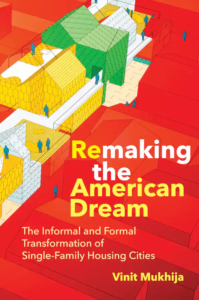
Mukhija, V., 2022, Remaking the American Dream: The Informal and Formal Transformation of Single-Family Housing Cities, MIT Press, Cambridge.
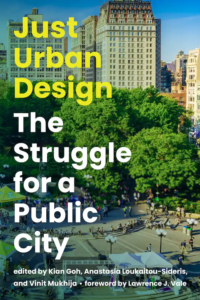


Goh, K., A. Loukaitou-Sideris, and V. Mukhija, 2022, Just Urban Design: The Struggle for a Public City, MIT Press, Cambridge.



Mukhija, V. and A. Loukaitou-Sideris, 2014, The Informal American City: Beyond Taco Trucks and Day Labor, MIT Press, Cambridge.



Mukhija, V., 2017, Squatters as Developers? Slum Redevelopment in Mumbai, Routledge, London. [Original edition: 2003, Ashgate, Aldershot, England (Studies in Development Geography Series of King’s College and School of Oriental and African Studies, University of London).]