



• Public Policy
  • Social Welfare
  • Real Estate Development
  • Urban Planning
  • Luskin Home
  • Undergraduate Program
  • Stay in Touch
  • Events Calendar
  • Give Now
  • About
    • Our Dean
    • Board of Advisors
    • Contact Us
    • Visit Us
    • Diversity, Disparities and Difference
    • Communications
      • UCLA Luskin in the News
      • Luskin Forum Online
  • Departments
    • Public Policy
    • Real Estate Development
    • Social Welfare
    • Undergraduate Program
    • Urban Planning
  • Apply
    • Master of Public Policy
    • Master of Real Estate Development
    • Master of Social Welfare
    • Master of Urban and Regional Planning
      • Double Degree With Sciences Po
    • PhD in Social Welfare
    • PhD in Urban Planning
    • Undergraduate Programs
  • Faculty
    • All
    • Public Policy
    • Social Welfare
    • Urban Planning
    • Real Estate Development
    • Faculty Executive Committee
    • Open Positions
  • Student Affairs & Alumni
    • Career Services
      • Employers
      • Fellowships
    • Student Support
    • Graduate Resource Library
    • Alumni Relations
  • Support
  • Programs
    • Research Centers & Affiliated Research
    • CA Title IV-E Education Program
    • Global Public Affairs (GPA)
    • Data Analytics Certificate
    • Luskin Lecture Series
    • Luskin Summit
    • UCLA Luskin California Policy Briefing
    • Public Service Weekend
    • Commencement
  • Administration
    • Financial Services
    • Events Office
    • Information Technology
  • Search
  • Menu Menu

Archive for: Michael Manville

Manville on Affordable Housing’s Impact on Property Values

June 21, 2022/0 Comments/in Luskin in the News Michael Manville /by Zoe Day

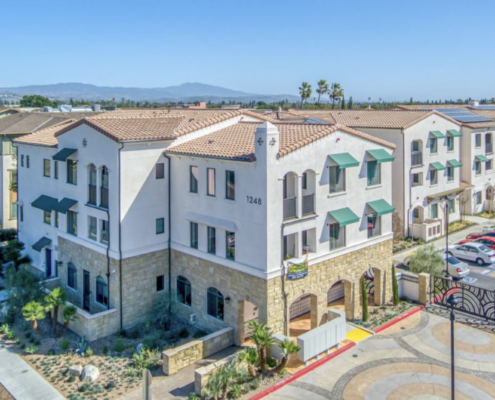
Associate Professor of Urban Planning Michael Manville was featured in an Orange County Register article about a recent study on the relationship among affordable housing, property value and crime. Research by the Livable Cities Lab at UC Irvine examined the impact of affordable developments in Orange County and found that affordable housing did not increase crime or drag down housing values. In many cases, there was a positive impact on property values after affordable housing was built. Manville explained that affordable housing is highly regulated and “we put it in places where lower-income people are already likely to live.” He said that while the addition of affordable housing can bring down property values in affluent, exclusive areas, it is rarely allowed to do so. But he added, “The purpose of public policy is not to keep your home value high.”

Read the article

Manville on Urban Design Impact of Caruso Properties

June 6, 2022/0 Comments/in Luskin in the News Michael Manville /by Mary Braswell

A Los Angeles Times article on the origins of developer Rick Caruso’s real estate empire included comments by Michael Manville, associate professor of urban planning. Caruso, who is running to become Los Angeles’ next mayor, has deployed his political instincts, force of personality and sizable resources to sway constituencies to support high-end shopping centers and residences, the article noted. Manville spoke about malls such as the Grove and Americana at Brand, manicured outdoor centers where visitors are enticed to hang out. From the inside,“this is a very nice urban environment, but from the outside, it’s not,” he said. “They’re often surrounded by vast quantities of parking, and that is bad urban planning in many ways.” Manville asked, “What would a Mayor Rick Caruso bring to the public realm? Would he bring what he has tried to do within his properties, or would he bring what his properties suggest to the city from the outside?”

Read the article

Manville on Sharing Wealth of Housing Market

May 31, 2022/0 Comments/in Luskin in the News Michael Manville /by Zoe Day

Associate Professor of Urban Planning Michael Manville was featured in a Los Angeles Times column about the possibility of a new luxury tax on homes in Los Angeles. The housing market has rewarded many homeowners who have seen their properties quadruple in value before selling. In response, the United to House L.A. initiative has proposed an additional tax on property sales above $5 million that could then be funneled into homelessness prevention. “If the value of your house doubles, that’s not because you did a killer kitchen remodel, it’s because L.A.’s economy took off like a rocket,” Manville said. “Did you personally kickstart the L.A. economy? Impressive as you are, probably you didn’t.” According to Manville, “the community as a whole created that value, and there is no particular reason that you should mop up a big share of it while someone who rents gets punished for it, simply because you were lucky enough to own a house while it happened.”

Read the column

ITS Study Offers Strategy for Freeway Congestion Pricing A new report by UCLA transportation experts outlines ways that California could implement congestion pricing while minimizing the financial burden on low-income residents

April 21, 2022/0 Comments/in For Faculty, For Policymakers, For Students, For Undergraduates, Public Policy News, Research Projects, School of Public Affairs, Urban Planning Michael Manville /by Claudia Bustamante
By Claudia Bustamante

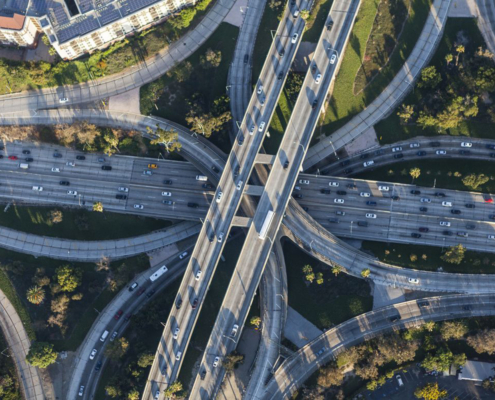
Among transportation experts, congestion pricing is the gold standard policy for managing traffic on freeways and highways. The strategy involves charging drivers tolls to use a road, and charging more during the busiest times — morning and evening rush hours, for example.

The intention is to discourage drivers from using their own cars and nudge them toward alternative forms of transportation, thereby unclogging traffic. But charging people to use busy roads raises questions about fairness, especially for low-income drivers.

A new report by UCLA transportation experts outlines ways that California could implement congestion pricing while minimizing the financial burden on those residents.

The study suggests that if congesting pricing were enacted in California’s six largest urban areas, about 13% of households in those areas might be unduly burdened because of the combination of their travel habits and low incomes. But while tolls could create an equity problem, the report suggests that the revenue generated by tolls could ultimately solve that problem.

The report was produced by the UCLA Institute of Transportation Studies, and its authors are Michael Manville, an associate professor at UCLA Luskin; Gregory Pierce, co-director of the UCLA Luskin Center for Innovation; and Bryan Graveline, a UCLA graduate student.

“Traffic congestion imposes real costs on a wide segment of society, with some of the most severe consequences falling disproportionately on the most vulnerable people,” Manville said. “Congestion pricing has the potential to alleviate many of those harms. But it’s important when we price roads to do so in a way that won’t unfairly burden low-income people. Fortunately, with a little political will, we should be able to do that.”

In the report, the authors defined “vulnerable” residents as those with household income below 200% of the federal poverty level (for example, $55,500 or less for a family of four) and at least one household member driving during peak congestion periods on a freeway. The study focused on Los Angeles, San Francisco, the Inland Empire, San Jose, San Diego and Sacramento.

The authors write that some of the ways to mitigate cost burdens on low-income drivers would come with pitfalls that dilute the goal of reducing traffic. For example, subsidizing public transportation and providing free transit passes for low-income residents wouldn’t help those who must still drive.

Another option would be lowering toll prices or making them free for low-income drivers, but that would risk negating the primary goal of congestion pricing: If the cost of driving isn’t high enough, people would likely continue to use their vehicles.

The most promising solution, they write, would be to provide direct cash assistance to low-income residents from revenue collected by the tolls.

“Similar policies already exist that help low-income people afford crucial goods and services, such as California’s CARE for energy, the federal SNAP program for food and groceries, and vouchers for housing,” Pierce said. “We should build on these models rather than reinvent the wheel.”

Another benefit of the strategy, the authors write, is that residents who receive money through the program could use the funds for any number of purposes — helping to cover the costs of congestion pricing when they drive or paying for public transit or other alternate transportation if they’re able to switch.

The report also suggests that county governments could identify people who are eligible for such a program by looking at which households are eligible for existing programs like SNAP or housing and utilities subsidies.

The authors acknowledge that there would be administrative and political hurdles to beginning a cash assistance program for transportation costs. They write that introducing congestion pricing to roadways one lane at a time would help demonstrate the strategy’s benefits, which could help overcome public skepticism about the policy.

Slowing Down Saves Money and Lives, Manville Says

March 16, 2022/0 Comments/in Luskin in the News Michael Manville /by Zoe Day

Associate Professor of Urban Planning Michael Manville was featured in an Atlantic article about the benefits of driving slower. Fast speeds use more energy to cover the same distance, making driving fast more dangerous, more harmful to the environment and more expensive, especially with the recent increase in gas prices. According to Manville, the first step to altering the culture of fast driving is simply to enforce existing speed limits more consistently. “If a camera catches everyone who speeds on a road segment, every time they speed, then you can actually get meaningful deterrence,” he said. Furthermore, speeding fines would be less expensive if they caught every instance of speeding. “The logic behind the high fines for speeding right now is that you don’t catch most people who speed,” Manville explained. However, if drivers knew they would be consistently penalized for speeding, they may slow down, a decision that could save money and lives.

Read the article

On the Decline and Fall of Parking Requirements

February 10, 2022/0 Comments/in Luskin in the News Donald Shoup, Michael Manville /by Zoe Day

A StreetsBlog article about the evolution of mandatory parking requirements noted that recommendations put forward long ago by Distinguished Research Professor of Urban Planning Donald Shoup are now gaining wide acceptance. Shoup recommended removing off-street parking requirements, allowing developers and businesses to decide how many parking spaces to provide for their customers. He also recommended pricing on-street parking so that one or two spaces will always be left open in order to avoid parking shortages. Finally, he suggested spending parking revenue on public service projects on the metered streets, which would help increase the popularity of demand-based pricing. Many local governments are taking these recommendations seriously and implementing changes. The article cited Associate Professor of Urban Planning Michael Manville‘s research on San Diego’s 2019 decision to stop requiring parking for housing near transit, which helped make affordable housing projects more economically viable. As Shoup predicted, parking requirements are quickly being eliminated across the United States.

Read the article

Manville on How Toll Roads Change Driver Behavior

February 7, 2022/0 Comments/in Luskin in the News Michael Manville /by Zoe Day

Associate Professor of Urban Planning Michael Manville spoke to Community Impact Newspaper about ways to reduce traffic congestion on roads and freeways. The Central Texas Regional Mobility Authority has broken ground on its $612 million expansion of US 183 North in Austin, Texas. The project will add four express toll lanes and two general-purpose lanes, making it 18 lanes wide in some areas. While Manville said he sees advantages in express lanes, he is skeptical the project will actually reduce congestion because adding non-toll lanes will induce demand and cause more people to use them. Manville explained that he prefers toll roads because they force drivers to consider the time involved and how they make trips. “If you just changed the behavior of a small number of people who might get on that road, the road works a lot better, carries more people, there’s less congestion, and you actually have a high-quality service,” Manville said.

Read the article

Manville Sees Pandemic Shift in Parking Paradigm

February 1, 2022/0 Comments/in Luskin in the News Michael Manville /by Zoe Day

Associate Professor of Urban Planning Michael Manville spoke to Commercial Observer about how the pandemic opened up new possibilities to utilize streets and parking spaces. Many restaurants were able to save their businesses by expanding outdoor seating into parking lots and street parking spaces; other parking spaces have been converted to electric vehicle charging stations and even ghost kitchens. “The pandemic gave everyone this very vivid illustration of how much space, even in very vibrant parts of their area, is devoted to surface parking,” Manville said. “It helped them understand, more than any other sort of medium could, just how much of this scarce resource of urban land is devoted to holding empty cars.” These pandemic-triggered changes have accelerated a shift toward reevaluating the parking paradigm, including a Los Angeles city ordinance that does not require builders to add new parking and efforts to transform some downtown parking structures into affordable housing units.

Read the article

New Transit Doesn’t Alleviate Traffic, Manville Says

January 4, 2022/0 Comments/in Luskin in the News Michael Manville /by Zoe Day

Associate Professor of Urban Planning Michael Manville spoke to the San Diego Union-Tribune about the anticipated effects of a new trolley line in San Diego. The 11-mile trolley runs from Old Town to UTC mall in La Jolla and is expected to carry 20,000 daily riders in the coming years. While the trolley line may seem like an ideal solution to reduce traffic congestion in the area, Manville explained that all the cars the trolley removes from the freeway “will almost certainly get replaced by backfilling prompted by reduced congestion” as open space on the freeway is filled by new commuters. “It’s a very established empirical fact that new transit doesn’t alleviate traffic,” Manville said. “It’s self-undermining, because congestion is the No. 1 thing that blunts demand.” He agreed that the new transit line is good for the economy and the region but noted that “you need to be realistic about what transit can and can’t do.”

Read the article

Manville on Showdown Over California Housing Laws

December 10, 2021/0 Comments/in Luskin in the News Michael Manville /by Mary Braswell

An NBC News report on a looming showdown over new California laws aimed at building more housing included insights from Associate Professor of Urban Planning Michael Manville. The laws going into effect on Jan. 1 include Senate Bill 9, which will allow property owners to construct more than one unit on lots previously reserved for single-family homes. Opponents say the laws will strip cities and counties of control over zoning and will not ensure that new units will be affordable. A proposed constitutional amendment that would undo several of the laws may appear on the November 2022 ballot. The debate illustrates how difficult it is to address the state’s affordable housing crisis. “It took a long time for us to get into this hole, and it’s going to take a long time to get out,” Manville said. “It’s going to take some time to see so much construction that rents are going to fall.”

Read the article
Page 6 of 17«‹45678›»

Recent Posts

  • Kim on Fire Recovery in Los Angeles January 13, 2026
  • Brian Taylor on the Retirement of New York’s MetroCard January 12, 2026
  • Stoll on the Factors Influencing Migration Patterns within the U.S. January 9, 2026
  • Northern California Maintains Nation’s Lowest ICE Arrest Rate Despite National Surge January 9, 2026
  • One Year After the Fires, Recovery Remains Uneven January 8, 2026

Contact

UCLA Luskin School of Public Affairs

3250 Public Affairs Building - Box 951656
Los Angeles, CA 90095-1656

Campus Resources

  • Maps, Directions, Parking
  • Directory
  • Contact
  • Academic Calendar
  • Careers
  • Diversity
  • University of California
  • Terms of Use

Follow

The statements on this page represent the views of people affiliated with the Luskin School of Public Affairs and do not necessarily represent the views of the University of California, or UCLA or its Chancellor.

Posts and comments by individuals at UCLA on social media channels may not reflect the opinions or policies of UCLA, the University of California or the Luskin School, nor its benefactors and academic partners.

Scroll to top