Launch of New UCLA Luskin Initiative Is True to Its Mission Event celebrating the creation of the Latino Policy and Politics Initiative brings UCLA community together with policymakers to share research and exchange information

By Les Dunseith

The newest research center at UCLA Luskin aims to bring together scholars and policymakers to share information so that political leaders can make informed decisions on issues of interest to Latinos, and its Dec. 6, 2017, kickoff event exemplified that goal.

Students, faculty and administrative leaders from the UCLA Luskin School of Public Affairs and throughout UCLA were among a crowd of about 175 people that also included elected officials, community activists, business leaders and other stakeholders who gathered in downtown Los Angeles to celebrate the launch of the Latino Policy and Politics Initiative (LPPI).

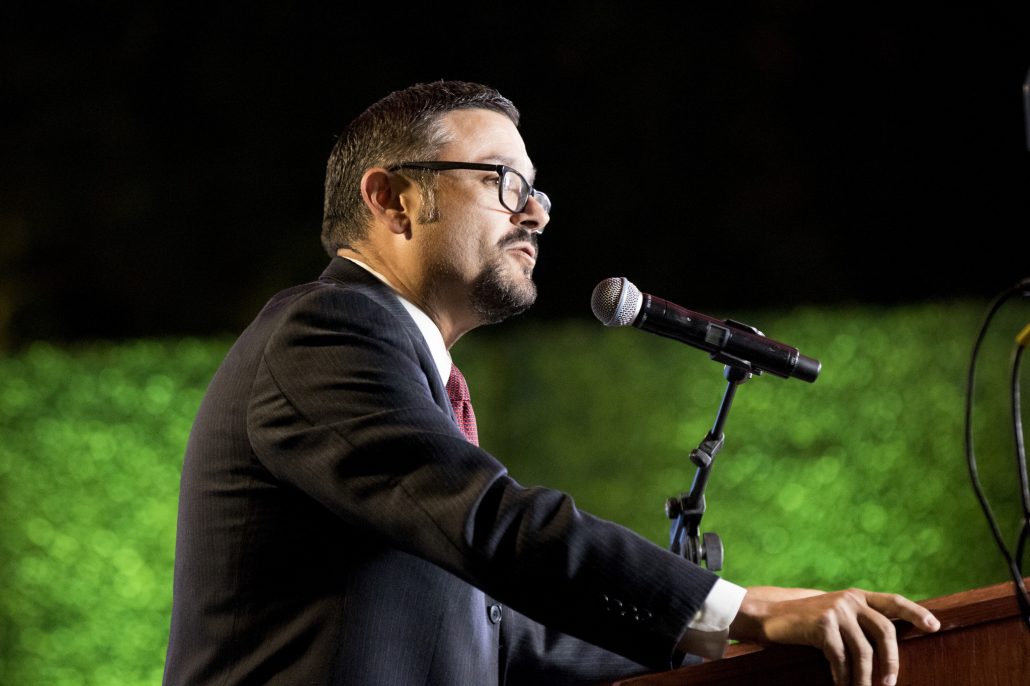
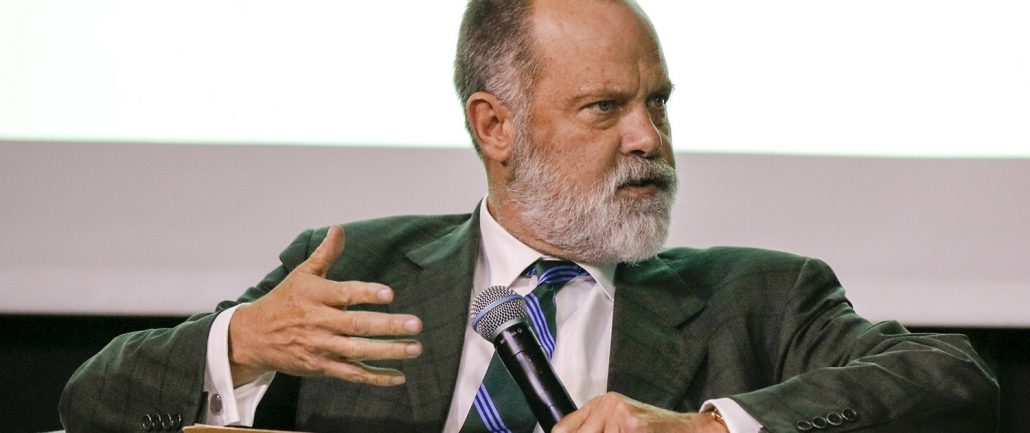
Attendees had an opportunity to hear keynote speaker Kevin de León, current president pro tem of the California Senate and a candidate for the U.S. Senate, talk about recent legislation on issues related to such diverse topics as labor, good government, the environment and education. He was then joined by a panel of experts in a spirited discussion of the current national political climate and major issues that directly impact Californians, particularly Latinos and other communities of color.

“In the great state of California, we celebrate our diversity,” de León told the crowd. “We don’t ban it, we don’t wall it off, and we sure as hell don’t deport it.”

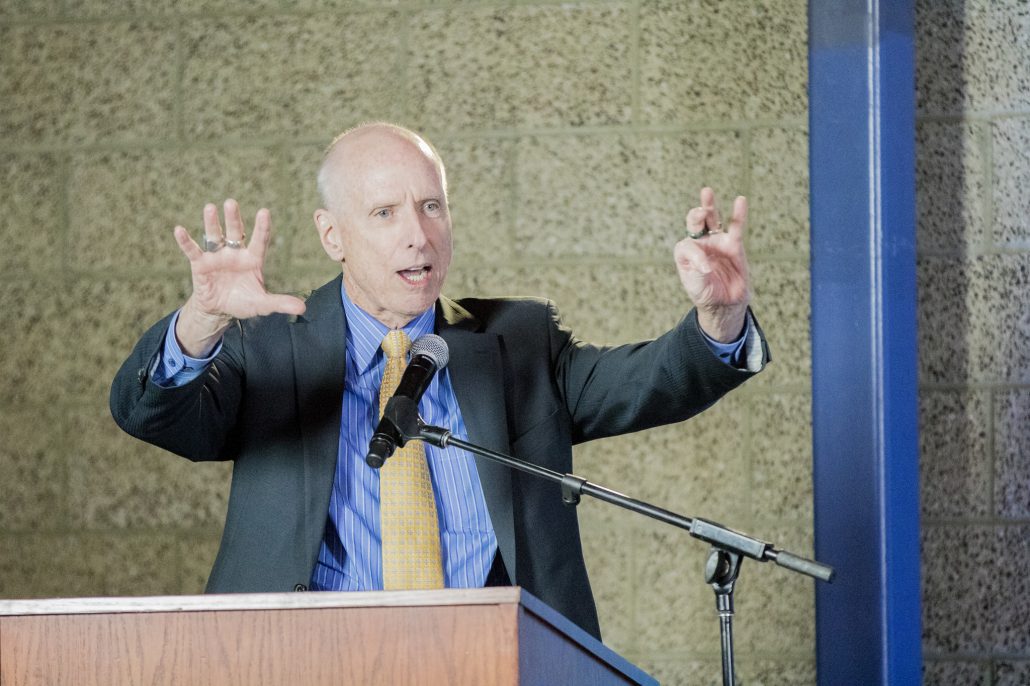
In his speech, de León talked about the state’s efforts to deal with climate change, to improve education and to provide a safe haven for all residents. For example, Senate Bill 54, the California Values Act, which de León championed, creates a safe zone at “our schools, our hospitals, our churches, courthouses and other sensitive locations so our undocumented immigrant communities can live their lives and conduct their businesses without fear.”

De León declared, “If this president wants to wage a campaign of fear against innocent families, he can count us out. Because the state of California won’t lift a single finger or spend a single dime to become a cog in the Trump deportation machine.”

One of the goals of LPPI, which received its startup funding from UCLA Luskin and the Division of Social Sciences, is to provide better access to information — real data, not alternative truths — to help leaders nationwide resist attacks on immigrants and also help them to craft new policies on other issues vital to Latinos.

“It is impossible to understand America today without understanding the Latino community and the power that it wields. And this institute is going to do that,” Scott Waugh, UCLA executive vice chancellor and provost, told the crowd.

“It’s going to harness all of the intellectual capacity that UCLA has — it’s going to be truly interdisciplinary,” Waugh explained. The co-founders of LPPI — Professor of Political Science and Chicana/o Studies Matt Barreto, UCLA Luskin Dean Gary Segura and LPPI Director Sonja Diaz MPP ’10 — “have a vision that reaches not just inside the School of Public Affairs but reaches out across the campus in areas like health, education, science, the arts — wherever Latinos have made a difference and continue to affect change in a profound way.”

Darnell Hunt, dean of the Division of Social Sciences at UCLA, noted in his remarks that the founding of LPPI comes at a particularly opportune time in American politics. “It goes without saying that we live in challenging times — challenging political times — and the Latino Policy and Politics Initiative will help us make sense of this contemporary setting with an eye toward transformative solutions.”

Barreto, who served as master of ceremonies for the night, spoke about the scope of LPPI’s vision. “We’re not only going to work on immigration reform — we know that immigration reform affects our community and we will work on that — but we are dedicated to work on every policy issue.”

He added, “Whether it has to do with climate change or clean energy, transportation, housing, homelessness, criminal justice or education, we are going to work on that. And we have experts at UCLA who will join us.”

Many of the 20 scholars from across the UCLA campus who are part of LPPI’s faculty advisory council attended the launch event, which began with a networking reception at La Plaza de Cultura Y Artes near Olvera Street, the founding site of Los Angeles itself. As musicians from La Chamba Cumbia Chicha performed, attendees had an opportunity to meet and exchange ideas with the featured speakers and various former and current elected officials in attendance, such as Gil Cedillo, the former state senator and current Los Angeles city councilman. Also in attendance were former California assemblyman and senator Richard Polanco and Amanda Rentería, the former national political director for Hillary Clinton’s campaign and now a staff member in the executive office of California Attorney General Xavier Becerra.
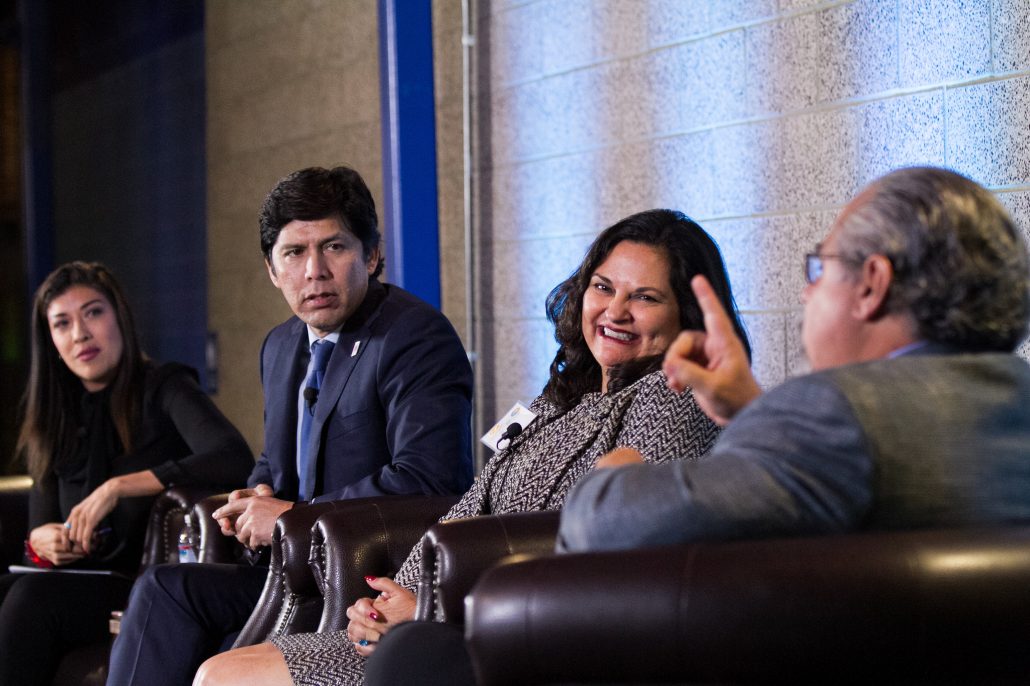
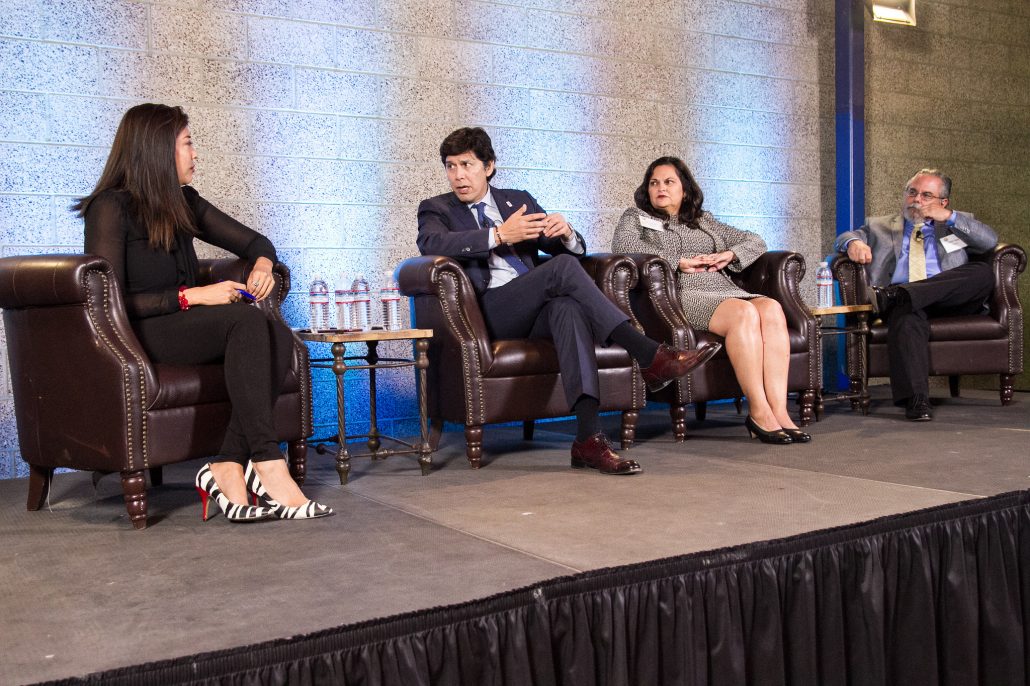
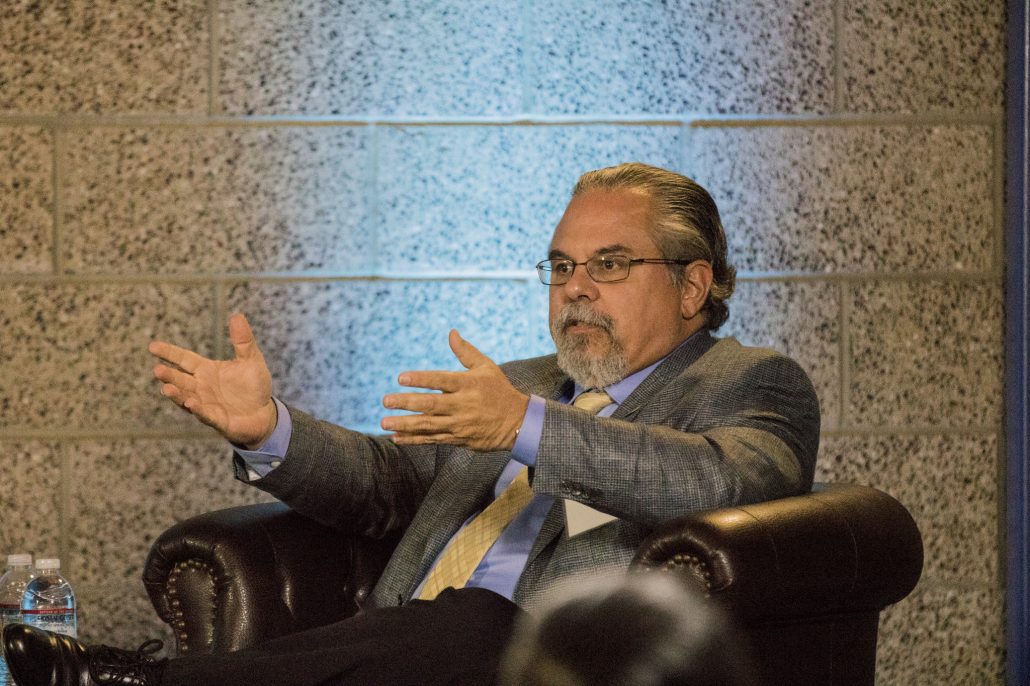
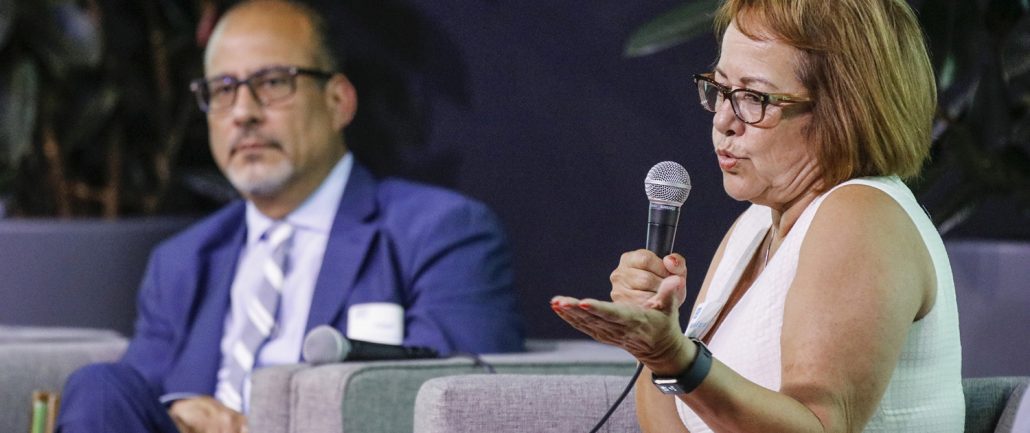
The event wrapped up with a panel discussion and Q&A moderated by Lucy Flores, a former assemblywoman in Nevada who now serves as vice president for public affairs for mitú, a multimedia enterprise that targets young Latinos. Panelists said that bolstering the number of Latino elected officials has been a vital step in bringing about positive change.

“In the end, votes are what count,” Segura said, noting that Latino’s political influence has not kept up with its rapid population growth. “In order for governments to enact policies that benefit Latinos, it is going to be required that Latinos be a significant share of elected officials.”

Panelist Laura E. Gómez, professor of law at UCLA and former interim dean of the Division of Social Sciences, expanded on that idea in light of a recent wave of disclosures related to sexual misconduct by men in positions of power.

“I think it’s really important … for us to realize that Latinos are a diverse community. We are not just men; we are also women. We are not just straight people; we are also gay and transgender people. And those are important numbers going forward,” she said.

Flores summed it up, “Demographics is not destiny.”

The fact that California often seems to be an outlier in the current national political climate was a recurring topic of the night, with several speakers praising Californians’ resistance to the policies of the current U.S. president. Can the state also serve as a model of progress?

“Despite all of the discord and disunity, California is standing tall for our values,” de León said during his speech. “From education to the environment, from high wages to health care, to human rights, to civil rights, to women’s rights, to immigrant rights, California is proof positive that progressive values put into action in fact improve the human condition regardless of who you are or where you come from.”

De León said California is a leader in innovation — “home to Hollywood and Silicon Valley and the best public university system in the world, the University of California. And we are on the cusp of surpassing the United Kingdom for the fifth largest economy on planet Earth.”

The state is thriving, he said, by doing exactly the opposite of what Donald J. Trump says. “We succeed because we are dreamers, not dividers. We succeed because we double down on lifting people up, not putting them down. We are not going to allow one election to erase generations of progress.”
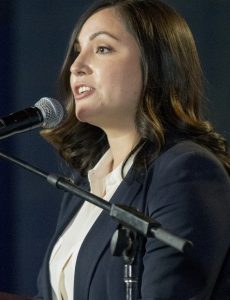
Photo by Les Dunseith

“I want to ask for your partnership, because this is what we need to do — we need to train a new leadership pipeline that is diverse but also represents us substantively,” LPPI Founding Director Sonja Diaz told the audience.

Saying that UCLA is “arguably the finest public institution in the nation, if not the entire world,” De León spoke enthusiastically of the promise that LPPI represents for elected officials such as himself. “We need the empirical evidence, and it’s about time we have this institution established at UCLA.”

Later, when speaking about climate change during the panel discussion, he expanded on the idea that knowledge equals power.

“California has the ability — if we have access to this type of information, this data — to export our policies to other states, even to red states that may not believe in climate change per se,” de León said. “We are showing that, whether you believe in climate change or not, you can actually grow an economy by delinking and decoupling carbon from GDP.”

Access to data is important, but it takes real leadership to turn information into action. “You can have all the academics in the world, all the data, but it doesn’t make a difference if it just sits in a book on a shelf,” de León said. “You have to take that data and move it with political power to actually implement it, execute it, to improve the human condition.”

Segura said it is his goal — and the mission of LPPI — to unite scholars and policymakers for mutual benefit, helping academics turn research into actionable policy.

“Facts do matter. Facts may not be a good way to sell people who don’t want to hear them, but lots of well-meaning elected officials want information,” Segura said. “One of the jobs of the institute is going to be to take the data out of those dusty books and put them in the hands of policymakers in a useful time frame so that policymakers can respond.”

The Latino Policy & Politics Initiative is a comprehensive think tank around political, social and economic issues faced by California’s plurality population of Latinos and other people of color. Anyone interested in providing financial support may do so through the UCLA giving page for LPPI.

Additional photos from the event may be viewed in an album on the UCLA Luskin feed on Flickr. Watch the video of our speakers and panelists.


The Goal: Making Diversity Redundant UCLA Luskin alumni, faculty, students and staff gather for a daylong diversity recruitment fair showcasing programs and commitment to social justice

“You need diversity because it is excellence and its absence is a sign of intellectual weakness and organizational incapacity. So what we do here today and what we do at Luskin makes the country, Los Angeles and the world a better place.”

— UCLA Luskin Dean Gary Segura

By Stan Paul

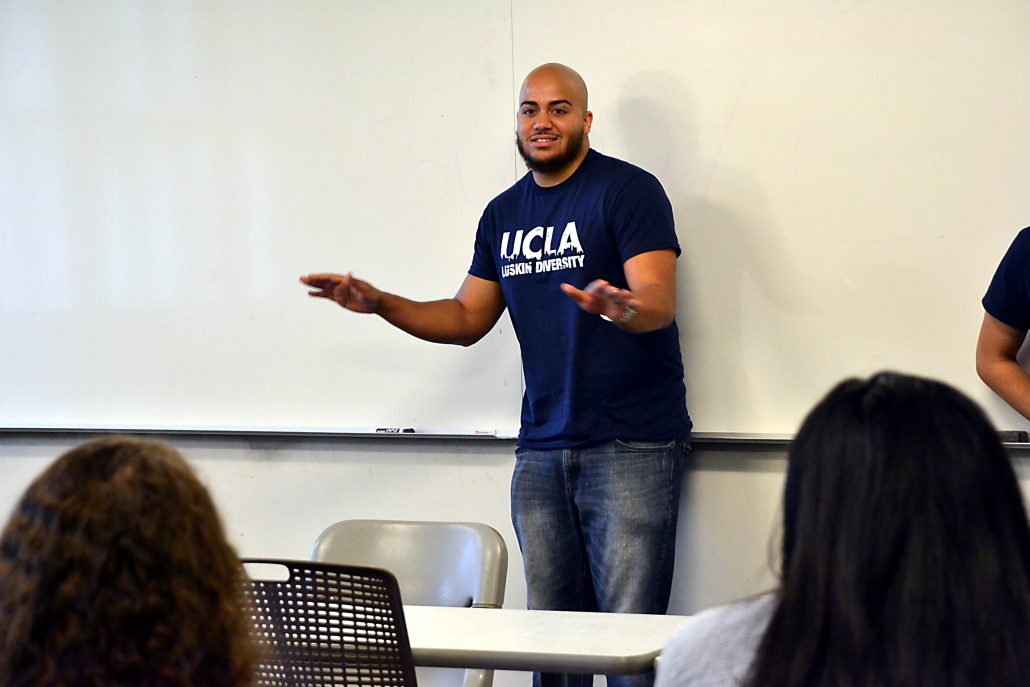
Gary Segura, dean of the UCLA Luskin School of Public Affairs, was happy to host the second all-school diversity recruitment fair at UCLA. But, in truth, he would like to see it become redundant.

“I am hoping and believing that we are getting very close to the verge of making it redundant in what Luskin does,” said Segura, who has devoted his academic life to studying issues related to the issues highlighted by the fair.

“By your arrival next fall, Luskin will indisputably be the most diverse school of public affairs in the United States,” Segura said to an audience of students who have applied, or are thinking of applying, to one or more of the School’s three professional graduate programs in public policy, social welfare and urban planning.

In addition to UCLA Luskin’s outstanding faculty, Segura cited the School’s wide array of groups, caucuses and organizations — including the D3 Initiative (Diversity, Disparities and Difference) — and new programs, new hires and ongoing searches for new faculty focused on racial inequality, multicultural planning and immigration policy, among other areas of expertise.

The many UCLA Luskin student groups, along with their classmates, alumni, faculty and staff, came together again this year to organize the Dec. 2, 2017, event.

“At some point, the study of class and racial and sexuality differences as an understanding of public policy, social well-being and urban issues is not a niche, it is the discipline,” Segura said. “It’s 70 percent of the population.”

Joining the dean in welcoming fair attendees were faculty leaders in Public Policy, Social Welfare and Urban Planning, along with a panel of Luskin alumni representing all three graduate programs.

Making her pitch to candidates for the Master of Social Welfare professor and department chair Laura Abrams focused on recent tax legislation passed by the U.S. Senate.

“What does the tax bill have to do with social welfare at the UCLA Luskin School of Public Affairs?” she asked. “Everything,” came a soft voice rising from the audience, stealing a bit of Abrams’ thunder.

“That was on my notes,” quipped Abrams, who explained that the bill would directly attack Social Security, Medicare and “all the public benefits that are the foundation of our social welfare system.”

She then asked who would deal with the costs of economic hardships on the front lines.

“Social workers!” she answered emphatically, adding, “We are going to have to be the ones who pick up the pieces of those who are displaced, who are homeless, who are pushed into the criminal justice system, who don’t have enough to eat and who don’t have housing.

“So,” Abrams added, “we need all of you, not just those entering social welfare, but the planners and the policy makers because you are the future that is going to have to fix what is happening today.”

Manisha Shah, associate professor and vice chair of Public Policy, highlighted the expertise of Luskin faculty in areas such as health policy, education, immigration, inequality, science and technology.

“We have a lot of flexibility in the department based on what your interests are and what you want to do, what type of policy arena you want to work in,” said Shah, who cited the department’s mixture of qualitative and quantitative approaches to evidence-based policymaking and analysis.

Vinit Mukhija, professor chair of Urban Planning, said that diversity and excellence are not trade-offs in outlining the holistic approach his department — which will soon celebrate 50 years at UCLA — takes in making admissions decisions. Urban Planning emphasizes not only grades but also a student’s personal statement, recommendations and the importance of relevant work experience.

Mukhija, who studies informal housing and slums in the global north and south, explained his own interest as a planner in finding ways to improve living conditions in slums, and his goal to “learn about them to change our ideas about cities and about our design ideas, our rules and to have more just cities.”

Also providing information and encouragement were recent graduates of the Luskin School’s programs who participated in a series of discussions with aspiring students.

Panelists were asked what motivated them to apply to Luskin in their chosen disciplines.

“Communities of color are not always exposed to urban planning although we’re often experiencing the negative effects of what actually happens,” said Carolyn Vera MURP ’17, who was born and raised in South Central Los Angeles. Vera, who now works at a transportation consulting firm, said that when she moved back to Los Angeles following her undergraduate years, she didn’t recognize the city she grew up in, citing the effects of gentrification. Vera said urban planning is such a diverse field and, “I knew I wanted to stay in L.A. and work with my community.”

It was homelessness that brought Cornell Williams MSW ’12 to UCLA Luskin Social Welfare.

“I was homeless for a year. I had a college degree and I was sleeping in the park,” said Williams, now a psychiatric social worker for Los Angeles County Department of Mental Health and clinical director of the Jeffrey Foundation in Los Angeles. “Like a lot of our clients and people we have the passion to serve, I was stuck in that position and I had no knowledge of resources and access.”

Williams said the experience forced him to ask tough questions about himself and his future. “I came to one of these events and had an interest in all three programs,” but he said that Gerry Laviña, director of field education and associate director of D3, “was a big part of helping me conjure or stir the gifts inside of me to choose social welfare.”

Williams said UCLA Luskin’s Social Welfare gave him the flexibility to work in “every environment you can think of, and I’ve worked in a good number of them myself.”

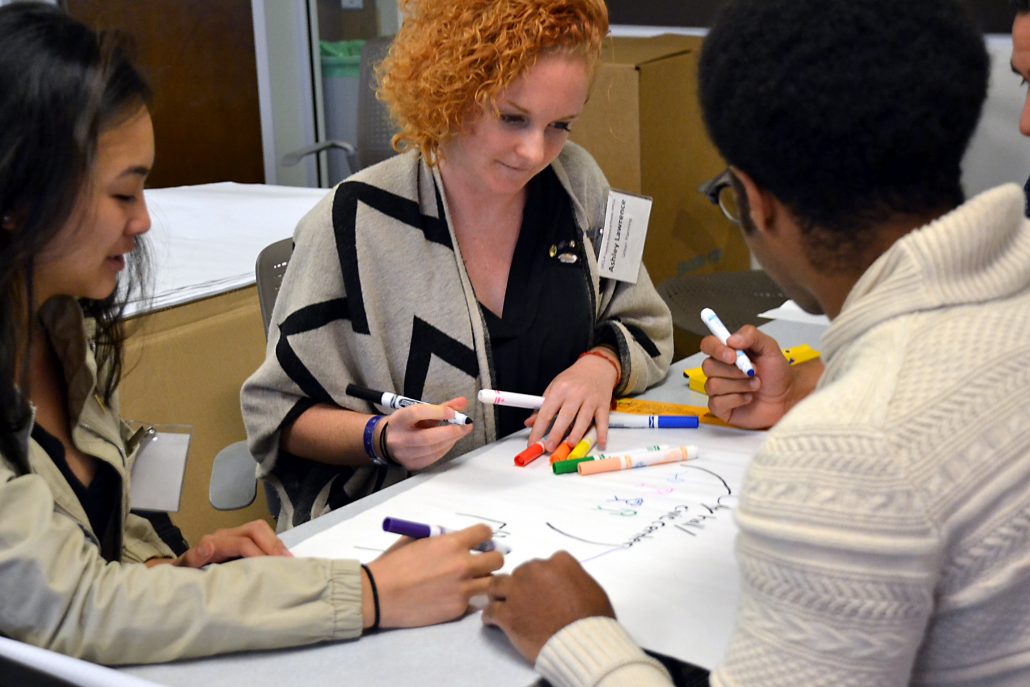
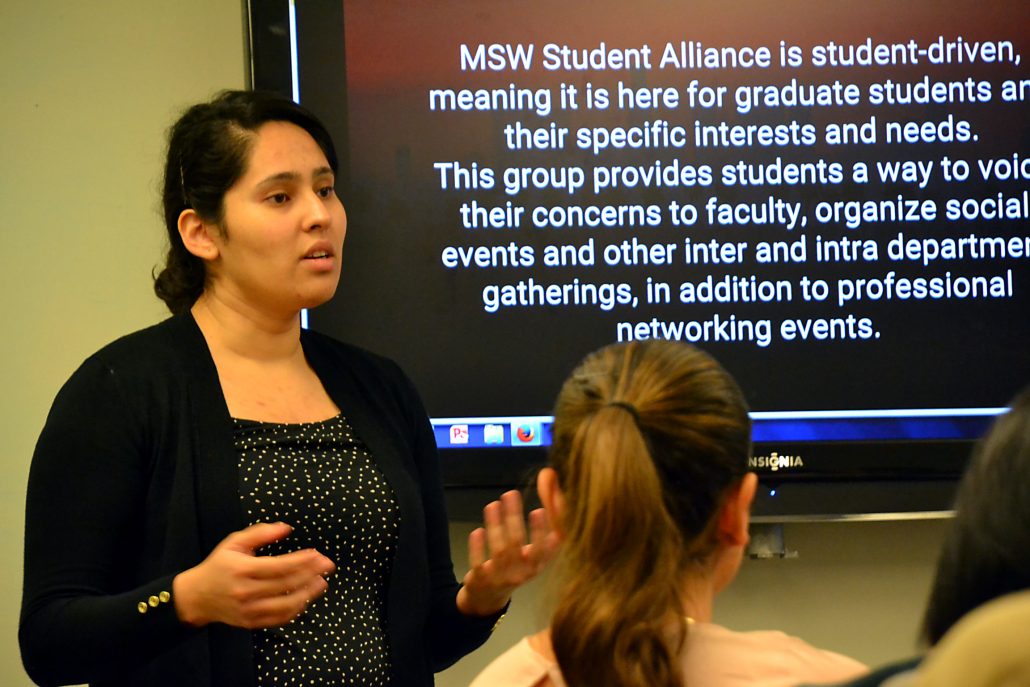
The day’s events also included breakout sessions led by a number of the School’s sponsoring and organizing student groups: D3, Luskin Leadership Development, Social Welfare Diversity Caucus, Policy Professionals for Diversity & Equity, and Planners of Color for Social Equity.

Attending the event was recent UCLA graduate Vanessa Rodriguez, who said she hopes to enroll in the MSW program next fall. Rodriguez, who grew up in Boyle Heights and has worked with children with autism, said she has always had a passion for helping people. She said her reason for pursuing an MSW degree would be to work with women and victims of domestic abuse.

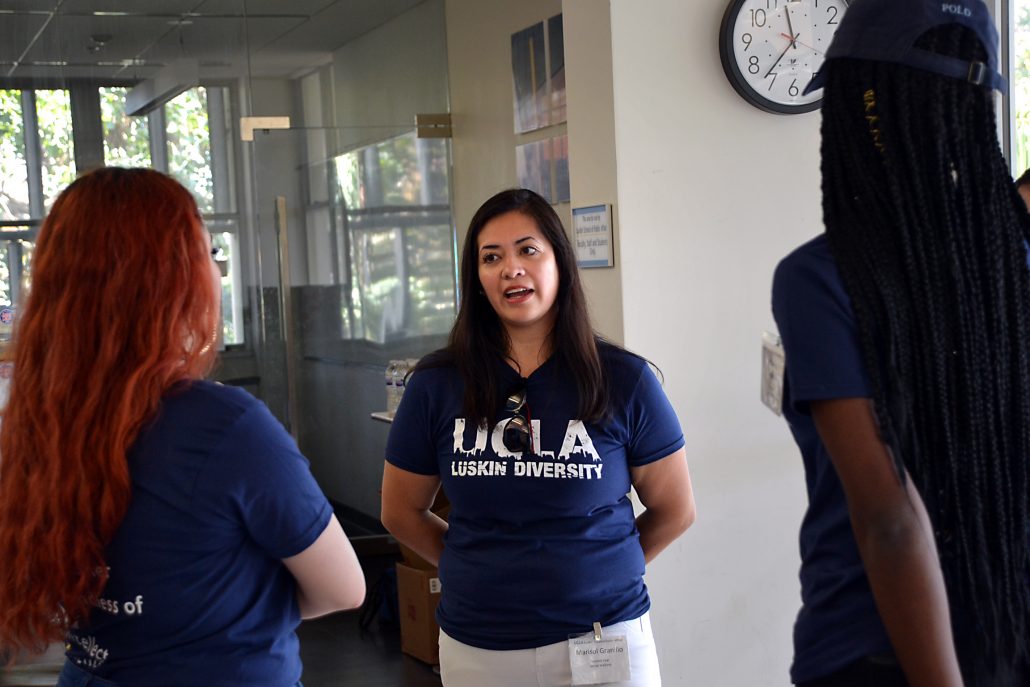
Among the staff and student volunteers who made the day a success was second-year MSW candidate Marisol Granillo Arce, who said she had attended a number of Luskin diversity related fairs before applying. Granillo Arce, who now also works as a graduate researcher for the UCLA Institute for Research on Labor and Employment, said it is exciting to meet future agents of change and tell them: “You’ve got what it takes to be a social worker, urban planner, and public policymaker.”

Granillo Arce added: “I think that individuals thinking of applying get the unique opportunity to know the staff, professors and students in the different departments. It is truly inspirational. You end up leaving the fair more confident and inspired.”

UCLA Study Finds Price of Freedom Too High for Poor L.A. Families While bail companies made millions in profit, hundreds of thousands of residents in poor communities remained behind bars awaiting trial, according to researchers

By Stan Paul

Between 2012 and 2016 more than $19 billion in bail was levied on individuals arrested for felonies and misdemeanors by the Los Angeles Police Department (LAPD), according to a new study conducted by the Million Dollar Hoods Research team based at UCLA. Of this, $17.5 million in cash went to the court and more than $193 million in nonrefundable bail bond deposits were pocketed by bail bond agents.

The report, “The Price for Freedom: Bail in the City of L.A.,” is the work of Kelly Lytle Hernandez, interim director of UCLA’s Ralph J. Bunche Center for African American Studies, and two UCLA graduate students: Isaac Bryan, a master of public policy student at the UCLA Luskin School of Public Affairs, and Terry Allen, an education Ph.D. candidate.

In California, those who are arrested for crimes, in most cases, have the right to freedom prior to trial if they can post bail determined by the court. Money bail is the mechanism for this freedom, which is also intended to ensure that the accused will appear for all court pretrial and trial proceedings.

Of the total of bail assessed — nearly $4 billion for each of the years in the study — approximately 70 percent was unpaid, meaning that nearly a quarter of a million people remained in custody before arraignment and trial. This percentage, which translates to more than $13.5 billion that went unpaid, also represents overwhelmingly those unable to pay — the poor. According to the study, disproportionately bearing the burden of the actual dollars paid for bail bonds were women, “namely black women and Latinas, representing mothers, grandmothers, aunts, friends and wives of the accused,” the researchers said in the report.

“This is an astounding toll that Los Angeles residents — not yet convicted of any crime — are charged for their freedom,” said Hernandez, also an associate professor of history at UCLA and one of the nation’s leading historians on race, policing, immigration and incarceration. “It’s no wonder that so many Californians remain imprisoned before trial simply because they cannot afford bail. This is an extraordinary amount of wealth taken primarily from low-income, communities of color.”

Of almost $200 million paid for bail bonds, Latinos represented $92.1 million, African Americans $40.7 million, and whites $37.9 million, the study’s authors reported. Among communities studied, four out of the top five were located in South Central Los Angeles and the greatest amounts of bail paid were in city council districts with the highest unemployment, with homeless individuals making up nearly $4 billion of the money bail levied in the areas studied.

The information, obtained through public records act requests fulfilled by the LAPD in March of 2017, was broken down by City Council districts “so elected officials can see how much their constituents are paying to a private industry that doesn’t generate outcomes,” Hernandez said.

Bryan, who served as lead author of the report, is a second-year MPP student at UCLA Luskin.

“I think the bail report will revive a conversation on the economic sustainability of such a wide net in pretrial incarceration, the morality of such a punitive system reaction to poverty, and the disparate racial impacts associated with the current money bail system,” he said. “I am hoping it is the final push that is needed to spur policymakers toward a more equitable pretrial system.” Bryan is also serving as a David Bohnett Fellow in Mayor Eric Garcetti’s Office of Reentry, established in 2015.

Hernandez said that other states have found other non-monetary ways to ensure that the accused will return to court. Six states currently use an algorithm to help determine risk to public safety and risk of flight, Bryan said. New Jersey, for example, uses such a risk assessment tool. Prosecutors are still able to disagree with the algorithm, which may require another hearing before a judge.

According to Hernandez, the alternatives have “functioned well, if not better than money bail.”

But, for L.A., most people are not able to pay money bail, according to the researchers. For those who pay bail bond agents, that money — typically about 10 percent of the bail amount levied — is never returned and additional fees apply, the research team reported. “Among them, many individuals as well as their families and communities are simply too poor to pay the price of freedom,” they conclude.

The report may be accessed online.

A New Tool to Help Plan for Expected Growth in Electric Vehicles Luskin Center’s Plug-in Electric Vehicle Readiness Atlas informs investments, policies and plans to meet consumer demand

More than 82,000 electric vehicles were registered in Southern California between 2011 and 2015. The number of new plug-in electric vehicles registered there during 2015 increased a whopping 992 percent from 2011.

Now, a report produced by the UCLA Luskin Center for Innovation forecasts continued exponential growth in the electric vehicle market, with more than 700,000 plug-in electric vehicles expected to hit Southern California roads by the end of 2025.

This forecast assumes that over time more residents of apartments and other multi-unit dwellings will be able to charge at home. The report, the Southern California Plug-In Electric Vehicle Readiness Atlas, can help make that happen, according to J.R. DeShazo, director of the Luskin Center for Innovation.

“We wanted to provide a tool that decision-makers can use to accommodate forecasted consumer demand for electric vehicles and charging infrastructure,” DeShazo said. For example, the atlas provides planners with critical spatial information for meeting charging demand in multi-unit residences and other places. It can also help utilities identify where utility upgrades may be needed to accommodate additional electricity loads.

The atlas documents the concentration of plug-in electric vehicles (PEVs) in a given neighborhood, visualizes how that concentration varies over the course of a day, and projects PEV growth over the next 10 years for each of the 15 sub-regional councils of government within Southern California.

With support from the Southern California Association of Governments (SCAG) and the California Energy Commission, the 2017 atlas is an update to the first Southern California PEV Readiness Plan and Atlas created by the Luskin Center for Innovation in 2013. Recognizing that the plug-in electric vehicle market has changed considerably in the last five years, the updated atlas helps decision-makers plan for future changes.

“Like the region’s first PEV plan and atlas, the 2017 update can help open people’s eyes to the promises and challenges posed by electric charging stations,” said Marco Anderson, a senior regional planner with SCAG. As a liaison to cities in the region, he has seen how many cities used the first atlas to find local partners for charging station sites.

The new maps include the following spatial information:

  • the locations and sizes of workplaces, multiunit residences and retail establishments that could potentially host PEV charging
  • the locations of existing charging infrastructure, including the number of charging units/cords and level of service
  • and the locations of publicly accessible parking facilities to fill in gaps in PEV charging, particularly in older urban cores.


Unlocking Millions of Dollars in State Incentives for Solar Power New research by GRID Alternatives and UCLA Luskin Center for Innovation quantifies the opportunities and potential benefits of solar power on affordable housing units in L.A. County

By Colleen Callahan MA UP ’10

Karina Guzman is both property manager and resident of a low-income housing complex for working families in Southern California. Even with the job and relatively affordable rent, Guzman worries about paying her electricity bills. But relief is coming from what she found to be a surprising source: solar panels recently installed on 17 of the 27 buildings in her complex.

The solar panel system will offset the cost of powering lights and other needs in common areas as well as help residents lower their electricity bills. “I can’t wait for the solar panel to help me pay a credit card bill, and maybe even save for a vacation,” Guzman said.

Low-income households typically spend higher percentages of their incomes on energy costs and thus stand to benefit most from utility bill savings due to solar power generated on their homes. Yet, while Los Angeles County is a national leader in the adoption of residential solar, the homes of low-income households account for less than 1 percent of residential solar capacity across the county, according to new research by the UCLA Luskin Center for Innovation and the nonprofit organization GRID Alternatives. This may change.

The study found that cities in Los Angeles County could soon unlock millions of dollars annually in state incentives for residential solar on affordable housing.

Starting in 2018, California will offer a solar rebate program targeted at putting solar panels on the roofs of affordable housing developments. With an annual budget of up to $100 million, the Solar on Multifamily Affordable Housing program “could make a big difference toward reversing the current inequity in the distribution of residential solar systems,” said Michael Kadish, executive director of GRID Alternatives Los Angeles, which makes renewable energy technology and job training accessible to underserved communities.

The program, along with smaller existing state solar rebate programs such as the Low-Income Weatherization Program available for large multifamily residences located in disadvantaged communities across the state, will encourage the installation of solar systems that help affordable housing residents’ reduce their utility bills.

But there is a catch.

Residents of affordable housing and other multifamily dwellings can only take advantage of state solar incentive programs if their utility offers a virtual net metering policy allowing residents to receive credits from the system. Virtual net metering is a common billing mechanism that allows multiple parties to share the financial benefits of a single solar power system.

Southern California Edison offers virtual net metering, but that’s not the case with municipally owned utilities in cities such as Los Angeles, Burbank, Glendale and others in the county. Without virtual net metering, there is no real mechanism for residents of multifamily dwellings, including affordable housing, to access the financial benefits of solar.

Now is a good time for the City of Los Angeles ― which we identified as having the largest share of rooftop solar potential (62 megawatts) and rebate-eligible rooftop solar potential in the region ― to consider removing the policy barrier that is currently preventing myriad residents of multifamily dwellings from realizing the benefits of residential solar,” said J.R. DeShazo, director of the UCLA Luskin Center for Innovation and chair of UCLA Public Policy.

Researchers calculated the potential of 115 MW of rooftop solar power throughout Los Angeles County on the more than 1,100 affordable housing properties that would qualify for a solar rebate. Researchers quantified the potential benefits if this physical capacity for solar on affordable housing was realized in Los Angeles County:

  • $11.6 million annually in utility bill savings for affordable housing residents
  • $4.9 million annually in savings for affordable housing property owners
  • $220.6 million in funding from state programs to spur local economic development
  • 1,800 job years (one year of full-time work or the equivalent) created
  • More than 3,800 job training opportunities and nearly 31,000 job training hours that can be strategically targeted to encourage an equitable clean energy workforce

The report includes recommendations for designing a virtual net metering tariff in Los Angeles to help maximize these types of benefits. Findings also highlight the opportunity to target solar workforce development benefits to residents of affordable housing who are more likely to live in communities with higher unemployment rates than the county at large.

The report can be found online.


Guiding the Next Gen of Leaders UCLA Luskin welcomes new and returning Senior Fellows from the public, private and nonprofit sectors

By Stan Paul

For more than two decades the Senior Fellows Leadership Program at the UCLA Luskin School of Public Affairs has matched the School’s students with professionals.

UCLA Luskin Public Policy, Social Welfare and Urban Planning students have enhanced their academic experience with real-world, practical applications by making direct connections with individuals working in their areas of interest.

This year is no exception. Now in its 21st run, the program has fielded an outstanding class of fellows representing a wide range of professional expertise. The 2017-18 class includes a former U.S. Congresswoman, a current U.S. Foreign Service officer, the president of a popular local news media and cultural outlet, and an advocate for children’s rights.

“We are particularly proud of this group of Senior Fellows in part because it’s one of the largest groups of new and returning fellows,” Dean Gary Segura said in his opening remarks at an Oct. 26, 2017, welcome breakfast marking the kickoff of the 2017-18 Senior Fellows. “We are overwhelmed by your generosity. More importantly, we are overwhelmed by your willingness to share some of your valuable time with the next generation of leaders in Los Angeles and beyond. And, I mean by that, the 575 young people that make up the student body of the Luskin School of Public Affairs.”

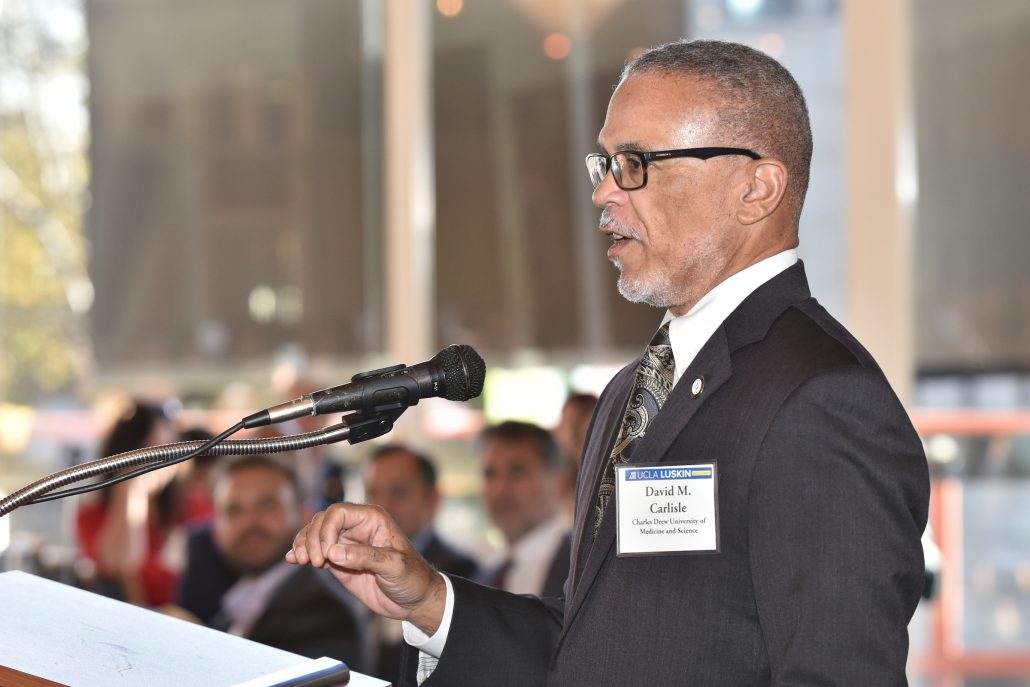
Among the returning Senior Fellows is David Carlisle, president and CEO of Charles Drew University of Medicine. Carlisle, who also is an adjunct professor at the David Geffen School of Medicine at UCLA, served as keynote speaker for the gathering at UCLA’s Faculty Center.

“This is one of the most wonderful activities that I do every year … and I look forward to coming back because of the interaction with young people that this program provides,” Carlisle said to Luskin student mentees, faculty, staff and guests.

In his presentation, Carlisle, who has served as a Senior Fellow since 2007, stressed the continued importance of the mentor program. In an economic sense California is experiencing a “golden age,” Carlisle said. But “we are still challenged by meeting demands cultivating personal capital in the state of California and the United States … human capital. And, there are too many places in our state where people are still challenged to participate fully in the economic engine that is the state of California.”

For second-year Master of Urban and Regional Planning student Sonia Suresh, an interest in affordable housing development and working with homeless populations led to her choice of Anita Nelson as a Senior Fellow mentor. Nelson is the CEO of SFO Housing Corporation, a Los Angeles-based organization committed to providing housing and support services for homeless and low-income people.

“We had a great conversation on our backgrounds and interests, as well as the type of affordable housing her organization builds,” said Suresh, who is also a member of Planners of Color for Social Equity at UCLA Luskin. “We have set up a day for me to shadow her and her development team.”

Second-year Master of Public Policy student Bei Zhao and first-year urban planning student Alexander Salgado were partnered with returning fellow Steven Nissen, senior vice president, legal and governmental Affairs, for NBC Universal.

Zhao, a native of China who has worked in investment banking in Beijing, said that the breakfast and mentor program provided the opportunity to talk about participants’ backgrounds and professional experience. She said she was amazed by Nissen’s experience bridging the private, public and nonprofit sectors, “which is also the direction I want to build for my own career.” Zhao said she hopes to apply her public policy and finance experience in the public sector of a nonprofit organization.

Nissen and his mentees have already planned on continuing their conversation. “At the end of the breakfast, he invited us to visit NBC Universal for further meetings … which shows his generosity for the future generation,” Zhao said.

The Senior Fellows Leadership Program is part of the Luskin School’s Leadership Development Program which is led and organized each year by VC Powe, director of career services and leadership development.

In addition to Nelson, new members of the Senior Fellows are:

  • Elizabeth Calvin, senior advocate, Children’s Rights Division, Human Rights Watch
  • Rick Cole, city manager, city of Santa Monica
  • Efrain Escobedo, vice president, civic engagement & policy, California Community Foundation
  • Christine Essel, president and CEO, Southern California Grantmakers
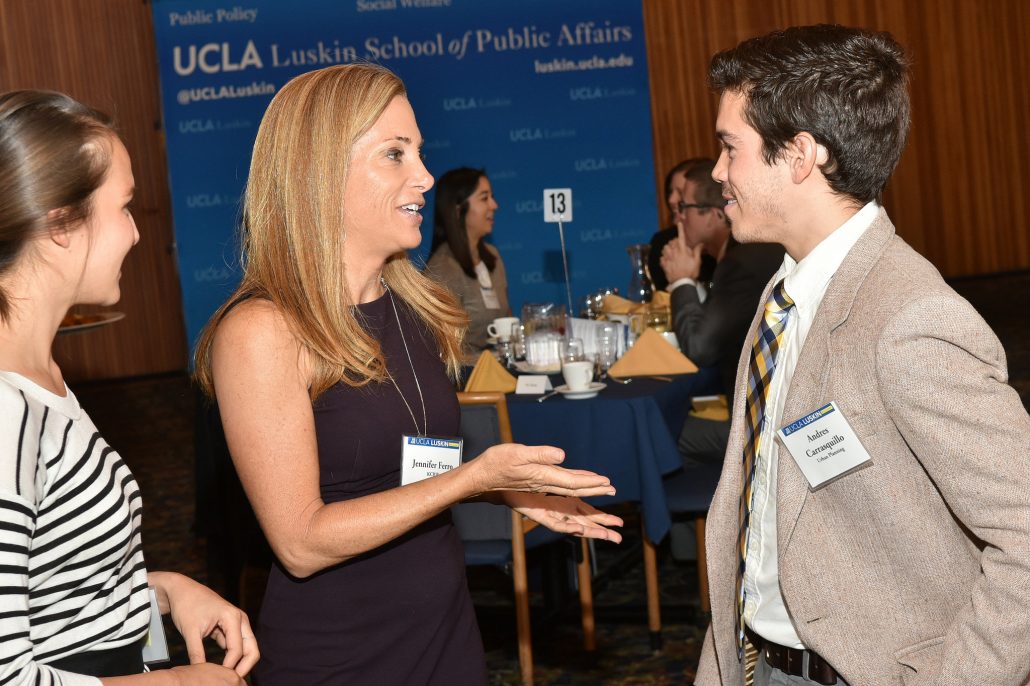
  • Jennifer Ferro, president, KCRW
  • Anne Miskey, chief executive officer, Downtown Women’s Center
  • Erica Murray, president and CEO, California Association of Public Hospitals
  • Rick Nahmias, founder/executive director, Food Forward
  • Seleta Reynolds, general manager, Los Angeles Department of Transportation
  • Michelle Rhone-Collins, executive director, LIFT-Los Angeles
  • Lynn Schenk, former Congresswoman, California 39th Congressional District
  • Dan Schnur, director, American Jewish Committee; former director, USC Unruh Institute of Politics
  • Heather Joy Thompson, diplomat-in-residence based at UCLA Luskin; Foreign Service Officer, U.S. State Department
  • David Wright, CEO, Los Angeles Department of Water and Power

More information on the Senior Fellows Leadership Program, Senior Fellow bios and a full list of returning Senior Fellows are available online.

Bringing Experience, Expertise to Problem-Solving Professions Four scholars join UCLA Luskin’s faculty in Public Policy, Social Welfare and Urban Planning

By Stan Paul

Four new faculty members will add a wide range of knowledge and expertise to the world-class faculty of UCLA’s Luskin School of Public Affairs, as of the 2017-18 academic year.

The four will expand research and teaching in public policy, social welfare and urban planning at the Luskin School, with expertise in areas including housing and spatial inequality, labor and human capital impacts of climate change, health disparities for marginalized populations, and youth and urban violence.

Kenya Covington, who has experience teaching undergraduate and graduate courses at Luskin, was officially appointed to Public Policy in July. She has taught courses at Luskin on housing policy, research methods, forces of urbanization, social inequality and urban poverty. This summer, Covington completed her second online version of the school’s popular undergraduate introductory public affairs course, which she developed. The course is a requirement for the public affairs minor.

Covington, a former longtime professor of urban studies and planning — and 2015 Distinguished Teacher of the Year — at California State University, Northridge, studies social and economic inequality associated with the structural makeup of metropolitan areas. Her work suggests ways to better utilize social and urban policies that likely mitigate disparities in economic opportunity. Covington earned her Ph.D. in public policy from the University of Maryland, Baltimore County.

Latoya Small joins Luskin Social Welfare as an assistant professor from her former appointment at the University of North Carolina, Chapel Hill School of Social Work. Her research addresses health disparities and social justice issues for marginalized populations at the intersection of poverty, mental health and behavioral health. In her work related to HIV, women and children, she has looked at ways to empower HIV-infected youth in South Africa to maintain their medicine regimes and promote the avoidance of risky behaviors, while encouraging family participation in their health care.

Small earned her Ph.D. at New York University Silver School Of Social Work.

Karen Umemoto, formerly of the University of Hawai’i at Manoa, is expected to hold a joint appointment with Urban Planning at Luskin and the Asian American Studies Department. Umemoto, who holds a doctorate in urban studies from the Massachusetts Institute of Technology, focuses her teaching and research on planning and governance in multicultural societies, race and ethnic relations, youth and urban violence, and community building.

At the University of Hawai’i, Umemoto taught courses on public policy and planning theory, community planning, community-based economic development, diversity and multiculturalism in planning, and qualitative methods and evaluation.

Jisung Park will join Public Policy as an assistant professor in January 2018. Park will also be a member of the faculty of UCLA’s Fielding School of Public Health. His research agenda includes the labor and human capital impacts of climate change, the prospects for long-run climate adaptation, and environmental determinants of economic mobility.

Park, a Rhodes Scholar, earned his Ph.D. in economics from Harvard University, where he is currently a postdoctoral fellow at the Kennedy School of Government. He has taught courses at the undergraduate and graduate level on American economic policy, and environmental economics and policy.

“Such an exceptional group of new faculty will bring tremendous opportunities and expertise to the Luskin School and our students,” Dean Gary Segura said in announcing the new faculty. “All three departments will benefit from these new colleagues and their path-breaking research and pedagogy.”

Tackling the Resource Curse UCLA researchers launch the Project on Resources, Development, and Governance to design policies in countries where corruption, conflict undercut natural abundance

By George Foulsham

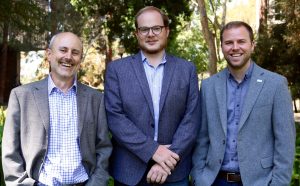
From left, Michael Ross, professor of political science; Graeme Blair, assistant professor of political science; and Darin Christensen, assistant professor of public policy at UCLA Luskin, are the co-founders of PRDG. Photo by George Foulsham

For three UCLA scholars, it just didn’t add up. Why do so many people who live in developing countries with an abundance of natural resources struggle in poverty every day?

“You would think that it’s a simple thing to take wealth that’s underneath the ground and turn it into wealth on top of the ground for everybody to share,” said Michael Ross, a professor of political science at UCLA. “But we know from studying countries around the world that that very rarely happens.”

Social scientists call it the resource curse, and it’s one of the reasons why Ross and two UCLA colleagues, UCLA Luskin’s Darin Christensen and political science faculty member Graeme Blair, have created the Project on Resources, Development, and Governance (PRDG), a network of social scientists, policymakers, nongovernmental organizations and industry representatives dedicated to finding policies that promote welfare, peace and accountability in resource-rich countries.

“For the past 15 years or so, I have been living in two worlds,” Ross said. “One is an academic world where I do research and I speak to some of the smartest young social scientists in the world who are studying the problems of developing countries. In the other world, I’m sitting around the table with policymakers who are worried about how to fix a problem called the resource curse.”

About three dozen countries in the low- and middle-income world are economically dependent on oil, gas and mining, but they all seem to struggle despite the riches provided by the resources. Those countries include Angola, Kenya, Uganda, Peru, Ecuador, Venezuela, Bolivia, Indonesia, East Timor and Kazakhstan.

“They tend to be conflict-ridden,” Ross said. “There are protests, there’s pollution, there are civil wars around these projects.” There’s also plenty of corruption, with many of the countries in economic turmoil because of bribery and other issues in regions of exceptional resource wealth, such as mining areas.

“There are so many opportunities for corruption, and politicians are a whole lot less responsive to the people and a whole lot more concerned with siphoning off money for their own bank accounts overseas,” Ross said.

Finding solutions to these challenging issues won’t be easy.

“We have a generation of super-smart young political scientists and economists who are interested in this problem,” Ross said. “Our project is designed to bring together the smartest sort of leading-edge people in political science and economics with the policymakers who are dealing with these problems on a day-to-day level.”

That mission officially begins Sept. 21-22, 2017, with the first PRDG summit at the Luskin Conference Center on the UCLA campus. Researchers and policymakers from UCLA, the World Bank, Barnard College, the University of Pittsburgh, the Natural Resource Governance Institute and many other organizations and universities will make presentations and discuss issues that range from creating successful research-policy partnerships to the research priorities of funders.

The September conference at UCLA was generously funded by the Luskin Center for Innovation, Natural Resource Governance Institute, the William and Flora Hewlett Foundation, the Burkle Center and UCLA’s Political Science Department. The initiative also recently received a one-year, $600,000 grant from the William and Flora Hewlett Foundation to support additional workshops in Washington, D.C., and Accra, Ghana, and the research partnerships that emerge from these meetings.

“One of the important parts of PRDG is the effort to bring in local researchers,” said Blair, assistant professor of political science at UCLA. “We want to provide training in modern social science research methods, and to provide learning-while-doing at matchmaking workshops where we bring together academics, policymakers and practitioners.”

Providing guidance on policy issues is Christensen, assistant professor of public policy at the UCLA Luskin School of Public Affairs. “I think policy plays an essential role in this PRDG initiative,” Christensen said. “What PRDG is trying to do is bring policymakers and academics around the same table and allow policymakers to propose solutions and team up with researchers who can go to the field and determine whether these new initiatives are actually helping root out the corruption or address the grievances that often accompany these big mining, oil and gas projects.”

PRDG’s short-term goals include generating a series of new research projects on solutions to problems faced in resource-rich countries, bringing together researchers, policymakers and practitioners. “Another goal is to start joint learning exercises where we go out into the field and try to help build research into their existing program,” Blair said.

In the long term, the UCLA researchers are hoping that the conversation about these issues becomes circular — the research feeds back into the policymaking conversation, which generates new questions the researchers can tackle.

“We want to figure out ways to make a difference, and find ways to fix this problem,” Ross said.

UCLA Luskin Public Policy Professor Named a Brookings Institution Fellow Randall Akee is among the first class of scholars and experts awarded two-year terms as David M. Rubenstein Fellows

By Stan Paul

Randall Akee

For Randall Akee, conducting research with restricted-use U.S. Census data has meant time-consuming travel back and forth across the country to Washington.

But a two-year residence in the nation’s capital as a Brookings Institution Fellow starting in September 2017 will allow the assistant professor of public policy at the UCLA Luskin School of Public Affairs to spend more time working on issues of income inequality across racial and ethnic categories. While there, he will also collaborate with a number of Washington-based American Indian, Alaska Native and Native Hawaiian organizations, including the National Congress of American Indians.

“It will also, hopefully, foster additional collaboration with agencies that collect data on these populations,” said Akee, citing the Indian Health Service and the Department of the Interior.

Akee, who also holds an appointment in American Indian Studies at UCLA, is among 10 outstanding early- and mid-career scholars and experts selected for the inaugural class of the Brooking Institution’s David M. Rubenstein Fellows. The new fellows will focus on one or more of Brookings’ five research programs. These include economic studies, where Akee will be positioned, as well as governance studies, foreign policy, metropolitan policy, and global economy and development.

The program is funded by a multimillion-dollar gift from Rubenstein, co-chair of the Brookings board of trustees, and co-founder and chief executive officer of the Carlyle Group.

“I believe strongly not just in Brookings’ work to improve governance locally, nationally and globally, but in the Institution’s commitment to fostering diverse thinking in the ranks of public policy researchers and practitioners,” Rubenstein said in announcing the new fellowship program in March 2017. “Finding solutions to the complex challenges we face requires new and innovative thinking that reflects a variety of perspectives, disciplines and experiences.”

In addition to conducting in-depth research and analysis, fellows will have the opportunity to learn about advanced communication tools designed to maximize both the reach and impact of their scholarship. Akee said he is looking forward to working with the century-old nonprofit public policy organization’s experts and staff on research dissemination techniques and methods.

“Overall, I expect it to be a very productive time,” said Akee, who is also a faculty research fellow at the National Bureau of Economic Research and the Harvard Project on American Indian Economic Development, as well as a number of organizations and institutes focused on his interests in labor economics, economic development and migration.

Immigration Experts Call for Unity to Protect Dreamers Panelists shared their experiences at launch event for latest issue of UCLA Blueprint magazine

By Jonathan Van Dyke

As the country reckons with President Donald Trump’s decision to end the Deferred Action for Childhood Arrivals program, expert panelists discussing immigration at a UCLA event Sept. 12, 2017, noted that now is the time for everyone who supports immigration reform to advocate for legislation that would protect those who are undocumented.

“I feel 100 percent protected at this point,” said Marcela Zhou, a UCLA medical student who is undocumented, as part of the discussion held at the Cross Campus gathering space in downtown Los Angeles. “But we really need the support from the community to continue fighting.”

Zhou was speaking as part of “Public Discussion: L.A. Leaders on Immigration and Civic Action,” which included immigration experts from UCLA and beyond, all trying to make sense of what transpired a week ago and what needs to be done now.

Hosted by the policy magazine UCLA Blueprint, in conjunction with the UCLA Luskin School of Public Affairs and UCLA Advocacy, the discussion featured Abel Valenzuela, professor of urban planning at UCLA Luskin and director of the UCLA Institute for Research on Labor and Employment; Dae Joong Yoon, executive director of the National Korean American Service and Education Consortium; Maria Elena Durazo, longtime Los Angeles labor leader and immigration activist; and Zhou. Blueprint editor-in-chief Jim Newton, who is also a lecturer in public policy at UCLA Luskin, moderated.

On Sept. 5, 2017, the Trump administration announced its decision to rescind DACA in six months, a move that would affect nearly 800,000 young adults across the country. These people, who are often called Dreamers, were typically brought to the United States as children, and have worked to gain access to higher education and a job, while maintaining a clean legal record (no felonies or major misdemeanors).

Valenzuela, who is also a professor of Chicana and Chicano studies, and has authored numerous work on day labor and immigrant labor markets, lamented that it “took years to get [President Barack] Obama to finally change his mind” and create DACA. Rescinding the order is “not politics as usual in any way,” he said.

Durazo’s experience has spanned decades, working in the hotel employees and restaurant employees union back in 1983, and then as the vice president for UNITE HERE International Union. In 2003 she became national director of the Immigrant Workers’ Freedom Ride, a campaign to address immigration laws, and from 2006 to 2015 she was the first woman elected executive secretary-treasurer of the Los Angeles County Federation of Labor.

All that experience leads her to the belief that the public needs to examine the immigration issue beyond just the current administration.

Despite their concerns, the panelists implored the crowd to remain positive. The event comes on the heels of a push by UC system leadership to convince members of the House and Senate from California to get an immigration reform bill through Congress.

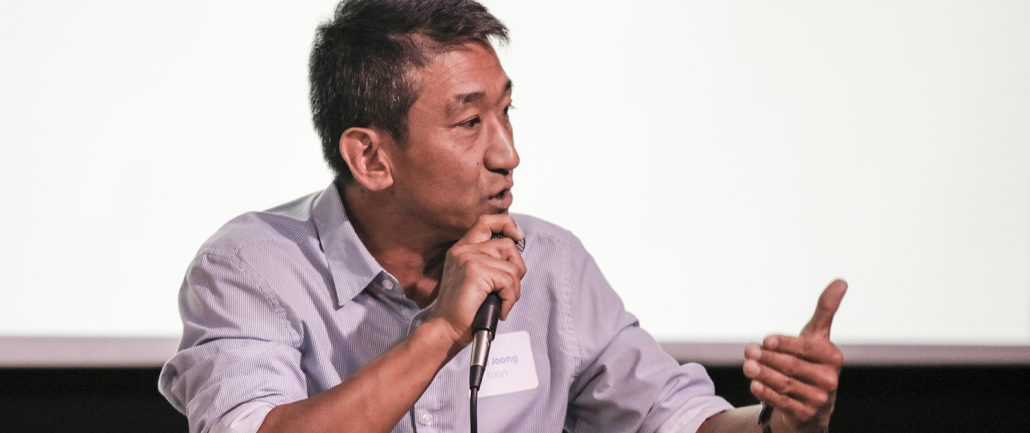
Yoon just returned from a 22-day vigil in front of the White House. There, he spoke to many non-immigrants. Yoon said he was hopeful because many were able to open up their minds on the issue.

He was part of the founding of the National Korean American Service and Education Consortium in 1994, with successful campaigns including the “Justice for Immigrants” Washington Post ad campaign that opposed anti-immigration legislation. Now, efforts must be focused on Congress to pass comprehensive immigration reform that protects those eligible for DACA.

“It’s their lives and future, and that future is in danger,” Yoon said. “This is a great opportunity to really pass the DREAM Act.”

Durazo called for business and education leaders to amplify the message of Dreamers and comprehensive immigration reform.

In the spring, UCLA Chancellor Gene Block formed an Immigration Advisory Council, on which Valenzuela serves, and the campus and UC system have supported immigrant students.

“There’s a lot we can do,” Valenzuela said. “Their history on our campus is real.” The council will continue to do what it can to mitigate fallout from federal immigration decisions, he added.

For the civically minded in the crowd, the panelists said there is no time like the present.

“Organizing at the street level is what I think is the next answer,” Valenzuela said.

“We’ve been on the defense for so long,” Yoon said. “Now we have something we want to push for.”

To change the narrative on DACA and immigration issues, Zhou said everyone can contribute, and that “organizing is huge.” Think about the terms you use when discussing these issues, she said.

“I am sort of the medical student people talk about positively in their narrative,” but what about field workers and others, she wondered.

Zhou, who was born in Mexicali, Baja California, Mexico, but to Chinese parents, moved to Calexico, California. when she was 12. Her story defies easy categorization — 100 percent Chinese, but a native Spanish speaker.

Zhou questioned why it was easy for her as someone who looks Asian to walk along checkpoints, even though she’s also from Mexico.

Durazo said she has been out in the community providing resources, including pamphlets detailing how to deal with Immigration and Customs Enforcement agents. She noted that anyone can do something, for example learning to help with citizenship tests. “Everyone here can be a volunteer in providing these services. The push is to not settle for anything less.”