Luskin Center sets out to make L.A. a greener place to live, work The Luskin Center for Innovation has set a goal to produce research that will help Los Angeles become more environmentally sustainable

By Cynthia Lee

Green power. Solar energy incentives. Renewable energy. Smart water systems. Planning for climate change. Clean tech in L.A. For the next three years, the UCLA Luskin Center for Innovation has set an ambitious goal to produce research that will help Los Angeles and state and federal agencies reach the Holy Grail of environmental sustainability.

Five Luskin scholars are working on initiatives that could change how residents, businesses, industries and government meet the challenge of living more sustainably. The Luskin center is carrying out a mission that was broadly outlined by Chancellor Gene Block in his inaugural address on May 13, 2008: to marshal the university’s intellectual resources campuswide and work toward intense civic engagement to solve vexing local and regional problems. “I believe that UCLA can have its greatest impact by focusing its expertise from across the campus to comprehensively address problems that plague Los Angeles,” the chancellor told an audience in Royce Hall.

With an agenda packed with six hefty research initiatives, the center is diving into that task under the leadership of its new director, J.R. DeShazo, an environmental economist and associate professor of public policy who also heads the Lewis Center for Regional Policy Studies. DeShazo took the reins in October when the center moved from the Chancellor’s Office to the School of Public Affairs, a move that took advantage of the school’s outward orientation. “It’s focused on policy solutions, so this is a natural place for us to grow,” DeShazo said. “But even though the center is located here, we’re very cross-disciplinary. We have researchers from chemistry, public health, engineering, the Anderson management school, the Institute of the Environment (IoE) and public policy.”

The five scholars working on the six initiatives are DeShazo; Yoram Cohen, an engineering professor and director of the Water Technology Research Center; Magali Delmas, professor of management and the IoE; Hilary Godwin, professor of environmental health sciences; and Matt Kahn, professor of economics in the departments of Economics and Public Policy and IoE. “We started off by identifying problems that our community is facing and that it can’t solve,” DeShazo said. Then, they asked two questions: “Does UCLA have the research capacity to address this deficit? And can we find a civic partner who can make use of this new knowledge?” Proposals were prioritized by a 16-member advisory board with a broad representation of business and nonprofit executives, elected officials and a media expert. Among the high-profile board members are State Senators Carol Liu and Fran Pavley; Mary Nichols, chairman of the California Air Resources Board; Los Angeles Council President Eric Garcetti and Controller Wendy Greuel; Assemblymember Mike Feuer; John Mack, chairman of the Police Commission; and William Ouchi, professor of the Anderson School and chairman of the Riordan Programs.

“We take our research ideas and develop real-world solutions that can be passed on to a civic partner with whom we can engage and support,” DeShazo said. “We let them carry through with the politics of policy reform as well as the implementation. We don’t get involved in advocacy.” An array of local green research DeShazo recently completed Luskin’s first initiative with his research on designing a solar energy program for L.A. that would minimize costs to ratepayers. His research – the basis of Mayor Antonio Villaraigosa’s new energy policy – proposes a solar feed-in tariff that would help everyone from homeowners and nonprofits to commercial property owners buy solar panels and be able to sell their solar energy to utility companies for a small profit.

Other Luskin research initiatives involve creating smart water systems for Southern California with water reclamation, treatment and reuse (UCLA researcher Cohen will work in partnership with the Metropolitan Water District); helping local governments plan for climate change (DeShazo with the California Air Resources Board and the Southern California Association of Governments); and reducing toxic exposures to nanomaterials in California (Godwin with the National Institute of Occupational Safety and Health.) In another initiative in partnership with the Mayor’s Office and the California Air Resources Board, researchers are compiling a database of jobs created by clean tech activities in L.A. County and will document best practices that other cities have used to attract and support clean tech development. Luskin’s Kahn is working with the Sacramento Municipal Utility District to pinpoint what determines how much electricity is used by residential and commercial consumers and how the district can market its major green energy programs to increase participation.

Finally, Delmas is looking into whether the Green Business Certification Program approved recently by the City Council will reduce the overall carbon footprint of small businesses. The program offers incentives and assistance to small business owners in L.A. to become more efficient and less wasteful in their everyday practices. Those businesses that meet certain “green” criteria will be certified as being environmentally friendly. Her partner in this venture is the Los Angeles Department of Water and Power.
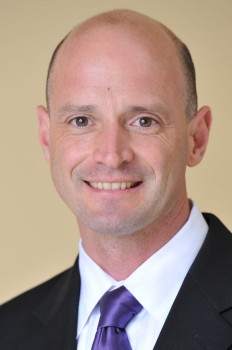
Ten Questions: J.R. DeShazo and solar power J.R. DeShazo explains how solar can provide up to a third of L.A.'s energy, without costing a bundle

by Alison Hewitt

Environmental economist J.R. DeShazo’s recent research is the basis of Los Angeles’ new solar power policy. DeShazo explains how solar can provide up to a third of L.A.’s energy, without costing a bundle.

J.R. DeShazo, the director of The UCLA School of Public Affairs Luskin Center for Innovation and an associate professor of public policy, describes himself as an

environmental economist. Most recently, he turned his focus to how Los Angeles can create policies that will encourage Angelenos to turn their rooftops into a glittering sea of solar panels. His research formed the basis of L.A.’s new solar plan. DeShazo sat down with UCLA Today writer Alison Hewitt to explain how solar could save L.A. Below is an edited Q&A.

Why bother with solar energy?
Solar power is completely underutilized in Los Angeles. All the unused capacity – on business rooftops, on top of parking lots, in fields – adds up to 5.5 gigawatts, which could meet about a third of L.A.’s energy needs. California is a leader in solar, thanks to state and federal subsidies, but Los Angeles’ Department of Water and Power still gets 44 percent of its energy from coal. That’s a lot for California.

So why haven’t more rooftops begun sprouting solar panels already?
The biggest obstacle to increasing the availability of solar energy right now is the cost of solar panels. They’re still really expensive. The price is beginning to fall, but for now, government incentives are vital to make the cost of solar panels pan out.

Your solution is a program called feed-in tariffs, which would raise utility rates a little bit so the city could create a solar fund. The fund would help volunteers afford solar panels, and actually hook them up to the grid so that we could all use the power they generate. Is this a new program?

Variations on feed-in tariffs are being used around the world, from Japan and Spain to Florida and Vermont. Germany’s feed-in tariff program is the best known. But when I studied these other programs, it was discouraging. No one else’s policy was right for Los Angeles. They were all too expensive.

How did you design a solar feed-in tariff program that would be affordable?
One big change from other programs is that we have to target commercial customers, not residential customers.

What makes commercial buildings better?
Businesses have larger rooftops and parking lots where you can install large banks of solar panels. Existing feed-in tariff programs have focused on residential rooftops, but you miss all the economies of scale that way. Federal tax subsidies can help reduce the cost, but only if you’re already paying a lot of taxes, as a company would. We want to include homeowners, nonprofits, schools and hospitals, but commercial properties have to be the main target.

Why would companies want to enter the solar power business and sell clean energy to the city?
Because the feed-in tariff system would provide a “reasonable rate of return” – a small profit. Solar power is still too expensive to pan out economically for most people, but if we buy it from feed-in tariff providers the same way we buy it from utility companies, they can make their money back. The city would buy the solar power for a slightly above-market rate using its solar fund.

Why would residents agree to pay a little more for power just so their neighbors or local companies could earn a profit selling them solar power?
Solar is the only renewable energy program that produces jobs in L.A. Wind farms will be elsewhere. Geothermal energy sources are far away. But we have a massive amount of unused solar capacity right here in Los Angeles.

We’re also known as the nation’s most polluted city. A solar power program can change the way we’re perceived and how Los Angeles thinks about itself. Los Angeles has very ambitious renewable energy targets, but we’re struggling to meet them. This plan was designed to help Los Angeles meet its renewable energy goals with the lowest possible impact to ratepayers.

How is your research being used by Los Angeles?

The details are still being negotiated at City Hall, but the mayor is using our research as the basis for his solar policy.

How could the energy landscape change if solar becomes as widespread as you hope?
This could change everything. So many people will have solar that we won’t need the Department of Water and Power – well, except on rainy days. There will be a big shift from energy delivery to energy reliability. Actually, it threatens power utilities’ business model, which is centered on production and transmission, not on distribution from sources all over the city. Power generation would become a public-private partnership.

What made you decide to research solar power policy?
The Luskin Center’s focus for our first three years is on environmental sustainability. Our mission is solving regional problems, local problems where we can have the biggest impact. We identify problems that need to be solved and look for a partner, like the City of Los Angeles, who can benefit from our research.­­­­­­­

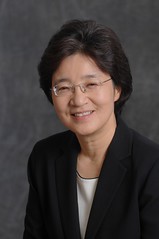
Ailee Moon Receives St. Barnabas Award Professor Ailee Moon was honored by St. Barnabas Senior Services during their annual Evening Under the Stars event

The School of Public Affairs congratulates Associate Professor Ailee Moon of the Department of Social Welfare, who was honored by St. Barnabas Senior Services (SBSS) with the Collaborator Award during their annual Evening Under the Stars event on Thursday, April 29, 2010.

Ailee

Los Angeles City Councilmember Ed P. Reyes delivered the keynote address; other 2010 honorees include W. June Simmons (Partners in Care Foundation, Impact Award), and Jorge Lambrinos (USC Edward R. Roybal Institute on Aging, Behind-the-Scenes Award).

Professor Moon is active in gerontological research, particularly in the areas of elder abuse, mental health, and service utilization. Currently, she is a Hartford Geriatric Social Work Faculty Scholar, funded to study “Cultural and Non-Cultural Factors in Elder Abuse Assessment and Intervention.” Dr. Moon and her colleagues completed a study, titled “A Multicultural Study of Attitudes toward Elder Mistreatment and Reporting,” funded by the National Center on Elder Abuse. She was a co-principal investigator with Dr. James Lubben on a four-year study funded by the National Institute on Aging that examines social supports and long-term care use among elderly Korean and non-Hispanic white Americans. Dr. Moon has published 55 articles, book chapters, research reports and monographs.

Fernando Torres-Gil Confirmed by the U.S. Senate as a Member of the National Council on Disability

Associate Dean Fernando Torres-Gil has been named to an Obama administration post as a member and vice chair of the National Council on Disability.  This marks the third term of national service in a
presidential administration for Professor Torres-Gil, who previously served under President Bill Clinton and President Jimmy Carter.
Prior to his roles at UCLA, he served as a professor of gerontology and public administration at the
University of Southern California, where he is still an adjunct professor of gerontology. Before serving in academia, Prof. Torres-Gil was the first assistant secretary for aging in the U.S. Department of Health and Human Services and as the staff director of the U.S. House of Representatives Select Committee on Aging.  Prof. Torres-Gil also served as President of the American Society on Aging from 1989 to 1992.

Prof. Torres-Gil holds appointments as professor of social welfare and public policy in the UCLA School of Public Affairs and is the director of the Center for Policy Research on Aging.  Professor Torres-Gil is an expert in the fields of health and long-term care, the politics of aging, social policy, ethnicity and disability.

He is the author of six books and more than 80 articles and book chapters, including The New Aging: Politics and Change in America (1992), and Lessons From Three Nations, Volumes I and II (2007).  In recognition of his many academic accomplishments, he was elected a Fellow of the Gerontological Society of America in 1985 and the National Academy of Public Administration in 1995.  He also served as President of the American Society on Aging from 1989 to 1992 and is a member of the National Academy of Social Insurance.  He is currently a member of the San Francisco Bay Area Polio Survivors, the National Academy of Social Insurance and of the board of directors of Elderhostel, the National Committee to Preserve Social Security and Medicare, the AARP Foundation, the Los Angeles Airport Commission, and The California Endowment.

UP Doctoral Students Receive Rishwain Social Justice Entrepreneurship Awards Two urban planning doctoral students were recognized for their outstanding contributions to community based social entrepreneurship

The Center for Community Partnerships has announced the winners of the first Rishwain Social Justice Entrepreneurship Award:   Urban Planning doctoral students Ava Bromberg and John Scott-Railton were recognized for their outstanding contributions to community based social entrepreneurship, serving the community in ground-breaking ways.

Ava Bromberg created a Mobile Planning Lab, a converted camper designed to take urban planning issues to low-income residents in South Los Angeles. Working with the Figueroa Corridor Coalition for Economic Justice and the United Neighbors in Defense against Displacement, she created the project “Visions for Vermont,” which helps to engage residents in land use plans by providing a mobile, neutral, and local setting for neighbors and city planners to go over models, maps and data, and to discuss the future development and growth of their communities. Her project has given a voice to residents to show city planners the concerns and comments of the neighborhood in order to create sustainable development.

Halfway across the world, in Dakar, Senegal, John Scott-Railton has been working to solve “collective action” problems in villages as they seek to deal with unseasonable rains and devastating floods that are related to climate change. Using inexpensive handheld technology, John has partnered with Senegalese universities, climate scientists and their students, non-profit organizations, and community members to apply sophisticated mapping techniques, hybridized surveys, and linked satellite mapping to the village level toward developing more effective, long-term parcel-based solutions. As Railton continues his fieldwork, he plans to redouble efforts to steer local officials towards a pilot program in which community members and the government share responsibility for mitigating flooding.

A ceremony was held in Royce Hall to honor the recipients for their social justice entrepreneurial work with opening remarks by Dean Franklin D. Gilliam Jr. of the School of Public Affairs and a keynote address by Professor Jonathan Greenblatt, Anderson School of Management.

For more details see the recent article at the website for the UCLA Newsroom.

UCLA Luskin Center for Innovation Releases Solar Feed-in Tariff Report Informing Renewable Energy Policy in Los Angeles The Luskin Center for Innovation at the UCLA School of Public Affairs unites the intellectual capital of UCLA with the Los Angeles Business Council to publish a report on an effective feed-in tariff system for the greater Los Angeles area

By Minne Ho

The UCLA Luskin Center for Innovation and the Los Angeles Business Council has publicly released the report, “Designing an Effective Feed-in Tariff for Greater Los Angeles.” The report was unveiled yesterday at the Los Angeles Business Council’s Sustainability Summit, attended by hundreds of the city’s elected officials and business, nonprofit, and civic leaders.

J.R. DeShazo, the director UCLA’s Luskin Center for Innovation, has long studied how governments can promote and help implement environmentally friendly energy policies. His recent research on solar energy incentive programs, conducted with Luskin Center research project manager Ryan Matulka and other colleagues at UCLA, has already become the basis for a new energy policy introduced by the city of Los Angeles.

On Monday, March 15, Los Angeles Mayor Antonio Villaraigosa announced an ambitious program to move the city’s energy grid toward renewable energy sources over the next decade. Included in the plan is a provision — based in large part on the Luskin Center research — for a “feed-in tariff,” which would encourage residents to install solar energy systems that are connected to the city’s power grid.

The overall plan would require ratepayers to pay 2.7 cents more per kilowatt hour of electricity consumed, with 0.7 cents of that — a so-called carbon surcharge — going to the city’s Renewable Energy and Efficiency Trust, a lockbox that will specifically fund two types of programs: energy efficiency and the solar power feed-in tariff.

Under the feed-in tariff system, homeowners, farmers, cooperatives and businesses in Los Angeles that install solar panels on homes or other properties could sell solar energy to public utility suppliers. The price paid for this renewable energy would be set at an above-market level that covers the cost of the electricity produced, plus a reasonable profit. “A feed-in tariff initiated in this city has the potential to change the landscape of Los Angeles,” said DeShazo, who is also an associate professor of public policy at the UCLA School of Public Affairs. “If incentivized appropriately, the program could prompt individual property owners and businesses to install solar panels on unused spaces including commercial and industrial rooftops, parking lots, and residential buildings. Our projections show that the end result would be more jobs and a significant move to renewable energy with no net cost burden to the city.”

Feed-in tariffs for solar energy have been implemented in Germany and several other European countries, as well as domestically in cities in Florida and Vermont. The programs have moved these regions to the forefront of clean energy. And while these programs have necessitated slight increases in ratepayers’ monthly electricity bills, they have also generated thousands of new jobs. The mayor estimated that under the program announced Monday, 18,000 new jobs would be generated over the next 10 years. “For Los Angeles to be the cleanest, greenest city, we need participation from every Angeleno,” Villaraigosa said. “We know that dirty fossil fuels will only become more scarce and more expensive in the years to come. This helps move us toward renewable energy while at the same time creating new jobs.”

The new program had its genesis last year, when Villaraigosa announced a long-term, comprehensive solar plan intended to help meet the city’s future clean energy needs. The plan included a proposal for a solar feed-in tariff program administered by the Los Angeles Department of Water and Power. In September 2009, the Los Angeles Business Council created a Solar Working Group consisting of leaders in the private, environmental and educational sectors in Los Angeles County to investigate the promise of the feed-in tariff for Los Angeles and commissioned the UCLA Luskin Center for Innovation to lead the investigation. In addition to DeShazo and Matulka, the working group also included Sean Hecht and Cara Horowitz from the UCLA School of Law’s Emmett Center on Climate Change and the Environment. The first phase of their research examined current models operating in Germany, Spain, Canada, Vermont and Florida to propose guidelines for a feed-in tariff design. The second phase looks at the potential participation rates in a large-scale solar feed-in tariff program in Los Angeles and its impact on clean energy in the Los Angeles basin.
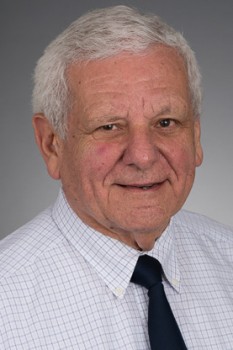
The Luskin Center for Innovation at the UCLA School of Public Affairs unites the intellectual capital of UCLA with forward-looking civic leaders in Los Angeles to address urgent public issues and actively work toward solutions. The center’s current focus in on issues of environmental sustainability.

Mark Peterson on Passage of Health Care Reform Professor Mark Peterson recently went on Minnesota Public Radio to provide analysis on the historic passage of this week's health care reform bill

Professor Mark Peterson of the Department of Public Policy provided analysis of the historic passage of this week’s health care reform bill; he was featured on “Midmorning” with Kerri Miller on Minnesota Public Radio (along with David Drucker, staff writer for Roll Call; and Terry O’Neill, president of the National Organization for Women).

The following is an excerpt from the hour-long program:

KERRY MILLER (Midmorning, Minnesota Public Radio): “Mark, you hear competing arguments about this—the President will say economic recovery is linked to health care reform because it will allow businesses to do better planning, people aren’t going to be so worried about higher premiums, but then you hear Republicans say, ‘Look, this is going to be a jobs killer’ because you’ve got companies that are now going to have to offer health insurance because they’re going to pay a penalty if they don’t.”

MARK PETERSON: “Yes, and there are points to be scored on both sides of that, I think that it’s very important to make that linkage with the economy.  It is important to note that if the Congress had not passed any legislation at all and we continued under the current set of arrangements, the status quo was not going to be a stable experience.  Premiums were going to shoot up quite dramatically, millions more would be losing insurance, and a lot of that is also a drag on the economy as well.  And so you have to compare what is going to happen in the future under the bill, with what would have happened without the bill.

It’s also the case that there are many ways in which businesses right now, that really cannot afford to provide health insurance for their employees—small businesses—by 2014 as the exchanges are being set up, those businesses ultimately will have access to the exchange and be able to provide insurance to their employees at a much, much better rate than they can possibly do now in the small group market.”

Listen to the complete interview here.

Amy Zegart Named to FBI Intelligence Analysts Association (IAA) Board Zegart will provide advice and assistance to the FBI IAA to advance the interests of the FBI’s intelligence analysts in an effort to increase our national security

The School of Public Affairs congratulates Professor Amy Zegart on her recent appointment to the FBI Intelligence Analysts Association (IAA) external advisory board. In this role, she will provide advice and assistance to the FBI IAA to advance the interests of the FBI’s intelligence analysts in an effort to increase our national security.

Professor Zegart has been featured in the National Journal as one of the ten most influential experts in intelligence reform. In addition to her role as an associate professor at UCLA’s School of Public Affairs, she is also a research fellow at the Hoover Institution, and a fellow at UCLA’s Burkle Center of International Relations. In 1993, Professor Zegart served on the Clinton administration’s National Security Council staff. Before her academic career, she spent several years as a management consultant at McKinsey & Company.

The FBI IAA is an independent professional association dedicated to improving the professional development of the FBI’s 2,500 intelligence analysts throughout the FBI’s fifty-six field offices, FBI headquarters, and its offices abroad.

Mayor Villaraigosa Announces L.A. Solar Energy Incentive Plan Based on UCLA Luskin Research

J.R. DeShazo, the director UCLA’s Luskin Center for Innovation, has long studied how governments can promote and help implement environmentally friendly energy policies. Now, his recent research on solar energy incentive programs, conducted with Luskin Center research project manager Ryan Matulka and other colleagues at UCLA, has become the basis for a new energy policy introduced by the city of Los Angeles.

On Monday, March 15, Los Angeles Mayor Antonio Villaraigosa announced an ambitious program to move the city’s energy grid toward renewable energy sources over the next decade. Included in the plan is a provision — based in large part on the Luskin Center research — for a “feed-in tariff,” which would encourage residents to install solar energy systems that are connected to the city’s power grid. The overall plan would require ratepayers to pay 2.7 cents more per kilowatt hour of electricity consumed, with 0.7 cents of that — a so-called carbon surcharge — going to the city’s Renewable Energy and Efficiency Trust, a lockbox that will specifically fund two types of programs: energy efficiency and the solar power feed-in tariff. Under the feed-in tariff system, homeowners, farmers, cooperatives and businesses in Los Angeles that install solar panels on homes or other properties could sell solar energy to public utility suppliers.

The price paid for this renewable energy would be set at an above-market level that covers the cost of the electricity produced, plus a reasonable profit. “A feed-in tariff initiated in this city has the potential to change the landscape of Los Angeles,” said DeShazo, who is also an associate professor of public policy at the UCLA School of Public Affairs. “If incentivized appropriately, the program could prompt individual property owners and businesses to install solar panels on unused spaces including commercial and industrial rooftops, parking lots, and residential buildings. Our projections show that the end result would be more jobs and a significant move to renewable energy with no net cost burden to the city.”

Feed-in tariffs for solar energy have been implemented in Germany and several other European countries, as well as domestically in cities in Florida and Vermont. The programs have moved these regions to the forefront of clean energy. And while these programs have necessitated slight increases in ratepayers’ monthly electricity bills, they have also generated thousands of new jobs.

The mayor estimated that under the program announced Monday, 18,000 new jobs would be generated over the next 10 years. “For Los Angeles to be the cleanest, greenest city, we need participation from every Angeleno,” Villaraigosa said. “We know that dirty fossil fuels will only become more scarce and more expensive in the years to come. This helps move us toward renewable energy while at the same time creating new jobs.”

The new program had its genesis last year, when Villaraigosa announced a long-term, comprehensive solar plan intended to help meet the city’s future clean energy needs. The plan included a proposal for a solar feed-in tariff program administered by the Los Angeles Department of Water and Power. In September 2009, the Los Angeles Business Council created a Solar Working Group consisting of leaders in the private, environmental and educational sectors in Los Angeles County to investigate the promise of the feed-in tariff for Los Angeles and commissioned the UCLA Luskin Center for Innovation to lead the investigation.

In addition to DeShazo and Matulka, the working group also included Sean Hecht and Cara Horowitz from the UCLA School of Law’s Emmett Center on Climate Change and the Environment. The first phase of their research examined current models operating in Germany, Spain, Canada, Vermont and Florida to propose guidelines for a feed-in tariff design. The second phase looks at the potential participation rates in a large-scale solar feed-in tariff program in Los Angeles and its impact on clean energy in the Los Angeles basin. The Los Angeles Business Council is expected to release the UCLA Luskin Center for Innovation’s complete report on solar energy feed-in tariffs next month. The Luskin Center for Innovation at the UCLA School of Public Affairs unites the intellectual capital of UCLA with forward-looking civic leaders in Los Angeles to address urgent public issues and actively work toward solutions. The center’s current focus in on issues of environmental sustainability.

Carnesale joins high-level commission exploring storage of nuclear waste Albert Carnesale, chancellor emeritus and professor of public policy and of mechanical and aerospace engineering at UCLA, has been selected to serve on a high-ranking commission to devise strategies on how to manage nuclear waste

By Joe Luk

Chancellor Emeritus Albert Carnesale has been selected to serve on a high-level national commission that will study and make recommendations for developing a safe, long-term solution to the serious problem of managing the nation’s nuclear waste.

Albert Carnesale commented on his appointment to a commission regarding long-term management strategies for nuclear waste in the United States

President Obama directed the U.S. Department of Energy to form the 15-member Blue Ribbon Commission on America’s Nuclear Future to conduct a comprehensive review of policies for managing the country’s current and future stockpile of nuclear waste after the administration decided not to proceed with the Yucca Mountain (Nevada) nuclear waste repository.

“The decision to pursue the Yucca Mountain plan was made 20 years ago,” Carnesale said. “From a scientific and technological perspective, much has been learned since then about radioactive waste and how spent nuclear fuel can be treated. And much has also been learned about the Yucca Mountain site itself.” The residents of Nevada also vehemently opposed the plan for a number of reasons.

The question of what to do with the country’s nuclear waste has grown in urgency because of climate change and the nation’s search for a cleaner source of fuel.

Currently, spent nuclear fuel is being stored at more than 100 nuclear power plants throughout the United States. These plants provide about 20 percent of the nation’s electricity.

“I don’t think there are many people who think that is a very good long-term solution to the waste problem,” Carnesale said.

“The commission is not being asked to identify an alternative site to replace Yucca Mountain,” Carnesale said. “There are many other avenues of inquiry to pursue. For example, are there new designs for nuclear rectors that might mitigate the problem? Should the spent fuel be processed differently? How might the spent fuel or processed waste be stored to minimize the risk to current and future generations?”

“The solution won’t be found in science and technology alone,” Carnesale said.

“If you look at the commission, these are not simply experts on nuclear power or nuclear waste,” he said. “They are primarily strategic thinkers, people who understand issues that have substantial technological dimensions, but cross many high-priority areas for the country, everything from climate change to reducing American dependence on foreign sources of fuel. It’s clear that the commission has been asked to take a strategic look at this problem.”

The commission is co-chaired by former Indiana Congressman Lee Hamilton and Brent Scowcroft. Hamilton is a member of the President’s Intelligence Advisory Board and the President’s Homeland Security Advisory Council, and he previously served as vice chairman of the 9/11 Commission (National Commission on Terrorist Attacks Upon the United States). Scowcroft, a retired lieutenant general in the U.S. Air Force, served as National Security Advisor to both Presidents Gerald Ford and George H.W. Bush.

Carnesale, who has a Ph.D. in nuclear engineering, holds professorial appointments in UCLA’s School of Public Affairs and Henry Samueli School of Engineering and Applied Science. Earlier in his career, he represented the United States in high-level negotiations on defense and energy issues, including the Strategic Arms Limitation Talks, SALT I. He has been increasingly called upon by the government for his expertise on public policy issues that have scientific and technological dimensions.

Since leaving Murphy Hall as chancellor, he has led committees formed by the National Academies, the nation’s science advisors, to analyze, make recommendations and brief policymakers and Congress on vital issues. In 2008, he chaired a committee that looked at whether the nation needs a non-nuclear weapon with the ability to strike a target anywhere in the world within one hour after the president gives the order.

Recently, he has been holding classified briefings with representatives from the departments of Energy, Defense and Homeland Security as well as others on Capitol Hill on the findings of a committee he chairs on nuclear forensics.

Carnesale is also chair of the Committee on America’s Climate Choices, a nationwide project launched by the National Academies at Congress’ request for policy-relevant advice, based on scientific evidence, to help guide the nation’s response to climate change. That project, which involves some of the country’s leading researchers on climate change, is scheduled to release its report in September.