• Public Policy
  • Social Welfare
  • Real Estate Development
  • Urban Planning
  • Luskin Home
  • Undergraduate Program
  • Stay in Touch
  • Events Calendar
  • Give Now
  • About
    • Our Dean
    • Board of Advisors
    • Contact Us
    • Visit Us
    • Diversity, Disparities and Difference
    • Communications
      • UCLA Luskin in the News
      • Luskin Forum Online
  • Departments
    • Public Policy
    • Real Estate Development
    • Social Welfare
    • Undergraduate Program
    • Urban Planning
  • Apply
    • Master of Public Policy
    • Master of Real Estate Development
    • Master of Social Welfare
    • Master of Urban and Regional Planning
      • Double Degree With Sciences Po
    • PhD in Social Welfare
    • PhD in Urban Planning
    • Undergraduate Programs
  • Faculty
    • All
    • Public Policy
    • Social Welfare
    • Urban Planning
    • Real Estate Development
    • Faculty Executive Committee
    • Open Positions
  • Student Affairs & Alumni
    • Career Services
      • Employers
      • Fellowships
    • Student Support
    • Graduate Resource Library
    • Alumni Relations
  • Support
  • Programs
    • Research Centers & Affiliated Research
    • CA Title IV-E Education Program
    • Global Public Affairs (GPA)
    • Data Analytics Certificate
    • Luskin Lecture Series
    • Luskin Summit
    • UCLA Luskin California Policy Briefing
    • Public Service Weekend
    • Commencement
  • Administration
    • Financial Services
    • Events Office
    • Information Technology
  • Search
  • Menu Menu

Archive for category: For Undergraduates

Category to differentiate content of interest to students in the undergraduate major in public affairs.

Bruin Excellence in Civic Engagement Awards Recognize Public Service Leadership Eight with ties to the Luskin School are among 40 honored by the UCLA Alumni Association

November 27, 2023/0 Comments/in Alumni, For Faculty, For Policymakers, For Students, For Undergraduates, Public Policy, Public Policy News, School of Public Affairs, Urban Planning /by Mary Braswell
By Madeline Adamo

A week to the day after starting her new role as Los Angeles Mayor Karen Bass’s chief housing and homelessness officer, UCLA alumna Lourdes Castro Ramírez traveled to campus for an occasion of utmost importance to the public servant of 30 years.

To say the double Bruin had a packed schedule that day might be an understatement. Besides being a week into her new job, Castro Ramírez was in the midst of relocation, having picked up her life in Sacramento to move to Los Angeles.

Castro Ramírez, one of 40 awardees being recognized by the UCLA Alumni Association for distinctions in public service, said despite her circumstances, she wasn’t about to miss the ceremony and networking reception for the Bruin Excellence in Civic Engagement awards.

“I’m really proud to be part of this first cohort with a number of distinguished alumni,” said Castro Ramírez, who had been serving as Gov. Gavin Newsom’s appointed secretary for the California Business, Consumer Services and Housing Agency since March 2020. “For me, the focus on civic leadership is really important.”

The award reception, which took place Nov. 13, included a certificate presentation and remarks from the association’s leadership. Darnell Hunt, the executive vice chancellor and provost at UCLA, also was in attendance. The honorees included eight Luskin School alumni: Castro Ramírez MURP ’96, Norma E. Fernandez MURP ’06, Oceana R. Gilliam MPP ’19, Rayne Laborde Ruiz MURP ’21, Teresa Magula MPP ’04, Veronica Melvin MPP ’01, Aaron Ordower MURP ’15 and Regina Wallace-Jones MPP ’99. Wallace-Jones was presented with her award during a speaking engagement on campus the week before.

‘Once you go to Luskin, you’re family for life.’ — Oceana R. Gilliam MPP ’19

The Bruin Excellence in Civic Engagement awards, which will be awarded to a new class annually, is the brainchild of UCLA Alumni Association board member Matt Kaczmarek. He said he was inspired by the association’s Bruin 100 awards, launched in 2022, which recognize alumni fostering positive social change in the private sector. Kaczmarek felt a comparable program for civic service was needed.

“People who devote their careers to public service generally don’t seek recognition for their work, even though their impact can be significant,” said Kaczmarek, who earned a bachelor’s degree in geography and political science with a minor in public affairs in 2005.

Having held senior appointments in the administration of former President Barack Obama and in the international finance division of the U.S. Treasury Department, Kaczmarek knows the gravitas of being in public service. He also served as White House liaison for John Kerry during the politician’s term as secretary of state.

“As a student at UCLA, I learned the opportunity to have the greatest impact comes through dialogue, listening and pragmatic problem solving,” Kaczmarek, now a director and global head of market strategy and sustainable investing for the asset management firm BlackRock. “I’ve met Bruins at all levels of government who consistently excel based on those same values.”

One of those Bruins is Gilliam, chief of staff for Tennessee state Rep. Justin J. Pearson. The Democrat gained national attention in April, when he and Rep. Justin Jones protested on the chamber floor in support of stricter gun-control regulations. A few months prior, Gilliam had led Pearson’s campaign to victory, focusing on policies to eradicate gun violence, alleviate poverty and enhance community safety.

Gilliam wears many hats in the civic realm, including serving as senior program manager for the Center for Justice Innovation, a nonprofit that strives for a more equitable criminal legal system. She’s proud of the work she does at the center, building alternatives to incarceration.

“Even at a young age, I’ve always had this servant leader’s heart,” said Gilliam, whose next endeavor is law school, a step toward fulfilling her childhood dream of being a criminal court judge. Gilliam said her family’s involvement with the criminal justice system has informed her career trajectory.

She was honored to be named an award recipient last month. Though she had planned to return to Tennessee following a business trip, she changed her flights to ensure a stop in Los Angeles for the reception.

“Once you go to Luskin, you’re family for life,” Gilliam said. It still strikes her when she’s on a video call with Los Angeles County for work — and she sees the face of one of her Luskin School peers on the other end.

“This recognition program not only brings more awareness to what UCLA grads or Luskin grads are doing, but what so many other people are doing in the field of public service and civic engagement,” she said.

At the reception, Gilliam caught up with fellow alumna Castro Ramírez, who earned her master’s degree in urban and regional planning from the Luskin School in 1996. Castro Ramírez has sustained a strong connection with the school, sitting on its advisory board as co-chair of the Equity, Diversity and Inclusion Subcommittee, where she helps students get support with fellowships.

“I benefited tremendously from the support that I received as a student,” said Castro Ramírez, who was the first in her family to attend college when she earned her bachelor’s degree in political science and Chicano studies at UCLA in 1994. “I think it’s important for us to continue understanding the needs and the support that is necessary for students of color and students of underprivileged or underrepresented backgrounds.”

Read the full story.

Learn more about all 40 recipients of the inaugural Bruin Excellent in Civic Engagement awards and stay up to date about 2024 nomination submissions. 

Increasing Urbanization Contributes to Racial and Gender Pay Inequality, Study Shows Newly published research finds that an 'urban wage premium' in large cities primarily benefits white and male workers

November 20, 2023/0 Comments/in Diversity, For Faculty, For Policymakers, For Students, For Undergraduates, Global Public Affairs, Latinos, Research Projects, School of Public Affairs, Urban Planning Michael Storper /by Les Dunseith
By Les Dunseith

Researchers who study cities have long documented an “urban wage premium,” whereby workers in denser, larger cities tend to have higher wage and salary incomes. But a new study by a UCLA scholar is providing fresh insight into how growing population density in urban areas contributes to pay inequalities by race and gender.

In research published this month in the Journal of Urban Affairs, Max Buchholz, a postdoctoral researcher working with Professor Michael Storper of the UCLA Luskin School of Public Affairs, shows that this wage premium primarily benefits white and male workers, with significantly less positive impacts for Black workers, and possibly none for Latino and female workers.

Furthermore, gender-based wage inequality related to urbanization tends to be significant between men and women who have children but relatively insubstantial between men and women without children.

“My findings suggest there is something about cities that makes it particularly difficult for women to manage the dual responsibilities of child care and having a career,” Buchholz said.

He also looked at the constraints and tradeoffs that arise when urban workers balance employment opportunities with choices about housing quality and affordability, commuting and other activities. These “congestion costs” have been shown to have negative impacts disproportionately borne by women and people of color.

In particular, Buchholz found that the relationship between density and pay inequality became stronger when commute times to and from work also increased. Moreover, as urban areas get denser, commute times for Black workers and Asian American and Pacific Islander workers increase relative to white workers. But female–male commuting inequality decreases.

“This suggests that rising density doubly disadvantages Black workers with relatively lower wages and longer commutes, prompts AAPI workers to commute longer for pay that is equal to white workers, and constrains women’s access to jobs that suit their skills and qualifications,” Buchholz said.

The research was supported by a postdoctoral research fellowship from the National Science Foundation.

L.A. Asks How to Equitably Achieve 100% Clean Energy by 2035 — and UCLA Answers Luskin School research centers join cross-campus effort to guide LADWP strategies centered on equity and justice

November 16, 2023/0 Comments/in Environment, For Faculty, For Policymakers, For Students, For Undergraduates, School of Public Affairs Gregory Pierce, Paul Ong /by Mary Braswell

By Mara Elana Burstein

In 2021, after the LA100 analysis laid out pathways for the city of Los Angeles to produce 100% renewable electricity, the City Council and Los Angeles Department of Water and Power committed to pursuing the most ambitious — and expensive — scenario: achieving the goal by 2035 at a cost of nearly $40 billion.

But cost is far from the only challenge. Facing a legacy of inequity within the city’s energy system, the LADWP turned to UCLA researchers to develop strategies for pursuing clean energy without perpetuating social, racial and economic injustices.

Five teams convened by the Sustainable LA Grand Challenge answered the call, bringing together more than 20 UCLA faculty and researchers with expertise in engineering, environmental science, law, labor studies, public health and urban policy. Working with researchers from the U.S. Department of Energy’s National Renewable Energy Laboratory, which offered computing power and technical capacity, these scholars provided a deep local context, as well as behavioral, social and political expertise, to help Los Angeles ensure a more just transition.

The release of their two-year study, the LA100 Equity Strategies report, was announced today at a press conference at LADWP headquarters downtown, where Mayor Karen Bass’ “Powered by Equity” initiative, based on the report’s findings, was also unveiled.

“We have an opportunity to be innovative and bold,” Bass said in a press release. “We have an opportunity to shape our clean energy future in a manner that delivers benefits to community residents and our LADWP customers in the neighborhoods where they live. We’re making a conscious decision to take intentional clean energy actions that are ‘Powered by Equity,’ as recommended by the newly released LA100 Equity Strategies research study.”

Stephanie Pincetl, a co-author of the report and director of the UCLA California Center for Sustainable Communities, welcomed the initiative, which will kick off with a LADWP project to build, operate and maintain a network of electric vehicle charging stations in underserved communities.

“No other utility in the United States has made a commitment to not only 100% renewable but making sure it’s implemented equitably,” said Pincetl, who earned a PhD in urban planning from UCLA in 1985. “This is the power of a municipal utility, a utility owned by and for its customers.”

The UCLA authors of LA100 Equity Strategies found that significant changes will be necessary to prevent the energy system’s injustices from increasing both during and after the transition, particularly for underserved communities of color, which currently bear the brunt of bad air quality, extreme heat and electrical outages. Without mitigation, these communities are projected to pay more for energy and experience fewer benefits over time.

To that end, UCLA’s approach has been justice-centered, providing community-informed, evidence-driven strategies and recommendations on affordability and policy solutions, air quality and public health, green jobs and workforce development, and housing and buildings.

The cost of electricity will rise with the transition to clean energy, with average electricity bills predicted to increase by nearly 80% for households overall and by more than 130% for low-income households by 2035. Addressing those rate hikes has been a key goal for UCLA researchers.

The work of the UCLA Luskin Center for Innovation, supported by the UCLA Institute of the Environment and Sustainability, provides specific recommendations for robust, long-term structural solutions to improve LADWP customers’ ability to pay their energy bills. These include addressing regulations that constrain rate affordability and continuing to explore and scale up innovative approaches to support affordability for ratepayers.

“Affordability is a key equity concern for all LADWP stakeholders, and protections for lower-income customers must be expanded,” said Gregory Pierce, a report co-author and research director of the Luskin Center for Innovation. “And as exposure to extreme heat increases, universal access to residential cooling is essential.”

The UCLA Center for Neighborhood Knowledge and the UCLA Latino Policy and Politics Institute analyzed aspects of energy affordability for small ethnic-owned businesses. They recommended that the LADWP partner with community-based organizations to better engage with these businesses.

Other projects, led by teams from the UCLA Fielding School of Public Health, UCLA Institute for Research on Labor and Employment and UCLA California Center for Sustainable Cities, focused on improving air quality, promoting green jobs abd equitable workforce development, and proving energy upgrades to housing and other buildings, many of them in disadvantaged neighborhoods.

Achieving the city’s carbon-neutral goal equitably requires intentional, community-informed, bold decisions adapted over time, and UCLA will continue to work with the LADWP and local communities on these efforts.

Importantly, the researchers say, UCLA’s methods, tools, insights and strategies not only support the LADWP’s efforts but can be used other cities seeking a just energy transition.

In addition to Pincetl and Pierce, the UCLA teams were led by Paul Ong, director of the UCLA Center for Neighborhood Knowledge; Yifang Zhu, professor of environmental health sciences at the UCLA Fielding School of Public Health; Raúl Hinojosa-Ojeda, director of North America Integration and Development Center at UCLA; and Abel Valenzuela Jr., interim dean of social sciences and professor at the UCLA Institute for Research on Labor and Employment.

Read the full story.

Learn more about the Luskin Center for Innovation’s recommendations for how to expand protections for low-income customers.

Tapping Into the Inner Strength of Black Girls Empowering children instead of focusing on their struggles will lead to healthier choices, says Luskin Lecturer Ijeoma Opara

October 30, 2023/1 Comment/in For Faculty, For Policymakers, For Students, For Undergraduates, School of Public Affairs, Social Welfare, Social Welfare News Ayako Miyashita Ochoa, Ian W. Holloway /by Mary Braswell

By Mary Braswell

“People out there expect you to fail. Prove the haters wrong. You know I’m here for you always.”

These words from a father to his young daughter — consistently encouraging her to finish school, stay away from drugs and make a good name for herself — helped her rise above the damaging stereotypes she faced as a Black girl growing up in America.

The New Jersey teen’s story was one of many shared by Yale University scholar Ijeoma Opara, who came to UCLA on Oct. 19 to deliver her message that harnessing the inner strengths of children of color is not just possible but imperative.

Opara, the first UCLA Luskin Lecturer of the 2023-24 academic year, conducts research focused on the well-being of Black girls, who may face multiple layers of stress because of their race, gender, class and age.

The conversation between father and daughter emerged in a survey Opara led of 200 girls from around the country, most in their mid-teens. With surprising frankness, they spoke of how they view themselves in the world, and how they struggle to protect their health and mental health in the face of harmful stereotypes.

“They were very aware that they were not loved by society,” said Opara, who directs the Substance Abuse and Sexual Health Lab at Yale.

“They understood, too, that society always assumed they were doing something bad. … They’re internalizing all the things that adults are saying about them, all the images they’re seeing.”

Some of the girls wondered how they could possibly thrive in a world that assumed they were angry, aggressive, into drugs and alcohol, or sexually permissive.

‘It’s not about us saving these children, right? They don’t necessarily need to be saved. They need to be empowered.’  — Ijeoma Opara of Yale University

“We cannot keep looking at Black children as if they are criminals instead of harnessing their strengths,” Opara said.

“It’s not about us saving these children, right? They don’t necessarily need to be saved. They need to be empowered.”

Opara was moved to study the unique experience of Black girls in high-risk surroundings because, she says, “I was one of them.”

Growing up in a part of New Jersey where violence and drug use were common, she saw many friends choose unhealthy paths. Later, as a social worker in New York City helping youths caught up in the criminal justice system, she came face to face with Black girls who had simply given up hope.

But she wondered, “What about girls like me and the other girls that I run into who are thriving in these environments? Why aren’t we talking about them, learning from them?”

On her academic journey, as she earned a PhD as well as master’s degrees in social welfare and public health, Opara set out to connect with these girls. She wanted to hear what factors led to their strong self-esteem and how their experiences could help others.

The common denominators, her research has found, include a strong sense of ethnic pride, a community that has their back and the belief that they have some control over their destinies.

Among girls who demonstrate a high level of resilience and self-assurance, the public health ramifications are striking, she said, with many far better equipped to avoid substance abuse and sexually transmitted infections.

For those who’ve already fallen into dangerous behaviors, these strategies can still provide a lifeline. Opara shared the story of Sheila, who by age 15 had been involved with robberies, attempted murder and kidnapping. Sheila had spent time on Rikers Island.

“She had no hope in the future. She thought she would be dead by 19 years old,” said Opara, who was assigned to Sheila’s case when she was a social worker.

With Opara’s help, Sheila came to “feel heard, feel like a teenager, feel like a human” and eventually turned her life around. She is now attending graduate school and volunteering as a youth advocate for a substance use prevention program.

“Sheila is the reason that I do the work that I do,” Opara said.

In her current research, Opara’s top priority is elevating the voices of young people of color. She has opened up opportunities for Black girls by offering internships in her lab and hosting tours of Yale to show that higher education is within their reach.

Her signature Dreamer Girls Project is a “safe space for Black girls that infuses elements of ethnic identity, of empowerment, of pride, of sisterhood,” Opara said, and its youth advisory board, a small working group of budding researchers, helps shape and administer her studies.

During her visit to UCLA, Opara met one-on-one with UCLA Luskin doctoral students and appeared at a virtual meeting of the Los Angeles County Commission on HIV’s Black Caucus. The commission was a co-sponsor of the visit, along with the UCLA California HIV/AIDS Policy Research Center and the Center for HIV Identification, Prevention and Treatment Services at UCLA.

Following Opara’s Luskin Lecture at UCLA’s California NanoSystems Institute, Ayako Miyashita Ochoa of the UCLA Luskin Social Welfare faculty moderated a conversation that delved into the most effective ways to strengthen connections among social workers in the field, the research community and those in position to make real policy reforms.

Opara said the guiding principle is keeping the focus on the strengths of children instead of their deficits.

“It’s up to us as adult allies to support them, to show them that they that if they fail, if they make a mistake, we’ll be right there, judgment-free, to support them and lift them up.”

Luskin Lecture by Ijeoma Opara

‘Retirement Is Not Retreating; It’s Changing Gears’ Now a professor emeritus, Social Welfare's Mark Kaplan continues to teach and serve the UCLA community

October 26, 2023/0 Comments/in Education, For Faculty, For Policymakers, For Students, For Undergraduates, School of Public Affairs, Social Welfare, Social Welfare News Mark S. Kaplan /by Mary Braswell

By Stan Paul 

Mark S. Kaplan, professor emeritus of social welfare, officially retired earlier this year, but, for now, he is busier than ever.  

“Retirement is not retreating; it’s changing gears,” explained Kaplan, an avid cyclist. “It’s more leaving one set of activities and moving toward new adventures.”

He is still teaching, conducting research, applying for grants, including from the National Institutes of Health, mentoring students, and continuing to mentor and collaborate with former students who have become successful scholars and colleagues over the years. He’ll also take on a campuswide faculty committee post or two, including chairing UCLA’s Academic Senate Grievance Advisory Committee for 2023-24. 

Kaplan, a faculty member at UCLA Luskin for the past decade, has devoted his career to public health issues, most notably suicide and gun violence in the United States and globally. 

“Throughout his career, Mark tirelessly devoted himself to unraveling the complex dynamics surrounding suicide, substance use, and gender and firearm violence,” said Social Welfare chair Laura Abrams at a retirement celebration/roast held for Kaplan over the summer. “His unwavering dedication to these critical areas of public health and social work has significantly contributed to our collective knowledge, prevention strategies and policy advancements in addressing these pressing concerns.”  

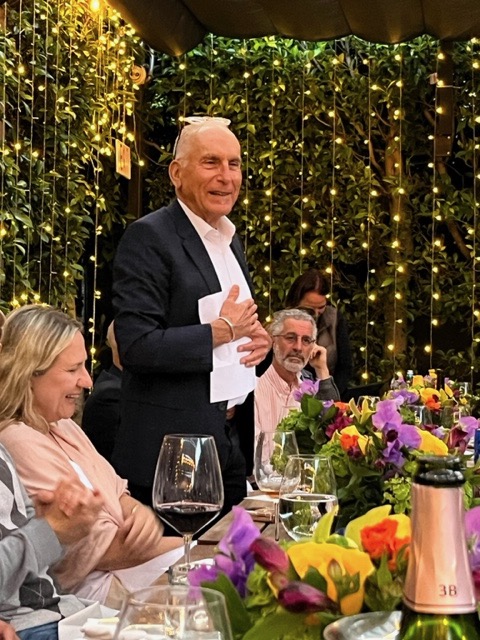
Man in white shirt and dark jacket standing at festive table

Kaplan thanks his colleagues from UCLA Luskin Social Welfare at a retirement dinner/roast. Photo by Ananya Roy

Kaplan, also a dedicated ukulele player, says his retirement also comes with a few strings attached. 

“I’m actually working with more undergraduate public affairs students than ever before, including honors thesis projects,” he said. 

In addition, he will be teaching his popular course on preventing firearm violence, now approved for distance (online) learning. Kaplan said the format has allowed him to bring in a wider array of guest speakers on timely topics who are unable to travel to campus.  

Of one of his frequent guests, he said, “We don’t see eye-to-eye on anything. But it is a very civil conversation, and most students very much appreciate the diversity of points of view and hearing different voices in this highly polarized area.” 

Since going online in winter 2021, the course has received positive feedback from students, who voted to keep the course fully online in winter 2022, even after UCLA had returned to in-person instruction. 

“There’s no other place in the country that I know of that has a permanent course on gun violence,” Kaplan said. Launched in the wake of a 2016 shooting on the UCLA campus, the course has been consistently filled, and student interest has only grown. “What is important is that it has evolved over time. It keeps getting better, so I am committed to that course,” he said. 

Kaplan has received a number of awards throughout his career, including the Distinguished Investigator Award from the American Foundation for Suicide Prevention. He has contributed to state and federal suicide prevention initiatives and has testified before the Senate Special Committee on Aging at a hearing on veterans’ health. He has also served as an advisor to the U.S. Department of Veterans Affairs, the Centers for Disease Control and Prevention, the American Foundation for Suicide Prevention, and the National Institute on Alcohol Abuse and Alcoholism. Kaplan also has advocated for including of gun violence prevention as one of the Grand Challenges in Social Work, which he said was recently approved. 

At UCLA, Kaplan has been a faculty affiliate with the university’s California Center for Population Research. Academic posts before coming to UCLA have included Portland State University, the University of Illinois at Urbana-Champaign and the University of Oregon.  

The four-time Fulbright awardee recently received an award from the Fulbright Specialist Program to help faculty at the Universidad Carlos III de Madrid maximize the global impact of their research. He also has his eye on new research opportunities in Canada, where he has been affiliated with the Canadian Institute for Substance Use Research at the University of Victoria in British Columbia.

Kaplan, whose research has been widely published, is a frequent contributor to media seeking his expertise, including through op-ed pieces. He plans to expand on that effort to help the next generation of scholars improve their citation record of scholarship and their overall visibility and impact. 

“I’ve been intrigued by that. How do you engage the readers more? It doesn’t happen in an organic way.”  

And although Kaplan has made some time for cycling in the Pacific Northwest and a trip to Guatemala, where he grew up, he also plans to continue collaborating with Luskin School faculty, staff and students.

So, for now, Kaplan is staying local. 

“It’s not one transition. It is a series of transitions for me,” he said. “And there will be unexpected twists and turns along the way.” 

In Memoriam: Douglas G. Glasgow, Author of ‘The Black Underclass’ First Black UCLA Social Welfare tenured faculty member was director of UCLA’s Center for Afro-American Studies, and later dean of Howard University’s School of Social Work

October 5, 2023/0 Comments/in Diversity, Education, For Faculty, For Policymakers, For Students, For Undergraduates, School of Public Affairs, Social Welfare, Social Welfare News /by Mary Braswell

By Stan Paul

A celebration of life for former UCLA Social Welfare Associate Professor Douglas G. Glasgow, a widely recognized scholar on welfare and underclass formation in urban cities, will be held Oct. 7 at Howard University in Washington, D.C. He died Aug. 9 at age 94.

Glasgow was the first Black tenured faculty member in the UCLA School of Social Welfare — now part of the UCLA Luskin School of Public Affairs. He was a member of the faculty from 1969 to 1971. In 1970, Glasgow served as director of the UCLA Center for Afro-American Studies, which later became the UCLA Ralph J. Bunch Center for African American Studies.

“Doug was a good friend and colleague when I was a lecturer and he an associate professor in the School of Social Welfare,” said emeritus professor Alex Norman. “He was the first African American to receive tenure at the School — I was the second.”

Glasgow was one of the founders of the National Association of Black Social Workers and was former vice president of operations of the National Urban League during his time in the nation’s capital.

“He was beloved as a teacher and respected as a scholar,” Norman said.

Norman also noted that Glasgow, who was published in numerous professional journals, coined the phrase “the Black underclass,” the title of his powerful and insightful book based on research he conducted in Watts in the 1960s following the Watts riots. Updated in 1975, his research drew attention to young Black males labeled as “problem” youths who constituted a perpetual underclass that, he said in his book, “represent the fastest-growing portion.”

“This book was born in flames, in an inferno that raged for four August days in 1965. The place was Watts, Los Angeles,” Glasgow begins. Amid this tumultuous historical turning point in Los Angeles, Glasgow writes that he sought to “examine the lives of inner-city young men through their perceptions of their life experiences.”

In his preface, Glasgow wrote that “this book is not intended as a definitive study of the Black underclass. Rather, by concentrating on a group of representative young men and their individual (and collective) confrontations with mainstream institutions, it attempts to convey the human experience of those who are denied upward mobility and are processed into underclass status.”

Glasgow also wrote that his hope was that “everyone concerned with the human, social and economic waste represented by America’s inner cities will benefit from reading this book.”

Joseph A. Nunn, who earned his undergraduate, MSW and Ph.D. degrees at UCLA, also recalled Glasgow fondly from his graduate student days in the 1960s.

“Dr. Glasgow was the only tenure-track faculty, an assistant professor, when I arrived,” a time of anti-war and anti-discrimination marches and protests, he said. During that time, Nunn and other students demanded that a tenured Black professor be added.

“He was promoted to associate professor following the activities of the Black Caucus,” said Nunn, who would later become a longtime director of field education at UCLA Luskin.

Glasgow left UCLA for Howard University’s School of Social Work, where he was dean from 1972 to 1975. While there, he led faculty and students in creating the first comprehensive, accredited, graduate-level curriculum modeled from a Black perspective.

He is included on the National Association of Social Workers Foundation Pioneer roster, which notes his many accomplishments and affiliations. Among these are visiting professor at the University of Ghana at Legon and Makerere University in Uganda. During his time in Africa, Glasgow served as a policy analyst and consultant on social development to the Ministers of Social Welfare in Ghana and with the Ministry of Rehabilitation in Ethiopia.

In the United States, he was a visiting professor at the University of Maryland and taught at Norfolk State University, where he helped start its social work department.

Glasgow also helped found community-based and national organizations that include the Black Men’s Development Center and the United Black Fund/United Way. In Washington, he served on a number of boards and commissions, including the District of Columbia’s Mental Health Reorganization Commission, the Advisory Board on Mental Health and the Teen Pregnancy Commission.

He was a resident scholar for the 21st Century Commission on African-American Males and was a scholar in residence at the E. Franklin Frazier Center for Social Research at Howard University, where he remained actively engaged in research and policy studies into his later years.

Glasgow was born in New York City, the youngest of 13 children of Matthew and Angelin Glasgow. He grew up in Brooklyn and received his undergraduate degree from Brooklyn College in 1959 and MSW from Columbia University in 1961, followed by his DSW from the University of Southern California in 1968. He later worked as a youth therapist at Kaiser Permanente Los Angeles.

His activist work as a student led to friendships with civil rights advocates including Harry Belafonte, Sidney Poitier, Jesse Jackson, John Lewis, Andrew Young, Ronald Brown, Whitney Young and “so many other greats while publishing articles, consulting, working and always selflessly trying to make a positive difference,” said his daughter Karen Glasgow.

“He was a gifted lobbyist, orator, writer, cook, singer, storyteller, visionary, father, partner, friend, bridge builder and a very humble man,” she said. “He only wanted his legacy to be remembered as a catalyst to make others pick up where he left off. When asked what he was passionate about, his reply was ‘the eradication of injustice.’”

Glasgow is predeceased by his wife, Frieda Glasgow, and a daughter, Rickie Glasgow. He is survived by his daughter Karen Glasgow; his grandson Douglas R. Glasgow; his partner Cheryl McQueen; and great grandchildren, nieces, nephews, grandnieces and grandnephews.

In his memory, the family suggests that donations be made to the National Association of Black Social Workers in his name.

More information is available via the family obituary and tribute wall online.

A Festive Welcome to UCLA Luskin The entire School community comes together to make connections and celebrate the launch of a new academic year

October 2, 2023/0 Comments/in Alumni, Diversity, Education, For Faculty, For Students, For Undergraduates, Public Policy, Public Policy News, School of Public Affairs, Social Welfare, Social Welfare News, Urban Planning /by Mary Braswell

Students, alumni, faculty, staff and friends of UCLA Luskin connected at a series of events kicking off the 2023-2024 academic year.

An orientation for graduate students brought public policy, social welfare and urban planning students together to learn about resources provided by the university and the Luskin School.

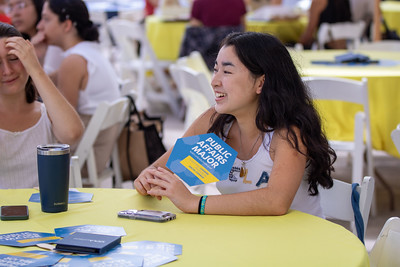
The undergraduate program hosted a luncheon for majors, pre-majors and students interested in learning more about the bachelor of arts in public affairs.

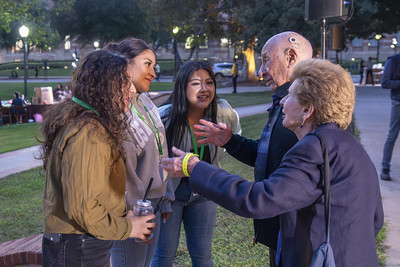
And the Block Party tradition continued for the 12th year, with the entire UCLA Luskin community gathering to make connections, learn about opportunities and organizations, enjoy the flavors of Los Angeles, and greet the School’s benefactors, Meyer and Renee Luskin.

View photos from:

Graduate Student Orientation

Graduate Student Orientation 2023

Undergraduate Open House 

Undergraduate Open House 2023

12th Annual UCLA Luskin Block Party

Block Party 2023


For access to the Block Party 360 Videos and Roamer Booth images, contact events@luskin.edu. 

UC Grant Will Fund EV Research by UCLA Luskin Center for Innovation Team led by a Fielding School professor gets nearly $2 million to pursue an equitable model for electrical vehicle charger placement

September 6, 2023/0 Comments/in Alumni, Climate Change, Electric Vehicles and Alternative Fuels, Environment, For Faculty, For Policymakers, For Students, For Undergraduates, Luskin Center, Public Policy, Public Policy News, Research Projects, School of Public Affairs, Social Welfare News, Sustainable Energy, Transportation, Urban Planning Gregory Pierce /by Les Dunseith

The UCLA Luskin Center for Innovation will be a key contributor to research recently funded through a partnership between the University of California and the state intended to spur real-world solutions relating to climate change in California.

A team from the Center for Innovation, or LCI, will focus on community engagement relating to a project led by Yifang Zhu, professor of environmental health sciences at the UCLA Fielding School of Public Health, that will look at how efforts to reduce greenhouse gases can better enable residents of disadvantaged communities to adopt electric vehicles more readily. 

A $1.99 million grant under Zhu’s direction will fund the study of EV usage in communities that have historically lacked access to charging stations. The LCI researchers will work with local residents and community-based organizations to identify barriers, improve knowledge and awareness of EVs, and design plans for deploying and installing charging stations in underserved areas. 

To date, the siting of EV chargers has been a top-down process driven by business priorities rather than community needs and preferences. Gregory Pierce, adjunct associate professor of urban planning and co-executive director of LCI, said researchers will partner with three community-based organizations in the Los Angeles area to co-design the first-ever procedurally equitable process for placement of EV chargers. 

“We hope that this project leads to a new community co-designed model for placing electric vehicle charging stations throughout California that can accelerate our transition to a zero-emissions transportation future,” Pierce said. 

The UCLA Luskin-affiliated team will be co-led by Rachel Connolly, project director for air quality and environmental equity research at LCI. The effort will include surveys and a three-part workshop process relating to the siting of EV chargers and future investments in coordination with the Los Angeles Department of Water and Power and other partners. Connolly, who earned doctorate and master’s degrees in environmental health sciences from UCLA, has been working at LCI since 2017. 

In all, $83.1 million in California Climate Action grants were awarded to a total of 38 projects involving researchers from across the UC system, as well as California State University campuses, private universities and community, industry, tribal and public agencies. The two-year grants are part of $185 million allocated by the state for UC climate initiatives that advance progress toward California’s climate goals.

Read about other UCLA research funded by California Climate Action grants

A Push to Protect Angelenos From Mpox Infection UCLA's Hub for Health Intervention, Policy and Practice leads community effort to bring vaccinations to vulnerable populations

August 28, 2023/0 Comments/in For Faculty, For Policymakers, For Students, For Undergraduates, School of Public Affairs Ian W. Holloway /by Mary Braswell

The Hub for Health Intervention, Policy and Practice (HHIPP) at UCLA Luskin is leading an effort to ensure that vulnerable populations in Los Angeles are protected from the mpox virus.

HHIPP has teamed up with nonprofits, grassroots groups, health care providers and government agencies to provide mpox information and free vaccinations at a summerlong series of events serving the LGBTQ+ community. Nearly 1,000 Angelenos have received the vaccine since the campaign launched in June, LGBTQ+ Pride Month.

Now, HHIPP will take the campaign to the rest of California, thanks to a $100,000 grant from the Centers for Disease Control and Prevention Foundation, an independent nonprofit that helps to marshal resources to support the CDC’s public health priorities.

“We particularly want to focus on Black and Latinx folks, as we were seeing lower rates of vaccination in those groups, and on people living with HIV who are out of care, who are particularly vulnerable to complications related to mpox,” said HHIPP Director Ian Holloway, professor of social welfare at UCLA Luskin.

Holloway was named a scientific advisor to the California Department of Public Health in 2022, after the first case of mpox was reported in the United States. In spring of 2023, the CDC and local and state health agencies called for renewed efforts to protect people from the virus, which is typically spread through sexual activity or skin-to-skin contact.

In June, HHIPP and its partners launched a social media campaign called stickitin.la to share information about mpox, invite the community to pop-up vaccination clinics and offer other health services, including testing for HIV and sexually transmitted infections.

“In true HHIPP fashion, this was a co-creation led by and for our community and facilitated by us,” Holloway said. “Very quickly, we were able to get a lot of large and small community-based organizations working on sexual health to come on board and to help cross-promote and co-sponsor events and provide financial support.”

To date, around 20 community partners have joined the campaign. “They’re all working multiple angles to continue to get the word out about the importance of mpox vaccination and then actually bring it to communities where it may not have been as readily available,” Holloway said.

The campaign also invited the community to an End of Summer Celebration on Aug. 31 at the APLA Health in Baldwin Hills to share information about the vaccination effort and promote diversity, inclusion and sexual health awareness.

Alumnus Looks Back on UCLA Social Welfare in the Turbulent 1960s Mickey Weinberg MSW '69 on his education and career as a grassroots organizer and advocate for the disadvantaged

June 23, 2023/0 Comments/in Alumni, For Faculty, For Policymakers, For Students, For Undergraduates, School of Public Affairs, Social Welfare, Social Welfare News /by Mary Braswell

Mickey Weinberg earned his Master of Social Welfare at UCLA in 1969, a year when the country was divided by war in Vietnam, Richard Nixon arrived in the Oval Office and humans first set foot on the moon. Trained in grassroots organizing, Weinberg was well-positioned to be of service to disadvantaged communities at a turbulent time.

An Ohio native, Weinberg earned his bachelor’s in political science from University of Cincinnati in 1963, then headed to New York’s Columbia University to study law. Realizing this was not his calling, he left Columbia and took a job at Manhattan State Hospital, where he worked for close to two years before returning to University of Cincinnati for graduate courses in poli sci. In the autumn of 1966, he came to UCLA to continue his graduate education, eventually switching to Social Welfare and its program on community organizing.

His classmates were an impressive group, Weinberg recalls. They included Maury Samuel, a minister nicknamed Father Sam who had delivered food to distressed neighborhoods during the Watts riots, and June Sale, who introduced Weinberg to historic East Los Angeles and later became prominent in the field of child care services.

Weinberg’s career path led to Los Angeles’ federal veterans affairs hospital, where he spent nearly three decades. He helped many Vietnam veterans secure housing and other services, all the while challenging the medical model of mental health. He has continued this advocacy since his retirement in 2000.

This year, on the occasion of the 75th anniversary of social welfare education at UCLA, Professor David Cohen, associate dean of UCLA Luskin, spoke at length with Weinberg to hear about his days as a student in the ’60s and his long career as an organizer and medical social worker. The interview was edited for space and clarity.

On the experiences that drew Weinberg to a career in social work:

As an undergraduate student, I worked in the summers in Cincinnati playgrounds, first as a maintenance man but later as a play leader, as they called it. I recall a lot of Appalachian kids there, they could relate to me, and at the end of the day, when the swimming pools were drained, perhaps for polio reasons, we would sit on the edge of the pool and talk quietly. Cops were often called to the playgrounds because the teenage boys were rowdy, but they were never called to my playground. Later, my work at Manhattan State Hospital changed my life — not only because of the harmful things I saw, but the good things, too.

On his recollections of a boy named Frank, born in Manhattan State Hospital and confined to the hospital grounds after his mother died:

Frank was very upset because he didn’t want to stay there all the time. He wanted to get into Manhattan, but couldn’t because someone had written in his chart that he was homicidal. The reason: He had one possession, a transistor radio, and they took it away from him as punishment and he blew up. I went to the psychiatrist in charge of male patients, and I said “This is a good kid, it can’t be good for him to spend his whole life in this place. What do you think about letting him do what he wants to do?” So we did it. The kid’s going back and forth between the hospital and Manhattan. Very quickly he got a job as a bicycle messenger. He joined a church. They loved him in the church, he got adopted by a family, he could leave the hospital. So what I learned from that as a twenty-something-year-old, is that sometimes the best thing you can do for hospital patients is get off their back.

On his education in grassroots organizing at UCLA Social Welfare:

There were just six of us in that concentration, and I recall that we were very separate from the rest of the students. Our grassroots group met almost exclusively with Warren Haggstrom. He was an incredible teacher. The way he talked about power, the simple and clear language that he used, was inspiring. Part of his pitch was not only about the use of power, but how to talk to people. But we didn’t just talk. He took us out to Delano, where he introduced us to farm workers and their organizer Cesar Chavez. I recall that we were frisked and patted down before meeting Chavez, indicating the nature of the situation.

On a student walkout organized by Weinberg and his classmates:

We wanted some changes, so we organized a walkout of all the students. Haggstrom told us later that he thought we would never do it, couldn’t pull it off. But it was he who gave us the tools and confidence to make it happen. What we wanted was more minority students admitted. There was only one Black student in our grassroots major. We also wanted curriculum change. My friend and classmate Jack Carney and I were on the phone every night to pull it off. I remember that we wanted to make sure that older students in the program, there were a few, would be on the picket line. We wanted our faculty to notice, we wanted people who walked on campus to notice. One measure of its success was a meeting the faculty had with Black students in the School to discuss increasing minority enrollment, a meeting that was open to everybody.

On his Social Welfare field placements:

My first-year placement was in East L.A. at welfare rights offices. I spoke to a lot of moms, moms of schoolchildren, moms who were worried about drug dealers in their neighborhoods. My second-year field placement was at the Veterans Administration, and it grew out of a summer job when I worked in what they called the domiciliary, where vets lived who had no other place. It was during that summer job that I met George Katz, a psychologist who had supervised psychology students there. He learned of my background working in the state hospital and that I was skeptical of psychiatry, and he took me under his wing. After my placement ended and I graduated, they hired me to organize the people living in board and care homes. Because at that time, we had decided to redefine helping these people, into helping people learn how to help themselves. Essentially, to organize them.

On his work on a grant-funded project to organize residents of board and care homes, many of whom had been labeled mentally ill:

We put a classified ad in the L.A. Times, looking for former psychiatric patients interested in organizing to meet with us. We got a meeting room somewhere in Hollywood, and I recall a woman in that group, very quiet, who hardly ever spoke at meetings. But people thought she was intelligent, and it was suggested she take minutes of meetings. Later, she and her husband had to leave the state, and she approached me and said, “I want you to know that I was planning to commit suicide, and if it hadn’t been for how respectfully and kindly I was treated in these meetings, I would not be alive today.” People can be helped in many ways. Another learning experience for me.

On learning the power of teaching people to advocate for themselves:

At the board and care homes, we organized people to do what they wanted to do — if there was vermin in the board and care homes, if the food was bad. For the first weeks, all I did was sit around, just observing. And you know, they’d come up to me, and say, “What are you doin’ here?” I’d say: “I’m here to help.” This went on for six weeks. They’d come back, insisting, “What d’you want to do?” And me: “Well, what do you want to do?” And they said whatever their problems were, and then I said, “Oh, you want to do it. OK. If you want to do it, help me get the rest of the people who live here together, and we’ll have meetings.” And we had meetings, and what we did was to find ways to have meetings with the ownership, to solve problems. When it was over, some state people researched it and found that the people who were in the organizations were much more confident than those who weren’t, and they were better able to function and solve their own problems. Because that’s what we talked about: how to solve the problems. No talk at all about mental illness or anything. It was just: you have a problem and let’s all figure out a way to resolve it.

Page 7 of 24«‹56789›»

Recent Posts

  • Why Cars Are More Expensive Than Ever December 23, 2025
  • Carlos E. Santos Elected President of National Social Work Educators Association December 23, 2025
  • Pierce on LADWP inspections by U.S. EPA December 22, 2025
  • Measuring the Impact of the Community Schools Model December 22, 2025
  • Rethinking Rent Control in California December 22, 2025

Contact

UCLA Luskin School of Public Affairs

3250 Public Affairs Building - Box 951656
Los Angeles, CA 90095-1656

Campus Resources

  • Maps, Directions, Parking
  • Directory
  • Contact
  • Academic Calendar
  • Careers
  • Diversity
  • University of California
  • Terms of Use

Follow

The statements on this page represent the views of people affiliated with the Luskin School of Public Affairs and do not necessarily represent the views of the University of California, or UCLA or its Chancellor.

Posts and comments by individuals at UCLA on social media channels may not reflect the opinions or policies of UCLA, the University of California or the Luskin School, nor its benefactors and academic partners.

Scroll to top