Study Tracks College Enrollment Rate of LAUSD Graduates Research team led by UCLA Luskin Public Policy scholar, in collaboration with the Los Angeles Education Research Institute, also examines how L.A. schools prepare students for enrollment in higher-education institutions

By George Foulsham

In the first comprehensive analysis of college enrollment of Los Angeles Unified School District graduates, UCLA and Claremont Graduate University researchers show that 70 percent of high school graduates enrolled in either two- or four-year colleges, but only 25 percent of graduates went on to earn a college degree within six years.

A separate, parallel study that focused on college readiness revealed that while over 75 percent of high school counselors say they have adequate information to help students complete college and financial aid applications, less than half (42 percent) said they have enough time to provide students with the assistance they need.

Both studies were co-directed by Meredith Phillips, associate professor of public policy and sociology at the UCLA Luskin School of Public Affairs, and Kyo Yamashiro, associate professor of education at Claremont Graduate University. Carrie Miller, a doctoral candidate at UCLA, co-authored the report on college readiness supports; Thomas Jacobson, a Luskin Master of Public Policy graduate and incoming doctoral student at UCLA, co-authored the report on college enrollment. Phillips, Yamashiro, Miller and Jacobson are all research collaborators with the Los Angeles Education Research Institute (LAERI), a nonprofit research organization engaged in a research-practice partnership with L.A. Unified. The studies were funded by a grant from the College Futures Foundation to UCLA and LAERI.

“In the first report, we analyze data on college enrollment, persistence and completion from the National Student Clearinghouse and L.A. Unified data on students’ high school performance, and ethnic and socioeconomic backgrounds, to provide the first detailed description of graduates’ postsecondary outcomes,” Phillips said. “In the second report, we examine the prevalence of college readiness supports throughout the school district. We hope these reports, taken together, contribute to a broader conversation about preparing L.A. Unified students for their post-secondary options and how the Los Angeles community can work together to ensure that more students enroll in college and complete a four-year degree.”

Enrollment Numbers

The analysis examines college-going outcomes for district graduates who had passed critical milestones for enrollment within one year (class of 2014), persistence into a second year (class of 2013), and completion within six years (class of 2008).

Among the key findings:

  • Seventy percent of 2014 L.A. Unified students enrolled in college within one year of high school graduation; college enrollment rates were similar for the classes of 2008 and 2013.
  • Most college attendees persisted into a second year of college.
  • However, only 25 percent of 2008 graduates had earned a college degree within six years of high school graduation (by 2014). More than two-thirds were four-year degrees.

The researchers also found that L.A. Unified graduates were more likely to enroll in two-year than four-year colleges. Most of the 2008, 2013 and 2014 graduates enrolled in public colleges and universities in California. About 8 percent of the class of 2014 enrolled in “very selective” four-year universities such as UCLA, UC Berkeley, Stanford and USC, or “selective” four-year colleges such as Loyola Marymount University, UC Irvine, UC Santa Cruz and San Diego State University.

The study also revealed disparities based on gender and ethnicity:

  • College enrollment, persistence and completion rates were lower for Filipino American, African American and Latino graduates than for white and Asian American graduates.
  • Female graduates were more likely than their male classmates to enroll in, persist in and complete college.
  • Gender disparities were especially stark for Filipino American, African American and Latino male graduates, who were roughly one-third less likely to enroll or persist in four-year colleges than their female classmates of the same ethnicity.

According to the researchers, improving L.A. Unified students’ academic preparation is essential for ensuring that more graduates start and complete college, and must begin earlier than high school. In addition, striving to ensure that all District students complete their A-G course requirements with at least a C is critical for students’ immediate enrollment after high school in a public, four-year college.

“This report provides a first look at L.A. Unified graduates’ pathways to and through college,” UCLA co-author Jacobson said. “It will be important to continue to track these college-going outcomes in upcoming years to understand students’ successes and challenges as they progress through college, and to learn about how college outcomes change for future graduate cohorts.”

L.A. Unified officials say the study’s recommendations align with the district’s new and ongoing efforts to ensure that students develop the skills and mindset to thrive in college and the workforce.

“The LAERI goals serve as the framework for an array of strategies we are implementing to address the needs of students, families and schools,” said Frances Gipson, the District’s chief academic officer. “We are passionate about continuing our work to foster a college-going climate in our schools and to strengthen our college planning and academic supports as we provide more robust counseling services for our students.”

“We look forward to continuing our partnership with LAERI to learn more about promising strategies for increasing our students’ college readiness,” Gipson said.

Preparation for College

The college readiness study explores the prevalence of support for high school students in L.A. Unified. The data analyzed for this report include survey data from school staff and students in more than 90 percent of the district’s traditional high schools and 76 external service providers, as well as data collected during interviews with district and school staff.

Although more than 75 percent of counselors said they have adequate information to assist students with the college application and financial aid process, less than half said they have enough time to provide students with the individualized college application assistance they need. And counselors at 75 percent of schools report that some students at their schools are not getting the help they need.

Other key findings:

  • Counselors cite large caseloads and competing demands on their time as barriers to helping students with the college application and financial aid process. Counselors spend nearly the same amount of time coordinating academic testing and performing non-counseling activities as they do advising students about college and financial aid.
  • Nearly all schools offer college readiness support but students still need more help with the college application, financial aid and college enrollment process. About one-fifth of 12th graders in the survey said they didn’t feel that adults at their school had helped them learn the details of getting into college.
  • Most L.A. Unified schools rely on external service providers to help them provide college application, financial aid and college enrollment assistance. At more than two-thirds of schools, counselors report that both school and external staff provide college application (66 percent) and financial aid (75 percent) help.

Learning more about disparities among students in their access to college readiness support is an important next step for improving college-going among L.A. Unified graduates, according to the study.

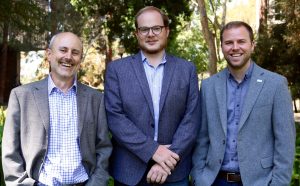
Researchers on the UCLA-LAERI LAUSD study include Meredith Phillips, front, associate professor of public policy and sociology at UCLA; and, back row, from left, Kyo Yamashiro, associate professor of education at Claremont Graduate University; Thomas Jacobson, a Luskin Master of Public Policy graduate and incoming doctoral student at UCLA; and Carrie Miller, a doctoral candidate at UCLA.

The researchers offer several recommendations for increasing schools’ capacity to meet students’ college counseling needs, including clarifying a common set of college counseling expectations by grade level, diversifying the type of school staff responsible for specific aspects of college counseling assistance, incorporating key college application tasks into required academic coursework, and providing professional development specific to college counseling tasks.

The researchers concluded that the district could maximize the effectiveness of existing partnerships with external service providers by:

  • providing counselors and other school staff who connect schools and students to external providers with additional support to develop and maintain these partnerships;
  • asking external service providers to contribute to a common information system to aid individual schools or the district in determining which students are and are not receiving sufficient help; and
  • evaluating the effectiveness of the college-related services that students receive from external providers.

“This report is a first step toward understanding the college readiness resources available to LAUSD students,” UCLA co-author Miller said. “While we find that nearly all schools offer a range of college readiness resources, identifying the extent of these services — the proportion of students served and the intensity of the services they receive — is essential for more effectively targeting school and district resources.”

Phillips said that LAERI will continue its collaboration with L.A. Unified by gathering additional data on college counseling resources available to students and the relationship between those resources and whether and where students enroll in college.

“Our partnership with LAERI and this research informed our approach to the state’s College Readiness Block Grant,” said Gipson, of L.A. Unified. “Through this research, Phillips and Yamashiro’s team developed a counselor section of our annual staff survey, which provided the first districtwide data on college readiness resources. Additionally, these initial data have provided a foundation for the college readiness professional development resources we are developing for schools.”

“We’re very excited to present the first detailed overviews of LAUSD graduates’ postsecondary outcomes and college readiness supports,” Yamashiro said. “As we build on this research partnership work, we look forward to continuing to collaborate with the district to get a better understanding of elementary and middle school predictors of college readiness and success, identifying schools that are doing an especially good job of preparing their students for college, and helping the district identify the most effective practices and interventions for improving college access.”

Click below to download the full reports in PDF format.


“College Going in LAUSD: An Analysis of College Enrollment, Persistence, and Completion Patterns”


“College Readiness Supports In LAUSD High Schools: A First Look”


UCLA Study: When Genetics Challenges a Racist’s Identity Researchers analyzed posts on a white nationalist online forum to interpret reactions of subjects whose genetic testing revealed their racial identity wasn’t what they expected

By Stan Paul

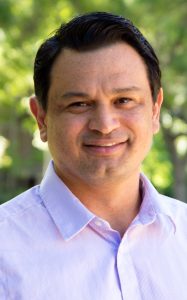
Aaron Panofsky

A new study by UCLA researchers reveals the range of reactions — from rejection to reinterpretation to acceptance — after white nationalists learn that DNA ancestry test results indicate they may not be as white or European as they previously thought.

The study, “When Genetics Challenges a Racist’s Identity: Genetic Ancestry Testing among White Nationalists,” is the work of UCLA researchers Aaron Panofsky and Joan Donovan, who presented their findings at the annual meeting of the American Sociological Association held Aug. 14, 2017, in Montreal, Canada.

Upon receiving genetic evidence of non-white or non-European ancestry, those posting online “expend considerable energy to repair identities by rejecting or reinterpreting GAT results,” said the researchers, who studied discussion threads on the topic posted on the white nationalist online forum Stormfront.

In their qualitative study, Panofsky and Donovan looked at more than 3,000 posts in 70 discussion threads on topics related to “test reveals.” These included posts by individuals who revealed results of non-white/non-European ancestry on Stormfront, a website that requires members to be white or European with non-Jewish ancestry. Responses also included the comments on those test results.

Panofsky, an associate professor with appointments in Public Policy at UCLA Luskin and the Institute for Society and Genetics, and Sociology; and Donovan, a postdoctoral fellow at UCLA’s Institute for Society and Genetics, report that while GATs promote “the capacity to reveal one’s genetic ties to ethnic groups, ancient populations and historical migrations, and even famous historical figures … this opportunity to ‘know thyself’ can come with significant risks.”

Panofsky points out that based on white nationalists’ responses to genetic information, upon learning their test results, there is no reason to believe that they would give up their racial ideology, and, more importantly, that genetic information cannot be relied on to change the views of white nationalists.

In addition, Panofsky said that, as a group, white nationalists appear to have a combination of sophisticated and unsophisticated methods of interpreting the data from statistical and genetic viewpoints, as well as on their own historical reasoning or reinterpretation.

“In this framework, the repair strategy is not to reject scientific or historical knowledge, but to educate oneself to understand the construction of GAT results and to explain those results in alternate terms,” the researchers conclude.

In parsing responses to GAT results posted on Stormfront, Panofsky and Donovan created a “decision tree” consisting of “good news” responses, or confirmation of white identity, or “bad news,” revealing results of non-white or non-European ancestry.

“Good news” served a confirming purpose and was well-received, but “bad news” elicited responses of rejection of the GAT. The alternatives to the rejected responses included championing of traditional methods, citing family history or using a “mirror test,” whereby individuals evaluated their outward appearance as a gauge of racial identity.

When appealing to the online community for more information about confusing results, “Many of the responses to bad news are about how to repair the damage, rather than latching onto the ideology of Stormfront,” Panofsky said. “Even though they have that idea of purity, they help people explain away or dismiss the result.”

The researchers also found that some who reject unfavorable GAT results interpret them as the product of companies with an anti-white bias, or Jewish ownership “invested in sowing racial doubt and confusion among whites.” They also attribute a small percentage of non-white or non-European markers as being “part of a multicultural conspiracy,” according to the study.

Another way the online community dealt with bad news, Panofsky and Edwards reported, was to discount indications of “non-white” ancestry as a statistical error, or “noise” to engage in “scientific reinterpretation of the results.”

The findings also indicate that white nationalists are using GAT results to rethink “the boundaries of whiteness.” Panofsky and Donovan point out that a great deal of discussion on Stormfront focuses on “what are the genetic markers of legitimate whiteness or European-ness,” and how to think about white nationalism in the era of GAT.

“They are doing so based not on wild misinterpretations or anti-scientific conceptualizations, but rather by processing through a racist cognition the materials that geneticists and genetic ancestry companies churn into the public,” Panofsky said.

Conference at UCLA Luskin Slices Into Post-Election Data UCLA faculty members guide scholars from across the nation during a face-to-face dissection of a collective survey effort that showcases research on race, ethnicity and politics

By Stan Paul

The assembled scholars listened intently, readying their critiques as a stream of researchers from universities large and small took the podium. Over two days, findings from a landmark shared survey effort focusing on the 2016 U.S. elections were presented, and then colleagues from across the nation congratulated and cajoled, concurred and challenged — sometimes forcefully.

And that was the point of it.

The spirited gathering on Aug. 3-4, 2017, in a large lecture hall at the UCLA Luskin School of Public Affairs brought together academic peers from across the United States whose findings were all derived from the same innovative and singular data set.

The 2016 Collaborative Multi-Racial Post-Election Survey (CMPS) was produced by a nationwide research collaborative co-led by faculty from UCLA. The survey’s nearly 400 questions focused primarily on issues and attitudes related to the 2016 election, including immigration, policing, racial equality, health care, federal spending and climate change.

“Questions were user-generated via a team of 86 social scientists from 55 different universities across 18 disciplines,” said Lorrie Frasure-Yokley, a UCLA associate professor of political science who was one of the event’s organizers as well as co-principal investigator for the survey.

The survey’s creators describe the 2016 CMPS as “the first cooperative, 100 percent user-content-driven, multiracial, multiethnic, multilingual, post-election online survey in race, ethnicity and politics (REP) in the United States.”

“We queried more than 10,000 people in five languages — English, Spanish, Chinese, Korean and Vietnamese,” said Frasure-Yokley, who was joined by conference co-organizer Matt Barreto, professor of political science and Chicana/o studies at UCLA, as well as their co-principal investigators, Janelle Wong from the University of Maryland and Edward Vargas from Arizona State University.

Also serving as the annual summer meeting of a group known as the Politics of Race, Immigration and Ethnicity Consortium (PRIEC), the conference is part of an ongoing series of meetings at which faculty scholars and graduate student researchers showcase works in progress related to racial and ethnic politics. Immigration, political behavior, institutions, processes and public policy also receive research attention.

“We have never seen this much diversity in the research being presented, in the presenters themselves, and in the audience members,” Barreto said. “It was a great experience.”

In spring 2016, U.S. scholars were invited to join a cooperative and self-fund the 2016 CMPS through the purchase of question content by contributors, Frasure-Yokley explained. The treasure trove of results is being incorporated into numerous ongoing academic studies and reports. Of those, 16 research projects derived from the data were presented, discussed and critiqued in open forums by other researchers attending the conference at UCLA.

“Our goal was to provide CMPS contributors with an outlet to present their research, obtain feedback for revisions toward publication, including book projects and academic articles,” Frasure-Yokley noted.

The gathering also served as a professional development and networking opportunity for scholars who study race, ethnicity and immigration in the United States, she said. And the conference provided what Frasure-Yokley described as a “lively and interactive platform” for graduate students to present their research and obtain feedback via a poster session.

Organizers also encouraged and further cultivated the development of a number of co-authored research projects among CMPS contributors, she said.

One of the presentations focused on research conducted by UCLA Luskin Dean Gary Segura and colleagues titled, “From Prop. 187 to Trump: New Evidence That Group Threat Mobilizes Latino Voters.”

Segura, who also served as a presentation moderator, is a longtime participant in PRIEC, having previously hosted a meeting when he was at Stanford. In fact, Barreto noted that Segura was one of the original members of PRIEC, presenting at the very first meeting at UC Riverside.

Holding this year’s conference at UCLA was a perfect fit. “Luskin was a great venue to host this conference because so many of the research presentations were directly engaging public policy and public affairs — from health policy, policing, immigration reform, LGBT rights, and race relations,” Barreto said.

“The partnership between Luskin and Social Sciences to bring the PRIEC conference to UCLA was truly outstanding. This conference was groundbreaking in bringing together scholars who study comparative racial politics from a Latino, African American and Asian American perspective,” he said.

Here are some of the other presentation titles:

  • “Immigration Enforcement Scares People from Police and Doctors”
  • “Pivotal Identity: When Competitive Elections Politicize Latino Ethnicity”
  • “Using the 2016 CMPS to Understand Race and Racism in Evangelical Politics”
  • “Generations Divided: Age Cohort Differences in Black Political Attitudes and Behavior in the Post-Obama Era.”

Frasure-Yokley said the CMPS provides a high-quality online survey data source, and it also builds a multidisciplinary academic pipeline of inclusive excellence among researchers who study race, ethnicity and politics. Plans to conduct 2018 and 2020 surveys are already underway, and an annual CMPS contributor conference will continue each summer.

“The 2016 CMPS brought together a multidisciplinary group of researchers at varying stages of their academic careers,” she said, noting that participating cooperative scholars and conference attendees included junior and senior faculty from large research institutions, scholars from historically black colleges and universities (HBCUs) and researchers from Hispanic serving institutions (HSIs). Also on hand were postdoctoral fellows, graduate students and some undergraduates.

“We need to go all in because this is the future of our discipline. To ensure that we are creating a strong pipeline and have access to quality data for various racial and ethnic groups, our model of data collection inspires innovation and fresh ideas through collaboration,” Frasure-Yokley said.

In addition to support from Segura and the Luskin School, co-sponsors included UCLA’s Department of Political Science; the American Political Science Association (APSA) Centennial Center Artinian Fund; the UCLA Division of Social Sciences and its dean, Darnell Hunt, professor of sociology and African American studies; the Department of African American Studies; the César E. Chávez Department of Chicana/o Studies; and the Center for the Study of Race, Ethnicity and Politics (CSREP).

Additional information on PRIEC.

More information about the survey.


Amplifying the Voice of Latinos on Policy Issues Latino Policy & Politics Initiative at UCLA Luskin School will fill a critical research gap and provide a think tank around political, social and economic issues

By Les Dunseith

A new initiative underway at the Luskin School of Public Affairs will take advantage of the immense research expertise at UCLA to fill a critical gap in research and policy analysis related to issues that impact Latinos and other communities of color in California and across the country.

The Latino Policy & Politics Initiative (LPPI) will be “a comprehensive think tank around political, social and economic issues faced by California’s plurality population,” said UCLA Luskin Dean Gary Segura about the new effort, which also received startup funding from the Division of Social Sciences. Matt Barreto, professor of political science and Chicana/o Studies, co-founded the project with Segura in February 2017.

Founding Director Sonja Diaz came aboard in March and has spearheaded meetings with scholars, community organizations, public officials, staff members from governmental agencies, and potential funding partners to formalize the initiative and secure its place among the various research centers at UCLA.

“People on this campus are supportive and willing to partner.”
—Sonja Diaz

“One of the things that I have personally been so impressed with is that people on this campus are supportive and willing to partner,” said Diaz, who earned a Master of Public Policy degree at UCLA Luskin in 2010 before going on to receive her law degree from UC Berkeley. “They see the value of supporting LPPI as a meeting place, as an organization and as a foundation to build upon.”

Scholars from across campus have already come aboard, including professors from schools and departments such as Medicine, Business, Health Policy and Management, History and Law.

“We stand here on the shoulders of individual researchers, scholars, students and their centers to actually start having a convergence and a meeting place,” Diaz said about the role of LPPI in uniting Latino-focused research efforts so that studies can be found and shared more easily among interested parties. “We have more than 16 people already in place to produce rapid-response and evidence-tested research on domestic policy issue areas.”

Segura, himself a professor of public policy and Chicana/o studies, said that the University of California — particularly UCLA — is an ideal home for the enterprise. LPPI will develop new research, as well as assist existing faculty research projects and provide direct support for the community, centered around policy issues of vital importance to Latinos.

“The city of Los Angeles is the second-largest Spanish speaking city on the planet — after Mexico City, and significantly ahead of Buenos Aires and Madrid,” Segura explained. “If you are going to study what is happening to Latinos in the United States, you begin in Los Angeles, and your next stop is California.”

Barreto noted that Latinos have been the largest minority group in the U.S. since 2001, and the Latino percentage of the population continues to grow, particularly in California. “Yet, there is a significant gap between the diversity of our state and the institutional representation of Latinos in Sacramento, as well as in the UC system,” he said. “Through this initiative, we hope to increase policy-relevant research on Latinos in California and the country as a whole.”

Basing LPPI at UCLA not only makes sense geographically, it makes sense organizationally, Segura said.

“UCLA has a very strong Department of Chicano/a Studies. It has a very strong Chicano Studies Research Center. And the Luskin School of Public Affairs is UCLA’s — and I would argue the University of California’s — best voice on questions of human service and human need,” Segura said. “The concentration of Latino academics here makes UCLA the right place for LPPI. It’s where it should exist.”

“The concentration of Latino academics here makes UCLA the right place for LPPI.”
—Gary Segura

Although LPPI is still in the organizational phase of its evolution, Diaz noted that its leaders have “already connected with, met with, and partnered with more than 50 community-based organizations, both nationally and at the state level.”

Segura, Barreto and Diaz continue to meet with potential funding partners, including a host of state and federal foundations, and recently completed a trip to Sacramento to engage with members of the California Legislature. The visit served a dual purpose, simultaneously letting elected officials know about LPPI and giving the leadership team an opportunity to ascertain the needs of elected officials in terms of the policymaking demands of the populations that they represent.

“One of the things that we learned is that state government does no demographic research as a matter of form,” Diaz said. “It means that policy is not always best-tailored to the needs of communities of color. We know there is an opportunity there — a need for this type of research.”

To fill that need, LPPI will be launching new research projects to be completed by internal staff members, often working with postdoctoral candidates and graduate assistants. Those projects will afford students an opportunity to get hands-on training and will forge partnerships that Diaz sees continuing beyond graduation as former UCLA students take their places in government life.

“One of the things that is unique about LPPI is that it’s action-oriented,” she explained. “It’s not enough to just produce the research and produce the evidence, but we will actually put it into the hands of people who can go ahead and integrate it into their own proposals.”

The ability to respond quickly to issues of concern among Latinos is a vital aspect of the new initiative. “It’s no secret that a majority of Latinos felt disrespected and under attack by Donald Trump during the presidential campaign,” Barreto said. “It is more important now than ever before to have an objective, research-based approach to policy and politics, to understand the Latino experience in this country, and to make sure that policymakers at all levels of government — from president of the school board to president of the United States — understand that Latinos contribute equally to our communities and expect to have equal input into, and equal outputs, from the political system.”

Diaz sees LPPI becoming a go-to source of information on Latino policy issues at City Hall, in Sacramento and for people nationwide. Segura concurs, noting that he has launched an effort to hire additional faculty members at UCLA Luskin who will add new areas of expertise to the cadre of faculty members across the campus who are already actively pursuing important policy or social issue research.

Segura’s ultimate goal for the Latino Policy & Politics Initiative?

“We will be doing something in the world to improve the lives of the people that we study,” he said, “which, really, is why we do it.”


An Online Summer Gateway to a Public Policy Education In its second year, a web-based version of an introductory course allows UCLA students to get a headstart on a UCLA Luskin Public Affairs minor

By Stan Paul

Kenya Covington has been teaching Public Policy 10A at the UCLA Luskin School of Public Affairs for several years, so she’s well aware of the burdens for students who take the summer class.

Many students have very busy summer schedules “working with congressional members, doing summer internships or running youth mentoring camps,” she said, mentioning just a few of the typical commitments made by undergraduates at UCLA. “It dawned on me after the first summer teaching the course that the alternative online format might work well.”

Thanks to Covington, undergrads who are pursuing a minor in public affairs at UCLA Luskin can take the core introductory course online. Public Policy 10A has served as the gateway for the public affairs minor since shortly after the Luskin School was established more than 20 years ago. Now in its second online summer run, the course is a welcome addition — judging from the impressive summer enrollment of nearly 80 students.

But, despite the convenience, the six-week summer course is no “lite” version of the course offered during the regular academic year, said Covington, who’s also a new member of the UCLA Luskin Public Policy faculty. Covington said that, even though the course is online, it will remain rigorous and true to the in-class version she has taught two previous summers at Luskin.

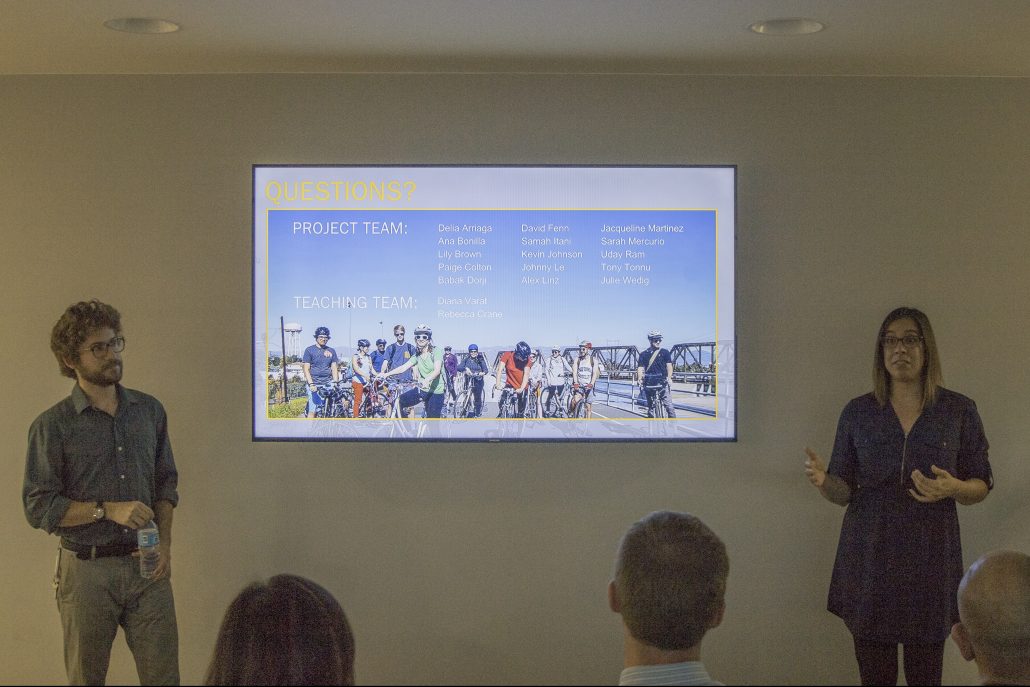
Kenya Covington speaks to students during the Public Policy 10A class taping. Photo by Stan Paul

It was Covington who brought 10A online last summer with an initial enrollment of 35 students. Covington, who has previous online instruction experience at California State University Northridge (CSUN), said her goal was to create a flexible course that “students can take with them on the road.”

“This course is fast-paced,” Covington said. “Students must stay on top of the work … there are quite a few tasks to be completed for every weekly module.” She said that self-directed learners will succeed in the course.

Like the in-class version, the course is chock full of reading from an assigned text and other materials, as well as additional video content on topics and tools used in policy analysis. These include policy memo-writing and cost-benefit analysis — the same skills honed by the school’s master of public policy (MPP) students.
Covington noted that a great deal of effort is required to ensure the quality of the course. “I work to duplicate the course quality of the face-to-face traditional course,” she said. “Student learning objectives are linked to the lectures that are posted online and to classwork assignments that are embedded in weekly modules.”

Covington’s areas of study include the examination of social and economic inequality associated with the structural makeup of metropolitan areas. At UCLA Luskin, she teaches courses on housing policy, research methods, urbanization, social inequality and urban poverty.

For students more accustomed to a classroom setting, Covington provides a number of optional live sessions. Those classes are recorded and serve as supplementary online content for future presentations of the course.

Among the students who enjoy the face-to-face experience with the convenience of online learning is UCLA senior Bryan Dean, who is juggling an internship this summer with studying for the GRE, the graduate record examination.

“This is not my first online course, but it is my first online course at UCLA.,” said Dean, who hopes to pursue graduate studies in public policy. “I really enjoy the course format with the mixture of in-class meetings and online materials.”

Venette Agustin was among the UCLA undergraduate students attending the optional in-person class that was recorded for the Public Policy 10A course. Photo by Stan Paul

Online content isn’t a new concept at UCLA. All courses have an interactive class web page and built-in aspects of a “blended course.” Students who grew up with smart phones, tablets and the internet are accustomed to finding their course syllabi online as well as turning in assignments online and having access to downloadable supplementary materials, internet links to readings and more.

Covington requires students to participate in an open forum during which the class discusses a topic linked to the focus of the weekly modules. Students are required not only to submit posts, but must comment on other students’ posts, which adds a social and participatory element to the course.

In her in-class introductory session this summer, Covington urged students to stay connected. “The challenge with the online is you don’t get to interface with me as much, so you don’t get to pick my brain as easily about things that you are interested in. But don’t hesitate, send me an email,” she said.

Non-traditional students — those who are typically working full- or part-time jobs while going to school — may find this type of course more appealing. “These courses allow them to pursue their academic goals,” Covington said. “The value of online is that it provides maximum flexibility for students.”

UCLA Study Helps Californians Save Electricity — and Money — this Summer Participants in UCLA Luskin research effort receive smartphone notifications that help them make smart decisions about electricity usage and avoid peak pricing

Electricity demand fluctuates each day, and consumers who want to unplug during peak times to save money and help the environment now have a new tool at their disposal. Chai Energy, a partner of the UCLA Luskin Center for Innovation, is making real-time energy information a reality for electricity consumers who want to reduce or shift their electricity usage during peak periods when electricity is the most expensive.

In a pilot study funded by a California Energy Commission grant of more than $2 million, UCLA is seeking to understand and identify the most effective demand response program designs for different types of households across the state, depending on social characteristics.

“We want to provide a comprehensive tool that will help customers save money while improving grid reliability, reducing pollution during peak hours, and maybe even preventing blackouts” said J.R. DeShazo, director of the Luskin Center for Innovation at the UCLA Luskin School of Public Affairs.

How does the study work? 

The UCLA researchers have partnered with a clean technology company named Chai Energy. “Chai developed a free smartphone application that displays your home daily electricity consumption and provides you with tips on how to better manage your electricity bill,” DeShazo said. This could include knowing when it makes financial sense to replace an old appliance, or simply what time to use it based on electricity prices. Chai has also developed a gateway device that establishes communication between a participant’s smartphone and the smart-meter already installed in his house, allowing users to see real-time energy consumption by individual household appliances.

The UCLA Luskin Center is delivering and testing messages designed to inform Californians about their electricity consumption and provide tips for reducing it. About 10,000 Californians are expected to download the app and participate in the study.

“This large sample will enable researchers to identify the most effective format, timing and content of messages,” said Julien Gattaciecca, project manager and one of the researchers.

How can Californians participate?

The free Chai Energy application can be found by searching for Chai Energy in android or IOS app stores or by visiting chaienergy.com. Those who install the app are automatically enrolled in the study. A free Chai gateway device with a market value of $75 is being randomly distributed to 5,000 participants.

The study is currently available only for customers of Pacific Gas & Electricity (PG&E), Southern California Edison (SCE), and San Diego Gas & Electricity (SDG&E).


Luskin Center and the Chai Energy App from UCLA Luskin on Vimeo.

The video is also available on YouTube.

New Study Examines Effects of Stopping Psychiatric Medication UCLA Luskin School professor co-authors report showing that more than half succeed in discontinuing usage of drugs

Despite numerous obstacles and severe withdrawal effects, long-term users of psychiatric drugs can stop taking them if they choose, and mental health care professionals could be more helpful to such individuals, according to a new study.

A new study shows that while long-term users of psychiatric drugs can stop taking them if they choose, mental health care professionals could be more helpful to such individuals dealing with problems like severe withdrawal effects.

While 1 in 6 Americans take a psychiatric medication for serious mental illness, there is little research on people’s experiences coming off the drugs. In the first large-scale study in the United States on this subject, Live & Learn, Inc., in partnership with researchers at the UCLA Luskin School of Public Affairs, UC San Francisco and New York University, began to fill this knowledge gap. Study findings are now available online in Psychiatric Services, a journal published by the American Psychiatric Association.

Surveying 250 long-term users of psychiatric medications who had a diagnosis of serious mental illness and chose to discontinue use, the study found that more than half succeeded in discontinuing usage, despite having little professional support while experiencing severe withdrawal symptoms including insomnia, crying and diarrhea. The majority of survey respondents cited the main reason they attempted to quit centered on health risks of long-term use and side effects.

Of the study’s respondents, 54 percent managed to stay off psychiatric medication for at least one year, with few reporting relapse or re-hospitalization. Eighty-two percent of those who discontinued use reported being “satisfied” with their choice.

“People stop taking their psychiatric medications whether or not they find the drugs helpful, and they do so at all stages of the medication experience — days, weeks, months, or years after taking them,” said David Cohen, professor in Social Welfare at UCLA Luskin and a co-author of the study.  “This study is novel because it asks questions about stopping to take medications from the consumer’s point of view.”

Many industry-funded studies have asked patients why they stop taking their medications, but typically with a view to increase compliance, according to Cohen. By contrast, this study asks consumers what they experienced while coming off drugs, who helped them make and carry out their decision, and whether they were satisfied with their attempted or completed discontinuation.

“Over 70 percent of our study sample had taken medication for more than a decade; however, these individuals reported having little to rely on when discontinuing except the internet and social support in order to endure withdrawal. Limiting access to care through cuts to health and psychosocial services can only make that situation worse,” says principal investigator Laysha Ostrow, founder and CEO of Live & Learn, a California-based social enterprise that provides research, technical assistance and knowledge translation services to behavioral health systems. “Most were working with a provider at the time but did not find them helpful in the process. However, even though it was often complicated and difficult, the majority who were able to come off medication completely were satisfied with their decision to do so.”

Cohen said that there are still plenty of challenges for researchers who are examining this topic.

“There’s a lot of work to do to understand how people come off medications and how to help them do so safely, especially when they’re taking several psychiatric medications simultaneously,” he said. “This study didn’t use a probability sample. Though it very carefully selected the 250 respondents, most with over 10 years’ history of taking medications, it should be a priority to confirm or modify these findings with a probability sample.”

The study was funded through a grant by the Foundation for Excellence in Mental Health Care.

Dispensing Knowledge in Real Time UCLA Luskin Social Welfare students present the results of their rapid response research projects

By Stan Paul

Research, by design, is focused, systematic, methodical. It takes time.

But when information moves at the speed of social media, and false, distracting and potentially harmful information can be spread worldwide via tapping a screen in the middle of the night, there is a pressing need for responsible research that can be produced in real time.

A dozen social welfare graduate students at the UCLA Luskin School of Public Affairs reacted to this challenge by taking on projects — above and beyond their required studies — to match their data-gathering and synthesizing skills with the ability to make useful information available quickly to communities that may need it.

The social welfare master’s and doctoral students researched topics such as hate speech and immigration.

“You are going to enter your profession, a profession built around the question of human caring, at a time where human caring is not held in particularly high esteem,” UCLA Luskin Dean Gary Segura said in introducing “Rapid Response Research in the Trump Era,” a June 1, 2017, gathering at the Luskin School to review student projects.

Segura, whose research has centered on representation and empowerment, said: “You know the challenges that all of us face … across all racial and ethnic, socioeconomic subpopulations in the United States: access to affordable health care, dealing realistically and honestly with challenges that individuals and families face, providing quality education and job opportunities for people. The list is unbelievably long.

“The first piece of advice I’m going to give you for resistance is to call things by their name,” Segura said. “We must begin our resistance by calling things what they are: Racism is racism, sexism is sexism, anti-Semitism and Islamophobia are what they are.” He urged students not to pass these things off as merely rants not worthy of comment or notice.

Laura Abrams, the incoming chair of UCLA Luskin Social Welfare, said that a list of potential research ideas was presented to social welfare students early in the academic year, and a number of groups responded. The criteria for the projects included working with real-time data from social media platforms such as Twitter.

Abrams said the research topics “were going to be more immediately applicable to what communities might need in order to resist and they had to be social justice oriented.” Social welfare faculty such as assistant professors Ian Holloway and Laura Wray-Lake served as advisers for the students.

One project examined Twitter data based on the motivations of those who participated in the Women’s March, and how that motivation connects — or doesn’t — with broader issues of racial justice.

One immigration issue tackled by the students was part of a nationwide project asking how young people have been affected by the policies and rhetoric of the Trump administration. That project relied on responses from Latino high school students. The information gathered is intended to inform educators and others working with adolescents.

First-year MSW student Alexandra Rhodes said she studied anti-LGBT hate speech and the incidence of particular words used on Twitter.

“I was interested in seeing if anti-LGBT hate speech on Twitter increased after Donald Trump’s election,” said Rhodes, who gathered information from more than 40,000 users who had tweeted anti-LGBT search terms. From that group, just over 10,000 users were randomly selected for comparison of the number of such tweets before and after the election.

“I was most interested in how Donald Trump’s election was affecting the LGBT population given his seemingly anti-LGBT rhetoric and policies,” said Rhodes, who is primarily interested in working with the LGBT population and is considering pursing a Ph.D. in social welfare.

“It is very important to me to do ethical and essential research in my community and build evidence to support how we have been affected by various social changes and policies,” Rhodes said. “For now, I’m focusing on getting involved with research in whatever way I can as an MSW student. It is important to do research and look at the data and respond to what is happening right now.”

Abrams said she hopes that this becomes a tradition that can continue to be built into the curriculum in a meaningful way.

“As a Social Welfare Department, the rapid response research projects are a prime example of what we can accomplish when we have an idea, put our heads together, and work hard as team,” Abrams said. “I am proud of the students for carrying out their projects in such a timely and rigorous manner.”

Public Policy Professor Is Honored by UCLA Randall Akee receives C. Doris and Toshio Hoshide Distinguished Teaching Prize in Asian American Studies

By Asian American Studies Center Staff

Assistant Professor Randall Akee of the Department of Public Policy and American Indian Studies is the 2016-17 recipient of the C. Doris and Toshio Hoshide Distinguished Teaching Prize in Asian American Studies at UCLA.

Akee is emerging as one of the most important and influential scholars studying the socioeconomic conditions of indigenous people and formulating strategies to address their marginalization. He is a former economic development specialist for the state of Hawaii, Office of Hawaiian Affairs. Since 2013, he has served on the U.S. Census Bureau’s National Advisory Committee on Racial, Ethnic and Other Populations. Akee has conducted extensive research on several American Indian reservations, Canadian First Nations, and Pacific Island nations in addition to working in various Native Hawaiian communities. His main research interests are labor economics, economic development and migration.

Colleagues and students expressed that Akee is deserving of the Hoshide Award honor. He has taught key courses that benefit Asian American Studies, incorporating Pacific Islanders, an understudied racial group in the United States. One colleague stated, “He epitomizes a faculty who bridges disciplinary silos — American Indian Studies, Asian American Studies and Public Policy — not an easy task at UCLA.”

In his “Economic Principles and Economic Development in Indigenous Communities” course, Akee uses Micronesian migration to Guam and the U.S. and Tongan migration to New Zealand as examples of diaspora of indigenous peoples. The significant international movement of Pacific Islanders makes this group unique among indigenous populations, creating challenges to how students understand the indigenous experience. It is the only course offered at UCLA focusing on the prosperity of indigenous nations and communities globally through economic subsistence.

“I learned first-hand of the high expectations he has for his students. Dr. Akee challenges his students intellectually. As one of a few Pacific Islander students, it made me think about what it meant to be a Pacific Islander scholar,” said one student.

Another student noted, “With the purpose of using data to show how Native people have successfully approached economic development, Dr. Akee effectively engaged our class in a way that felt both very thorough and intimate.”

Akee’s “Pacific Island Economic Development” course focuses on the Anglophone former colonies and countries in the Pacific. The class examines the economic and political development of the Hawaiian Islands, Fiji, the islands of Micronesia, Samoa and Tahiti.

A student commented, “I enjoyed every minute of Dr. Akee’s class because it challenged me to look beyond the scope of my field and bridge western-indigenous methodologies to critique economically sustainable programs in the South Pacific.”

Akee also worked with Pacific Islander graduate students to establish the Graduate Student Association for Pasifika. It was created to support graduate students from Native Hawaiian and Pacific Islander descent or areas.

As one student expressed, “Dr. Akee is a role model, but a mentor to countless Pacific Islander students. He offers unencumbered and relentless support to any student seeking his guidance, which, I believe, reflects his love for teaching, research, but more so his community.”

The late C. Doris Hoshide, class of 1934, of Rockville, Maryland, established the teaching prize to annually recognize an outstanding professor in Asian American Studies. She was a longtime supporter of Asian American Studies at her alma mater. The Hoshide Prize includes a $1000 award.

Akee received his Ph.D. from Harvard University in political economy, his M.A. from Yale University in international and development economics, and his bachelor’s degree from Dartmouth College in economics. The award was announced by the Asian American Studies Center’s Interim Director Marjorie Kagawa Singer and Assistant Director Melany De La Cruz-Viesca.

More Than 45,000 Californians Living With HIV Would Be Impacted by Medicaid Cuts in Senate Health Plan According to a fact sheet from the California HIV/AIDS Policy Research Centers, the cuts would be felt by patients covered by Medi-Cal

Tens of thousands of Californians living with HIV would be impacted by Medicaid cuts under the Better Care Reconciliation Act (BCRA), according to a fact sheet released by the California HIV/AIDS Policy Research Centers in collaboration with the UCLA Luskin School of Public Affairs.

The fact sheet highlights new data from the California Department of Public Health, Office of AIDS, which indicates that 45,033 people living with HIV received health coverage through Medi-Cal in 2014. These data also indicate that approximately 11,500 people living with HIV enrolled in Medi-Cal because of the Affordable Care Act (ACA). Medi-Cal, California’s Medicaid program, covers the cost of medications that help low-income people living with HIV achieve viral suppression, which both improves their health and prevents new infections.

Last week, the U.S. Senate released the BCRA, which would make dramatic cuts to Medicaid. A similar bill passed by the U.S. House of Representatives, the American Health Care Act (AHCA), would have cut Medicaid nationwide by $834 billion over 10 years.

View resources and an FAQ from testing.com about at-home STD testing

The BCRA would radically restructure the Medicaid program by converting it to a per capita cap or block grant and effectively end the ACA’s Medicaid expansion. Together, these changes would result in a massive fiscal shift from the federal government to the states and add billions in additional costs to the state of California.

“People living with HIV have complex health-care needs that require high-quality, consistent and affordable health care,” said Ian Holloway, director of the Southern California HIV/AIDS Policy Research Center and an assistant professor in the Department of Social Welfare at the UCLA Luskin School of Public Affairs.

The CHPRC fact sheet emphasizes that limits on Medicaid financing and coverage would have a detrimental impact on California’s efforts to provide care and treatment for people living with HIV and to reduce new HIV infections.

“It is important for policymakers to understand the threats the BCRA poses to people living with HIV and other vulnerable communities in California,” Holloway said.