• Public Policy
  • Social Welfare
  • Real Estate Development
  • Urban Planning
  • Luskin Home
  • Undergraduate Program
  • Contact Us
  • Events Calendar
  • Give Now
  • About
    • Our Dean
    • Board of Advisors
    • Contact Us
    • Visit Us
    • Diversity, Disparities and Difference
    • Communications
      • UCLA Luskin in the News
      • Luskin Forum Online
  • Apply
    • Master of Public Policy
    • Master of Social Welfare
    • Master of Urban Planning
    • Master of Real Estate Development
    • PhD in Social Welfare
    • PhD in Urban Planning
    • Undergraduate
  • Departments
    • Public Policy
    • Urban Planning
    • Social Welfare
    • Real Estate Development
    • Undergraduate Program
  • Faculty
    • All
    • Public Policy
    • Social Welfare
    • Urban Planning
    • Real Estate Development
    • Faculty Executive Committee
    • Open Positions
  • Student Affairs & Alumni
    • Career Services
      • Employers
      • Fellowships
    • Student Support
    • Graduate Resource Library
    • Alumni Relations
  • Support
  • Programs
    • Research Centers & Affiliated Research
    • CA Title IV-E Education Program
    • Data Analytics Certificate
    • Luskin Lecture Series
    • Luskin Summit
    • UCLA Luskin California Policy Briefing
    • Commencement
  • Administration
    • Financial Services
    • Events Office
    • Information Technology
  • Click to open the search input field Click to open the search input field Search
  • Menu Menu
  • About
    • Our Dean
    • Board of Advisors
    • Contact Us
    • Visit Us
    • Diversity, Disparities and Difference
    • Communications
      • UCLA Luskin in the News
      • Luskin Forum Online
  • Apply
    • Master of Public Policy
    • Master of Social Welfare
    • Master of Urban Planning
    • Master of Real Estate Development
    • PhD in Social Welfare
    • PhD in Urban Planning
    • Undergraduate
  • Departments
    • Public Policy
    • Urban Planning
    • Social Welfare
    • Real Estate Development
    • Undergraduate Program
  • Faculty
    • All
    • Public Policy
    • Social Welfare
    • Urban Planning
    • Real Estate Development
    • Faculty Executive Committee
    • Open Positions
  • Student Affairs & Alumni
    • Career Services
      • Employers
      • Fellowships
    • Student Support
    • Graduate Resource Library
    • Alumni Relations
  • Support
  • Programs
    • Research Centers & Affiliated Research
    • CA Title IV-E Education Program
    • Data Analytics Certificate
    • Luskin Lecture Series
    • Luskin Summit
    • UCLA Luskin California Policy Briefing
    • Commencement
  • Administration
    • Financial Services
    • Events Office
    • Information Technology

Archive for category: School of Public Affairs

Norman Lear’s Work Is Never Done At UCLA Blueprint event, the iconic TV producer reflects on his career and shares his thoughts on modern America

January 19, 2018/0 Comments/in Alumni, Diversity, For Faculty, For Policymakers, For Students, Public Policy, Public Policy News, School of Public Affairs Gary Segura /by webteam

By Jonathan Van Dyke 

Television producer Norman Lear is one of the most influential people in his business. On the night of Jan. 17 in the Real D Theater in Beverly Hills, the 95-year-old creator of some of TV’s most legendary shows — who is still working on two current shows — gathered with members of the UCLA community and the public to reflect on his career, philanthropy and advocacy efforts after a screening of the documentary “Norman Lear: Just Another Version of You.”

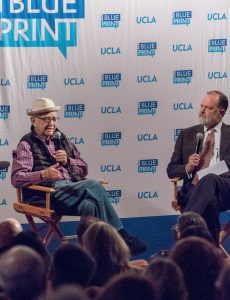
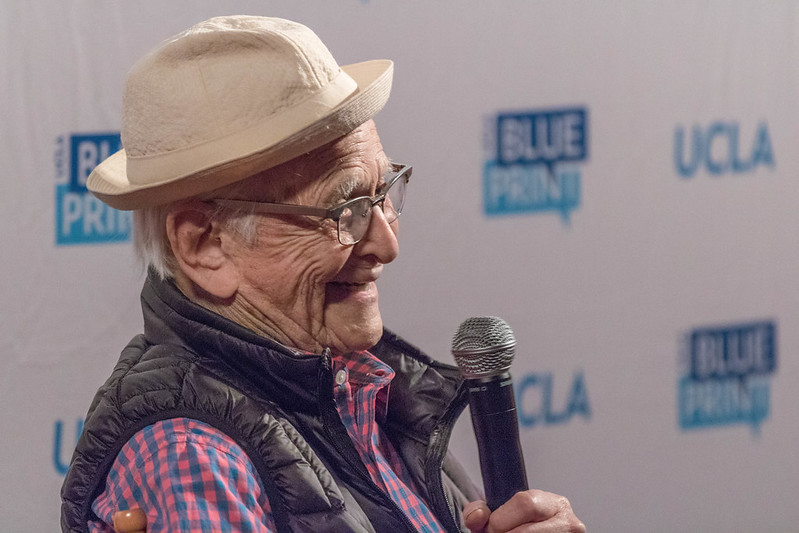
Iconic TV producer Norman Lear chats with Blueprint editor Jim Newton after screening of a documentary about Lear and his work. Photo by Les Dunseith

The screening was part of a special conversation hosted by UCLA’s public policy magazine, Blueprint — the latest issue of which focuses on philanthropy. Editor-in-chief Jim Newton moderated the event.

“[Lear] inspired us to start conversations that were at once contentious, but also necessary,” UCLA Chancellor Gene Block said. “Norman’s contributions extend into philanthropy and activism as an outspoken champion of civic engagement and constitutional freedoms. Luckily for us, even at 95 years old, he’s not done yet. He still remains extremely active.”

Lear is best known as creator/producer of classic television shows such as “All in the Family,” “Good Times,” “The Jeffersons” and “Maude.” He also gained national notoriety when in 1981 he founded the liberal political organization People for the American Way. Over the years he has backed campaigns to register young voters, donated to organizations that fight climate change and sponsored a trust and awards to recognize and encourage businesses to think beyond the short term.

“I’m known to be quite liberal, progressive, etc.,” he told the packed room of about 130 people. “I think of myself, truly, as a bleeding heart conservative. You will not ‘eff’ with my First Amendment, my Bill of Rights, my Constitution or my Declaration — every single word of it. My dedication [to] life, liberty and the pursuit of happiness for all Americans could not be stronger.”

Lear is especially lionized for the issues his shows tackled, particularly for minority communities and cultures.

“Norman Lear is an artistic pioneer, a social activist, and — my favorite line from the documentary — a patriot,” said Gary Segura, dean of the UCLA Luskin School of Public Affairs. “[He is an] artist who was willing to shine a powerful spotlight on race relations and bigotry, at a time when America was completely unprepared to face the realities of the 1970s. That was Norman Lear.”

Lear is credited with putting “Good Times” and “The Jeffersons” on the air, two shows that concentrated, for the first time, on African American families.

“Esther Rolle and John Amos were playing the very first black parents on the tube,” Lear said of “Good Times.” “They were representing their entire race, who had never, ever been represented before. And I realized shortly into rehearsal, just from questions and conversations and body language and everything else, just how much weight was on them. They were alone in representing their race.”

Even now, Lear notes the need for further work. “Is there anyone in the audience who thinks we’ve finished the discussion on race?”


“Norman Lear is an artistic pioneer, a social activist, and — my favorite line from the documentary — a patriot.” — Gary Segura, dean of the UCLA Luskin School of Public Affairs


Many of the issues that have concerned Lear throughout the years have persisted, and he is no fan of the current people residing in the executive branch, but he did encourage people to keep pushing forward.

“I think the American people are bereft of great leadership,” he said. “If you are looking at corporate America, military America and certainly political America … the American people have a great reason to be terribly disappointed.

“The American people look and say, ‘This is the kind of leadership you have to offer? Then take that,’” he said referring to Trump winning the presidency.

“I believe we’ll get through this,” he said. “There is always going to be someone breaking through, nothing is going to change that … There hasn’t been a time that hasn’t been exciting to be alive. The fact is it’s taken me 95 years … to get here doing this. Every split second, it has taken me to sit here and do this. And it has taken every split second of your lives to watch me. And if you add up your numbers and mine, I’m way ahead of you.”

Listen to the Q&A on SoundCloud:

View a Flickr album of additional photos from the event:

Policy & Philanthropy with Norman Lear

Suicides by Drugs in U.S. Are Undercounted, Study Suggests Report co-authored by UCLA Luskin professor Mark S. Kaplan finds that a substantial gap between the rates of drug suicides and 'accidental' drug deaths is likely due to misclassification

January 10, 2018/1 Comment/in School of Public Affairs, Social Welfare, Social Welfare News, Uncategorized Mark S. Kaplan /by Stan Paul

By Stan Paul

Mark S. Kaplan

The rate of suicides by drug intoxication in the United States may be vastly underreported and misclassified, according to a new study co-written by Mark S. Kaplan, professor of social welfare at the UCLA Luskin School of Public Affairs.

The study was published online Jan. 10 in the journal PLOS ONE. The researchers report that the drug suicide rate in the United States rose nearly one-quarter (24 percent) between 2000 and 2016, and the accidental opioid and other drug intoxication death rate increased by 312 percent. This rate gap suggests an increase in suicide undercounting, according to the multidisciplinary international team of researchers led by Ian Rockett of West Virginia University School of Public Health.

“Unfortunately, part of the problem is due to serious under-resourcing of state and local death investigation systems throughout most of the U.S.,” said Kaplan, whose research has focused on using population-wide data to understand suicide risk factors among veterans, seniors and other vulnerable populations. Kaplan added that the Centers for Disease Control and Prevention (CDC) recently reported more than 63,000 drug deaths in 2016, up from 52,000 in 2015.

“Many of these deaths were probably suicides, yet reported as accidental self-poisoning rather than intentional self-harm, particularly among the middle-aged,” Kaplan said.

The researchers report that suicide notes and psychiatric history, including a prior suicide attempt or diagnosed depression, are much more important in helping medical examiners and coroners identify drug suicides than suicides by more violent and obvious methods. The new research further shows this evidence is absent in a large majority of suicide and possible suicide cases.

“A suicide note, prior suicide attempt or affective disorder was documented in less than one-third of suicides and one-quarter of undetermined deaths,” the research team reported in the study. The researchers cited larger prevalence gaps among drug intoxication cases than gunshot or hanging cases.

“Our incorporation of undetermined deaths, as well as registered suicides, not only provided a window on the nature of suicide misclassification within the undetermined death category, but within the accident category — as a much larger reservoir for obscuring drug intoxication suicides,” the researchers wrote in the report.

The opioid epidemic in the United States is also exacerbating problems with suicide accounting, the researchers report. And that severely impedes the understanding and prevention of suicide and drug deaths nationally.

The team analyzed data from the Restricted Access Database in the National Violent Death Reporting System, which is administered by the CDC.

Luskin Forum Online: Who We Are Essays highlight people who make UCLA Luskin a vibrant, thought-provoking and entertaining place to be

January 5, 2018/0 Comments/in Alumni, Business and the Environment, Climate Change, Development and Housing, Diversity, Electric Vehicles and Alternative Fuels, Environment, For Faculty, For Policymakers, For Students, HIV/AIDS, Luskin Center, Public Policy, Public Policy News, Research Projects, Resources, School of Public Affairs, Smart Water Systems, Social Welfare, Social Welfare News, Sustainable Energy, The Lewis Center, Transportation, Urban Planning /by Les Dunseith

[ From the Luskin Forum Online ]

Dean Gary Segura is fond of saying that the UCLA Luskin School of Public Affairs is about human well-being.

“We study ways to make individuals, families, communities and polities function better, for the improvement and quality of lives of all those affected,” Segura told the Class of 2017 at Commencement last June.
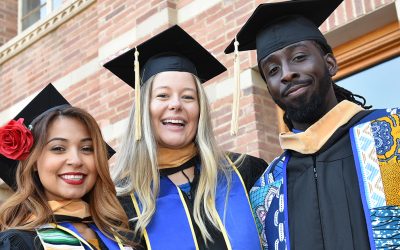
Those students, now Luskin alumni, spent 2016-17 working on a variety of projects related to urgent human needs, such as:

  • greenhouse gas reduction
  • interventions with at-risk youth
  • prison population reduction
  • homelessness
  • HIV prevention
  • meningitis epidemic control
  • regulation of new and intrusive technologies
  • safe school environments
  • quality mental health services
  • river restoration
  • access to home ownership
  • responsive governance in the developing world

“I’m reminded every day of how lucky I am and how special it is to be a part of the Luskin School of Public Affairs,” Segura told proud parents and family members at the graduation ceremony.

This issue of Luskin Forum is dedicated to just that: taking pride in how this school makes a difference, and why it’s important to remember the myriad accomplishments of our students, faculty, staff
and alumni.

Our UCLA Luskin mission statement says it perfectly: “At the convergence of the fields of social work, urban planning, and policymaking, the UCLA Luskin School of Public Affairs identifies and develops emerging areas of research and teaching, cultivating leaders and change agents who advance solutions to society’s most pressing problems.”

In the words of Dean Segura: “Do good in the world. Make change.”

— GEORGE FOULSHAM
We Are Connecting

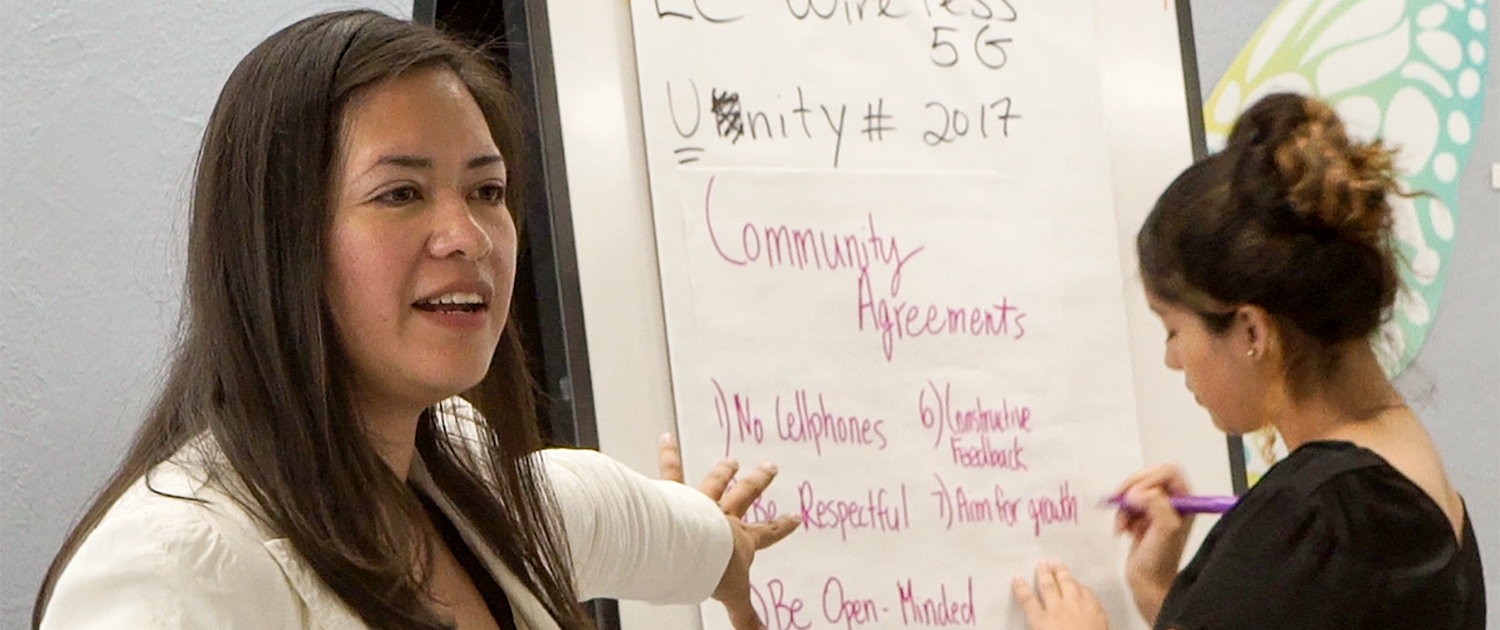
Like their planning and policy peers at UCLA Luskin, the School’s Master of Social Welfare students are connecting with the community throughout their two-year professional program. First-year MSW students have the opportunity to engage in high-impact internships and placements that begin even before fall classes start.

New Luskin MSW students bring with them a wide range of experience in the community and at social work-related agencies, where they have served as students, employees and volunteers. From the get-go, they immerse themselves in the work of organizations that assist and provide programs for the homeless, the elderly, disabled adults, children with emotional and learning disabilities, and foster youth.

The wide array of student placements includes a downtown women’s shelter, a psychiatric care facility, school and community groups, and other sites that provide services such as law advocacy or assistance with transitional housing, according to Michelle Talley MSW ’98, field education faculty member.

First-year MSW students are placed at various field sites throughout Los Angeles County and in surrounding counties, Talley said. Placements are based on previous experience, prior knowledge of the role of a social worker and other factors.

Their extensive field work also involves community outreach and advocacy. They participate in staff meetings and offer consultation. They engage in research activities and participate in development programs that include training on professional responsibility and reporting mandates.

Both years of the MSW program integrate the School, alumni and the community as integral parts of the educational process for this professional practice-oriented degree, assuring that graduates become high-impact practitioners.

“The goal is to place students at sites that will create opportunities to enhance their growth as a professional social worker,” Talley said.

— STAN PAUL
We Are Protectors

From the streets of Los Angeles to innovative research on social media, UCLA Luskin faculty members like Ian Holloway are gathering data to inform programs and policies that improve the health and well-being of vulnerable communities.

In addition to his position as assistant professor of social welfare at UCLA Luskin, Holloway is director of the Southern California HIV/AIDS Policy Research Center. There are approximately 5,000 new HIV cases in California each year. Holloway’s ongoing work focuses on HIV prevention and treatment among sexual and gender minority people. “Young gay and bisexual men, especially those from racial and ethnic minority communities, are disproportionately impacted by HIV, and HIV-related comorbidities,” Holloway said.

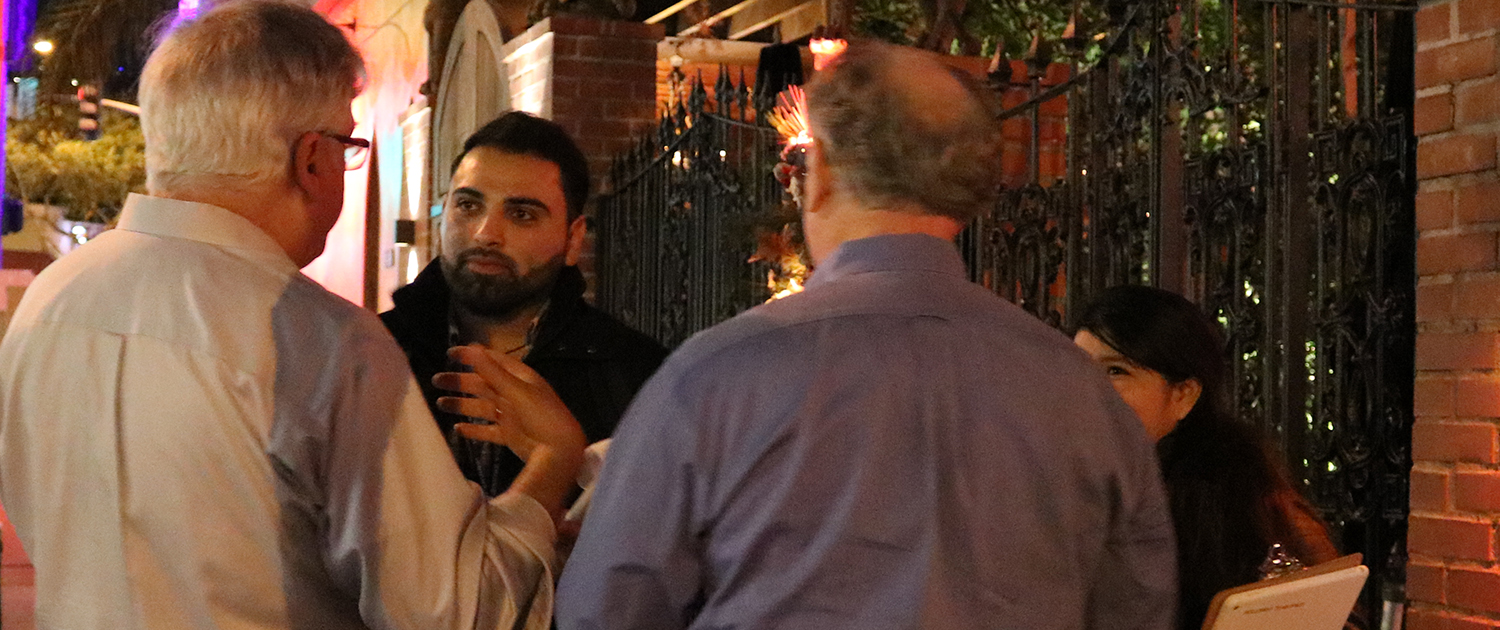
In 2016-17, Holloway and a group of Luskin students and recent graduates canvassed more than 500 gay and bisexual men to gauge their awareness of a yearlong outbreak of meningitis in Southern California. Holloway and his research group found that less than a third of those interviewed were vaccinated against meningitis despite extensive outreach efforts by the California Department of Public Health.

Holloway’s findings suggested that better vaccination uptake surveillance, tailored education and more sites for immunization throughout Southern California are needed in order to bolster efforts to track meningitis and encourage vaccination among gay and bisexual men.

Other research conducted by Holloway and student assistants includes the LINX LA project, which uses a mobile phone app to encourage treatment engagement among HIV-positive African American young gay and bisexual men through access to legal and social service resources in Los Angeles.

Next up? Using a new and innovative approach, Holloway and a group of tech-savvy UCLA researchers will use data-mining of social networking sites to learn more about drug use and sexual risk behavior. The project, funded by the National Institutes of Health, aims to use social networking data to inform intervention development. “This would include ‘just-in-time’ technology-delivered interventions aimed at preventing negative health outcomes and promoting healthy behaviors,” Holloway explained.

— STAN PAUL
We Are Innovating

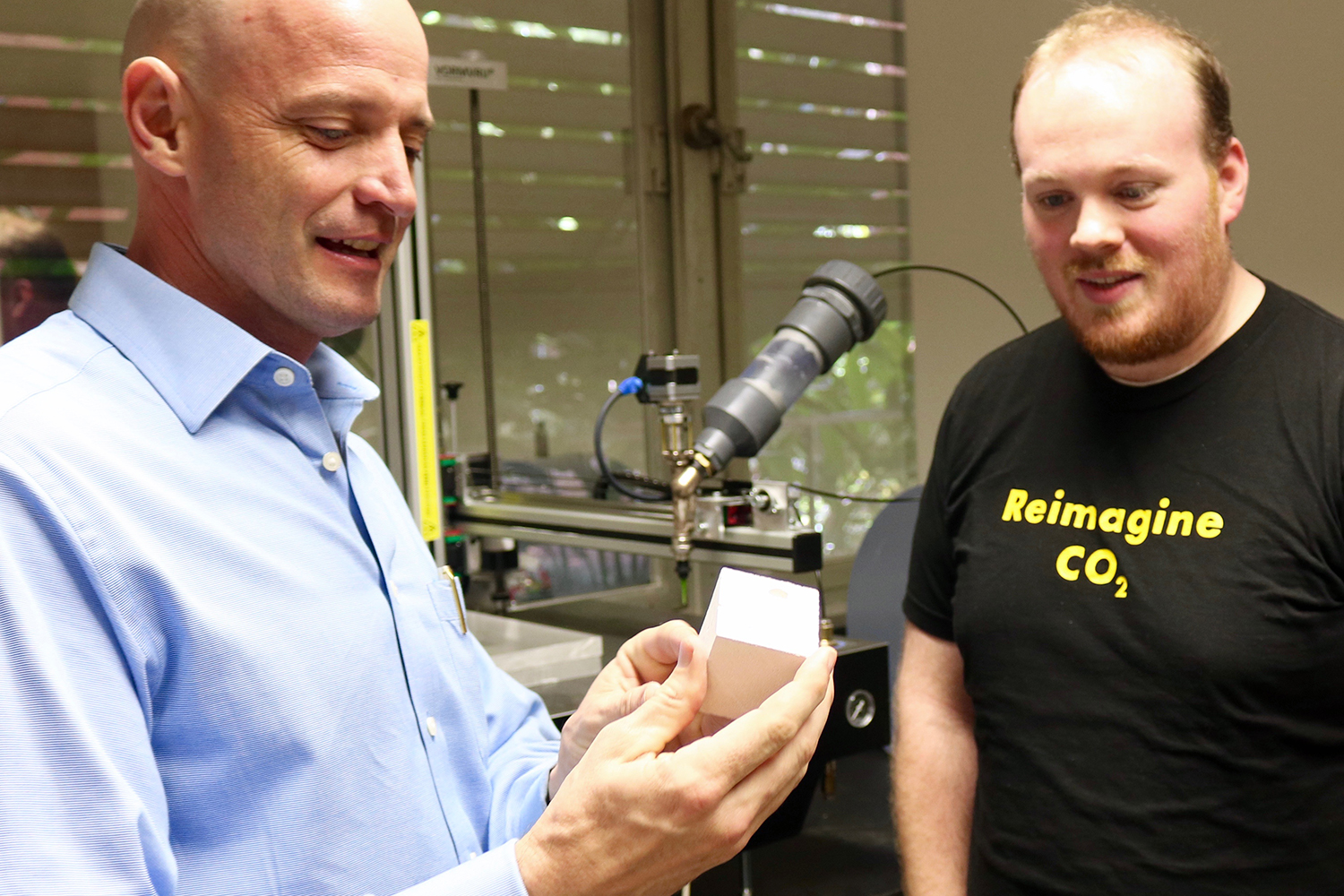
Whether it be guiding equitable revitalization of the L.A. River, helping Californians cut down on their electricity use, or advancing a new way to repurpose carbon dioxide into a greener form of concrete, the Luskin Center for Innovation is a trailblazer among UCLA’s many sustainability leaders.

And that’s just for starters.

Since its inception in 2009, the Luskin Center’s research has influenced local, state and national policy. This includes a new rooftop solar program for Los Angeles, the redesign of California’s clean vehicle rebate program, and current efforts to develop a drinking water low-income assistance program in California. Other research informs the state’s world-renowned actions to combat climate change while maximizing local employment, air quality and health benefits.

A think tank housed within the UCLA Luskin School of Public Affairs, the center is organized around initiatives that translate world-class research into real-world policy solutions. Current initiatives include advanced transportation, clean energy, climate action, digital technologies, sustainable water and urban greening — all linked by the theme of informing effective and equitable policies.

The center brings together faculty and staff from a variety of academic disciplines across campus to conduct research in partnership with civic leaders who use the knowledge to inform policy and organizational innovations. Civic leaders include policymakers, nonprofit organizations, and business associations. Students at UCLA Luskin have the opportunity to work with the Luskin Center to gain hands-on research experience and work closely with these decision-makers.

Meyer Luskin, the visionary and benefactor behind the Luskin Center, says, “Sustaining the environment is the greatest inheritance one can leave to children, and the most enduring gift to the community and nation.”

— KELSEY JESSUP

We Are Inspiring

Each year, UCLA Luskin students are embedded in internships and research projects offered through all three departments. That’s a given. Not as well known is how the school also creates partnerships that benefit students and the communities in which they work.

Take, for example, the Watts Leadership Institute (WLI). The brainchild of Social Welfare adjunct professor Jorja Leap MSW ’80 and her research partner, Karrah Lompa MSW ’13, the WLI is engaged in a 10-year mission to bring about positive change in a community hungry for leadership coaching.

Leap and Lompa are working with the first cohort of community members, providing guidance on everything from learning how to establish successful nonprofits to applying those skills in their community garden. After several years of training and coaching, the cohort will provide guidance for future leaders in Watts.

At the same time, Leap is using the project as a way to provide community-based educational experiences for Luskin’s Social Welfare students.

“This kind of a public-private partnership, along with the research attached to it — and the building of the Watts community — really represent the best of how all of these different factors can come together,” said Leap, who has been working in Watts since conducting research there when she was a Social Welfare graduate student in the 1970s. “It represents part of UCLA’s continuing and growing commitment to communities like Watts that need our involvement, our engagement, our organizing, our research.”

The WLI has received funding from the California Wellness Foundation and from GRoW @ Annenberg, a philanthropic initiative led by Gregory Annenberg Weingarten, as well as office space and in-kind support from Los Angeles City Councilman Joe Buscaino.

“What Watts Leadership did was to help us come together, to put our resources together, and be an example for the rest of the nonprofit and leadership community in Watts,” cohort member Pahola Ybarra said. “It’s been an amazing effort to help us grow, and to help us get out of our own way. It encourages us to reach for as much as we can and do as much as we can in the community.”

— GEORGE FOULSHAM

We Are Woke

On Nov. 9, 2016, after many felt their world spin out of control, the Institute on Inequality and Democracy at UCLA Luskin decided to create a space for students, faculty and staff to critically analyze the forms of exclusion, including white nationalism, so pervasive throughout the election that had just ended.

Post-election, the Institute, whose tagline is “Organizing knowledge to challenge inequality,” expanded its mission to challenge state-sponsored violence against targeted bodies and communities by immediately issuing a call for Jan. 18, 2017: Teach.Organize.Resist.

The campaign, known as #J18, included universities and colleges across the nation and internationally that organized nearly 100 courses, performances, sit-ins, and lectures to demonstrate that places of teaching and learning would not bear silent witness to oppression and hate. After a day of programming at UCLA, #J18 ended with “From the Frontlines of Justice,” a multi-performance event held in Ackerman Grand Ballroom. Highlights are online at teachorganizeresist.luskin.ucla.edu

Ananya Roy, professor of urban planning, social welfare and geography and the director of the Institute, remarked: “I encourage students to think of their role as scholars and to consider the power of research and knowledge.”

To strengthen the link between scholarship and collective action even further, the Institute launched its first Activist-in-Residence program in 2017. In the words of the inaugural fellow, Funmilola Fagbamila, arts and culture director of Black Lives Matter LA and adjunct professor of Pan-African Studies at Cal State LA, the definition of “woke” doesn’t end at knowledge. “To achieve the ‘woke’ label, you must be willing to analyze the conditions in your community. Lastly, you must act.”

Through academic research, and in alliance with social justice movements, the Institute creates scholarship, art and collective action to tackle divides and dispossessions in global Los Angeles and in cities around the world.

“We do so to insist on the academic freedom to examine regimes of power and structures of intolerance,” Roy explained. “We do so to forge imaginations of abolitionism, civil disobedience and human freedom. We do so, as James Baldwin reminded us, to shake the dungeon and leave behind our chains.”

— CRISTINA BARRERA
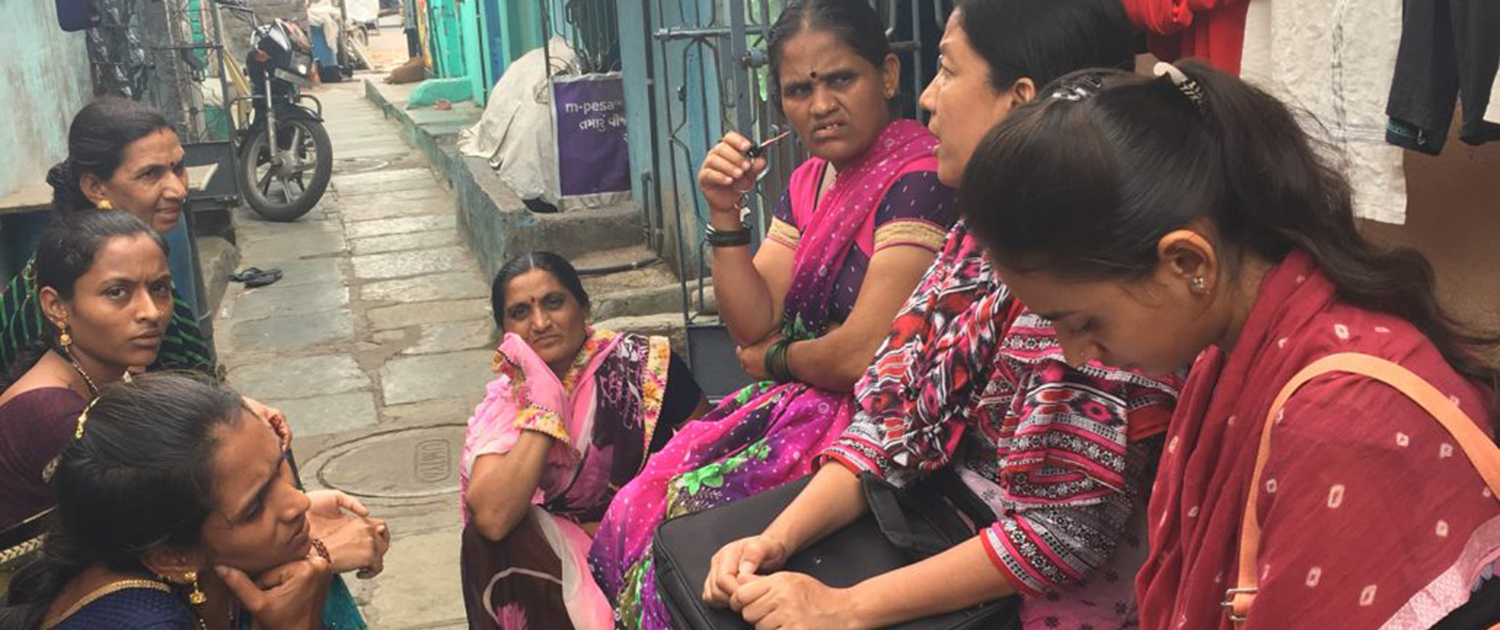
We Are Global

The impact of the Luskin School resonates far beyond the borders of Los Angeles and California. It’s a brand with international flavor. It’s not unusual to find Luskin students and faculty in Mexico, Uganda, India or Japan.

Luskin’s popular Global Public Affairs program offers students the chance to obtain intellectual and professional preparation to become future experts within the realm of international public affairs.

Each year GPA students travel around the globe, immersing themselves in the culture — and problems — of their host countries, and blogging about it for the GPA website. In the past year, students have lived in Mexico City; Paris; Kampala, Uganda; Bonn, Germany; Santo Domingo, Dominican Republic; and Tokyo, among other locales.

The GPA program is led by two members of the Urban Planning faculty. Michael Storper, distinguished professor of regional and international urban planning, is the director of GPA. He’s also a professor of economic sociology at the Institute of Political Studies in Paris and professor of economic geography at the London School of Economics. Stephen Commins UP PhD ’88, a lecturer in Urban Planning, is a former senior development specialist at the World Bank and director of policy and planning at World Vision International. UCLA Luskin’s international influence also includes:

  • Urban Planning faculty like Paavo Monkkonen MPP ’05, whose students made multiple visits to Tijuana, Mexico, where they provided guidance to city and government officials about the best ways to deal with a housing crisis.
  • Policy professors like Manisha Shah, associate professor of public policy, who has traveled around the world — to India, Mexico, Tanzania and Indonesia — to conduct research into microeconomics, health and development.
  • Faculty leaders like Donald Shoup and Anastasia Loukaitou-Sideris who are among the many UCLA Luskin faculty in great demand as speakers at conferences around the world.
  • Our international students — who add a global perspective to the student body and to Luskin educational efforts.

“A focus on problems that cross borders and involve international interdependence, also identifies where international forces affect domestic policies,” Commins said. “Students can learn from comparing experiences of different countries in how they face planning, policy and social welfare challenges and apply the experiences to their own studies and professional practice.”

— GEORGE FOULSHAM
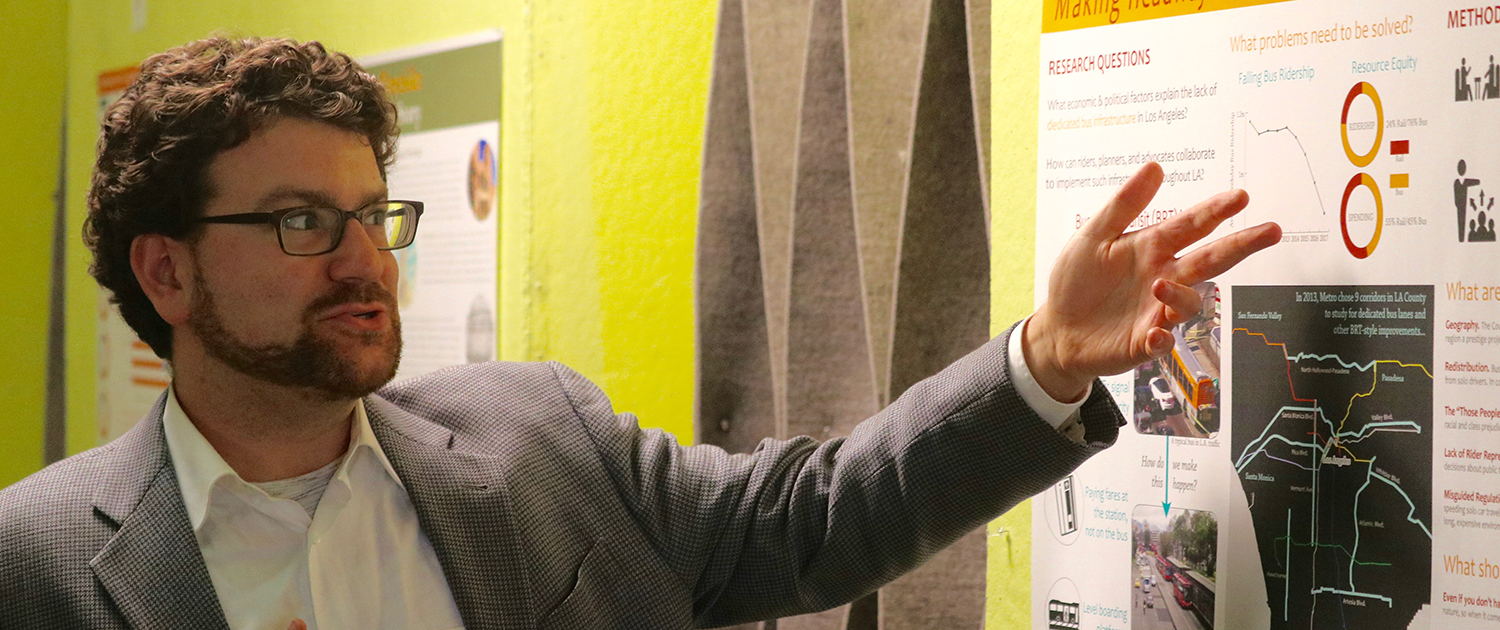
We Are Problem Solvers

Graduate students at UCLA Luskin don’t wait to step beyond the classroom to address California’s pressing challenges. Master of Public Policy (MPP) and Master of Urban and Regional Planning (MURP) students spend their time on campus deeply immersed in local, state, national and global issues. At the Luskin School, it’s part of the program.

Luskin students log countless hours learning lessons from leading-edge faculty and researchers. Here they seek solutions related to ongoing problems like housing, transportation or sustainability. They look into topics of vital importance to Southern California like electric recharging stations, barriers to bicycling in and around the city, or accessibility to water and food.

“At Luskin, we give students a diverse set of tools (both quantitative and qualitative) that will help guide them through the APP process and ultimately to go out into the real world and conduct policy analysis on issues close to their hearts,” said Manisha Shah, associate professor of public policy and faculty coordinator for the Applied Policy Project program completed by MPP graduates.

Recent work has connected students with county and city offices such as the Mayor of Los Angeles and the Los Angeles Department of Transportation. Regional agencies such as the Southern California Association of Governments (SCAG) frequently serve as clients. Recent APP projects included healthy food choices for elementary school students and employment opportunities for youths. Students also tackle educational issues right here at UCLA or work with the University of California’s Office of the President.

Many student projects benefit local and regional clients and the communities they serve, but they also reach out to communities far way. A recent planning capstone evaluated the short-term rental market in a Northern California city, for example. And a recent policy project analyzed governance at
the local level in the Ukraine.

— STAN PAUL
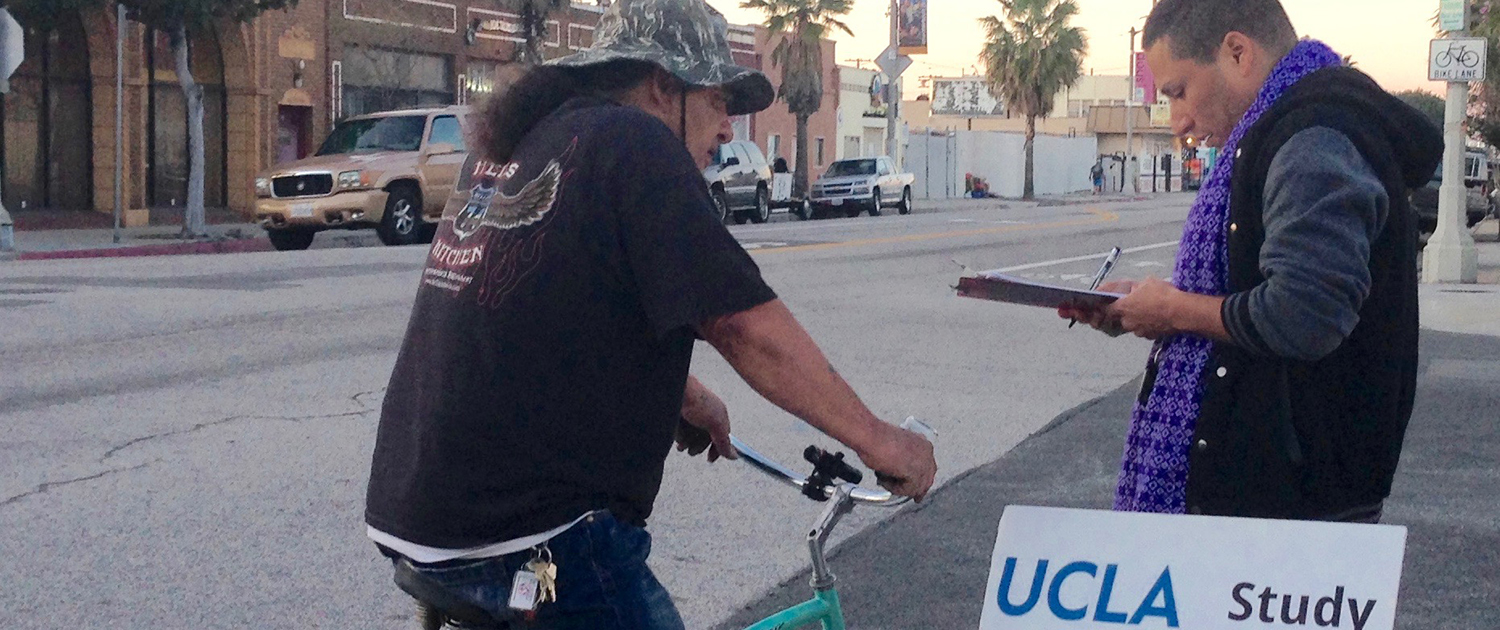
We Are Trailblazing

There’s no better place to study how people get around than Southern California — and for the past 25 years, UCLA has been home to one of the country’s preeminent transportation research centers.

The UCLA Institute for Transportation Studies (ITS) at UCLA Luskin combines cutting-edge research with meaningful, influential civic engagement to lead to policy results in California and beyond. From the impacts of traffic congestion to fairness around rideshare hailing to the civic consequences of paying for parking, ITS scholars produce work that ties directly to current transportation planning practices and policymaking at the local, state and national levels. ITS is noted for connecting transportation and equity, and for emphasizing the effect of transportation decisions on people’s lives.

“We take our policy mandate seriously,” said Brian Taylor UP PhD ’90, director of ITS and professor of urban planning.

Through close partnership with dozens of outside organizations that include government agencies, private transportation companies, nonprofit foundations and advocacy groups, ITS faculty, staff and students translate the latest knowledge on transportation into proposed real-world policies around movement and growth. ITS’ biannual digital magazine is widely read throughout the transportation community, highlighting important new research in a clear, constructive manner for practitioners.

Luskin students working at ITS collaborate closely with faculty members, receive generous scholarship funding for their own trailblazing projects, and have garnered an inordinate number of prestigious grants and awards over the years. Regular interactive events and publications showcase student findings to the academic community and the public at UCLA and around the country.

The next quarter-century will bring significant changes to how we travel, with daunting societal impacts. As it has since 1992, ITS research and policy action will help guide the way toward solutions.

— WILL LIVESLEY-O’NEILL
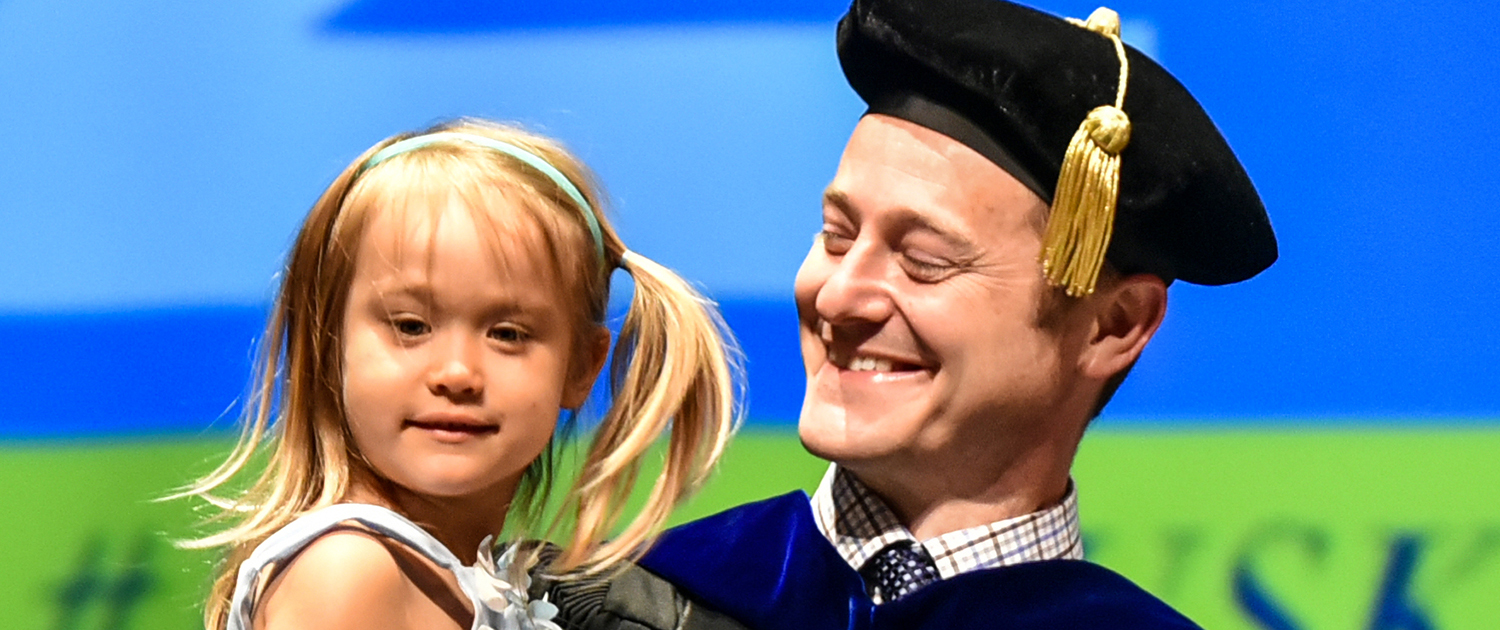
We Are Family

Attend any gathering at UCLA Luskin and you may feel like you stumbled into someone’s family reunion.

There will be a toddler or two, chasing a balloon or dancing as a faculty, staff or student parent hovers nearby. You’ll notice plenty of happy young faces — graduate students tend to be in their 20s — but look closer, and you’ll see older folks too. Mid-career professionals returning to add a degree. Staff and faculty, some grayed and others not. Perhaps alumni who earned degrees during the days of typewriters or even pencil and paper, not smartphones.

But family is more than differences in age. It’s continuity. Legacy. Progress over time, as one generation blazes a trail and then passes the torch of knowledge along to another to mark its own, slightly different path. It’s every professor who imparts a tidbit of knowledge only to be surprised, and humbled, when a protégé nurtures that information into something new and wonderful and impactful.

A lifetime of learning walks the Public Affairs Building each day — legends who become mentors, colleagues, even friends. Marty Wachs. Joan Ling. Mark Peterson. Michael Dukakis. Ananya Roy. Gerry Laviña. And so many more. People who have done everything in their careers that students could ever dream of doing themselves and yet still seem to care most about what their students learn now that will improve the world tomorrow.

Family provides inspiration. At Luskin, it’s instructors who know how to say, “You can do better,” in a way that makes students understand that, yes, they really can.

Families help those who need it. It’s every person on the Donor Honor Roll whose name is there not because their wealth exceeds their needs but because money is a way to honor someone who once expanded their worldview. Or lifted their spirits. Or answered a question late one night as a deadline loomed.

After 40 years at UCLA Luskin, Donald Shoup knows all about the Luskin family. In 2017, he won another big award, honoring his contributions as an educator. He put it in perspective: “If we have any influence — if there is going to be anything to remember after we are gone — I think it will be the successful careers of our students who will be changing the world for the better.”

— LES DUNSEITH
Message From the Dean

January 4, 2018/0 Comments/in Alumni, Diversity, For Faculty, For Policymakers, For Students, Public Policy, Public Policy News, School of Public Affairs, Social Welfare, Social Welfare News, Urban Planning /by Les Dunseith

Act.

Well, act if you want to — but since that is almost certainly true, ACT!

I have to admit, it is difficult to be a professor of public affairs and not watch the news. But, too often of late, I find I can’t. I know enough about most matters of public policy that a quick skim of the headlines, a scan of the first paragraph of this or that story, and I can fill in the rest. To read it all, to watch cable news, to do the deeper dive that I used to do is not good for me. I feel physically un-well.

It is always easier not to come to grips with humanity’s problems. They are plentiful and seemingly beyond our capacity to solve. Perhaps that’s so. And the 30,000-foot view, of all of them at once, can be overwhelming.

These days, the Luskin School is my solace, my happy place. And, ironically, this is not because it insulates me from all that bad news. Quite the contrary. The School and its faculty are engaged in many — perhaps most — of the struggles that populate the evening news.

What is comforting to me is the recognition that thoughtful people, engaged in systematic analysis of social challenges, can find answers. That reasoned examination can produce social interventions and design policies that are able to make things better.

Increasingly, at least here in California, legislators at the state and local level reach out regularly to ask us for help, to seek suggestions, to run ideas by us. Individual Luskin faculty members, students and research teams in all of the Institutes and Centers in the School are constantly engaged in the world, mobilizing their research and inquiry into direct social action. Carbon pollution, mass incarceration and its effects, HIV, catastrophic increases in housing costs, urban sprawl, challenges of the aging, technology driven erosion of privacy, weak social, civic and political institutions in the nations of the developing world (and, increasingly, in our own nation) are all challenges engaged by the Luskin faculty. The results are inspiring, and several of our efforts are chronicled in the pages of this issue.

In this first year, I have gotten to meet many of you, heard of your work, observed its impacts. It is beyond joyful to know that good people, armed with the tools we develop here, can create such positive change in so many different and important ways. The alumni of the Luskin School include a vast array of high-impact social actors, people whose day-to-day lives are about improving the human condition.

Your action and your spirit sustain me. Please, please … keep it up!

Gary M. Segura
Professor and Dean
UCLA Luskin School of Public Affairs

Alumni News and Notes Recent gatherings and other updates from the alumni of UCLA Luskin

January 4, 2018/0 Comments/in Alumni, For Faculty, For Students, Public Policy, Public Policy News, School of Public Affairs, Social Welfare, Social Welfare News, Urban Planning /by Les Dunseith

Each issue of the Luskin Forum magazine includes information regarding alumni gatherings and notes about what our graduates have been up to lately. Here are highlights from the most recent issue:

UCLA Urban Planning Legends Remembered

UCLA Luskin Professor of Urban Planning Emeritus Allan Heskin and Margaret Crawford UP PhD ’91 organized a beautiful alumni gathering in Berkeley, California, to honor the lives of three UCLA Urban Planning faculty we recently lost — John Friedmann (1926-2017), Jacqueline Leavitt (1939-2015) and Edward Soja (1940-2015).

UCLA Luskin alumni, friends and family spent an afternoon together sharing stories and celebrating the vibrant lives, careers and ideas of these influential individuals.

“We are fortunate to learn and grow from those we remember and those who gathered,” said Anson Snyder MA UP ’90.

Pioneering Collaboration for Safe and Affordable Water in California

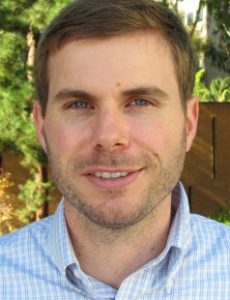
Gregory Pierce

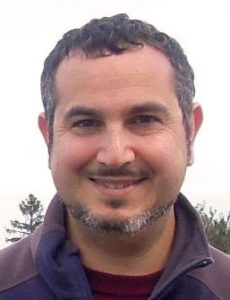
Max Gomberg MPP ’07

The growing problem of household affordability of water has been a concern for many, and for good reason. According to a survey by Circle of Blue, water rates rose in Los Angeles by as much as 71 percent from 2010 to 2017.

In San Francisco, the increase was as much as 127 percent. And the trend in water scarcity, climate change and competing uses over the last several decades indicates the problem is projected to get worse.

Climate and Conservation Manager Max Gomberg MPP ’07 of the California State Water Resources Control Board is working to change this with the help of the UCLA Luskin Center for Innovation, which is headed by Professor J.R. DeShazo. Together, the Water Board and the Luskin Center’s Senior Researcher Gregory Pierce MA UP ’11 PhD ’15, are conducting research to inform policy designs for a statewide Low-Income Rate Assistance program. This program would support California’s leadership in implementing a human right to water.

“If California does enact this program, it would be out in front. No other state has done this,” Gomberg said.


A Legacy of Helping People Grow

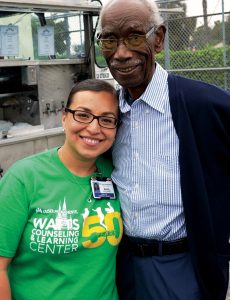
Maria Aguirre, current director of the Kaiser Permanente Watts Counseling and Learning Center, poses with Bill Coggins MSW ’55.

Bill Coggins MSW ’55 celebrated the 50-year anniversary of the Kaiser Permanente Watts Counseling and Learning Center, which he founded in 1967. Coggins began his career with Kaiser in the aftermath of the Watts Riots, having just returned from London, where he studied as a Fulbright Fellow. As a clinical social worker, he was tasked with creating a loosely defined community service program that could provide services for children and parents in South Los Angeles.

The enterprise is rooted in the community thanks to Coggins’ relentless efforts to build partnerships and encourage local residents like “Sweet” Alice Harris. It all began in a small room on 103rd Street and Anzac with three employees. Coggins recalls, “We all thought great things were going to happen … we were going to change the world.”

And they do, every day. The center has since grown into a 9,000-square-foot facility in the same location, with a team of 30 therapists, teachers and staff. Their motto, “Helping People Grow,” is poised to guide the organization through another 50 flourishing years.


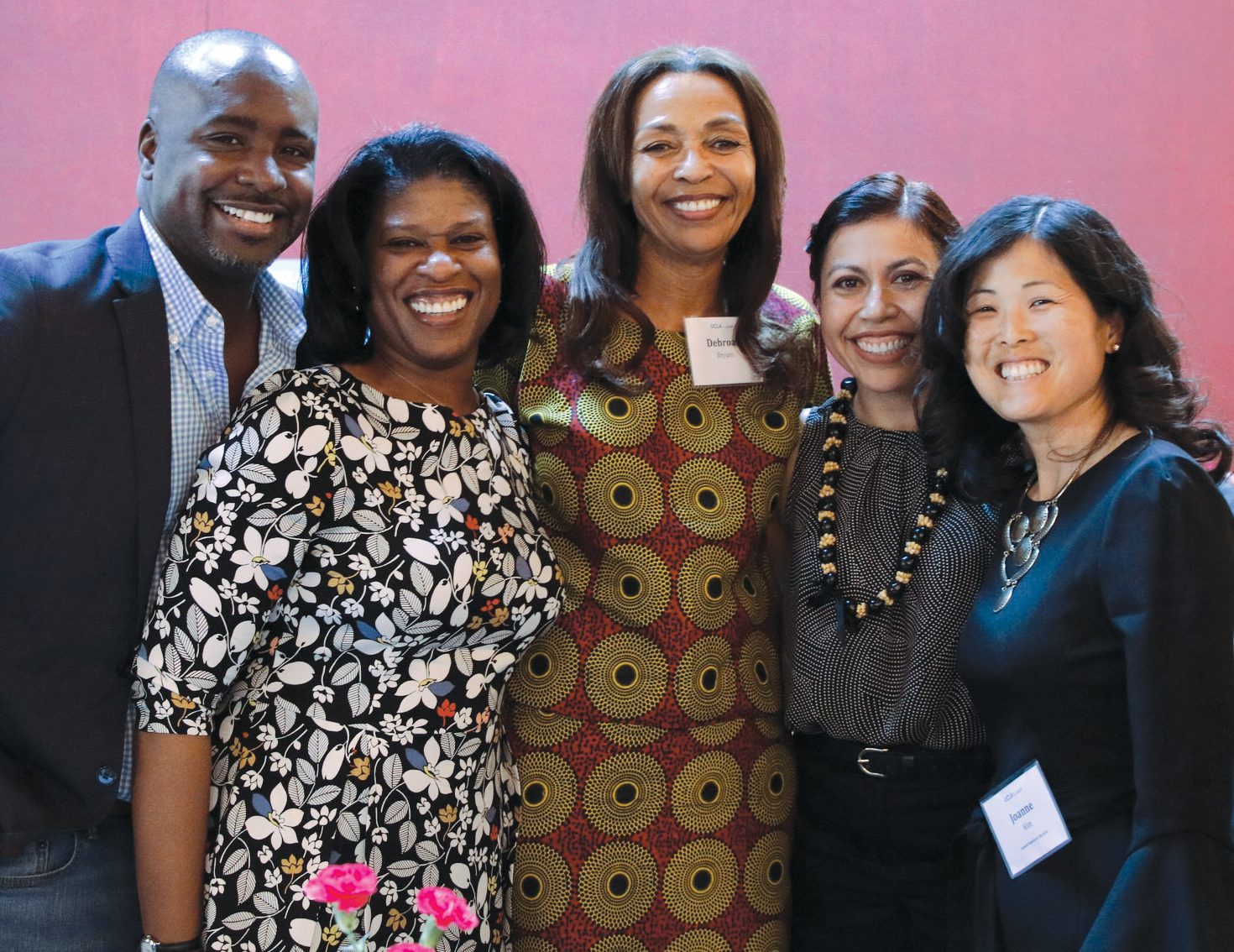
Guests at the annual Social Welfare Alumni Gathering included, from left, Council member Marqueece Harris-Dawson, Karrie Harris-Dawson, Deborah Bryant, Aurea Montes-Rodriguez MSW ’99 and Joanne Kim.

Community Organizer Honored as Joseph A. Nunn Alumna of the Year

More than 100 alumni, faculty, friends and colleagues came together on May 20 at the annual Social Welfare Alumni Gathering to recognize the 2017 recipient of the Joseph A. Nunn Alumna of the Year Award, Aurea Montes-Rodriguez MSW ’99.

Montes-Rodriguez came to California from Mexico at the age of 3, was raised in South Los Angeles and witnessed firsthand the 1992 riots.

Now serving as the Executive Vice President of Community Coalition, a social justice nonprofit based in South Los Angeles, Montes-Rodriguez credits her success and inspiration to lessons learned while at UCLA Luskin. Among those lessons were leadership seminars led by Joseph A. Nunn MSW ’70 PhD ’90, former vice chair and longtime director of field education, who focused on social welfare beyond the individual treatment model to build organizations and change the systems that prevent people from reaching their potential.

She also cited the late Social Welfare faculty member Mary Brent Wehrli MSW ’84 who, according to Montes-Rodriguez, “went out of her way to help us understand the theory with the practice in communities by bringing us out into the communities and organizations who were doing great work. She really pushed us to see leadership opportunities and the contributions we could make by providing us with concrete training.… And, since I graduated, that is exactly the work I have been doing … organizing everyday people about having a voice in addressing the most pressing issues so they can be the drivers of change.”

It is no surprise then that Montes-Rodriguez has indeed made enormous contributions to the community and the field-at-large. Her strategic direction of Community Coalition’s education reform campaigns includes a landmark $151 million settlement that was announced in September 2017 to ensure Los Angeles Unified School District (LAUSD) allocates funds to a group of 50 LAUSD schools in South and East Los Angeles.

She is also a co-founder of Partners for Children South LA, a multiagency initiative that seeks to improve children’s development and reduce the risk of involvement with the child welfare system, and she serves as a board member of the Building Movement Project, working to build capacity within the nonprofit sector to promote social justice at the national level.

Most recently, she was selected by The Education Trust-West as a Senior Equity Fellow, which is a fellowship designed to provide a platform for California’s educational equity leaders.

Alumni Accolades

  • Jennifer Bryning Alton MPP ’01 was appointed senior consultant to the Assistant Secretary for Preparedness and Response for the U.S. Department of Health and Human Services.
  • Mohammed Cato MA UP/JD ’06 was appointed as UCLA’s Title IX Coordinator overseeing UCLA’s compliance with Title IX including policies and procedures to prevent and respond to gender discrimination, sexual harassment and sexual violence.
  • Masen Davis MSW ’02 has been selected to serve as the new CEO for Freedom for All Americans (FFAA). With the goal of securing federal statutory protections for LGBT Americans, FFAA works to advance measures and laws protecting people from discrimination on the basis of sexual orientation, and gender identity and expression.
  • Joey Nuñez Estrada, Jr. MSW ’01 was promoted to associate professor at San Diego State University, Department of Counseling & School Psychology where his scholarship focuses on building socially just school environments by challenging systemic inequities and eradicating school and community barriers to student learning.
  • Sarah Godoy MSW ’15 was named No. 20 in the list of Top 100 Influence Leaders by Assent Compliance, which contributes to the awareness, education, regulation, and fight against human trafficking and slavery.
  • Alexandra Tassiello Norton MA UP ’06 was chosen to serve as the new Deputy Director for Administration and Innovation at Louis Armstrong New Orleans International Airport.
  • Sarah Simons MPP ’07 was selected as a Climate Change Adaption Fellow by the MIT Climate CoLab where she serves as a technical reviewer of proposals to address climate change challenges posed by land use, agriculture and forestry. She represents the Natural Capital Practice of her employer, SSG Advisors.
  • Morgan Sokol MPP ’15 was promoted to vice president of government affairs for MedMen, the leading full-service management company and capital firm serving the cannabis industry.
  • Carole Turley Voulgaris UP PhD ’17 was honored with the Barclay Gibbs Jones Award from the Association of Collegiate Schools of Planning (ACSP) for Best Dissertation in Planning, which recognizes superior contributions to scholarship.


Maciek Kolodziejczak: A Legacy of Giving Former graduate advisor founds Fellowship Fund in Public Policy to benefit future students

January 4, 2018/0 Comments/in For Faculty, For Students, Public Policy, Public Policy News, School of Public Affairs, Uncategorized /by Les Dunseith

After 20 years of service to Public Policy students, former Graduate Advisor Maciek Kolodziejczak wasn’t ready to walk away without leaving a legacy at UCLA Luskin.

In June, Kolodziejczak retired from his post after mentoring every Public Policy student to ever step foot on the UCLA campus; he had held the position since the creation of the Master of Public Policy in 1996. In his time, he advised and fostered the education of about 700 policy students who have gone on to directly influence the world.

As a final act of service to those he cared about so deeply, he founded the Maciek Kolodziejczak Fellowship Fund in Public Policy. A month-long campaign leading up to his retirement celebration on June 12 raised over $34,500 for fellowships for students who will demonstrate excellence in leadership and service in the department, the Luskin School, UCLA and the community at large. Donors included students, alumni and friends from throughout UCLA Luskin Public Policy’s history.

Because Maciek himself provided a generous lead gift and the Dean of the Luskin School provided a $25,000 matching gift, nearly $55,000 was raised in all. Public Policy students will thus have another source of funding to advance their desire to become Luskin agents of change.

The legacy of Maciek Kolodziejczak will continue well into the future.

Latest Updates Regarding Support for UCLA Luskin The School's education and research efforts are bolstered by support from alumni and other advisors

January 3, 2018/0 Comments/in Alumni, For Students, School of Public Affairs, Uncategorized /by Les Dunseith

Each issue of the Luskin Forum magazine includes information regarding recent gifts to UCLA Luskin and the various development activities that help us maintain and strengthen our education and research. Here are highlights from the most recent issue:

Students Say Thank You to the Luskins

Last spring, recipients of a Luskin Graduate Fellowship from the UCLA Luskin School of Public Affairs met for lunch with Meyer and Renee Luskin. The students wanted to thank the Luskins for their generous support of academic endeavors. Meyer and Renee Luskin are among the school’s most generous supporters and have supported UCLA Luskin students from the school’s beginning. Students from each of the three departments are selected each year for this prestigious award.


A Salute from the UCLA Luskin Board

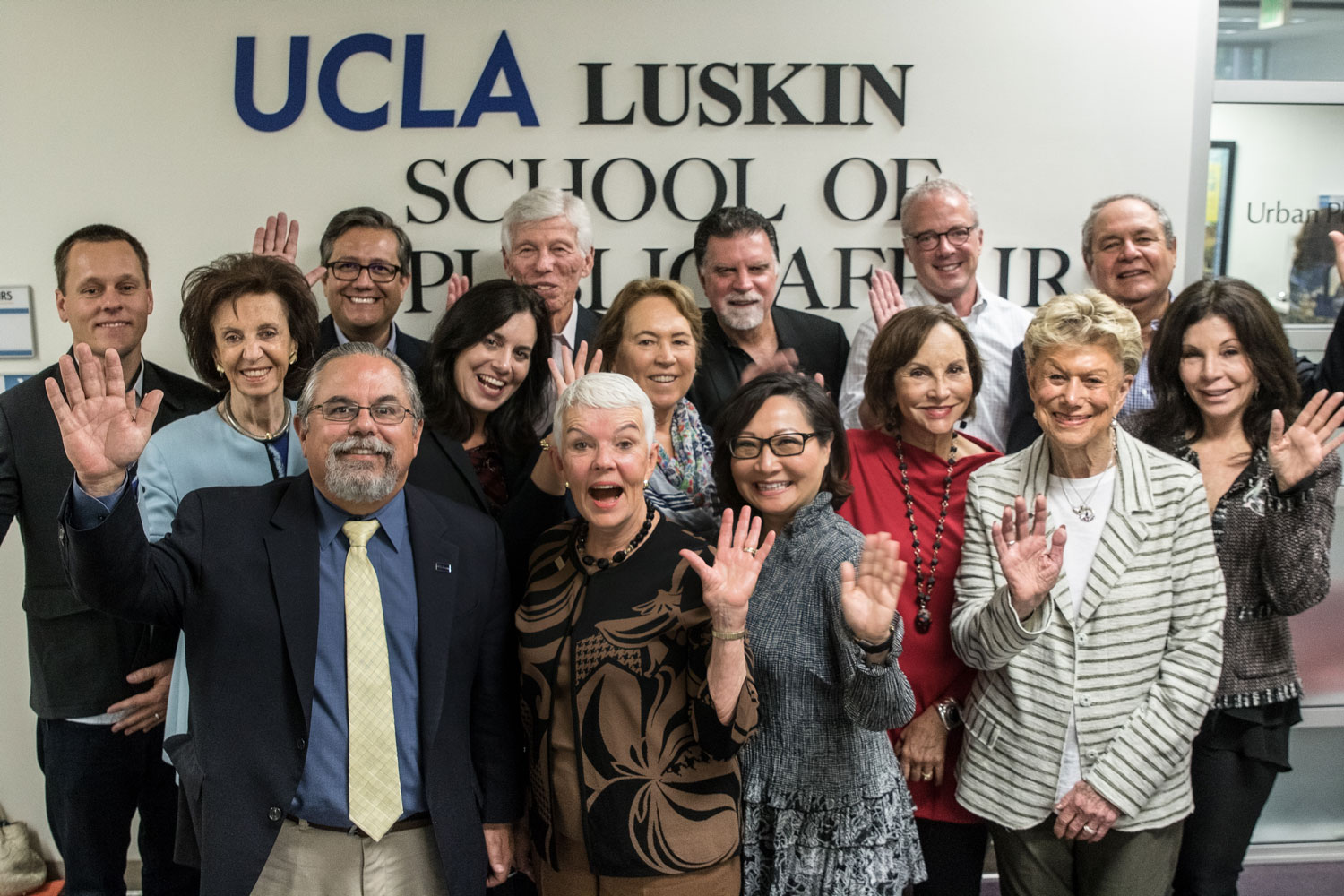
The Board of Advisors for UCLA Luskin met Oct. 3, 2017, to discuss the school’s future with Dean Gary Segura, and to salute and say thank you to the outgoing board chair, Susan Rice. The board, made up of civic leaders, business executives and social entrepreneurs, helps shape the vision and strategic plan for the UCLA Luskin School of Public Affairs. In her final meeting as board chair, Rice was recognized for her five years of service as leader of the board. Taking over as the new board chair is Michael Fleming.

Members of the board include, back row, from left, Chuck Gatchell MPP ’05, Miguel Santana, Keenan Behrle, Michael Mahdesian, Fleming and Len Unger. Middle row, from left, Vicki Reynolds, Laura Shell, Fran Inman, Karen Hill Scott, Annette Shapiro and Jill Black Zalben. Front row, from left, Dean Segura, Rice and Marcia Choo.

Board members not pictured are Michael Dukakis, David Fisher, Gadi Kaufmann, Joanne Kozberg, Randall Lewis, Meyer Luskin, Dan Maldonado, George Pla, Jeff Seymour and Steve Soboroff.

From left, Sherrie Schlom, Dick Lewis, the 2016-17 Kathleen Lewis Family fellow Ummra Hang, and Ricardo Quintero, UCLA Luskin’s director of development.

Lewis Family Fellowship Honors Outstanding MSW Student

The Kathleen Lewis Family Fellowship was established in 2013 to support Master of Social Welfare (MSW) students in memory of Kathleen “Kathy” Lewis MSW ’60. Dick Lewis, Kathy’s husband of 54 years, and their two daughters, Carol Gullstad Lewis and Susan Lewis, created the fellowship to honor Kathy Lewis’s memory and her legacy as a social worker who was dedicated to community and political issues.

As the first in her family to graduate from college, Kathy Lewis overcame significant family challenges, which helped lead her to a career in social work. Her family believes there is no better way to ensure her memory is carried on by future generations of social workers who are passionate about helping others.

The 2016-17 Kathleen Lewis Family fellow was Ummra Hang, who received her MSW degree last June.

Hang chose UCLA Luskin because of her desire to be an impactful change agent. She is dedicated to working with the juvenile justice population and those who have been impacted by the commercial sexual exploitation of children (CSEC).

A survivor of sexual exploitation herself, Hang became more involved with CSEC research and empowering youth through shared knowledge of trauma and healing that is possible through higher education. Her research involved working on the CSEC research team and hosting a conference that highlighted survivors and services to assist the population and their healing.

Hang was a part of the Justice Workgroup, as well as the Formerly Incarcerated Externship, where she researched policies and pathways and advocated for the formerly and currently incarcerated so they too could heal and combat the cradle-to-prison pipeline.

Hang had extensive internship experience while at UCLA Luskin. She was an Education and Workforce Development Intern for the Los Angeles Area Chamber of Commerce, where she researched and wrote grants for program development. She also researched and wrote a report on the school-to-prison pipeline and compiled research to help the Chamber become more equitable.

She also collected data and created a collaborative model, assisted in organizing youth educational events, and worked with the Smart Justice team to expand program development for formerly incarcerated youth.

Match Program Boosts Endowed Scholarship Gifts to UCLA Luskin

UCLA Luskin School of Public Affairs is pleased to announce an exceptional opportunity for friends and alumni of the school to expand the impact of their gifts.

UCLA Chancellor Gene Block has created the Chancellor’s Centennial Scholars Match program. Through June 30, 2018 — or until matching funds are exhausted — the UCLA Chancellor’s Centennial Scholars Match program will add 50 percent to the value of all qualifying gifts for endowed scholarships. With the Chancellor’s Match, a $250,000 gift automatically becomes $375,000 to support high-achieving Luskin students. A $1 million scholarship gift automatically becomes $1.5 million.

“Endowed scholarships are vital for our students and the school,” said Ricardo Quintero, director of development at the UCLA Luskin School of Public Affairs. “They attract diverse and talented applicants who want to take advantage of the rich education we offer in the fields of social work, urban planning, and policymaking. They also help the School to provide the access and excellence that are our hallmarks as one of the top public affairs schools in the country. In addition, endowed gifts remain intact in perpetuity, giving donors a permanent legacy at the School.”

HOW THE CHANCELLOR’S CENTENNIAL SCHOLARSHIP MATCH WORKS:

Qualifying gifts of $250,000 to $1 million will be matched at 50 percent. Gifts eligible for matching funds must support new or existing endowments that are specifically designated to support scholarships at UCLA Luskin. Cash gifts and pledges will be matched. Corporate matching gifts and planned gifts are not eligible. Pledges are payable over a maximum of five years. The Chancellor’s Centennial Scholarship Match is part of the Centennial Campaign for UCLA — a seven-year, $4.2 billion effort to prepare UCLA for a second century of leadership as one of the greatest public universities in the world — and it will help strengthen UCLA Luskin for decades to come. 

For more information, contact Ricardo Quintero at (310) 206-7949, or by email at rquintero@luskin.ucla.edu


Social Welfare Revises Academic Program Updated MSW curriculum includes three new concentrations and a leadership component designed to launch students on lifelong, impactful careers helping people who are the most vulnerable

January 2, 2018/0 Comments/in Diversity, For Faculty, For Students, Research Projects, School of Public Affairs, Social Welfare, Social Welfare News Fernando Torres-Gil /by Stan Paul

By Stan Paul

A newly revised Master of Social Welfare curriculum at the UCLA Luskin School of Public Affairs comes with an expectation: “We expect you to use your career to make a huge difference,” said Fernando Torres-Gil, professor of social welfare and lead instructor of a new leadership component.

Social welfare has a long tradition at UCLA going back to the 1940s and a highly regarded national reputation of training multiple generations of social workers, and the purposeful changes have been made with a fresh focus and expanded goals for the two-year graduate professional program.

“It’s a new program in the sense that we have a new curriculum and new areas of concentration,” said Laura Abrams, professor and chair of social welfare at UCLA Luskin, explaining that the changes are designed to greater utilize the strengths and expertise of faculty and provide specialized and enhanced in-depth training to students.

Each new concentration allows students to delve deeply into an area of focus and, at the same time, to prepare graduates for leadership positions locally, nationally and globally throughout the course of their careers. They are:

  • Health and Mental Health Across the Life Span
  • Social and Economic Justice
  • Child and Family Well-Being

“I think we have to prepare social workers to be the best possible thinkers, leaders, educators, activists they can be.”

— Laura Abrams, professor and chair of social welfare


Some things will remain the same because the need for social workers is as relevant as ever, if not more, according to Abrams. “We are obviously incorporating some of the same principles,” she said of the program and its “overarching mission” to train the next generation of social work practitioners and leaders in the field, champion the development of knowledge for the social work profession, and strengthen social institutions and services in Los Angeles and beyond. “Everything has to be grounded in, ‘How do we engage clients and communities? How do we help solve some of these social issues like homelessness, kids who have social and emotional issues in schools.’ It’s not that we are focusing on a different set of issues, we are just refreshing our curriculum and making it more up-to-date.”

In addition to the course on leadership that the entire cohort of first-year students will be taking this Winter Quarter, Abrams said all first-year courses have been revised and updated.

“These are all new and they have been rolling out this year,” she said, adding that the divisions between “micro” and “macro” practice — or the distinction between clinical, or direct, practice and community practice — have made way for a more generalist practice approach.

“We realized that most social workers do a little bit of everything,” said Abrams, explaining the reasoning behind the shift to the new concentrations, which come with new faculty searches and hires to augment them. “Within each of those areas students should be expected to get a grounding in policy as well as practice.”

In addition, students will receive more training in research and statistics. So, like their peers in UCLA Luskin’s other graduate programs in public policy and urban planning, they will be working on yearlong capstone projects that mix qualitative and quantitative work, as well as opportunities to take on group projects.

The programs will still be flexible enough to allow students to take electives from the School’s other programs.

“We’ve always kept in mind that we are embedded in a school of public affairs with top-notch public policy and urban planning programs where we have the opportunity to be interdisciplinary, and we need to be,” Torres-Gil said. “It’s all part of the overall Luskin School mission that we’re making a difference, our graduates are special, they’re unique, they’re going places and the Luskin School is UCLA’s tool to train those that are going to be involved in those real-world problems and issues and make a big difference.”

The leadership aspect of the training seeks to guide students in “their ability to impact social change, to be sophisticated policy advocates and to plan for a career where they will exercise leadership at all levels, whether they are starting off as a clinician or as a lower-level eligibility worker in a large bureaucracy,” Torres-Gil said. “Over time we expect them to move up the ranks, whether it’s a CBO (community-based organization), nonprofit, public bureaucracy or practice,” he added.

Torres-Gil said that this approach is important for a number of reasons, including exerting power and being influential in areas traditionally dominated by arenas such as business, journalism, economics, communication and political science.

“Social workers are grounded in understanding, intuitively and right there at the front lines, how issues affect people, and so we want to be more upstream and train social workers to understand what it takes to be an effective social change agent and leader,” even though terms like “influence” and “power” may “go against the grain of the social work profession that wants to focus on social justice and social equity,” he said.

Other reasons include managing and assuming leadership roles in a career that may last decades and involve a number of different jobs or positions. With the idea of longevity in mind, Torres-Gil, who also serves as the director of the Center for Policy Research on Aging at UCLA Luskin, said it is impossible to pack everything into a single program, but “here are the attributes, those competencies, capabilities that I need to build a greater ability to be effective and to make social change.”

Torres-Gil continued, “So we want to make sure the MSW part of the Luskin School has that same mindset; we’re not just any graduate school, we’re UCLA, we’re Luskin and over time people are going to say, ‘If you want to make a difference, if you want to be a power player, if you want to be an elite leader who is seen as a go-to person or whatever the issue is, get a UCLA MSW.’ That’s the aspiration.”

Abrams noted that the curriculum revamp started “long before the last presidential election, but I think there’s a lot more challenges that are going to be happening, especially in vulnerable communities.”

In sum, “I think we have to prepare social workers to be the best possible thinkers, leaders, educators, activists they can be,” Abrams said. “So they have to be armed with the tools of theory, they have to have tools of research, they have to have tools of practice.”

Details about the new Plan of Study are available on the UCLA Luskin website.

Alternative Utility Providers Offer Options for Energy Customers New report by the UCLA Luskin Center for Innovation assesses the options available to Santa Monica and other cities in Los Angeles County

December 14, 2017/0 Comments/in Business and the Environment, Luskin Center, School of Public Affairs, Sustainable Energy J.R. DeShazo /by George Foulsham

By Colleen Callahan MA UP ’10

Los Angeles County is set to launch its own electricity provider in 2018, giving customers another option besides longtime power company Southern California Edison. Called Los Angeles Community Choice Energy, the county’s venture is part of a wave across California of new community choice aggregators.

Community choice aggregators (CCAs) enable cities or counties to make decisions about what kinds of energy resources and local clean energy programs in which to invest, such as local renewable energy. Since 2010, California communities have established nine CCAs, with over a dozen municipalities actively exploring forming a CCA and many others considering joining one. Multiple CCA models have arisen out of this rapid growth. Now cities such as Santa Monica have multiple CCA options.

A new study by the UCLA Luskin Center for Innovation analyzed three CCA options to inform Santa Monica’s decision whether to form or join a CCA.

“This study commissioned by the City of Santa Monica is garnering wide attention from cities across the region that are faced with a similar set of options, because it is an important decision,” said J.R. DeShazo, director of the UCLA Luskin Center for Innovation. The decision could affect electricity rates for local customers, the amount of renewable energy procured and how much money could be available for local energy programs, among other consequences.

The study assessed the strengths and potential challenges of Santa Monica’s three CCA options:

  • Los Angeles Community Choice Energy (LACCE), a large, soon-to-launch CCA with member cities across Los Angeles County. This regional option may dilute influence for Santa Monica, in terms of its direct vote on the governing board. However, it could also provide Santa Monica with the greatest economies of scale, which would well position the city to meet its ambitious renewable energy and other environmental goals while avoiding long-term risks.
  • South Bay Clean Power (SBCP), a CCA designed for a group of cities in the South Bay and Westside subregion. SBCP is more a set of recommendations than an operationally ready option at this time. SBCP’s business plan includes innovative, sophisticated strategies for a next generation CCA, which others outside of SBCP could adopt. With no other currently committed members, Santa Monica would likely have to take the lead in its development and it would likely benefit from fewer economies of scale than LACCE.
  • A single-city CCA through the services of California Choice Energy Authority (CCEA), which pools services for multiple single-city CCAs. The business model for CCEA allows for member cities to have a significant amount of autonomy to pursue and meet renewable energy and other goals. However, it would also involve an initial financial and staff commitment.

Relying in part on UCLA’s research findings, the Santa Monica City Council recently voted unanimously to join LACCE as the first step in a two-step approval process.

The associated Santa Monica staff report states, “The UCLA study helped to inform staff’s recommendations. … LACCE is operationally ready and could provide the City with a variety of economies of scale and a stronger voice for the legislative and regulatory discussions that lay ahead.” By collaborating with other cities through this new regional energy partnership, Santa Monica hopes to be a powerful voice pushing for clean energy strategies that advance the City’s progressive environmental goals, according to the report.

Launch of New UCLA Luskin Initiative Is True to Its Mission Event celebrating the creation of the Latino Policy and Politics Initiative brings UCLA community together with policymakers to share research and exchange information

December 12, 2017/1 Comment/in Alumni, Diversity, Environment, For Faculty, For Policymakers, For Students, Global Public Affairs, Public Policy, Public Policy News, School of Public Affairs, Social Welfare, Social Welfare News, Sustainable Energy, Transportation, Urban Planning Gary Segura /by Les Dunseith

By Les Dunseith

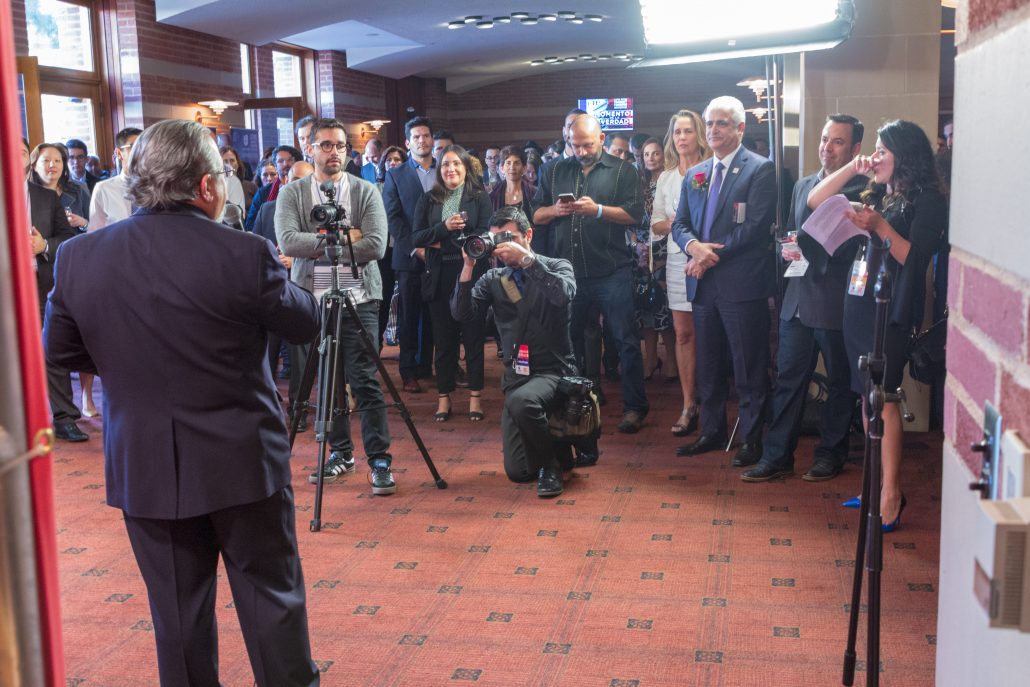
The newest research center at UCLA Luskin aims to bring together scholars and policymakers to share information so that political leaders can make informed decisions on issues of interest to Latinos, and its Dec. 6, 2017, kickoff event exemplified that goal.

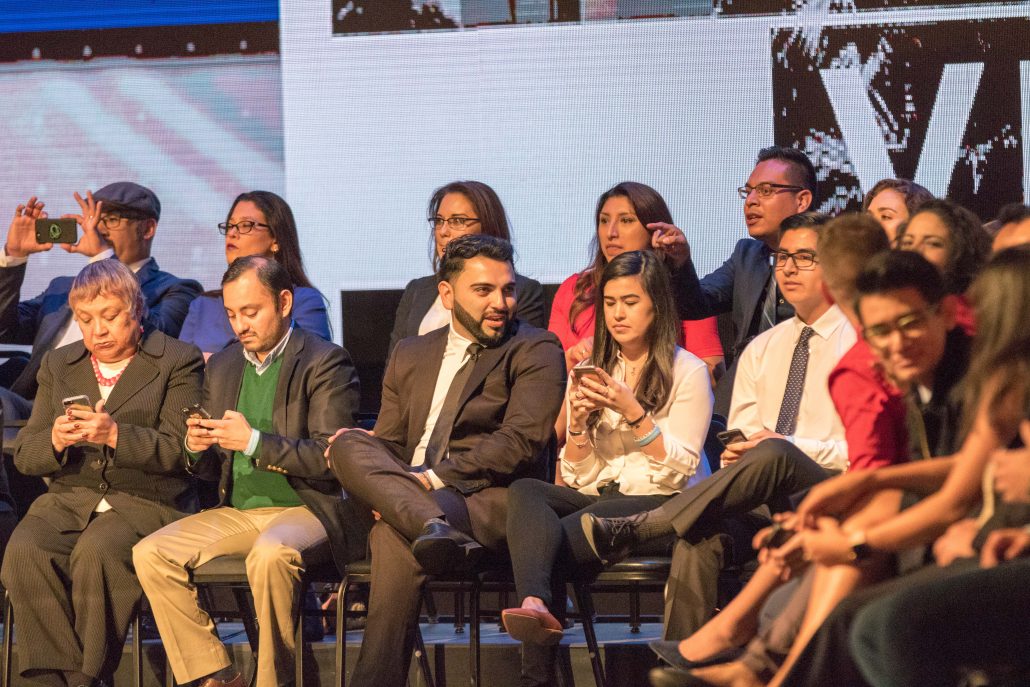
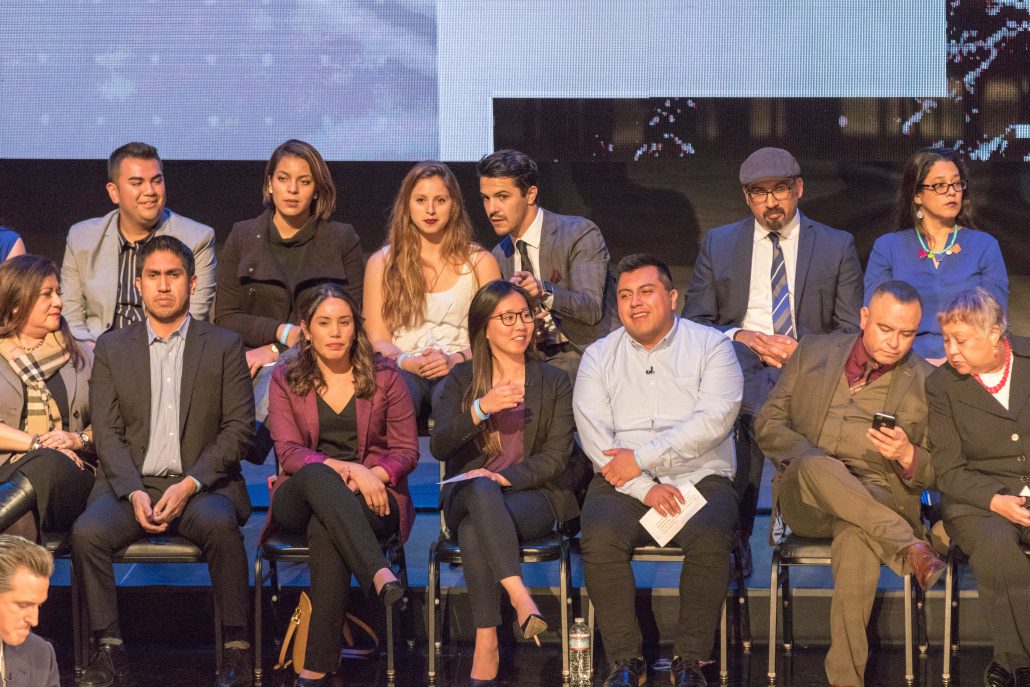
Students, faculty and administrative leaders from the UCLA Luskin School of Public Affairs and throughout UCLA were among a crowd of about 175 people that also included elected officials, community activists, business leaders and other stakeholders who gathered in downtown Los Angeles to celebrate the launch of the Latino Policy and Politics Initiative (LPPI).

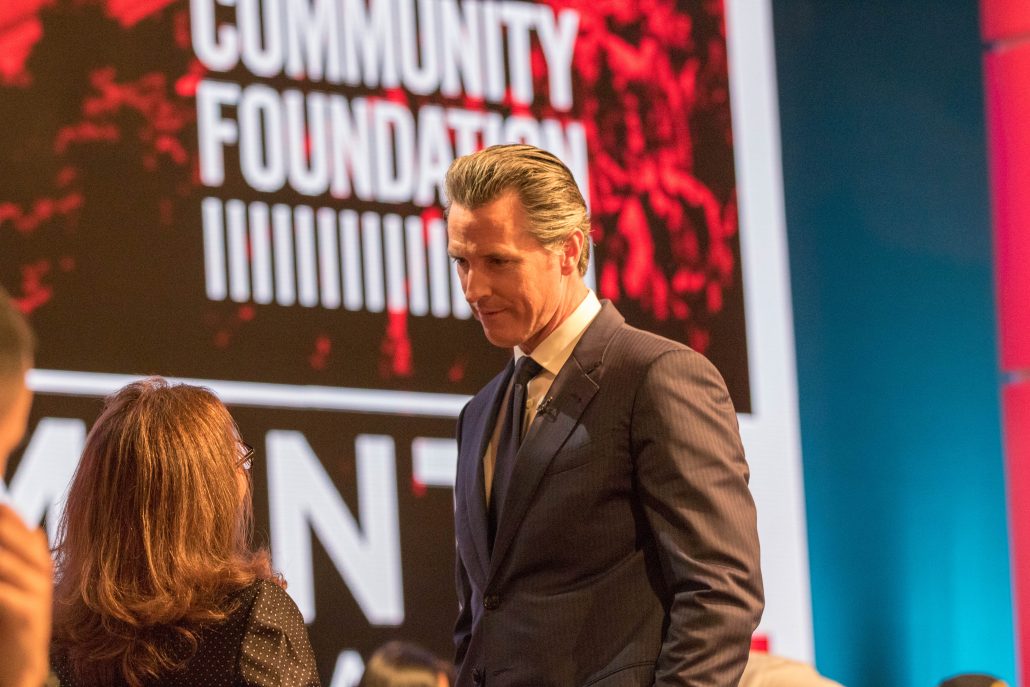
Attendees had an opportunity to hear keynote speaker Kevin de León, current president pro tem of the California Senate and a candidate for the U.S. Senate, talk about recent legislation on issues related to such diverse topics as labor, good government, the environment and education. He was then joined by a panel of experts in a spirited discussion of the current national political climate and major issues that directly impact Californians, particularly Latinos and other communities of color.

“In the great state of California, we celebrate our diversity,” de León told the crowd. “We don’t ban it, we don’t wall it off, and we sure as hell don’t deport it.”

Keynote speaker Kevin de León talks about recent California legislative advances. Photo by Amy Tierney

In his speech, de León talked about the state’s efforts to deal with climate change, to improve education and to provide a safe haven for all residents. For example, Senate Bill 54, the California Values Act, which de León championed, creates a safe zone at “our schools, our hospitals, our churches, courthouses and other sensitive locations so our undocumented immigrant communities can live their lives and conduct their businesses without fear.”

De León declared, “If this president wants to wage a campaign of fear against innocent families, he can count us out. Because the state of California won’t lift a single finger or spend a single dime to become a cog in the Trump deportation machine.”

One of the goals of LPPI, which received its startup funding from UCLA Luskin and the Division of Social Sciences, is to provide better access to information — real data, not alternative truths — to help leaders nationwide resist attacks on immigrants and also help them to craft new policies on other issues vital to Latinos.

“It is impossible to understand America today without understanding the Latino community and the power that it wields. And this institute is going to do that,” Scott Waugh, UCLA executive vice chancellor and provost, told the crowd.

“It’s going to harness all of the intellectual capacity that UCLA has — it’s going to be truly interdisciplinary,” Waugh explained. The co-founders of LPPI — Professor of Political Science and Chicana/o Studies Matt Barreto, UCLA Luskin Dean Gary Segura and LPPI Director Sonja Diaz MPP ’10 — “have a vision that reaches not just inside the School of Public Affairs but reaches out across the campus in areas like health, education, science, the arts — wherever Latinos have made a difference and continue to affect change in a profound way.”

Darnell Hunt, dean of the Division of Social Sciences at UCLA, noted in his remarks that the founding of LPPI comes at a particularly opportune time in American politics. “It goes without saying that we live in challenging times — challenging political times — and the Latino Policy and Politics Initiative will help us make sense of this contemporary setting with an eye toward transformative solutions.”

Barreto, who served as master of ceremonies for the night, spoke about the scope of LPPI’s vision. “We’re not only going to work on immigration reform — we know that immigration reform affects our community and we will work on that — but we are dedicated to work on every policy issue.”

He added, “Whether it has to do with climate change or clean energy, transportation, housing, homelessness, criminal justice or education, we are going to work on that. And we have experts at UCLA who will join us.”

Many of the 20 scholars from across the UCLA campus who are part of LPPI’s faculty advisory council attended the launch event, which began with a networking reception at La Plaza de Cultura Y Artes near Olvera Street, the founding site of Los Angeles itself. As musicians from La Chamba Cumbia Chicha performed, attendees had an opportunity to meet and exchange ideas with the featured speakers and various former and current elected officials in attendance, such as Gil Cedillo, the former state senator and current Los Angeles city councilman. Also in attendance were former California assemblyman and senator Richard Polanco and Amanda Rentería, the former national political director for Hillary Clinton’s campaign and now a staff member in the executive office of California Attorney General Xavier Becerra.

Other panelists listen as UCLA Luskin Dean Gary Segura makes a point during the panel discussion. Photo by Amy Tierney

The event wrapped up with a panel discussion and Q&A moderated by Lucy Flores, a former assemblywoman in Nevada who now serves as vice president for public affairs for mitú, a multimedia enterprise that targets young Latinos. Panelists said that bolstering the number of Latino elected officials has been a vital step in bringing about positive change.

“In the end, votes are what count,” Segura said, noting that Latino’s political influence has not kept up with its rapid population growth. “In order for governments to enact policies that benefit Latinos, it is going to be required that Latinos be a significant share of elected officials.”

Panelist Laura E. Gómez, professor of law at UCLA and former interim dean of the Division of Social Sciences, expanded on that idea in light of a recent wave of disclosures related to sexual misconduct by men in positions of power.

“I think it’s really important … for us to realize that Latinos are a diverse community. We are not just men; we are also women. We are not just straight people; we are also gay and transgender people. And those are important numbers going forward,” she said.

Flores summed it up, “Demographics is not destiny.”

The fact that California often seems to be an outlier in the current national political climate was a recurring topic of the night, with several speakers praising Californians’ resistance to the policies of the current U.S. president. Can the state also serve as a model of progress?

“Despite all of the discord and disunity, California is standing tall for our values,” de León said during his speech. “From education to the environment, from high wages to health care, to human rights, to civil rights, to women’s rights, to immigrant rights, California is proof positive that progressive values put into action in fact improve the human condition regardless of who you are or where you come from.”

De León said California is a leader in innovation — “home to Hollywood and Silicon Valley and the best public university system in the world, the University of California. And we are on the cusp of surpassing the United Kingdom for the fifth largest economy on planet Earth.”

The state is thriving, he said, by doing exactly the opposite of what Donald J. Trump says. “We succeed because we are dreamers, not dividers. We succeed because we double down on lifting people up, not putting them down. We are not going to allow one election to erase generations of progress.”

Photo by Les Dunseith

“I want to ask for your partnership, because this is what we need to do — we need to train a new leadership pipeline that is diverse but also represents us substantively,” LPPI Founding Director Sonja Diaz told the audience.

Saying that UCLA is “arguably the finest public institution in the nation, if not the entire world,” De León spoke enthusiastically of the promise that LPPI represents for elected officials such as himself. “We need the empirical evidence, and it’s about time we have this institution established at UCLA.”

Later, when speaking about climate change during the panel discussion, he expanded on the idea that knowledge equals power.

“California has the ability — if we have access to this type of information, this data — to export our policies to other states, even to red states that may not believe in climate change per se,” de León said. “We are showing that, whether you believe in climate change or not, you can actually grow an economy by delinking and decoupling carbon from GDP.”

Access to data is important, but it takes real leadership to turn information into action. “You can have all the academics in the world, all the data, but it doesn’t make a difference if it just sits in a book on a shelf,” de León said. “You have to take that data and move it with political power to actually implement it, execute it, to improve the human condition.”

Segura said it is his goal — and the mission of LPPI — to unite scholars and policymakers for mutual benefit, helping academics turn research into actionable policy.

“Facts do matter. Facts may not be a good way to sell people who don’t want to hear them, but lots of well-meaning elected officials want information,” Segura said. “One of the jobs of the institute is going to be to take the data out of those dusty books and put them in the hands of policymakers in a useful time frame so that policymakers can respond.”

The Latino Policy & Politics Initiative is a comprehensive think tank around political, social and economic issues faced by California’s plurality population of Latinos and other people of color. Anyone interested in providing financial support may do so through the UCLA giving page for LPPI.

Additional photos from the event may be viewed in an album on the UCLA Luskin feed on Flickr. Watch the video of our speakers and panelists.


Page 44 of 84«‹4243444546›»

Recent Posts

  • Q&A with a graduating senior: Sophia Wang ’26 June 2, 2026
  • Could Ire Over AI Data Centers Tilt the Midterm Elections? June 1, 2026
  • Samsung’s Bonus Dispute Sparks Calls for Structural Reform May 29, 2026
  • Kauffman Study Shows Post-Pandemic Entrepreneurial Surge Alongside Growing Financial Uncertainty May 28, 2026
  • New Center for Neighborhood Knowledge Analysis Undercuts “Worst of the Worst” Deportation Claims May 27, 2026
Search Search
Search Search

Contact

UCLA Luskin School of Public Affairs

3250 Public Affairs Building - Box 951656
Los Angeles, CA 90095-1656

Campus Resources

  • Maps, Directions, Parking
  • Directory
  • Contact
  • Academic Calendar
  • Careers
  • Diversity
  • University of California
  • Terms of Use

Follow

The statements on this page represent the views of people affiliated with the Luskin School of Public Affairs and do not necessarily represent the views of the University of California, or UCLA or its Chancellor.

Posts and comments by individuals at UCLA on social media channels may not reflect the opinions or policies of UCLA, the University of California or the Luskin School, nor its benefactors and academic partners.

Scroll to top Scroll to top Scroll to top