• Public Policy
  • Social Welfare
  • Real Estate Development
  • Urban Planning
  • Luskin Home
  • Undergraduate Program
  • Stay in Touch
  • Events Calendar
  • Give Now
  • About
    • Our Dean
    • Board of Advisors
    • Contact Us
    • Visit Us
    • Diversity, Disparities and Difference
    • Communications
      • UCLA Luskin in the News
      • Luskin Forum Online
  • Departments
    • Public Policy
    • Real Estate Development
    • Social Welfare
    • Undergraduate Program
    • Urban Planning
  • Apply
    • Master of Public Policy
    • Master of Real Estate Development
    • Master of Social Welfare
    • Master of Urban and Regional Planning
      • Double Degree With Sciences Po
    • PhD in Social Welfare
    • PhD in Urban Planning
    • Undergraduate Programs
  • Faculty
    • All
    • Public Policy
    • Social Welfare
    • Urban Planning
    • Real Estate Development
    • Faculty Executive Committee
    • Open Positions
  • Student Affairs & Alumni
    • Career Services
      • Employers
      • Fellowships
    • Student Support
    • Graduate Resource Library
    • Alumni Relations
  • Support
  • Programs
    • Research Centers & Affiliated Research
    • CA Title IV-E Education Program
    • Global Public Affairs (GPA)
    • Data Analytics Certificate
    • Luskin Lecture Series
    • Luskin Summit
    • UCLA Luskin California Policy Briefing
    • Public Service Weekend
    • Commencement
  • Administration
    • Financial Services
    • Events Office
    • Information Technology
  • Search
  • Menu Menu

Tag Archive for: policy

Posts

In Support Dean's Associates meet and a new major in real estate development is approved, plus donor updates

June 20, 2024/0 Comments/in Luskin Forum Online /by Tilly Oren

The Luskin School of Public Affairs gathered again in winter quarter to thank its Dean’s Associates, a group of donors giving $1,000 or more in the last year. These benefactors help fuel the School’s mission of social justice through pedagogy, research and community engagement.

The luncheon commenced with a welcome from Interim Dean Anastasia Loukaitou-Sideris, who expressed her appreciation for contributions that have enriched the Luskin School by funding academic programs, fostering innovation and providing transformative opportunities for students.

Loukaitou-Sideris praised the tremendous impact of donors guiding the new Master of Real Estate Development and those promoting an ongoing campaign to raise funds for Equity, Diversity and Inclusion programs.

One of the most touching moments was a heartfelt testimonial from urban planning doctoral candidate Andres Ramirez, who shared how his life has been positively impacted by the generosity of donors — a sentiment echoed throughout the event. Ramirez highlighted the impact of the Vanessa Dingley Fellowship on his educational experience and professional goals.
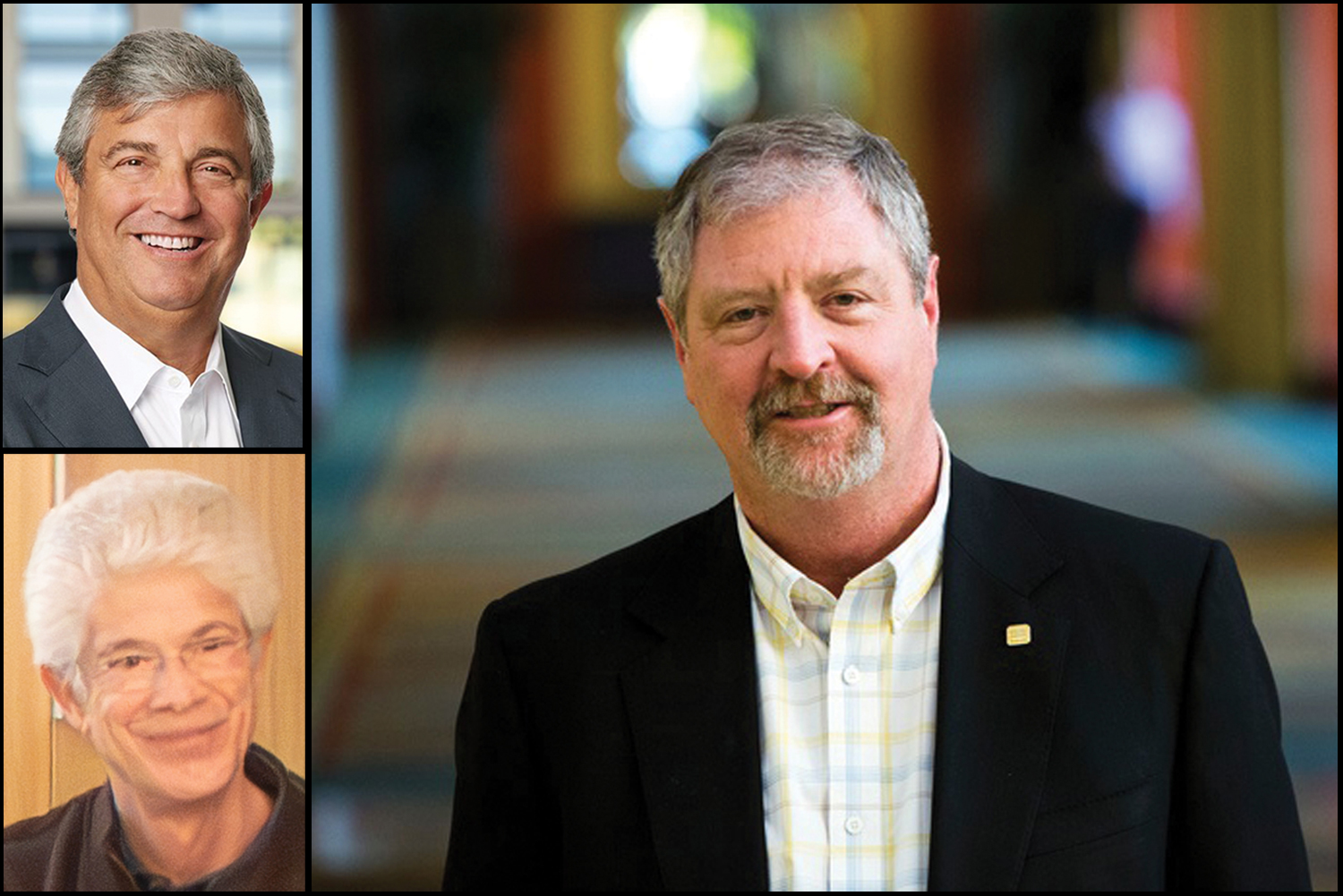

portrait images of three men

Gadi Kaufmann, top left, Alex Rose, right, and Jeffrey Seymour

‘A Holistic Education Covering the Entire Life Cycle of Real Estate’

In response to a growing demand for skilled professionals in real estate development, the Luskin School will launch an innovative master’s degree designed to equip students with the knowledge, skills and practical experience needed to excel.

UCLA Luskin is grateful to Board of Advisors members Gadi Kaufmann, Alex Rose and Jeff Seymour, among others, for helping to prepare the Master of Real Estate Development, or MRED, to launch in fall 2025.

Amid a housing crisis, real estate development plays a vital role in shaping our communities, from the construction of homes and commercial properties to the revitalization of urban neighborhoods. An increasing need exists for professionals who can navigate the field’s complexities while considering such factors as sustainability, affordability and
social equity.

“There is no more fitting institution to house MRED than the Luskin School at UCLA,” said Seymour, who noted that the new degree will complement the School’s established programs in urban planning, social welfare and public policy.

“MRED students will benefit from an outstanding Luskin and adjunct faculty. They’ll have opportunities to work with scholars as well as industry professionals,” he said. “In addition, MRED will affiliate with the Anderson and UCLA Law schools, as well as the Ziman Center.”

Kaufmann said that UCLA, as a global education powerhouse, is well-positioned to offer such a program, which will be set apart from other programs by its “comprehensive approach to preparing real estate professionals for the dynamic challenges of the industry.”

“In today’s complex landscape, a holistic education covering the entire life cycle of real estate is crucial for success — from development, planning and design, and construction to financing, marketing, property management and asset management,” he said.

“Real estate accounts for almost one-half of global wealth, and almost everything humans do on our planet is housed in some sort of real estate,” Kaufmann said. “It is a segment of the economy far too important to ignore.”
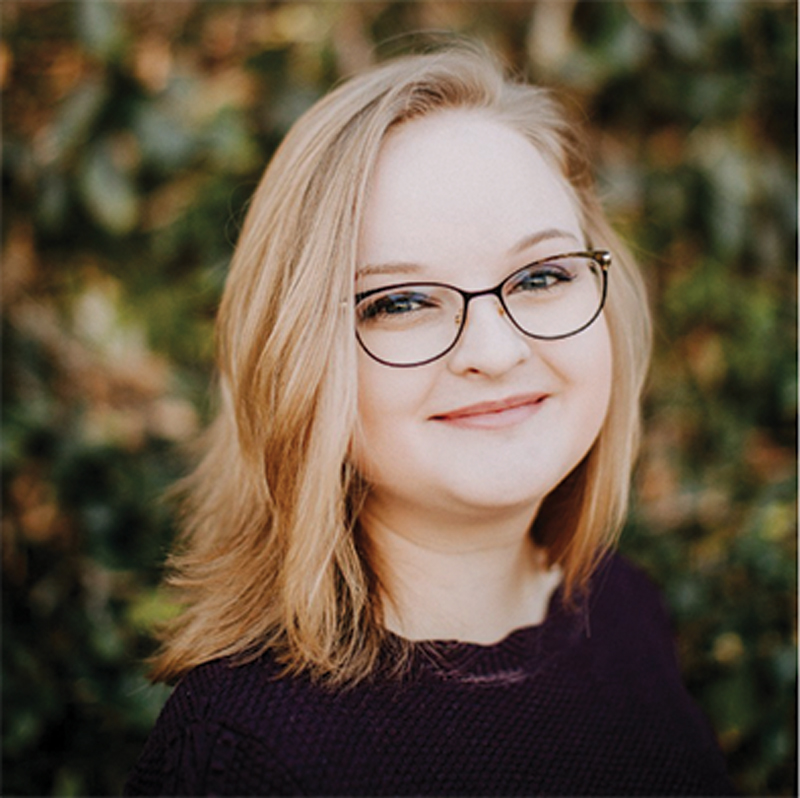

Where They Are Now: Meagan Smith-Bocanegra MSW ’23

Meagan Smith-Bocanegra MSW ’23 shared her experiences at UCLA Luskin and beyond, including the impact that her Shapiro Fellowship, funded by the Shapiro family, made on her educational and career trajectory. Smith-Bocanegra is now a social worker at MemorialCare Long Beach Medical Center.

What made you choose to attend the Luskin School?

The main factor was the opportunity for specialization, particularly the Health and Mental Health Across the Lifespan concentration.

How did your fellowship shape your educational and professional experience at the Luskin School?

Because of the Shapiro Fellowship, I had a unique learning opportunity at the Special Patient Care Clinic at UCLA School of Dentistry. This field placement gave me invaluable hands-on experience in program building and advocating for individuals and families with disabilities, and prepared me well for my current role as a hospital social worker.

What experiences did your fellowship provide that you may not have otherwise had?

Too many to count! I was able to begin practicing social work at a higher level, and even participated in writing an article for the California Dental Association about the impact of social work in dental settings. Above all, this fellowship allowed me to work with families and individuals with unique strengths and challenges, which deeply impacted my professional and personal spheres.

How did your fellowship influence you in your current role?

My ultimate goal has always been to be a medical social worker. However, my fellowship prepared me for the real-world situations and hard work of the inpatient medical world.

If you could say something to the donors of your fellowship, what would you say?

Thank you! Due to your generosity, I had the privilege of working with these individuals and families, supporting them and learning from them. This fellowship provided me with the skills to obtain my dream position, where I am now able to work with so many more individuals and families every day.

If you could say something to prospective or current students, what would you say?

If you have the opportunity to be a part of the Shapiro Fellowship, do it! Due to the unique experiences I had from the fellowship, I had multiple job offers post-graduation and am now working my dream job. You will encounter so many incredible people, diverse individuals and situations, and have the experience of a lifetime.
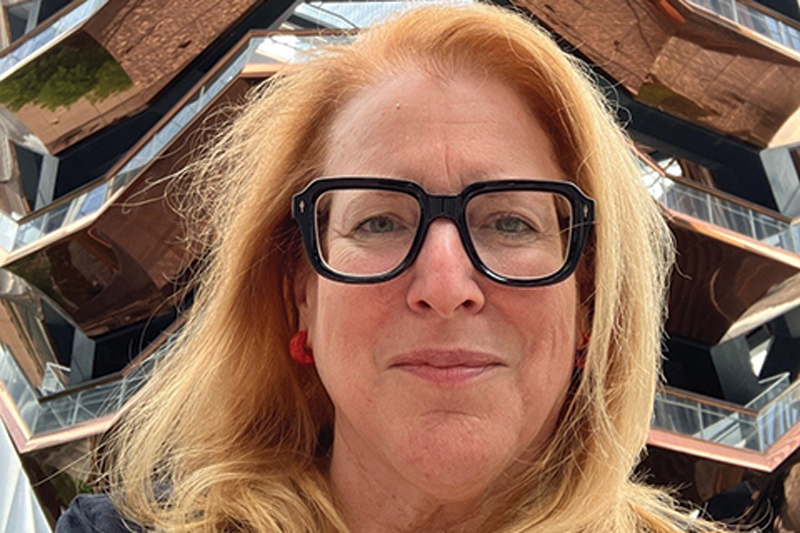

Why They Give: Kayne Doumani MA UP ’95

UCLA Luskin urban planning alumna and longtime supporter Kayne Doumani shares her experiences as a student, followed by a professional life with unexpected twists and turns. Doumani MA UP ’95 has held many roles in affordable housing, building skills that led her to her current position as an asset management consultant to nonprofit housing organizations. “I didn’t know I was training to be an asset manager,” she said, “but every bit of that experience has contributed to my success.” Read the full interview.

Did a transformative experience lead to your passion?

There wasn’t one. I wrote in my application to what was then GSAUP [Graduate School of Architecture and Urban Planning] that I didn’t know why I cared. There’s no history of public service in my family. We didn’t discuss lofty topics like justice. But that’s been my lens for as long as I can remember. I got interested in urban planning when I saw it being used as a tool for making sure that development didn’t only benefit the developer.

How did the Luskin School help you get closer to your goal?

For me, Luskin was the complete package. Los Angeles was a rich laboratory for professors and students — and those students contributed nearly as much to my education as the professors. We were a diverse and accomplished group coming into the School.

How have you seen the impact of your philanthropy play out?

I try not to. I’m helping a couple of young students I know with their college expenses and the only stipulation I made was, “No gratitude.” You have to trust the people you hand your money to. Then don’t bug them.

What values do you hold closest in your life and work?

Sometimes you need to sublimate your values to those of the people affected by your work. Listen as long and hard as is necessary to understand. Be fierce, not popular.

‘It’s Never Too Late to Learn … Even For Me’

June 7, 2024/0 Comments/in Luskin's Latest Blog /by Mary Braswell

When Emily Wang moved from China to California with her husband and 3-year-old daughter, she knew just one person in this country. Settling near Los Angeles, Wang worked as a restaurant cashier and contemplated options for her future. Learning English was key, so she enrolled in ESL classes at El Camino College in Torrance. A counselor told her about transferring to a four-year university. Wang was 34 at the time, with a first-grader in tow. “They told me it’s never too late to learn,” she said. “I thought, ‘Wow, really? Even for me?’” With assistance from the Center for Community College Partnerships, she successfully transferred to UCLA and will graduate this spring with a bachelor of arts in public affairs from the Luskin School. The process of applying to the UC system also stoked her desire to pursue policy work, as she discovered that she was technically an undocumented immigrant. The family had come to the U.S. legally, applied for asylum and had work permits. But eight years have passed, and Wang has had no updates about her case since she and her husband separated during the pandemic. “I thought, since I’m stuck in this situation, I’m going to use my undocumented identity as my strength to advocate,” she says. “We need more support systems to help undocumented immigrants who are already here, like my daughter.” Now 40 and a single parent, Wang plans to continue her work in political advocacy and — when her daughter, now 11, is a bit older — return to school for a law degree.

Read the full story about Emily Wang as well as other transfer students across the UC system.


School Travels to State Capital for Research Briefing and Alumni Gathering Back-to-back events in Sacramento provide networking opportunities and showcase scholarly works

February 21, 2024/1 Comment/in Alumni, Business and the Environment, Development and Housing, Environment, For Faculty, For Policymakers, For Students, For Undergraduates, Politics, Public Policy, Public Policy News, School of Public Affairs, Urban Planning Anastasia Loukaitou-Sideris, Gregory Pierce, Michael Lens /by Les Dunseith

In mid-February, a contingent of more than 30 people from UCLA Luskin made the trip to northern California in an effort to connect with alumni, government officials and policy experts involved in state government.

The two-day gathering in Sacramento was envisioned as the first of what will become an annual feature of the Luskin’s School’s outreach efforts, pairing an alumni get-together in the state capital with a research-focused briefing for elected officials and their staffs.

The UCLA Luskin Briefing at UC Center Sacramento took place during the time when new bills were being finalized for the next legislative session, and the hope is that the research of UCLA Luskin and its various research centers can put current and future legislative leaders in a better position to make data-informed decisions.

“It was very well attended by elected and appointed officials,” noted Interim Dean Anastasia Loukaitou-Sideris, who made the effort a priority for this academic year and actively participated in the planning process. “The elected officials I talked to afterward were very appreciative for the event and told me that they hope to see more such events from our School.”

Two briefing sessions were held. A session on water management highlighted research by Adjunct Associate Professor Gregory Pierce MURP ’11 PhD UP ’15, co-executive director of the UCLA Luskin Center for Innovation. A session on affordable housing was led by Associate Professor Michael Lens, associate faculty director of the Lewis Center for Regional Policy Studies.

The briefing and the Alumni Regional Reception, which took place the evening before, brought together faculty, staff or alumni from all four departments — Public Policy, Social Welfare, Urban Planning and the Undergraduate Program — as well as members of the Luskin School’s Board of Advisors.

A group of about 20 current Master of Public Policy students also made the trip, getting an opportunity to connect directly with alumni whose footsteps they may hope to follow, including Assemblyman Isaac Bryan MPP ’18, a member of the affordable housing panel.

Find out more about the briefing and view the bios of the 12 people who participated as speakers or panelists.

View photos from the alumni reception

Sacramento Alumni Regional Reception 2024

View photos from the research briefing

Sacramento Briefing 2024


On L.A.’s Complex Cannabis Landscape

February 21, 2024/0 Comments/in Luskin in the News Brad Rowe /by Mary Braswell

Brad Rowe, researcher and lecturer of drug and criminal justice policy at UCLA Luskin, spoke to LAist’s “Air Talk” about Los Angeles’ complex landscape of cannabis sales. The legalization of marijuana for recreational use in California initially sparked a Green Rush, but licensed operators are finding that the high cost of doing business and lax enforcement against illicit shops make it tough to compete. Now, the unlicensed market is about two to three times the size of licensed sales, according to Rowe, author of  “Cannabis Policy in the Age of Legalization.” He spoke about the public health risks of untested products and public safety concerns surrounding large, unregulated facilities with weapons and large sums of cash on the premises — “not the kind of neighbors that you want.” Rowe called for targeted, equitable, effective enforcement that protects the rights of legal businesses. “No one has an appetite for heavy-handed drug enforcement,” he said. “The key word is fairness.”

Listen to the podcast


Amplifying Latina Voices in Law and Policymaking

January 31, 2024/0 Comments/in Luskin's Latest Blog Veronica Terriquez /by Mary Braswell

By 2050, Latinas are expected to make up 13% of the U.S. population and account for 11% of the labor force. Yet Latinas comprise only 2.5% of all U.S. lawyers, account for less than 1% of all partners in law firms and have never served on the highest court in 44 states. To address this gap in Latina representation and leadership in law and policy, the UCLA Latino Policy and Politics Institute; Latina Futures, 2050 Lab; Latina Lawyers Bar Association; and UCLA Chicanx Latinx Law Review hosted the inaugural Latina Futures: Transforming the Nation Through Law and Policy symposium. The event, which took place Jan. 20 and 21 at UCLA’s Luskin Conference Center, brought together nearly 400 Latina scholars, attorneys, politicians, policy leaders and students from across the country to explore today’s legal and advocacy challenges and opportunities through a Latina lens. “This weekend, we are replacing the status quo with forward-thinking, accurate and necessary contributions from Latina leaders now and well into the future,” said Sonja Diaz, founding executive director of the UCLA Latino Policy and Politics Institute. Diaz co-founded the Latina Futures, 2050 Lab with Veronica Terriquez, professor of urban planning at UCLA Luskin and director of UCLA’s Chicano Studies Research Center. Terriquez expressed hope that the symposium would inspire participants to continue their advocacy and leadership. “We have the potential to inform social, political and economic changes that benefit the majority of this nation,” she said. “This is a long game, and it builds on the work that came before us.” — Cristian Rivera

Read the full story


Wesley Yin Appointed Chief Economist of White House Budget Office

November 17, 2023/0 Comments/in Luskin's Latest Blog Wesley Yin /by Mary Braswell
UCLA Luskin’s Wesley Yin has been appointed chief economist at the White House Office of Management and Budget (OMB). Yin heads OMB’s Office of Economic Policy, where he will help formulate President Biden’s budget and work on a wide range of issues, including national tax policy, health care and social insurance, climate policy, labor and student loans. OMB assists the president in meeting administration policy, budget and management objectives across the federal government. “There’s the saying, ‘Don’t tell me what you value. Show me your budget — and I’ll tell you what you value.’ This saying resonates with me, and now more than ever at OMB,” said Yin, whose research focuses on economic inequality, health care and household finance. During his government service, Yin will be on leave from UCLA during the 2023-24 academic year. He previously served on the White House Council of Economic Advisors and as the U.S. Treasury Department’s deputy assistant secretary of economic policy during the Obama administration.


Reforming the L.A. City Council to Give Diverse Communities a Voice

October 5, 2023/0 Comments/in Luskin in the News Gary Segura /by Mary Braswell

UCLA Luskin’s Gary Segura spoke to the L.A. Times about a proposal to expand the Los Angeles City Council in an effort to boost representation and discourage unethical behavior. Nearly a century has passed since L.A. residents approved the current number of council districts, 15. New proposals would increase that number to somewhere between 21 and 31. “Los Angeles is a complex city, far more diverse than most cities in the United States,” said Segura, a professor of public policy. “With huge numbers of ethnic and racial populations, it has become increasingly difficult to give different communities a voice.” Any change would require voter approval. Opponents of council expansion often cite concerns about higher costs, but “the truth of the matter is we spend very little on governance in Los Angeles,” Segura said. Even if the council more than doubles in size, the cost of staff, office space, cars and other needs would represent less than 1% of Los Angeles’ annual $13-billion budget.

Read the story


The Heat Is Rising, and UCLA Luskin Research Is Helping L.A. Respond Environmental justice has been the cornerstone of Luskin School efforts related to the city’s hot weather policies

August 17, 2023/0 Comments/in Alumni, Climate Change, Environment, For Faculty, For Policymakers, For Students, Luskin Center, Public Policy News, School of Public Affairs, Urban Planning Gregory Pierce, V. Kelly Turner /by Les Dunseith

By Les Dunseith

As Southern California braces for more heat waves this summer, the city of Los Angeles has launched its most comprehensive and equitable response ever, thanks in part to partnerships with student, faculty and staff researchers from UCLA Luskin.

Interactive mapping tools co-developed by Luskin School-affiliated scholars and the Public Health Alliance of Southern California, for instance, are helping government officials and social services providers better visualize the neighborhoods most in danger from extreme heat. And research has helped ensure that city resources like cooling centers are being deployed in areas with high numbers of low-income residents and communities of color — groups that tend to be disproportionately affected by hot weather but whom previous heat-mitigation efforts often failed to reach.

Heat as an Equity Issue

While California has not historically viewed hot weather in the context of social equity, heat’s disparate impact on the state’s various populations has been a central focus of Luskin School and other UCLA research.

“Heat is an equity issue. Neighborhood by neighborhood, we’re going to be experiencing heat differently,” said Colleen Callahan, co-executive director of the Luskin Center for Innovation and co-author of the center’s three-part series on California’s Extreme Heat Action Plan. “That’s why it’s important to identify where protections are most needed and where they’ll have the biggest impact.”

Among those equitable protections is providing shade from the heat, said V. Kelly Turner, an associate professor of urban planning and point person for the Luskin Center for Innovation’s climate adaptation and resilience research. In a July 2023 commentary in the journal Nature, Turner detailed how a lack of shade affects urban residents — particularly those from low-income and marginalized communities, who tend to live in heat-prone areas that lack air-conditioning and tree cover — and stressed the need for cities to remove regulatory restrictions that make it difficult to build shade infrastructure.

“It’s going to take a setting-by-setting approach, whole of government approach, where we look at all the regulations that make it really hard to do the right thing,” she recently told LAist.

A related recent capstone effort at the Luskin School involved graduate students in public policy. Their research (PDF) explored historical inequities in Los Angeles and included a survey to assess how the city can create an equitable heat policy with long-term resilience for vulnerable communities.

It’s the hope of Callahan, Turner and many other UCLA scholars that their research will spur the city of Los Angeles and its Climate Emergency Mobilization Office to continue to implement equitable and forward-thinking responses to extreme heat.

Finding CEMO

Twitter:
CEMO_EJ4LA

Facebook:
facebook.com/EJ4LA

Instagram:
CEMO_EJ4LA

Email:
CEMO-Office@lacity.org 
www.climate4la.org

These and other UCLA contributions are informing the city’s equity-based approach to the threat posed by climate change and rising temperatures, said Marta Segura, Los Angeles’ first chief heat officer and director of the city’s Climate Emergency Mobilization Office. Launched in 2021, CEMO is responsible for coordinating across agencies to create a cohesive response to extreme heat.

“It’s my belief that in focusing on equitable climate solutions and investing first and foremost in the historically disinvested communities, we will accelerate climate solutions for everybody,” Segura, a UCLA Public Health alumna, said during a May panel discussion at UCLA organized by the UCLA Luskin Center for Innovation.

Using data gathered in partnership with UCLA scholars, CEMO was able to identify which cooling centers received a lot of use in previous years, which didn’t and where the need was greatest. This summer, the number of city-coordinated facilities offering heat relief — including air-conditioned recreation centers and public libraries that stay open beyond regular hours — has expanded significantly.

Among those helping the city evolve its hot weather response were 13 students who earned their master’s degrees in urban and regional planning this past June. As participants in the UCLA Luskin Urban Planning 2022-23 Comprehensive Project class, they prepared a report on heat equity for CEMO under the direction of Gregory Pierce, adjunct associate professor of urban planning and co-executive director of the Luskin Center for Innovation.
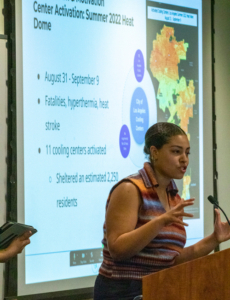
woman in striped top speaks at podium while map is projected on a screen behind her

Corinne Odom discusses the importance of cooling centers at the Comprehensive Project’s June 2023 presentation. Photo by Les Dunseith

The students focused on three areas — cooling centers, emergency response and bus shelters. Their final report (PDF), released in June, commended Los Angeles for being at the forefront of government efforts on extreme heat but noted room for improvement to ensure public safety and equitable distribution of resources.

Corinne Odom was among the students who looked at cooling centers. She and her classmates spoke with staff members at libraries who were eager to help but frustrated that people in danger didn’t seem to know these facilities were available.

“Visitor counts at cooling center locations last summer were low,” Odom said. “So, really informing people that they’re available is important, and that’s something that CEMO is prioritizing.”

Odom and her classmates were supportive of the city’s efforts to create “resiliency centers” by offering a broader range of social services programs and heat-related amenities at locations like recreation centers and public libraries that traditionally serve as cooling centers. They also noted that CEMO’s communication efforts also recommend informal locations where residents can duck in quickly to escape extreme heat.

“A mall could be a cooling center,” Odom said, “or a movie theater.”

A particularly difficult challenge for city officials is reaching the people in the most danger — the unhoused population.

Michelle Gallarza, a Comprehensive Project participant who contributed to Luskin Center for Innovation research on heat and housing insecurity, noted that the unhoused population’s lack of shelter makes them particularly vulnerable during heat waves.

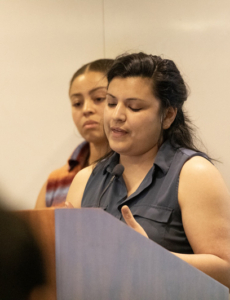
woman in dark shirt without sleeves speaks at a podium

Michelle Gallarza, shown here talking about the Comprehensive Project’s findings, remembers the lights being left off during heat waves in her Los Angeles grade school that lacked air conditioning. “The same thing would happen when I would go home,” she said. “We’d just have fans blowing and no lights on.” Photo by Les Dunseith

“These people are more likely to suffer from the extreme aspects of heat and a really increased likelihood for illness and, unfortunately, death,” she said.

In Los Angeles County, unhoused people accounted for 42% of heat-related deaths in 2022, even though they make up less than 1% of the population. Beyond having less access to indoor cooling than the general population and facing challenges getting information about emergency resources, they may not always feel comfortable in city-provided facilities, said Gallarza, who spoke with an unhoused person who said cooling centers have not felt very welcoming.

“In our sensitivity and vulnerability analysis,” Odom said, “we thought that there should be more specific solutions catered to that community, especially in collaboration with organizations that are trusted and knowingly support unhoused communities.”

Generally speaking, Segura said, a person in danger doesn’t need to be out of the heat for long to benefit, and this is where resilience centers, particularly smaller ones, can help. She and other city officials hope to persuade, for example, local fast-food restaurants to serve as centers for unhoused people and others on hot days.

“With just three or four hours of refuge and recovery, you can make it to the next day,” she said. “People don’t need to stay there 24 hours.”

Waiting for the bus: The need for transit shelters

Other Comprehensive Project students focused on Los Angeles’ Sidewalk and Transit Amenities Program, recently established to support the expansion of transit shelters in a city where only 26% of Metro bus stops currently offer shade.

Project participant Miguel Miguel said he was surprised to discover that the city’s shelter placement decisions were often related more to political and commercial considerations, like advertising potential, than protecting people from heat. “We never suspected that would be such a driving factor,” he said. “We finally realized that the contract explicitly said that [shelter providers] needed to maintain advertising revenue to support the operations of the program.”

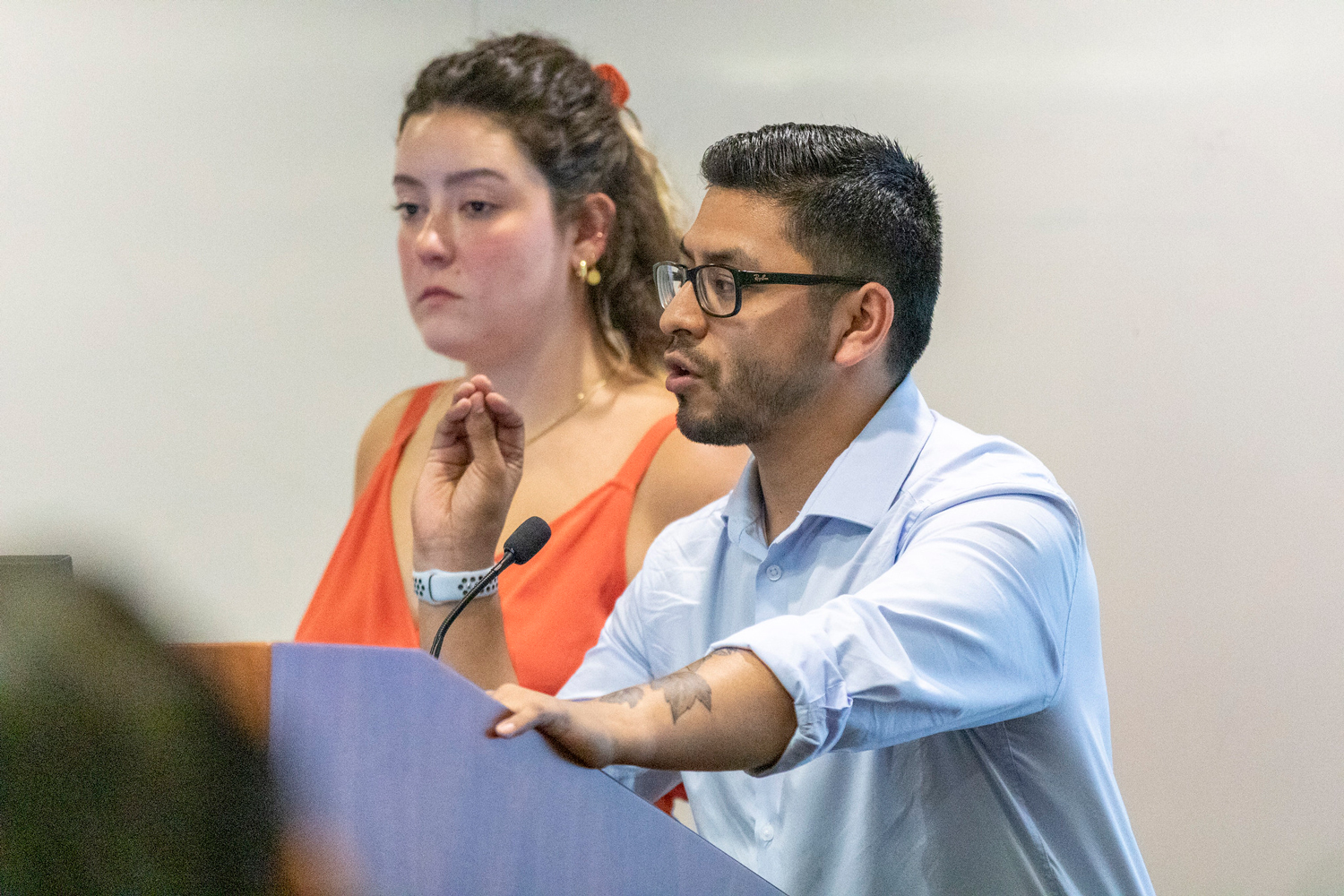
man in blue shirt and glasses gestures at a podium while a woman listens int he background

Miguel Miguel delivers findings from the Comprehensive Project’s final report. Miguel, a San Fernando Valley resident who has seen the impact of dangerously high temperatures on communities without adequate heat protection, said, “It was really important for me to be involved and to bring lived experience and emotional compassion into this [research].”  Photo by Les Dunseith

In the end, the students recommended prioritizing bus shelter development on geographic equity, with a focus on the Harbor Gateway area near San Pedro and parts of the San Fernando Valley area that have high ridership and where historically underserved populations frequently experience extreme temperatures. The final report of the Comprehensive Project class recommended revising criteria for heat emergencies and heat warnings, setting lower thresholds than previous city policy. And their emergency response analysis found a statistically significant correlation between 911 call volumes and heat across the city but no similar spike in calls to the 311 system, which connects residents to city services, including heat mitigation. More outreach is thus needed to ensure that people seek help before it’s too late.

Segura said in May at UCLA that the city had developed an equity index to guide policy decisions, but it didn’t yet have a strong climate equity focus. Now, Los Angeles has begun ts climate vulnerability assessment and fully developing its heat action plan.

“This information that the UCLA researchers are bringing to us is going to be part of the consideration and the development of those plans,” she said. “So, the timing couldn’t have been more perfect.”

Read more about UCLA’s efforts to combat the effects of extreme heat

A Sweeping Proposal to Reform L.A. City Governance

July 5, 2023/0 Comments/in Luskin in the News Gary Segura /by Mary Braswell

News organizations including the Los Angeles Times, Daily News and Associated Press covered a package of recommendations issued by the Los Angeles Governance Reform Project, co-chaired by UCLA Luskin Professor Gary Segura. The advisory group, created in response to a series of corruption scandals that have plagued L.A. City Hall, called for 10 additional seats on the City Council for a total of 25; two independent redistricting commissions; and a more powerful ethics commission. “As we speak today, there are 260,000 souls in every City Council district in Los Angeles. To say that this stretches the definition of local representation as it was understood by our founders would be an understatement,” Segura said. He called the proposals in the group’s interim report a “starting point, intended to spark a meaningful and actionable conversation that will drive reform forward.”

Read the L.A. Times story
Read the Daily News story
Read the Associated Press story


Turner Says Regulations Hinder Heat Mitigation Efforts Like ‘La Sombrita’

July 3, 2023/0 Comments/in Luskin in the News V. Kelly Turner /by Les Dunseith
Los Angeles officials are struggling to cope with rising heat in a city where a majority of bus stops lack shelter. A recently unveiled “shade and lighting” pilot effort known as La Sombrita (“little shadow” in Spanish) is a thin, slightly curved sheet of perforated metal attached to a pole. It’s designed to be cost-effective and fit into places where planting trees would be impractical. Alas, UCLA Luskin’s V. Kelly Turner said, “What I see is a shade structure that has been basically whittled down by all the regulations and policies that make it really difficult — and you can call it illegal — to produce shade where needed.” Turner, an associate professor of urban planning and geography who studies how to protect people from extreme heat, told Fast Company that “patchwork, piecemeal interventions” like La Sombrita exemplify that cities have historically not thought about shade as an infrastructure system.
Read the story


Page 2 of 12‹1234›»

Events

Nothing Found

Sorry, no posts matched your criteria

Recent Posts

  • Kaplan on the Social Media Ban for Minors in Florida December 17, 2025
  • How DemocraShe Builds Civic Engagement for All December 17, 2025
  • Yaroslavsky on Rob Reiner’s Legacy of Progressive Advocacy December 17, 2025
  • How Rising Debt and Eroding Governance Threaten Long-Term Stability in Five Countries December 16, 2025
  • The Facts on School Violence: Q&A with UCLA Luskin’s Ron Avi Astor December 15, 2025

Contact

UCLA Luskin School of Public Affairs

3250 Public Affairs Building - Box 951656
Los Angeles, CA 90095-1656

Campus Resources

  • Maps, Directions, Parking
  • Directory
  • Contact
  • Academic Calendar
  • Careers
  • Diversity
  • University of California
  • Terms of Use

Follow

The statements on this page represent the views of people affiliated with the Luskin School of Public Affairs and do not necessarily represent the views of the University of California, or UCLA or its Chancellor.

Posts and comments by individuals at UCLA on social media channels may not reflect the opinions or policies of UCLA, the University of California or the Luskin School, nor its benefactors and academic partners.

Scroll to top