• Public Policy
  • Social Welfare
  • Real Estate Development
  • Urban Planning
  • Luskin Home
  • Undergraduate Program
  • Stay in Touch
  • Events Calendar
  • Give Now
  • About
    • Our Dean
    • Board of Advisors
    • Contact Us
    • Visit Us
    • Diversity, Disparities and Difference
    • Communications
      • UCLA Luskin in the News
      • Luskin Forum Online
  • Departments
    • Public Policy
    • Real Estate Development
    • Social Welfare
    • Undergraduate Program
    • Urban Planning
  • Apply
    • Master of Public Policy
    • Master of Real Estate Development
    • Master of Social Welfare
    • Master of Urban and Regional Planning
      • Double Degree With Sciences Po
    • PhD in Social Welfare
    • PhD in Urban Planning
    • Undergraduate Programs
  • Faculty
    • All
    • Public Policy
    • Social Welfare
    • Urban Planning
    • Real Estate Development
    • Faculty Executive Committee
    • Open Positions
  • Student Affairs & Alumni
    • Career Services
      • Employers
      • Fellowships
    • Student Support
    • Graduate Resource Library
    • Alumni Relations
  • Support
  • Programs
    • Research Centers & Affiliated Research
    • CA Title IV-E Education Program
    • Global Public Affairs (GPA)
    • Data Analytics Certificate
    • Luskin Lecture Series
    • Luskin Summit
    • UCLA Luskin California Policy Briefing
    • Public Service Weekend
    • Commencement
  • Administration
    • Financial Services
    • Events Office
    • Information Technology
  • Search
  • Menu Menu

Archive for category: School of Public Affairs

Envisioning a New Voting Rights Act for the 21st Century At UCLA conference, experts map out new federal protections after an election season marred by suppression and intimidation

December 14, 2020/0 Comments/in For Faculty, For Policymakers, For Students, For Undergraduates, Latinos, Politics, Public Policy, School of Public Affairs Chad Dunn, Matt Barreto /by Mary Braswell

By Mary Braswell

Voting rights experts from around the country gathered at a UCLA conference to brainstorm ways to protect Americans’ access to the ballot box, even as votes cast in the 2020 election continued to be challenged in court.

Elected officials on the front lines of the civil rights fight joined legal scholars, policy analysts, attorneys and advocates at the Dec. 8–9 virtual seminar. The event was hosted by the Voting Rights Project, a division of the Latino Policy and Politics Initiative at UCLA Luskin.

The seminar’s organizers intend to turn the attendees’ shared wisdom into a report to Congress that could help shape comprehensive national legislation to safeguard the right to vote.

Among the topics that guided the conversation: voter suppression and intimidation during this year’s election cycle and the Supreme Court’s 2013 rollback of core provisions of the landmark Voting Rights Act of 1965.

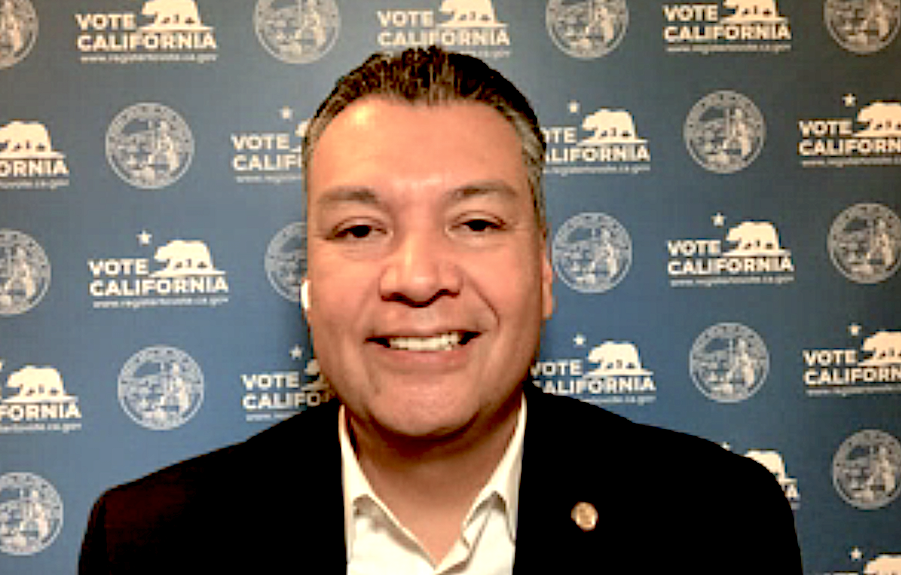
“This is what we get when we have elections without the full protection of the federal Voting Rights Act that stood and served well for more than 50 years,” California Secretary of State Alex Padilla said. “It has unleashed the floodgates for a lot of the voter suppression measures that we’ve seen in the last seven years and we saw in full display in the 2020 election.”

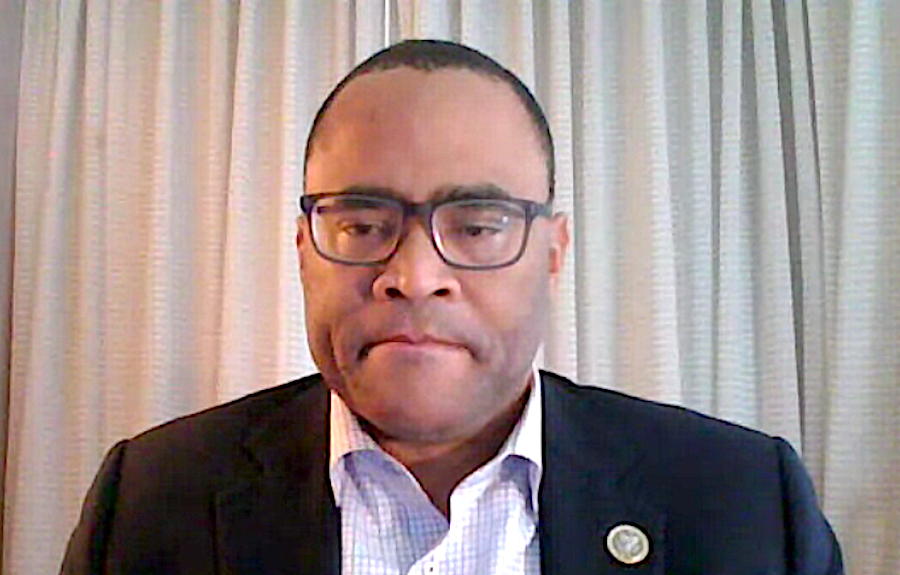
Texas Rep. Marc Veasey, who co-founded the Congressional Voting Rights Caucus, said the country is witnessing “egregious stories that you would think we wouldn’t be seeing in modern-day America.”

In his state, he said, officials have attempted to require people registering to vote to first produce a birth certificate or passport. Another proposal, seen as an invitation to voter intimidation, would have permitted cellphone recordings of citizens casting their ballots as a way to document “fraud.”

“We’re revisiting a very dark time in U.S. history where people just absolutely have no regrets at all about rolling back the rights of people to be able to vote, particularly people of color,” he said.

For example, Padilla noted, during the Georgia primaries, the wait time to vote in Black neighborhoods averaged 51 minutes, compared with six minutes in white neighborhoods.
While some state and local jurisdictions are pushing for rules that chip away at the freedom to vote, others are lighting the way for federal reforms, the speakers stressed.

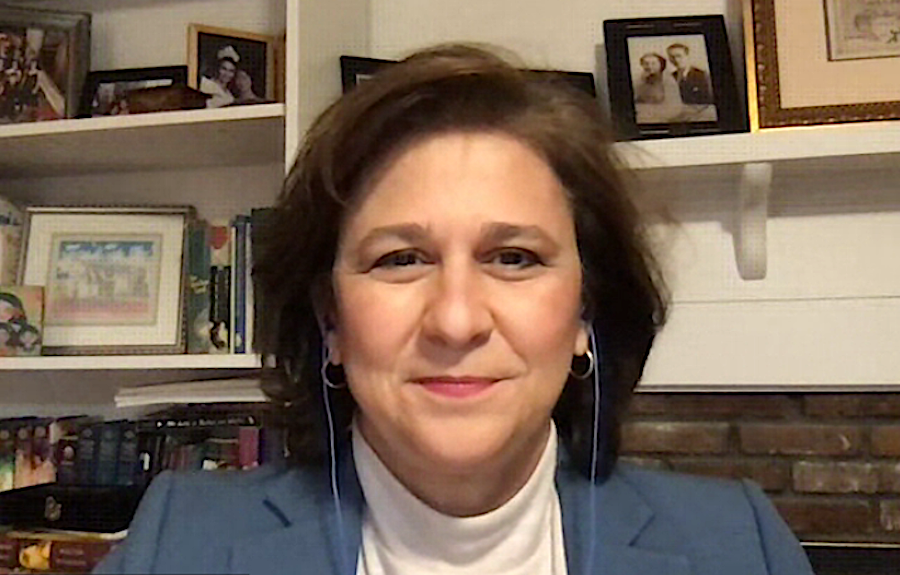
Padilla and Rhode Island Secretary of State Nellie Gorbea spoke of changes in their states that have made it easier for citizens to register and vote — changes that were accelerated because of the COVID-19 pandemic.

“What made this cycle different is that the pandemic focused us to reexamine how people vote,” Gorbea said. “And in many of our states we adapted our democracy to provide easier and safer access to the ballot box, which meant that people could vote while still taking care of their health.”

The seminar included workshops that zeroed in on specific facets of the voting rights movement, including fair redistricting, equal access for low-income and minority communities, planning for the next public health crisis, and overcoming procedural hurdles that have blocked past efforts to bring change.

Panelists and participants in the audience weighed in on the strengths and omissions of legislation already in the pipeline, including HR1, the For the People Act, and HR4, the Voting Rights Advancement Act.

Panelists represented several organizations with long histories of championing voting rights, including the ACLU, Campaign Legal Center, NAACP Legal Defense and Education Fund, Mexican American Legal Defense and Education Fund, Southern Coalition for Social Justice, Leadership Conference on Civil and Human Rights, and Asian Americans Advancing Justice.

The discussion took place amid persistent efforts by President Donald Trump and some of his supporters to discredit the results of the 2020 presidential election. Padilla said those efforts have been fueled by “baseless conspiracy theories that have been spewed that seek to question the legitimacy of votes cast by Black voters and Latino voters, among others.”

The seminar capped a hectic electoral season for the Voting Rights Project, whose members conducted research, wrote policy reports and appeared in court to battle efforts to disenfranchise voters.

Tye Rush, a UCLA political science doctoral student, said a reinvigorated Voting Rights Act for the 21st century would eliminate the need for piecemeal litigation of civil rights violations.

“We’re looking to get something in front of Congress that can be signed and that will protect against the onslaught of voting rights–related rollbacks that we’re seeing in this era,” said Rush, a research fellow at the Voting Rights Project.

Despite Improved Access, Digital Divide Persists for Minority, Low-Income Students UCLA research shows battle for educational equity has shifted into a new space

December 8, 2020/0 Comments/in Digital Technologies, Education, School of Public Affairs Paul Ong /by Stan Paul

By John McDonald

While students’ access to computers and the internet improved during the pandemic-affected and largely remote fall school term, a clear digital divide persists, especially among Black, Latino and low-income students, according to a new report by the UCLA Center for Neighborhood Knowledge.

“It appears that the lack of access has become less severe this fall than it was last spring, as schools have made adjustments to support remote learning,” said Paul Ong, the center’s director and an author of the report. “But it is also clear that a lack of access and real and troubling divide remains.”

This digital divide, the authors say, translates into students missing lessons, being unable to access materials and struggling to complete assignments — all of which have significant implications for long-term learning and success later in life.

The researchers used data from the U.S. Census Bureau’s Household Pulse Survey to provide a current look at household access to computers and the internet. Their findings show that the rate of limited digital access for households fell from a high of 42% during the panic and chaos of school closures last spring to about 31% this fall.

But the data also make clear that during the fall term, racial and economic inequality has remained significant, with African American and Latino households being 1.3 to 1.4 times as likely as white households to experience limited accessibility. Low-income households are most impacted by digital unavailability, with more than 2 in 5 having limited access to a computer or the internet.

In addition, since mid-October, the rate of digital inaccessibility has increased slowly but unmistakably. The researchers are concerned that the divide may worsen amid the current surge in COVID-19 infections and resulting restrictions.

“This new research details a persistent and troubling digital divide among students, with far-reaching implications for educational access and equitable opportunities,” said Tina Christie, the Wasserman Dean of the UCLA School of Education and Information Studies, which co-published the report with the Center for Neighborhood Knowledge at the UCLA Luskin School of Public Affairs.

“The pandemic has brought into focus the intimate connection between education and technological connectivity and, with it, the connection between connectivity and social justice,” Christie said. “The battleground for educational equity has now, and perhaps forever, shifted into a new space.”

According to Ong, a UCLA Luskin research professor, persistent digital inequality threatens to widen disparities in achievement as minority and low-income children become adults, contributing to an intergenerational reproduction of inequality.

“The disparities in limited technological resources for virtual learning are not just today’s education crisis,” Ong said. “Falling behind increases the achievement gap, which has long-term social and economic implications. To avoid this tragedy, we must act immediately and decisively to close the digital divide.”

COVID-19 and the Digital Divide in Virtual Learning, fall 2020, is a publication of the Center for Neighborhood Knowledge at the UCLA Luskin School of Public Affairs. The research brief was published in collaboration with the UCLA School of Education and Information Studies. Read the full research brief.

Contact: John McDonald
jmcdonald@gseis.ucla.edu

A New Game Plan for Connecting With Latino Voters UCLA experts join dialogue on lessons from the 2020 election, pointing to the complexities of voting behavior in a growing sector

December 2, 2020/0 Comments/in Diversity, For Faculty, For Policymakers, For Students, For Undergraduates, Latinos, Politics, School of Public Affairs Matt Barreto, Sonja Diaz /by Mary Braswell

By Mary Braswell

The pivotal role that Latino voters played in this year’s battle for the White House provides a roadmap for engaging with the diverse and growing constituency in decades to come.

To chart the way, experts from UCLA and elsewhere are digging into data from the 2020 vote to find answers to questions still lingering after Election Day.

Which issues resonated with Latino voters from state to state, in urban and rural communities, and from different ethnicities and age groups? How did President-elect Joe Biden build a winning coalition — and why did President Donald Trump make unexpected gains among the Latino electorate?

A Nov. 24 panel hosted by the UCLA Latino Policy and Politics Initiative (LPPI) and the Aspen Institute’s Latinos and Society Program took aim at these questions, shining a light on the path ahead for both Democrats and Republicans.

“Latinos want to feed their families, they want security, they want a president who’s going to deal with this pandemic, and we saw that in our polling across the board,” Tom Perez,  chairman of the Democratic National Committee, told the virtual audience.

But the panelists emphasized that the biggest takeaway from 2020 is that Latinos do not vote with a single mind.

‘The youth in our community is transforming our electorate, and so we need to reach out to them, get them engaged.’ — UCLA Professor Matt Barreto

“There are things that bind us together, but our politics are unique,” said Matt Barreto, a UCLA professor of political science and Chicano/a studies who advised the Biden campaign. “At the end of the day, Latinos want to be engaged, as Latinos but also as Americans.”

Finding ways for candidates to connect with this complex electorate is a top priority given its rapid growth — more than 16 million Latino votes were cast this year, compared to about 7.5 million in 2004, Barreto said. The trend will continue, he noted, saying that in Arizona alone, 175,000 U.S.-born Latino high school students just missed the chance to cast a ballot this year but will be eligible to vote in 2024 and beyond.

“The youth in our community is transforming our electorate, and so we need to reach out to them, get them engaged, let them feel heard and massively target voter registration campaigns,” said Barreto, who also serves as faculty co-director of LPPI, which is based at the UCLA Luskin School of Public Affairs.

One notable trend in 2020: Trump’s campaign message that the U.S. economy would be stronger under his watch hit home with both the white, non-college-educated males who formed his base as well as with U.S.-born Latino males under 40 — but “Latinas were not having any of this nonsense,” said Mike Madrid, former political director for the California GOP and co-founder of the Lincoln Project, which was launched by disaffected Republicans working to unseat the president.

“Trump had stronger numbers than anybody anticipated, and we’ve got to recognize that if we’re going to be honest about what’s happening in the community,” said Madrid, who remains a member of the Republican Party.

Broadcast journalist María Elena Salinas, the moderator, said that several other GOP analysts were invited to participate on the panel but declined.

Madrid said the conservative economic, foreign policy and moral platforms that originally drew him to the Republican Party have been replaced by “white identity grievance politics.”

“I believe that the majority party in the next 20 years will be the one that captures the economic aspirations of a multicultural middle class,” he said. “The Republican Party has a significant problem with that because they’re not interested in a multicultural anything. The Democratic Party, I think, really needs to refine some of their economic messages.”

That messaging was met with skepticism on rural stretches of the campaign trail, said panelist Rudy Soto, a Democrat who lost his recent bid to win a congressional seat in the red state of Idaho.

He recounted one conversation with a Latino father and son who asked, “ ‘Why are you pushing to give everything away for free?’…  That doesn’t represent what we are actually about,” Soto said.

“In rural America and much of suburban America, where Hispanic communities are at the forefront of growth,” Soto said. “We’re seeing a lot of struggles when it comes to the Democratic Party’s message connecting with people,” Soto said.

Perez predicted that the Biden administration would be quick to enact policies that benefit the Latino community, building support for the Democrats’ agenda.

As the record turnout in this year’s race showed, “Latinos are difference makers across the country,” helping to tip the scales in tight races from Arizona to Wisconsin to Georgia, he said.

During this election cycle, Democrats used sophisticated modeling tools to tailor messages to multiple Latino audiences, a strategy that has long been used to parse the white electorate.

“For the better part of the 21st century, campaigns have had efforts to micro-target and understand different segments of the white vote: suburban women, non-college-educated men, young, sort of hipster Portland types, whatever it is,” Barreto said.

The Biden campaign used the same technique — massive sampling and community-driven outreach — to zero in on issues important to diverse Latino segments, he said.

U.S.-born children of immigrants who are voting for the first time likely have different priorities than families rooted in their communities for several generations, he said. And voters with ties to Cuba, Venezuela, Central America, Mexico, Puerto Rico and elsewhere bring their own lenses to the American experience.

Democrats are now studying the lessons of 2020 to position themselves for future engagement with the Latino electorate, the panelists said. This includes building up the infrastructure to more aggressively combat misinformation, lobbying for fair maps in the next round of redistricting, and grooming Latino candidates for office up and down the ballot.

“Latinos, like other voters of color, cannot be taken for granted by either party, candidates or campaigns,” said LPPI Executive Director Sonja Diaz in remarks ending the webinar. “The campaigns that inspire Latino turnout will be rewarded with winning margins.”

The UCLA Latino Policy and Politics Initiative and Aspen Institute Latinos and Society Program launched a partnership to highlight the importance of the Latino vote in 2018, following the U.S. midterm elections. Read more.

View the video of this year’s LPPI-Aspen Institute panel.

L.A.-Paris Connection Offers New Double Master’s Degree for Urban Planners UCLA Luskin's partnership with a top European university will allow graduate students to earn two distinct degrees in two years

November 30, 2020/0 Comments/in For Faculty, For Students, School of Public Affairs, Urban Planning Anastasia Loukaitou-Sideris, Chris Tilly, Michael Storper, Vinit Mukhija /by Mary Braswell

By Mary Braswell

A new partnership between UCLA and a top European research university offers urban planning students an opportunity to earn two distinct master’s degrees in two years while studying in the global cities of Los Angeles and Paris.

Beginning in the fall of 2021, the highly regarded urban planning programs at the UCLA Luskin School of Public Affairs and France’s Sciences Po will join forces to offer a double master’s focusing on global and comparative planning and governance.

Students accepted into the program will be immersed in two thriving urban laboratories where perspectives on managing cities are quite distinct.

“The approach to urban governance in France and across Europe is very different from the American approach,” said Professor Chris Tilly, chair of UCLA Luskin Urban Planning. “This double master’s is a unique opportunity to learn how things are done in different cultures and to bring that knowledge to a range of global urban environments.”

‘There could not be a better two-city laboratory for learning how to become an urbanist today.’ — Professor Michael Storper

Students will spend the first year in Los Angeles, where UCLA Luskin offers rigorous training in urban planning, development and design with a strong emphasis on social, environmental and racial justice.

Year 2 will be spent at the Paris campus of Sciences Po’s Urban School, which takes a deep comparative and critical approach to public administration and the social transformation of cities. English is the language of instruction at the Urban School, which attracts students from across the globe.

Upon completion of the program, students will receive two degrees: a Master of Urban and Regional Planning from UCLA Luskin and a Master of Governing the Large Metropolis from the Urban School.

“By creating this dual degree, we get the best of both worlds,” said Professor Michael Storper, who holds appointments at both UCLA Luskin and Sciences Po. “Paris and Los Angeles are both world cities, but they couldn’t be more different in lifestyle and layout.

“Paris is historical, dense, public-transit oriented. And yet, the cities share many of the same challenges for planners, such as economic development, infrastructure, gentrification and housing, diversity and segregation, public space and climate change,” said Storper, a French-American citizen and resident of both cities.

The double master’s program is geared toward students seeking to work internationally or to bring a global perspective to urban planning in their home countries. And the opportunity to study abroad and build a network of friends and colleagues from around the world will be particularly welcome after travel restrictions brought on by the COVID-19 pandemic are lifted.

What sets this program apart from other international exchange programs is that it grants two degrees in urban planning, accredited in the United States and Europe, in the time normally needed to earn just one.

Across the University of California system, only one other similar international partnership exists: a double executive MBA program offered by the UCLA Anderson School of Management and the National University of Singapore.

The alliance between UCLA Luskin Urban Planning and the Urban School dates back to 2016, with the launch of a quarter-long student exchange program. To build on that relationship, a team from UCLA Luskin, including Storper, Associate Dean Anastasia Loukaitou-Sideris and past Urban Planning Chair Vinit Mukhija, advocated for the double master’s program, which required approval from UCLA and the UC Office of the President.

By design, the program will be small and selective. The roughly 15 students accepted into each year’s cohort will complete coursework and internships integrating theory and scholarship with real professional experiences, preparing them for work in the public, private and nonprofit sectors in any region of the world.

Applications to join the program in fall of 2021 are due on January 31. More information is available on the UCLA Luskin website. 

“This program is a natural fit of two great universities and two great cities that are complementary in their differences,” Storper said. “There could not be a better two-city laboratory for learning how to become an urbanist today.”

Former HUD Secretary Julián Castro on Future of Federal Housing Webinar with the former Democratic presidential candidate includes UCLA Luskin housing experts in a discussion of urgent policy priorities

November 24, 2020/0 Comments/in Development and Housing, Diversity, Education, For Faculty, For Policymakers, For Students, For Undergraduates, Politics, Public Policy, Public Policy News, School of Public Affairs, Social Welfare, Social Welfare News, Urban Planning Michael Lens /by Claudia Bustamante

By Bret Weinberger

Former U.S. Secretary of Housing and Urban Development Julián Castro characterized the seriousness with which American society ought to address the nationwide housing crisis by saying during a recent UCLA virtual event, “All of us have a responsibility to solve this challenge.”

Castro said there is no time to waste in facing this issue, with an eviction crisis looming because of economic fallout from the coronavirus pandemic. The Nov. 5 webinar focused on the future of federal housing policy as part of the Housing, Equity and Community Series, a joint endeavor of the UCLA Lewis Center for Regional Policy Studies and the UCLA Ziman Center for Real Estate.

Castro and Michael Lens, associate faculty director of the Lewis Center, spoke amid uncertainty regarding the nation’s political landscape just days before major news outlets called the race for President-elect Joe Biden. They delved into the interconnectedness of multiple ongoing crises and came ready with policy solutions.

Regarding protections for those who struggle to remain housed, Castro said that local governments should be empowered to enact rent control measures, even if it isn’t a one-size-fits-all remedy. And the federal government should robustly enforce the Fair Housing Act by working with local governments to put together implementation plans, as was the practice when he served in the Obama administration.

Castro, who unsuccessfully ran for president in 2020, also suggested changing the tax code to favor non-homeowners by offering a renters’ tax credit.

When Lens brought up the infusion of racial politics into housing policy, Castro castigated the Trump administration for assuming that racism exists among suburbanites and ignoring the realities of diversifying suburbs. He said their rhetoric translated into policy changes, such as removing protections against housing discrimination and underfunding key programs, that have exacerbated the housing crisis.

Castro raised cause for hope on the topic of homelessness when he said that both parties could agree on tackling veteran homelessness. He shared an experience of visiting Los Angeles’ Skid Row while HUD secretary.

“You can’t tell, just by looking at someone, why they’re there. You can’t stereotype them,” he said.

Lens also joined a second portion of the event that featured a roundtable discussion about topics covered by Castro, joining Cecilia Estolano MA UP ’91, founder and CEO of the urban planning firm Estolano Advisors, and José Loya, assistant professor of urban planning at UCLA Luskin.

“We need to be strategic, and we need to work fast,” Estolano said. She argued that incomes need to rise for people to afford high housing costs. Policies helping minority-owned businesses could have a major impact, she said.

Like Castro, Loya focused on how the tax code could be rewritten to help renters and low-income homeowners. This centered on granting tax credits to these groups rather than to wealthier homeowners.

One theme resonated with all the speakers: The new government, whatever its composition, must face housing head on. Americans — whether rural, suburban or city-dwelling — can’t afford otherwise.

View a video of the session on YouTube:

UCLA Alumna Neera Tanden Delivers Post-Election Analysis at Virtual Luskin Lecture CEO of Center for American Progress draws on her deep experience in national politics to discuss what to expect from the Biden administration

November 18, 2020/0 Comments/in For Faculty, For Policymakers, For Students, For Undergraduates, Politics, Public Policy, Public Policy News, School of Public Affairs Gary Segura /by Stan Paul

By Stan Paul

Pollsters and pundits predicted a blue wave for Joe Biden and Democrats, and President Donald Trump called for an overwhelming red surge at the polls to secure a second term.

Both sides got it right and wrong.

“It’s just that Joe Biden was able to put together a coalition that, at the end of the day, will likely have 5 million more people behind it and, importantly, had strength enough to carry him through victory in what’s likely to be five states that Trump won in 2016,” said Neera Tanden, president and CEO of the Center for American Progress.

Tanden is a 1992 UCLA alumna who served in the Obama and Clinton administrations, lending credibility to her discussion of the state of the electoral process and prospects of a polarized nation under the administration of Biden and his vice president-elect, Kamala Harris. She was the featured speaker for a post-election analysis Nov. 10 moderated by UCLA Luskin Dean Gary Segura. The online session was the second Meyer and Renee Luskin Lecture of the 2020-21 academic year.

Tanden was asked to analyze the campaign, comment on voter turnout and assess an ongoing tumultuous transition amid vote recounts demanded by an incumbent president refusing to acknowledge the outcome of the 2020 vote. Meanwhile, the COVID-19 pandemic has reached its highest levels across the country.

“I can’t think of a better person to talk to about this than Neera Tanden,” said Segura, who described the first week after the election as “an anxiety-filled time.” Citing her work with previous presidential campaigns and noting her law degree from Yale, Segura added that Tanden “has perhaps the best grasp of what we’re likely to see in a Biden administration in the coming years.”

Noting that the White House win was the “most pivotal outcome, for sure,” Segura asked Tanden to address the fact that Democrats did more poorly in House and Senate races than they had hoped.

“I think we do have to grapple with the fact that it seems that Biden’s brand is stronger than the brand of the Democratic Party,” Tanden said. “There’s a lot of work for the party to evaluate how Biden has a brand that the party needs to move to, rather than the other way around.”

Tanden prefaced her analysis by starting from a global perspective, noting a worldwide rise of right-wing authoritarian populism over the past decade and the “politics of division” some politicians are stoking. She called out countries that include India, Turkey and Hungary, as well as current “politics roiling in Britain.”

“What we’ve seen around the world is that once an authoritarian populist takes power, through democratic means, it’s very, very difficult to dislodge that person,” Tanden said.

She suggested that Trump shares a trait with many authoritarian leaders — an ability to dominate a news cycle and negatively brand their opponents, calling it one of “Trump’s greatest superpowers.” The GOP’s effort to associate Democrats with socialism, she noted, was important in some races but generally turned out to be a less successful strategy against Biden.

Still, she acknowledged that Trump was able to mobilize his base of support across the country and bring out conservative voters at unprecedented levels, far exceeding his 2016 tally despite falling short of Biden’s total.

Segura asked Tanden about Trump’s legal strategy in challenging the election and the possible detrimental effect on democracy given that many Republican voters believe the election was stolen.

“I think we are witnessing a profound damage to democracy in the sense that Republican leaders are willing to basically do anything to appease Trump’s fantasy that he can win,” Tanden said. “You see that in the two Georgia run-off candidates who attacked the Republican secretary of state. Basically, it’s been reported that Trump demanded that they do so or he would attack them.”

The outgoing president has a “stronger hold on the base of the Republican Party and Republican voters than any other Republican in my lifetime, so he has an ability to basically scare any single one of these Republicans,” she said.

Even so, Tanden said she did not think the electoral process is in jeopardy “unless something goes really haywire,” given that Trump’s legal challenges are being rejected by judges appointed by both Democratic and Republican administrations. U.S. courts do not have a history of overturning votes after the fact, she said.

The coming years won’t be easy for either party, Tanden said, and both sides face unique challenges.

Republicans will find it hard to do anything independently “because they will just be in fear of Trump running again or campaigning against them. … The one thing he’s demonstrated over the last four years is he is perfectly happy to attack Republicans if they don’t do his bidding, and with deep, deep consequences.”

Democrats seem likely to face an obstructive Republican Senate majority and thus will have to seek compromise to govern.

“It’s an open question; there’s four Republican senators, maybe five, at this point who congratulated Biden, so maybe they form a basis of trying to negotiate some compromises,” Tanden said.

She has observed structural challenges within the Democratic Party that she believes create a healthy debate about tactics.

“With gerrymandering, Democrats have to run in conservative-leaning districts,” Tanden told the online audience of about 200 people. She noted that such practical considerations “allow more ideological fluidity in the party, as we sometimes have seen.”

Segura also asked whether what was “good for the goose is good for the gander? Do we run amok as a party — are Democrats thinking that to themselves?”

“I think this is a balance … a range of arenas where the Democrats need to be assertive. They need to undo Donald Trump’s really lawless immigration policies. We need to reenter the Paris [climate accords],” Tanden countered.

Going forward, the most pressing and important thing for the new president is to handle the coronavirus crisis effectively. She noted that Biden “can do a lot on the virus with executive action.”

If Republicans show a willingness to bend, Tanden said she believes much can be accomplished. “But if Republicans choose to ignore everything, then we are going to be in a position where, hopefully, we address the virus,” she said, “and argue at the midterms.”

Tanden recalled her thinking after the 2018 midterm elections. “I told my staff that 2020 was going to be a huge turnout election in both directions, and that the job was going to require mobilizing more voters … and the truth is that happened and it’s a historic victory.”

But Biden’s job is just beginning.

“When you have power, you can build on power,” Tanden said. “Joe Biden is going to have to spend more time thinking about how he builds a majority in the country. But I think he navigated this extremely well, and he and his team have good instincts about how to move forward.”


$3 Million Commitment From Berggruen Institute to Support Research Partnership Gift to Luskin School will advance global understanding of what makes governments effective

November 17, 2020/0 Comments/in Education, For Faculty, For Policymakers, For Students, For Undergraduates, Politics, School of Public Affairs, Social Welfare, Social Welfare News Helmut Anheier /by Stan Paul
By Stan Paul and Les Dunseith

The UCLA Luskin School of Public Affairs has received a $3 million gift from the Berggruen Institute to produce and disseminate the Los Angeles-based think tank’s Berggruen Governance Index, which evaluates countries based on their quality of political and administrative governance.

With the capacity of democratic governance being tested around the world, the index seeks to deepen public understanding of the relationship between democracy, government competence and the provision of public goods.

“The Luskin School is thrilled to partner with the Berggruen Institute on this incredibly important and timely work,” said Dean Gary Segura. “In a period where governments the world over struggle to cope with global crises, including the current pandemic, the effectiveness, transparency and capacity of states to care for the needs of their people is of critical importance. With this gift, the Luskin School can help advance our understanding of what makes government effective.”

For policymakers and policy analysts, the index will serve as a much-needed tool for grasping how governance relates to social and economic progress in various political contexts. A better understanding of these relationships, say UCLA Luskin researchers, is particularly relevant as liberal democracies face increasing threats from autocratic rivals.

“We are excited to deepen our relationships at UCLA through this partnership with the Luskin School,” said Dawn Nakagawa, executive vice president of the Berggruen Institute. “This important collaboration will lead to new insights about how to enhance government capacity in ways that lead to better quality-of-life outcomes.”

“The Berggruen Institute gift allows us to continue exploring the relationship between the quality of democracy and the quality of life — a crucial issue in today’s world.”

— Helmut Anheier 

Led by Helmut Anheier, an adjunct professor of social welfare, the team based at UCLA Luskin will curate, advance and disseminate the Berggruen Governance Index over a five-year period, helping to increase awareness of the index’s findings among policymakers, analysts and the general public through various events and media formats.

“The Berggruen Institute gift allows us to continue exploring the relationship between the quality of democracy and the quality of life — a crucial issue in today’s world,” Anheier said. “Governance is about how effectively we address public problems. The index is designed to reveal how different countries are managing in this regard.”

Anheier, who is also a professor of sociology at the Hertie School in Berlin, where the index originated, noted that other governance indices do not focus on the process of governance that is central to the Berggruen Governance Index, which looks closely at how the delivery of public goods contributes to the quality of life of citizens.

The 2019 Berggruen Governance Index analyzed 25 different aspects of the performance of 38 countries over a 14-year period, tracking national differences in three crucial areas of governance: quality of democracy, quality of government and quality of life.

The Berggruen Institute was founded in 2010 by investor and philanthropist Nicolas Berggruen, and editor Nathan Gardels.

Race, Place of Birth Are Key Factors in Americans’ Upward Mobility Children are less likely to earn more than their parents as adults if they are Black or grow up in the South, according to a new study

November 16, 2020/1 Comment/in School of Public Affairs, Urban Planning Michael Storper /by Les Dunseith

By Les Dunseith

A new longitudinal study of the geography of upward mobility in the United States shows that regions with high levels of income inequality have suffered from consistently low levels of intergenerational mobility over the last century.

In an article published today by the prestigious Proceedings of the National Academy of Sciences, co-authors Dylan Connor of Arizona State University and Michael Storper of UCLA Luskin discuss findings that include:

  • Individuals growing up in urbanized and industrialized regions — such as in the Northeast, Midwest and West — experienced higher levels of intergenerational social mobility in the early 20th century, although this advantage declined over time.
  • People born in the South experienced consistently lower levels of social mobility throughout the 20th century.
  • Regions with large Black populations that face income inequality have suffered from consistently lower levels of social mobility.
  • An individual’s early childhood environment has gained increasing importance over time as a predictor of economic upward mobility in the country. In the early 20th century, for example, proximity to a city with employment opportunities in manufacturing was of greater importance than in today’s economy. Contemporary upward mobility is more likely to depend on educational success.

The authors analyzed location and income data from the U.S. Census for more than 1 million U.S.-born fathers and sons in 1920 and 1940, respectively, to measure regional social mobility in the early 20th century. They compared those findings with contemporary social mobility patterns derived from Internal Revenue Service data for 10 million children from the 1980–1982 birth cohorts and later observed from 2011–2012. Although the newer data capture the experiences of both males and females, the historical data only apply to males.

Why did the authors need to look back 100 years?

“The article’s central concern is intergenerational social mobility — meaning the probability that the children of one generation will or will not achieve a higher socioeconomic status than their parents,” said Storper, a professor of urban planning at the UCLA Luskin School of Public Affairs. Although adult life may take place in a region different from one’s childhood, the region where a person starts life influences factors such as quality of schooling, social support structures and parental income.

“We have to know how the conditions of their childhood might have helped them be both geographically and socially mobile,” he said, “and whether geographical migrants are more socially mobile than stay-at-homes.”

Connor pointed out that understanding changes over time in intergenerational social mobility can provide a sense of how and where society needs to make improvements. Intergenerational change is a slow process, however, and the study needed to compare multiple waves of parents to their adult children at intervals that were 25 years apart.

“To get a sense of how things are changing across generations, we must take a long-term perspective,” said Connor, an assistant professor in Arizona State’s School of Geographical Sciences and Urban Planning.

In recent decades, the Northern Plains went from having one of the lowest rates to among the highest for intergenerational social mobility. One factor was a propensity for people born there to relocate as adults to other parts of the country for better work opportunities, often in sunnier locales such as California and other Western states.

But children born in the South had persistently lower levels of intergenerational social mobility, the study found. Among the factors is “the persistent way that race influences early childhood opportunities, probably by discouraging social consensus around investing in such things as schooling for all, and the way discrimination affects childhood and adult performance,” Storper said.

“This is what we call ‘deep roots’ — or persistent long-term structures impacting social mobility.”

Although many of the leading economic regions of the early 20th century weakened over time as springboards for intergenerational advancement, historical economic inequality within the regions with those deep roots, in contrast, exhibited a more consistent negative association. Correlating factors included high school dropout rates and income inequality.

The Black population share also showed statistical correlation, which the authors say shows the persistent impact of racial subordination, inequality and inadequate schooling on the U.S. landscape of opportunity.

“By social mobility, we are thinking about the degree of upward mobility within the American income/class structure for children who were born into poverty,” said Connor, who noted how the study relates directly to recent momentum around racial inequity and the Black Lives Matter movement. “One of the main concerns is that African American children are both more likely to be born into poverty and also face particularly high barriers to escaping poverty as adults — a point that is very strongly supported by our findings.”

A robust local labor market and access to quality schooling in early life were consistent factors in social mobility across generations and over time, according to the study. Because much of the South continues to lag other regions in terms of schooling and other social influences, major improvements in upward mobility have been slow to develop despite considerable growth in employment and economic output.

The authors also sought to identify and understand other long-term patterns across geographical regions.

“Some areas of the United States have witnessed significant declines in social mobility, while others have had persistently low levels all along. Thus, the contemporary national picture is shaped by both powerful forces of change that reduce intergenerational mobility in some regions and deeply entrenched long-term forces generating persistence in others,” they write in the journal.

Two specific cases stood out to the researchers when they compared data over time.

First, urban areas of the Midwest were comparable to the persistently high-income Northeast and West regions in the early 20th century, but intergenerational social mobility in the region was the third-lowest by century’s end, only slightly above the less urban areas of the South.

Second, the benefits of migration were higher for people leaving the Plains and Mountain regions, and the South to a lesser extent, than for their counterparts who left higher-income regions elsewhere.

“This intuitive pattern is consistent across the century and confirms the role of outmigration in providing a path to upward mobility for people growing up in lower-income places,” the authors wrote.

Corporate Landlords Sought to Profit During Last Economic Crisis, Study Finds Residential property acquisitions by LLCs soared during the Great Recession in Los Angeles’ working-class communities of color

November 5, 2020/0 Comments/in Development and Housing, Diversity, For Faculty, For Policymakers, For Students, For Undergraduates, Latinos, Research Projects, School of Public Affairs, Social Welfare News, Urban Planning Ananya Roy /by Les Dunseith

By Les Dunseith

A recently released research brief from the UCLA Luskin Institute on Inequality and Democracy draws fresh attention to the manner in which corporate entities have sought to benefit from an economic crisis by rapidly acquiring residential property in Los Angeles. 

The report builds on insights from several studies released during the COVID-19 pandemic by UCLA researchers that have found social and economic inequalities being reflected disproportionately in working-class communities of color. A significant percentage of residents in such communities face higher risk of unemployment, unsafe jobs, homelessness, and possible eviction and subsequent housing displacement. 

The report analyzes data on the Great Recession, finding that corporate control of residential property in many working-class communities with large Black and Latino populations expanded significantly in Los Angeles County between 2005 and 2015. The report also develops case studies that focus on different types of corporate landlords that have been active in Los Angeles in recent years and their varied strategies to profit from the acquisition of distressed residential properties.

The study seeks to examine the geography of racialized risk in Los Angeles by focusing on working-class communities of color with high rent burdens, grouping data from 20 at-risk ZIP codes into four regions: South Central Los Angeles, the Koreatown/Westlake area, the Hollywood/East Hollywood area, and a portion of the San Fernando Valley that includes Van Nuys and North Hollywood. 

Researchers focused on property acquisitions during the 10-year period in which the new owners are listed with the Los Angeles County Office of the Assessor as limited liability companies, or LLCs. Residential unit acquisitions by such LLCs increased significantly in the four regions in the wake of the Great Recession, peaking in 2012. 

Referring to those acquisitions as “housing grabs,” the report finds that corporate control of residential property “is established and maintained through various strategies, including dominance in the single-family rental market, mass acquisition of foreclosed properties, destruction of rent-controlled housing, and running ‘eviction machines’ to displace tenants.”

“Who Profits From Crisis? Housing Grabs in Times of Recovery” is the title of the report issued Oct. 16 and written by Ananya Roy, director of the institute and a professor of urban planning, social welfare and geography; tenants rights activist Terra Graziani MURP ’19; Pamela Stephens, a doctoral student in urban planning; and Joel Montano, MURP ’20.

“Housing grabs are enabled by policies of deliberate deregulation, which also extend to financial lenders and the banking industry,” the authors write in the report. “Rewarded through bailouts and government-sponsored securitizations after the Great Recession, these real-estate and financial actors continue to be enabled in their profit-making on crisis.”

The report argues that action by public officials is needed to protect rent-burdened tenants in communities vulnerable to housing grabs, especially amid the pandemic. “Otherwise, there will be mass displacement of an unprecedented scale.” 

A single property transaction can refer to the acquisition of a single-family home or an apartment building with several hundred units. The focus of the study was primarily on the number of units acquired through LLC transactions because the authors believe that figure best illustrates the scope of impact on a given community. During the period of study, data show a countywide increase in LLC transactions of 433% and a 121% increase in the number of units acquired. In 2015, for example, a total of 30,651 units were acquired through LLC transactions.

The four regions in the study have different housing stocks, the study notes, and thus a property sale in the San Fernando Valley, which has a higher share of single-family units, would likely have different meaning than would a sale in Koreatown/Westlake, which has significantly more high-unit apartment buildings. 

The largest number of unit acquisitions through LLC transactions in any ZIP code in any year of the period of study was 735, which took place in the 90005 ZIP code of Koreatown in 2012. The Koreatown/Westlake region also had a significant spike in 2015 when 665 units were acquired by LLCs in the 90006 ZIP code, which is Pico Union.

South Central Los Angeles had the greatest overall increase in unit acquisition, at 388%, during the study period. Unlike the other regions, South Central had a fairly steady increase in units acquired through LLC transactions between 2007 and 2010, with a sharp increase and peak in 2011. Acquisitions were on the downswing after 2011 until another increase in 2015. This region’s change in unit acquisitions was greatest by far in ZIP code 90016 (West Adams), rising 2,757%.

The average number of units acquired through LLC transactions increased 201% overall during the study period in the region of the San Fernando Valley that was studied. The highest number of units, 550, in that region changed hands in the 91601 ZIP code (North Hollywood) in 2009. 

The rise in units acquired in LLC transactions in the Hollywood/East Hollywood region was the least of the four at-risk regions studied, although still at 40% between 2005 and 2015. 

The study was released at a time when the Los Angeles City Council and Mayor Eric Garcetti were considering how to respond to a legal challenge from the Apartment Association of Greater Los Angeles to the city’s moratorium on renter evictions amid the pandemic. 

As director of the UCLA Luskin Institute on Inequality and Democracy, Roy joined with Paul Ong, director of the Center for Neighborhood Knowledge based at UCLA Luskin, in filing an amicus brief that argues against the landlord association’s effort to persuade a judge to issue a preliminary injunction that would suspend the moratorium on eviction for those renters who have experienced financial hardship during the pandemic.

“The proposed preliminary injunction threatens mass displacement in Los Angeles,” according to the amicus brief filed Oct. 9 in Los Angeles federal court. “Studies of COVID-19 impacts in Los Angeles show that most of this suffering will be concentrated in the city’s working-class communities of color, which are already bearing the burden of high infection and death rates.”

City leaders chose to fight back against the landlord association, and a U.S. District Court denied the motion for a preliminary injunction on Nov. 13, allowing Los Angeles’ eviction moratorium to remain in place.

Study Finds Involuntary Psychiatric Detentions on the Rise Americans are increasingly being detained as a danger to themselves or others because of mental illness

November 3, 2020/0 Comments/in For Faculty, For Policymakers, For Students, Health Care, School of Public Affairs, Social Welfare, Social Welfare News David Cohen /by Les Dunseith

By Les Dunseith

The rate at which Americans are held against their will and forced to undergo mental health evaluations and even state-ordered confinement — lasting anywhere from a few days to years — has risen sharply over the past decade, according to a new study by researchers at the UCLA Luskin School of Public Affairs.

The analysis, published online today in the journal Psychiatric Services, shows that in the nearly half of U.S. states for which data was available, involuntary psychiatric detentions outpaced population growth by a rate of 3 to 1 on average in recent years.

The study is the most comprehensive compilation of data on involuntary detentions to date, the researchers say, an undertaking made more challenging by the lack of a national data set on the topic and longstanding inconsistencies in reporting across states and jurisdictions.

“This is the most controversial intervention in mental health — you’re deprived of liberty, can be traumatized and then stigmatized — yet no one could tell how often it happens in the United States,” said David Cohen, a professor of social welfare at the Luskin School, who led the research. “We saw the lack of data as a social justice issue, as an accountability issue.”

While each state has its own laws governing these detentions, nearly all specify that people who have not been accused of a crime but who may pose a danger to themselves or others or can’t take care of themselves — because of mental illness or substance abuse — can be detained in an authorized facility, usually a hospital, Cohen said. An initial evaluation can last several days, but detention can be extended at the discretion of mental health professionals.

Cohen and his co-lead author, Gi Lee, a social welfare doctoral student at the Luskin School, scoured health and court websites for all U.S. states and were able to cull usable counts on emergency and longer-term involuntary detentions from just 25 of them for the period from 2011 to 2018. In those 25 states, they found, annual detentions varied from a low of 29 per 100,000 people in Connecticut in 2015 to a high of 966 in Florida in 2018.

Twenty-two of those states had continuous data from 2012 to 2016, and the authors found that during this five-year span, the average yearly detention rate in these states increased by 13%, while their average population grew by just 4%, the authors say. Further, using data from 24 states that make up 52% of the country’s population, the researchers calculated a rate of 357 emergency involuntary detentions per 100,000 people in 2014 — a total of 591,000 detentions.

“If you think that coercion is necessary in mental health, then a rise in detention rates may be welcome news, a sign that society is doing whatever it takes to help people in crisis and keep order,” Cohen said. “But if you think that coercion is punishment, that we need services to prevent or defuse crises in families and society before they get out of control, then a rise is a bad sign.”

One of the most common triggers for a detention is a threat of suicide, said Cohen, who noted that the detentions often involve law enforcement personnel.

“The process can involve being strip-searched, restrained, secluded, having drugs forced on you, losing your credibility,” Cohen said. “For people already scarred by traumatic events, an involuntary detention can be another trauma.”

The rate of suicide is high for people recently released from psychiatric hospitalization, but how many of these hospitalizations are involuntary is not known, nor is it clear whether such detentions may play a protective or risk-increasing role in suicide. Likewise, while former involuntary detainees interviewed in previous studies have expressed both gratitude and resentment, data on the lasting effects of being coerced into a facility for psychiatric treatment is scarce, the authors say.

“These studies have mostly focused on subjective experiences of psychiatric detention, which are important to understand,” Lee said. “However, not much is known about more objective outcomes of psychiatric detention — on employment, education, contact with the criminal and juvenile justice systems, and others.”

Still, the authors stress that their study is not about whether involuntary psychiatric detention helps or hurts but about determining precisely how often it occurs in the U.S. in the hopes of spurring a national discussion on these issues. That, say Cohen and Lee, will come with more data.

Despite the current limitations, the researchers gleaned several other important findings from the available data:

  • Among the eight states that provided data on longer-term detentions, average annual rates over time ranged from lows of 25 (Oklahoma) and 27 (Missouri) per 100,000 people to highs of 158 (Virginia) and 159 (California). These longer-term detentions were, on average, 42.2% of the eight states’ rate of all emergency detentions.
  • 24 of the states studied comprised 52% of the U.S. population in 2014. Five of them — Florida, California, Massachusetts, Texas and Colorado — accounted for 59% of the population of those 24 states but were responsible for 80% of the total detentions that year.
  • While only six states provided information on the detention of minors, the researchers believe even this partial data is the most complete glimpse yet of the involuntary detention of minors in the U.S.

“Greater transparency in data would not only lead to a better understanding of the epidemiology of psychiatric detentions in the U.S.,” Lee said, “but could help determine to what extent commitment is a last resort.”

Page 22 of 83«‹2021222324›»

Recent Posts

  • What would it take to make housing, energy, and transportation affordable in California? January 14, 2026
  • Kim on Fire Recovery in Los Angeles January 13, 2026
  • Brian Taylor on the Retirement of New York’s MetroCard January 12, 2026
  • Stoll on the Factors Influencing Migration Patterns within the U.S. January 9, 2026
  • Northern California Maintains Nation’s Lowest ICE Arrest Rate Despite National Surge January 9, 2026

Contact

UCLA Luskin School of Public Affairs

3250 Public Affairs Building - Box 951656
Los Angeles, CA 90095-1656

Campus Resources

  • Maps, Directions, Parking
  • Directory
  • Contact
  • Academic Calendar
  • Careers
  • Diversity
  • University of California
  • Terms of Use

Follow

The statements on this page represent the views of people affiliated with the Luskin School of Public Affairs and do not necessarily represent the views of the University of California, or UCLA or its Chancellor.

Posts and comments by individuals at UCLA on social media channels may not reflect the opinions or policies of UCLA, the University of California or the Luskin School, nor its benefactors and academic partners.

Scroll to top