Q&A with Maleeyah Frazier: Youth Activist and a Voice for Black Students Public Affairs major discusses education justice and dismantling the school-to-prison pipeline.

You are passionate about dismantling the school-to-prison pipeline and advocating for youth in marginalized communities. What early experience or moment made you realize this work was important for you?

The moment I realized this work mattered, and that I had a responsibility to step into it, came in the 10th grade, during the George Floyd protests in the middle of COVID. Up until then, I had always been placed in gifted programs and uplifted as the “right kind” of student in my community. I was constantly compared to other students of color who weren’t placed in gifted classes, and teachers often used me as the example of what being a “good student” should look like. That created a harmful dynamic and placed enormous pressure on me, because I knew the system was failing those students, they were being tracked, ignored, and underestimated.

The real turning point happened when I learned that LAUSD was spending over $75 million on school police while investing less than half of that in critical student resources: psychiatric social workers, mental health services, counselors, full-time nurses, and educators. For a district that serves a majority of students of color, including students in areas that were historically redlined, it became clear to me that policing was being prioritized over care.

That’s when I found Students Deserve, a youth-led grassroots organization committed to dismantling the school-to-prison pipeline. I wasn’t just a member, I became deeply involved in organizing actions, speaking at board meetings, and challenging school board members directly. Students Deserve taught me that youth have power, and that our voices, especially Black and brown youth voices, can shift millions of dollars.

Alongside other young leaders, I helped push forward the demand to defund school police and reinvest that money into the Black Student Achievement Plan (BSAP). I spoke out publicly, shared data, uplifted student stories, and organized with peers to make our calls for justice undeniable. That campaign wasn’t theoretical for me, our communities were experiencing the consequences every day. And when LAUSD ultimately redirected funds into BSAP, it showed me what collective youth power could do. That experience solidified my commitment to this work. It was the first time I saw how policy, activism, and community organizing intersect, and the first time I understood that fighting for students wasn’t just important to me, it was part of my purpose.maleeyah frazier stands in front of sacramento capitol building

You were present at the Capitol when AB7 passed, a historic moment for Black student representation in higher education. What was going through your mind as you stood at the press conference alongside Assemblymember Isaac Bryan, a UCLA Luskin alum leading this effort?

Being at the Capitol for the passing of AB 7 was a moment I will never forget. Standing at the podium as the Black Student Success Officer for the University of California Student Association, representing tens of thousands of Black students across the UC system, felt like history was unfolding right in front of us, and we were the ones shaping it.

Standing beside Assemblymember Isaac Bryan, a UCLA Luskin alum who has done transformational work for our communities, felt especially powerful. In that moment, I wasn’t just speaking for myself, I was speaking for generations of Black students who have been excluded, overlooked, and systemically disadvantaged in higher education.

Even though Governor Newsom later vetoed AB 7, I felt the magnitude of what we were trying to accomplish. AB 7 would have allowed universities to consider giving preference to students who are descendants of slavery, a policy aimed at addressing centuries of harm embedded in academic institutions. For me, the bill represented hope, recognition, and the possibility of healing long-standing inequities.

As I stood at that press conference, I thought about my younger self, the girl organizing walkouts, challenging school board members, and fighting for resources in LAUSD. I realized that all of that work, all of those moments, had led me to that stage. I felt proud, but more than anything, I felt responsible. That moment strengthened my commitment to continue advocating for Black student success at every level, from K–12 to higher education.

You’ve taken on major leadership roles at UCLA. From Chair of the Afrikan Student Union to Vice President of the Black Pre-Law Association. How have these roles shaped your approach to advocacy and community-centered leadership?

I’ve been rooted in community work since high school, often doing the work long before I ever held a title. But stepping into formal leadership roles at UCLA has deepened my understanding of what it means to lead with intention, accountability, and love for my community. Serving as Chair of the Afrikan Student Union during its 60th anniversary was especially meaningful. ASU has a powerful legacy of Black student activism, cultural resistance, and institutional change. Stepping into that role meant stepping into decades of history. It wasn’t just a position, it was stewardship. It meant honoring the students who fought before me while uplifting the needs of students who are coming after me. Through ASU I learned how to navigate university politics, build coalitions, and advocate for Black students in spaces where we are often underrepresented. More importantly, these roles taught me that leadership isn’t about being at the front, it’s about making sure the community’s needs are at the center. It’s about creating systems, programs, and spaces that will exist long after I graduate. Every role has reminded me that my leadership is rooted in collective power. I carry my community with me in every decision, every meeting, and every piece of advocacy work I do.

You’ve worked across policy, research, and community engagement—from the Department of Youth Development to the UCLA Law Fellows Program. What project or experience has been the most transformative for your future in juvenile justice?

My journey has been shaped by a combination of grassroots organizing and academic enrichment programs, but the most transformative element has been the way these experiences complemented each other. My early grassroots work taught me what justice looks like on the ground. Speaking at protests, showing up for students, and building power through youth-led organizing grounded me in the realities that young people, particularly Black and brown youth, face every day. Those experiences made the systems I want to reform feel personal, not abstract. At the same time, the programs I’ve participated in, like the UCLA Law Fellows Program, Ready to Launch, and the Vice Provost Initiative for Pre-College Scholars (VIPS), helped open doors that previously felt out of reach. VIPS has been pouring into me since high school, shaping my confidence and my academic trajectory. Through Ready to Launch, I had the opportunity to intern with Assemblymember Sade Elhawary, a UCLA alum whose leadership showed me how policy can directly uplift communities when done with intention. UCLA Law Fellows, specifically, gave me the belief that a first-generation, low-income student like me could pursue a legal career and make an impact. These programs showed me that community work and policy work aren’t separate, they strengthen each other. Together, these experiences transformed my perspective on juvenile justice. They taught me that real change requires both lived experience and institutional knowledge, and that I can carry both.

As a third year Public Affairs major, I’d love to hear what stands out most about your experience at UCLA Luskin. Was there a moment, class, project or professor that felt especially transformative or helped shape your path?

My experience at UCLA Luskin has been eye-opening, challenging, and deeply affirming. One of the most impactful classes I’ve taken is Public Affairs 80. That class helped me make sense of the systems that shaped my upbringing and the experiences of the students I advocate for. It gave me the language and tools to understand how policies around housing, education, and criminal justice intersect, and how they disproportionately impact Black and brown communities. But beyond the coursework, the professors made the difference. Professor Smalls and Professor Covington have been transformational figures in my journey. Growing up, I rarely had Black women educators, and stepping into a classroom led by Black women in higher education felt grounding and empowering. They didn’t just teach, they spoke life into me. They modeled excellence, challenged my thinking, and pushed me to see my full potential. Their presence reminded me that representation isn’t just inspirational, it’s necessary. UCLA Luskin helped expand what I thought was possible for my career and my community. It gave me theory, but also the confidence to imagine a bigger future.

As you look ahead to a possible career in juvenile justice law, what legacy do you hope to build for Black youth and future first-gen scholars following in your footsteps?

I hope to build a legacy rooted in transformation, liberation, and possibility. I want to create tangible change in the systems that have harmed our youth for generations. My goal is to dismantle the pathways that push Black and Brown youth into criminalization and instead build pathways toward healing, education, and opportunity. But my legacy isn’t only about the work I do, it’s about the doors I help open. I want first-generation students, low-income students, and Black and Brown youth to see themselves in rooms they were told they didn’t belong in. I want them to know that their voices matter, their stories matter, and their dreams are not too big. If I can show even one young person from my community that they can rewrite their story, then I’ve done my job. I hope to leave behind a legacy of courage, compassion, and faith, a legacy that reminds others that even faith as small as a mustard seed can move mountains.

Cohen on Prolonged Withdrawal Symptoms After Discontinuing Antidepressant Use

Antidepressants are taken by millions of adults in the United States and are one of the most commonly prescribed medications. Some decide to discontinue their medication use due to side effects like elevated heart rate and blood pressure, but this can also lead to serious withdrawal symptoms, even in people tapering off the drug.

Professionals in the field of psychiatry have shared their perspectives on these cases of prolonged withdrawal symptoms, with some stating these narratives do not largely reflect what they observe in research and in their practice and others highlighting the importance of not dismissing people’s experiences and ensuring patients have medical supervision when tapering. 

Professor of Social Welfare and Associate Dean at the Luskin School of Public Affairs David Cohen shared with NBC News that he believes there is a need for more research on withdrawal symptoms in the field of psychiatry. “We need large, nonindustry funded trials to examine what happens when people stop antidepressants, using various tapering strategies and long enough follow-up,” he said.

BART Extension Faces Federal Funding Uncertainty

The long-awaited BART extension through downtown San José is facing renewed uncertainty as local officials prepare for potential federal funding cuts under President Trump. BART, or Bay Area Rapid Transit, is the regional train system connecting San Francisco, Oakland, and surrounding suburbs.

The $12.7 billion project relies heavily on a $5.1 billion commitment secured during the Biden administration, and any delay or reversal could further stall progress and drive up costs.

Jacob Wasserman, research program manager at the UCLA Institute of Transportation Studies, spoke to KQED that this project will likely be fully canceled but warned of serious ripple effects. “It certainly will engender delays, which add cost,” he noted, adding that a federal administration “hostile to California” could complicate the project’s path forward.

National Shade Map a Stroke of ‘Bruingenuity’

A new national Shade Map spearheaded by experts at the UCLA Luskin Center for Innovation and the nonprofit American Forests made UCLA Magazine’s list of the top 25 “Bruinventions” of the 21st Century (so far).

The tool helps cities across the United States respond to extreme heat by mapping an essential climate solution: shade.

“Never before has it been this easy for communities in the U.S. to know how much shade they have, where it is and whether the source is buildings or vegetation,” said V. Kelly Turner, associate director of the UCLA Luskin Center for Innovation. The resource gives decision-makers in more than 360 cities and towns the data to guide local heat resilience efforts.

The top 25 Bruinventions, listed in the latest edition of UCLA Magazine, pays tribute to the long history of creativity and innovation by UCLA students, faculty and alumni. This century’s index of Bruingenuity includes scientific discoveries, technological wizardry, medical marvels, and ingenious gadgets.

Read the full story

Pierce on the Closure of the Santa Ynez Reservoir during the Palisades Fire

News that the Santa Ynez reservoir was empty and closed for repairs during the highly destructive Palisades Fire in January has led to a month-long state investigation ordered by Governor of California Gavin Newsom on whether or not use of the reservoir could have made a difference in combatting the flames.

The resulting report released by California agencies found that use of the reservoir could not have influenced the outcome of the wildfire, as the water flow rate would have been insufficient to keep fire hydrants working and even a full reservoir would not have been able to maintain the necessary water pressure for long. The report emphasized that the Santa Ynez reservoir is part of L.A.’s municipal water system whose primary purpose is not to fight wildfires, but rather to maintain a supply of clean drinking water.

Co-Executive Director of the UCLA Luskin Center for Innovation and Director of the Human Right to Water Solutions Lab Greg Pierce shared his views on the report with LAist. “This report confirms what we and others have been saying more broadly regarding water system expectations and capabilities, but does so completely independently and with new details specific to the L.A. fires.”

Counteracting the Market Dominance That Keeps Health Care So Expensive Research by UCLA Luskin's Wesley Yin is one of several projects made possible by nearly $55 million in awards to the school

Americans are facing rising health expenses year after year, with many compelled to skip or delay the care their families need. To investigate the root causes of this barrier to affordability, UCLA Luskin’s Wesley Yin has embarked on a pair of ambitious studies of market power in the health care industry — and how it might be checked.

Yin’s research, funded by the nonprofit Arnold Ventures, will seek to answer several questions:

How has consolidation in the industry — mergers among hospitals, physician practices, insurers, and pharmaceutical managers, for example —  eroded competition?

How has the market dominance of hospitals and other medical care providers suppressed wages in the health sector — an industry that accounts for 18% of the U.S. economy?

Can “public option” health insurance plans, with cost structures set by government statute, exert enough pressure to counteract the price-negotiating power of dominant providers, leading to lower health care bills?

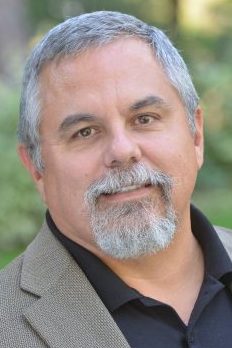
Headshot of man in suit, white shirt, tie

Professor Yin will tap into powerful research tools to explore market forces in the health sector.

“There are a lot of markets in the U.S. economy that are no longer competitive. This can generate some benefits at times. But the broad concern is that this can create a lot of distortions in the markets, which ultimately bear down on consumers and on workers through higher prices, fewer options, and lower wages,” said Yin, a UCLA Luskin professor of public policy with a joint appointment at the UCLA Anderson School of Management.

“Health care is an industry where this concentration has been rising for decades.”

Yin’s two-year study was made possible by a $466,000 grant from Arnold Ventures, which funds research into policy solutions that address inequity and injustice. It is one of several grants and contracts that have brought nearly $55 million to the UCLA Luskin School of Public Affairs from April to October 2025.

By far the largest component of that funding — more than $47 million — is from federal, state, and county agencies that contract with UCLA Luskin Social Welfare to administer social services and training programs.

Philanthropic groups, nonprofits, community organizations, and public agencies have also stepped up to support UCLA Luskin research spanning the school’s broad portfolio: fair housing, water quality, voting rights, K-12 education, parking reform, and more.

The common thread is a desire to find policy solutions to the most pressing issues of our time, with donors turning to UCLA for its extensive faculty expertise and deep resources as a top-tier research university.

Yin’s work draws on his experience as a scholar, economist and public servant. Motivated by a desire to understand the causes and consequences of excessive market power, he recently co-authored a high-impact study of the crippling impact of medical debt in America.

In the Biden Administration, Yin served as Chief Economist of the White House Office of Management and Budget, where he helped advance policies surrounding affordability and competition. In the Obama Administration a decade earlier, he helped implement the Affordable Care Act during his service in the Department of Treasury and Council of Economic Advisors.

For his current project on the health care industry’s market power, Yin and his research team will tap into powerful resources, including the Federal Statistical Research Data Center, housed in the UCLA Luskin Public Affairs building. Access is highly selective, requiring security clearances and confidentiality agreements — but the massive trove of data opens up vast opportunities for novel research.

Yin has secured permission to analyze anonymized U.S. Census Bureau and Internal Revenue Service files to assess the impact of consolidation in the health care industry on workers’ earnings and job stability — including the potential for lopsided bargaining power and wage inequality.

For a second investigation funded by the grant, Yin and his team will review records from Washington state’s public option health care program, the first in the nation. They hope to identify how such public-private partnerships in procurement can best be structured to act as a brake on soaring health care costs.

“In theory, a public option, if it’s structured well, could try to achieve the prices of what a competitive market would have achieved,” said Yin. “The big question is how to design a public option program with teeth that also supports a healthy hospital market. This project essentially is to understand this.”

Wasserman on Efforts to Improve Traffic Flow at LAX

As the 2028 Olympic and Paralympic Games in L.A. steadily approach, the Los Angeles International Airport (LAX) is picking up the pace on rebuilding its roads to improve traffic flow. This project is predicted to be completed two months before the games begin. 

Perspectives on the practicality of this effort have been mixed. LAWA officials claim that it will increase safety and streamline the separation of airport travelers from others on the road. Critics, on the other hand, point out that this plan neglects the “horseshoe,” an infamously traffic-heavy bottleneck at LAX, and argue it could actually worsen traffic.

A recent Los Angeles Times article featuring Research Program Manager Jacob Wasserman at the UCLA Institute of Transportation Studies cited his views on the temporality of traffic improvements due to a phenomenon called induced demand.

“Initially, these changes could alleviate traffic in the area and on the freeways to some degree, but it’s going to fill up again. … When there’s less traffic, more cars will naturally file in and it’ll fill up,” he said. “It’s going to move more people in total, but it’s not going to fix traffic.”

Tribal Casinos Lift Living Standards, Study Finds

Tribal casino operations boost wages for American Indians and reduce unemployment for nearby people of all races employed in casino-related industries. In addition, per-capita payments of casino profits may have contributed to improved living standards, on average, for tribal citizens living on reservations.

These are the findings of a recent working paper co-authored by UCLA Luskin’s Randall Akee, a professor of public policy and American Indian studies, and summarized in a U.S. Census Bureau report.

Using census data to evaluate ZIP-code-level economic impacts, the researchers showed that the expansion of tribal casinos that began in the 1990s has helped improve conditions faster for American Indians relative to the U.S. population as a whole.

American Indians living on reservations experienced a roughly 11% decrease in childhood poverty, an increase of about 7% in labor force participation by American Indian women, and a 4% reduction in overall unemployment, Akee and his colleagues found.

Yet there is still progress to be made: The American Indian poverty rate was 19.6% in 2024, greater than that year’s national average of 12.1%, according to Census Bureau data.

Barbara Nelson Honored With Inaugural Torchbearer Award UCLA Luskin Dean Emerita recognized for co-founding the nation’s first academic center dedicated to gender and public policy at the University of Minnesota

Barbara Nelson, UCLA Luskin Dean Emerita, was recently honored with the inaugural Torchbearer Award for co-founding the Center on Women, Gender, and Public Policy (CWGPP) at the Hubert H. Humphrey School of Public Affairs at the University of Minnesota.

Nelson was recognized along with the late Arvonne Fraser at the Founders and Futures celebration in October for the 40th anniversary of CWGPP, the first academic center in the field of gender and policy analysis in a public affairs school.

“Barbara was visionary in creating a center that could adapt to new directions in scholarship and new policy questions,” said current CWGPP director Professor Christina Ewig. “She and Arvonne increased the impact of all of our gender-based programs by creating communities of scholars, students, and problem solvers locally and globally. The depth and breadth of 40 years of students becoming leaders and research improving policy making deserved recognition and celebration.”

In her remarks, Nelson said she and Fraser, a prominent Minnesota women’s rights advocate and political campaign leader, established the center “because multicultural gender analyses needed an institution to integrate course work, research, and public engagement. A center created the infrastructure that encouraged long-term collaborations.”

One of Barbara Nelson’s key innovations was the creation of the Women, Gender, and Public Policy major in the Humphrey School, another national first for the CWGPP.  Building on the major, the Center inaugurates an all-university graduate minor on Gender, Intersectionality, and Public Policy in 2026 at the University of Minnesota.

Yaroslavsky on the Response to the Lachman Fire

Reports have emerged that firefighters at the site of the January Lachman fire were told to leave the scene of the flames while there was still visible smoldering. Five days later, the highly destructive Palisades fire swept through southern California, killing twelve people and destroying thousands of buildings and homes.

Los Angeles mayor Karen Bass ordered an investigation into the handling of the Lachman fire to ensure that the Los Angeles fire department (LAFD) can enact necessary reforms and improvements. 

Director of the Los Angeles Initiative at the UCLA Luskin School of Public Affairs Zev Yaroslavsky spoke with the Guardian about the resulting Palisades fire, describing it as a “Pearl Harbor moment,” and highlighted the importance of transparency to restore the public’s faith in the LAFD.

“Many questions remain and Bass and the LAFD need to provide answers as communities continue to rebuild,” said Yaroslavsky. “I think the morale has been shaken to the core in Altadena and the Palisades.”