





• Public Policy
  • Social Welfare
  • Real Estate Development
  • Urban Planning
  • Luskin Home
  • Undergraduate Program
  • Stay in Touch
  • Events Calendar
  • Give Now
  • About
    • Our Dean
    • Board of Advisors
    • Contact Us
    • Visit Us
    • Diversity, Disparities and Difference
    • Communications
      • UCLA Luskin in the News
      • Luskin Forum Online
  • Departments
    • Public Policy
    • Real Estate Development
    • Social Welfare
    • Undergraduate Program
    • Urban Planning
  • Apply
    • Master of Public Policy
    • Master of Real Estate Development
    • Master of Social Welfare
    • Master of Urban and Regional Planning
      • Double Degree With Sciences Po
    • PhD in Social Welfare
    • PhD in Urban Planning
    • Undergraduate Programs
  • Faculty
    • All
    • Public Policy
    • Social Welfare
    • Urban Planning
    • Real Estate Development
    • Faculty Executive Committee
  • Student Affairs & Alumni
    • Career Services
      • Employers
      • Fellowships
    • Student Support
    • Graduate Resource Library
    • Alumni Relations
  • Support
  • Programs
    • Research Centers & Affiliated Research
    • CA Title IV-E Education Program
    • Global Public Affairs (GPA)
    • Data Analytics Certificate
    • Luskin Lecture Series
    • Luskin Summit
    • UCLA Luskin California Policy Briefing
    • Public Service Weekend
    • Commencement
  • Administration
    • Financial Services
    • Events Office
    • Information Technology
  • Search
  • Menu Menu

Archive for: Michael Lens

UCLA Luskin Day at Los Angeles City Hall Returns

February 27, 2023/0 Comments/in Luskin's Latest Blog Michael Lens /by Stan Paul

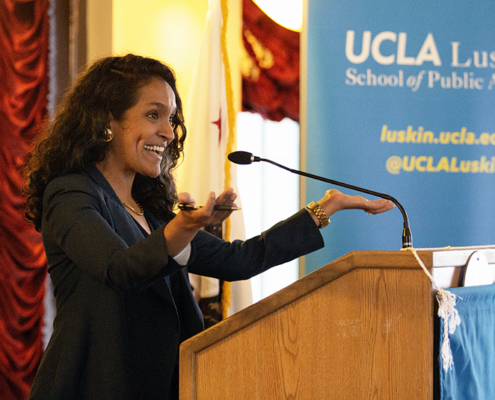
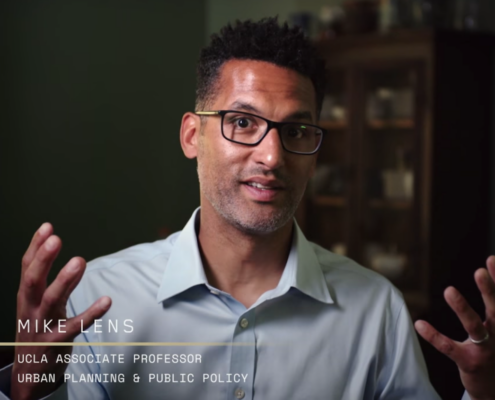
UCLA Luskin is back at Los Angeles City Hall. Following a hiatus in the annual event caused by the COVID-19 pandemic, students from the School’s three graduate programs — Public Policy, Social Welfare and Urban Planning — traveled downtown Feb. 24 to meet, interview and learn from local leaders from government, nonprofit agencies and the community. This year, Los Angeles City Council member Nithya Raman hosted the group, led by Luskin faculty advisor Michael Lens, on the topic “Homelessness Governance Reform — Service-Led Models, Building More Housing, Better County-City Collaboration.” “It’s important to see the economic constraints, the practical constraints, the political constraints that our elected officials and our policymakers operate under,” said Lens, associate professor of urban planning and public policy at UCLA Luskin. Also important, Lens said, is that “the big ideas and plans we talked about in class — about what ‘Professor Lens’ thinks that the city should do tomorrow — just isn’t so easy to do.” He tasked students to take information from the day, co-sponsored by UCLA Government and Community Relations, and ask how to apply it to the real world. For Raman, getting people off the streets involves talking to, and building relationships of trust with, people experiencing homelessness. “You have to go out there and understand who they are, what brought them to the streets, and to ensure that they believe you when you say, ‘I have something to offer you that will help address exactly what brought you here and help bring you indoors,’ ” said Raman, who will receive a written memorandum of findings and policy recommendations from the students.

View more photos from the day on Flickr

UCLA Luskin Day at Los Angeles City Hall 2023


Lens on L.A.’s Urgent Need to Construct More Housing

January 3, 2023/0 Comments/in Luskin in the News Michael Lens /by Mary Braswell

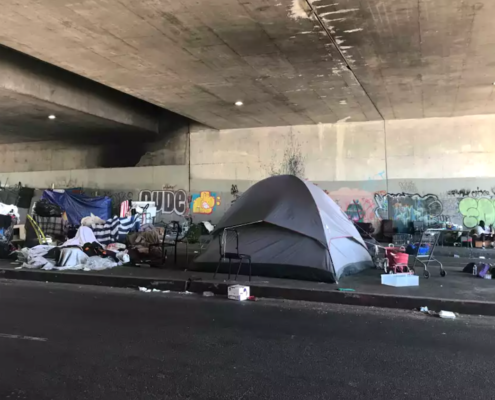
A Los Angeles Times op-ed written by Michael Lens, associate professor of urban planning and public policy, argues that stemming the flow of people into homelessness requires building more housing of all types, including market-rate. With homelessness as her top priority, L.A. Mayor Karen Bass has declared a state of emergency allowing her to expand the supply of temporary shelters and subsidized housing. Lens writes that these short-term solutions are not adequate to address the overarching problem that has driven up housing costs, and worsened homelessness, in Los Angeles: We do not build enough homes. Pointing to research showing that L.A. built fewer housing units in the 2010s than each of the two previous decades, Lens urged city officials to increase housing density in single-family and higher-income neighborhoods, among other recommendations. “If we don’t build more housing of all types, we are sustaining homelessness, not solving it,” he writes. 

Read the op-ed


A Historic Leadership Transition in L.A.

December 12, 2022/0 Comments/in Luskin in the News Jim Newton, Michael Lens, Sonja Diaz /by Mary Braswell

Media covering the swearing-in of Los Angeles Mayor Karen Bass spoke to experts from UCLA Luskin about the historic leadership transition. “Los Angeles is a city at a crossroads,” Sonja Diaz, executive director of the UCLA Latino Policy and Politics Institute, told the Washington Post, noting that Bass must deal with great increases in housing insecurity, food insecurity and economy inequality. Michael Lens, associate professor of urban planning and public policy, spoke to LAist about hurdles Bass is likely to face, including resistance to zoning changes that could ease construction of various types of housing. And Jim Newton, editor of UCLA’s Blueprint magazine, wrote a CalMatters commentary about Bass’ tenure as a test for Democrats in California and nationally. Newton also spoke to KPCC’s AirTalk about the historic arc of Los Angeles’ mayors, their scope of authority and leadership styles.

Read the Washington Post article
Read the LAist article
Read the CalMatters commentary
Listen to the AirTalk interview


Monkkonen, Lens on Flawed Approach to Fair Housing Compliance

June 8, 2022/0 Comments/in Luskin in the News Michael Lens, Paavo Monkkonen /by Mary Braswell

A Policies for Action article co-authored by UCLA Luskin faculty members Paavo Monkkonen and Michael Lens assessed California’s bumpy implementation of the Affirmatively Furthering Fair Housing rule, part of the U.S. Fair Housing Act. The rule, which sets out a framework for local governments and agencies to take decisive steps to promote fair housing, was codified into California law in 2018. Research by Lens and Monkkonen, along with co-author Moira O’Neill of UC Berkeley, found a lack of political will to comply with the law in some jurisdictions and a lack of clarity on the state’s expectations. The authors write, “Is it enough to do ‘better’? Given the deeply entrenched segregation in U.S. land-use plans, the reforms we’ve observed are not sufficient to achieve the ‘integrated and balanced living patterns’ envisioned by the Fair Housing Act.” They called on the state to create binding minimum expectations, including the use of metrics to track progress toward the goal of desegregated cities.

Read the article


Luskin Housing Scholars Weigh In on California’s Crisis

March 30, 2022/0 Comments/in Luskin in the News Jim Newton, Michael Lens, Paavo Monkkonen, Zev Yaroslavsky /by Zoe Day

A UCLA Newsroom article on how to tackle California’s affordable housing crisis cited several scholars from UCLA Luskin. Associate Professor of Urban Planning and Public Policy Paavo Monkkonen sees the housing crisis as a combination of “unaffordability, instability and inability to house” and has urged the state to “use many levers to push cities to allow more new housing.” Los Angeles Initiative Director Zev Yaroslavsky has cautioned against changes that fundamentally undermine the character of neighborhoods. He suggested increasing zoning capacity but allowing the city to decide where it should take place. “You don’t need to destroy communities,” Yaroslavsky said. Associate Professor of Urban Planning and Public Policy Michael Lens highlighted the urgent need for more money for permanent supportive housing. The article was written by Jim Newton, editor of UCLA’s Blueprint magazine, who concluded that the competing arguments “reflect and shape California’s ongoing and urgent search for ways to adequately house every resident of the state.” 

Read the article

Lens Explores Low-Density Zoning Impact on Health

October 11, 2021/0 Comments/in Luskin's Latest Blog Michael Lens /by Zoe Day

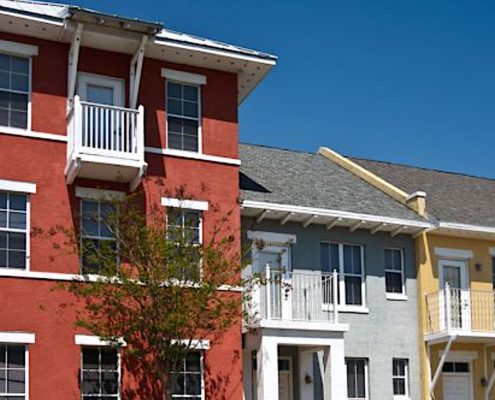
Associate Professor of Urban Planning and Public Policy Michael Lens published a policy brief in Health Affairs on the downstream effects of low-density residential zoning on health and health equity. Previous research on the relationship between housing and health has identified four important pathways for health equity: housing stability, housing quality and safety, neighborhood characteristics and affordability. While residential zoning ordinances are designed to address density-related concerns such as traffic and environmental harms, Lens explained that “the effect is often to artificially raise the cost of housing for everyone by limiting housing supply, as well as to exclude people who cannot afford to buy single-family homes on large lots.” As a result, low-density zoning practices have exacerbated segregation by income and race. “Safer and healthier neighborhoods tend to have the most restrictive zoning, pricing people out of those areas and increasing segregation and affordability problems,” Lens said. He acknowledged that zoning reform alone cannot fix disparities in housing or health; sufficient housing subsidy programs are crucial, as well as an increase in new housing developments that are required to set aside some units for lower-income households. “The downstream effects of exclusionary land use regulations on health should make scholars and policymakers pay more attention to reforming zoning and expanding housing subsidy programs to make housing more plentiful and affordable,” Lens wrote. Even if increasing density in more neighborhoods does not have an immediate effect on housing affordability, segregation or health, Lens argued that it is a necessary step toward a healthy and sustainable future.


Lens on Redefining ‘Home’ Amid Pandemic

September 29, 2021/0 Comments/in Luskin in the News Michael Lens /by Mary Braswell

Associate Professor of Urban Planning and Public Policy Michael Lens shared his insights into housing policies and priorities on “Home Rediscovered” on the National Geographic Channel. “We have for decades not produced enough housing to keep up with population growth, and we’re at a point in which the bill is really becoming due,” Lens said on the program, which focused on several individuals and families who have rethought where and how they want to live, now and in the future. “COVID is really present in the minds of all of us, of course. It’s driving 36% of recent home purchases,” Lens said, adding that the ability to work remotely has transformed the housing market. “If you don’t have to commute, then that changes not only the structures that people will demand, but it also changes the locations that they’re likely to inhabit,” he said.


Manville on Heavy Burden of Rent Debt as Pandemic Drags On

August 17, 2021/0 Comments/in Luskin in the News Michael Lens, Michael Manville, Paavo Monkkonen /by Mary Braswell

An Orange County Register story on frustrations surrounding California’s rental assistance program, which made $5.2 billion available to help low-income tenants and their landlords during the COVID-19 pandemic, cited research led by the Lewis Center for Regional Policy Studies at UCLA Luskin. Surveys conducted in July 2020 and March 2021 found that, in Los Angeles County, renters’ debt rose sharply as the pandemic dragged on. Almost half of those surveyed in March turned to friends and family to help them pay rent, 58% dipped into their savings and 37% took out an emergency or payday loan, the study found. “That’s a lot of debt that people have accumulated, and they will be left out in the cold if we end up moving forward with a program that just pays your rent,” said Associate Professor of Urban Planning Michael Manville, co-author of the study. The research was also highlighted by Commercial Observer and Multi-Housing News.

Read the OC Register story

Upzoning Won’t End Single-Family Housing, Lens Says

August 13, 2021/0 Comments/in Luskin in the News Michael Lens /by Zoe Day

Associate Professor of Urban Planning and Public Policy Michael Lens was featured in a Star Tribune article about how zoning affects housing affordability. Many advocates for racial equity and housing affordability are pushing cities across the country to remove zoning requirements that restrict areas to single-family housing only. In some cases, they have been met with opposition from those who fear that removing these requirements would result in the destruction of single-family neighborhoods. Lens pointed out that upzoning does not require the addition of duplexes and triplexes but merely removes a long-standing prohibition and gives landowners more flexibility. “Ending single-family zoning doesn’t end single-family housing, and there’s no real reason why we prioritize single-family housing in such a way,” he said. “You can’t have true integration of race and income without a variety of housing types.”

Read the article

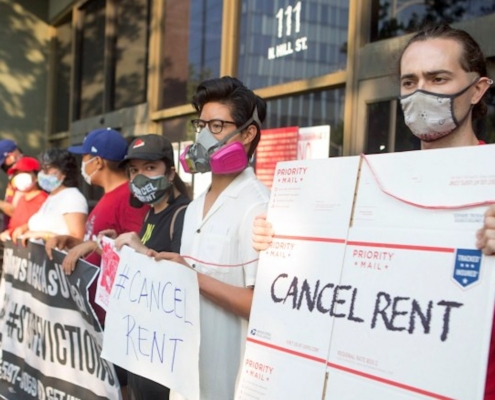
Nearly Half of L.A. Tenants Owe Back Rent Lewis Center-USC survey shows many renters missing out on government assistance

July 29, 2021/0 Comments/in Development and Housing, Diversity, For Faculty, For Policymakers, For Students, Public Policy, Public Policy News, Research Projects, School of Public Affairs, Social Welfare, Social Welfare News, The Lewis Center, Urban Planning Michael Lens, Michael Manville, Paavo Monkkonen /by Les Dunseith
By Les Dunseith

In a new survey of Los Angeles County renters, 49% of households reported that they were unable to pay all of their rent during the pandemic.

The study, by researchers from UCLA and the University of Southern California, found the median amount renters owe their landlords is $2,800. That suggests that countywide, tenants owe landlords upwards of $3 billion.

The findings are from one of a pair of surveys of 1,000 renters each — one conducted in July 2020, which focused on renters’ ability to pay rent in the short term, and another in March 2021, asking about their ability to pay over the entirety of the pandemic.

The preliminary results show that in both surveys, about 7% of renters missed a full rent payment in at least one of the three months before the study was conducted. But by the time the second survey was conducted, the share of renters paying less than the full amount to a landlord at least once during the crisis had almost doubled to 31%, up from 17% in July 2020.

The study was co-authored by Michael Manville, Paavo Monkkonen and Michael Lens, associate professors at the UCLA Luskin School of Public Affairs; and Richard Green, director of the USC Lusk Center for Real Estate.

A slight majority of respondents reported paying their rent on time and in full, and many of those who owe rent said they were behind by less than a month. But other renters are emerging from the COVID-19 emergency in a financial hole they will struggle to climb out of on their own, the authors write in a research brief published today.

Of particular concern is evidence from the surveys that renters’ debt rose sharply as the COVID-19 crisis dragged on. Only about 6% of Los Angeles tenants reported using a credit card to pay their rent prior to the pandemic. That figure rose to 19% of respondents in the early days of the emergency, and to 44% in the latest survey. Also in the 2021 survey, 49% said they turned to friends and family to help them pay rent, 58% dipped into their savings and another 37% reported taking out an emergency or payday loan.

The overall share of renters taking on debt reached 45% in the second survey, up from 32% in the first.

Other findings include:

  • Just over 15% of tenants who were behind on their rent payments in 2020 had been threatened with eviction; that figure increased to 25% in the 2021 survey. Although an eviction moratorium is still in effect in Los Angeles County, tenants can still be threatened with evictions or have evictions initiated against them; a court won’t act until the moratorium ends.
  • Similarly, 6% reported in 2020 that an eviction had been initiated against them. In 2021, that percentage tripled to 18%.
  • In the 2021 survey, about 68% of all respondents said they had received federal aid during the pandemic, and about 15% reported getting local aid.
California’s eviction moratorium will remain in place through at least September, and the brief notes that the state has committed to helping renters pay the back rent they owe. Through existing rental assistance programs, which generally require that both landlords and tenants agree to participate, the state or city pays landlords on behalf of tenants who qualify for assistance.

The problem? The data show that many tenants owe money to people or institutions other than their landlords, and the researchers write that many may be in that position precisely because they were deeply concerned about their housing security.

The report suggests a solution often advocated by economists as the best way to help people facing financial trouble: Just give people money. Distributing cash to tenants who are financially distressed would allow them to pay back whomever is owed the money — a landlord, another creditor or a family member.

“Programs where the government pays a landlord are sometimes justified as ways to prevent fraud or misuse,” Manville said. “And we should certainly be concerned about fraud. But we need to weigh those concerns against the possibility that an overly cautious program will deny needed assistance to some people who are in real financial trouble.”

To allay concerns about fraudulent claims — which in most government redistribution programs are very rare — the authors suggest ways the state could ask for evidence of debt, lost work or income.

The 2021 survey was funded and produced by the UCLA Lewis Center for Regional Policy Studies in partnership with the USC Lusk Center for Real Estate, the UCLA Luskin School of Public Affairs and the Committee for Greater LA.

Page 4 of 10«‹23456›»

Recent Posts

  • Fugitive Sanctuaries: Ananya Roy on Migration, Solidarity, and Sanctuary February 13, 2026
  • Building the “Anti-Amazon” in Echo Park February 12, 2026
  • Welcoming the 2026 UCLA Activists-in-Residence February 11, 2026
  • Growth Without Freedom: Bangladesh’s Precarious Path to the 2026 Election February 10, 2026
  • Seeing Local Policy in Action at Luskin’s Annual City Hall Day February 9, 2026

Contact

UCLA Luskin School of Public Affairs

3250 Public Affairs Building - Box 951656
Los Angeles, CA 90095-1656

Campus Resources

  • Maps, Directions, Parking
  • Directory
  • Contact
  • Academic Calendar
  • Careers
  • Diversity
  • University of California
  • Terms of Use

Follow

The statements on this page represent the views of people affiliated with the Luskin School of Public Affairs and do not necessarily represent the views of the University of California, or UCLA or its Chancellor.

Posts and comments by individuals at UCLA on social media channels may not reflect the opinions or policies of UCLA, the University of California or the Luskin School, nor its benefactors and academic partners.

Scroll to top