• Public Policy
  • Social Welfare
  • Real Estate Development
  • Urban Planning
  • Luskin Home
  • Undergraduate Program
  • Stay in Touch
  • Events Calendar
  • Give Now
  • About
    • Our Dean
    • Board of Advisors
    • Contact Us
    • Visit Us
    • Diversity, Disparities and Difference
    • Communications
      • UCLA Luskin in the News
      • Luskin Forum Online
  • Departments
    • Public Policy
    • Real Estate Development
    • Social Welfare
    • Undergraduate Program
    • Urban Planning
  • Apply
    • Master of Public Policy
    • Master of Real Estate Development
    • Master of Social Welfare
    • Master of Urban and Regional Planning
      • Double Degree With Sciences Po
    • PhD in Social Welfare
    • PhD in Urban Planning
    • Undergraduate Programs
  • Faculty
    • All
    • Public Policy
    • Social Welfare
    • Urban Planning
    • Real Estate Development
    • Faculty Executive Committee
    • Open Positions
  • Student Affairs & Alumni
    • Career Services
      • Employers
      • Fellowships
    • Student Support
    • Graduate Resource Library
    • Alumni Relations
  • Support
  • Programs
    • Research Centers & Affiliated Research
    • CA Title IV-E Education Program
    • Global Public Affairs (GPA)
    • Data Analytics Certificate
    • Luskin Lecture Series
    • Luskin Summit
    • UCLA Luskin California Policy Briefing
    • Public Service Weekend
    • Commencement
  • Administration
    • Financial Services
    • Events Office
    • Information Technology
  • Search
  • Menu Menu

Archive for category: Diversity

UCLA Students, Staff Join California Leaders to Set a Latino Agenda LPPI leads effort to provide policy guidance for the November elections — and for future policymakers and civic leaders

August 18, 2020/0 Comments/in Alumni, Diversity, For Faculty, For Policymakers, For Students, For Undergraduates, Latinos, Politics, Public Policy, Public Policy News, School of Public Affairs Gary Segura /by Luskin Staff
By Eliza Moreno

On July 15, more than 80 California Latino leaders — from the fields of government, education and philanthropy — took part in a unique Zoom meeting. Their discussion focused on issues facing U.S. Latinos amid the COVID-19 pandemic.

Their mission was to provide policy guidance on these issues to candidates in the November elections — and to policymakers and civic leaders for years to come.

Most of the meeting’s participants, like Gary Segura, dean of the UCLA Luskin School of Public Affairs, have decades of experience in advocacy and public policy. But for eight UCLA students and recent graduates, the online gathering was a unique opportunity to help make history.

The meeting, hosted by the UCLA Latino Policy and Politics Initiative, was billed as “Shaping a 21st Century Latino Agenda,” and it yielded policy recommendations covering eight issues, including climate change, education, immigrant rights and political representation.

One of the UCLA participants was Adriana Bernal, 20, who’s entering her third year at UCLA and is a student fellow at the Latino Policy and Politics Initiative. Bernal comes from a Mexican American and Salvadoran family — her grandfather was one of millions of Mexicans who were brought to the United States to work in agriculture beginning in the 1940s.

The group’s policy recommendations have already been disseminated to politicians, philanthropists and business leaders, and Bernal said she hopes the policy transformations will be considered by elected officials state- and nationwide. “It’s important to have our voices and our needs represented by local and national elected officials,” she said.

Another participant was Maria Morales, 27, who earned a master’s in public policy from the School of Public Affairs in June and recently began a job as a policy manager at the Politics and Policy Initiative. Born in Mexico, Morales moved with her family to Texas when she was 9. She has worked at a hospital as an interpreter, as well as at nonprofits involved in combating racism and building civic engagement among the Latino community.

“As a first-generation student, immigrant and a non-native English speaker, it was important for me to be a part of the Latino Policy and Politics Initiative, a space that was willing to nurture the skills I hadn’t explored before,” Morales said.

Discussion at the meeting was shaped not only by the economic fallout of the COVID-19 pandemic, but also by the nation’s increased attention to the Black Lives Matter movement.

“The Latino community continues to get excluded from critical decisions — the California Redistricting Commission and COVID-19 relief efforts, for example — despite our driving the state’s economy,” Morales said. “With the Black Lives Matter movement paving a path for change, we hoped to recognize the work they have done and ask policymakers to take Black and brown communities into account.”

Morales said the event gave her an invaluable chance to learn from some of the state’s Latino leaders, including state Assemblywoman Lorena Gonzalez and state Sen. María Elena Durazo, the chair and vice chair of the California Latino Legislative Caucus; Cástulo de la Rocha, president and CEO of AltaMed Health Services; and Kevin de León, the former president pro tempore of the California State Senate.

“I had the opportunity to engage in conversations with leaders from across the state with plans to directly impact the lives of Latinos,” said Morales.

For both Morales and Bernal, being a part of the meeting was squarely in line with the reasons they joined the policy initiative as student fellows: collaborating with civil rights organizations and elected officials to develop data-based policy recommendations that can improve lives for communities of color.

Morales said those efforts have taken on new meaning in this election year.

“This year is the most imperative, and it is through advocacy and continuing conversations with policymakers that I can be a changemaker,” she said. “We need to make an effort to have a prosperous Latino community and in turn, a prosperous nation.”

Read the full policy agenda here (PDF); those who are interested may register their support of the agenda here.
Black, Latino Renters Far More Likely to Be Facing Housing Displacement During Pandemic Systemic racial inequality underlies nonpayment of rent, UCLA Luskin researchers say

August 10, 2020/0 Comments/in Alumni, Diversity, For Faculty, For Policymakers, For Students, For Undergraduates, Health Care, Latinos, Politics, Public Policy, Public Policy News, Research Projects, School of Public Affairs, Social Welfare, Social Welfare News, Urban Planning Ananya Roy, Paul Ong /by Les Dunseith

By Les Dunseith

A new study of the magnitude, pattern and causes of COVID-19’s impact on California housing reveals that Black people and Latinos are more than twice as likely as whites to be experiencing rent-related hardships.

The analysis by researchers from the UCLA Center for Neighborhood Knowledge and Ong & Associates, in coordination with the UCLA Luskin Institute on Inequality and Democracy, relies on the U.S. Census Bureau’s weekly Household Pulse Survey, a multiagency effort to collect information on the social and economic effects of COVID-19 on Americans. The research findings are based on pooling a 10-week sample of more than 22,000 adults in California for the period from April 23 to July 7.

During the pandemic, workers, families, businesses and communities have experienced enormous financial difficulties, and the new study estimates that more than 1.9 million adults in California were unable to pay their rent on time in early July. The finding that Black and Latino renters are particularly vulnerable echoes previous analyses showing that minority renters are more likely to be suffering economically during the pandemic.

“These systematic racial or ethnoracial disparities are the product of systemic inequality,” UCLA Luskin research professor Paul Ong writes in the study. “People of color, low-income individuals, and those with less education and skills are most at risk.”

An analysis of the survey responses shows that people of color are disproportionately more concentrated in the lower-income and lower-education brackets, and they entered the crisis with fewer financial and human capital resources. Those people of color who lost their jobs or suffered a significant earnings loss during the pandemic were therefore far more likely to fall behind on rent.

When the researchers looked closely at who was unable to pay rent during the period of study, they found that 23% were Black and 20% were Latino — more than double the 9% for both whites and Asians.

In her foreword to the study, UCLA urban planning professor Ananya Roy, the director of the Luskin Institute on Inequality and Democracy, writes, “An especially important finding of the report is that across socioeconomic status categories, Black and Latinx households are more likely to be unable to pay rent compared to non-Hispanic whites and Asian Americans, a stark reminder of the entrenched racial disparities that are being rearticulated and amplified by the present crisis.”

The researchers delved deeper into the data to compare the experiences of various ethnic and racial groups based on demographic characteristics such as level of education. They found that Black and Latino respondents with some college education had higher rates of nonpayment of rent than whites and Asian Americans with similar educations. Racial disparities were evident even when the researchers focused on employment and earnings categories related to COVID-19.

“In other words,” Ong writes, “the pattern indicates that racial inequality is not due simply to class differences.”

Many experts believe this situation will lead to a wave of evictions in coming months unless governments take steps to protect people who have fallen behind on rent during the crisis. This includes extending the state’s eviction moratorium, continuing supplemental employment benefits and providing financial assistance to offset accumulated rent debt.

In a July 27 webinar hosted by the UCLA Asian American Studies Center, Paul Ong, Ananya Roy and others discuss the potential for mass COVID-19–related evictions in Los Angeles if current tenant protections are not extended.

The researchers did uncover some disparate patterns across ethnoracial groups. For example, the correlation between a lower income and the inability to pay rent was pronounced for both whites and Latinos, but it was minimal, and statistically insignificant, for Asians and Black people. The impact of less education was very pronounced for Black people but only minimally so for the other three groups. The effect of earnings losses was far greater for Black and Latino people than for white and Asian people.

Perhaps most surprising, the researchers said, was the effect of joblessness. While a loss of work led to an increased likelihood of nonpayment of rent among Asian and Latino people, it marginally decreased the odds of rental difficulties among white and Black people.

“One reasonable explanation is disparate access to unemployment insurance,” Ong writes in the study. He noted that Asians and Latinos may have less access to this type of financial relief — which can more than replace lost wages — because many work in informal ethnic job sectors and also face linguistic, cultural and legal barriers to applying for and collecting unemployment benefits.

The study urges elected officials to extend and expand unemployment insurance benefits. The researchers also call for the renewal of temporary tenant protections and say that financial relief should be provided to both renters and landlords.

Overall, the study’s findings show that prepandemic inequalities and pandemic labor-market hardships amplify systemic racial disparities. The economic impact on low-income and minority populations is likely to be long-lasting because so many people will have amassed a huge debt of deferred rents.

“Many will struggle to find meaningful employment in a protracted and uneven economic recovery,” Ong writes. “It is very likely that race will shape who will be most hurt.”

Ong is the director of the Center for Neighborhood Knowledge at the UCLA Luskin School of Public Affairs. He also founded Ong & Associates, an economic and policy analysis consulting firm that specializes in public interest issues and provided services pro bono for this study.

An Outdoor Oasis Research spearheaded by Urban Planning's Anastasia Loukaitou-Sideris contributes to a new public space designed with older adults in mind

August 4, 2020/0 Comments/in Diversity, Education, For Faculty, For Policymakers, For Students, For Undergraduates, School of Public Affairs Gary Segura /by Les Dunseith

At Golden Age Park in Los Angeles’ Westlake neighborhood, visitors can stroll along circular walkways, build strength and balance on low-impact exercise machines, practice their gardening skills, or rest in areas designed for socializing or solitude.

Spearheaded by Urban Planning Professor Anastasia Loukaitou-Sideris, pictured, a team from UCLA Luskin launched a study of senior-friendly open spaces based on a model from Taiwan where older adults enjoy the benefits of outdoor recreation.

Many parks in the United States are constructed with children in mind, leaving the over-65 population feeling unwelcome. The Westlake park incorporated aspects of urban planning, design and gerontology to turn a vacant lot into a small oasis with age-appropriate features.

Read more about the project.

In Nation’s 2 Largest Metros, Blacks and Latinos Are More Likely to Die From COVID-19 LPPI report highlights need to protect essential workers and expand economic assistance in high-poverty areas

July 27, 2020/0 Comments/in Diversity, For Faculty, For Policymakers, For Students, For Undergraduates, Health Care, Latinos, Public Policy, Public Policy News, School of Public Affairs /by Luskin Staff
By Eliza Moreno

A study by the UCLA Latino Policy and Politics Initiative based at UCLA Luskin finds that Latino and Black residents of Los Angeles County and New York City are roughly twice as likely as white residents to die from COVID-19. The research also revealed that high-poverty neighborhoods in both regions have the highest rates of COVID-19 cases and COVID-19–related deaths.

Sonja Diaz, founding director of the policy initiative, said two significant reasons for those trends are that low-income Black and Latino people in both regions tend to have a greater need to work outside of the home and a greater reliance on public transportation, both of which put them at a greater risk for exposure to the coronavirus.

“We are now seven months into the pandemic, and we are starting to have clear information about the disproportionate health and economic impacts that communities of color are facing,” Diaz said. “It’s time to address the specific ways that COVID-19 hurts Latino and Black families and to protect our most vulnerable communities as the virus surges across the nation.”

In Los Angeles County, the age-adjusted death rate was 54 per 100,000 for Latino residents and 46 per 100,000 for Black residents, compared to 23 per 100,000 for white residents; in New York City, the age-adjusted death rates were 247 per 100,000 for Latino residents, 237 per 100,000 for Black residents and 120 per 100,000 for white residents.

The authors recommend that six measures be implemented immediately in cities with large populations of vulnerable communities:

  • Increase testing for low-income communities of color.
  • Provide access to health services and healthy food in low-income communities.
  • Add protections on public transportation, including providing hand sanitizing stations and free masks.
  • Expand access to health care and paid sick leave for essential workers.
  • Increase access to telehealth for low-income residents and the uninsured to bridge the lack of medical care.
  • Ensure that accurate race and ethnicity information is being collected so that elected officials and public health experts can understand the impact of COVID-19 in communities of color.

The researchers analyzed data from Los Angeles County and New York City, two areas that have been hard-hit during the pandemic and are home to large Latino and Black populations. They found that residents who didn’t have health insurance, lived in overcrowded housing conditions and had limited access to the internet will encounter inequitable access to health care during the pandemic.

In addition, the authors found that people between the ages of 18 and 40 have the highest rate of infection in Los Angeles County; in New York, people over age 45 are most affected. Men in both regions have higher rates of infection than women.

“Essential workers are putting their lives at risk every day to keep the economy running and our families fed, and it’s making them sick,” said Laura Martínez, the lead author of the report and a UCLA postdoctoral fellow in obstetrics and gynecology. “The data clearly shows that the brunt of the pandemic is being felt by our most vulnerable communities, and our government leaders must take into account the specific needs of Black and Latino residents.”

Report Shows Major Effects of COVID-19 on Asian American Labor Force Increasing difference in unemployment, jobless rates between Asians and whites among the findings

July 22, 2020/0 Comments/in Business and the Environment, Diversity, For Policymakers, For Students, For Undergraduates, Public Policy, Research Projects, School of Public Affairs, Social Welfare News, Urban Planning Paul Ong /by Les Dunseith

By Melany De La Cruz-Viesca

A UCLA report released today reveals the disparate economic impact the coronavirus pandemic has had on Asian Americans and points to a need to expand financial relief for all workers in order to stave off the worst effects of the crisis and ensure a strong recovery.

While anecdotal evidence suggests that Asian American businesses, particularly those in big-city ethnic enclaves, experienced the impact of COVID-19 earlier and more deeply than others as a result of xenophobia and racial discrimination, there has been little empirical data to show the overall effect on Asian Americans in the labor market.

The new analysis, by researchers from the UCLA Center for Neighborhood Knowledge, the UCLA Asian American Studies Center, and Ong & Associates, used employment and labor data for California and New York to better understand the nature, pattern and magnitude of the COVID-19 economic disruption to Asian Americans between March and May 2020.

The report found an increased difference in unemployment and joblessness between Asian Americans and whites during this period, compared with the period before the pandemic, when the rates were nearly identical. By May 2020, the researchers found, the unemployment rate for Asians was 15% and the jobless rate was 21%, compared with 12% and 16% for whites.

In addition, while Asian Americans made up 16% of the California labor force in February 2020, they filed 19% of initial unemployment claims over the two-and-a-half months of the shutdown. In New York state, they accounted for 9% of the labor force but filed 14% of claims by mid-April.

The pandemic has had a profound effect on disadvantaged Asian Americans, the researchers note. Among those in the labor force with a high school education or less, 83% filed unemployment claims in California, compared with 37% for the rest of the California labor force with the same level of education.

According to the report, many of these economic effects of COVID-19 are due to the fact that Asian Americans are heavily concentrated in a small number of states and frequently work in industries that have been particularly hard hit by the pandemic and shelter-in-place mandates.

Nearly 1 in 4 employed Asian Americans work in the categories of hospitality and leisure, retail, and other services, the last of which includes businesses like repair shops and personal services such as hair-cutting and laundries. The unemployment rate for Asian Americans in the hospitality and leisure sector in April was 39%, compared with 36% for non-Hispanic whites. In the other services sector, the rate was 40% for Asians and 19% for whites, according to the report.

In terms of business closures during the pandemic, the authors estimate that 233,000 Asian American small businesses closed from February to April, representing a decline of 28% over the two-month period. The 1.79 million non-Hispanic white small businesses that closed over the same period represented a decline of 17%.

“An important question to consider for the future is whether these disparities will continue as the economy reopens and be exacerbated by the apparent increase in anti-Asian sentiment in the U.S.,” said Paul Ong, co-author of the report and director of the Center for Neighborhood Knowledge at the UCLA Luskin School of Public Affairs.

A number of policy recommendations outlined in the report would provide much-needed economic relief to marginalized and low-income Asian Americans, in particular those in the service sector. They include:

  • Enact federal policy to extend unemployment benefits and small business assistance, such as the Paycheck Protection Program and the Economic Injury Disaster Loan assistance program from the U.S. Small Business Administration.
  • Enact additional state policies that provide benefits to marginalized populations least likely to receive unemployment benefits through the CARES Act.
  • Enact additional policies to assist small businesses, including the so-called resiliency funds established by some local governments.
  • Increase efforts to ensure marginalized populations take advantage of governmental, private and philanthropic resources to help people weather the financial hardships of COVID-19.
  • Enact federal and state polices and fund programs to equip economically displaced people with job skills that are marketable during and after the COVID-19 crisis.

“We need to invest in all workers to ensure a robust recovery,” the researchers write.

The Center for Neighborhood Knowledge (CNK) conducts basic and applied research on the socioeconomic formation and internal dynamics of neighborhoods, and how these collective spatial units are positioned and embedded within regions. The center is housed in the UCLA Luskin School of Public Affairs.

Established in 1969, the UCLA Asian American Studies Center has been at the forefront of producing and disseminating knowledge of the lives of Asian Americans and Pacific Islanders through research, archival and film documentation, publications and civic engagement.

Ong & Associates is an economic and policy analysis consulting firm founded by Paul Ong that specializes in public interest issues; the firm provided services pro bono for the study.

Global Study Finds Critical Gaps in Workplace Protections Laws prohibiting discrimination are key to ensuring equal economic opportunity, UCLA researchers say

July 9, 2020/0 Comments/in Diversity, For Policymakers, Public Policy, Public Policy News, School of Public Affairs Jody Heymann /by Mary Braswell

As throngs of people around the world stand in solidarity with American protesters calling for an end to racial injustice, a sweeping study of 193 countries by the UCLA WORLD Policy Analysis Center reveals critical gaps in legal protections against discrimination on the job.

Nearly one in four countries continue to have no legal protection from discrimination at work based on race and ethnicity, according to the study, just published in the journal Equality, Diversity and Inclusion.

This is not a question of a nation’s resources, researchers found. In fact, high-income countries do slightly worse: 28% of high-income countries fail to have any protections, compared to 19% of low-income countries and 23% of middle-income countries.

Even in countries that prohibit discrimination, substantial gaps in legal protections exist. Globally, 51% of countries offer no protection from retaliation against workers who report discriminatory treatment based on race or ethnicity, preventing individuals from accessing justice, the study revealed.

Moreover, laws against discrimination often provided only partial protection or failed to specify areas covered. The study analyzed laws and regulations governing hiring, pay, promotions and demotions, terminations and harassment in all 193 members of the United Nations.

“Discrimination at work persists across countries, but there is powerful evidence that anti-discrimination laws can make a difference,” said Jody Heymann, founder of the WORLD Policy Analysis Center and a distinguished professor of public policy, health policy and management, and medicine at UCLA. “All the world’s countries have agreed to address inequality, over and over again, at the U.N. This cannot be achieved without providing legal guarantees to non-discrimination at work for all people.”

In addition to race and ethnicity, WORLD researchers assessed gaps in national legislation protecting against discrimination based on sex, parenting status, gender identity, sexual orientation, migrant status and foreign national origin, among other groupings. Among the findings:

• 53% of the countries do not guarantee equal pay for work of equal value based on sex
• 62% do not prohibit discrimination based on parenting status
• 68% do not guarantee protection from discrimination based on sexual orientation
• 90% do not guarantee protection from discrimination at work based on gender identity
• 62% do not guarantee protection from discrimination based on migrant status
• 62% do not guarantee protection from discrimination based on foreign national origin

“Equal access to decent work is one of the most promising ways to end cycles of poverty, yet discrimination on the job persists,” said study co-author Amy Raub, principal research analyst at WORLD. “Legal protection from workplace discrimination is a critical first step to ensuring equal opportunities for economic success.”

In addition to the newly published research, the WORLD Policy Analysis Center has posted detailed data, maps, charts and policy briefs on workplace discrimination in four categories: race and ethnicity, sex, sexual orientation and gender identity, and migrant status.

Racial, Class Disparities Found Amid Persistent Shortfall in 2020 Census Response A looming undercount puts the prospect of a complete and unbiased enumeration in doubt, according to a new report

June 16, 2020/0 Comments/in Development and Housing, Diversity, For Faculty, For Policymakers, For Students, Politics, Public Policy, Public Policy News, Resources, School of Public Affairs, Social Welfare, Social Welfare News, Urban Planning Paul Ong /by Les Dunseith

By Les Dunseith

The national response rate to the U.S. Census continues to be well behind where it was at a similar point a decade ago, and the gap in self-responses is most evident in poor and minority communities, according to a new UCLA analysis of census data.

As of June 1, the nation’s 2020 census was approximately 6 percentage points behind the rate of response in 2010, according to co-author Paul Ong, a UCLA Luskin research professor and director of the UCLA Center for Neighborhood Knowledge. Although this rate is better than the shortfall of over 12 percentage points found in an earlier study, Ong said it is unlikely that the overall gap can be closed completely.

“More troubling is that poor and minority communities are systematically and disproportionately affected by the problems with the self-response rates,” Ong wrote in the new report. “These neighborhoods experienced lower response rates in 2010 than more advantaged neighborhoods, and the gap widened in 2020.”

The difference is most apparent in Black and Latino neighborhoods, which have historically had lower rates of response than white neighborhoods. The 2020 response in Latino neighborhoods is down 15.2% points, according to the report.

The findings also show that the poorer the community, the lower the census response rate, and that divide has widened over the past decade. For the poorest neighborhoods, the self-response rates dropped from 56.3% in 2010 to 45.3% by 2020. Other adversely affected groups include families with young children, limited English speakers and non-citizens.

The researchers project that the undercount they see in the 2020 Census has put the prospect of a complete and unbiased enumeration in doubt. In turn, this threatens and undermines the goal of having fair political representation and just resource allocation.

The fact that reporting gaps coincide with neighborhoods most impacted by the COVID-19 pandemic further complicates the situation, especially during the phase of the census that involves in-person counts by census takers.

“This association makes in-person interactions and follow-up interviews riskier and more costly than originally planned,” the report notes.

Rather than addressing the overall shortfall in the most cost-effective manner by targeting neighborhoods that are easiest to count, the authors advocate devoting the bureau’s limited resources instead to neighborhoods that are harder to reach.

“If we believe in a fair count, it is more important to address racial and class disparities,” the authors write. “Under these circumstances, priorities must be realigned so that scarce resources are laser-focused on safe, and proven, evidence-based actions with hard-to-count populations.”

One approach would involve partnering with community and faith-based organizations that could help persuade more of the “hard to count” to participate, the report says.

The analysis is based primarily on examining the 2010 and 2020 response rates for census tracts, which is a proxy for neighborhoods. Paul Ong also is a founder of Ong & Associates, an economic and policy analysis consulting firm specializing in public interest issues, which provided services pro bono for the study. It was co-authored by Jonathan Ong.

State’s Black, Latino Workers Less Likely to Be Covered by Unemployment Insurance UCLA report recommends that California extend COVID-19 economic recovery funding to all workers

June 11, 2020/0 Comments/in Diversity, For Faculty, For Policymakers, For Students, For Undergraduates, Health Care, Latinos, Politics, Public Policy, Public Policy News, School of Public Affairs, Social Welfare News, Urban Planning Paul Ong /by Luskin Staff

By Eliza Moreno

An analysis of unemployment in California at the height of the COVID-19 crisis shows that as many as 22% of Blacks and 26% of Latinos were jobless, compared to 17% of both white and Asian workers.

The new report, by the UCLA Latino Policy and Politics Initiative and the UCLA Center for Neighborhood Knowledge, is based not only on data from the filing of unemployment insurance claims, but also on labor statistics and U.S. Census data.

The paper examines the totality of the pandemic’s effect through mid-April on the California labor market by including estimates of the numbers of undocumented workers and so-called discouraged workers — people who want to be employed but are not actively engaged due to factors like job shortages, discrimination or a lack of requisite skills.

With state officials discussing a recovery package that will include adjustments to unemployment support, the UCLA report highlights the importance of including assistance for all types of workers, not just those who have filed unemployment claims. According to the study, roughly 1 million additional workers need assistance, and between 350,000 to 500,000 of them are undocumented.

“Many of the people facing devastating economic losses are in the shadows, and this report puts a figure to that loss so that policymakers understand where to focus their support as we move toward recovery,” said Sonja Diaz, founding director of the Latino Policy and Politics Initiative.

The report’s other key findings include:

  • More than 3 million workers in California have lost their jobs as a result of the COVID-19 pandemic, more than any other state.
  • More than 900,000 Californians have lost their jobs due to layoffs and have stopped looking for work as a result of the pandemic.
  • Over a quarter of Californians experiencing job loss were ineligible for unemployment insurance.
  • One-third of Californians who are receiving unemployment insurance are Latino.
  • Latinos are 59% of Californians who are ineligible for unemployment insurance.

“Economic recovery can only be achieved by understanding who is hurting the most from the pandemic-induced recession,” said Chhandara Pech, a researcher at the Center for Neighborhood Knowledge and co-author of the paper. “Our report underscores that in the nation’s richest state, those at the bottom of the economic ladder need help the most.”

The report recommends that state policymakers expand the eligibility requirements for unemployment insurance, including for workers who may need to take time off to care for sick relatives. It also urges expansion of support to include health care and rental assistance, including for undocumented Californians.

The research brief is the fourth in a series of research papers examining the economic impact of the COVID-19 pandemic on neighborhoods in Los Angeles County. Previous papers in the series found that Asian-American and Latino neighborhoods in Los Angeles County were most vulnerable due to the pandemic’s impact on the retail and service sectors, Latino neighborhoods were less likely to receive the individual rebate under the CARES Act, and many Blacks and Latinos live in neighborhoods that lack basic necessities during the county’s safer-at-home order.

The research is being conducted with assistance from Ong & Associates, an economic and policy analysis consulting firm specializing in public interest issues. Ong & Associates provided services pro bono for the study. Its founder is Paul Ong, director of the Center for Neighborhood Knowledge, which is housed in the UCLA Luskin School of Public Affairs.

New Scholarship Offers Support to Emerging Latino Leaders Partnership with Congressional Hispanic Caucus Institute aims to bolster student diversity

May 26, 2020/0 Comments/in Diversity, Education, For Students, Latinos, Public Policy, School of Public Affairs, Social Welfare, Urban Planning /by Mary Braswell

By Mary Braswell

UCLA Luskin and the Congressional Hispanic Caucus Institute have entered a partnership to support underrepresented students in the School’s graduate programs.

Beginning this fall, alumni of the institute’s programs — aimed at developing the next generation of Latino leaders — will receive a $7,500 scholarship if they go on to pursue a master’s degree at UCLA Luskin. The scholarship is renewable in the second year of study.

“We are thrilled to start building our partnership with CHCI” to further the School’s goal of diversifying its student body, said Kevin Franco, recruitment and advising officer for UCLA Luskin Public Policy.

Franco credited MPP student Michael Rios with bringing the alliance from idea to reality.

“I kept hearing about some of the initiatives we were discussing for recruiting students of color, but I felt that there was a huge missing link, that there was a solution that we weren’t really pursuing,” Rios said. That solution, he concluded, was funding.

MPP student Michael Rios initiated the partnership between the Luskin School and CHCI.

“The pool of students of color who go into a graduate program is small, and the pool who go into a policy program is even smaller,” he said. Top candidates may be weighing handsome offers of financial assistance from private universities. Students considering UCLA must also consider the cost of living on L.A.’s Westside.

“As a student of color, you often have financial hardships, so you’re going to do what makes the most sense financially,” Rios said.

To tip the balance in UCLA’s favor, Rios researched potential partners who might work with the Luskin School to attract and support a diverse student body. Late one night in the spring of 2019, he decided to act.

Impressed by the Congressional Hispanic Caucus Institute, which creates opportunities for leadership and civic engagement for young Latinos, Rios sent an inquiry via the Contact Us tab on the group’s website. It was the first modest step of a yearlong rollercoaster ride.

Along the way, Rios worked to keep both sides engaged in what often seemed like a long shot. But his patience paid off in February when CHCI and the Luskin School finalized the agreement.

In the end, Rios said, “it was a match made in heaven,” one that would benefit students of color, advance the Luskin School’s recruitment goals and support the institute’s efforts to expand its reach.

The scholarships, awarded by UCLA Luskin to students who complete CHCI’s leadership program, are renewable for a second year for those with top grades, making them worth a total of $15,000. Rios’ efforts will benefit students entering all of the School’s master’s programs: public policy, social welfare, and urban and regional planning.

With the CHCI scholarship as a model, Franco said he is interested in pursuing similar partnerships with student leadership institutes representing the black and Asian communities.

Rios anticipated that future agreements would be easier to complete.

“We have the foundation, we’ve gone through the formalities, we know what the agreements look like, and we now know that we have the backing of the faculty and staff,” he said.

Rios hopes his efforts, spurred by his own sense of isolation when he first arrived at UCLA, will resonate with ethnically diverse students considering a graduate education at the Luskin School.

“For prospective students, I think it would be cool to see that there are students in the program who are doing things to benefit other students of color,” he said.


UCLA Study Finds Strong Support for LAPD’s Community Policing Program Researchers say crime declines and trust increases when officers work alongside residents to build relationships

May 21, 2020/1 Comment/in Alumni, Diversity, Education, For Faculty, For Policymakers, For Students, For Undergraduates, Latinos, Research Projects, School of Public Affairs, Social Welfare, Social Welfare News Jorja Leap /by Les Dunseith

By Les Dunseith

Families living in public housing developments with a history of gang violence and troubled relationships with law enforcement are seeing less crime and feeling safer because of a policing program launched in 2011 by the Los Angeles Police Department, according to a comprehensive analysis led by Jorja Leap, an adjunct professor of social welfare at the UCLA Luskin School of Public Affairs.

The Community Safety Partnership, or CSP, began in the Jordan Downs public housing development and later expanded to two other Watts locations, Nickerson Gardens and Imperial Courts, as well as Ramona Gardens in Boyle Heights. The program assigns specially trained LAPD officers to work alongside residents to reduce crime by developing youth outreach, sports, recreational and other programs tailored specifically to their communities.

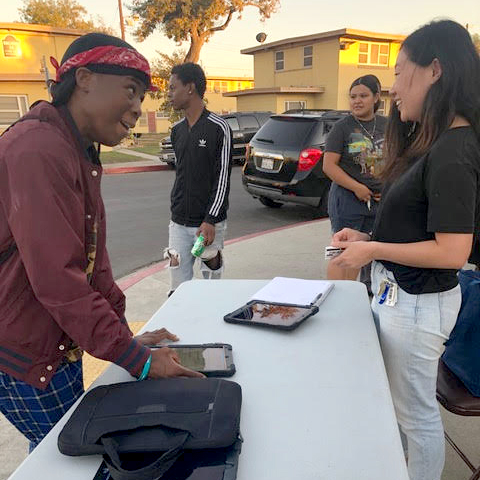
The yearlong UCLA-led evaluation compared crime rates in Jordan Downs and Nickerson Gardens with computer-generated, synthetic models of demographically similar neighborhoods that did not receive CSP services. The research team also conducted community-based research with officers and residents, logging 425 hours of observation, conducting 110 interviews and 28 focus groups, and completing close to 800 surveys as part of a mixed-methods research effort at Nickerson Gardens and Ramona Gardens. Clear majorities at both sites expressed support for this innovative program.

“Their lives were literally changed by CSP,” Leap said during a May 12 online meeting of the Los Angeles Police Commission at which the study was publicly unveiled.

Leap is an expert on gangs whose academic research and community engagement in Watts spans four decades, including the Watts Leadership Institute, a 10-year initiative based at UCLA Luskin. She told the five members of the civilian commission that people interviewed by the UCLA team “felt it was safer to go outside, mingle with people, use green spaces.”

As part of the LAPD program, extra effort is made to bridge communication between officers and residents, many of whom have deep-seated distrust of the police. Leap said a critical component involves officers apologizing to community residents for past mistakes and incidents of brutality.

“We were the enemy — pure and simple — if you had the LAPD uniform on, it was as if you had a target on your back. If there were reports of a shooting, officers were not supposed to come in without back-up,” said one officer interviewed for the report. “That’s all changed. The residents of this community want CSP here, they want this community to be safe. They welcome us.”

The impact on crime is significant. According to the analysis, in a one-year period, CSP has led to seven fewer homicides, 93 fewer aggravated assaults and 122 fewer robberies than would otherwise have been expected at Jordan Downs and Nickerson Gardens.

Statistics like those, plus the high level of resident support found by researchers, encouraged Leap to recommend to the commission that CSP serve as a model for department-wide LAPD policing efforts. The relationship-based focus could also be helpful in other crisis situations, including public health problems such as opioid abuse or the current coronavirus pandemic, she said.

“It could be extremely useful for epidemic crises, including homelessness and the pandemic,” Leap told the commission. “This is the type of approach that represents a new and important paradigm in law enforcement.”

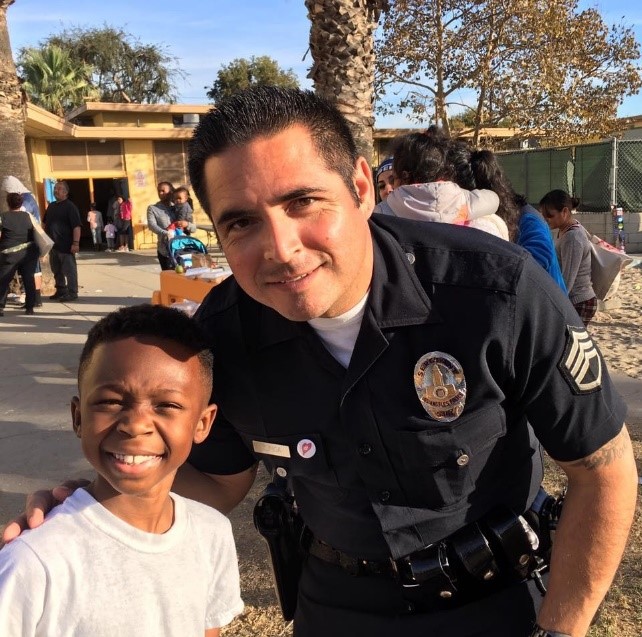
Aztec dancersCultural programs include Aztec dancing.
Aztec dancers
Aztec dancers
Officer Emada Tingirides races a youngster
Officer Christian Zuniga
Researcher Ann Kim, right
Officers sponsor youth sports
soapbox derby car
soapbox derby car

The program has already expanded beyond Watts and Boyle Heights to housing developments in South Park and San Fernando Gardens, as well as the neighborhood surrounding Harvard Park. That expansion was funded by the Ballmer Group, co-founded by Clippers owner Steve Ballmer, and the Weingart Foundation, which, along with The California Endowment and several private donors, were among the seven funders of the $500,000 UCLA study.

The report describes many positive outcomes related to CSP, but it also identified several shortcomings.

“It is not all sunshine and roses,” Leap warned the commission, adding that the community was skeptical regarding the department’s commitment. “This must become part of the DNA of the LAPD and not a hit-and-run program that is gone in a few months.”

Some respondents questioned the level of community involvement in CSP activities, for example, saying that the officers implemented some programs without first seeking resident participation. Many residents — and even some of the officers — also expressed confusion about the specifics of the program.

“Everyone understood it was about relationships. Pretty much everyone understood it was about building trust,” Leap said. “Nevertheless, there was tremendous confusion” about the CSP model and a strong desire from all parties for better documentation of the program’s components.

Leap said the level of support for CSP in the study differed according to demographic characteristics.

Overall, she said, women were the leaders in both of the housing developments that were studied, and women were slightly more supportive of CSP than men. On the other hand, she noted, there were major differences in terms of ethnicity.

Latino residents predominantly supported CSP, Leap said. “Where we got push-back and mixed results,” particularly on community surveys, was among African Americans. The researchers were able to delve into the underlying reasons for this response during their interviews and focus groups.

“It should come as no surprise — African Americans have had the most tumultuous history” with law enforcement in Los Angeles, said Leap, who noted that incidents of police violence against blacks in other parts of the country in recent years have only added to longstanding tensions between the community and the LAPD. “There are many individuals who carry this history and this mistrust.”

In the report, one interviewee said: “Don’t say everyone loves CSP because not everyone loves CSP. There’s some people who think it’s a bunch of bull. There’s some people who are never gonna trust the police. And there’s some people who are waiting to be convinced. They’re waiting to see if the CSP sticks around or — if once all the publicity goes away — then [the CSP officers] go away.”

That concern was echoed in the report, which included a recommendation to increase funding for CSP and a designation of the program as a permanent part of the LAPD’s law enforcement strategy.

Staying the course over time is important to Leap. She pledged that this study will be just one part of an ongoing effort by her research team, which included UCLA Luskin social welfare professor Todd Franke, a methodological and systems expert, and UCLA anthropology professor P. Jeffrey Brantingham, who is a lead researcher for the Los Angeles Mayor’s Office Gang Reduction and Youth Development program. Also on the research team were UCLA research associate Susana Bonis and UCLA Luskin alumna Karrah Lompa, who served as the project manager. Several students, some of whom grew up in Watts and Boyle Heights, joined project staff in conducting field research and data analysis. A multicultural advisory board helped guide the study and will contribute to follow-up efforts.

The key to the program’s success is cooperation. Leap told the commissioners something she has repeated in public meetings: “The community truly partners with the police — this is not rhetoric but a meaningful model.”

Page 6 of 17«‹45678›»

Recent Posts

  • Stoll on the Factors Influencing Migration Patterns within the U.S. January 9, 2026
  • Northern California Maintains Nation’s Lowest ICE Arrest Rate Despite National Surge January 9, 2026
  • One Year After the Fires, Recovery Remains Uneven January 8, 2026
  • Oil and Gas Companies Sacrificing Plastic-Burdened Communities January 7, 2026
  • A sixth-generation Altadena resident presents a community recovery roadmap after the fires January 7, 2026

Contact

UCLA Luskin School of Public Affairs

3250 Public Affairs Building - Box 951656
Los Angeles, CA 90095-1656

Campus Resources

  • Maps, Directions, Parking
  • Directory
  • Contact
  • Academic Calendar
  • Careers
  • Diversity
  • University of California
  • Terms of Use

Follow

The statements on this page represent the views of people affiliated with the Luskin School of Public Affairs and do not necessarily represent the views of the University of California, or UCLA or its Chancellor.

Posts and comments by individuals at UCLA on social media channels may not reflect the opinions or policies of UCLA, the University of California or the Luskin School, nor its benefactors and academic partners.

Scroll to top