• Public Policy
  • Social Welfare
  • Real Estate Development
  • Urban Planning
  • Luskin Home
  • Undergraduate Program
  • Stay in Touch
  • Events Calendar
  • Give Now
  • About
    • Our Dean
    • Board of Advisors
    • Contact Us
    • Visit Us
    • Diversity, Disparities and Difference
    • Communications
      • UCLA Luskin in the News
      • Luskin Forum Online
  • Departments
    • Public Policy
    • Real Estate Development
    • Social Welfare
    • Undergraduate Program
    • Urban Planning
  • Apply
    • Master of Public Policy
    • Master of Real Estate Development
    • Master of Social Welfare
    • Master of Urban and Regional Planning
      • Double Degree With Sciences Po
    • PhD in Social Welfare
    • PhD in Urban Planning
    • Undergraduate Programs
  • Faculty
    • All
    • Public Policy
    • Social Welfare
    • Urban Planning
    • Real Estate Development
    • Faculty Executive Committee
    • Open Positions
  • Student Affairs & Alumni
    • Career Services
      • Employers
      • Fellowships
    • Student Support
    • Graduate Resource Library
    • Alumni Relations
  • Support
  • Programs
    • Research Centers & Affiliated Research
    • CA Title IV-E Education Program
    • Global Public Affairs (GPA)
    • Data Analytics Certificate
    • Luskin Lecture Series
    • Luskin Summit
    • UCLA Luskin California Policy Briefing
    • Public Service Weekend
    • Commencement
  • Administration
    • Financial Services
    • Events Office
    • Information Technology
  • Search
  • Menu Menu

Archive for category: Public Policy News

UCLA Alumna Neera Tanden Delivers Post-Election Analysis at Virtual Luskin Lecture CEO of Center for American Progress draws on her deep experience in national politics to discuss what to expect from the Biden administration

November 18, 2020/0 Comments/in For Faculty, For Policymakers, For Students, For Undergraduates, Politics, Public Policy, Public Policy News, School of Public Affairs Gary Segura /by Stan Paul

By Stan Paul

Pollsters and pundits predicted a blue wave for Joe Biden and Democrats, and President Donald Trump called for an overwhelming red surge at the polls to secure a second term.

Both sides got it right and wrong.

“It’s just that Joe Biden was able to put together a coalition that, at the end of the day, will likely have 5 million more people behind it and, importantly, had strength enough to carry him through victory in what’s likely to be five states that Trump won in 2016,” said Neera Tanden, president and CEO of the Center for American Progress.

Tanden is a 1992 UCLA alumna who served in the Obama and Clinton administrations, lending credibility to her discussion of the state of the electoral process and prospects of a polarized nation under the administration of Biden and his vice president-elect, Kamala Harris. She was the featured speaker for a post-election analysis Nov. 10 moderated by UCLA Luskin Dean Gary Segura. The online session was the second Meyer and Renee Luskin Lecture of the 2020-21 academic year.

Tanden was asked to analyze the campaign, comment on voter turnout and assess an ongoing tumultuous transition amid vote recounts demanded by an incumbent president refusing to acknowledge the outcome of the 2020 vote. Meanwhile, the COVID-19 pandemic has reached its highest levels across the country.

“I can’t think of a better person to talk to about this than Neera Tanden,” said Segura, who described the first week after the election as “an anxiety-filled time.” Citing her work with previous presidential campaigns and noting her law degree from Yale, Segura added that Tanden “has perhaps the best grasp of what we’re likely to see in a Biden administration in the coming years.”

Noting that the White House win was the “most pivotal outcome, for sure,” Segura asked Tanden to address the fact that Democrats did more poorly in House and Senate races than they had hoped.

“I think we do have to grapple with the fact that it seems that Biden’s brand is stronger than the brand of the Democratic Party,” Tanden said. “There’s a lot of work for the party to evaluate how Biden has a brand that the party needs to move to, rather than the other way around.”

Tanden prefaced her analysis by starting from a global perspective, noting a worldwide rise of right-wing authoritarian populism over the past decade and the “politics of division” some politicians are stoking. She called out countries that include India, Turkey and Hungary, as well as current “politics roiling in Britain.”

“What we’ve seen around the world is that once an authoritarian populist takes power, through democratic means, it’s very, very difficult to dislodge that person,” Tanden said.

She suggested that Trump shares a trait with many authoritarian leaders — an ability to dominate a news cycle and negatively brand their opponents, calling it one of “Trump’s greatest superpowers.” The GOP’s effort to associate Democrats with socialism, she noted, was important in some races but generally turned out to be a less successful strategy against Biden.

Still, she acknowledged that Trump was able to mobilize his base of support across the country and bring out conservative voters at unprecedented levels, far exceeding his 2016 tally despite falling short of Biden’s total.

Segura asked Tanden about Trump’s legal strategy in challenging the election and the possible detrimental effect on democracy given that many Republican voters believe the election was stolen.

“I think we are witnessing a profound damage to democracy in the sense that Republican leaders are willing to basically do anything to appease Trump’s fantasy that he can win,” Tanden said. “You see that in the two Georgia run-off candidates who attacked the Republican secretary of state. Basically, it’s been reported that Trump demanded that they do so or he would attack them.”

The outgoing president has a “stronger hold on the base of the Republican Party and Republican voters than any other Republican in my lifetime, so he has an ability to basically scare any single one of these Republicans,” she said.

Even so, Tanden said she did not think the electoral process is in jeopardy “unless something goes really haywire,” given that Trump’s legal challenges are being rejected by judges appointed by both Democratic and Republican administrations. U.S. courts do not have a history of overturning votes after the fact, she said.

The coming years won’t be easy for either party, Tanden said, and both sides face unique challenges.

Republicans will find it hard to do anything independently “because they will just be in fear of Trump running again or campaigning against them. … The one thing he’s demonstrated over the last four years is he is perfectly happy to attack Republicans if they don’t do his bidding, and with deep, deep consequences.”

Democrats seem likely to face an obstructive Republican Senate majority and thus will have to seek compromise to govern.

“It’s an open question; there’s four Republican senators, maybe five, at this point who congratulated Biden, so maybe they form a basis of trying to negotiate some compromises,” Tanden said.

She has observed structural challenges within the Democratic Party that she believes create a healthy debate about tactics.

“With gerrymandering, Democrats have to run in conservative-leaning districts,” Tanden told the online audience of about 200 people. She noted that such practical considerations “allow more ideological fluidity in the party, as we sometimes have seen.”

Segura also asked whether what was “good for the goose is good for the gander? Do we run amok as a party — are Democrats thinking that to themselves?”

“I think this is a balance … a range of arenas where the Democrats need to be assertive. They need to undo Donald Trump’s really lawless immigration policies. We need to reenter the Paris [climate accords],” Tanden countered.

Going forward, the most pressing and important thing for the new president is to handle the coronavirus crisis effectively. She noted that Biden “can do a lot on the virus with executive action.”

If Republicans show a willingness to bend, Tanden said she believes much can be accomplished. “But if Republicans choose to ignore everything, then we are going to be in a position where, hopefully, we address the virus,” she said, “and argue at the midterms.”

Tanden recalled her thinking after the 2018 midterm elections. “I told my staff that 2020 was going to be a huge turnout election in both directions, and that the job was going to require mobilizing more voters … and the truth is that happened and it’s a historic victory.”

But Biden’s job is just beginning.

“When you have power, you can build on power,” Tanden said. “Joe Biden is going to have to spend more time thinking about how he builds a majority in the country. But I think he navigated this extremely well, and he and his team have good instincts about how to move forward.”
 

Steve Kerr Has More on His Mind Than Winning The NBA head coach speaks with UCLA Luskin about life, justice and important lessons Americans still need to learn

October 13, 2020/0 Comments/in Alumni, Diversity, Education, For Faculty, For Policymakers, For Students, For Undergraduates, Politics, Public Policy, Public Policy News, School of Public Affairs, Social Welfare, Social Welfare News, Urban Planning Gary Segura /by Les Dunseith

By Les Dunseith

One of NBA coach Steve Kerr’s oldest memories occurred in the early 1970s when he attended his first NCAA basketball game at Pauley Pavilion with his father, then a UCLA professor. It was the heyday of UCLA men’s basketball, when the Bruins rolled through season after unbeaten season on the way to 10 championships in 12 years. The opponent was highly ranked Maryland.

“I was 6 or 7 years old, and UCLA wins the game by one point. The place is electric. Every seat is sold, and it’s an incredible game,” Kerr remembered, telling the story Oct. 7 during a webinar hosted by UCLA Luskin.  “There’s all these All-American players on the court, and I’m thinking, you know, that was amazing!”

As he exited the arena with his father, Malcolm Kerr, they overheard Bruin fans complaining about UCLA’s performance. “What’s wrong with the team?” the fans said. “We only won by one point.”

Young Steve stopped suddenly. “‘But dad, we won?’ And my dad had to say, ‘Well, son, I’m going to have to teach you about context.’”

When a team wins championships, “fans are not just interested in winning, they’re interested in how they win and how dominant they look,” Kerr told an online audience of about 200 students, alumni, faculty, staff and other invited guests while helping the Luskin School celebrate a new academic year. Dean Gary Segura moderated the talk, which touched on Kerr’s role as a player, coach and outspoken advocate for social justice.

Understanding expectations has meaning for Kerr in his role as head coach of the Golden State Warriors, a team that went to the NBA finals five years in a row, winning three championships, before finishing the most recent season with the worst record in the league amid injuries and player departures.

Moving forward, Kerr can draw inspiration from his interactions with a who’s who of coaching role models from college and professional basketball, starting with John Wooden. During his father’s 20 years as a political science professor at UCLA, Steve got to know Wooden, and even served as a ball boy for the Bruins when he was 13 and 14 years old.

“I have [Wooden’s] photo hanging on the wall at my office in San Francisco,” Kerr said during the audience Q&A portion of the webinar. “He is one of the people I really admire and look up to as much as anybody — not only in the basketball world, but just in terms of people who have impacted me and the way I try to coach.”

Kerr’s Bruin connections run deep. So why didn’t he play for UCLA?

“I would have if they had wanted me,” Kerr said, laughing. “I’ll just say I was a late bloomer” — a statement borne out during his days as an NBA player when he earned five championship rings and set a still-unmatched record for career 3-point shooting success.

Kerr ended up playing college ball at the University of Arizona, where he learned from another great coach, Lute Olson.

“Coach Olson really kind of set the stage for my entire career,” Kerr said. “You’re so impressionable at that age, and to learn from one of the great coaches and to feel that presence — in that structure and with that wisdom — every day was incredible.”

This was in the 1980s, a couple of years after Malcolm Kerr had left UCLA to become the president of American University in Beirut. Then, during Steve’s freshman year at Arizona in 1984, Malcolm Kerr was killed on the Beirut campus by two gunmen. “He was one of the early victims of Middle East terrorism,” Kerr said. “And, obviously, it was a devastating time for our family.”

Steve Kerr is active today in efforts to prevent gun violence and provide guidance to troubled youth. But he doesn’t see the tragedy as the defining moment in shaping his worldview and that of his siblings.

“It was the way we were raised,” Kerr said, reflecting on his upbringing on and around the UCLA campus. “My mom and dad always exposed us to a lot of people from all over the world.”

His mother, Ann Kerr, has worked at UCLA since 1991 and still coordinates the Visiting Fulbright Scholar Enrichment Program for the International Institute. His siblings include John, who teaches at Michigan State University; Susan, an author and an elected county councillor in Great Britain; and Andrew, a businessman working in Washington, D.C.

Steve Kerr played pro basketball, then became a sportscaster and later a coach.

“I was definitely kind of the black sheep of the family. My siblings have all pretty much gone on to various educational endeavors. My mom likes to say that she has two Ph.D.s, an M.B.A. and an NBA,” Kerr joked.

Then again, Kerr’s job involves helping a group of people to learn and work together to achieve a goal. “Coaching is just teaching,” Kerr said. “It dawned on me after a while that I actually wasn’t as big of a black sheep as I thought I was.”

Few athletes have careers as varied or successful as Kerr, an eight-time NBA champion — five as a player on the Chicago Bulls and San Antonio Spurs, and three as coach of the Warriors.

In Chicago, he played for another legendary coach, one known for then-unusual tactics like meditating before games. “Phil Jackson taught me that you can be totally unique — and even weird — and be an incredible basketball coach.”

In San Antonio, he played for Gregg Popovich, who remains a close friend and mentor and is “just an incredible human being.”

“He’s the one who taught me … not to be afraid to speak out,” said Kerr in reference to his own reputation as an outspoken advocate for progressive political viewpoints.

During the webinar, Kerr answered questions about basketball:

  • Could he beat Steph Curry in a game of H-O-R-S-E? “In theory, yes, but probably not.”

And he answered questions about his life:

  • Would he ever consider a run for public office? “No. I’m a basketball coach and that’s what I love to do.”

But Kerr and the dean spent a good portion of their hour together talking about societal issues, the sorts of things that are on the minds of the faculty, students and alumni of a school that educates future social workers, urban planners and policy experts.

So, what’s getting him hot under the collar lately?

“Well, voter suppression is probably the thing that makes me the angriest right now,” Kerr responded. “We have this country that we all want to believe in. And we want to believe in the words that were written in the Constitution, and the words that were uttered by our founding fathers.”

But, to Kerr, people need to recognize the “parallel universe” that was often hidden beneath the surface of the American ideal.

“This parallel universe has existed from Day 1 in this country — where slavery existed and Black people were considered to be three-fifths of a human being in the Constitution,” Kerr told Segura. “What this social movement is about right now is trying to reconcile these parallel universes. How can we be so proud of our country and so thankful, and yet at the same time really be staring at some of the things that are still going on like … voter suppression? It’s really disheartening.”

The 2019-20 NBA season was suspended for months because of COVID-19, then restarted amid protests about anti-Black violence by police. When play resumed, coaches and players let their views be known, such as wearing slogans in support of racial justice on their uniforms.

“I’m very proud that the NBA has taken a leadership role with this issue,” Kerr said.

During a 15-year playing career that spanned all of the 1990s, Kerr was on teams with some of the most famous basketball players of all time. Circumstances, he noted, have changed.

“Social media didn’t exist. And so somebody like Michael Jordan, for example, rarely spoke out about politics or social issues. But at the same time, he wasn’t really asked, and that’s the biggest difference,” Kerr noted.

Kerr singled out Andre Iguodala, a former Warrior who is now with the Miami Heat, as a current player whose activism has been influential for him.

“I had one of the most meaningful conversations I’ve ever had on race with Andre,” Kerr said, recalling a chat at the team’s practice facility about how white America can be oblivious about reconciling with the nation’s past.

“Andre, he just said, very matter of factly, ‘Coach, have you ever heard about Black Wall Street?’”

Kerr had not, so he went online to learn the horrific story of the 1921 massacre of Black residents by a white mob in the Tulsa, Oklahoma, suburb of Greenwood, known as the Black Wall Street because of the relative wealth of many of its residents.

The tragic nature of the story isn’t the only reason this incident is significant to Kerr, who “has read a lot of books about history and thoroughly enjoyed American history classes in high school and college, and was a history minor in college. Not one person ever taught me about the Tulsa race riots.”

For Kerr, the son of educators and the recipient of wisdom from legendary coaches known not just for winning games but for shaping young lives, the path ahead is clear.

The tragedy of Black Wall Street “should be an entire chapter in every high school student’s textbook,” Kerr said. “We have to face what we’ve done, and the evils and the awfulness that has existed.”

Watch the webinar.

In Memoriam: VC Powe A pivotal figure for decades at the Luskin School, Powe oversaw career counseling and programs in which public officials, community leaders and alumni mentor students

September 21, 2020/1 Comment/in Alumni, Diversity, Education, For Faculty, For Policymakers, For Students, For Undergraduates, Public Policy News, School of Public Affairs, Social Welfare News, Urban Planning /by Les Dunseith

By Les Dunseith and Stan Paul

Longtime UCLA Luskin staff member VC Powe, executive director of external programs and career services, died Sept. 16 following complications from a serious illness. She was 66.

Powe BA ’75, MBA ’77 joined the School in 1998 and served in a variety of roles over the years, including director of alumni and government relations. From 1990-97, she worked for the UCLA Alumni Association. Powe also was an adjunct faculty member at Los Angeles City College, where she taught marketing and management.

At the time of her death, Powe, a longtime Culver City resident who was born in Los Angeles, oversaw counseling, internships and fellowships, plus the Bohnett Fellows and Senior Fellows programs, at the Luskin School. Powe, who was widely known on campus simply as VC, was instrumental in developing deep ties to civic leaders. 

“VC Powe was a powerful advocate for the Luskin School, its students and alumni,” Dean Gary Segura said. “She worked tirelessly to draw attention to our excellent students, and she never stopped trying to expand opportunities for them to partner with leading members of the Los Angeles community.”

Segura noted that her work with the Luskin Senior Fellows program connected UCLA Luskin students with elected officials, CEOs and the leaders of nonprofit, educational and philanthropic organizations.

“She paved the pathways for more careers in public affairs than we can count. The Luskin School of Public Affairs lost a bit of its heart this week,” Segura said. “VC will be deeply missed.”

Powe’s death was unrelated to COVID-19. Angelus Funeral Home in Los Angeles made arrangements amid the ongoing pandemic for an Oct. 6 viewing, where friends and family paid their respects.

In lieu of flowers, the family asks that any gifts in VC’s honor be made to the VC Powe Memorial Fund, which will support UCLA Luskin-wide fellowships, Career Services and the Senior Fellows program. Gifts can also be made by check payable to the UCLA Foundation. Please include “Fund #14300” in the memo field and mail to the UCLA Foundation, PO Box 7145, Pasadena, CA 91109-9903.

Anyone wishing to send cards and other non-perishable items in her memory can address them to VC Powe’s family in care of the Luskin School of Public Affairs, 337 Charles E. Young Drive East, Los Angeles, CA 90095-1656. Please note that on-campus mail delivery is only available via the U.S. Post Office at this time.

A Luskin School memorial will be announced at a later date.

In recognition of her role strengthening civic life in the region, the Los Angeles County Board of Supervisors announced that it will adjourn in her honor on Sept. 29. The Los Angeles City Council will also adjourn in her honor that day.

Supervisor Sheila Kuehl, who has longstanding ties to the Luskin School’s leadership programs, called Powe the “perfect combination of supreme competence, kindness and empathy.” 

“VC advocated tirelessly for students and worked to help so many individually,” Kuehl said. “When I was lucky enough to serve as a Regents’ professor, I would have been completely lost without her generous time. She will be deeply missed.”

Associate Dean Anastasia Loukaitou-Sideris, distinguished professor of urban planning, noted Powe’s contributions to vital programs such as Senior Fellows and Luskin City Hall Day and her guidance in helping students start their careers.

“It is so hard to imagine our Luskin School without VC. She was the nicest, kindest person, and utterly committed to our school and its alums,” Loukaitou-Sideris said. “She did her work with tremendous professionalism and grace, and always with a smile on her face.”

Loukaitou-Sideris added that Powe’s longtime role at the annual commencement was especially memorable.

“I will always remember VC, hidden from the large crowds, steadily guiding us toward one more commencement, orchestrated to perfection,” Loukaitou-Sideris said. 

Powe’s involvement in commencement was also a fond memory for Bill Parent, who recently retired from the Luskin School after serving as an instructor and member of the staff, where he worked alongside Powe for many years.

“My favorite mental image of VC Powe will forever be her standing front and center on the Royce Hall stage at the very end of commencement, smiling radiantly, her arms raised to signal the graduates to rise and go take on the world,” Parent recalled.

Powe’s enthusiastic guidance of UCLA Luskin students and alumni is well-known, but she was equally supportive of staff members such as Caroline Lee, who joined the Luskin School in July 2019 as a career counselor. 

“VC was the most amazing mentor and boss,” said Lee, the assistant director of career services. “She is the reason that I felt so comfortable moving across the country to begin a new chapter in my life. She had the unique quality to make people feel at ease and always welcome.”

Lee continued: “I have never seen someone more dedicated to the success of students.” 

Her contributions were many, but Powe’s success with the Senior Fellows program stands out to many as a signature accomplishment. Before she took over, Parent recalled, the fledgling Senior Fellows program was “pretty weak tea,” but that did not deter Powe.

“Year-by-year, fellow-by-fellow, student-by-student, event-by-event, VC nurtured the program into a rewarding honor for scores of fellows and hundreds of students, a centerpiece of engagement for the Luskin School and UCLA in the world of public leadership,” Parent said. 

Past and present fellows include elected officials, corporate CEOs, government leaders, entrepreneurs, Pulitzer Prize-winning journalists, prominent educators and numerous public servants with ties to the nonprofit and philanthropic sectors. 

Powe was adept at matching the expectations of students to what fellows could reasonably offer as mentors, then maintaining contact and paying attention to the details to make things work, Parent said. This approach led to similar success with the Bohnett Fellows program and a wide range of internship programs under Powe’s guidance. 

“Near as I could tell, VC’s strongest faith was in the power of education — as a teacher, an administrator, and as a lifelong student of management and leadership,” Parent said. “She believed in UCLA. She believed in the Luskin School and the missions of our three graduate departments. In other words, she believed deeply in us. She dedicated her career, as a vocation, to helping every one of us succeed.”

Powe was also known as someone who went out of her way to welcome new additions to the Luskin School.

“When I first came back to UCLA in 2015, one of the first people who took me under her wing was VC,” recalled longtime elected official Zev Yaroslavsky, a UCLA alumnus who is now director of the Los Angeles Initiative at the Luskin School. “Her engaging smile, understated demeanor, intense commitment to our students, soothing voice, and total embrace of me let me know that I was back home.”

Yaroslavsky recalled that during his time as a public official he came to know Powe as UCLA Luskin’s emissary. 

“She came to meetings in my office, asked for advice on how to place more students in jobs, and proselytized me on the great work being done at Luskin,” Yaroslavsky said of Powe’s relentless efforts to advance the School and its students. “She was preaching to the converted.”

Former colleagues across the UCLA campus recalled some of Powe’s other contributions. Keith Parker, a former assistant vice chancellor of government and community relations, said Powe was a friend and colleague for more than 25 years.

“She was someone that always offered a smile, extended a helping hand and took a moment to let you know that she cared about you,” Parker said. “I always told her VC stood for ‘Very Caring.’”

In the 1990s, when Powe was working for the UCLA Alumni Association, outreach to alumni of African American descent was a key focus. “She developed a number of successful outreach programs that brought alums back to UCLA as engaged, supportive alumni,” Parker said. “She worked on the initial Summer Youth Employment Program that brought low-income high school students to UCLA for not only employment experiences, but also exposure to the benefits of higher education.” 

After she moved over to the Luskin School, Powe was the principal partner with UCLA Government and Community Relations in the annual School of Public Affairs Day at City Hall during which UCLA Luskin graduate students visit with the mayor, council members and department heads for the City of Los Angeles. 

Those meetings focus on an important issue facing the city each year, and the students subsequently produce a white paper with well-researched recommendations, Parker said. “The City Hall Day programs could not have happened without VC.”

Powe’s career history in the late 1970s and 1980s includes employment at May Co., as well as positions in advertising and marketing at the Los Angeles Times. She worked for five years with Inroads, helping to produce business seminars, and she taught business economics at the junior high school level for two years.

She was a former United Way/Kellogg Training Center certified volunteer trainer, a member of the Southern California Leadership Network and a volunteer for the UCLA Alumni Association’s scholarship selection programs. 

She held professional certifications in Organization and Human Resource Development (sponsored by the American Society for Training and Development) and Online Teaching from UCLA Extension. 

Powe was preceded in death by her mother, Vivian Carrell (Burbridge) Hines. She is survived by her father, Bolden Eugene Hines; her husband, Keith Powe; and three sisters, Brenda Kelly, Roberta Lecour and La Lita Green.

Friends and former colleagues of VC Powe are encouraged to contribute their reminiscences for an online tribute page by commenting on the UCLA Luskin Facebook page or by emailing news@luskin.ucla.edu.

View a video tribute


Bruins Play Key Roles in Report Calling for Sweeping Reforms in L.A. Dean Gary Segura and Luskin School students are among the many UCLA contributors to ambitious effort to reimagine life in the region from a racial justice perspective

September 21, 2020/0 Comments/in Alumni, Development and Housing, Diversity, Education, Environment, For Faculty, For Policymakers, For Students, For Undergraduates, Health Care, Latinos, Politics, Public Policy, Public Policy News, Research Projects, School of Public Affairs, Social Welfare, Social Welfare News, Transportation, Urban Planning Gary Segura /by Les Dunseith

By Les Dunseith

A new report that lays out a road map for the transformation of the Los Angeles region built on racial equity is rooted in research from the UCLA Luskin School of Public Affairs. The report’s co-authors are Gary Segura, dean of the Luskin School, and Manuel Pastor, director of the University of Southern California’s Equity Research Institute.

The paper, “No Going Back: Together for an Equitable and Inclusive Los Angeles,” was issued Sept. 9 and shared with a UCLA audience Sept. 15 at a virtual salon. At more than 250 pages, the report is a comprehensive examination of the hidden barriers to success that limited many of the city’s residents even before COVID-19, but have been exacerbated since the pandemic began.

A wide swath of the Bruin community contributed to the paper. Numerous faculty and staff members provided new research, offered historical context and analyzed existing data. UCLA alumni serve on the Committee for Greater LA, which developed the report. And a handful of current UCLA students conducted research that fed the recommendations.

UCLA Contributors

Julie Aguilar 

Fred Ali

Yohualli Baldera-Medina Anaya 

Eraka Bath

Isaac Bryan

Jae Canas

Sonja Diaz

Rodrigo Domínguez-Villegas

Debra Duardo

Antonio Elizondo

Dan Flynn

Silvia R. González 

Raúl Hinojosa Ojeda

Michael Lens

Patricia Lester

Kelly Lytle Hernandez

Paavo Monkkonen

Michael Manville

Laura Martinez 

Michael Méndez

Pedro Noguera

Jonathan Ong

Paul Ong

Chhandara Pech 

Meredith Phillips

Ananya Roy

Mariesa Samba

Miguel Santana

Lucrecia Santibañez

Ellen Schwartz

Abel Valenzuela

Arturo Vargas Bustamante 

Carla Vasquez-Noriega 

Jacqueline Waggoner


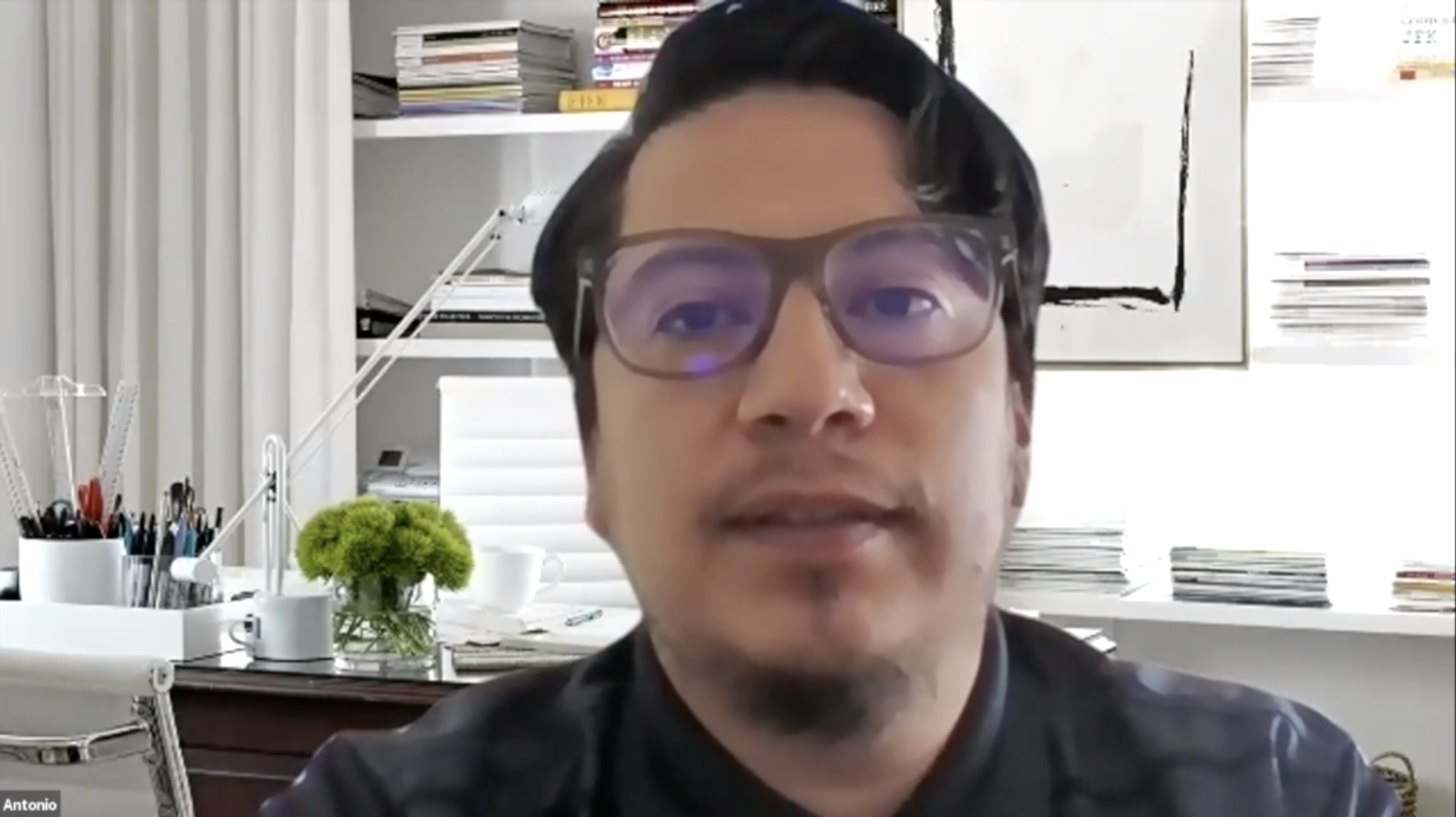
Those students, Antonio Elizondo, Dan Flynn, Mariesa Samba and Ellen Schwartz, share a passion for building a new Los Angeles grounded in social justice and racial equity.

Flynn, a second-year graduate student, contributed to the report’s sections on health and homelessness. His experience working with nonprofit agencies has made him acutely aware of the need to think differently about the region’s homelessness crisis.

“You’re looking at 70,000 unhoused people in Los Angeles at any given point,” Flynn said. “There’s no way to look at that issue and describe it as anything other than a failure — and a catastrophic one, with immense human cost. There has been a failure to build systems of accountability and to hold people responsible and accountable.”

Setting forth a strategy to create accountability to end homelessness is among 10 guiding principles (PDF) that underlie the report, which also tackles economic justice, mental and physical health, child and family well-being and other topics.

Samba is pursuing a master’s in social welfare and is a graduate student researcher at the Black Policy Project at UCLA. She contributed to sections of the report that related to children, families, mental health and justice.

“A lot of the work that I do is within the community with folks who are directly impacted by the pandemic,” she said. “Especially with this project, my top-line goal was to uplift those voices and experiences into the research.”

The report builds on the personal insights of the researchers and the people they interviewed to identify social problems, pairing those lived experiences with data to point toward solutions. For example, research findings about the impact of the COVID-19 pandemic on education highlighted the region’s racial disparities. Under Los Angeles’ safer-at-home orders, Black and Latino schoolchildren have been far less likely to be able to engage successfully in remote learning because of a lack of computers and access to high-speed internet connections.

As Segura noted during a Sept. 9 webinar to unveil the report to the general public, public officials are expected to ensure that residents have access to electricity, trash collection and a sewer system — so why not something as vital as the internet?

“The time has come for us to think about the internet as what it has become,” he said. “It is a civil right.”

The opportunity to think about such issues in new ways appealed to the UCLA Luskin students who played a role. Plus, there were practical benefits. For example, Schwartz was happy to work on the transportation section of the report because that’s her area of concentration as an urban planning master’s student. But her biggest takeaway from the experience was the mindset of the project’s leaders.

“What I loved seeing is how the community leaders on the committee really focused on empowerment. That’s something that I want to take with me into my own career,” she said.

“… work remains to be done to prevent those long-term effects from being catastrophic.”

—Antonio Elizondo

Elizondo, a master’s student in urban planning, said during the virtual salon that the most impactful aspect of his involvement in the project came during his review of interviews with people impacted by the health crisis and thinking about the repercussions.

“At the moment, it’s an unfolding crisis, so every policy response is a short-term response,” Elizondo said. “This project helped me realize that there will be long-term effects, and how much work remains to be done to prevent those long-term effects from being catastrophic.”

The Committee for Greater LA comprises a diverse group of civic and community leaders and a joint research team from UCLA Luskin and the USC Equity Research Institute. Initially, the committee intended primarily to address the racial disparities exposed by the pandemic, but in the wake of the recent police-involved killings of Black people and the nationwide protests that followed, its focus expanded to encompass a broader understanding of systemic racism.

The UCLA students helped Segura with the policy-related aspects of the report, which cover issues like housing affordability, immigrant rights, alternatives to incarceration, transportation and equitable access to health care, among others. Because of the pandemic, the work had to be coordinated via phone, email and Zoom sessions.

Flynn, who is pursuing a master’s in public policy, said he appreciated the chance to work directly with the dean on a project of such ambition and scope.

“What makes UCLA such a special place is that you have world-class academics and practitioners who are not just interested in generating work but are interested in mentorship and teaching and in giving opportunities to the next generation of policymakers,” he said.

As gratifying as the work was, the students realize the real work is still to come. Schwartz said she’s hopeful that society is ready to adopt the meaningful change advocated in the report.

“We live in a world where people are really isolated and don’t always know what’s going on in the community,” she said. “I hope that this report will just shed some light on issues that people are facing and that it will inspire elected officials to take action and make real, lasting changes to the system.”

Samba said her participation offered a unique opportunity to process her emotions about the extraordinary impact of the COVID-19 crisis, particularly because of how it coincided with the growing racial justice movement — and she sees cause for hope.

“We’re at a point in time where we are trying new things,” Samba said. “We’re able to experiment with our justice system, with our foster care system, with what social services look like, with what community care looks like. I would like to see some of those social experiments — some of those new ideas and visions — become real, and for us not to revert to the status quo. I would love to see us really, actually reimagine what a more racially equitable future looks like for the people of Los Angeles.”

Among the other UCLA connections to the effort: The Committee for Greater LA is chaired by Miguel Santana, a member of the Luskin School’s advisory board, and the project is funded in part by philanthropists who have also supported UCLA.

The Committee for Greater LA has invited interested parties, including policymakers and candidates for elected office, to join in making the #NoGoingBackLA promise, a commitment to build a more equitable and inclusive Los Angeles. Sign up at nogoingback.la.

1 in 5 Tenants in L.A. Has Struggled to Pay Rent During Pandemic, Study Finds Thousands of renters are at risk of eviction with moratorium set to expire; tens of thousands more are in a deep financial hole

August 31, 2020/0 Comments/in Development and Housing, Diversity, For Faculty, For Policymakers, For Students, For Undergraduates, Latinos, Public Policy, Public Policy News, Research Projects, School of Public Affairs, Social Welfare, Social Welfare News, Urban Planning Michael Lens, Michael Manville, Paavo Monkkonen /by Les Dunseith

By Claudia Bustamante

Twenty-two percent of Los Angeles County tenants paid rent late at least once from April to July, while between May and July, about 7% did not pay any rent at least once, according to a joint UCLA–USC report released today as a statewide eviction moratorium is set to expire.

The report documents the hardships faced by tenants during the COVID-19 pandemic, and it traces those hardships overwhelmingly to lost work and wages as a result of the economic shutdown.

Among households in the county that did not pay rent, either in full or partially, about 98,000 tenants have been threatened with an eviction, while an additional 40,000 report that their landlord has already begun eviction proceedings against them. California’s moratorium on evictions was scheduled to end Sept. 1, but at the last minute, lawmakers extended protections through Jan. 31, 2021. Federal action to protect renters from eviction at the national level through December 2020 has also been enacted.

The report by researchers at the UCLA Lewis Center for Regional Policy Studies and the USC Lusk Center for Real Estate analyzed data from the U.S. Census, as well as data from an original survey conducted in July 2020 of 1,000 Los Angeles County renter households. The survey, in particular, gave the researchers new insights into the circumstances facing renters. The study was authored by Michael Manville, Paavo Monkkonen and Michael Lens, all with the UCLA Luskin School of Public Affairs, and Richard Green, director of the USC Lusk Center.

“I think everyone understood, early on, that renters might be in trouble as a result of COVID-19 and its economic fallout, but conventional sources of data don’t give us a good window into whether renters are paying or not, and into how they are paying if they do pay,” said lead author Manville, an associate professor of urban planning. “We were able, by using data from a special census survey, and especially our own original survey of renters, to get a direct sense of these questions.”

The researchers first analyzed the U.S. Census Bureau’s Household Pulse Survey, a weekly survey that asked if renters have paid rent on time and if they think they will be able to pay the next month’s rent on time. This data was augmented by the UCLA Luskin–USC Lusk survey, which asked not only if renters paid on time but if they paid in full and if they were threatened with an eviction or had eviction proceedings initiated against them.

The study found that tenants have been facing unprecedented hardships during the COVID-19 crisis, substantially more so than homeowners. Overall, the study also found that most tenants are still paying their rent during the pandemic but are often doing so by relying on unconventional funding sources. The majority who pay late or not at all have either lost their work, gotten sick with COVID-19 or both.

Among the findings:

  •  About 16% of tenants report paying rent late each month from April through July.
  •  About 10% did not pay rent in full for at least one month between May and July.
  •  About 2% of renters are three full months behind on rent. This translates to almost 40,000 households in a deep financial hole.
  •  Late payment and nonpayment are strongly associated with very low incomes (households earning less than $25,000 annually) and being Black or Hispanic.
  •  Nonpayment is more common among tenants who rent from friends and family.

This crisis is particularly acute in the Los Angeles region and other high-cost cities, where an existing affordable housing crisis and an economic slowdown resulting from mitigation efforts to curb the pandemic intersect to threaten the stability of many households.

“Even before the pandemic, L.A. renters, especially low-income renters, were struggling,” said Lens, associate faculty director of the UCLA Lewis Center. And while most renters who miss rent have entered into some type of repayment plan, they’re not out of the woods yet.

“Nonpayment occurs disproportionately among the lowest-income renter households, so repaying back rent could be a tremendous burden for them,” Lens said.

The study also found that renters were suffering disproportionately from anxiety, depression and food scarcity, and they are relying much more than in the past on credit cards, family and friends, and payday loans to cover their expenses. One-third of households with problems paying rent relied on credit card debt and about 40% used emergency payday loans.

The prevalence of these nonconventional forms of payment, along with the incidence of job loss among tenants, suggests the importance of direct income assistance to renter households.

Tenants collecting unemployment insurance were 39% less likely to miss rent payments. Just 5% of households that hadn’t lost a job or fallen sick reported not paying the rent.

Co-author Green, director of the USC Lusk Center for Real Estate, said that although data show that most renters have been paying their rent, government policies can help strengthen the ability to do so.

“One of the main concerns among landlords at the beginning of the pandemic was that tenants weren’t going to pay their rent if they knew they weren’t going to be evicted,” Green said. “Not only have we not seen any evidence of this, but getting money in renters’ hands through unemployment insurance or rental assistance helps a lot.”

Co-author Monkkonen, an associate professor of urban planning and public policy, agreed.

Helping renters now will not only stave off looming evictions next month but “also prevent cumulative money problems that are no less serious, such as renters struggling to pay back credit card debt, struggling to manage a repayment plan or emerging from the pandemic with little savings left,” he said.

Across the state, most evictions were halted in April by the California Judicial Council, the state’s court policymaking body. The eviction moratorium was set to expire in June, but it had been postponed to Sept. 1 to allow local and state lawmakers more time to develop further protections, including the bill currently under consideration. Given the unconventional means renters reported using to pay rent, the new study says that policies that provide funds to renters could help mitigate a raft of evictions and homelessness that had been predicted by previous reports by researchers at UCLA and elsewhere.

The study was funded by the Luskin School, the UCLA Luskin Institute on Inequality and Democracy, the UCLA Ziman Center for Real Estate, the USC Lusk Center for Real Estate, and the California Community Foundation.

Reliable, Accurate and Complete Count for 2020 Census Is at Risk UCLA study forecasts a severe undercount for people of color, immigrants and low-income individuals

August 19, 2020/0 Comments/in Development and Housing, Diversity, For Faculty, For Policymakers, For Students, For Undergraduates, Latinos, Public Policy, Public Policy News, School of Public Affairs Paul Ong /by Les Dunseith

By Melany De La Cruz-Viesca

A new UCLA report shows that the 2020 Census will severely undercount immigrants, low-income people and people of color.

Two key reasons are the COVID-19 pandemic and a directive issued July 21 by the Trump administration to cut population data collection operations short by one month; the Census Bureau must now end field data collection by Sept. 30.

To date, 93 million households, nearly 63% of all households in the U.S. have responded to the 2020 Census. In 2010, 74% of households in the United States filled out and mailed back their 2010 Census questionnaires, matching the final mail participation rate of the 2000 Census.

The White House directive and the public health crisis have made it an enormous challenge for the Census Bureau to ensure a complete and fair enumeration for the 2020 Census, according to the researchers. They write that racial and economic class biases threaten and undermine the goals of equal political representation and just allocation of resources.

The new analysis, by researchers from the UCLA Center for Neighborhood Knowledge, the UCLA Asian American Studies Center and Ong & Associates, uses U.S. Census Bureau COVID Tracking Project data as of Aug. 1, and updates a previous UCLA report that analyzed self-response rates as of June 1.

The current report examines changes from 2010 to 2020, and the spread between tracts with high response rates and tracts with low response rates. While the overall response gap from 2010 to 2020 has closed to three to four percentage points as of Aug. 1, some communities have experienced more barriers to participating. Low-income and minority neighborhoods had lower response rates in 2010 than more advantaged neighborhoods, and that gap has only widened in 2020.

“It is highly likely and unfortunate that the 2020 Census will be flawed with severe undercounts of people of color and low-income individuals,” said Paul Ong, co-author of the report and director of the Center for Neighborhood Knowledge at UCLA Luskin. “At this juncture, it is critically important to start developing methods to adjust the counts to develop a more accurate statistical picture of America and its people.”

Ong is also the founder of Ong & Associates, which provided its research services pro bono for the report.

The report results show that neighborhoods with high concentrations of Asian, Black, Hispanic and Indigenous populations experienced a greater decline in response rates relative to non-Hispanic white neighborhoods, when comparing 2010 and 2020 response rates. The estimated median response rates are 69.1% for non-Hispanic white, 66.7% for non-Hispanic Asian, 49.7% for non-Hispanic Black and 50.1% for Hispanic.

The research reveals that Hispanic (12.7%) and Indigenous (12.3%) people have the largest temporal gap from 2010 to 2020. What is particularly dramatic is the decline for Hispanic neighborhoods, which may be attributable to the stigma and fear associated with the controversial attempt to include a citizenship question on the 2020 census form. Moreover, the pandemic appears to have created more barriers to participation for non-English speaking households and/or those without good internet connections.

The report finds that 2020 Census response rates vary systematically with economic class, ranging from 73.2% for the most affluent neighborhoods to 47.4% for the poorest neighborhoods. When comparing 2010 and 2020 Census response rates, the gaps also vary systematically by economic class, ranging from a less than one percentage point decline for the most affluent to a nine-percentage point decline for the poorest.

On April 18, the New York Times reported that the COVID-19 crisis had seriously hampered self-reporting, causing the Census Bureau to adjust its timeline and initially prolong the collection process to counter any shortfalls. The data collection period was extended from mid-August to October 31, but the recent White House directive will cause operations to end one month sooner.

The report points out that lower self-response rates will generate disproportionately more homes that must now be visited during an abbreviated — and labor-intensive — non-response follow-up phase. This will add great strain to the Census Bureau’s limited budget and resources, and add an overwhelming burden on Census workers, community-based organizations and other stakeholders participating in 2020 Census outreach efforts.

According to the authors, COVID-19 further compounds the challenges by creating barriers to face-to-face contacts because of a continued need for social distancing and other public-health precautions. Finally, the systematic low self-response rates in disadvantaged neighborhoods compound the problems because these are the same neighborhoods most affected by COVID-19.

The challenge that lies ahead is how the nation will address a seriously flawed enumeration, one with a significant overall undercount and differential undercount that will disproportionately hurt the poor and people of color, the researchers warn.

The authors recommend developing data and methods that enable researchers and statisticians to adjust the count and produce a more accurate and unbiased numerical picture of America and its people. The Census Bureau’s post-enumeration study will help, but it is also critically important for academic researchers to develop independent approaches.

“An adjustment is fundamental to ensuring fair political representation, just resource allocations, and social equality,” the researchers write.

UCLA Students, Staff Join California Leaders to Set a Latino Agenda LPPI leads effort to provide policy guidance for the November elections — and for future policymakers and civic leaders

August 18, 2020/0 Comments/in Alumni, Diversity, For Faculty, For Policymakers, For Students, For Undergraduates, Latinos, Politics, Public Policy, Public Policy News, School of Public Affairs Gary Segura /by Luskin Staff
By Eliza Moreno

On July 15, more than 80 California Latino leaders — from the fields of government, education and philanthropy — took part in a unique Zoom meeting. Their discussion focused on issues facing U.S. Latinos amid the COVID-19 pandemic.

Their mission was to provide policy guidance on these issues to candidates in the November elections — and to policymakers and civic leaders for years to come.

Most of the meeting’s participants, like Gary Segura, dean of the UCLA Luskin School of Public Affairs, have decades of experience in advocacy and public policy. But for eight UCLA students and recent graduates, the online gathering was a unique opportunity to help make history.

The meeting, hosted by the UCLA Latino Policy and Politics Initiative, was billed as “Shaping a 21st Century Latino Agenda,” and it yielded policy recommendations covering eight issues, including climate change, education, immigrant rights and political representation.

One of the UCLA participants was Adriana Bernal, 20, who’s entering her third year at UCLA and is a student fellow at the Latino Policy and Politics Initiative. Bernal comes from a Mexican American and Salvadoran family — her grandfather was one of millions of Mexicans who were brought to the United States to work in agriculture beginning in the 1940s.

The group’s policy recommendations have already been disseminated to politicians, philanthropists and business leaders, and Bernal said she hopes the policy transformations will be considered by elected officials state- and nationwide. “It’s important to have our voices and our needs represented by local and national elected officials,” she said.

Another participant was Maria Morales, 27, who earned a master’s in public policy from the School of Public Affairs in June and recently began a job as a policy manager at the Politics and Policy Initiative. Born in Mexico, Morales moved with her family to Texas when she was 9. She has worked at a hospital as an interpreter, as well as at nonprofits involved in combating racism and building civic engagement among the Latino community.

“As a first-generation student, immigrant and a non-native English speaker, it was important for me to be a part of the Latino Policy and Politics Initiative, a space that was willing to nurture the skills I hadn’t explored before,” Morales said.

Discussion at the meeting was shaped not only by the economic fallout of the COVID-19 pandemic, but also by the nation’s increased attention to the Black Lives Matter movement.

“The Latino community continues to get excluded from critical decisions — the California Redistricting Commission and COVID-19 relief efforts, for example — despite our driving the state’s economy,” Morales said. “With the Black Lives Matter movement paving a path for change, we hoped to recognize the work they have done and ask policymakers to take Black and brown communities into account.”

Morales said the event gave her an invaluable chance to learn from some of the state’s Latino leaders, including state Assemblywoman Lorena Gonzalez and state Sen. María Elena Durazo, the chair and vice chair of the California Latino Legislative Caucus; Cástulo de la Rocha, president and CEO of AltaMed Health Services; and Kevin de León, the former president pro tempore of the California State Senate.

“I had the opportunity to engage in conversations with leaders from across the state with plans to directly impact the lives of Latinos,” said Morales.

For both Morales and Bernal, being a part of the meeting was squarely in line with the reasons they joined the policy initiative as student fellows: collaborating with civil rights organizations and elected officials to develop data-based policy recommendations that can improve lives for communities of color.

Morales said those efforts have taken on new meaning in this election year.

“This year is the most imperative, and it is through advocacy and continuing conversations with policymakers that I can be a changemaker,” she said. “We need to make an effort to have a prosperous Latino community and in turn, a prosperous nation.”

Read the full policy agenda here (PDF); those who are interested may register their support of the agenda here.

Black, Latino Renters Far More Likely to Be Facing Housing Displacement During Pandemic Systemic racial inequality underlies nonpayment of rent, UCLA Luskin researchers say

August 10, 2020/0 Comments/in Alumni, Diversity, For Faculty, For Policymakers, For Students, For Undergraduates, Health Care, Latinos, Politics, Public Policy, Public Policy News, Research Projects, School of Public Affairs, Social Welfare, Social Welfare News, Urban Planning Ananya Roy, Paul Ong /by Les Dunseith

By Les Dunseith

A new study of the magnitude, pattern and causes of COVID-19’s impact on California housing reveals that Black people and Latinos are more than twice as likely as whites to be experiencing rent-related hardships.

The analysis by researchers from the UCLA Center for Neighborhood Knowledge and Ong & Associates, in coordination with the UCLA Luskin Institute on Inequality and Democracy, relies on the U.S. Census Bureau’s weekly Household Pulse Survey, a multiagency effort to collect information on the social and economic effects of COVID-19 on Americans. The research findings are based on pooling a 10-week sample of more than 22,000 adults in California for the period from April 23 to July 7.

During the pandemic, workers, families, businesses and communities have experienced enormous financial difficulties, and the new study estimates that more than 1.9 million adults in California were unable to pay their rent on time in early July. The finding that Black and Latino renters are particularly vulnerable echoes previous analyses showing that minority renters are more likely to be suffering economically during the pandemic.

“These systematic racial or ethnoracial disparities are the product of systemic inequality,” UCLA Luskin research professor Paul Ong writes in the study. “People of color, low-income individuals, and those with less education and skills are most at risk.”

An analysis of the survey responses shows that people of color are disproportionately more concentrated in the lower-income and lower-education brackets, and they entered the crisis with fewer financial and human capital resources. Those people of color who lost their jobs or suffered a significant earnings loss during the pandemic were therefore far more likely to fall behind on rent.

When the researchers looked closely at who was unable to pay rent during the period of study, they found that 23% were Black and 20% were Latino — more than double the 9% for both whites and Asians.

In her foreword to the study, UCLA urban planning professor Ananya Roy, the director of the Luskin Institute on Inequality and Democracy, writes, “An especially important finding of the report is that across socioeconomic status categories, Black and Latinx households are more likely to be unable to pay rent compared to non-Hispanic whites and Asian Americans, a stark reminder of the entrenched racial disparities that are being rearticulated and amplified by the present crisis.”

The researchers delved deeper into the data to compare the experiences of various ethnic and racial groups based on demographic characteristics such as level of education. They found that Black and Latino respondents with some college education had higher rates of nonpayment of rent than whites and Asian Americans with similar educations. Racial disparities were evident even when the researchers focused on employment and earnings categories related to COVID-19.

“In other words,” Ong writes, “the pattern indicates that racial inequality is not due simply to class differences.”

Many experts believe this situation will lead to a wave of evictions in coming months unless governments take steps to protect people who have fallen behind on rent during the crisis. This includes extending the state’s eviction moratorium, continuing supplemental employment benefits and providing financial assistance to offset accumulated rent debt.

In a July 27 webinar hosted by the UCLA Asian American Studies Center, Paul Ong, Ananya Roy and others discuss the potential for mass COVID-19–related evictions in Los Angeles if current tenant protections are not extended.

The researchers did uncover some disparate patterns across ethnoracial groups. For example, the correlation between a lower income and the inability to pay rent was pronounced for both whites and Latinos, but it was minimal, and statistically insignificant, for Asians and Black people. The impact of less education was very pronounced for Black people but only minimally so for the other three groups. The effect of earnings losses was far greater for Black and Latino people than for white and Asian people.

Perhaps most surprising, the researchers said, was the effect of joblessness. While a loss of work led to an increased likelihood of nonpayment of rent among Asian and Latino people, it marginally decreased the odds of rental difficulties among white and Black people.

“One reasonable explanation is disparate access to unemployment insurance,” Ong writes in the study. He noted that Asians and Latinos may have less access to this type of financial relief — which can more than replace lost wages — because many work in informal ethnic job sectors and also face linguistic, cultural and legal barriers to applying for and collecting unemployment benefits.

The study urges elected officials to extend and expand unemployment insurance benefits. The researchers also call for the renewal of temporary tenant protections and say that financial relief should be provided to both renters and landlords.

Overall, the study’s findings show that prepandemic inequalities and pandemic labor-market hardships amplify systemic racial disparities. The economic impact on low-income and minority populations is likely to be long-lasting because so many people will have amassed a huge debt of deferred rents.

“Many will struggle to find meaningful employment in a protracted and uneven economic recovery,” Ong writes. “It is very likely that race will shape who will be most hurt.”

Ong is the director of the Center for Neighborhood Knowledge at the UCLA Luskin School of Public Affairs. He also founded Ong & Associates, an economic and policy analysis consulting firm that specializes in public interest issues and provided services pro bono for this study.

In Nation’s 2 Largest Metros, Blacks and Latinos Are More Likely to Die From COVID-19 LPPI report highlights need to protect essential workers and expand economic assistance in high-poverty areas

July 27, 2020/0 Comments/in Diversity, For Faculty, For Policymakers, For Students, For Undergraduates, Health Care, Latinos, Public Policy, Public Policy News, School of Public Affairs /by Luskin Staff
By Eliza Moreno

A study by the UCLA Latino Policy and Politics Initiative based at UCLA Luskin finds that Latino and Black residents of Los Angeles County and New York City are roughly twice as likely as white residents to die from COVID-19. The research also revealed that high-poverty neighborhoods in both regions have the highest rates of COVID-19 cases and COVID-19–related deaths.

Sonja Diaz, founding director of the policy initiative, said two significant reasons for those trends are that low-income Black and Latino people in both regions tend to have a greater need to work outside of the home and a greater reliance on public transportation, both of which put them at a greater risk for exposure to the coronavirus.

“We are now seven months into the pandemic, and we are starting to have clear information about the disproportionate health and economic impacts that communities of color are facing,” Diaz said. “It’s time to address the specific ways that COVID-19 hurts Latino and Black families and to protect our most vulnerable communities as the virus surges across the nation.”

In Los Angeles County, the age-adjusted death rate was 54 per 100,000 for Latino residents and 46 per 100,000 for Black residents, compared to 23 per 100,000 for white residents; in New York City, the age-adjusted death rates were 247 per 100,000 for Latino residents, 237 per 100,000 for Black residents and 120 per 100,000 for white residents.

The authors recommend that six measures be implemented immediately in cities with large populations of vulnerable communities:

  • Increase testing for low-income communities of color.
  • Provide access to health services and healthy food in low-income communities.
  • Add protections on public transportation, including providing hand sanitizing stations and free masks.
  • Expand access to health care and paid sick leave for essential workers.
  • Increase access to telehealth for low-income residents and the uninsured to bridge the lack of medical care.
  • Ensure that accurate race and ethnicity information is being collected so that elected officials and public health experts can understand the impact of COVID-19 in communities of color.

The researchers analyzed data from Los Angeles County and New York City, two areas that have been hard-hit during the pandemic and are home to large Latino and Black populations. They found that residents who didn’t have health insurance, lived in overcrowded housing conditions and had limited access to the internet will encounter inequitable access to health care during the pandemic.

In addition, the authors found that people between the ages of 18 and 40 have the highest rate of infection in Los Angeles County; in New York, people over age 45 are most affected. Men in both regions have higher rates of infection than women.

“Essential workers are putting their lives at risk every day to keep the economy running and our families fed, and it’s making them sick,” said Laura Martínez, the lead author of the report and a UCLA postdoctoral fellow in obstetrics and gynecology. “The data clearly shows that the brunt of the pandemic is being felt by our most vulnerable communities, and our government leaders must take into account the specific needs of Black and Latino residents.”

Social Workers Identify Dire Needs as Schools Prepare to Resume Classes Research brief recommends a nationwide rapid-response initiative to coordinate guidance for education in the COVID-19 era

July 16, 2020/0 Comments/in Education, For Policymakers, Public Policy, Public Policy News, School of Public Affairs, Social Welfare, Social Welfare News Ron Avi Astor /by Mary Braswell

By Mary Braswell

As school districts nationwide grapple with how and when to safely reopen in the midst of the COVID-19 pandemic, a survey of 1,275 social workers across the United States shows the immensity of the challenge ahead.

The results of the survey, conducted by UCLA and research partners from Loyola University Chicago, Cal State Fullerton and Hebrew University, were published today in a research brief that calls on elected officials and other leaders to act quickly and invest heavily to bolster the nation’s schools.

In addition to concerns about online learning platforms and physical distancing protocols, the school social workers reported that many students and their families are struggling with their most basic needs during the COVID-19 era.

“They’re reporting overwhelming numbers of students who don’t have food, who don’t have stable housing or health services, whose families are suffering,” said the study’s co-author, Ron Avi Astor, a professor of social welfare at the UCLA Luskin School of Public Affairs who also has a faculty appointment at the UCLA Graduate School of Education and Information Studies.

“The national dialogue on reopening schools is not focused on this right now, but the social workers are telling us loud and clear that meeting basic human needs for a large number of students is the big issue schools face in the fall.”

“Every school district is reinventing the wheel over and over and over again, and we think it would be wise to have a clear national strategy,” says Social Welfare Professor Ron Avi Astor.

The social workers who responded to the survey work with students from preschool to 12th grade, mostly in low-income and minority communities. Serving on the front lines in the most underserved schools, the social workers are uniquely equipped to identify the students’ social, mental health and physical needs — and to help address them once states and schools enter into a recovery phase, he said.

As one social worker who participated in the study noted, “Creating equitable education isn’t about checking off to-do lists. It’s about getting into the work of getting to know the needs of the community and meeting them where they are.”

The brief calls for the creation of a national rapid-response team including teachers, administrators, medical professionals, counselors, psychologists and social workers to provide guidance for schools as they weigh in-person, online or hybrid learning models.

“Every school district is reinventing the wheel over and over and over again, and we think it would be wise to have a clear national strategy,” Astor said.

The report also recommends that a national technical assistance center be created to help any school adjust its procedures, if needed.

“The reality around this virus is changing day to day,” Astor said. “We can’t just have one plan at the beginning of the year and wait until the end of the next year to find out it didn’t work.”

The policy recommendations call for the hiring of a massive number of social workers, nurses, psychologists and other professionals in the hardest-hit schools, many of which serve low-income and minority students.

“That’s going to cost money. But the teacher can’t do it alone,” said Astor, who added that state and federal investment is needed to expand support staff in schools that have historically been underfunded.

“If our country has trillions of dollars to bail out large wealthy corporations, we also have enough to create a Marshall Plan-like program to rebuild and provide basic supports to the nation’s students, schools and communities,” he said.

The report’s authors noted that their findings come amid calls for systemic change spurred by the Black Lives Matter movement. “The question of how to reopen and reinvest in schools that serve under-resourced communities and students of color has gained prominence and urgency,” they wrote.

In addition to providing resources and support for mental health, food, housing, transportation and medical services, a team of professionals is needed to locate and reengage the large number of students — up to 30%, according to some reports — who rarely showed up once classrooms went virtual this spring, the report found.

The recommendations are aimed at avoiding a “lost generation” of students, Astor said.

“That would be the epitome of social injustice,” he said. “We need a campaign to bring students who dropped out or disengaged due to systemic inaction back into the fold. We need to show that our schools are not just about sitting in the classroom and learning math or other academic subjects — that we care about their well-being as a whole.

“That’s a very important message for our country to send this generation of students and their families.”

Read the policy brief and technical report authored by Michael S. Kelly of Loyola University Chicago, Ron Avi Astor of UCLA, Rami Benbenishty of Hebrew University, Gordon Capp of Cal State Fullerton and Kate R. Watson of UCLA.


Page 10 of 25«‹89101112›»

Recent Posts

  • Experts Question Trump’s ‘Narco-Terrorist’ Claims Against Venezuela’s Maduro January 16, 2026
  • UCLA student wins fourth consecutive national transportation prize January 15, 2026
  • U.S. Inequality Through the Housing Lens: A Conversation with José Loya January 15, 2026
  • What would it take to make housing, energy, and transportation affordable in California? January 14, 2026
  • Kim on Fire Recovery in Los Angeles January 13, 2026

Contact

UCLA Luskin School of Public Affairs

3250 Public Affairs Building - Box 951656
Los Angeles, CA 90095-1656

Campus Resources

  • Maps, Directions, Parking
  • Directory
  • Contact
  • Academic Calendar
  • Careers
  • Diversity
  • University of California
  • Terms of Use

Follow

The statements on this page represent the views of people affiliated with the Luskin School of Public Affairs and do not necessarily represent the views of the University of California, or UCLA or its Chancellor.

Posts and comments by individuals at UCLA on social media channels may not reflect the opinions or policies of UCLA, the University of California or the Luskin School, nor its benefactors and academic partners.

Scroll to top
