• Public Policy
  • Social Welfare
  • Real Estate Development
  • Urban Planning
  • Luskin Home
  • Undergraduate Program
  • Contact Us
  • Events Calendar
  • Give Now
  • About
    • Our Dean
    • Board of Advisors
    • Contact Us
    • Visit Us
    • Diversity, Disparities and Difference
    • Communications
      • UCLA Luskin in the News
      • Luskin Forum Online
  • Apply
    • Master of Public Policy
    • Master of Social Welfare
    • Master of Urban Planning
    • Master of Real Estate Development
    • PhD in Social Welfare
    • PhD in Urban Planning
    • Undergraduate
  • Departments
    • Public Policy
    • Urban Planning
    • Social Welfare
    • Real Estate Development
    • Undergraduate Program
  • Faculty
    • All
    • Public Policy
    • Social Welfare
    • Urban Planning
    • Real Estate Development
    • Faculty Executive Committee
    • Open Positions
  • Student Affairs & Alumni
    • Career Services
      • Employers
      • Fellowships
    • Student Support
    • Graduate Resource Library
    • Alumni Relations
  • Support
  • Programs
    • Research Centers & Affiliated Research
    • CA Title IV-E Education Program
    • Data Analytics Certificate
    • Luskin Lecture Series
    • Luskin Summit
    • UCLA Luskin California Policy Briefing
    • Commencement
  • Administration
    • Financial Services
    • Events Office
    • Information Technology
  • Click to open the search input field Click to open the search input field Search
  • Menu Menu
  • About
    • Our Dean
    • Board of Advisors
    • Contact Us
    • Visit Us
    • Diversity, Disparities and Difference
    • Communications
      • UCLA Luskin in the News
      • Luskin Forum Online
  • Apply
    • Master of Public Policy
    • Master of Social Welfare
    • Master of Urban Planning
    • Master of Real Estate Development
    • PhD in Social Welfare
    • PhD in Urban Planning
    • Undergraduate
  • Departments
    • Public Policy
    • Urban Planning
    • Social Welfare
    • Real Estate Development
    • Undergraduate Program
  • Faculty
    • All
    • Public Policy
    • Social Welfare
    • Urban Planning
    • Real Estate Development
    • Faculty Executive Committee
    • Open Positions
  • Student Affairs & Alumni
    • Career Services
      • Employers
      • Fellowships
    • Student Support
    • Graduate Resource Library
    • Alumni Relations
  • Support
  • Programs
    • Research Centers & Affiliated Research
    • CA Title IV-E Education Program
    • Data Analytics Certificate
    • Luskin Lecture Series
    • Luskin Summit
    • UCLA Luskin California Policy Briefing
    • Commencement
  • Administration
    • Financial Services
    • Events Office
    • Information Technology

Archive for category: Public Policy

New report finds sharply rising rates of unemployment for Black Californians In the latest report in the State of Black California series, the team found that across all racial and ethnic groups, Black people had the largest single-year increase in unemployment.

June 10, 2026/0 Comments/in Luskin's Latest Blog, Public Policy Michael Stoll /by Peaches Chung

This article originally appeared in UCLA Newsroom and is reprinted here in full with permission.

By Barbra Ramos

Key takeaways

  •  In 2025, the unemployment rate of Black Californians at 7.5% was twice that of those who were white.
  •  Black men in California without a high school diploma experienced the highest rate of unemployment at 15.9%.
  •  Black women with college degrees saw the largest increase in unemployment from the year before, more than tripling from 2.7% to 8.5%
  •  Based on their findings, the study’s researchers believe policymakers should take a multi-prong approach to ensure that California supports its residents during this difficult labor market.

Employment — a major marker and measure of quality of life — declined among Black Californians between 2024 and 2025, according to new research from the Black Policy Project, a research initiative of the UCLA Ralph J. Bunche Center for African American Studies.

In their latest biennial report in the State of Black California series, the team found that across all racial and ethnic groups, Black people had the largest single-year increase in unemployment, up from 5.6% in 2024 to 7.5% in 2025. The unemployment rate of Black Californians was double that of white Californians by the end of 2025, researchers found.

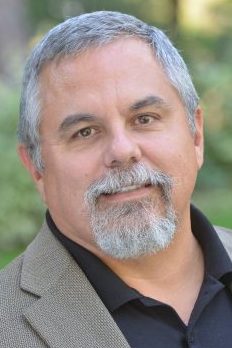
“These employment shifts are against a two-year backdrop of historic changes in federal action, closing of DEI offices, the attacks on affirmative action and higher education, etc.,” said lead author Michael Stoll, a professor of public policy at the UCLA Luskin School of Public Affairs and faculty director of the Black Policy Project. “In this short period of time, we’ve found that many of the employment pathways that Black Californians have relied on have been significantly weakened or shut off entirely.”

The researchers discovered that increases in unemployment were sharpest among those who were younger (ages 18-34) and in the prime working age (35-54). When factoring in education and gender, two unemployment statistics stood out for 2025: Black men without a high school diploma experienced the highest rate of unemployment at 15.9%, while Black women with college degrees saw the largest unemployment increase, more than tripling, from 2.7% to 8.5%.

One driver that the authors attribute to the rise in unemployment for those with at least some level of higher education is the declining public sector, where Black Californians have historically held the highest share of jobs among all racial and ethnic groups. In particular, roles at state and municipal government agencies decreased, with unemployment losses for college-educated Black women driving the declines.

In addition, researchers found that the quality and conditions of work changed as more Black workers turned to involuntary part-time work, meaning they preferred full-time or had likely worked full-time previously. The involuntary part-time rate increased by ten percentage points, from 38.8% to 48.8%. Black men with a college degree saw the sharpest increase by 30 percentage points to 79.2%. When comparing age groups, older Black Californians saw the largest increase, rising from 27.0% to 40.0%, followed closely by those considered prime-age, who went from 48.7% to 60.6%.

Institutional disconnection — defined as not being employed or in school — was found to be up 3% for Black people in California, to 11.8%. Disconnection among Latinos was slightly higher at 12.0%, the highest among all races and ethnicities. The largest increase among Black Californians was seen for Black women, up 6.5 percentage points to 15.1%. Over a third of Black Californians with less than a high school diploma were disconnected last year, up almost six percentage points from 2024.

The findings are particularly alarming to researchers following the last report on the State of Black California, published in 2024, which provided a comprehensive analysis of the social and economic status of Black communities in the Golden State over a 20-year period. In that report, the researchers estimated it would take more than 248 years to close the gaps between Black and white Californians.

Based on their findings, the authors identified four areas of action to combat the impact of the changing labor market on Black Californians:

  •  Strengthen employment regulations and social safety nets, such as unemployment insurance and mandate anti-discrimination protections.
  •  Diversify pathways to quality employment, including apprenticeships and career paths that do not require advanced degrees.
  •  Continue investing in California’s public colleges and universities to expand access and pathways for success.
  •  Invest in Black-led organizations and initiatives supporting Black entrepreneurship to help cultivate community wealth and strengthen economic well-being.

“The path forward will require targeted, sustained action at the state, local and community levels,” said Stoll. “The work ahead demands urgency and commitment for a California that is stronger, more equitable and prosperous not just for some, but for all.”

Stoll presented the research at the State of Black California conference, held on April 10, 2026, at UCLA, with advocates, policy experts, elected officials, academic scholars and community-based leaders in attendance. The conference featured a wide array of elected, academic and cultural leaders as speakers, including California Secretary of State Dr. Shirley Weber, California Legislative Black Caucus Vice Chair Assemblymember Isaac Bryan, California Senator Laura Richardson, California Assemblymembers Sade Elhawary and LaShae Collins, MacArthur Fellow and David O. Sears Presidential Endowed Chair of Social Sciences Dr. Safiya Noble, Chuck D, and Aloe Blacc. Hosted by the UCLA Bunche Center and the California Legislative Black Caucus, the all-day event provided a space for attendees to think critically and begin to develop solutions together on the issues that matter most and will help Black Californians thrive.
 

Could Ire Over AI Data Centers Tilt the Midterm Elections?

June 1, 2026/0 Comments/in Luskin in the News, Public Policy Megan Mullin /by Mary Braswell

Opposition to AI data centers is rising in both red and blue states, stirring bipartisan outrage that could influence the outcome of many races in this fall’s midterm election, Rolling Stone reported.

Communities across the country have expressed concerns about electricity prices, water usage, environmental degradation, and tax breaks for developers. For many voters, a candidate’s stance welcoming or resisting the arrival of data centers could be a defining issue.

“Amid so much partisan division, opposition to data centers seems to be the thing that unites Americans right now,” said Megan Mullin, UCLA Luskin professor of public policy and faculty director of the UCLA Luskin Center for Innovation.

“It’s tempting to attribute this resistance to a growing wariness about technology and the titans who control it, but in reality it’s rooted in the one thing that has always united Americans: our deep affinity for where we live.”

Michael Stoll Appointed to Governor Gavin Newsom’s Council of Economic Advisors

May 15, 2026/0 Comments/in Luskin in the News, Public Policy, Urban Planning Michael Stoll /by Jiah Lee

California Governor Gavin Newsom has appointed Michael Stoll, professor of urban planning and public policy at UCLA, to the Governor’s Council of Economic Advisors, a group of leading scholars and policy experts that advises the Governor and the California Department of Finance on key economic issues facing the state.

The council analyzes economic trends and provides guidance on state and federal developments, including trade policy, tariffs, technological change, and the growing impact of artificial intelligence on California’s economy. The newly announced council leadership includes Chair Renee Bowen of Georgetown University and Vice Chair Valentin Bolotnyy of Stanford University.

In a statement accompanying the announcement, Newsom said the council’s expertise will help California navigate “federal shifts, global disruptions, and emerging challenges with creativity, resilience, and confidence” while strengthening the state’s position as the nation’s leading economy. “Together, we’re going to keep California moving forward and strengthening our position as the nation’s leading economy,” said Newsom.

Read the full press release here.

The Facts on Free and Fair Elections: A Q&A With Gary Segura The UCLA Luskin political scientist weighs in on the changing landscape of voting rights and how the public can prepare for this election season

May 7, 2026/0 Comments/in Public Policy, School of Public Affairs Gary Segura /by Mary Braswell

This election year has seen a drumbeat of policies, proposals, and court rulings that could change the way Americans vote.

To make sense of the swirl of news surrounding the landmark Voting Rights Act, evolving rules about how we register to vote, the prospect that federal agents will monitor polling stations, and more, UCLA Luskin Public Policy Professor Gary Segura offered context and insights grounded in his 35 years as a scholar of political behavior.

Gary Segura

Segura’s research and teaching focuses on political representation and social cleavages. He also serves as founding partner and president of the political polling and data analysis firm BSP Research. Formerly the principal investigator of the American Action Election Study, the largest federally funded study of the U.S. electorate, Segura has also testified as an expert witness in voting rights lawsuits and constitutional cases.

Segura weighed in on the current state of free and fair voting and how citizens can prepare for the current election season. His comments have been condensed for space.

Last week, the U.S. Supreme Court put limits on the 1965 Voting Rights Act in a decision split along ideological lines. Help us understand the impact of these changes.

The Voting Rights Act was designed to protect the right to vote and the quality of representation for people of color who were not being elected to public office. And that’s because of a phenomenon we call racially polarized block voting. So if white citizens won’t vote for candidates of color, and you draw districts in such a way that there’s no place where those people of color are a concentration, then you would end up with all-white legislatures, all-white city councils, all-white county boards, and so forth.

The Voting Rights Act did two principal things. The first thing is it made illegal efforts to thwart the vote: poll taxes; literacy tests; character assessments by the local registrar of voters, which was really just a racial test; intimidating voters; blocking access to polls — all of those things are illegal.

The second thing it did is it said that the quality of representation, the chance that each citizen will have his or her views reflected in public space, should be more or less equal. And that has been interpreted since as a way to create districts that allow people of color to elect first-choice candidates.

Now in the past, two forms of gerrymandering called “cracking” and “packing” have had the effect of excluding minority candidates for public office. Cracking is when we take a community and, instead of drawing a congressional district around it, we crack them into little bits, into three or four different districts. And that has the effect of rendering them voiceless.

Packing is when you take as many minority voters as possible and you put them into a single district. That district will elect a minority representative, but there will never be a second one because you’ve cracked the remaining minority population so thinly that they don’t have a chance.

That’s really what was at issue in the case that the Supreme Court handed down. Those forms of racially polarized block voting are called “minority vote dilution,” and under Section 2 of the Voting Rights Act, lawsuits were designed to undo that, to make that actionable or illegal. In Louisiana versus Callais, the Supreme Court made that very, very difficult to do. They didn’t make it impossible. They made it nearly impossible.

And that’s the second big change to the enforcement of the Voting Rights Act that the Roberts Court has undertaken. What’s going to happen is, in the ’26 and ’28 congressional elections, the number of Black elected officials from the South is going to drop like a stone.

Efforts to regulate access to the ballot are cropping up at the state and federal level. How might they affect voting in this year’s election and beyond?

The Constitution is very specific that the states regulate the time, place, and manner of elections. As a consequence, states are very different.

States like Colorado and Oregon have 100% mail-in ballots. Other states have almost no mail-in ballots. Some states have partisan primaries, which nominate one Democrat and one Republican to face each other in the general election. California has what we call jungle primaries, where all candidates, regardless of party, run together and the top two vote-getters go to the general election.

Many of the voting rights and voting security concerns have arisen from attempts to nationalize this. There are some pieces of legislation that nationally affect how we conduct elections, but one of the issues is whether or not any of those have effect, given that the states ultimately are the arbiters of how elections are conducted.

One issue that we should talk about is the federal legislation known as the SAVE America Act, voter ID, and the general question that elections are not secure. So let me preface this by saying there is not a shred of evidence that there’s ever been any electoral shenanigans that changed any outcomes in the United States.

The number of non-citizens who are alleged to have voted illegally? A handful you can count on your fingers in any given election year, never to have affected an outcome. And that’s because it’s illegal for someone who is not a citizen to register and vote in a federal or state election. So those protections are already in place.

The SAVE America Act is particularly concerning. It’s an attempt to nationalize regulations on elections in a way designed to make it harder to vote, limit mail-in voting, limit earlier voting, have some form of voter ID requirement, and hype up voter registration requirements. Now that’s where things get really sticky, because the documents needed to register under the SAVE America Act would include a birth certificate with a name that matches your current name or a passport.

Many Americans don’t have passports, and if you are, for example, a married woman who took your husband’s name, your birth certificate does not match your name and therefore you would have trouble registering to vote. So this is really a way, once again, to reduce the number of people who have a chance to vote. So that’s why it’s very, very controversial.

In addition to the federal legislation moving through Congress, a statewide voter ID initiative will appear on the California ballot this fall. How have similar measures adopted in other states affected the vote?

Voter ID laws may have a number of different parts. One might be whether or not you have to present a valid identification when you show up to vote, but what constitutes an acceptable ID?

And there is also a question of whether statutes require “exact matches” of the signatures on your ID and your voter registration. Wow. How many of you sign your name exactly the same way? You probably sign it mostly the same way. But if it’s not exactly the same way, it’s at the discretion of the election poll worker whether or not you have a valid identification. In some states, student IDs are not valid, but gun registrations are. That’s true in Texas. Why would that be? Because they don’t want college students voting and they do want gun owners.

So you can you can use these identification requirements to mold the electorate. And the underlying question of this is true for both political parties, which is that both have an interest in an electorate that has more of the people who like them and fewer of the people who don’t like them.

The Democrats’ approach to this has been trying to enlarge the electorate, trying to get more people to come to vote because they feel that that’s their way of winning. The GOP approach is to keep people away from the ballot box because they don’t believe that their manifesto is a majoritarian position.

Some elected officials and activists have floated the idea of deploying federal law enforcement, possibly including Immigration and Customs Enforcement (ICE) agents, to polling sites. If this comes to pass, how might the voting public be affected?

The concern here is whether or not the administration will attempt to put ICE agents at polling stations in states and in locations where there’s a large Hispanic population. And the idea, according to them, is that they would be used to prevent undocumented residents from voting. Again, almost no evidence that there’s ever been such a thing.

But really, what it’s about is intimidation. So folks who don’t agree that this is a problem would say, “If everyone’s a U.S. citizen, then ICE won’t arrest anyone.” Except that ICE has arrested dozens and dozens of U.S. citizens. And under the Supreme Court’s decision regarding racial profiling that Justice Kavanaugh wrote, they can engage in what we now call Kavanaugh stops, which is if someone has an accent or is dressed in a particular type of clothing or so forth, that can be the basis for being taken into custody. So there’s nothing to prevent mass arrests of U.S. citizens at polling places.

Latinos know this because they are aware of people who’ve been taken into custody who have green cards or have U.S. citizenship. It’s an old form of intimidation going back decades, including when the GOP in Orange County would dress people up in Border Patrol uniforms, fake uniforms, and put them at polling stations to try to drive down Latino turnout.

With all these changes you’ve mentioned, where do we go from here?

A single elected official of good conscience — I’m thinking, for example, of the secretary of state in Georgia who refused to change vote totals in 2020 — can make the difference between a fair and an unfair election. So think carefully when you choose people and think carefully when you vote on matters having to do with elections.

For the average person, the best thing you can do is turn out to vote — and be prepared. Even if there’s no ID requirement now, bring an ID with you. Be prepared to stand in line. There are all sorts of efforts to try to drive voters out of an election by having fewer voting machines, fewer voting booths in places where the party you don’t like has a lot of voters. And so the lines get long.

Be persistent. Go. Go with an ID, bring a friend, bring two friends, go vote. That’s the way average people of any political persuasion can resist efforts to manipulate elections.


Luskin Professor Martin Gilens Elected to the National Academy of Sciences Martin Gilens is recognized for his influential research on inequality and democracy.

April 28, 2026/0 Comments/in Luskin's Latest Blog, Public Policy, Social Welfare Martin Gilens /by Peaches Chung

Martin Gilens, professor of public policy, political science and social welfare at UCLA, has been elected to the National Academy of Sciences (NAS), one of the highest honors in the scientific community. NAS membership is awarded to scholars in recognition of distinguished and continuing achievements in original research and is widely regarded as a mark of excellence across academic disciplines.

The National Academy of Sciences, established in 1863 under a congressional charter signed by President Abraham Lincoln, elects members annually for their significant contributions to science and scholarship. Election reflects sustained impact in advancing knowledge and shaping research in one’s field.

Gilens is a leading scholar of American politics and public policy, widely recognized for his research on inequality, public opinion, and democratic responsiveness. His work has shaped contemporary understanding of how policy outcomes reflect—or diverge from—the preferences of citizens across socioeconomic groups.

Gilens earned his Ph.D. in sociology from the University of California, Berkeley, and has held fellowships at the Institute for Advanced Study in Princeton, Stanford’s Center for Advanced Study in the Behavioral Sciences, and the Russell Sage Foundation. Before joining UCLA in 2018, he held faculty appointments at Yale and Princeton Universities.

Hope Is Hard Work: Laphonza Butler Delivered Call to Action on Building Power From the Ground Up At the annual Luskin Summit, the former U.S. senator joined 400 scholars, students, and leaders in search for lasting equity and well-being

April 20, 2026/0 Comments/in Alumni, Environment, For Faculty, For Policymakers, For Students, For Undergraduates, Public Policy, School of Public Affairs, Social Welfare, Urban Planning Zev Yaroslavsky /by Mary Braswell

Former U.S. Sen. Laphonza Butler brought a message of resiliency and resolve to more than 400 scholars, students, community leaders, and elected officials who came together at UCLA last week to take on California’s most entrenched problems.

“Too many Californians, too many Angelenos, are not OK,” Butler told the crowd gathered for the eighth annual UCLA Luskin Summit on April 15. But she added, “The people in this room, the communities that you serve, have already proven that change is possible. …

“I keep returning to this one thing that sustains me: It’s that hope is not a joyful feeling. Hope, UCLA, is hard work.”

Butler, who served as a labor leader, political advisor and UC regent before joining the U.S. Senate in 2023 to complete the term of the late Dianne Feinstein, delivered the keynote address following a morning centered on strengthening resilience and equity at the local level.

Sharing Research and Solutions

Researchers from the UCLA Luskin School of Public Affairs teamed up with difference-makers in the public, private, and nonprofit sectors to share the latest advances in four areas of concern:

  • California’s housing strategy, including the state’s new zoning rules aimed at making shelter more affordable
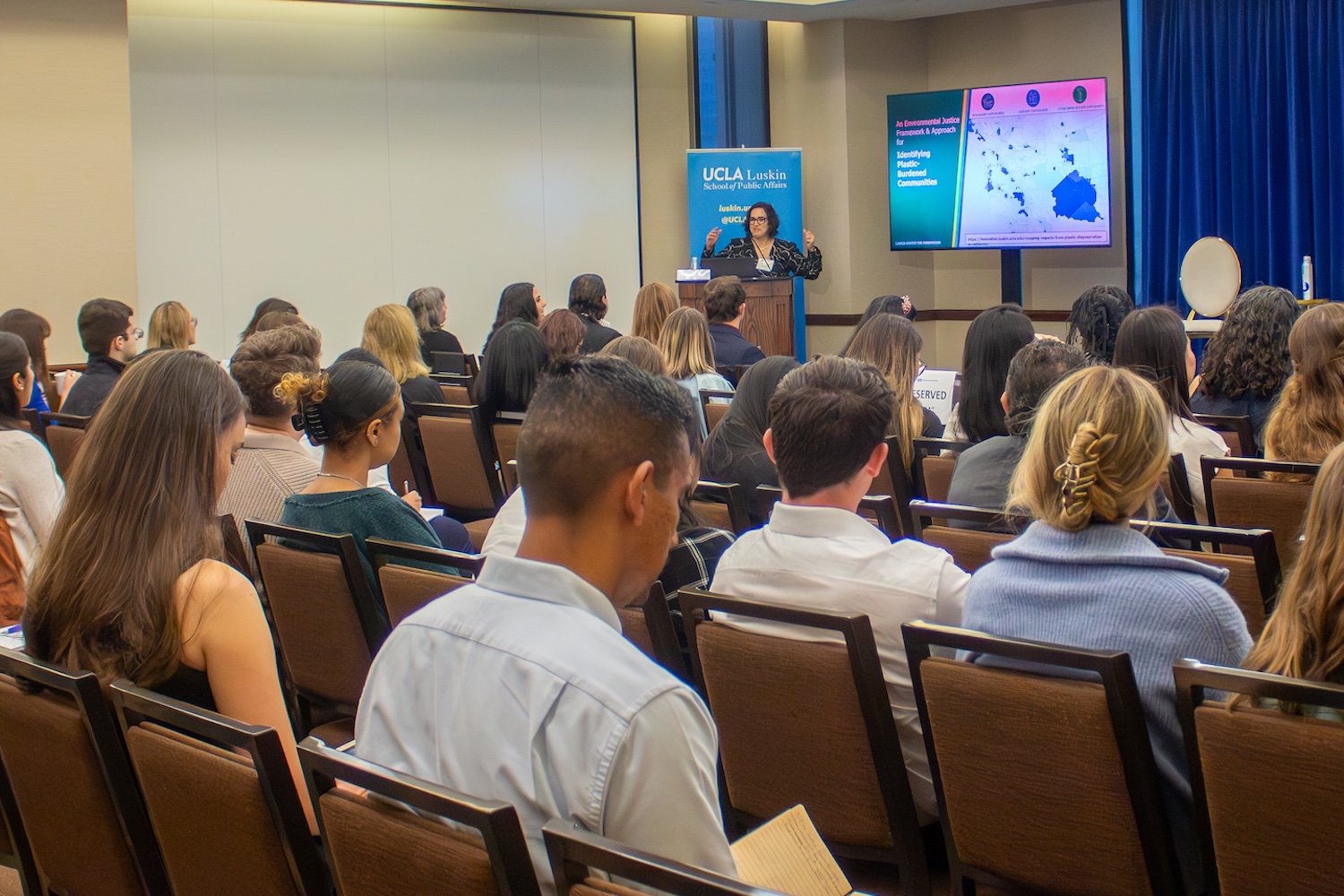
  • Environmental health and justice, including the impact of extreme heat as L.A. hosts a series of mega-events, and the toll plastic pollution takes on vulnerable communities
  • Transportation security, including new strategies for elevating security, trust, and comfort among public transit riders
  • Socioeconomic vulnerability, including strategies to bridge intergenerational inequities, and regulatory tools that can be used to promote more inclusive growth

Launched in 2019, the UCLA Luskin Summit provides a bridge between academia, policymakers, and civil society, with the goal of finding evidence-based solutions to California’s most pressing concerns. This year’s gathering highlighted recent research from the UCLA Luskin Center for Innovation, UCLA Institute of Transportation Studies, UCLA Lewis Center for Regional Policy Studies, and departments of Public Policy, Social Welfare, and Urban Planning.

Master of Urban Planning student O’Philia Le said she chose to attend the summit to learn how UCLA Luskin research is put into practice in the world.

“A key takeaway for me was that large-scale racial justice and global environmental impacts really start with local solutions. However, those solutions don’t just happen on their own,” she said.

“They require political pressure, community engagement, and an intentional push to actually move forward. As an aspiring planner, I believe that this is key to the work that we do.”

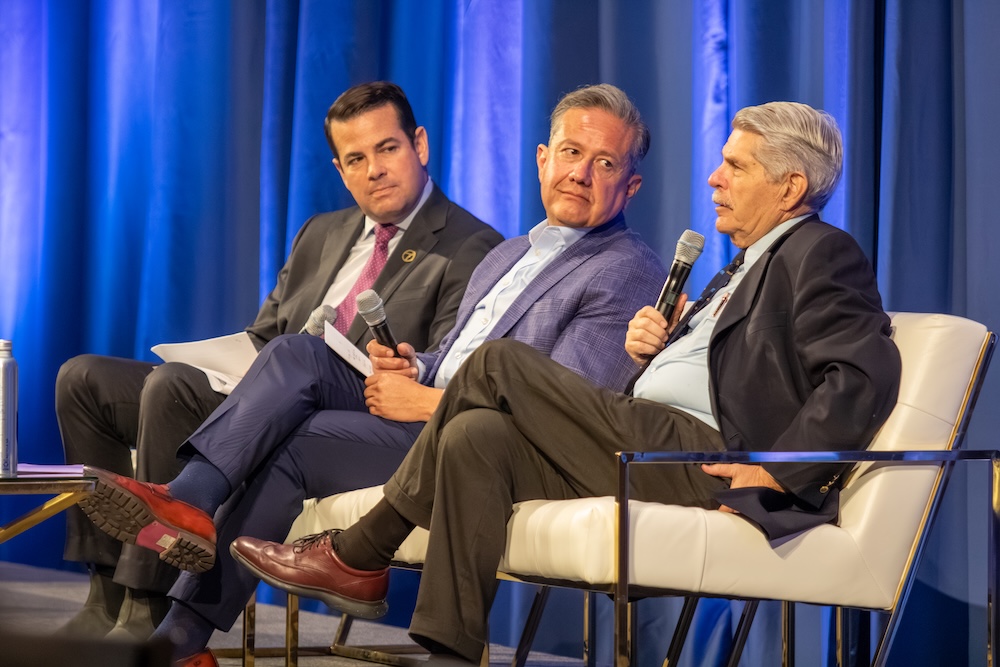
three men in suits sitting on stage

From left, ABC7’s Josh Haskell, Miguel Santana of the California Community Foundation, and Zev Yaroslavsky of UCLA Luskin’s Los Angeles Initiative review results from the 2026 Quality of Life Index. Photo by Michael Troxell

Quality of Life Index Reveals Growing Strain

The summit also hosted the release of this year’s UCLA Quality of Life Index (QLI), a project of the Luskin School’s Los Angeles Initiative, directed by Zev Yaroslavsky. The survey found that Los Angeles County residents’ satisfaction with their lives has hit the lowest level in the QLI’s 11-year history.

“We’ve been through a lot in the last five years: COVID; punishing increases in the cost of living; last year’s catastrophic fires, the worst natural disaster in the history of this city; tariffs; and this year the destabilizing implementation of the Trump administration’s immigration sweeps, which started right here in our own back yard,” he said. “All of these have taken their toll on virtually every aspect of our lives in every part of our region.”

Cost of living continues to be the single biggest driver of residents’ quality of life, though its rating declined from 2025, according to the survey. Among the 1,400 Los Angeles County residents polled in March, housing affordability remained the dominant concern, while rising costs for utilities, groceries, and taxes were cited more frequently than in prior years.

Ratings fell across nearly every category compared with last year, with six areas reaching their lowest levels since the survey began in 2016: education, transportation and traffic, jobs and the economy, public safety, neighborhood conditions, and relations among different races, ethnicities, and religions.

A Call to Action for the Next Generation

In her remarks, Butler also addressed the sobering results of the QLI.

“Every year the Quality of Life Index holds up a mirror to Los Angeles County,” she said. “And every year, it asks us to be brave enough to look in that mirror.”

She stressed, however, that “alongside every data point of strain, there’s a counter story, one that doesn’t get enough attention — the story that happens when people organize, when coalitions hold, when accountability is real.”

To the service-minded students in the room, she issued a call to action, echoing the summit’s theme of empowering local communities. Some of them would go to Washington and some to Sacramento, where they are desperately needed, she said.

“But some of you — hear me — need to go to places that don’t make headlines. To neighborhoods where the data actually lives, to communities where the stakes are immediate, not to study them but to be accountable to them. …

“The communities most impacted by vulnerability are also most engaged in building solutions. … Survival demands participation.”

UCLA Luskin professor Veronica Herrera introduces a session on plastic pollution before a standing-room-only audience. Photo by Mary Braswell
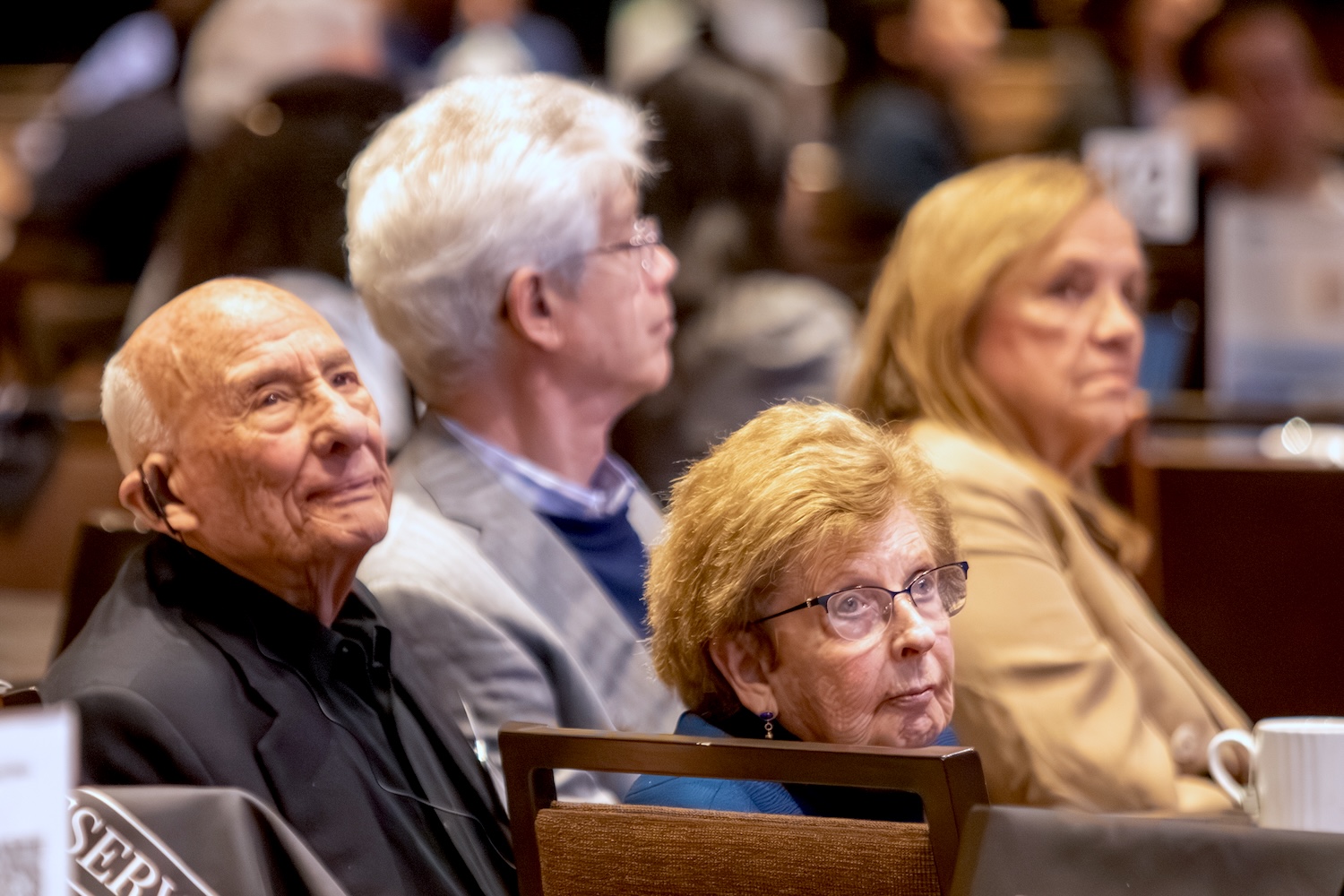
Men and women listening to speaker
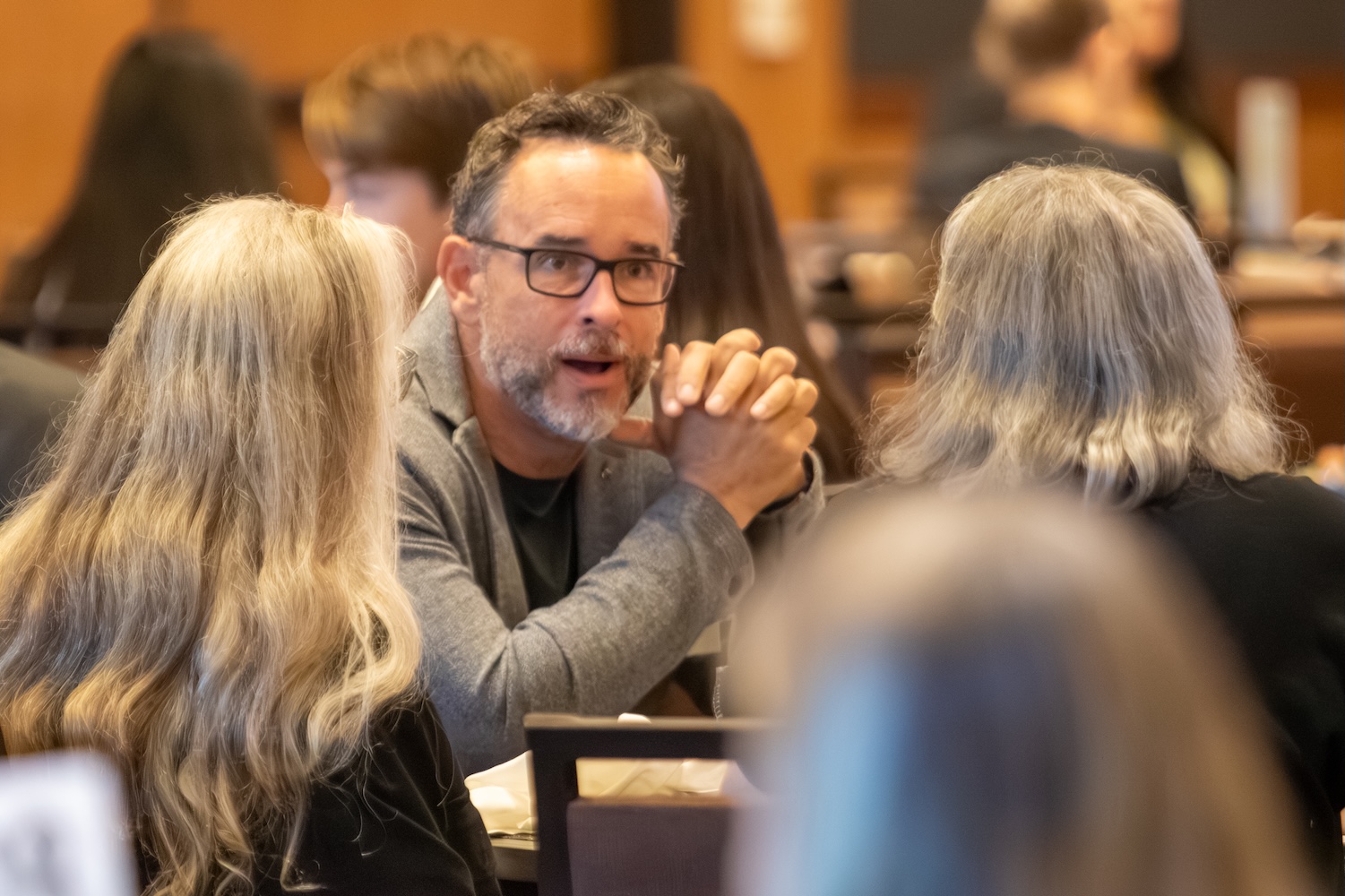
Three people in conversation

View more photos from the 2026 UCLA Luskin Summit on Flickr.

Gen Z Demands More: Andrea Escobar on California’s Leadership Gap

April 14, 2026/0 Comments/in Luskin in the News, Public Policy /by Peaches Chung

Since November 2025, MPP student Andrea Escobar has traveled across California attending gubernatorial forums in her role as a Senior Fellow at Unseen, engaging directly with candidates on issues including health access, environmental justice, and housing affordability. Drawing from these experiences, Escobar co-authored a CalMatters op-ed that reflects her perspective as a Gen Z Latina seeking clarity on who is prepared to lead the state.

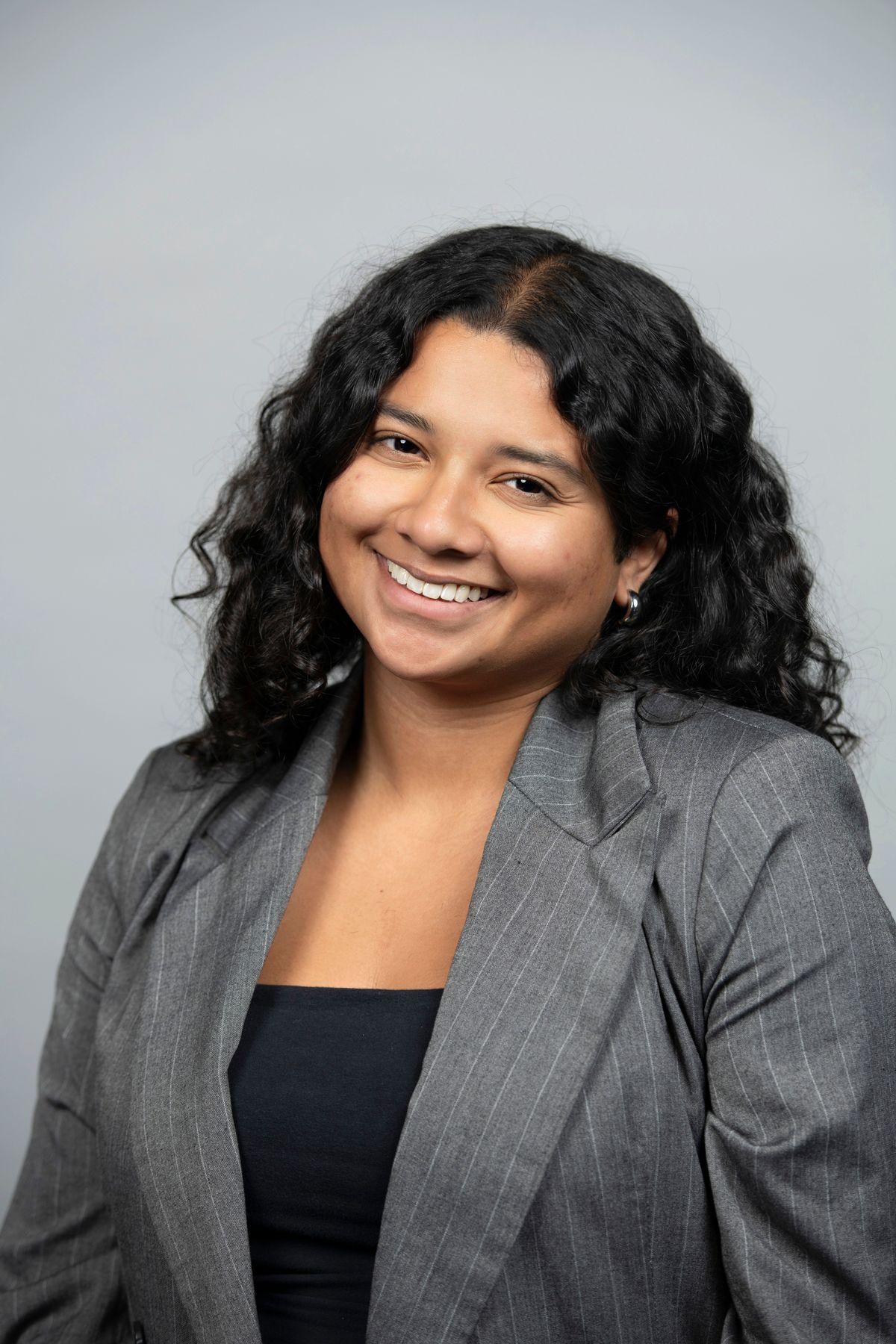
Public Policy student Andrea Escobar's headshot

Andrea Escobar

In the piece, Escobar offers a grounded and urgent critique of the current gubernatorial race, arguing that candidates are failing to meet the moment for Generation Z. She emphasizes the widening gap between the promise of the “California Dream” and the reality facing students today. She highlights the financial strain of higher education and cost of living, noting, “As a full-time student, I have to balance two jobs to afford tuition and rent in Los Angeles.”

Escobar’s critique centers on candidates’ lack of bold, actionable plans particularly around economic mobility, affordable housing, and education funding. She points out that young voters and Latino communities are often discussed in abstract terms rather than addressed through concrete policy proposals. This disconnect, she argues, risks alienating a generation already disengaged from the political process. As she puts it, “Without a clear plan to address the issues we care about, like college access and affordability, these candidates remain disconnected from mobilizing young voters like us.”

Read the full op-ed in CalMatters.

BGI Report Examines Hungary’s Democratic Future Ahead of Key Election

April 10, 2026/0 Comments/in Luskin's Latest Blog, Public Policy Helmut Anheier /by Mary Braswell

On the eve of Hungary’s April 12 parliamentary election, a new report from the UCLA Berggruen Governance Index (BGI) examines whether Viktor Orbán’s 16-year “illiberal democracy” experiment is a model for Europe’s future or a cautionary tale.

Using BGI data, researchers found that Hungary‘s democratic accountability has fallen sharply since 2010, state capacity has mildly deteriorated, and public goods provision has improved only modestly thanks to EU transfers.

Crucially, Orbán’s Fidesz party now trails the center-right Tisza Party by nearly 10 points —raising the prospect of a democratic reset echoing Poland’s 2023 election. The report outlines three post-election scenarios: continued illiberalism, cosmetic reform, or genuine democratic renewal.

The Berggruen Governance Index is a collaborative project between the UCLA Luskin School of Public Affairs, the Hertie School, and the Berggruen Institute,

Read the full report.

California Is the Most Expensive State for a Comfortable Lifestyle

April 3, 2026/0 Comments/in Luskin in the News, Public Policy, Urban Planning Paavo Monkkonen /by Sheryl Samala

California remains one of the nation’s most expensive states to live in, with communities like San José, San Francisco, and Orange County demanding six-figure incomes for comfortable living.

A recent SmartAsset study shows that a single adult in San José needs nearly $160,000 annually, while a family of four requires over $400,000, far outpacing local median incomes. Los Angeles ranks 16th, where single adults need $120,307 and families over $280,000. Housing costs are the primary driver of this gap, compounded by rising grocery and gas prices and stagnant wages.

The study underscores the broader housing affordability crisis in California, highlighting how daily necessities continue to climb while wages lag behind.

“It’s a problem that we created very slowly over a long period of time,” said Paavo Monkkonen, UCLA professor of urban planning and public policy, in a Los Angeles Times article.

A Leftward Shift in the Ever-Evolving Latino Vote

April 1, 2026/0 Comments/in Luskin in the News, Public Policy Gary Segura /by Mary Braswell

Over the past several years, Latino voters — men under 40, in particular — have shifted right, but evidence from elections during President Donald Trump’s second term suggest an abrupt correction is underway.

The recent shift to the left could have a significant effect on the politics of 2026, potentially putting control of Congress in the hands of Latino voters.

In a commentary in The Conversation, UCLA Luskin professor of public policy Gary M. Segura and faculty director Matt A. Barreto of the UCLA Voting Rights Project explore these dynamics, tapping into their expertise as political scientists and pollsters who study Hispanic voting trends.

Many Latinos are quite upset with Trump’s actions on the economy and immigration, polls show. Segura and Barreto also note that some Latinos question whether Democrats who have received their support in the past have delivered on policies that would improve the lives of their families.

“Latino voters need to believe that politicians truly care about their concerns and will work to implement a plan to create equal opportunities for the nation’s largest minority group to achieve the American dream,” Segura and Barreto write. “We believe the candidates able to make that pitch convincingly will be the most successful.”

Page 1 of 47123›»

Recent Posts

  • Q&A with Tristhan Lim: Public Affairs Minor Shaping Equitable Cities June 10, 2026
  • New report finds sharply rising rates of unemployment for Black Californians June 10, 2026
  • Q&A with a graduating senior: Sophia Wang ’26 June 2, 2026
  • Could Ire Over AI Data Centers Tilt the Midterm Elections? June 1, 2026
  • Samsung’s Bonus Dispute Sparks Calls for Structural Reform May 29, 2026
Search Search
Search Search

Contact

UCLA Luskin School of Public Affairs

3250 Public Affairs Building - Box 951656
Los Angeles, CA 90095-1656

Campus Resources

  • Maps, Directions, Parking
  • Directory
  • Contact
  • Academic Calendar
  • Careers
  • Diversity
  • University of California
  • Terms of Use

Follow

The statements on this page represent the views of people affiliated with the Luskin School of Public Affairs and do not necessarily represent the views of the University of California, or UCLA or its Chancellor.

Posts and comments by individuals at UCLA on social media channels may not reflect the opinions or policies of UCLA, the University of California or the Luskin School, nor its benefactors and academic partners.

Scroll to top Scroll to top Scroll to top