Geographer Susanna Hecht, professor of urban planning at the Luskin School, has been named director of the UCLA Center for Brazilian Studies, effective July 1. A specialist on tropical development in Latin America, especially Amazonia, she also holds joint appointments in the Institute of the Environment and Sustainability and the department of geography at UCLA.
Hecht takes over leadership of the interdisciplinary research center, which serves UCLA faculty and students whose scholarship focuses on Brazil, from José Luiz Passos.
Hecht’s research focuses on the intersections of economies, cultures and land use — and the socio-environmental effects of these processes — an approach now widely known as political ecology, of which she is recognized as a founding thinker. Her work spans climate change, mitigation and the rethinking of longer-term strategies in light of globalization, intense migration and novel climate dynamics.
Her published books include “The Social Lives of Forests: Past, Present and Future of Woodland Resurgence” (Chicago, 2014; co-edited with Kathleen D. Morrison and Christine Padoch); “The Scramble for the Amazon and the ‘Lost Paradise of Euclides da Cunha’ ” (Chicago, 2013), which won the American Historical Association’s Best Book in Environmental History Award in 2015; and “Fate of the Forest: Developers, Destroyers and Defenders of the Amazon” (Chicago, 2011; co-authored with Alexander Cockburn).
In addition to journal articles and book chapters, Hecht has also written monographs published by the Center for International Forestry Research (CIFOR), the National Academy of Sciences, the World Resources Institute and Centro Internacional de Agricultura Tropical (Cali, Colombia).
She has won multiple academic awards, including the American Geographical Society’s David Livingstone Centenary Medal and the Carl Sauer Award, both for distinguished research on Latin America. She is a past member of the Institute for Advanced Study at Princeton University and holds a professorial appointment at the Graduate Institute for Advanced Development Studies in Geneva.
With cities and suburbs across the United States facing well-documented affordable housing shortages, researchers for years have studied how government planning standards affect housing costs.
Those studies often examine how planning and zoning decisions affect traffic noise, whether neighborhood amenities can be reached by foot and other factors that can make a home more or less valuable.
A new paper expands this body of research by considering the housing, schools, parks and other infrastructure that go unbuilt in favor of wide streets.
The U.S. has some of the widest streets in the world. In 20 of the most populous counties, the median residential street plus sidewalks is 50 feet wide, with the dollar value of land used for streets sometimes stretching into six figures, according to the research in the Journal of the American Planning Association.
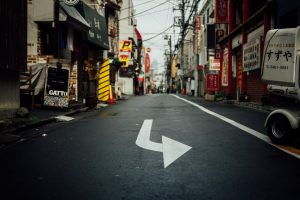
A narrow street in Shibuya City, Tokyo. Photo by Tim Foster / Unsplash
Wide streets are less common in some other countries. Certain streets in Japan, for example, are much narrower. Developments in Tokyo since 1990 have average street widths of 16 feet, noted Adam Millard-Ball, an associate professor of urban planning at the UCLA Luskin School of Public Affairs and author of the new paper.
“One of the best ways to alleviate the housing crisis is to build more housing,” he said. “To the extent that narrower streets allow developers to build more housing, that will address the No. 1 issue with housing right now.”
The median residential street in Arizona’s Maricopa County, which includes Phoenix, is 50 feet wide, according to Millard-Ball’s sample of counties.
The median width of a residential street in Middlesex County, Massachusetts, which includes Cambridge, is 40 feet — the narrowest of the group.
The widest streets in the sample are in Cook County, Illinois, which includes Chicago. There, the median residential street is nearly 65 feet wide.
The 50-foot standard
For urban planners, a street is called a right of way. The paved section is the roadway.
A right of way includes the roadway as well as sidewalks, if any, along with space for drainage, utility poles and other public infrastructure. It’s the land usually owned by a city or county that the public has the right to use and make its way through by car, bicycle, foot or other mode. Neighbors waving hello across the sidewalk’s edge of their properties are waving across the right of way.
The median 50-foot right of way Millard-Ball documents stems from nearly a century of history in U.S. planning. After the home mortgage system collapsed during the Great Depression, the federal government stepped in and established the Federal Housing Administration in 1934.
The agency’s mortgage insurance and financial assistance for homebuyers represented “the most ambitious suburbanization plan in United States history,” wrote Michael Southworth and Eran Ben-Joseph in a 1995 Journal of the American Planning Association article that reviews the historical rise of U.S. suburbs.
To protect the government’s unprecedented investment in home ownership, mostly for white Americans, developers had to have detailed plans approved by the agency. The agency encouraged cul-de-sacs for new developments and favored plans that discouraged through traffic.
“Moreover, the FHA, unlike other planning agencies, was largely run by representatives of real estate and banking, so developers felt that its intervention protected their interests,” Southworth and Ben-Joseph wrote.
If developers wanted to build homes that would benefit from federal financial backing, rights of way had to be at least 50 feet wide, Millard-Ball explained in his new paper, “The Width and Value of Residential Streets.”
Six-figure values
To understand the value of land used for streets, Millard-Ball drew on research from the Federal Housing Finance Agency that estimates the value of quarter-acre lots zoned for single-family homes across the country. The value of the land used for streets can be substantial in places where low population density and high housing costs converge.
Santa Clara County, California, which includes San Jose, has the most valuable streets in the sample at $146,000 per tax parcel. That’s roughly 40% of the median price of an existing single-family home sold in the U.S. in April 2021, according to data from the National Association of Realtors.
“One of the best ways to alleviate the housing crisis is to build more housing. To the extent that narrower streets allow developers to build more housing, that will address the No. 1 issue with housing right now.”
— Adam Millard-Ball, UCLA Luskin
New York City, by contrast, has high housing costs but also high density — large apartment buildings are common. Tens of thousands of people live within each square mile. The land beneath streets in Queens, for example, is worth $36,000 per parcel.
At the other end of the value spectrum, streets are worth $7,000 per parcel in Bexar County, Texas, which includes San Antonio. But land values and street widths can vary greatly within counties.
Terra Vista, a small street in a subdivision 25 miles north of San Antonio, is 52 feet wide and has a land value of $43,288 per parcel. All the land under residential streets in Millard-Ball’s 20 counties is worth nearly $1 trillion in total.
Millard-Ball noted that street land value estimates per parcel are likely low for high-cost, dense cities, which often zone for multifamily buildings over single-family homes.
For example, an Italian specialty food store in the Mission District of San Francisco sold its parking lot for $3 million in 2018 — roughly $36 million per acre, by Millard-Ball’s calculation — to make way for a five-story, 18-unit building, according to the news site Mission Local.
Most U.S. counties regulate how and where new housing and business developments are built, according to the National Association of Counties, a nonprofit organization that represents U.S. county governments.
Many large cities do the same.
It would be overly costly for cities and counties to change the width of existing streets, particularly with local governments facing budget shortfalls during the pandemic.
Still, the estimates in the new paper can be instructive for planning officials in places like Bexar, one of the fastest growing counties in the U.S., as they permit developments to accommodate new and current residents.
“The values are an indication that cities should be making it easier to use streets for something other than roadways and parking,” Millard-Ball said. “A good analogy is that during COVID, one use of streets has been for outdoor dining. It’s recognition that this land is more valuable to the community if we can use it for people to get together and eat in a safer environment outdoors, than as a parking space or travel lane for cars.”
He continued: “The point is that desolate asphalt is doing nobody any good — not the city, not property owners, not anyone. Cities are often keen to widen the right of way with new developments. Say you want to develop a new apartment building. Often, the city will say, ‘Sure, but you have to give up some land so we can add a turn lane, or widen the sidewalk.’ If cities can widen the right of way, why can’t they narrow it in exchange for improvements that will benefit the public?”
Indeed, when a new residential building goes up, cities commonly require developers to widen streets, according to a 2017 paper in the Journal of Transport and Land Use by Michael Manville, another UCLA Luskin urban planner.
In the paper, Manville looked at how the requirement played out in Los Angeles from 2002 to 2012. He found the city’s predictions of increased traffic with the arrival of new buildings were often wrong, and “the standards the law is based on are in some ways unverifiable. Thus the law likely does little to reduce congestion and probably impedes housing development.”
Flexible design
City and county planning standards vary and change, but the federal 50-foot standard still often dominates residential street design. Still, it’s not always true that counties with more land to expand, like those in Texas, have wider streets. Dallas County, for example, specifies that new residential streets in subdivisions be at least 50 feet wide. The median width of residential streets there is exactly 50 feet, Millard-Ball finds.
A surveyor’s chain owned by John Johnson, appointed Surveyor General of Vermont in 1813. Photo by John Johnson Allen / National Museum of American History
Residential streets in Chicago, meanwhile, are typically 66 feet wide, according to city design standards. That roughly matches the length of the typical surveyor’s chain as the city grew throughout the 1800s and early 1900s. The surveyor’s chain was a tool made up of interlocking metal bars that land surveyors used to measure and mark the shapes of streets to be built.
Uniformity in street design made sense as the nation was expanding and infrastructure technologies were less advanced. But the takeaway for Millard-Ball is that maintaining rigidity in street design means fewer amenities and, potentially, less housing.
He wonders, for example, whether more streets could be built with parking cutouts only where there are no private driveways — providing a unique residential landscape alongside opportunities to use more of the built environment for activities other than driving.
“That would make construction drawings more complex,” Millard-Ball said. “The tradeoff is visual interest — and saving a lot of valuable land.”
The prospect of narrower streets raises the question of whether emergency vehicles would be able to pass, though some planners, and at least one report from the U.S. Department of Transportation, suggest smaller emergency vehicles could be an answer.
This article first appeared on The Journalist’s Resource and is republished here with slight revisions for local style under a Creative Commons license.
At some schools in California, nearly 1 in 5 students say they have either carried a weapon or been injured or threatened with one, according to a new study co-authored by UCLA Social Welfare Professor Ron Avi Astor that examines the presence of weapons in the state’s public middle and high schools and recommends focusing on campus-level conditions that could serve as warning signs for violence.
“Although tragic incidents of shootings in schools are rare and directly affect only a small number of students, tens of thousands of students report bringing weapons to school, and many more see other students in their school carrying weapons,” said Astor, who holds joint appointments at the UCLA Luskin School of Public Affairs and UCLA School of Education and Information Studies.
The study, co-authored with Rami Benbenishty of Hebrew University of Jerusalem, was published recently in the Journal of School Violence.
Based on surveys of nearly 890,000 California students in grades 7, 9 and 11, the research focuses on all types of weapons — not only guns — and assesses how factors such as the level of crime in a school’s surrounding neighborhood, students’ feelings of belongingness or victimization at school, their relationships with teachers and staff, and their perceptions about whether disciplinary practices are fair can heighten or lower the potential for weapons-carrying and violence.
This holistic or school-wide approach represents a significant departure from previous school-violence studies, which have typically sought to identify risk factors around individual students who might pose a threat, Astor noted.
“A major limitation of current ‘shooter’ studies is that they tend to maintain a narrow focus on individual perpetrators,” the authors write. “Although it is very difficult to detect students who perpetrate school shootings, it is possible to identify schools that have many students who are involved with weapons.”
The number of students who reported seeing weapons on campus is very low at many schools,according to the study, which included a representative sample of students from every county in the state who completed the California Healthy Kids Survey between 2013 and 2015.
However, in 3.3% of schools, more than 15% of students reported carrying a weapon, and in 5.8% of schools, at least 15% of students said they had been injured by a weapon or threatened with one. It is at these schools in particular, Astor and Benbenishty say, that an approach focused on improving campuswide conditions can bear the most fruit.
“It is imperative to develop a monitoring system to identify such schools and channel resources to this vulnerable group of students, educators and parents,” said Astor, who teaches a UCLA undergraduate course on ways to improve school safety. “We must create opportunities to hear their voices and explore local solutions that make their schools safer.”
Fostering a warm, supportive school environment is key to reducing the presence of weapons and creating a truly safe campus, according to the authors, whose previous research has demonstrated that prioritizing a culture of care, funneling more resources to vulnerable schools and elevating the voices of students, teachers and students leads to a drop in the number of weapons at schools.
“Students who trust that teachers support them and have a sense of safety in school may be less inclined to bring weapons to school,” the authors write.
In this new study, Astor and Benbenishty also focus on the unintended negative consequences of past efforts to deter individual shooters by “hardening” schools with metal detectors, security cameras and armed staff, as well as “active shooter” drills and harsh mandatory punishments that research shows often demonstrated bias against students of color.
These measures, they noted, frequently created fortress-like campuses that greatly diminished students’ well-being, heightened the fear of violence on school grounds and sent more of the nation’s children into the school-to-prison pipeline.
“Schools,” the authors conclude, “could develop a variety of caring and supportive approaches to reduce weapons-related behaviors … that do not include law enforcement methods and do not increase the school-to-prison pipeline.”
Since the COVID-19 pandemic began, Latinas have not only experienced disproportionately high unemployment rates, but they also are dropping out of the workforce at higher rates than any other demographic group.
A new report by the UCLA Latino Policy and Politics Initiative examines unemployment figures for Latinas as well as changes in the number of Latinas in the U.S. labor force since the beginning of the COVID-19 pandemic.
The analysis also examines the reasons for Latinas’ exit from the labor force, including three main drivers:
Latinas are disproportionately employed in leisure, hospitality and related low-wage industries that were particularly vulnerable to pandemic-related closures.
A lack of access to education and training for higher-wage opportunities disincentivizes Latinas’ participation in the labor force overall.
Latinas are disproportionately responsible for family care obligations versus Latino men, and they are more likely to stay at home than U.S. mothers of other racial backgrounds. That burden was exacerbated during the pandemic because of the closure of schools and day care centers.
“A strong economic recovery that prepares us for a prosperous future is dependent on a stable Latino workforce made up of both men and women,” said Kassandra Hernández, a research analyst at the initiative and a co-author of the report. “Yet this analysis clearly shows that Latinas are being left behind, which could cost the U.S. economy billions of dollars.”
Before the pandemic, Latinos were expected to make up the fastest-growing segment of the U.S. labor force over the next decade, with women in particular driving that trend, according to the U.S. Bureau of Labor Statistics. The UCLA analysis found that between 2019 and 2029, the number of Latinas in the workforce is expected to grow by 25.8%, far outpacing other demographic groups. The growth of Latinas in the labor force is expected to be nearly nine times the growth rate among white women.
The analysis also found that Latinas experienced the highest unemployment rates at the start of the pandemic — with a record high of 20.2% unemployed in April 2020. After that, unemployment rates for Black men and women were generally higher than they were for Latinas, but Latinas’ unemployment rates remained consistently higher than the national average and were almost two times those of their white counterparts throughout the year. As of December 2020, 9.1% of Latinas were unemployed, versus 5.7% of white women.
Declining unemployment figures published by the Bureau of Labor Statistics in recent weeks have obscured a more complex picture of Latinas in the workforce. For example, the UCLA study found that Latinas dropped out of the workforce at a higher rate than any other demographic group. From March 2020 to March 2021, 2.7% of Latina workers dropped out of the labor market — almost double the 1.7% drop among white women workers during the same period. The study noted that Latinas’ unemployment rate has leveled off somewhat, in part because previously unemployed Latinas have dropped out of the labor force altogether.
“Over the course of this pandemic, we have seen women of color struggle much more than white men, often because of their overrepresentation in low-wage sectors and because of their roles as primary caregivers to their families,” said Rodrigo Dominguez-Villegas, the initiative’s research director and a co-author of the report.
“As the country enters an economic recovery, we now have the opportunity to address the immediate needs of these women and to create a system that will address their needs in the long term. Providing better access to child care and skills training that provides opportunities for economic mobility would go a long way toward ensuring not only jobs but dignified work for women of color.”
In quantifying the loss in labor for Latinas relative to other groups, the UCLA report provides evidence that inequities that existed before COVID-19 remain. Returning to pre-pandemic conditions in the U.S. workforce will still leave millions of Latinas without access to true economic opportunity and social mobility, which ultimately would diminish the nation’s long-term competitiveness. Among the report’s recommendations to policymakers:
Increase the minimum wage
Strengthen the social safety net by increasing child care support, introducing mandatory paid family leave and expanding the child tax credit
Strengthen skills training and education programs to create greater access to higher-wage careers in which workers are less susceptible to losing jobs due to automation
Paul Ong and Donald Shoup, research professors at the UCLA Luskin School of Public Affairs, have been honored for their decades of outstanding research and teaching and for their exemplary service to UCLA since retirement.
Ong is the recipient of the 2020-21 Carole E. Goldberg Emeriti Service Award, and Shoup is the winner of this year’s Edward A. Dickson Emeritus Professorship Award.
“Congratulations to Paul Ong and Don Shoup who are both deserving of this honor,” said UCLA Luskin Dean Gary Segura. “These two leaders and thinkers contribute mightily to making communities and neighborhoods healthier, more functional and more equitable. They fully represent the spirit of the School, and we take tremendous pride in their achievements.”
About Ong’s award
Ong retired in 2017 but has continued his research while serving as director of the UCLA Center for Neighborhood Knowledge. The award, established in 2015, recognizes emeriti for exemplary service to the university and their department and includes a prize of $1,000. Ong was cited for his more than three decades of interdisciplinary social science teaching, policy-focused applied research and engagement with the community, as well as his interactions with policymakers to enable significant change.
The nomination for the award was supported by numerous recommendations from UCLA colleagues, including Professor Chris Tilly, chair of UCLA Luskin Urban Planning, who noted Ong’s continuing dedication to post-retirement service.
“What makes his service truly extraordinary, and extraordinarily timely, is the Herculean effort he has undertaken over the last two years to generate an astounding volume of actionable research addressing the two crises that have convulsed this country in 2020 and 2021: the COVID-19 crisis and the longstanding crisis of racial injustice that flared into mass activism in 2020,” Tilly wrote in his letter of recommendation.
Tilly said that the resulting stream of policy-focused applied research provided a “tremendous service to Los Angeles and other California communities, and by extension to other communities across the nation wrestling with these issues.”
He noted that Ong’s work and collaborations have helped position the university as a major contributor to understanding while “facing the greatest challenges of this very challenging time.”
Announcing the award was the chair of the awards committee, UCLA Vice Chancellor for Academic Personnel Michael S. Levine. He said of Ong: “He is an extraordinary builder of intellectual relationships, transforming empirical research into critical policy discussions in local, state and national venues.”
“In retirement, this advocacy continued and Professor Ong’s commitment to research-as-service came to a fulcrum during the span of the pandemic with actionable policy research addressing the twin crises of the coronavirus and racial injustice,” Levine said.
He noted that city officials in Los Angeles and medical professionals at UCLA Health drew on Ong’s research when creating COVID-19 vaccine equity guidelines.
Tilly called attention to 28 policy-relevant reports spotlighting the disparate impacts of COVID-19 on various racial and ethnic groups published by Ong since the pandemic began in 2020, mostly issued under the auspices of the Center for Neighborhood Knowledge in collaboration with other UCLA units.
Ong’s research collaborators have included the Latino Policy and Politics Initiative, the Asian American Studies Center, the School of Education and Information Studies, the Ziman Center for Real Estate, the BRITE Center and the UCLA Center for Health Policy Research, among others.
“Throughout his career, Dr. Ong has been an engaged scholar par excellence, and this latest chapter has taken that engagement to a new level,” Tilly said.
Ong was one of two awardees for 2020-21. Also honored was Josephine B. Isabel-Jones, professor emerita of pediatrics. They join UCLA’s list of outstanding past awardees.
About Shoup’s award
Shoup, who retired in 2015, was chosen among a select group of UCLA scholars that include Distinguished Researcher Professor Emeritus Benjamin Bonavida of the department of Microbiology, Immunology and Molecular Genetics and Professor Emeritus Warwick Peacock of the department of Neurosurgery. Each will receive a $5,000 prize from a gift endowment established by the late Edward A. Dickson, a regent of the University of California.
Levine noted that since retirement Shoup has received numerous awards and accolades, including being named a National Planning Pioneer by the American Planning Association (APA). In 2017, he received the American Collegiate Schools of Planning’s Distinguished Educator Award, and in 2019 his landmark publication, “The High Cost of Free Parking,” was listed by the APA as a key timeline event since 1900 in the field of urban planning. The 2005 book has since been translated into other languages that include Russian, Chinese, Persian and Romanian.
Shoup followed up in 2018 with the publication of “Parking and the City,” which examined case studies of parking policies recommended in 2005 and outcomes in cities across the world that adopted those policies.
“Shoup is considered the world’s leading academic expert on policies, planning, travel impacts, environmental and social dimensions of parking,” Levine noted, pointing out that his analyses have led to policy changes adopted in various cities and have been emulated throughout Europe and Asia.
Shoup also was nominated and supported by colleagues including the late Marty Wachs, who passed away earlier this year.
“Professor Shoup has lived up to one of the early mottos of the Department of Urban Planning: ‘Linking Knowledge to Action,’” Wachs wrote in his nomination letter. He added, “In addition to scholarly writings addressing parking policy, Donald Shoup for decades advocated for public policies that reflected what he had learned from his research on parking.”
Wachs cited Shoup’s continued scholarship, teaching, mentoring, publishing and advocating on parking and other planning issues of public importance.
“Donald Shoup’s scholarship and advocacy related to parking are examples of what can be achieved when a strong background in the field of economics, meticulous empirical research and decades of attention to detail are combined and brought to the field of public policy and urban planning,” Wachs wrote.
Also supporting Shoup’s nomination was colleague Brian Taylor, professor of urban planning and public policy and the director of the Institute of Transportation Studies at UCLA.
“In addition to his ongoing research, Professor Shoup remains a committed teacher and UCLA ambassador to the present day,” Taylor said. “In sum, UCLA Distinguished Professor Emeritus Donald Shoup continues to be a renowned and prominent scholar of land use planning, transportation policy, land development and local public finance; a talented and popular teacher; and an exceptionally influential contributor to public policy and planning practice.”
Veronica Terriquez, a scholar who has always prioritized community engagement, has been appointed director of UCLA’s Chicano Studies Research Center, home to one of the most robust archives of Latino and Chicano materials in the country. The center, part of UCLA’s Institute of American Cultures, supports intersectional research, programming and advocacy related to Chicano, Latino and Indigenous communities.
Terriquez will become the 10th director in the center’s 51-year history and its first female leader.
“I’m thrilled to be able to direct a center whose mission is to leverage original research on U.S. Latinx communities in order to have an impact on the campus, higher education and the broader society,” Terriquez said. “I’m honored to assume the role of director, following Chon Noriega, whose visionary leadership has broadened the scope of the center’s scholarly and public impact, particularly in the arts.”
Terriquez joins UCLA from UC Santa Cruz, where she was an associate professor of sociology. She received her doctorate in sociology from UCLA, a master’s in education from UC Berkeley, and her bachelor’s in sociology from Harvard University. Her research focuses on efforts to civically engage youth, immigrants and other low-income residents of color. She has published widely in journals and disseminated research in collaboration with schools, unions, community organizers and local governments.
“Veronica’s profile as a scholar with a longstanding commitment to community-based and policy-relevant research aligns perfectly with the mission of the Chicano Studies Research Center,” said David Yoo, vice provost of the Institute of American Cultures. “I am grateful for the visionary leadership that she will bring to the CSRC and to the collective work across the ethnic studies centers.”
Terriquez’s dual faculty appointment as a professor in UCLA’s Luskin School of Public Affairs and in the UCLA College will allow for a broad campus network.
“Veronica will bring a valuable collaborative research practice and perspective to UCLA’s Luskin School, where we know she will find like-minded colleagues who are also dedicated to advancing a more equitable and inclusive California,” said Chris Tilly, chair of Urban Planning.
Terriquez’s research is geared toward policy relevance. She has received major grants from the Irvine Foundation, the California Endowment, and the Bill & Melinda Gates Foundation, as well as fellowships from the Ford Foundation and the Stanford Center for the Advanced Study in the Behavioral Sciences.
“Looking ahead, I see dynamic points at which the CSRC’s historic achievements could be used to spearhead new collaborative efforts that respond to contemporary political, economic, environmental and social crises impacting Latinx communities,” she said. “As someone who has tracked youth and multi-generational activism across the state over the past decade, I believe that the center can be a critical thought partner alongside educators and grassroots leaders in helping define the future of California and the country.”
Terriquez’s publications include awarding-winning work recognized by the American Sociological Association. She is committed to active mentorship of students both as project collaborators and co-authors of published work.
That approach is aligned with the spirit of UCLA’s Chicana and Chicano and Central American studies department, said Leisy Abrego, chair of the department.
“Our students are passionate about their scholarship and their communities, and are inspired by faculty who share that same dedication, of which we are fortunate to have so many,” Abrego said. “We know Veronica will be one of those professors. Immigrant and working-class communities of color in California are very fortunate to have Veronica on their side and we are excited to welcome her to our department.”
Inspired by the role of student activism in the creation of the center, Terriquez said she envisions the center will continue generating new theoretical frameworks, concepts and empirical studies. Her vision is that the work of the center will inform and be informed by the next generation of civic leaders and cultural workers, furthering the fundamental role in advancing scholarship and public awareness of Chicano and other Latino communities that the center has played for half a century.
“Today that population is growing in diversity and size, with Latinx youth approaching the majority of California’s young population,” Terriquez said. “Thus, it is an opportune time for the CSRC to center young people in its programming.”
Growing up amid the ancient redwoods of Sonoma County, Amy Stanfield developed a deep connection to trees, even greeting her favorites by the names she gave them as a little girl.
“You can stand in the forest and then look up and you just have this very awe-inspiring feeling looking up at these insanely tall, old, historic trees,” Stanfield said. “Redwood trees are really just a symbolic and beautiful part of my life.”
So when the third-year public affairs major spotted a new course on offer in spring quarter — “Trees in the City,” taught by Associate Professor of Urban Planning Kirsten Schwarz — she quickly enrolled.
“I think all the students came to this course with a love of trees,” Schwarz said. “I don’t want them to lose that, but I do want them to think a little bit more critically about the role of trees in the city, and who might benefit from them.”
Trees tell a complex story, touching on water use, climate change, gentrification and even mundane considerations like sap falling on cars.
Schwarz’s course examines urban forestry through an environmental justice lens, weaving together social sciences, natural sciences and fieldwork with the Los Angeles nonprofit TreePeople.
It’s one of several innovative courses that illustrate the UCLA Luskin public affairs major’s emphasis on deep engagement in civic life and rigorous scholarship that draws from many disciplines.
Also new in spring 2021 has been Public Affairs 125, “Creating Safe and Welcoming Schools,” taught by Social Welfare Professor Ron Avi Astor, an authority on school safety and student well-being.
Astor, who has a joint appointment with the UCLA School of Education and Information Studies, said he designed the curriculum with a holistic approach to enhance how universities prepare future educators, social workers, psychologists, administrators and policymakers.
“The new vision proposes that schools won’t just respond to crisis,” Astor said. “It will recognize the current inequities in the system and create school settings that uplift and inspire students — graciously creating a community of educators, peers and families that will elevate the aspirations of each child.”
The course incorporates lessons from more than a year of upheaval endured by schools around the country.
“The dual global pandemics of COVID-19 and our national reckoning with systemic racism after the murder of George Floyd focused a bright light on many blind spots we have as a society when we discuss and research school safety,” Astor said. “The two pandemics highlighted well-documented health, racial and geographic inequities, and started a widespread public conversation about them.”
Students in Public Affairs 125, “Creating Safe and Welcoming Schools,” learn to develop strong policy positions and convey them to the public using the power of media.
With her keen interest in education policy, Stephanie Tapia Onate was glad she could take the new course in her final quarter as an undergraduate.
“I like that it focused on improving the school environment. As a former student of the LAUSD public school system, I know that there’s a lot of work to be done,” said Tapia Onate, who will soon graduate with a public affairs bachelor’s degree, then pursue a master of public policy at the Luskin School in the fall.
What sets “Creating Safe and Welcoming Schools” apart, she said, is the opportunity to personally engage with a wide variety of experts and to develop the practical skills needed to deliver a policy message to the general public.
Astor’s lineup of guest speakers comes from an impressive array of disciplines, including education, public policy, social welfare, psychology, neuroscience, medicine and law. Scholars from UCLA and across the nation, as well as top officials from the Los Angeles Unified School District, have spoken to the class on topics that included racism, bullying, weapons and drug use, mental health and the unique needs of LGBTQ, homeless or undocumented students.
The course has an expansive view of how to make schools a safe space not just for students but for teachers and staff, Tapia Onata said.
“Teachers do deal with a lot of secondary trauma and sometimes they’re often forgotten in the conversation about mental health resources in schools,” she said. “They are one of the communities at school that we do need to support.”
Students in Astor’s class learn to develop strong policy positions then communicate them to the public through op-eds, TED Talks and TikTok campaigns.
Tapia Onate chose to create a series of one-minute policy videos on TikTok, a platform now used frequently for educational outreach as well as entertainment.
“It’s straight to the point, it can deliver your message really fast, and people are more likely to remember what you say in a short video,” she said.
Immersion in civic life is also central to the “Trees in the City” curriculum. During their quarter-long partnership, students worked with TreePeople to fill the nonprofit agency’s most immediate need — turning a voluminous amount of information about the benefits of trees into messaging tailored to local communities.
One team of students developed a school curriculum on the importance of trees that aligned with Next-Generation Science Standards; they even identified sources of potential funding that TreePeople could pursue.
“Students were really interested in ways that environmental stewardship and curriculum centered around trees could be introduced early on,” Schwarz said.
Amy Stanfield said her team chose to highlight the wisdom of those who “lived on the land the longest and most successfully” — Los Angeles’ Indigenous communities.
Through case studies and an infographic, the team demonstrated how to incorporate time-tested traditions into Westernized systems and provided resources to residents who want to connect with local Indigenous leaders.
“We wanted to center our project on amplifying Indigenous people’s voices in the science world and in this type of urban ecology setting,” Stanfield said.
In a happy coincidence, her work with TreePeople will continue next year as she interns with the nonprofit group for her senior capstone research project.
“Trees in the City” has been a perfect match for Stanfield’s interests, which blend ecology, policy and urban planning, as well as film. She is grateful for the personal attention that Schwarz gives each of the 14 students in the upper-division class, and for the interactive curriculum that has deepened her understanding of urban greenspaces.
“Everyone in my college life can’t hear me say enough about it,” Stanfield said. “I get done with class and say, ‘You guys, my tree class is making me so happy!’ ”
Leland S. Burns, UCLA emeritus professor of urban planning and a preeminent scholar of housing economics and policy, passed away at his home in Santa Monica on May 16, 2021. He was 87.
Burns, who came to UCLA seven decades before as an undergraduate student, became renowned in the United States and internationally for his work and research, which often focused on low-income housing. He was a prolific author of influential books in his field and published “The Housing of Nations” in 1977 with the late Leo Grebler, a UCLA professor of urban land economics who is considered the father of modern housing economics and housing policy.
“The book was the first international, econometric study of housing and led to much further research on the topic,” said Donald Shoup, distinguished research professor of urban planning at the UCLA Luskin School of Public Affairs and a longtime friend and colleague of Burns.
Other notable titles during Burns’ long and productive career include “The Future of Housing Markets, a New Appraisal” (1986), also co-written with Grebler, and “The Art of Planning: Selected Essays of Harvey S. Perloff ” (1985), co-edited with John Friedmann.
Burns was born in Osage, Iowa, in 1933 and came to UCLA in 1951, earning a bachelor’s in business administration in 1955, followed by an MBA in 1957. He was a Fulbright Scholar in the Netherlands and completed his Ph.D. in economics in 1961 from the Netherlands School of Economics, now Erasmus University, in Rotterdam. The same year he began teaching urban land economics at what is now the UCLA Anderson School of Management.
He later became one of the first faculty members in UCLA’s newly formed Graduate School of Architecture and Urban Planning, where the late Harvey Perloff became dean in 1968. There, Burns held a number of leadership positions, including associate dean from 1969 to 1971 and again in 1986 as acting associate dean. He also held numerous UCLA and departmental academic administration and advisory posts, including membership on UCLA’s Committee on Academic Personnel.
Burns had a close association with Cambridge University, where he lectured for 10 years in the Department of Land Economy and was a research scholar for three decades. At Cambridge, he was a Fellow Commoner of St. Edmunds College. Throughout his career, he also held a number of research and visiting scholar appointments at institutions such as UC Berkeley and at universities in Austria, Scotland and Japan.
Burns also served as a consultant and member of numerous public agencies, commissions and boards. They include the U.S. Public Health Service, the National Science Foundation, the National Academy of Sciences, the U.S. Department of Housing and Urban Development and the Federal Highway Administration of the U.S. Department of Transportation.
He served as a consultant to the Los Angeles Regional Transportation Study for the California State Division of Highways, as well as on President Lyndon B. Johnson’s Committee on Urban Housing. Other appointments included the Economic Commission for Europe, Economic and Social Council, United Nations, Geneva; the Office of Planning and Research of the Governor of the State of California; the Coastal Conservancy; and many other government and civic entities.
He was a referee for several academic publications, including American Economic Review, Urban Studies and California Management Review, plus manuscripts for the University of California Press. From 1983-89 he was the associate editor of Urban Studies and served on the editorial board for many years.
Another of Burns’ many achievements was the house he had built in Santa Monica Canyon in 1974, Shoup said. Burns commissioned internationally renowned architect Charles Moore, who was then chair of UCLA’s Architecture Department, to design the house
“An outstanding feature of the house is the baroque pipe organ that Lee played well and often,” Shoup said, adding, “Lee was a fine musician and was connected in musical circles in the United States and Europe.”
Burn was a former colleague and friend of Dolores Hayden, professor emerita of architecture, urbanism and American studies at Yale who also formerly taught at UCLA. “He was always ready to talk through a research question about economics, planning or design.”
Students who were advised by and studied as master’s and doctoral students with Burns went on to become leaders in and out of the field of urban planning. He was doctoral dissertation chair for Kathleen M. Connell Ph.D. UP ’87, who was elected as California state controller in 1995.
He also served as academic advisor to Bish Sanyal Ph.D. UP ’84, who went on to work at the World Bank and is now a professor at the Massachusetts Institute of Technology.
Sanyal said that Burns’ “mentorship, generosity and friendship” played a large part in his professional career, which includes serving as head of MIT’s Department of Urban Studies and Planning and later as chair of the entire MIT faculty.
“I will miss Lee, and will remember his gentle smile — but rigorous professional standards — which helped me become who I am today,” Sanyal said.
During the COVID-19 pandemic, Latinas went from being one of the fastest-growing groups in the labor force to one that was hit hardest by unemployment, with 2.4 million Latinas out of work in April 2020.
This finding from the Latino Policy and Politics Initiative (LPPI) at UCLA Luskin is part of a broad body of research on the pandemic’s impact on Latino populations — research that is now being shared with a wider audience through a partnership with Spanish-language news station Telemundo 52.
LPPI research analyst Kassandra Hernández BA ’17, MPP ’20 sees the collaboration as an opportunity to uplift Latina voices and make relevant research more accessible to Latino populations.
“The reports we produce are nothing if no one reads them,” she explained. “We’re studying the impact [of the pandemic] on Latinas, and we would like to reach the people who are being impacted.”
A Telemundo newscast featuring Hernández focused on Latina participation in the labor market, which had been projected to experience substantial growth until the pandemic forced many Latinas to choose child-care duties over paid work. LPPI Director of Research Rodrigo Dominguez-Villegas also appeared in the segment, underscoring that “Latinas are overrepresented in sectors hardest hit by the pandemic.”
As a native Spanish speaker, Hernández welcomed the chance to connect with the populations that her research focuses on, in their own language.
“Different media outlets are accessible in different languages, but English doesn’t reach Latinas in the same way,” she said.
Two other Telemundo reports featured LPPI-affiliated scholars who shared their expertise on COVID-19’s impact on Latino populations. In one segment, Melissa Chinchilla, a research scientist who studies the intersection of housing, health and community development, explained how unemployment caused by the pandemic led many to move in with friends and family, increasing the risk of COVID-19 transmission within households.
“Affordable housing and the capacity to accommodate multigenerational families are issues that will require long-term investment,” Chinchilla said.
In another report, Yohualli Balderas-Medina Anaya, a medical doctor on the faculty of the David Geffen School of Medicine at UCLA, discussed the long-term symptoms experienced by some COVID-19 patients even after the infection has passed. Anaya expressed concern that some side effects will continue to affect patients for years.
Telemundo reporter Enrique Chiabra, a UCLA alumnus, presented the three-part series aimed at making information about the COVID-19 pandemic accessible for Spanish-speaking populations. That is a key priority for Hernández, who has worked with LPPI faculty experts including Executive Director Sonja Diaz to interpret research and push it into the public sphere.
“Academic research is often not as accessible to the communities it focuses on,” she said. “I want to analyze inequities and share knowledge; I don’t want to stay in the ivory tower.”
Hernández is a double Bruin who earned her bachelor’s degree in philosophy and labor and workplace studies. After graduation, she worked with AmeriCorps on food insecurity before going back to school to develop her skills in quantitative analysis.
“As a Latina, I have lived what I find in numbers,” said Hernández, a first-generation college graduate and the daughter of Mexican immigrants. She spoke about her own mother’s challenges balancing responsibilities as a domestic worker and the demands of being a parent and caretaker.
“I realized not everyone has those same experiences, but I can use numbers as evidence to validate my own story.”
Hernández said she chose the master of public policy program at UCLA Luskin because of the supportive faculty and the opportunity to engage with real-world issues. The experience “opened up my eyes to what I could do and how to analyze policy,” she said.
Hernández’s research with LPPI has helped shed light on the gender norms and expectations that often push Latina women aside or confine them to the household. The partnership between LPPI and Telemundo, she said, helped break down stereotypes and recognize that Latinas should not be grouped together as a monolith.
As Hernández’s time with LPPI draws to a close, she is excited to meet the next cohort of fellows to continue advancing research and policy work to support Latinas. In the fall, she will pursue her Ph.D. in economics at UC Berkeley, building on her skills from UCLA Luskin to address inequality through policy research focusing on labor, income inequality, immigration, education, food access and environmental economics.
“Everything is connected,” Hernández said. “Inequality dictates access and quality of life.”