• Public Policy
  • Social Welfare
  • Real Estate Development
  • Urban Planning
  • Luskin Home
  • Undergraduate Program
  • Stay in Touch
  • Events Calendar
  • Give Now
  • About
    • Our Dean
    • Board of Advisors
    • Contact Us
    • Visit Us
    • Diversity, Disparities and Difference
    • Communications
      • UCLA Luskin in the News
      • Luskin Forum Online
  • Departments
    • Public Policy
    • Real Estate Development
    • Social Welfare
    • Undergraduate Program
    • Urban Planning
  • Apply
    • Master of Public Policy
    • Master of Real Estate Development
    • Master of Social Welfare
    • Master of Urban and Regional Planning
      • Double Degree With Sciences Po
    • PhD in Social Welfare
    • PhD in Urban Planning
    • Undergraduate Programs
  • Faculty
    • All
    • Public Policy
    • Social Welfare
    • Urban Planning
    • Real Estate Development
    • Faculty Executive Committee
    • Open Positions
  • Student Affairs & Alumni
    • Career Services
      • Employers
      • Fellowships
    • Student Support
    • Graduate Resource Library
    • Alumni Relations
  • Support
  • Programs
    • Research Centers & Affiliated Research
    • CA Title IV-E Education Program
    • Global Public Affairs (GPA)
    • Data Analytics Certificate
    • Luskin Lecture Series
    • Luskin Summit
    • UCLA Luskin California Policy Briefing
    • Public Service Weekend
    • Commencement
  • Administration
    • Financial Services
    • Events Office
    • Information Technology
  • Search
  • Menu Menu

Archive for category: Health Care

Jerry Brown Speaks Out on Curbing Coronavirus and Building a Strong Future Former governor's conversation with biographer Jim Newton draws virtual audience of more than 1,300

May 13, 2020/2 Comments/in Climate Change, Education, Environment, For Policymakers, Health Care, Politics, Public Policy, Public Policy News, School of Public Affairs, Social Welfare, Social Welfare News, Transportation, Urban Planning Jim Newton /by Mary Braswell

By Mary Braswell

Former Gov. Jerry Brown shared his views on stepping up the fight against COVID-19 and repairing the rifts that divide Americans during an expansive conversation with Jim Newton, editor of UCLA’s Blueprint magazine and author of a new book on the California statesman’s life.

More than 1,300 viewers tuned in to the May 12 webinar to hear insights from Brown, who built a reputation as both pragmatist and visionary in his half-century of public service, including four terms at the state’s helm.

The virtual audience had the opportunity to pose questions during the hour-long session, organized by the Los Angeles World Affairs Council & Town Hall and the nonprofit Writers Bloc, in partnership with the 2020 UCLA Luskin Summit.

The webinar took place amid a nationwide debate about how best to contain the novel coronavirus. Newton, author of the new biography “Man of Tomorrow: The Relentless Life of Jerry Brown,” asked the former governor how he would balance the dueling imperatives of protecting the nation’s health and reviving its economy.

Singling out Taiwan as a nation that acted swiftly and effectively to curb the virus’ spread, Brown urged that anyone infected be quarantined away from their families. The urgency of widespread coronavirus testing cannot be underestimated, he said, faulting the federal government for failing to mobilize the nation’s resources to fight the virus.

“This is a great manufacturing powerhouse, we’re a great biotech innovative powerhouse as well,” he said. “So the fact that we don’t have the tests we need, not by the hundreds of thousands but by the tens of millions every day, is leading to the problem we’re now at.

“The longer you wait, the harder it is, the more people get sick, suffer and die,” Brown said.

To rebuild the economy, the former governor invoked the words of Franklin Delano Roosevelt, who called for “bold, persistent experimentation” in his New Deal package of relief and reforms following the Great Depression.

“We need that. Not partisan rancor, not petty politics, not halfway measures. To get this economy going with so many people sequestered at home requires massive federal spending and investment,” Brown said.

He called for the immediate launch of ambitious infrastructure projects to reopen hospitals, bring internet access to rural areas, and build roads, highways and high-speed rail. The projects, he said, would be staffed through a jobs program that would provide a livelihood for millions of Americans now facing prolonged unemployment.

“I would call this really a Rooseveltian moment. And it ought to take into account all the problems that we have. Whether it’s the maldistribution of income and opportunity, whether it’s the pending challenge of climate disruption, all these things are on the table,” he said. “Unfortunately, if we can’t do them right in calmer days, it’s going to be very difficult.”

Known for sprinkling his comments with historical references, Brown cited Roosevelt numerous times and also namechecked economists John Maynard Keynes and Friedrich August Hayek, inventor and architect Buckminster Fuller, and Supreme Court Justice Edward Douglass White, who served in the early 20th Century.

But the names most cited were Donald Trump and Mitch McConnell, the president and Senate majority leader whom Brown held accountable for both an inadequate COVID-19 response and a fractured populace.

“If the choice is Trump for another four years … all these problems, from my vantage point, are going to get much, much worse, dangerously so,” Brown said, looking ahead to the November election.

“We have a lot of challenges and probably the biggest is building trust in our leadership, which is now being done better by our governors than by those occupying a power pole position in Washington,” he said.

Brown, a longtime Democrat whose own presidential aspirations fell short, predicted that an era of greater national unity lies ahead — but it requires abandoning far-reaching proposals from both the political left and right.

“I think we do need a unifier. I know we need polarization to activate the electorate, but in governing we need someone who reaches beyond the particular issues that are currently the stuff of campaigning,” Brown said.

“And that’s why politics is not all that satisfying and why politicians are not enduringly popular.”

Fielding audience questions, Brown weighed in on a range of topics.

On the future of financing higher education in California, he said, “We need to change the university from being an arms race of amenities to one that will be more limited but also fully creative. … The current course is not sustainable without a rising burden put on students, and I think that would be very wrong.”

On his signature issue, combating climate change, he called for an era of “planetary realism” and noted that the coronavirus emergency offers a sober lesson: “If you delay, if you don’t seize the moment when you can, you pay a much bigger price.”

And on maintaining hope amid an array of global threats, Brown took a poetic turn:

“I look out the window here and the wind is blowing on the walnut tree in front of me, the oak trees, the leaves, they’re flourishing” even amid drought, he said. “The rabbits are running around, the dogs are chasing the squirrels, the coyotes are howling at night. …

“Life — just to be here and be part of it — is quite a lot. So to worry, to think about down the road how it’s going to turn out? That’s fortune telling. That’s ouija board stuff.

“Do what you can do in the moment that you have. And God will take care of the rest.”
 

Parts of L.A. Hit Hardest by COVID-19 Also Among Those Where Census Response Lags 2010 UCLA analysis shows ‘extreme undercount’ shaping up in low-income and minority neighborhoods

May 12, 2020/2 Comments/in Development and Housing, Diversity, For Faculty, For Policymakers, For Students, For Undergraduates, Health Care, Latinos, Politics, Public Policy, Public Policy News, Research Projects, School of Public Affairs, Social Welfare, Social Welfare News, Urban Planning ong /by Les Dunseith
By Les Dunseith

An analysis by UCLA researchers has found that many of the areas in Los Angeles County with the lowest response rates to the 2020 U.S. Census are also among the locations with the most cases of COVID-19.

In the 2010 census, about 63% of Los Angeles County households responded by mail. This year, according to Paul Ong, a UCLA research professor, the county is on pace for just 52% of households to report their information.

Ong, who also is director of the UCLA Center for Neighborhood Knowledge, spearheaded the analysis of census responses through April 30, which found that the differences in response rate between 2020 and 2010 vary widely by census tract throughout the county. While the response rate for 2020 is about 11 percentage points below what it was in 2010 for the county overall, in many parts of the county the rate is lagging 2010 rates by 21.6% or more.

The communities whose 2020 response rates are lagging 2010 rates the most — 29 percentage points on average — include lower-income neighborhoods in Boyle Heights and East Los Angeles, a majority of South Los Angeles, the Harbor area and Van Nuys. When the researchers compared the census response data to the Los Angeles County Department of Public Health’s tally of COVID-19 cases, they found those immigrant-rich areas are also among the places with the greatest numbers of people with coronavirus.

The census is currently in its self-reporting phase, in which officials are encouraging everyone to participate on their own — whether by mail, phone or online. That phase had been scheduled to end July 31, but officials have pushed the deadline back to Oct. 31 amid the pandemic. Under normal circumstances, the census bureau addresses low response rates in specific neighborhoods by sending census takers to conduct in-person interviews. But with the coronavirus pandemic, that approach will be difficult in 2020.

“As things stand now, the only way to prevent an extreme undercount in some areas of the county would be for a horde of in-person census takers to descend on parts of the city with the greatest chance of coronavirus transmission,” Ong said. “Given the ongoing health concerns, it remains to be seen whether in-person interviews will even be viable during the current census.”

The countywide lag is roughly the same as a national lag of 11 percentage points reported in a related study published by the same researchers on April 30.

The decennial census is required so that congressional seats can be reapportioned to account for geographic shifts in the population, and it is used for redrawing electoral district boundaries for congressional, state legislative and local jurisdictions, and for allocating public funds, which makes an accurate count particularly important.

Ong, who has served as an adviser to the U.S. Census Bureau as part of his scholarly activities at the UCLA Luskin School of Public Affairs, said Los Angeles County is facing an unprecedented challenge in completing the 2020 count. The difficulty is magnified by the COVID-19 crisis, but several other factors contribute to the problem.

First, although making online responses an option for the first time should make participation easier for some, internet access is a barrier for many people — particularly those in areas with the lowest response rates, including the urban cores of Los Angeles and other local cities such as Long Beach. Language and cultural differences also may lower self-response rates.

In general, response rates have been highest in more affluent neighborhoods with significant percentages of white residents, but the analysis found some exceptions. For example, a few affluent tracts of Los Angeles County have rates of response that are well behind 2010, including the Santa Monica Hills and some coastal areas. Ong said increases in vacancies and seasonal housing, or the conversion of some residences to vacation and short-term rentals in those areas could partly explain those changes. A census tract with fewer permanent residents today than in 2010 would logically have fewer census responses this year, he noted.

The UCLA study urges public officials to take additional actions to mitigate the direct and indirect effects of COVID-19 on the census count.

The researchers noted that efforts could be made to lessen the impact of incompatible data sets when comparing census data to COVID-19 cases, for example. They also said that monitoring census responses at the tract level in real time could help in targeting communication to some neighborhoods, particularly low-income and predominantly minority communities that have historically been among the most difficult to accurately count.

“It is critical to quickly understand what is happening on the ground so adjustments can be made rapidly,” according to the report. “The amount of time left to fairly and accurately complete the 2020 census is very short, too short to wait for the normal slow institutional turnaround time.”

Paul Ong also is a founder of Ong & Associates, an economic and policy analysis consulting firm specializing in public interest issues, which provided services pro bono for the study. The study’s other co-authors are Jonathan and Elena Ong.

Paid Sick Leave a Crucial Weapon During COVID-19 Era and Beyond Global study shows that gaps in coverage for ailing workers put nations’ health and economic security at risk

May 11, 2020/0 Comments/in For Policymakers, Health Care, Public Policy, Public Policy News, Research Projects, School of Public Affairs Jody Heymann /by Mary Braswell

By Mary Braswell

At a time when the world’s attention is focused on curbing the spread of infectious disease, new research by the UCLA WORLD Policy Analysis Center shows that strengthening guarantees of paid sick leave is crucial to protecting health and economic security around the globe.

Just published in the journal Global Public Health, the study found that almost every country (94%) mandates some form of paid sick leave at the national level. The United States is one of 11 countries that do not.

Yet, even in nations that guarantee paid time off for illness, the analysis showed critical gaps that undermined the ability of sick workers to follow public health advice and stay home from the very first day of illness. This was true in such countries as Italy and Iran, among the hardest hit in the early days of the COVID-19 pandemic, the study noted.

Rules that limit the duration of leave, set low rates of pay and exclude certain classes of employees put countries’ health and economic systems at risk, the study concluded. The global health emergency underscores the consequences.

‘The cost of providing paid sick leave is modest compared to the cost of reining in a pandemic.’ — Jody Heymann, founder of the WORLD Policy Analysis Center

“The cost of providing paid sick leave is modest compared to the cost of reining in a pandemic,” said Jody Heymann, founder of the WORLD Policy Analysis Center and a distinguished professor of public policy, health policy and management, and medicine at UCLA.

“This is particularly true once the more rapid spread of disease caused by workers going to work sick is factored in,” said study co-author Amy Raub, principal research analyst at WORLD. She pointed to previous studies showing that ill employees are 1.5 times more likely to go to work when they lack strong paid leave guarantees.

Heymann and Raub led the research team that analyzed government policies in all 193 U.N. member states to answer an array of questions: When do paid sick leave benefits begin and how long do they last? What is the rate of pay? Are self-employed and part-time workers covered? Are there exemptions for small businesses? The findings are based on long-term policies in place as of March 2019 and do not reflect temporary policy changes in response to the outbreak of the novel coronavirus.

“The pandemic provides a stark illustration that expanding sick leave protections to the world’s workers is urgently needed,” Raub said.

Recognizing that their paid sick leave policies left them ill-equipped to combat COVID-19, countries around the world put stronger protections in place. However, Heymann said, “these temporary changes do not ensure that countries are prepared for the next pandemic.”

“In the last 20 years, the world has battled a series of acute health emergencies,” said Heymann, citing severe acute respiratory syndrome (SARS) in 2002, the H1N1 influenza virus in 2009, and Middle East respiratory syndrome (MERS) in 2012, among other outbreaks. “And new and dangerous respiratory diseases are bound to emerge.”

“Well-designed paid sick leave is critical to ensure workers stay home when sick to prevent the spread of COVID-19 and other infectious pathogens — both when the economy is open and during an economic shutdown,” Raub said.

The new study found strong sick-leave policies in place in both low-income and affluent countries. In key areas, the United States’ record lagged far behind:

  • The U.S. has no permanent national sick leave policy, although some state and local governments have adopted protections.
  • Even if the nationwide emergency paid sick leave act adopted amid the coronavirus outbreak were made permanent, the U.S. would be the only country to exclude workers from the benefits based solely on the size of the business they work for.

Beyond the United States, there are critical global gaps:

  • 58% of countries do not explicitly guarantee paid sick leave to self-employed workers. This group makes up nearly half of the world’s work force, according to the United Nations’ International Labor Organization.
  • 65% of countries — including 54% of high-income countries — do not explicitly guarantee paid sick leave to part-time workers. This gap disproportionately impacts women, who are more likely to be employed part time than men in nearly every country.

To conduct the study, the multilingual research team analyzed the full texts of labor and social security legislation, as well as other resources. For each of the 193 countries, source materials were read independently by two researchers, who then compared and reconciled their assessments.

View a fact sheet and maps illustrating key findings from this report here. Questions about the study may be directed to Erin Bresnahan at the WORLD Policy Analysis Center.

The WORLD Policy Analysis Center at UCLA is a nonprofit policy research center that aims to improve the quantity and quality of globally comparative data on policies affecting human health, development, well-being and equity. With this data, WORLD informs policy debates and advances efforts to improve government transparency and accountability. The center’s founding director, Jody Heymann, is a distinguished professor at the Fielding School of Public Health, Luskin School of Public Affairs and David Geffen School of Medicine. She is also dean emeritus of the Fielding School.

‘All of This Is Going to Change Us’: Two Deans on the State of COVID-19 Leaders of UCLA's Public Affairs and Public Health schools launch Luskin Summit 2020

April 23, 2020/0 Comments/in For Faculty, For Policymakers, For Students, For Undergraduates, Health Care, Public Policy, Public Policy News, School of Public Affairs, Social Welfare, Social Welfare News Gary Segura /by Mary Braswell

By Mary Braswell

The opening session of the 2020 UCLA Luskin Summit drew a far-flung virtual audience seeking authoritative, research-based information about the questions on everyone’s mind: What are the prospects of containing COVID-19? When and how should social distancing restrictions be relaxed? What have we learned from this shared global ordeal?

Two UCLA deans, Gary Segura of the Luskin School of Public Affairs and Ron Brookmeyer of the Fielding School of Public Health, drew on their expertise about the pandemic’s health and policy implications at the April 22 event, the first of at least a dozen online sessions that will be offered by the Luskin School in April, May and June.

“COVID has done us one favor,” Segura said. “It’s allowed us to see things more clearly than we did before the crisis,” including the searing depths of inequality in the United States, the importance of a competent government and the discovery that a simpler life can be rewarding.

In terms of slowing the spread of coronavirus, Brookmeyer said, “The current lockdown has bought ourselves some time. The question is, are we making the best use of this time?”

The insights shared by Segura and Brookmeyer came as UCLA Luskin launched the Summit’s second year, wrapping up the School’s 25th anniversary celebration.

Moving from an on-campus location to an online platform in response to the coronavirus’ spread widened the audience for the opening session. More than 400 people watched via Zoom and Facebook Live, from Southern California to New York, Washington, Philadelphia, Houston and Myanmar.

Viewers were invited to pose questions to the deans, whose conversation was moderated by Adrienne Alpert, host of ABC7’s public affairs program Eyewitness Newsmakers. Some asked about prospects for lifting orders to limit social contact.

Brookmeyer called for caution. “If we don’t have the necessary public health infrastructure in place, this thing will just explode again,” said the dean, who has conducted extensive research into the arc of illness and epidemic around the world.

He explained that different models make starkly different predictions about the virus’ march and described the protracted process of testing, manufacturing and administering an effective vaccine — a process he said is bound to take longer than the 12 to 18 months some are estimating.

“Without a vaccine, we may need intermittent periods of physical distancing to avoid overloading the health care facilities,” he said. “If we suppress this first wave, do we have the public health infrastructure in place to contain future waves?”

The eventual relaxation of social distancing restrictions should be gradual, strategic and nuanced, he said, predicting that wearing masks, sanitizing surfaces and closely monitoring the most vulnerable populations will be necessary for some time.

“All of this is going to change us, and it’s not completely clear how,” Brookmeyer said.

“The challenges, and particularly the inequities, are going to be profound,” Segura concurred.

Latino households are particularly hard hit by the coronavirus’ economic impact, he said, citing a nationwide survey. While proposals to institute relief for those unable to pay their rent or mortgage are promising, the number of homeless is bound to rise by the end of the crisis. And the need for computers and broadband access in homes — where K-12 students are now learning remotely — has turned public education into a “luxury good,” Segura said.

Still, both deans found cause for optimism.

Brookmeyer cited the public’s new appreciation for the people and institutions that guard the nation’s health. “The public health infrastructure had been really underfunded, and I think calling attention to this will help us in preparing for future public health emergencies,” he said.

Segura pointed out that “COVID is changing our lives in a million ways,” and not all of them are bad.

One example: “Has anyone noticed the air in Los Angeles? It’s crystal clear,” he said. “Do we want to go back to sitting on the 405 [freeway] for an hour?”

By necessity, telecommuting has been tested across sectors in the past few months, Segura noted. Some employers have found new ways to measure productivity, and some workers have found valuable uses for time once spent commuting.

“These are things that we’ve become used to and that we’ve internalized into our COVID quarantine lives. And I’m not so sure we’re going to be all that happy to give them up,” he said.

“COVID has actually revealed some things that we can do better to improve our quality of life.”

Visit the UCLA Luskin Summit page for a lineup of upcoming sessions, as well as recordings of past sessions as they become available.

Perseverance Amid the Pandemic UCLA Luskin alumni social workers reveal some fear and frustration and a whole lot of dedication

April 15, 2020/0 Comments/in Alumni, Diversity, Education, For Faculty, For Policymakers, For Students, For Undergraduates, Health Care, School of Public Affairs, Social Welfare, Social Welfare News Laura Abrams /by Les Dunseith

By Les Dunseith

Social workers. They are still out there.

They still walk Skid Row despite the COVID-19 pandemic. They still go to homes where children are in need. They still report to work at hospitals where patients die alone and families need to be located and told. It’s their job — their essential job — and they’re still doing it despite extraordinary circumstances that are making already difficult roles even more challenging.

“On a personal level, these social workers are making sacrifices of their own health, and potentially the health of their families, in order to continue to serve,” said Laura Abrams, professor of social welfare. “They know that they’re taking that risk, but they feel like it’s important to them. It’s their responsibility.”

Founded in 1947, the UCLA program is widely known and highly respected, particularly in California, where most of the 90 to 100 graduates each year go to work for city, county or state social services agencies.

Abrams, who is chair of social welfare at the UCLA Luskin School of Public Affairs, knows this because she’s been talking to some of them, connecting with alumni of her program for Zoom calls to find out how they are doing.

What is it like for social workers right now?

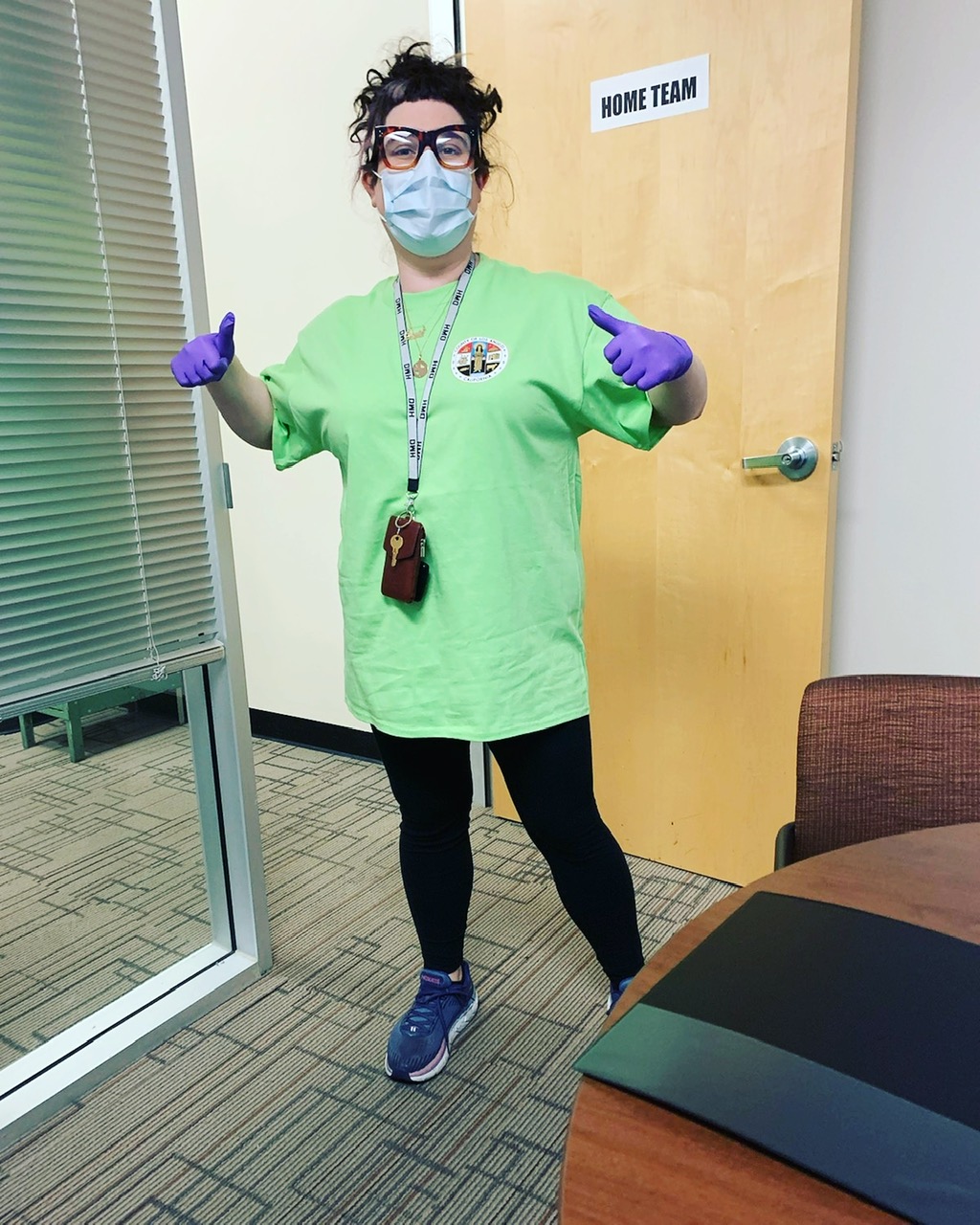
Lavit Maas in her personal protective gear.

Lavit Maas, who graduated in 2010 with her master’s in social welfare, works for the Los Angeles County Department of Mental Health’s Homeless Outreach and Mobility Engagement team, which provides care on Skid Row in downtown Los Angeles for homeless people with severe mental illness. Maas works with people who are among the most vulnerable to COVID-19.

“There’s a lot of elderly on Skid Row,” she told Abrams. “There’s a lot of people with medical conditions. It’s terrifying because we don’t know what to do [for them]. It makes me sad.”

Gabby Peraza, a 2019 master’s in social welfare graduate, works with foster youth as part of her job with the county department of children and family services. Soon after the safer at home order was issued, she encountered a young girl who needed to be transferred to a new placement but was frightened by Peraza’s protective gear. The child cowered in fear, hiding behind a foster parent.

“I had to make the decision. I’m either going to have a kid crying with me — and forcing that kid into a car with me,” Peraza recalled. “I said, ‘All right, I’m going to take this mask off, take these gloves off, and just engage with this kid.’ ”

Abrams has been recording her video interviews, and they are being edited for privacy and clarity before being posted for educational purposes on a showcase page maintained by the Luskin School. [Or scroll to the bottom to view.] So far, eight interviews have been completed and three have been posted publicly. In all, Abrams expects to do at least eight, with interviewees who reflect the broad swath of roles in which social workers are employed.

The idea came to Abrams soon after she and her family moved inside to comply with the social distancing order that was issued March 19 in Los Angeles County.

“I felt very disconnected from what was happening out in the real world,” Abrams said.

A conversation about the impact that the coronavirus pandemic was having on a close friend in a medical career led Abrams to realize that few people were thinking about her former and current students in UCLA’s social welfare program. She knew they were being affected too, but how? So she reached out on Facebook to see if anyone wanted to talk.

“Social workers, they’re playing a vital role in this pandemic,” said Abrams, noting that they interact with people at the margins of society who are often overlooked by the general public and in media reports. “What’s happening out in the community, especially with really vulnerable populations like homeless folks or people in the jails or children in foster care?”

Abrams said she has learned a lot from the Zoom calls. For one thing, the feeling of personal safety varies from person to person and job to job. A social worker in a hospital, for example, said she had access to personal protective equipment and felt safe. But those who work for government agencies, however, said they were fearful about their level of protection from the novel coronavirus.

Many social workers said they are facing unexpected dilemmas, and “working in spaces in which their clients are not getting what they need,” Abrams said. For example, an alumna who works in a correctional facility observed that people being imprisoned there were not given proper access to soap and water so they could comply with orders to frequently wash their hands.

A surprise from her interviews was discovering that some facilities and social services are actually being underutilized at the moment. The number of cases being handled is less than usual for Peraza and for Madison Hayes, another 2019 master’s in social welfare graduate, who works in Sacramento at a shelter for foster youth. For both, the decline in cases mirrors a steep drop-off in calls to crisis hotlines and a lack of referrals from the mandatory reporters at public schools.

“We know that things like abuse and other family problems are probably increasing, but calls … are decreasing so dramatically,” Abrams said. “Child protection is basically falling apart because there’s no window to the outside world.”

Gabby Peraza was a student commencement speaker in 2019.

Talking to social workers in the field has also reminded Abrams of the inequities that always exist in society.

“Access to health care: What does that mean?” Abrams asked. “Access to even having a home, to being sheltered? I am seeing the racial disparities and seeing the ways that the haves and the have-nots have different levels of access at this time.”

The interviews have also reminded Abrams of one other important — and more hopeful — aspect of society. People keep doing their jobs despite the risks involved.

“We all knew coming into this career that there’s always going to be a risk,” Peraza told Abrams about what it’s like to be a social worker during this crisis. “We just didn’t think it was going to be this type of risk.”

Peraza said it’s not about herself, it’s about the children and the families she serves.

Maas acknowledged the risks to her own health and the fear of getting infected and passing the virus along to a colleague or loved one. But there is work to be done.

“I love being a social worker and, to me, service is the only thing that matters,” Maas said. “Of course, you can’t be of service if you can’t protect yourself. I know that. But, especially in a time like this, I have to be of service.


Anxiety About Coronavirus Is Widespread in L.A. County Roughly 4 in 5 residents in new UCLA Luskin survey express deep concern about the health and economic impacts of COVID-19

April 8, 2020/1 Comment/in For Faculty, For Policymakers, Health Care, Politics, Public Policy, Public Policy News, School of Public Affairs, Social Welfare, Social Welfare News Zev Yaroslavsky /by Les Dunseith

By Les Dunseith

An overwhelming percentage (78%) of Los Angeles County residents say they are concerned that they or a member of their family will contract the novel coronavirus, according to a survey conducted between March 18 and 26 and released today by the UCLA Luskin School of Public Affairs.

A solid majority (61%) of respondents expressed confidence in the response by local officials to the pandemic, but only 39% had similar confidence in the federal response.

“There are two clear takeaways,” said Zev Yaroslavsky, director of the Los Angeles Initiative at the UCLA Luskin School of Public Affairs, which conducted the survey as part of an annual project known as the Quality of Life Index, or QLI. “The anxiety levels over contracting the virus and its economic impacts are overwhelming. And it’s a vote of confidence in the local public health agencies, while a vote of no confidence in the federal response.”

The results are based on interviews conducted with about 1,500  county residents during a period that happened to coincide with the implementation of stay-at-home orders in Los Angeles.

The QLI, which is a joint project of the UCLA Luskin Los Angeles Initiative and The California Endowment, is in its fifth year. Researchers poll a cross-section of Los Angeles County residents each year to understand the public’s perception of the quality of their own lives. Full results will be released April 23 as part of a UCLA event known as the Luskin Summit, which will be held virtually this year because of the ongoing health crisis. The survey has a margin of error of plus or minus 2.6%.

Respondents indicated that they were very concerned (49%), somewhat concerned (29%), not too concerned (13%) or not concerned at all (7%) that they or a member of their family would contract the novel coronavirus. Women over the age of 50 expressed the greatest concern (62% were very concerned).

When asked whether the health crisis had or will have a negative economic impact on themselves personally, more than four out of five respondents (83%) said they were concerned, with 56% saying very concerned and 27% saying somewhat concerned. Again, women expressed the most concern, although in this case it was slightly higher among women aged 18 to 49 (61%) than among women aged 50 to 64 (60%).

Two questions were asked about the response of public health and government officials to the COVID-19 pandemic, and the results were almost mirror opposites. When asked if they were confident in the response of officials in Los Angeles County, 61% of respondents said yes and 31% said no, but just 39% said yes and 55% said no when asked if they were confident in the response of officials in the federal government. These results were generally consistent among demographic and geographic groups.

“In virtually no major demographic group did we find less than a majority expressing confidence in local officials,” Yaroslavsky said.

Some of the highest marks for local officials came from those aged 50 to 74 (69%), men aged 50 to 64 (72%) and women 65 and older (70%), as well as Latinos over age 50 (70%). Residents in every L.A. County supervisorial district expressed at least 59% confidence as a whole.

Hardly any major demographic group expressed majority confidence in the federal response. The lowest confidence levels came from 18-to-39-year-olds (33%), African Americans (32%), women aged 18 to 49 (31%), those with annual incomes above $120,000 (30%), whites aged 18 to 49 (23%) and residents of the 3rd Supervisorial District (28%), which encompasses Westside communities such as Santa Monica and Malibu, plus the north and western sections of the San Fernando Valley.

The QLI was prepared in partnership with the public opinion research firm Fairbank, Maslin, Maullin, Metz & Associates.

UCLA Researchers Lead Coronavirus Transportation Response Research projects related to the health crisis will be fast-tracked for funding by the UCLA Institute of Transportation Studies and partners

April 3, 2020/0 Comments/in Education, For Faculty, For Policymakers, For Students, Health Care, Research Projects, School of Public Affairs, Transportation, Urban Planning Brian D. Taylor /by Claudia Bustamante

By Claudia Bustamante

Amid the coronavirus outbreak, the UCLA Institute of Transportation Studies will fast-track funding for research projects related to COVID-19 and its effects on public health, the economy and transportation, with those submissions due by April 19 and funding to be dispersed by June.

As part of its research goals for the next fiscal year, UCLA ITS and sister institutes at UC Berkeley, UC Davis and UC Irvine pivoted priorities to investigate the effect of the novel coronavirus and COVID-19 on transportation in the United States. This quick adjustment will allow researchers across the University of California system to collaborate and harness their collective expertise in transportation engineering, planning and policy.

Transportation and transit use have rapidly shifted in the country due to social distancing recommendations, shelter-in-place restrictions, quarantines and other mitigation efforts meant to slow the spread of the virus.

The collective UC Institute of Transportation Studies will prioritize research projects:

  • looking into the response to the public health emergency, including the mobility needs of essential workers and vital goods;
  • the capacity of both the private and public sectors to meet transportation needs during the crisis;
  • the substitution of technology-enabled access for mobility in response to movement limitations.

It will also fund projects focused on the recovery of transportation services and systems when this public health emergency ebbs, including coping with the backlog of goods and people movement.

Brian Taylor, chair of UC ITS, said the California Legislature and executive branches, as well as regional and local governments and agencies, have come to rely on the statewide institute’s expertise and assistance in times of need.

“We aim to produce research that meaningfully informs public officials in making critical, and sometimes difficult, decisions about California’s transportation systems,” he said. “Now more than ever, UC ITS is committed to supporting the state with data and research to help it respond to and recover from the effects of this terrible pandemic in the weeks, months and years ahead.”

Taylor also serves as director of the UCLA branch and a professor of urban planning and public policy at the UCLA Luskin School of Public Affairs.

Established by the California Legislature in 1947, UC ITS funds about 50 research projects a year that cover a wide variety of topics, including congestion management, performance evaluation for state transportation programs and policies, climate change mitigation strategies, micromobility like scooters and bike share, among others. Over the past 25 years, the four ITS branches collectively have formed one of the world’s preeminent university transportation research centers.

The institute’s annual research program will divvy up about $800,000 among projects tied to state-established priorities, including the COVID-19 response and other topics related to transportation and housing, transportation equity, innovative mobility, travel behavior, aviation, safety, and active transportation.

More information about the COVID-19 response and recovery solicitation is available here.

What the Ebola Outbreak Could Teach Us About How to Contain the Novel Coronavirus New study underscores the importance of public engagement and trust during health crises

March 27, 2020/0 Comments/in For Policymakers, Health Care, Public Policy, Public Policy News, Research Projects, School of Public Affairs Darin Christensen /by Mary Braswell

A new research paper examining the 2014-15 Ebola outbreak in Africa could hold crucial insights for policymakers grappling with the novel coronavirus pandemic — namely, the importance of public engagement and trust during health crises.

The study, co-authored by Assistant Professor of Public Policy Darin Christensen of the UCLA Luskin School of Public Affairs, shows that where people lack confidence in their health providers, they are less likely to seek testing and treatment when they feel sick. This stymies efforts to identify, treat and isolate infected patients to limit further contagion.

By the end of the Ebola outbreak in early 2016, the U.S. Centers for Disease Control and Prevention estimated there were more than 28,000 cases of the disease in West Africa — with roughly half coming from Sierra Leone. Simple interventions that encouraged people to seek treatment increased reporting of Ebola cases by 60%, which the authors estimate reduced the virus’ reproduction rate by 19%.

‘Strengthening ties between health providers and the communities they serve could bolster containment efforts as the current pandemic spreads to poorer countries,’ researcher Darin Christensen says.

“The epidemic generated tremendous fear, and families faced tough choices about whether to care for loved ones at home or report to clinics for testing and, if needed, isolation,” said Christensen, a political economist who holds a joint appointment with UCLA’s department of political science. “That choice may seem obvious in a rich country. But in poorer countries, like Sierra Leone, citizens often have little confidence that health providers will treat them with compassion or deliver effective care. Interventions that build that trust encourage timely testing — exactly what was needed to contain Ebola and, now, COVID-19.”

Conducted across 254 government-run health clinics covering approximately 1 million people — more than 15% of Sierra Leone’s population — the research tested the effects of two interventions aimed at increasing public involvement with, and trust in, the country’s health system.

Under the first intervention, community members participated in meetings with local health clinics, and articulated complaints and suggestions designed to improve health services.

The clinic staff also shared public health advice with community members, like encouraging women to come into the clinic to give birth. This experiment turned patients into “accountability agents who hold health system actors to account,” according to the paper.

The other intervention was an incentive program that gave out awards to health care workers at clinics that were doing a good job of providing services. The intent was to motivate providers to encourage their clinics to provide a higher quality of care.

The study found that these accountability interventions prior to the Ebola outbreak spurred a vast increase in testing and the reporting of Ebola cases — including those who tested both positive and negative for the virus. The reporting did not reflect higher rates of disease in the areas that benefited from the interventions. The higher rates of testing resulted in more effective containment, and ultimately, there were 30% fewer deaths among Ebola patients in the areas that benefited from the interventions.

As governments, particularly in less-developed countries, seek to contain the spread of COVID-19, “there has rightfully been a lot of focus on the test kits and other equipment needed to fight this virus,” Christensen said. “But it’s also important to think about how we encourage people to change their behavior — to get tested, to self-quarantine. Our research suggests that strengthening ties between health providers and the communities they serve could bolster containment efforts as the current pandemic spreads to poorer countries.

“Many governments don’t have the capacity or mandate to enforce strict restrictions on travel or gatherings,” Christensen concluded. “They must appeal to their citizens to voluntarily change behavior. The Ebola epidemic demonstrates that public engagement and confidence help determine whether people heed those calls.”

The study was co-authored by Christensen and Oeindrila Dube of the University of Chicago, Johannes Haushofer of Princeton University, Bilal Siddiqi of UC Berkeley and the Center for Effective Global Action, and Maarten Voors of Wageningen University. The research team also has a forthcoming companion piece that underscores the effectiveness of crisis-response measures that emphasize community engagement.


Graduating Students Seek Out Solutions Near and Far The capstone research projects that are now part of all UCLA Luskin programs tackle local challenges or examine issues that extend far beyond campus and California

July 16, 2019/0 Comments/in Alumni, Climate Change, Development and Housing, Diversity, Education, For Faculty, For Policymakers, For Students, For Undergraduates, Global Public Affairs, Health Care, Politics, Public Policy, Public Policy News, Research Projects, School of Public Affairs, Social Welfare, Social Welfare News, Transportation, Urban Planning Amy Ritterbusch, Ian Holloway, J.R. DeShazo, Laura Wray-Lake, Todd Franke, Vinit Mukhija /by Les Dunseith

By Stan Paul

Newly graduated Social Welfare master’s degree recipient Deshika Perera’s research project extended across the United States and as far north as Alaska.

Evan Kreuger helped create a nationwide database as a basis for his research into LGBT health and health outcomes to culminate his Master of Social Welfare (MSW) studies at the UCLA Luskin School of Public Affairs.

Perera and Kreuger are members of the first graduating class of Social Welfare students to complete a capstone research project as a graduation requirement for their MSW degrees. Like their UCLA Luskin counterparts in Urban Planning and Public Policy who must also complete capstones, working individually and in groups to complete research and analysis projects that hone their skills while studying important social issues on behalf of government agencies, nonprofit groups and other clients with a public service focus.

“It’s been fun; it’s been interesting,” said Perera, who worked with Associate Professor Ian Holloway. Her qualitative study examined the relationship between the Violence Against Women Act and nonprofits, focusing on programs that provide services to indigenous survivors of sexual assault and domestic violence on reservations and in remote areas of the U.S.

As a member of the pioneering class for the MSW capstone, Perera said that although the new requirement was rigorous, she enjoyed the flexibility of the program.

“I feel we got to express our own creativity and had more freedom because it was loosely structured,” Perera said, explaining that she and her fellow students got to provide input on their projects and the capstone process. The development of the requirement went both ways. “Because it was new, [faculty] were asking us a lot of questions,” Perera said.

“We strongly believe that this capstone experience combines a lot of the pieces of learning that they’ve been doing, so it really integrates their knowledge of theory, their knowledge of research methods and their knowledge of practice,” said Laura Wray-Lake, associate professor and MSW capstone coordinator. “I think it’s really fun to see research come alive and be infused with real world practice.”

Krueger, who also was completing a Ph.D. in public health at UCLA while concluding his MSW studies, previously worked as a research coordinator for a national survey on LGBT adults through the UCLA School of Law’s Williams Institute. He said he had a substantial amount of data to work with and that he enjoyed the opportunity to combine his research interests.

“I’m really interested in how the social environment influences these public health questions I’m looking at,” said Kreuger who has studied HIV and HIV prevention. “I kind of knew what I wanted to do, but it was a matter of pulling it all together.”

For years, MSW students have completed rigorous coursework and challenging educational field placements during their two-year program of study, and some previous MSW graduates had conducted research in connection with sponsoring agencies. This year’s class included the first MSW recipients to complete a new two-year research sequence, Wray-Lake said.

◊

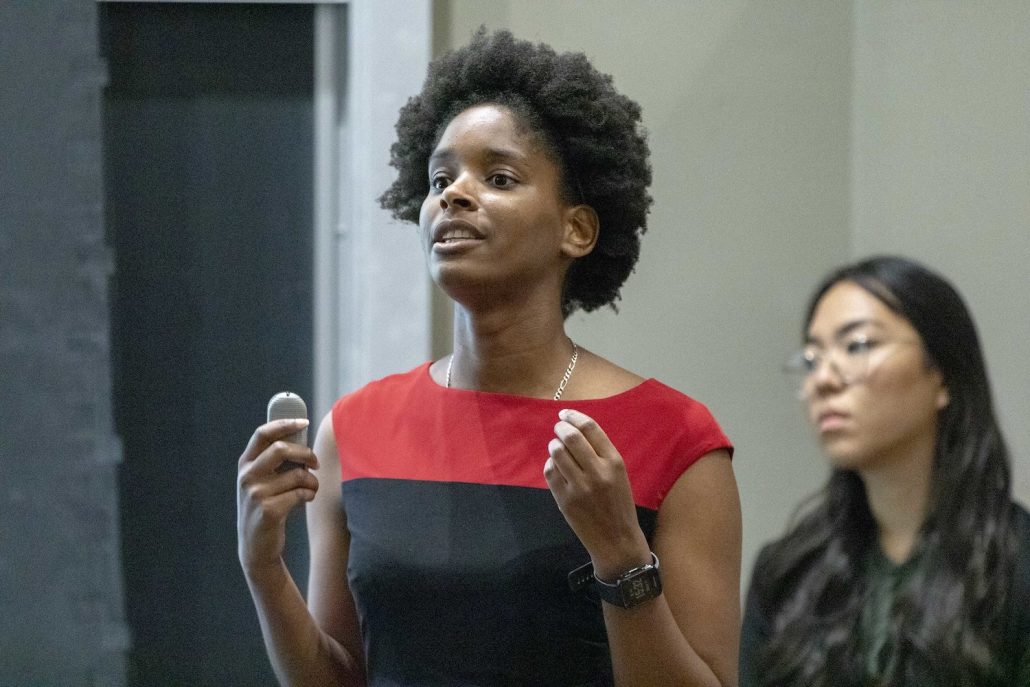
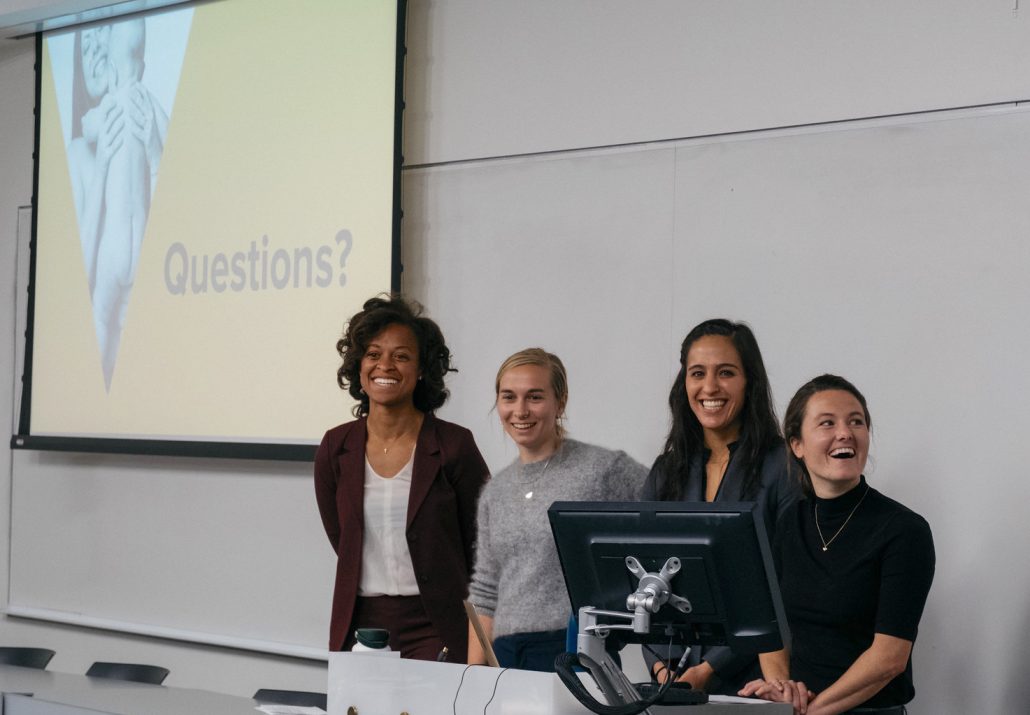
Oceana Gilliam shares her team‘s research on juvenile justice in L.A. County. Photo by Les Dunseith

View more photos from Public Policy’s APP presentations.

Applied Policy Projects

In UCLA Luskin Public Policy, 14 teams presented a year’s worth of exacting research during this year’s Applied Policy Project presentations, the capstone for those seeking a Master of Public Policy (MPP) degree.

Public Policy students master the tools to conduct policy analysis during their first year of study. In the second year, they use those tools to create sophisticated policy analyses to benefit government entities and other clients.

The APP research is presented to faculty, peers and curious first-year students over the course of two days. This May’s presentations reflected a broad spectrum of interests.

Like some peers in Social Welfare, a few MPP teams tackled faraway issues, including a study of environmental protection and sustainable tourism in the South Pacific. Closer to home, student researchers counted people experiencing homelessness, looked at ways to reform the juvenile justice system, sought solutions to food insecurity and outlined ideas to protect reproductive health, among other topics.

“Our students are providing solutions to some of the most important local and global problems out there,” said Professor JR DeShazo, chair of UCLA Luskin Public Policy.

After each presentation, faculty members and others in the audience followed up with questions about data sources, methodologies and explanations for the policy recommendations.

◊

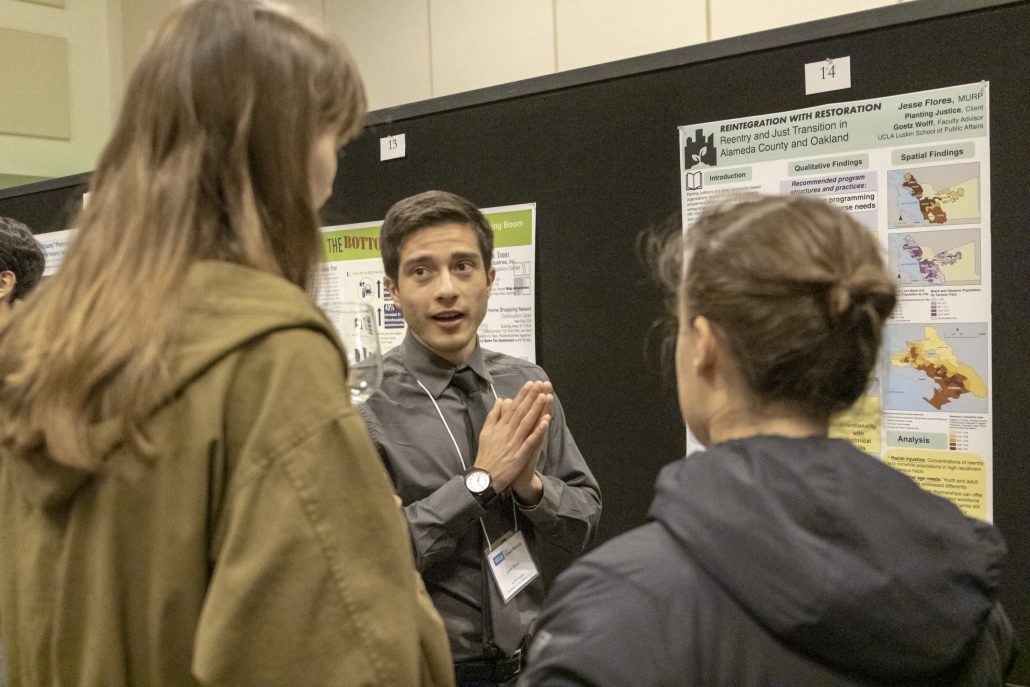
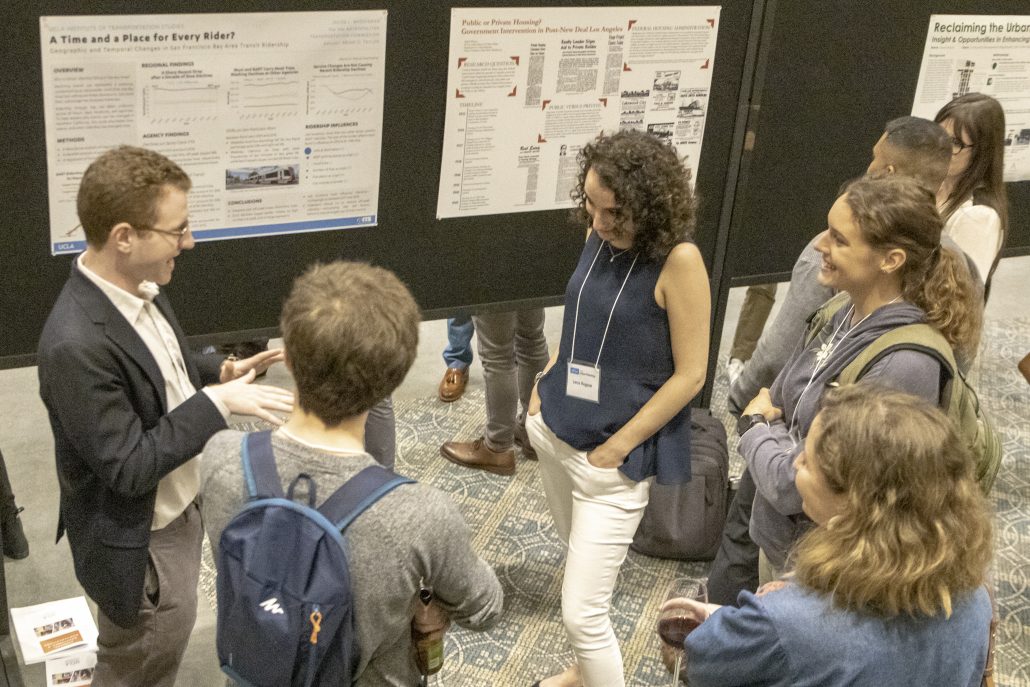
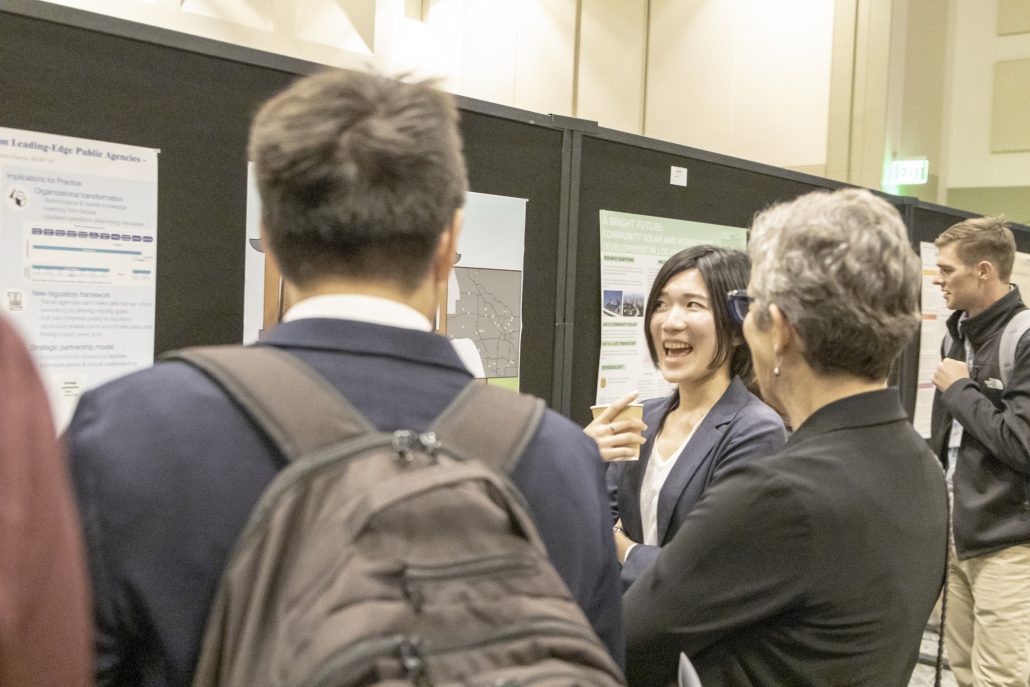
MURP Jesse Flores talks about his project during the poster session. Newly admitted students to UCLA Luskin Urban Planning are among those invited to CCC each year. Photo by Les Dunseith

View more photos from Urban Planning’s capstone presentations.

Careers, Capstones and Conversations

Recently graduated UCLA Luskin urban planners displayed their culminating projects in April at the annual Careers, Capstones and Conversations networking event, following up with final written reports for sponsoring clients.

Many planning students work individually, but a cohort of 16 Master of Urban and Regional Planning (MURP) students worked together to complete a comprehensive research project related to a $23 million grant recently received by the San Fernando Valley community of Pacoima. The project was the culmination of almost six months of analysis in which the MURP students helped the nonprofit Pacoima Beautiful, other community partners and government agencies prepare a plan seeking to avoid displacement of residents as a result of a pending major redevelopment effort.

“I think our project creates a really amazing starting point for further research, and it provided concrete recommendations for the organizations to think about,” said Jessica Bremner, a doctoral student in urban planning who served as a teaching assistant for the class that conducted the research. Professor Vinit Mukhija, chair of UCLA Luskin Urban Planning, was the course instructor.

◊

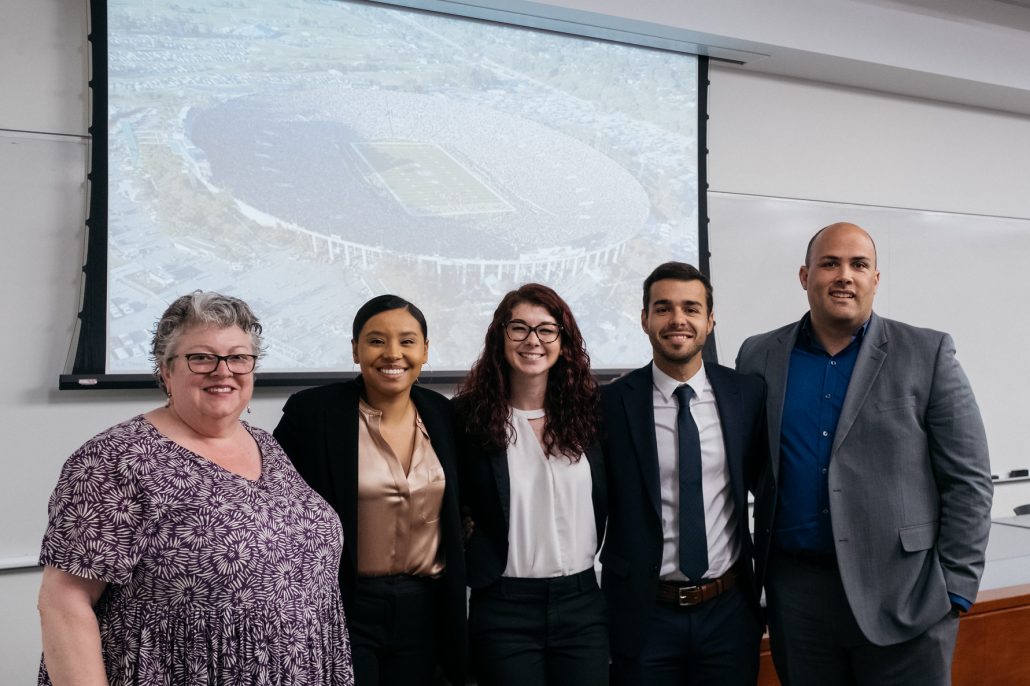
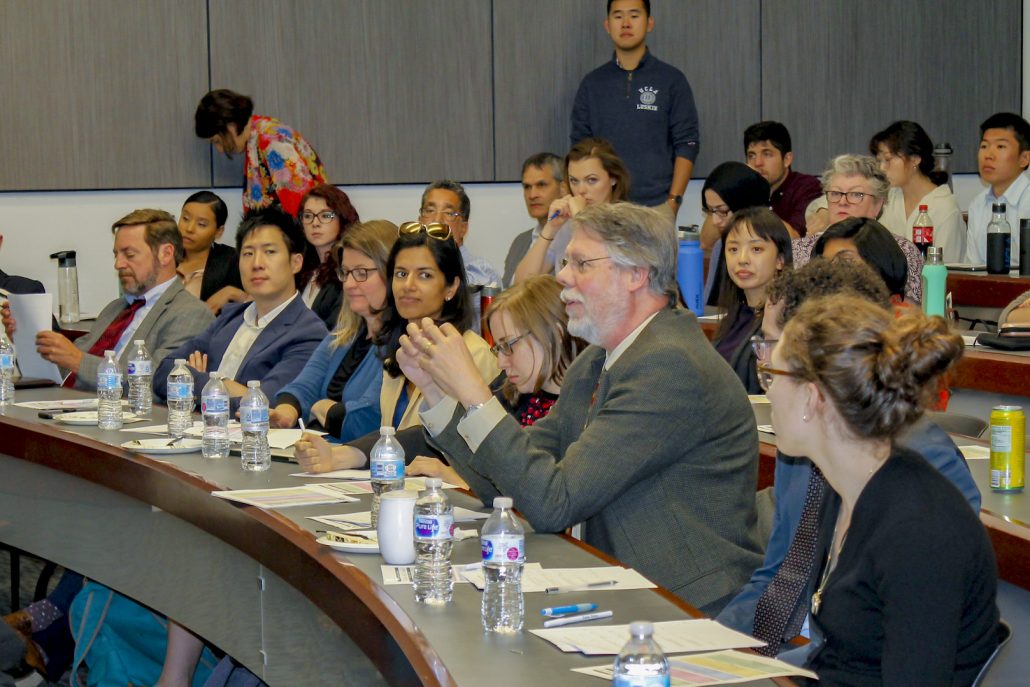
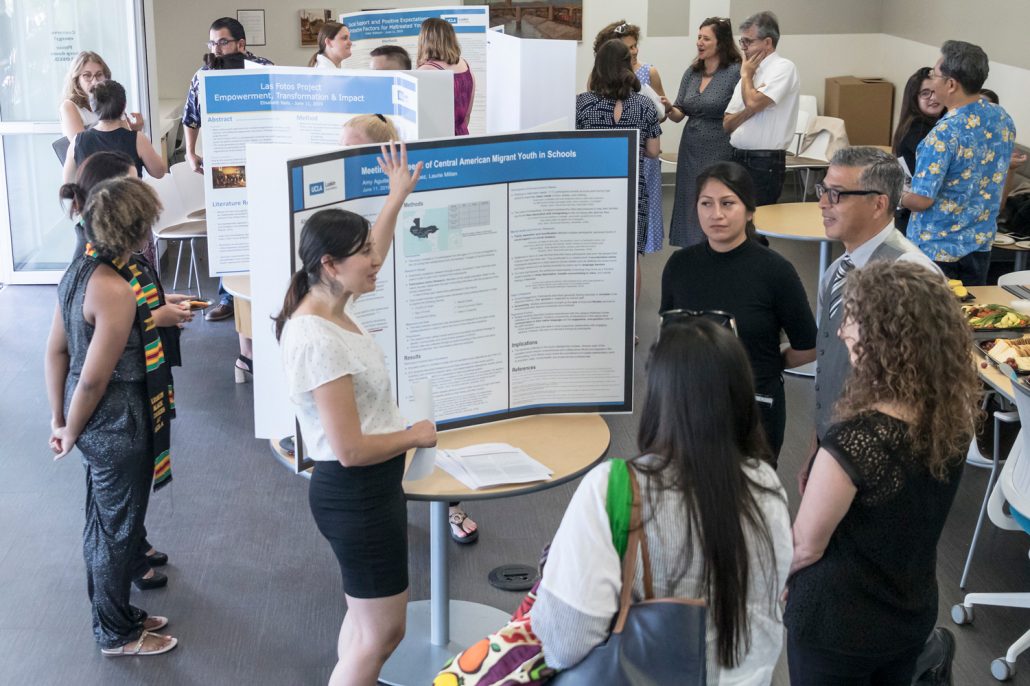
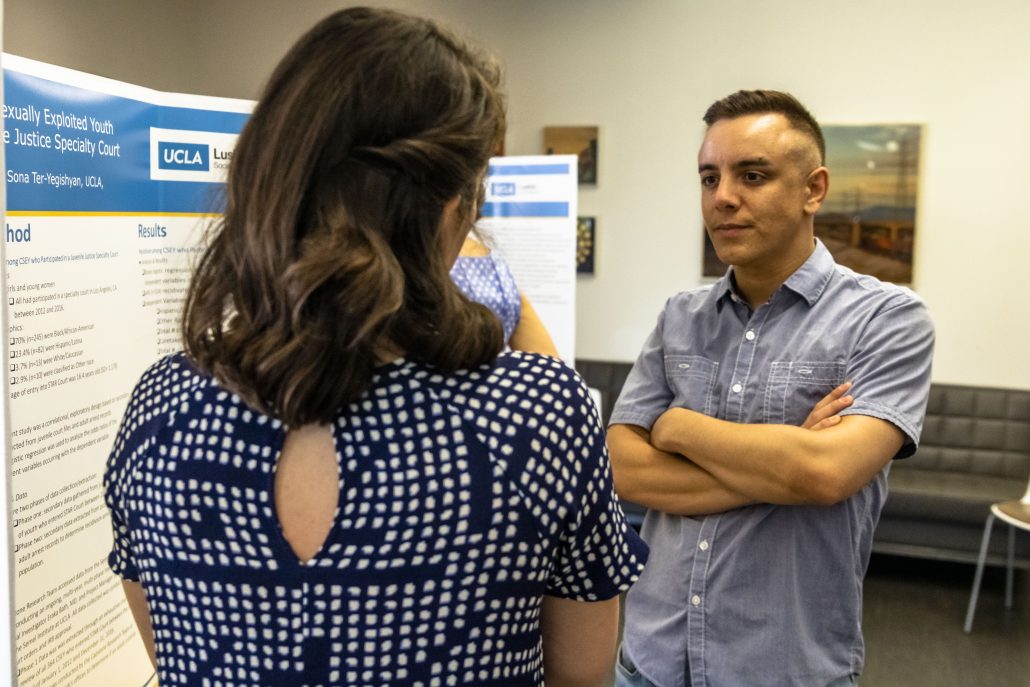
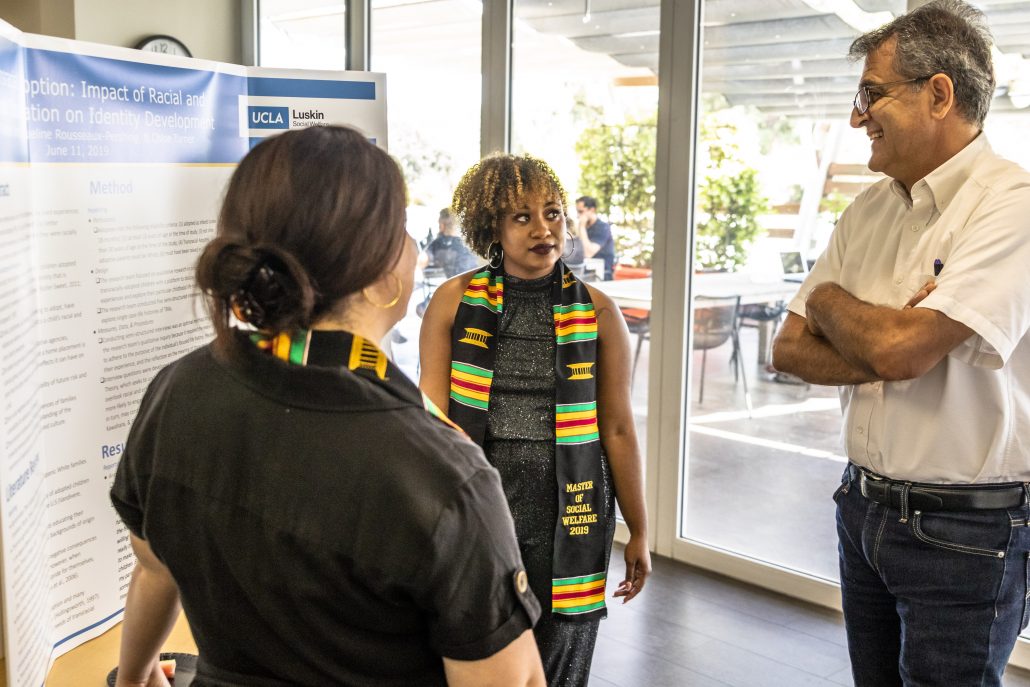
UCLA Luskin faculty, students and guests gather to hear MSW students present their capstone research. Photo by Les Dunseith.

View more photos from Social Welfare’s capstone presentations. 

MSWs Test Research Methods

In Social Welfare, the projects represented a variety of interests and subject matter, said Wray-Lake, pointing out that each student’s approach — quantitative and/or qualitative — helps distinguish individual areas of inquiry. Some students used existing data sets to analyze social problems, she said, whereas others gathered their own data through personal interviews and focus groups. Instructors provided mentoring and training during the research process.

“They each have their own challenges,” said Wray-Lake, noting that several capstones were completed in partnership with a community agency, which often lack the staff or funding for research.

“Agencies are very hungry for research,” she said. “They collect lot of data and they have a lot of research needs, so this is a place where our students can be really useful and have real community impact with the capstones.”

Professor of Social Welfare Todd Franke, who serves as a lead instructor for the capstone projects, said his students worked on issues that impact child welfare. Others studied the relationship between child neglect and involvement with the juvenile justice system. Another capstone focused on predictors of educational aspirations among black and Native American students. The well-being of caregivers and social workers served as another study topic.

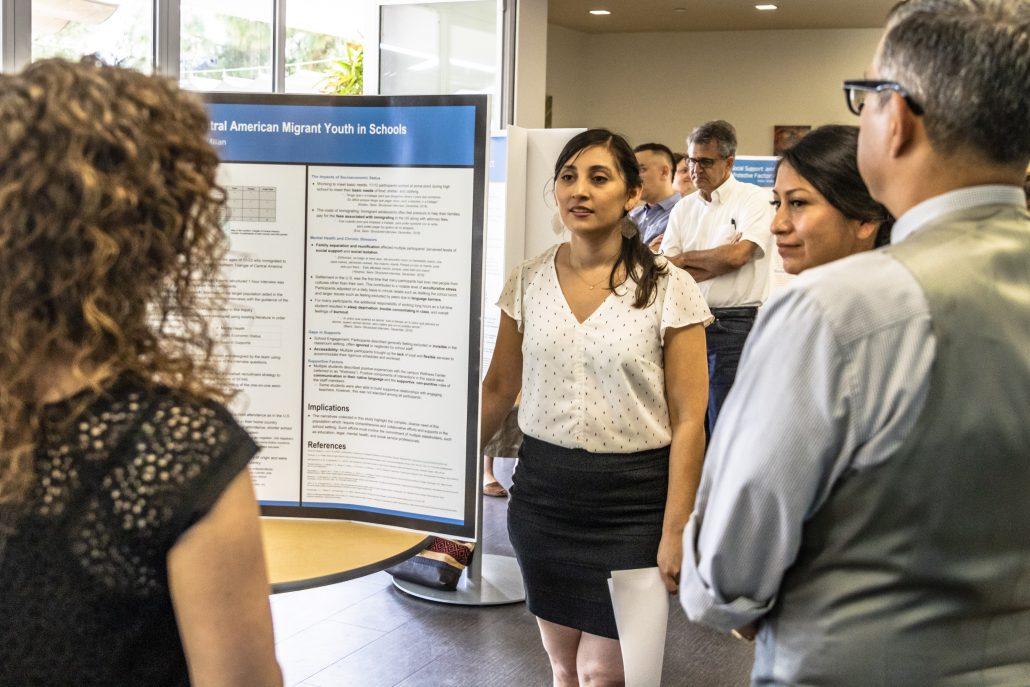
Assistant Professor Amy Ritterbusch, who also served as a capstone instructor, said her students focused on topics that included education beyond incarceration, the needs of Central American migrant youth in schools, and the unmet needs of homeless individuals in MacArthur Park. One project was cleverly titled as “I’m Still Here and I Can Go On: Coping Practices of Immigrant Domestic Workers.”

“They all did exceptional work,” Ritterbusch said.

When Psychiatric Medications Are Abruptly Discontinued, Withdrawal Symptoms May be Mistaken for Relapse UCLA research contributes to assessing the reliability of industry-funded drug trials

April 19, 2019/0 Comments/in Education, For Faculty, For Policymakers, For Students, Health Care, Research Projects, School of Public Affairs, Social Welfare, Social Welfare News David Cohen /by Stan Paul

By Stan Paul

Withdrawal symptoms following the practice of discontinuation, or abruptly “coming off,” of psychiatric drugs in randomized clinical trials may be mistaken for relapse and bolster the case for continued use of medication, according to two new studies by UCLA researchers published in the journal Psychotherapy and Psychosomatics.

Principal investigator David Cohen, professor of social welfare in the UCLA Luskin School of Public Affairs, said that clinical trials employing a drug discontinuation procedure had not previously been studied systematically.

“For years, observers have asked whether people getting more symptoms when they came off their medication was their disorder returning or the withdrawal effects from drugs that could be reduced by more gradual, patient-centered discontinuation,” Cohen said.

In light of the difficulties that people have in discontinuing psychiatric medications, Cohen sought to answer that question, joined by co-author Alexander Récalt, a doctoral student in social welfare at UCLA Luskin who is also pursuing a master’s degree at the UCLA Fielding School of Public Health.

They looked at how and why antidepressants, antipsychotics and stimulants were deliberately discontinued from trial subjects in more than 80 randomized controlled trials from 2000–2017. The study also included benzodiazepines, a class of drugs such as Valium, upon which long-term users may become dependent and experience withdrawal symptoms.

In the first study, the researchers found:

  • In 67 percent of studies, no justification was given for a particular discontinuation strategy, which was abrupt or lasted less than two weeks in most cases (60 percent).
  • In 44 percent of studies that related to antidepressants, stimulants and antipsychotics, researchers used mainly abrupt discontinuation to test whether the drugs prevented relapse. Yet, researchers in most studies did not indicate that misclassifying a withdrawal reaction could occur.
  • Most studies incorporating benzodiazepines used discontinuation differently. These studies recognized that withdrawal symptoms were common, and they employed longer drug-tapering periods (more than eight weeks in most cases) to help people successfully come off and stay off these drugs.

The pharmaceutical industry was involved in 70 percent of the 80 studies; in most of the relapse-prevention studies; but in few of the benzodiazepines studies with longer tapering periods, according to the researchers.

Cohen, who also serves as associate dean for research and faculty development at UCLA Luskin, observed across the 80 studies that, in addition to testing relapse prevention, drug discontinuation was employed to chart withdrawal effects and to compare different methods of managing older and frail residents in institutions, given the known damaging effects of drugs taken over the long term.

But only a single study out of the 80 actually employed the discontinuation procedure in order to distinguish clearly between “relapse” and “withdrawal symptoms,” the researchers noted.

“This suggests to us that sponsors or researchers of discontinuation studies are really uninterested in exploring this crucial question,” Cohen said.

“Distinguishing between them requires careful history taking, an open mindset from the clinician and a degree of suspicion that the discontinuation process itself may be contributing.”

In many first-person accounts, patients have complained that they were not warned about these effects or told how slowly they should come off, Cohen said. Instead, their prescriber told them that the effects confirmed that the patients were better off taking the medication and therefore should continue to take it.

“The disconnect continues to drive a wedge between patients and their prescribers and is increasingly discussed in the media, as about one in six adult Americans take — increasingly for years — psychiatric drugs,” Cohen said.

“Our findings, if confirmed by other researchers looking at this literature, contribute to helping decide whether industry-funded drug trials in psychiatry are — as critics have maintained for years — infomercials for drugs or credible scientific investigations,” he said.

In their second study, Cohen and Récalt focused on whether they could detect evidence in the relapse-prevention randomized control trials that an actual misclassification — a confound — of relapse with withdrawal was occurring.

“Most publications do not raise the issue openly, so they do not provide the data to examine this issue directly,” said Cohen, explaining that an indirect method to test their hunch was used. Because withdrawal symptoms are known to begin to occur within an interval of time after drug discontinuation, the researchers focused on the timing of symptoms for drug-continued vs. drug-discontinued participants. They looked for evidence that end-of-study symptoms might already have been present during the study at set discontinuation times. A 50 percent rate of occurrence was chosen to indicate a substantial, non-trivial possible misclassification, Cohen said.

Few studies provided the data to actually test the hypothesis, even indirectly. Among the 14 studies that did provide the necessary data, about three-quarters showed evidence that withdrawal may be mistaken for relapse.

Relapse prevention trials that use psychiatric drug discontinuation commonly conclude that drugs work because they help prevent relapse, Cohen pointed out.

In line with a stream of previous warnings in the literature, the two studies show that more justifications are needed for why and how these discontinuation trials are conducted. Clinicians and consumers should not accept conventional interpretations of what is actually occurring to deliberately drug-discontinued participants in the trials, Cohen said, “and what this could mean for long-term use of psychiatric medications by ordinary people around the world.”

Page 3 of 41234

Recent Posts

  • One Year After the Fires, Recovery Remains Uneven January 8, 2026
  • Oil and Gas Companies Sacrificing Plastic-Burdened Communities January 7, 2026
  • A sixth-generation Altadena resident presents a community recovery roadmap after the fires January 7, 2026
  • Risks of Privatization of Fannie Mae and Freddie Mac January 6, 2026
  • Pandemic Relief Programs Helped Small Businesses Survive, but Fraud Risk Remains January 5, 2026

Contact

UCLA Luskin School of Public Affairs

3250 Public Affairs Building - Box 951656
Los Angeles, CA 90095-1656

Campus Resources

  • Maps, Directions, Parking
  • Directory
  • Contact
  • Academic Calendar
  • Careers
  • Diversity
  • University of California
  • Terms of Use

Follow

The statements on this page represent the views of people affiliated with the Luskin School of Public Affairs and do not necessarily represent the views of the University of California, or UCLA or its Chancellor.

Posts and comments by individuals at UCLA on social media channels may not reflect the opinions or policies of UCLA, the University of California or the Luskin School, nor its benefactors and academic partners.

Scroll to top