• Public Policy
  • Social Welfare
  • Real Estate Development
  • Urban Planning
  • Luskin Home
  • Undergraduate Program
  • Stay in Touch
  • Events Calendar
  • Give Now
  • About
    • Our Dean
    • Board of Advisors
    • Contact Us
    • Visit Us
    • Diversity, Disparities and Difference
    • Communications
      • UCLA Luskin in the News
      • Luskin Forum Online
  • Departments
    • Public Policy
    • Real Estate Development
    • Social Welfare
    • Undergraduate Program
    • Urban Planning
  • Apply
    • Master of Public Policy
    • Master of Real Estate Development
    • Master of Social Welfare
    • Master of Urban and Regional Planning
      • Double Degree With Sciences Po
    • PhD in Social Welfare
    • PhD in Urban Planning
    • Undergraduate Programs
  • Faculty
    • All
    • Public Policy
    • Social Welfare
    • Urban Planning
    • Real Estate Development
    • Faculty Executive Committee
    • Open Positions
  • Student Affairs & Alumni
    • Career Services
      • Employers
      • Fellowships
    • Student Support
    • Graduate Resource Library
    • Alumni Relations
  • Support
  • Programs
    • Research Centers & Affiliated Research
    • CA Title IV-E Education Program
    • Global Public Affairs (GPA)
    • Data Analytics Certificate
    • Luskin Lecture Series
    • Luskin Summit
    • UCLA Luskin California Policy Briefing
    • Public Service Weekend
    • Commencement
  • Administration
    • Financial Services
    • Events Office
    • Information Technology
  • Search
  • Menu Menu

Archive for category: Politics

Parts of L.A. Hit Hardest by COVID-19 Also Among Those Where Census Response Lags 2010 UCLA analysis shows ‘extreme undercount’ shaping up in low-income and minority neighborhoods

May 12, 2020/2 Comments/in Development and Housing, Diversity, For Faculty, For Policymakers, For Students, For Undergraduates, Health Care, Latinos, Politics, Public Policy, Public Policy News, Research Projects, School of Public Affairs, Social Welfare, Social Welfare News, Urban Planning ong /by Les Dunseith
By Les Dunseith

An analysis by UCLA researchers has found that many of the areas in Los Angeles County with the lowest response rates to the 2020 U.S. Census are also among the locations with the most cases of COVID-19.

In the 2010 census, about 63% of Los Angeles County households responded by mail. This year, according to Paul Ong, a UCLA research professor, the county is on pace for just 52% of households to report their information.

Ong, who also is director of the UCLA Center for Neighborhood Knowledge, spearheaded the analysis of census responses through April 30, which found that the differences in response rate between 2020 and 2010 vary widely by census tract throughout the county. While the response rate for 2020 is about 11 percentage points below what it was in 2010 for the county overall, in many parts of the county the rate is lagging 2010 rates by 21.6% or more.

The communities whose 2020 response rates are lagging 2010 rates the most — 29 percentage points on average — include lower-income neighborhoods in Boyle Heights and East Los Angeles, a majority of South Los Angeles, the Harbor area and Van Nuys. When the researchers compared the census response data to the Los Angeles County Department of Public Health’s tally of COVID-19 cases, they found those immigrant-rich areas are also among the places with the greatest numbers of people with coronavirus.

The census is currently in its self-reporting phase, in which officials are encouraging everyone to participate on their own — whether by mail, phone or online. That phase had been scheduled to end July 31, but officials have pushed the deadline back to Oct. 31 amid the pandemic. Under normal circumstances, the census bureau addresses low response rates in specific neighborhoods by sending census takers to conduct in-person interviews. But with the coronavirus pandemic, that approach will be difficult in 2020.

“As things stand now, the only way to prevent an extreme undercount in some areas of the county would be for a horde of in-person census takers to descend on parts of the city with the greatest chance of coronavirus transmission,” Ong said. “Given the ongoing health concerns, it remains to be seen whether in-person interviews will even be viable during the current census.”

The countywide lag is roughly the same as a national lag of 11 percentage points reported in a related study published by the same researchers on April 30.

The decennial census is required so that congressional seats can be reapportioned to account for geographic shifts in the population, and it is used for redrawing electoral district boundaries for congressional, state legislative and local jurisdictions, and for allocating public funds, which makes an accurate count particularly important.

Ong, who has served as an adviser to the U.S. Census Bureau as part of his scholarly activities at the UCLA Luskin School of Public Affairs, said Los Angeles County is facing an unprecedented challenge in completing the 2020 count. The difficulty is magnified by the COVID-19 crisis, but several other factors contribute to the problem.

First, although making online responses an option for the first time should make participation easier for some, internet access is a barrier for many people — particularly those in areas with the lowest response rates, including the urban cores of Los Angeles and other local cities such as Long Beach. Language and cultural differences also may lower self-response rates.

In general, response rates have been highest in more affluent neighborhoods with significant percentages of white residents, but the analysis found some exceptions. For example, a few affluent tracts of Los Angeles County have rates of response that are well behind 2010, including the Santa Monica Hills and some coastal areas. Ong said increases in vacancies and seasonal housing, or the conversion of some residences to vacation and short-term rentals in those areas could partly explain those changes. A census tract with fewer permanent residents today than in 2010 would logically have fewer census responses this year, he noted.

The UCLA study urges public officials to take additional actions to mitigate the direct and indirect effects of COVID-19 on the census count.

The researchers noted that efforts could be made to lessen the impact of incompatible data sets when comparing census data to COVID-19 cases, for example. They also said that monitoring census responses at the tract level in real time could help in targeting communication to some neighborhoods, particularly low-income and predominantly minority communities that have historically been among the most difficult to accurately count.

“It is critical to quickly understand what is happening on the ground so adjustments can be made rapidly,” according to the report. “The amount of time left to fairly and accurately complete the 2020 census is very short, too short to wait for the normal slow institutional turnaround time.”

Paul Ong also is a founder of Ong & Associates, an economic and policy analysis consulting firm specializing in public interest issues, which provided services pro bono for the study. The study’s other co-authors are Jonathan and Elena Ong.

Participation in 2020 U.S. Census Is Falling Behind UCLA analysis shows the current rate of response is at least 11 percentage points lower than in 2010

April 30, 2020/0 Comments/in Diversity, For Faculty, For Policymakers, For Students, For Undergraduates, Latinos, Politics, Public Policy, Public Policy News, School of Public Affairs, Social Welfare News, Urban Planning /by Les Dunseith

By Les Dunseith

The national response rate to the U.S. Census is lagging well behind where it was at a similar point a decade ago, according to an analysis spearheaded by Paul Ong, a research professor and director of the UCLA Center for Neighborhood Knowledge.

Ong said shutdown orders related to the novel coronavirus pandemic seem to be a factor in suppressing the response rate, which is now at least 11 percentage points lower than it was for the 2010 census through late April.

The UCLA researchers noted that the self-response phase of the current census began March 12, which happened to coincide with mandated restrictions on gatherings and physical movements imposed in the state of Washington by Gov. Jay Inslee — some of the earliest such rules in the nation. His order also closed all schools in the three counties most affected by the coronavirus at the time.

Within a week, even more extreme physical distancing measures were in effect in states such as Washington, California and New York — and soon throughout the nation — as public officials ordered businesses to close and citizens to remain at home in an attempt to slow the advance of COVID-19.

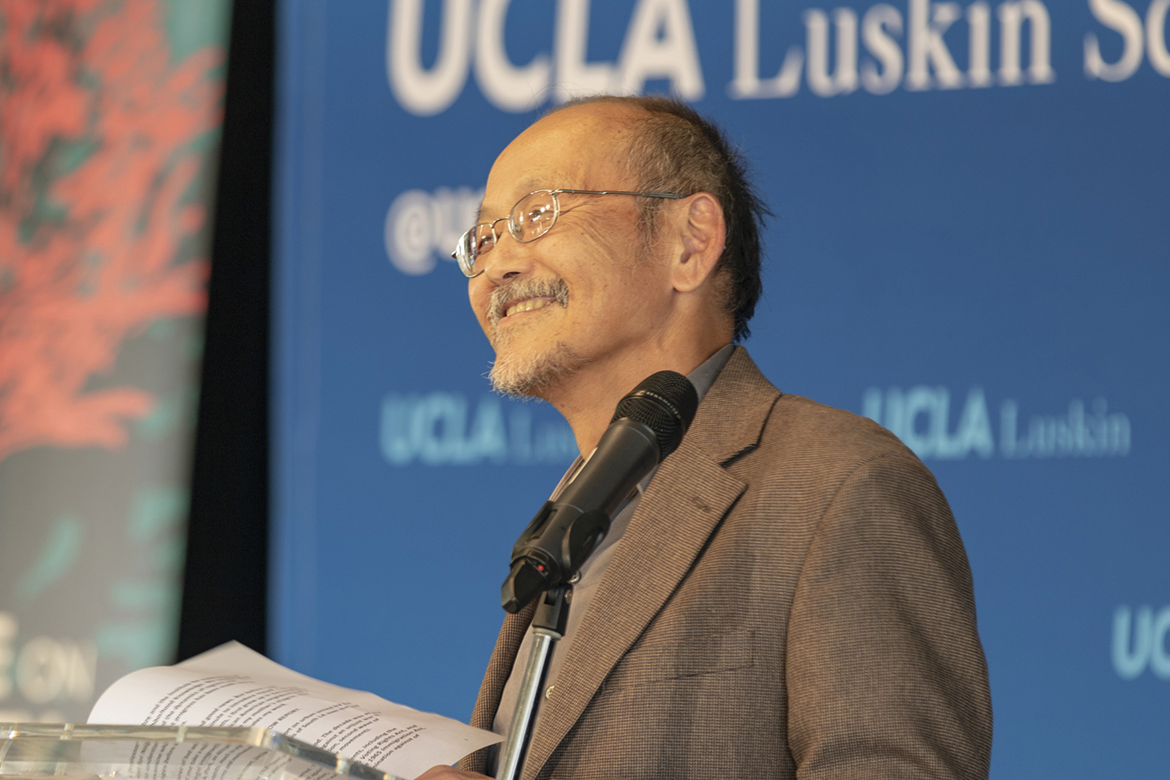
Paul Ong is director of the Center for Neighborhood Knowledge at UCLA Luskin. Photo by UCLA Luskin School of Public Affairs

“April 1 was designated as Census Day in an effort to highlight the importance of a complete and accurate count of American citizens,” said Ong, who has served as an adviser to the U.S. Census Bureau as part of his scholarly activities at the UCLA Luskin School of Public Affairs. “But that designation proved to be ceremonial at best, drawing little media notice or public attention with the vast majority of Americans hunkered down at home as a result of the shelter-in-place strategy.”

Ong said his findings are worrisome and seemingly at odds with the positive message coming from the Census Bureau. A bureau email blast sent in late April, for example, declared “an important milestone in the 2020 Census. More than half of all the households in the country have responded — that’s 77,500,000 households so far!”

Ong said crossing the halfway mark in the census count is less impressive when one looks below the surface. He noted, for example, that on April 18, the New York Times reported that the COVID-19 crisis had seriously hampered the response to the census, causing the Census Bureau to adjust its timeline and prolong the collection process to counter any shortfalls. The agency had earlier extended deadlines to complete its operations.

“The adjustments are framed and justified as necessary to protect the health of census workers and the public, which is obviously valid and prudent,” Ong said. “But nothing was mentioned about the need to extend census operations because of any possible lack of progress.”

The 2020 census is the first to allow people to respond online, by phone or by mail, while the 2010 census was limited to mail responses only.

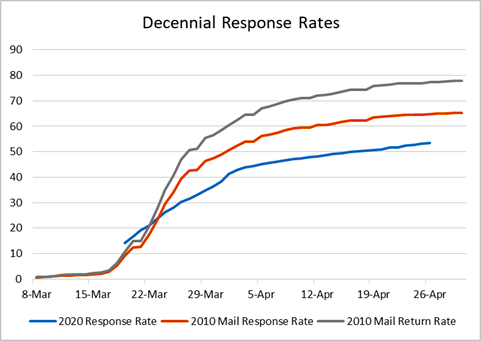
In its analysis, the Center for Neighborhood Knowledge compared the overall response rate so far to the mail-in rate at the same point for the 2010 census. The researchers looked at both the 2010 mail-response rate — the total number of filled-in and returned forms divided by the total number of addresses in the government’s master address file — and the mail-return rate, the number of returned forms divided only by the number deliverable and non-vacant addresses.


When the three measures are plotted on a graph, it is apparent that a slowdown in 2020 census responses coincides with the timing of the COVID-19 crisis. By March 22, the 2020 rate had slipped below the rate of return for both of the 2010 measures and has continued to lag since then. Since April 24, the date of the email blast from the Census Bureau, the 2020 response rate has never gotten closer than 11 percentage points below both of the 2010 measures, the UCLA analysis shows.

The researchers note that because the 2010 mail-return rate has a smaller denominator, it has a higher value than the 2010 mail-response rate. According to the Census Bureau, the 2010 mail-response is more compatible with how the 2020 response rate is being calculated.

Besides the COVID-19 pandemic, other factors may be hindering 2020 responses, Ong said. Those barriers may include a lack of access to the internet, which is the primary mode of data collection for the 2020 census; a nationwide increase in vacant and seasonal housing; and the growth of the historically harder-to-reach Hispanic population.

The decennial census is required so that congressional seats can be reapportioned to account for geographic shifts in the population. The official count is also used for redrawing electoral district boundaries for congressional, state legislative and local jurisdictions. Equally important, the numbers are used in allocating public funds and helping to provide a clearer picture of the nation’s population and housing stock.

Unless steps are taken immediately to boost response rates, Ong is worried that the 2020 census is experiencing “a real and present danger of having one of the most incomplete census enumerations in history.”

Based on historical precedent, the Center for Neighborhood Knowledge analysis predicts that an undercount would disproportionately affect low-income residents, people of color and immigrants.

“The Census Bureau is not to be blamed for the dire circumstances that have upended everyone’s life,” Ong said. “What is required now, however, is mobilizing community organizations and groups to work collaboratively with public agencies to minimize the damage. We need to focus scarce resources to do everything in our power to ensure inclusion in the census of society’s most marginalized people and neighborhoods.”

Questions about the study may be directed to Paul Ong at pmong@ucla.edu

To inquire about the proprietary data used to build the chart, contact Les Dunseith at the UCLA Luskin School of Public Affairs, ldunseith@luskin.ucla.edu

Residents in L.A.’s Latino Neighborhoods Less Likely to Receive Relief Funds Researchers from UCLA Luskin combine forces to recommend that local leaders fill gaps in COVID-19 stimulus funding

April 14, 2020/0 Comments/in Development and Housing, Diversity, For Faculty, For Policymakers, For Students, For Undergraduates, Latinos, Politics, Public Policy News, School of Public Affairs, Social Welfare News, Urban Planning Paul Ong /by Les Dunseith

By Eliza Moreno

Fifty-six percent of Latino-majority neighborhoods in Los Angeles County have a high proportion of residents at high risk for not receiving individual relief funds from the federal Coronavirus Aid, Relief and Economic Security Act, known as the CARES Act, according to a UCLA report.

The paper was written by researchers from the UCLA Latino Policy and Politics Initiative and the UCLA Center for Neighborhood Knowledge.

Its findings provide information that local and state officials can use to target resources and communications efforts in neighborhoods that are experiencing widespread economic distress. The CARES Act was passed by Congress in response to the economic disruptions associated with COVID-19; the measure includes payments to cover citizens’ basic needs.

“The global pandemic has put a spotlight on the cracks in our social safety net that often fail to catch those living in poverty, which disproportionately are people of color and immigrants,” said Sonja Diaz, founding director of the UCLA Latino Policy and Politics Initiative and a co-author of the report. “Entire neighborhoods will face economic uncertainty, and a public health crisis is not the time to ignore their needs. We are only as healthy as our most vulnerable, and many communities in Los Angeles County will need targeted assistance.”

The Los Angeles neighborhoods where residents are least likely to receive a stimulus check are concentrated in downtown Los Angeles, including Westlake/MacArthur Park, Koreatown, Chinatown, Skid Row and Pico Union.

Those most at risk for not receiving relief funding tend to be lower income, people of color, and live primarily in renter neighborhoods. Immigrants also have an elevated risk, according to the report.

“The lack of support puts entire communities at risk here in Los Angeles County and requires immediate attention,” said Paul Ong, the study’s lead author and director of the Center for Neighborhood Knowledge, which is housed in the UCLA Luskin School of Public Affairs. Ong also is the founder of Ong & Associates, an economic and policy analysis consulting firm specializing in public interest issues, which provided services pro bono for the study.

The report recommends that state and local governments in the affected neighborhoods provide targeted support, including cash assistance and other social benefits, regardless of recipients’ citizenship status.

The report is the second analysis by the Latino Policy and Politics Initiative and the Center for Neighborhood Knowledge on the economic effects of the COVID-19 crisis on underserved neighborhoods. A report published on April 1 examined economic vulnerability due to retail and service sector closures across Los Angeles County neighborhoods.

Anxiety About Coronavirus Is Widespread in L.A. County Roughly 4 in 5 residents in new UCLA Luskin survey express deep concern about the health and economic impacts of COVID-19

April 8, 2020/1 Comment/in For Faculty, For Policymakers, Health Care, Politics, Public Policy, Public Policy News, School of Public Affairs, Social Welfare, Social Welfare News Zev Yaroslavsky /by Les Dunseith

By Les Dunseith

An overwhelming percentage (78%) of Los Angeles County residents say they are concerned that they or a member of their family will contract the novel coronavirus, according to a survey conducted between March 18 and 26 and released today by the UCLA Luskin School of Public Affairs.

A solid majority (61%) of respondents expressed confidence in the response by local officials to the pandemic, but only 39% had similar confidence in the federal response.

“There are two clear takeaways,” said Zev Yaroslavsky, director of the Los Angeles Initiative at the UCLA Luskin School of Public Affairs, which conducted the survey as part of an annual project known as the Quality of Life Index, or QLI. “The anxiety levels over contracting the virus and its economic impacts are overwhelming. And it’s a vote of confidence in the local public health agencies, while a vote of no confidence in the federal response.”

The results are based on interviews conducted with about 1,500  county residents during a period that happened to coincide with the implementation of stay-at-home orders in Los Angeles.

The QLI, which is a joint project of the UCLA Luskin Los Angeles Initiative and The California Endowment, is in its fifth year. Researchers poll a cross-section of Los Angeles County residents each year to understand the public’s perception of the quality of their own lives. Full results will be released April 23 as part of a UCLA event known as the Luskin Summit, which will be held virtually this year because of the ongoing health crisis. The survey has a margin of error of plus or minus 2.6%.

Respondents indicated that they were very concerned (49%), somewhat concerned (29%), not too concerned (13%) or not concerned at all (7%) that they or a member of their family would contract the novel coronavirus. Women over the age of 50 expressed the greatest concern (62% were very concerned).

When asked whether the health crisis had or will have a negative economic impact on themselves personally, more than four out of five respondents (83%) said they were concerned, with 56% saying very concerned and 27% saying somewhat concerned. Again, women expressed the most concern, although in this case it was slightly higher among women aged 18 to 49 (61%) than among women aged 50 to 64 (60%).

Two questions were asked about the response of public health and government officials to the COVID-19 pandemic, and the results were almost mirror opposites. When asked if they were confident in the response of officials in Los Angeles County, 61% of respondents said yes and 31% said no, but just 39% said yes and 55% said no when asked if they were confident in the response of officials in the federal government. These results were generally consistent among demographic and geographic groups.

“In virtually no major demographic group did we find less than a majority expressing confidence in local officials,” Yaroslavsky said.

Some of the highest marks for local officials came from those aged 50 to 74 (69%), men aged 50 to 64 (72%) and women 65 and older (70%), as well as Latinos over age 50 (70%). Residents in every L.A. County supervisorial district expressed at least 59% confidence as a whole.

Hardly any major demographic group expressed majority confidence in the federal response. The lowest confidence levels came from 18-to-39-year-olds (33%), African Americans (32%), women aged 18 to 49 (31%), those with annual incomes above $120,000 (30%), whites aged 18 to 49 (23%) and residents of the 3rd Supervisorial District (28%), which encompasses Westside communities such as Santa Monica and Malibu, plus the north and western sections of the San Fernando Valley.

The QLI was prepared in partnership with the public opinion research firm Fairbank, Maslin, Maullin, Metz & Associates.

Paving a Path to Homeownership Lewis Center hosts panel to contemplate ways that homeownership can be an attainable goal for more low-income families

March 16, 2020/0 Comments/in Alumni, Development and Housing, Diversity, For Policymakers, For Students, Latinos, Politics, Public Policy, Public Policy News, School of Public Affairs, The Lewis Center, Urban Planning Michael Lens /by Les Dunseith

By Lauren Hiller

Despite the promise of homeownership enshrined in the American Dream, many people in low-income communities of color remain far from owning their own homes, and this challenge served as a focal point for a recent discussion at UCLA Luskin.

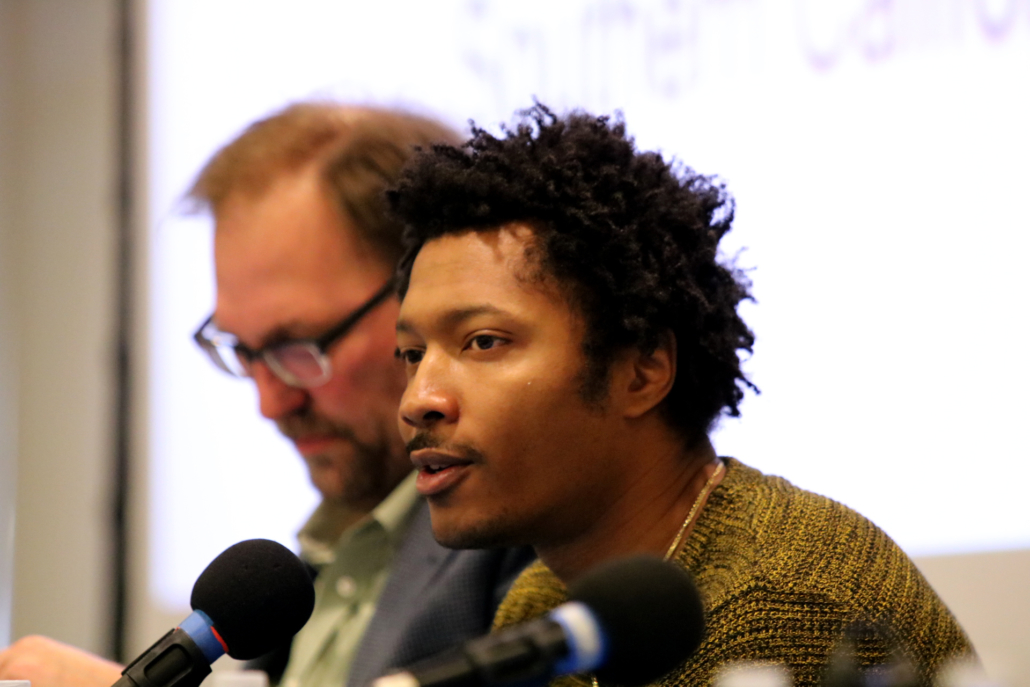
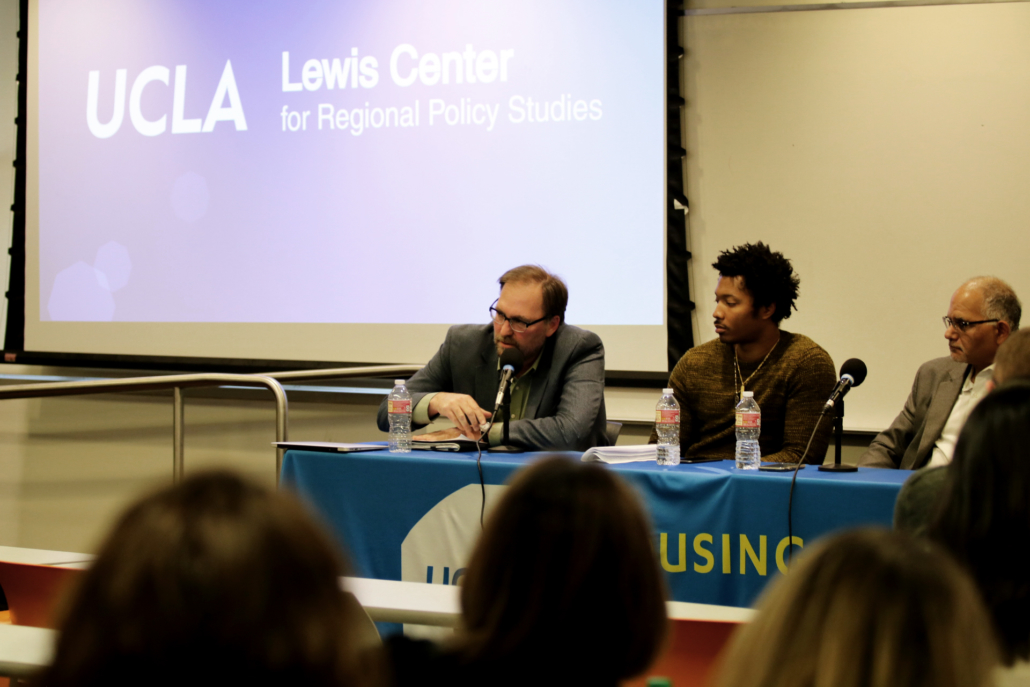
During the Housing, Equity and Community Series event held on Feb. 26, the UCLA Lewis Center for Regional Policy Studies and the UCLA Ziman Center brought together scholars and housing experts to discuss what it would take to ensure access to homeownership for communities historically locked out of it, particularly low-income families. The conversation was moderated by Michael Lens, associate faculty director of the Lewis Center and an associate professor of urban planning and public policy at the UCLA Luskin School of Public Affairs.

Rocio Sanchez-Moyano, a doctoral student at UC Berkeley’s Department of City and Regional Planning, opened the panel by providing context about homeownership in the United States.

According to U.S. Census statistics, homeownership rates have fallen below 50% in Los Angeles County, which is below the current 60% nationwide average and far below rates observed before the Great Recession. These rates are even lower for black and Latino households, and Sanchez-Moyano said this situation is compounded by predatory lending practices by banks that contribute to foreclosure rates in those communities that are among the highest.

Barriers to homeownership are particularly concerning given the benefits that homeownership can confer, Sanchez-Moyano said. These include greater household wealth, better neighborhood safety and quality, lower rates of perceived stress, and increased civic participation.

Discriminatory mortgage terms and higher income volatility among black and Latino households are among the reasons that these families are disproportionately shut out of homeownership opportunities, she said.

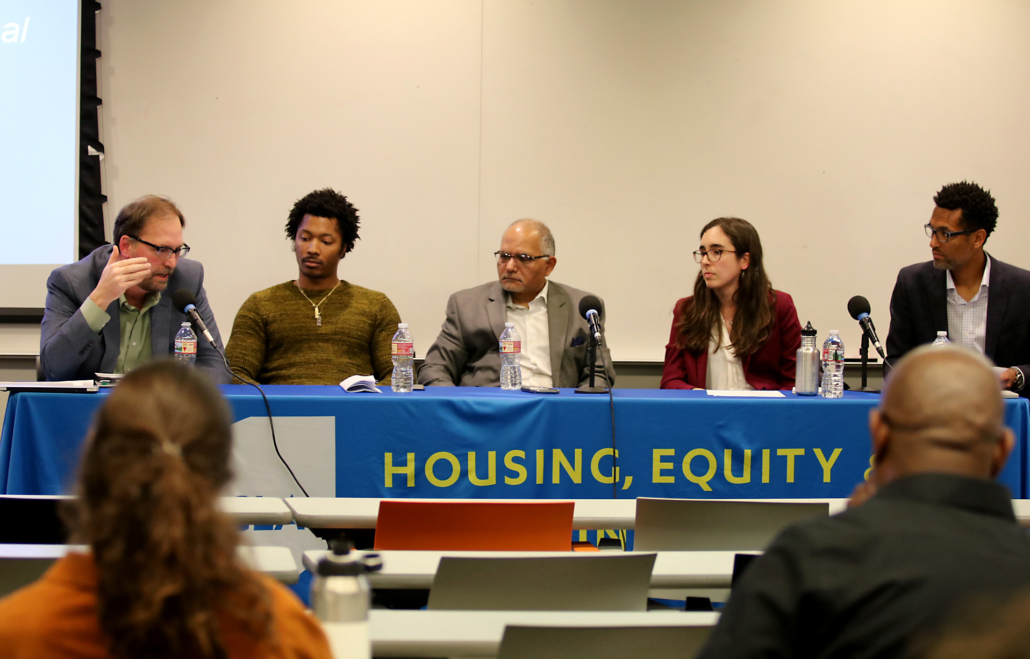
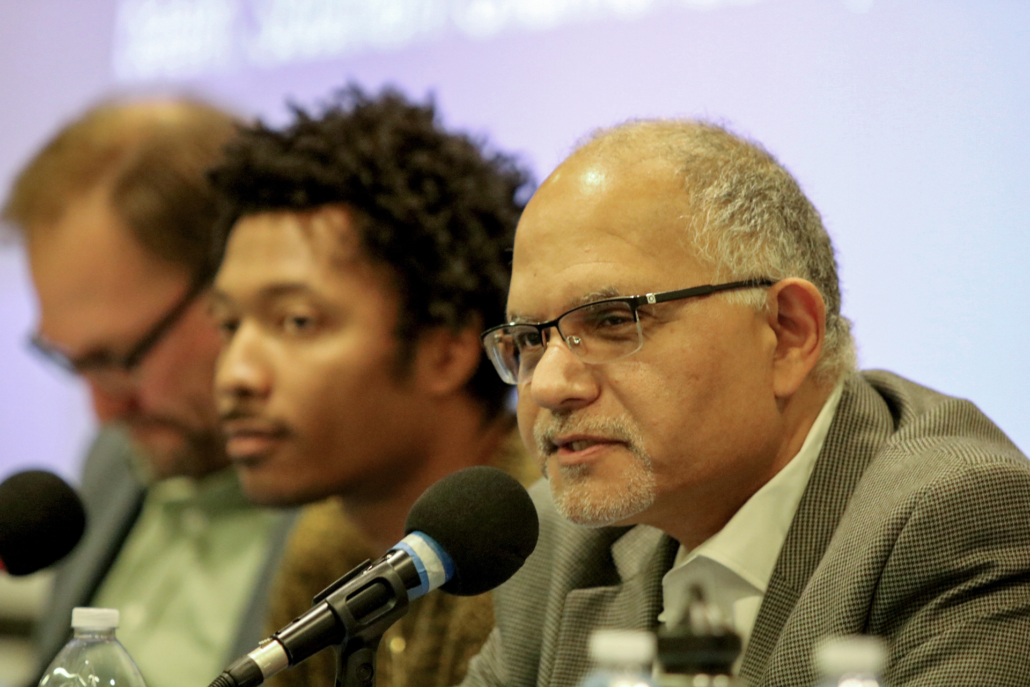
Panelists, from left, were John Perfitt, Dorian Young, Ashraf Ibrahim and Rocio Sanchez-Mayano, and the moderator was Michael Lens, associate professor of urban planning and public policy. Photo by Stan Paul

Ashraf Ibrahim, office director at the Neighborhood Assistance Corporation of America (NACA), spoke about his experience helping families apply for mortgages. He explained that housing affordability is the largest hurdle faced by families seeking to secure financing to buy homes. A household needs an annual income of at least $125,000 to be able to afford a home in Los Angeles County, Ibrahim noted.

Housing costs are also not rising linearly, said Dorian Young, a mortgage counselor at NACA. As of January 2020, the median sales price of a home in Los Angeles was $744,000, according to Zillow — up from $474,000 as recently as 2015. Housing costs are quickly outpacing income growth in cities such as L.A.

Sanchez-Moyano said this problem is exacerbated by high rents, meaning that lower-income households have less spare income to save up for a down payment.

John Perfitt is executive director at Restore Neighborhoods Los Angeles, a nonprofit that builds and improves homes for low-income families. He said that land values are the largest determinant of housing costs. High land values produce high housing costs, which reductions in construction costs are unable to offset.

Despite these challenges, options exist to increase homeownership rates. Counselors can educate families on practical steps needed to save up for a home, Young said. As a mortgage counselor, he and others in his field also can inform households of other approaches to securing home financing, including leveraging future rent to be collected from multi-family properties as part of the loan process.

Perfitt said that Los Angeles offers a low-income and moderate-income homeownership program that provides down payment assistance. More people sign up every year than there is help to give, however.

Sanchez-Moyano reminded the audience that homeownership has never been attainable for all families. Still, she hopes people will support efforts to make owning a home more accessible, particularly to communities of color, and ensure that “being a renter doesn’t mean being left behind.”

View additional photos from the event in an album on Flickr:

Promise and Peril: Homeownership in Southern California

LPPI Hits the Road to Assist Legislators in Battleground State UCLA team holds two days of roundtable discussions and provides technical assistance to lawmakers during workshop in Arizona

February 4, 2020/0 Comments/in Diversity, Education, For Policymakers, For Students, Latinos, Politics, Public Policy, Public Policy News, School of Public Affairs /by Les Dunseith

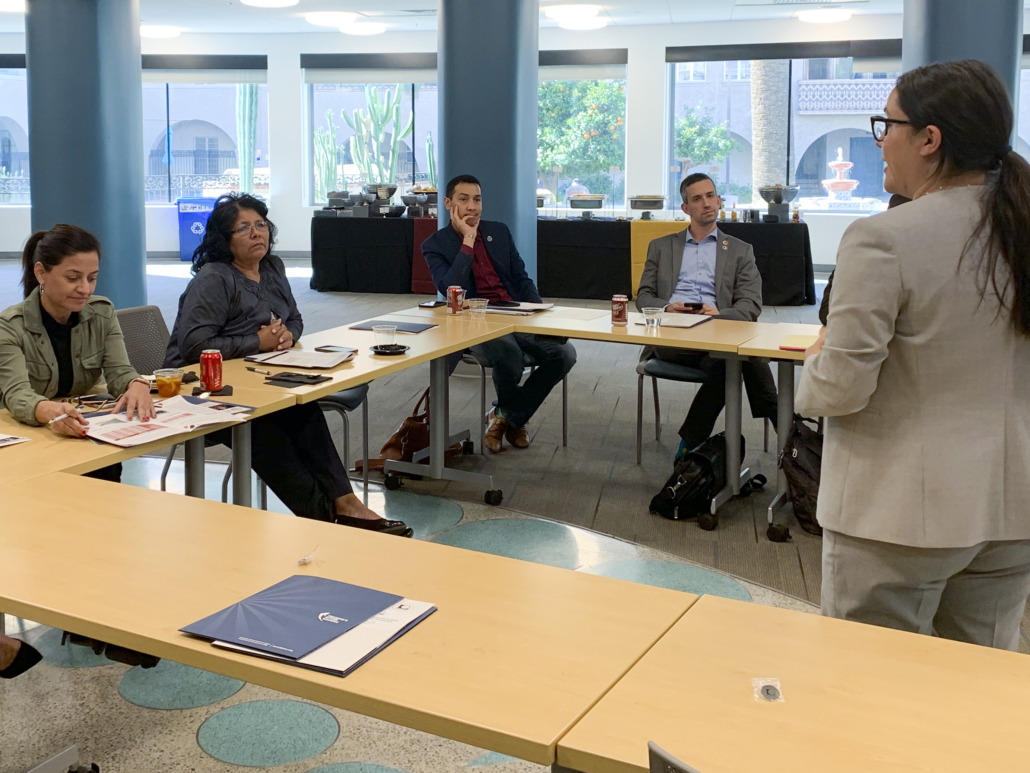
A group of lawmakers in Arizona are “breaking cycles of poverty,” Arizona Sen. Otoniel “Tony” Navarrete told fellow legislators attending a two-day workshop in mid-January at Arizona State University organized by the UCLA Latino Policy and Politics Initiative (LPPI).

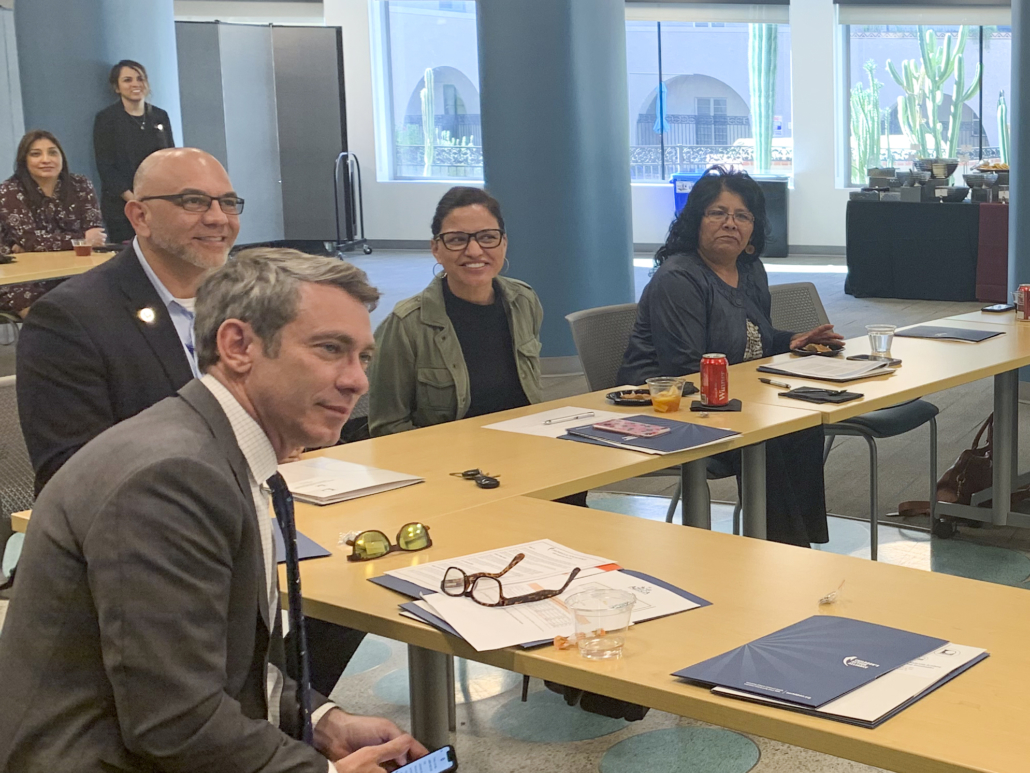
Navarrete was one of eight lawmakers who participated in the sessions put together by LPPI in partnership with the National Association of Latino Elected Officials (NALEO) and the Center for Latina/os and American Politics Research at Arizona State University. The workshops were a continuation of a leadership academy held at UCLA in August 2019.

The Arizona lawmakers are serving in what could be a battleground state during this presidential election year, and they are also marking 10 years since the passage of a controversial anti-immigrant bill in the state. The effects of the Support Our Law Enforcement and Safe Neighborhoods Act, otherwise known as SB 1070, are still being felt in Arizona.

While keeping a focus on the state’s younger electorate, the lawmakers have started their 2020 legislative session with education at the forefront of their efforts.

Understanding children is the first step to creating evidence-based policies centered around their needs, according to workshop speaker Kelley Murphy, director of early childhood policy at Children’s Action Alliance. She reviewed statewide trends relating to Arizona’s youngest children and took a deep dive into data about access to quality care and education during early childhood.

Legislators also engaged in a meaningful conversation about Arizona’s emerging dual language learners and how to craft purposeful policy to advance student success.

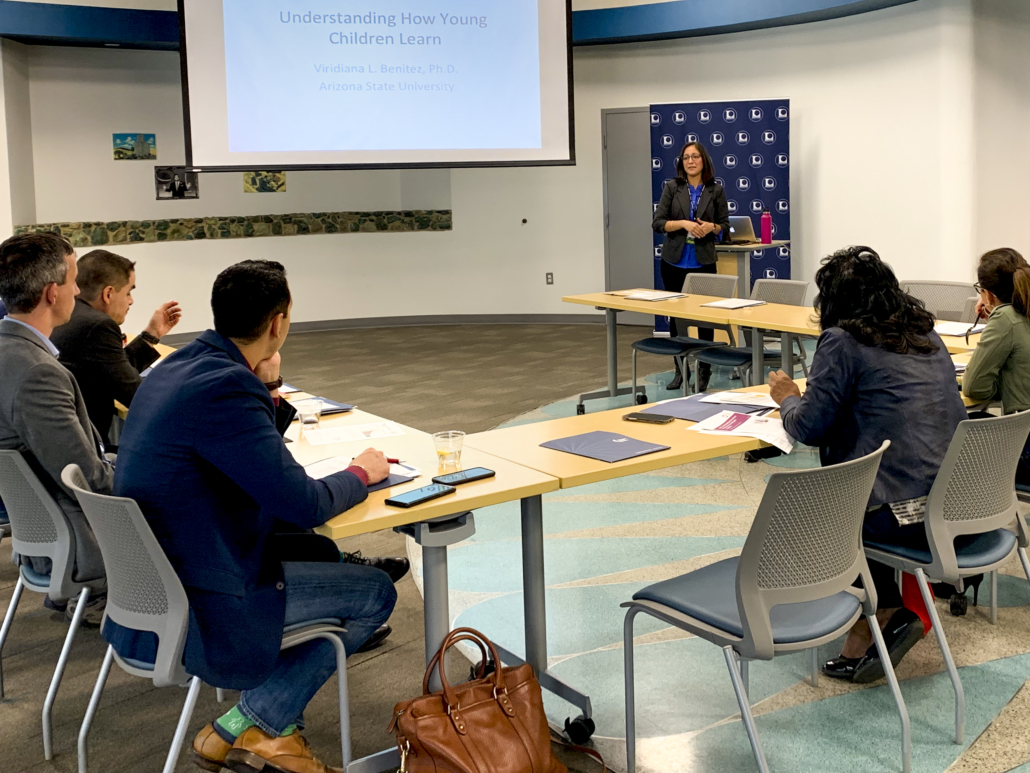
They sought to better understand how young children learn. Viridiana Benitez, assistant professor of psychology at ASU, explained how language acquisition and cognitive development play a crucial role in the educational foundation and outcomes for young children.

Such an understanding is especially important to politicians in a state like Arizona, where the bilingual electorate is increasing and may be influential during 2020 elections.

Edward Vargas, a professor in the School of Transborder Studies at Arizona State, continued the conversation by focusing on polling trends and how such data provide information on public opinion and voters’ priorities. Lawmakers looked at the latest trends on the issues of early education, and they were encouraged to think of creative ways to further develop their ability to solicit effective constituent feedback through polls.

Speaker Viridiana Benitez of ASU begins her presentation during the workshop. Photo by María Morales

Legislators were asked to apply the information on childhood education by thinking through effective data collection and usage in order to reinforce efforts in education, keeping in mind messaging and voters’ priorities.

“What impacted me the most was the legislators’ desire to truly understand the data and use it effectively in order to make sound policies,” said María Morales, a second-year master of public policy student at UCLA and a fellow at LPPI. “It shocked me to know that it [typically] takes about 17 years for a researcher’s findings to be made public and reach the policy-creation-and-implementation table. It reinforced the need of cross-sectoral partnerships to develop sensible policies tackling the community’s priorities and needs.”

Seeking Unity in a Time of Dissension Panelists discuss issues of class, race and exclusion during a Luskin Lecture event that focuses on the rise of divisiveness in America 

January 28, 2020/0 Comments/in Diversity, Education, Politics, School of Public Affairs Gary Segura /by Les Dunseith

By Les Dunseith

As writer and journalist Jeff Chang sees it, today’s political divisiveness is leading America to revert to a time when society was more starkly divided along intellectual, cultural and racial lines. It’s a social erosion he refers to as resegregation.

“We had a consensus 50 years ago — as fragile as it was — that segregation was an issue that we needed to work on as a nation,” Chang said during a Jan. 15 Luskin Lecture at the James Bridges Theater on the UCLA campus. His remarks followed the screening of a series of short documentary-style videos based on “We Gon’ Be Alright,” Chang’s critically acclaimed collection of essays about the rise and fall of the idea of diversity.

Event attendees also had an opportunity to hear from the filmmakers — producer and director Bao Nguyen and showrunner Kimmie Kim. The evening’s moderator was Dean Gary Segura of the UCLA Luskin School of Public Affairs.

The docuseries was produced for PBS’ Indie Lens Storycast, and a YouTube collection where the 8-10 minute segments can be viewed describes the docuseries as follows: “From Silicon Valley gentrification and resegregation to new Hollywood attempts to overcome typecasting by diversifying, from college admission debates to the flawed U.S. census’ way of categorizing race, the series asks the questions: How did we become so divided, and what can we do now to be alright?”

Segura asked a tongue-in-cheek but pointed first question of the panelists after the last of the four serious-minded documentaries: “‘We are gonna be all right?’ Are you sure? This is not an optimistic piece.”

Chang acknowledged that the oft-foreboding tone of the videos was a reflection of his book, saying that “if it were up to me, the series would have been really much more depressing.” He credited his collaborators with helping him find a positive perspective where possible.

“Bao was very much like, from the very beginning: ‘We’ve got to be able to find the hope in all of this,’” Chang recalled.

“Culture, art, film and music can help fill a void,” Nguyen said. “That’s how I kind of see my role. Filmmakers make stories that have some sort of inspiration — because we don’t see that on the news or in our public leaders today.”

Kim, a Korean-born filmmaker who has been working in the U.S. entertainment industry for about 20 years, noted that lack of diversity in Hollywood is a longstanding problem. When she first started in New York City, working with MTV, “there were only two Asians in pretty much the entire building.”

Diversity of ethnicity and gender remains an industry shortcoming, she said. “I want to remain optimistic,” she said of her experience as an Asian woman working in the U.S. entertainment industry. “But it is definitely a struggle.”

One positive sign for Kim is the nomination of the South Korean film “Parasite” as a Best Picture contender at this year’s Academy Awards. “It’s the first time,” she said, “but that doesn’t mean that there weren’t any other great Korean films — or Japanese or Chinese films — before.”

The intersection of entertainment and political activism has long been important to Nguyen, whose career history includes a stint as a field director and field organizer for Obama for America.

“I think everything’s kind of intertwined,” he said. “Culture doesn’t exist without politics, without learning about history and context, and so I bring that into the work that I do.”

The first segment in the docuseries deals with the issue of displacement by focusing on East Palo Alto, a California Bay Area community where longtime minority residents are being displaced because real estate speculators are buying houses in hopes of future profits. In some cases, the houses are being left vacant until enough well-to-do residents move onto a block to drive up home prices throughout the neighborhood.

“This is the last quote-unquote affordable neighborhood in Silicon Valley,” said Chang, noting that affordability means something very different to someone making more than $170,000 a year than it does to most of the people of modest means who had historically lived and worked in East Palo Alto. “Those people are being displaced, and that’s resegregation in a nutshell.”

Chang noted that the word gentrification is literally derived from the word gentry — the class of rich people just below the nobility in the United Kingdom. Likewise, in places like East Palo Alto, “the wealthy are moving in, and it ‘disappears’ the people who are forced to move out.”

Another segment in the docuseries focuses on inter-ethnic tensions, particularly from the point of view of Asian Americans.

Many Asian Americans are “self-conscious of both our oppression and our privilege,” Chang said.

Chang was studying toward a master’s degree in Asian American Studies at UCLA during the time of the 1992 Los Angeles uprising. At the time, there was a notion that Asian American Studies should focus solely on the experiences of Asian Americans, he recalled.

“And I think, for those of us who came of age during that particular period, our reality was much different,” Chang told the audience. “It became a reflection on the position that Asian Americans can take against racial injustice — Asian American empowerment or … empowerment for everyone.”

“To me, it’s like trying to figure out this whole labeling system,” Kim said. “It’s great to embrace who we are. But if the labeling works against who we are and separates people, then that’s where I think we need to have an in-depth conversation to find a better balance and live together.”

As a filmmaker, Nguyen said he looks for opportunities to attack racial problems at the systemic level by helping to bridge communities.

People of all races should be encouraged to tell their stories, he said. “The truest enactment of the American Dream is being able to tell your own story. I think that’s what I’m trying to do as a filmmaker. I think that’s what we’re all trying to do — to tell our own story, because we think once our voices are heard, then we can be seen.”

In addition to the UCLA Luskin School of Public Affairs, the event was co-sponsored by UCLA Asian American Studies and its Center for Ethno Communications. Other co-sponsors were the Bunche Center for African American Studies at UCLA, UCLA Chicana and Chicano Studies, the UCLA Luskin Undergraduate Program and Visual Communications.

View photos from the event on Flickr:

'We Gon' Be Alright' LLS

Watch highlights from the live stream of the event:

This Election Year, We Have 2020 Vision The race for U.S. president comes to town, and the UCLA Luskin community is there to make sure candidates take a stand on issues of importance

January 6, 2020/0 Comments/in Diversity, Education, For Faculty, For Policymakers, For Students, For Undergraduates, Politics, Public Policy, Public Policy News, School of Public Affairs, Social Welfare, Social Welfare News, Urban Planning Ian Holloway /by Mary Braswell

By Stan Paul

Students at UCLA Luskin always have many opportunities to seek out public policy discourse and engage in political activities. But during the 2020 presidential election campaign, some of the opportunities for political engagement have been coming directly to them.

In December, the top Democratic contenders for the U.S. presidency were in Los Angeles for a closely watched debate that set the stage for the caucus and primary season soon to follow. And just a few weeks beforehand, students like first-year Master of Public Policy student Tamera Hyatte participated as questioners of presidential candidates during a live telecast of a town hall-style forum that focused on LGBTQ issues.

“Get ready, you’re going on!” was Hyatte’s cue. Moments later, she was asking Democratic candidate Beto O’Rourke face to face — and on split screen for viewers — what protections he, as president, would put in place to safeguard transgender women of color. In her question, Hyatt noted that transsexual women of color are killed at an alarming rate.

“I thought he answered it fairly well,” Hyatte said of the former Texas congressman’s response. “I think a lot of the candidates being asked specific questions were caught off-guard, because I don’t think these are issues they generally look into,” added the former middle-school teacher. She said her interests include educational issues affecting LGBTQ students in K-12 as well as education in communities of color.

Hyatte was among a sizable contingent of UCLA Luskin graduate and undergraduate students, faculty and staff who attended the Oct. 10 Democratic presidential forum in downtown Los Angeles that was hosted by CNN and the Human Rights Campaign Foundation. And she was among a handful selected to ask a question of a Democratic candidate at the forum, which included candidates Joe Biden, Cory Booker, Pete Buttigieg, Julian Castro, Kamala Harris, Amy Klobuchar, O’Rourke, Tom Steyer and Elizabeth Warren.

Ayse Seker, a second-year UCLA undergraduate student and public affairs pre-major at UCLA Luskin, was selected to question Booker, a U.S. senator from New Jersey, on the sometimes-conflicting juxtaposition of religious freedom and LGBTQ rights. Seker, who is also from New Jersey, said her question was based on her own experience attending a religious-based high school.

“I wish he could have gotten more specific on the issues of Catholic schools and the rights their students have; sometimes our very identities are at conflict with an institution’s canonical ideas,” Seker said. “But I do appreciate the messaging of his response, as it is important for there to be representation of someone who is both outspokenly religious and a champion for LGBTQ rights.”

In fall quarter, Seker was enrolled in Public Affairs 80, a prerequisite for the public affairs major that explores how the policy environment shapes human development. Her professor, Ian Holloway of UCLA Luskin Social Welfare, joined her at the event and provided useful commentary between candidates. She also appreciated his tips on public speaking prior to her on-camera moment.

Holloway said he was proud to see UCLA Luskin students asking tough questions of the candidates. “It was helpful for our students to think critically about how policies being debated, such as the trans military ban or pharmaceutical pricing, impact the lives of LGBTQ Americans.”

Kevin Medina MPP / MSW ’15 is now the capstone advisor and coordinator for UCLA Luskin’s undergraduate major. Like Hyatte and Seker, he had applied in early September to attend the event and ask a question, and he was notified that his question had been chosen just a couple of days before the forum. He asked California candidate Tom Steyer about his plan to combat “the erasure of LGBTQ Americans’ identities on the 2020 Census.”

“I hope asking this question on a national platform elevates the importance of this issue and puts it on the radar of those with the power to positively effect change,” Medina said after the event. He said the Census Bureau plans to collect data on same-sex partners. “However, this question does not gain information about transgender people or LGBTQ people who are single or not living with a same-gender partner.”

Hyatte, who studied journalism as an undergrad, was appreciative of the opportunity to become directly engaged in the electoral process. When she chose UCLA for graduate school, “I didn’t even know we would be able to participate in something like this.”

Reflecting on the experience afterward, Hyatte said, “I think a lot of the candidates may want to brush up more on informing themselves about the issues that are happening in the LGBTQ community.” At the same time, the forum — which was held the day before the 31st annual National Coming Out Day — was also instructive for her.

“Just for myself, sitting in the audience, there were questions brought up that I didn’t even think about asking, and it makes me think, ‘Wow, I want to look more into that and really see what’s going on,’” she said. “It makes me think about how I can also include LGBTQ issues into my research on education policy because I think that’s also relevant.”

Relevance was key for Seker as well. “Within public affairs classes, we’re constantly learning about the vast array of issues that plague our society and the institutions and their history that perpetuate them.” The town hall demonstrated how diverse and multifaceted the LGBTQ community is, she said, and it highlighted a number of LGBTQ-related issues and concerns “that find their roots in a myriad of intersecting oppressive systems.”

Being within the Luskin School means a nearly constant stream of interesting opportunities for political engagement, Seker said a few days after the forum. “The fact that this was only during Week 2 of fall quarter makes me eager and excited for all the future opportunities and events the Luskin School will offer me throughout the rest of this school year.”

And Seker is right — UCLA Luskin will host a full calendar of public events and politics-related opportunities for students and alumni through Election Day 2020.

A Passion for Diversity UCLA Luskin showcases its programs — and its people — who are pushing for all voices to be heard on issues of public concern

December 4, 2019/0 Comments/in Alumni, Development and Housing, Diversity, Education, For Faculty, For Policymakers, For Students, Latinos, Politics, Public Policy News, School of Public Affairs, Social Welfare News, Transportation, Urban Planning Gary Segura, J.R. DeShazo, Laura Abrams, Vinit Mukhija /by Les Dunseith

By Les Dunseith

The social justice ethos and commitment to diversity that form the backbone of UCLA Luskin’s graduate degree programs were front and center during the fourth annual Diversity Fair.

Dozens of graduate student recruits came to campus in November for a full day of discussions and workshops. Key speakers included Dean Gary Segura and the chairs of each graduate department: JR DeShazo of Public Policy, Laura Abrams of Social Welfare and Vinit Mukhija of Urban Planning, all of whom are professors in their respective fields.

A highlight of the day was a panel discussion during which six alumni talked about why they chose UCLA Luskin and offered insightful advice about how the graduate school experience can help people with a passion for change figure out ways to turn their ideals into action.

The alumni panel, from left: Carolyn “Caro” Vera, Taylor Holland, Estafanía Zavala, Wajenda Chambeshi, Christina Hernández and Ulises Ramirez. Photo by Les Dunseith

“How do governments create safe spaces for immigrants? How do we improve the basic services that government provides so that it actually fits the needs of the people who are using them? All of those things were in my mind as I started the program,” said Estafanía Zavala MPP ’18, who is now project lead, digital engagement, for the city of Long Beach. “I feel like the program really helped me gain a good understanding of what was actually going on in the world and how to process it.”

Taylor Holland MURP ’19, assistant project manager at PATH Ventures, a nonprofit agency that works with the homeless population in Los Angeles, said that she chose UCLA in part because of its vast alumni network in Southern California. She said she met “great alumni by coming to events like this. We have super-active alumni who you can really tell are pushing for change in different systems throughout urban planning.”

Several panelists said that UCLA Luskin helped them to further develop a social justice perspective, and they talked about their own efforts to foster inclusiveness.

Ulises Ramirez MSW ’96 is a clinical social worker and therapist in the Adult Outpatient Psychiatric Clinic at Harbor UCLA Medical Center, and he said that mental health service protocols are too often developed only with English-speaking clients in mind.

“The community that we serve at Harbor UCLA is very diverse. We see a lot of Spanish-speaking clients, and my goal there has been to provide top treatment to monolingual, Spanish-speaking clients,” Ramirez said. “It’s an underserved population, and they have nowhere else to go.”

Christina Hernández MSW ’17, community accompaniment coordinator for Freedom for Immigrants in Santa Monica, said her clients come from immigration detention centers.

“They are asylum-seekers; they’re refugees; they’re immigrants. These are people coming from all over the world,” she said. “Our goal is that the documents that we have for English speakers, we also make available for other languages as well.”

The speakers noted that racial minorities and women have traditionally been underrepresented in some of their fields.

“I think our perspectives as folks of color are so important in transportation planning,” said Carolyn “Caro” Vera MURP ’17, who was born and raised in South Los Angeles and now works as a planning consultant. She makes an extra effort to encourage minorities to pursue planning careers.

“If you ever need anything, hit me up,” Vera told the prospective students of color in attendance at the Diversity Fair. “It’s hard to get into the field. It’s daunting. But we need you in that field.”

Wajenda Chambeshi MPP ’16, a program manager for the city of Los Angeles, noted that a lack of diversity in some professions starts with decisions by young people from minority communities about which courses of study to pursue.

“Some of these professions that we overlook make really, really important decisions about where funds are going to be allocated, how they are going to be allocated and, ultimately, who receives what. That’s why we need diversity,” Chambeshi said, “so when we graduate, we will be able to filter into those positions that are able to divert resources — or even just rethink how we think about planning and public policy.”

As “the housing person on this panel,” Holland talked about the ethnic component of the homelessness crisis in Los Angeles.

“We have 60,000 people on the streets in L.A. on any given night, and it’s largely a black crisis. We have 9 percent of the city that is black; 40 percent of our homeless population is black,” she said.

Holland said her focus is on chronically homeless people, many of whom are people of color.

“They are … people who have been forgotten about in every aspect of their lives and cannot be pulled up by their bootstraps. Looking at social justice and housing — it’s particularly in a crisis in L.A. right now,” she said, directing her attention to the prospective students of color in the audience. “And we need all of you guys to help out as you can.”

The alumni panelists spoke passionately about the advantages of being actively involved as students, and they urged attendees to build expansive personal and professional networks.

Vera said she battled depression during her time as a UCLA student and suffered a panic attack during an exam that threatened her opportunity to graduate. But friends helped her through.

“Always advocate for yourself. Create peer networks and check in on each other,” she said.

Noting that the pressures of academic life can be especially difficult for first-generation college students from disadvantaged populations such as herself, she continued: “You are more prone to having depression and anxiety when you come into a program that just doesn’t look like what you are accustomed to.”

Building a network as a student was important to Ramirez as well. He cited his involvement in the Latinx Caucus as a particularly beneficial connection, “and 23 years later, we still get together.”

Hernandez echoed those experiences.

“I am a first-generation daughter of immigrants, and navigating these spaces was very difficult for me,” she said. “So networks were a lifesaver.”

Hernandez ticked off the names of UCLA faculty and staff members who helped her as a student and remain close. “It was amazing to have people who look like me, Latinos, as advisors and as supervisors, who I could go to and say, ‘Hey, I’m stuck with this issue.’”

She continued: “That is the beauty of joining this school. Even after you graduate, you still have folks who are going to be there to support you regardless of the situation.”

View more images from the event on Flickr:

Diversity Fair 2019

A Wealth of Knowledge About Debt In a new role as associate faculty director at the Institute on Inequality and Democracy at UCLA Luskin, Hannah Appel will focus on the future of finance in an era of mass household indebtedness

October 3, 2019/0 Comments/in Diversity, Education, For Faculty, For Policymakers, For Students, Politics, School of Public Affairs, Social Welfare News, Urban Planning Ananya Roy /by Les Dunseith

By Les Dunseith

There are at least 13,500,000,000,000 reasons why people should care about the expertise of Hannah Appel and what she will be bringing to her new role as associate faculty director at the Institute on Inequality and Democracy at the UCLA Luskin School of Public Affairs.

That eye-popping number represents $13.5 trillion — the Federal Reserve’s current estimate of consumer debt (which Appel prefers to call “household debt”) in the United States.

Ananya Roy, director of the institute, says Appel’s scholarship and her participation in organized efforts to combat predatory financial practices make her an ideal fit for a leadership role at the institute, which promotes a unique pairing of research and critical thought with social movements and activism in its efforts to combat societal inequalities.

“Hannah Appel is one of those rare academics whose scholarship has had a direct impact on the urgent social justice issues of the day,” said Roy, professor of urban planning, social welfare and geography at UCLA. “We expect that she will greatly expand the impact of the institute on one of the key structural processes of inequality in the United States: crushing debt and predatory financialization.”

Financialization, which relates to a “growing scale and profitability of the finance sector at the expense of the rest of the economy,” according to Forbes, will be a primary focus for Appel as she oversees one of the four research streams heralded by the institute — “Debt and Predatory Financialization.”


‘You are not alone, you are not a loan, and you are not defined by the kinds of financial relationships you have.’
—Hannah Appel, assistant professor of anthropology and global studies

One of her first goals? Rethink the name.

“I feel like debt is something that people feel trapped in — in a kind of permanent way. ‘I’m in it and I can never get out of it,’” Appel said.

By changing the terminology — the working title is the “Future of Finance” — she hopes to redirect conversations toward solutions; specifically, to look at the power that debt can wield if leveraged collectively. “You are not alone, you are not a loan, and you are not defined by the kinds of financial relationships you have,” Appel said.

Although Roy and the Institute on Inequality and Democracy she founded in 2015-16 are based at UCLA Luskin, the mission has always been cross-departmental. Appel is an assistant professor of anthropology and global studies in the UCLA College and co-founder of the Debt Collective, an activist group that organizes debtors’ unions.

As she was finishing her doctorate in anthropology from Stanford during the Great Recession, Appel landed a postdoctoral fellowship at Columbia University in New York City that happened to coincide with the start of the Occupy Wall Street movement there.

She soon found herself amid a collection of like-minded activists and intellectuals who were troubled by the fact that so many people wound up losing their homes as a result of greed and risky financial decisions made by wealthy investment interests.

“Why is it that this kind of drama on Wall Street is dispossessing people of their homes or knocking people out of their jobs?” Appel recalls thinking at the time. “People used to phrase it about 10 years ago as the relationship between Wall Street and Main Street. And I was very compelled by that question.”

The search for an answer relates directly to Appel’s involvement in social movements — and the promise of her role at the Institute on Inequality and Democracy.

Viewed in isolation, she says, household debt may seem like a personal problem. But in aggregate — remember that $13.5 trillion? — such debt is potentially a new form of collective financial power.

Appel studies and teaches on the daily life of capitalism, from transnational corporations and the private sector in Africa to the relationship between financialization and household debt in the United States, where household indebtedness has become increasingly systemic during the last 30 years.

The astronomical rise in student debt is certainly part of that. “But there are people indebted for their own incarceration and having to pay legal fines and fees,” Appel said. “And then, of course, there is scale. It scales to municipal debt — where our cities are indebted and can no longer afford to fix streets or fund public schools.”

At the heart of Appel’s scholarship are people in crisis.

She cites an all-too-common example of a person saddled with student debt and household debt who then gets cancer and discovers that health insurance doesn’t fully pay for chemotherapy.

“If they can manage to pay for the chemo and still make the mortgage payments, of course they’re not going to pay their student loan, right?” Appel said. “So, there are ways that these forms of debt are always intersecting and can never be understood separately.”

Regarding student debt, she is encouraged that “transformative policy proposals are on the table” in the current presidential campaign. “Certainly, it’s the first time in my lifetime that there are two articulated proposals to discharge all $1.6 trillion in student debt,” Appel said, noting that other policy proposals would eliminate tuition and fees at public colleges like the University of California system.

Even if such sweeping policy changes never come to pass, however, Appel is certain that solutions to predatory financial practices can be achieved. It’s an optimism that is based on her own experience.

Appel’s involvement in Occupy Wall Street and her ongoing research related to the anthropology of capitalism led her to help found the Debt Collective. It’s an approach that borrows from workers’ unions by bringing together people with shared leverage over the financial system.

“If one of the very simple lessons of a union is that there’s power in numbers, then what would collective action under finance capitalism look like? Thinking analogously to workers’ unions, then the answer is debtors’ unions,” Appel said.

Soon after it started, the Debt Collective found success by uniting former Corinthian College students who were saddled with debt. At the time, Corinthian was the second-largest national chain of for-profit colleges in the country.

One group of people in Ontario, California, had a “tremendous amount of debt from the Corinthian Colleges. Some had degrees that were worthless or had dropped out because they realized how much debt they were accruing and how bad their education was,” Appel said.

The Debt Collective began working with Corinthian College debtors and this initial effort eventually led to “an enormous union of for-profit college debtors — roughly 150,000 people … and that union has discharged over $1 billion of for-profit students’ debt.”

Appel says this example shows that debtors’ unions can work.

She pauses to contemplate years of study, struggle and frustration that finally seem to be paying off in benefits for people in need. Appel takes a deep breath, smiles, then continues.

“You know, I also have a tremendous amount of student debt myself. I was thinking of making T-shirts that said, ‘I am your professor. I also have student debt, and I think yours is unjust. Let’s talk.”

Page 8 of 9«‹6789›

Recent Posts

  • Stoll on the Factors Influencing Migration Patterns within the U.S. January 9, 2026
  • Northern California Maintains Nation’s Lowest ICE Arrest Rate Despite National Surge January 9, 2026
  • One Year After the Fires, Recovery Remains Uneven January 8, 2026
  • Oil and Gas Companies Sacrificing Plastic-Burdened Communities January 7, 2026
  • A sixth-generation Altadena resident presents a community recovery roadmap after the fires January 7, 2026

Contact

UCLA Luskin School of Public Affairs

3250 Public Affairs Building - Box 951656
Los Angeles, CA 90095-1656

Campus Resources

  • Maps, Directions, Parking
  • Directory
  • Contact
  • Academic Calendar
  • Careers
  • Diversity
  • University of California
  • Terms of Use

Follow

The statements on this page represent the views of people affiliated with the Luskin School of Public Affairs and do not necessarily represent the views of the University of California, or UCLA or its Chancellor.

Posts and comments by individuals at UCLA on social media channels may not reflect the opinions or policies of UCLA, the University of California or the Luskin School, nor its benefactors and academic partners.

Scroll to top