• Public Policy
  • Social Welfare
  • Real Estate Development
  • Urban Planning
  • Luskin Home
  • Undergraduate Program
  • Stay in Touch
  • Events Calendar
  • Give Now
  • About
    • Our Dean
    • Board of Advisors
    • Contact Us
    • Visit Us
    • Diversity, Disparities and Difference
    • Communications
      • UCLA Luskin in the News
      • Luskin Forum Online
  • Departments
    • Public Policy
    • Real Estate Development
    • Social Welfare
    • Undergraduate Program
    • Urban Planning
  • Apply
    • Master of Public Policy
    • Master of Real Estate Development
    • Master of Social Welfare
    • Master of Urban and Regional Planning
      • Double Degree With Sciences Po
    • PhD in Social Welfare
    • PhD in Urban Planning
    • Undergraduate Programs
  • Faculty
    • All
    • Public Policy
    • Social Welfare
    • Urban Planning
    • Real Estate Development
    • Faculty Executive Committee
    • Open Positions
  • Student Affairs & Alumni
    • Career Services
      • Employers
      • Fellowships
    • Student Support
    • Graduate Resource Library
    • Alumni Relations
  • Support
  • Programs
    • Research Centers & Affiliated Research
    • CA Title IV-E Education Program
    • Global Public Affairs (GPA)
    • Data Analytics Certificate
    • Luskin Lecture Series
    • Luskin Summit
    • UCLA Luskin California Policy Briefing
    • Public Service Weekend
    • Commencement
  • Administration
    • Financial Services
    • Events Office
    • Information Technology
  • Search
  • Menu Menu

Archive for category: For Faculty

New UCLA Certificate Program Meets Opportunity and Challenge of Big Data UCLA Luskin and University Extension are collaborating on a graduate-level program offering in-demand skills to a wide range of students

December 17, 2024/0 Comments/in Alumni, Digital Technologies, For Faculty, For Policymakers, For Students, For Undergraduates, School of Public Affairs Anastasia Loukaitou-Sideris, Zachary C. Steinert-Threlkeld /by Mary Braswell

By Stan Paul

Big data is here and UCLA Luskin is ready.

With the expansion of digital technologies for big data collection and analysis over the past two decades, new opportunities have been created for professionals in the larger policy arena. With this in mind, UCLA Luskin and UCLA University Extension have developed a collaborative certificate program that has been approved by UCLA’s Academic Senate.

The new program, Data Analytics for Public Affairs, won unanimous approval during the November joint meeting of the university’s Academic Senate Graduate and Undergraduate councils, UCLA Luskin Interim Dean Anastasia Loukaitou-Sideris announced.

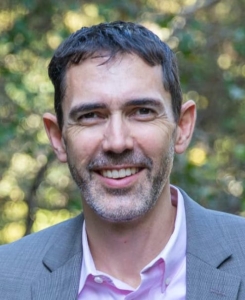
“It’s really exciting. We realized there is a lot of demand from mid-career professionals to develop analytic skills,” said Zachary Steinert-Threlkeld, associate professor of public policy and political science, who has accepted the interim dean’s request to serve as the director for the certificate. “We have put together an excellent program that gives them the opportunity to do that.”

At the same time, program planners recognized that these opportunities come with a number of risks and ethical dimensions that all professionals should be aware of, specifically privacy, the reliability of big data and unequal access to the internet.

New methodologies have emerged for data collection, analysis and visualization, and the Luskin School already offers a Data Analytics Certificate for its policy, planning and social welfare graduate students. But these new skills were not part of the education of professionals who completed their degrees even a few years ago.

Steinert-Threlkeld, who initiated the data analytics certificate program at the Luskin School and has served as the faculty lead, said that a bit of data analysis went into the decision to pursue this new venture. A survey launched to gauge interest in such a program directed questions at those who might be interested in adding data analytics to their skillsets as well as at supervisors who would find a benefit in having employees with these skills.

“We had over 300 responses, so that gave us confidence that there is strong demand for this certificate,” said Steinert-Threlkeld, who was part of a faculty committee assessing the initiative, led by Loukaitou-Sideris.

The program as envisioned in the committee proposal is designed to “attract and produce diverse cohorts of students interested in data analytics that can help enhance their understanding of big data and how they can be collected and analyzed, the ethical/social justice dimensions of big data, and how big data may apply to their professional practice.”

Housed at a school known for its emphasis on diversity and social justice, the program intends to “do better than other institutions in attracting a very diverse student body” and to “develop a broader perspective on data analytics courses designed to benefit a wide range of students,” the proposal says.

The program’s focus on public affairs also is designed to help it stand out from other UCLA Extension offerings. The graduate-level certificate, like other UCLA Extension programs, is open enrollment but targeted at those with prior academic experience, preferably a bachelor’s degree.

Four core courses will be required, including an overview of a variety of advanced technologies and their relevance to 21st-century governance and community development. Another course will examine ethical issues raised by the use of big data and data analytics for governance and community development projects. Topics to be explored include the tension between using data for the public good and protecting individual privacy.

A required data visualization course will allow students to explore approaches to communicating the value and impact of data to stakeholders at different organizational levels. The fourth course requirement is a data science course with two options: an introduction to programming and data science or a geographic information system (GIS) and spatial data analysis class.

Two optional electives included in the program are an introductory statistics class and an urban data science offering.

A launch date for the program has not yet been established but, said Steinert-Threlkeld, “Everyone in the school recognizes the demand for it and the benefit it will give to the enrollees, as well as to the School. We certainly think this will be received well and hope there’s very strong demand.”
‘People-Powered’ Campaign Elevates UCLA Luskin Alum’s Election Bid Bryan ‘Bubba’ Fish wins Culver City Council seat after knocking on doors — lots of them

December 17, 2024/0 Comments/in Alumni, For Faculty, For Policymakers, For Students, For Undergraduates, Politics, Public Policy, Public Policy News, School of Public Affairs /by Mary Braswell

By Stan Paul

Bryan “Bubba” Fish, a 2024 master of public policy graduate from the UCLA Luskin School of Public Affairs, is one of the latest Luskin grads to become an elected official, winning a Culver City Council seat in the November election.

Following graduation in June, Fish didn’t have time to rest on his laurels or take a vacation. The 33-year-old, winner of the “booked and busy” title by his fellow graduates, stepped out of Royce Hall in cap and gown, diploma in hand — in the middle of a competitive campaign that overlapped with the last two quarters of his public policy studies.

While juggling all of that, Fish, who concentrated on urban policy in his graduate studies, also worked in government affairs at the Los Angeles Department of Transportation before moving to his current job as a transportation deputy for Los Angeles County Supervisor Janice Hahn.

“As soon as I graduated, the campaign really ramped up. I basically got no break — the campaign just took over everything,” Fish said. He’s grateful now to be focused on work and serving as a council member.

Fish described his campaign as “people-powered,” with a lot of canvassing neighborhoods and knocking on doors. He recalls a politics of policymaking course led by UCLA Luskin Associate Professor Darin Christensen, where he saw a number of studies that showed “what works in policymaking and what doesn’t … and how do you know what really moves the needle in an election.”

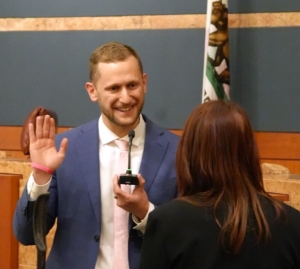
Fish takes the oath of office at a Dec. 9 ceremony.

There is little evidence that the cavalcade of flyers dropping through mail slots during campaign season does much, Fish said. But “there’s a ton of evidence that walking and the candidate specifically meeting people is what moves the needle, and that’s what we did,” he said. “I walked every single weekend since March — so 32 weekends in a row.”

He ended up knocking on thousands of doors and making plenty of personal contact. Of the 20,000 doors his campaign reached, Fish said he personally accounts for a fifth, or 4,000: “I think it made all the difference. … We literally met so many people, and they shared our vision.”

Fish said he’s thankful for the classmates who helped out with his campaign, adding that he wished he had had more time to spend with them while at UCLA.

“They were really wonderful and supportive,” he said. “A lot of them came to my kickoff, and some of them came to the election night party, too.”

The new councilman, who was sworn in on Dec. 9 at Culver City Hall, said he ran on three main priorities, including housing for people of all incomes.

“We have built very little housing in Culver City” — only 400 multifamily units in a city of 40,000 people — since before he moved to California in 2009, he said. Fish grew up in Houston and came west on a scholarship to the University of Southern California, where he majored in film and TV production.

Fish is currently a renter in the city he now represents. He says when he came to Culver City, he got really involved: “I created Culver City Pride here, the first Pride celebration in the city’s history, and I got really involved in housing advocacy here, trying to get more affordable housing in the city because the city has built so little housing.”

His second priority is mobility — specifically creating healthy streets and climate resiliency across the Los Angeles region, which is also a top concern for him as a transportation professional. He focused the third prong of his campaign on public safety.

“We saw this backlash in California,” Fish said, referring to a rolling back of criminal justice reform and return to “a philosophy that has failed time and time again, expanding prisons, doubling down on incarceration. It hasn’t served us.”

And, he said, “We saw our leadership, our council majority for the last couple of years, not really relying on policy as a science, not really relying on data to make certain decisions. It was more about reacting.”

Fish is interested in creating a budget that is “rooted in care” and says Culver City is at the precipice of creating new systems that he is excited about, such as a mobile crisis team, “health and housing professionals that will go to you.”

“I’m so grateful to Luskin for giving me the tools that I needed to run a successful campaign and make change,” said Fish, adding that his connection to faculty and classmates were key to his run.

“I don’t think I would have won without them,” he said. “I don’t think I’d be in a position to do what I hope to be able to accomplish.”

Read about other UCLA Luskin Public Policy alumni elected to office in November.

Training Youth to Turn Their Passion Into Action Undergrad Fiona Lu advocates for economic justice by forming strategic coalitions, including with UCLA Luskin alumni

December 12, 2024/0 Comments/in Alumni, Education, For Faculty, For Policymakers, For Students, For Undergraduates, Politics, School of Public Affairs /by Mary Braswell

By Mary Braswell

UCLA Luskin undergrad Fiona Lu entered the world of political activism while still in high school, moved by the realization that students like her could effect real change — with the right tools and strategies. Her vision is already paying off with legislative success, including the recent passage of a California law expanding access to menstrual products.

“Your experience as a community member is all you need to be a policy advocate,” says Lu. “You don’t need to have a prestigious degree — what you see in your community matters.”

With the dual goals of advancing economic justice and training other young people to maximize their political impact, Lu co-founded the advocacy organization What We All Deserve in November 2023. The group’s outreach to California lawmakers included two UCLA Luskin alumni, Assemblyman Isaac Bryan MPP ’22 and Sen. Caroline Menjivar MSW ’22, who authored and co-authored AB 1810.

The new law ensures that the state’s incarcerated population has unimpeded access to menstrual products, addressing what Bryan called a “gross abuse of power” in jails, prisons and juvenile facilities, where period products were at times withheld in an atmosphere of coercion, humiliation or harassment.

“It’s an issue at the intersection of gender rights, reproductive rights, but also poverty,” says Lu, a second-year student with plans to major in Public Affairs and Labor Studies and minor in Asian American Studies.

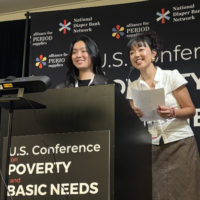
two young women at podium

Lu, right, and Esther Lau, co-founders of the What We All Deserve advocacy group. Photo by Monet Oganesian

AB 1810 is one of two What We All Deserve-supported bills that have been enacted, and two more are in the pipeline. In recognition of its impact, the group was recently awarded a $25,000 grant from an Allstate Foundation initiative to support youth empowerment.

Lu says her activism is shaped in part by the help that she, her mother and her 7-year-old brother have received through government assistance programs.

“I was a free lunch kid. And I still benefit from a lot of support systems the state of California and the federal government provide, like the Pell Grant and the Cal Grant,” Lu says.

“These support systems are so, so crucial, not just for people who are impoverished but also for people who might be going through a period of unemployment. Your economic circumstances can affect your physical and mental health and the type of life you think can be possible for you.”

Before launching her own advocacy venture, Lu was active in student-powered organizations such as Gen-Up and California High School Democrats, where she learned tangible ways to turn policy priorities into action. Key among those is building alliances with elected officials.

Last year, when What We All Deserve was working on the proposal that would become AB 1810, Lu reached out to Bryan.

“He has a such a robust background in criminal justice advocacy, and we were really glad that he was able to champion this idea,” she said.

Her first contact with Menjivar came years before, when Lu was a junior in high school. Menjivar had just been elected to represent a San Fernando Valley district in the state Senate, and Lu felt she would be the perfect author of another bill, still pending, that would make menstrual products affordable for low-income Californians.

“Sen. Menjivar is a social worker, and she knows how much access to basic needs affects your health and your overall well-being,” says Lu. “So I contacted her office and said, ‘We have this really cool policy idea. I would love it if we could meet with you.’ And she said yes.

“We really want to let young people know that sometimes it’s just that easy.”

Menjivar said that, as a state senator, she has prioritized authoring youth-serving and youth-led bills, and Lu is one of her strongest legislative collaborators.

“Not only a pleasure to work with, Fiona also has a pivotal voice that’s deeply knowledgeable on the issues young people face today,” says Menjivar.

“She is a determined leader in grassroots advocacy, including building the youth coalitions that are so important to our future, and I’ve absolutely loved every opportunity we’ve had to work together.”

Through What We All Deserve, Lu and co-founder Esther Lau are sharing these strategies for forging effective alliances with youth across California and now Texas and New York.

“A lot of times, young people think they have to have policy expertise or technical data or something super hardcore to speak to the people we elect,” Lu says. “But they’re supposed to represent your voices, and you’re supposed to feel comfortable talking to them. So that’s a big part of what we’re trying to demystify.”

Lu applied to UCLA as a Public Affairs pre-major because of its emphasis on social change.

“It’s a really unique program. We’ve already established that there is inequality in the U.S., in California, in our own communities. But in these classes, we’re asking, how can we work toward rectifying that? And how can we find policy solutions that are grounded in community values?”

She honed her advocacy skills during UCLA’s summer internship program in Washington, D.C. And at the invitation of Social Welfare Professor Laura Wray-Lake, Lu addressed an international youth conference hosted by UCLA Luskin last spring and beamed to an audience of 720,000 people worldwide.

Lu says her work is motivated in large part by the brother she is helping to raise.

“Watching my brother grow up has helped me really ground my anti-poverty work in this idea that children deserve this,” she says. “All children are not born in the same circumstances. But all of them deserve to thrive.”

This story appears in the 2025 issue of Luskin Forum magazine, coming soon in print and online.

Mega-Events, Major Opportunities As it prepares to host a series of monumental gatherings, L.A. is urged to seize the moment to bring lasting benefits to the region

December 5, 2024/0 Comments/in Climate Change, Diversity, Electric Vehicles and Alternative Fuels, Environment, For Faculty, For Policymakers, For Students, For Undergraduates, Politics, School of Public Affairs, Transportation /by Mary Braswell

Los Angeles is preparing to host several monumental events in the coming years, including the FIFA World Cup in 2026, Super Bowl LXI in 2027, and the Summer Olympics and Paralympics in 2028.

How can government and civic leaders balance the immediate needs of these global exhibitions with long-term planning goals that advance accessibility, equity and sustainability across the region?

That question was the focus of “Mega Events, Major Opportunities,” the 34th annual UCLA Lake Arrowhead Symposium held in October. The three-day experience presented by the Institute of Transportation Studies (ITS) at UCLA Luskin drew nearly 170 attendees from the spheres of policymaking, urban planning, advocacy, philanthropy, academia and more.

Participants emphasized the need not just for temporary, event-specific game plans but also for lasting improvements that benefit the lives of Angelenos long after the crowds go home.

A report published by ITS summarizes the symposium’s key takeaways. Some highlights:

Coordination and Inclusion

Several speakers said Los Angeles’ preparations for the blitz of mega-events is like the rush to clean one’s house before guests arrive. The City of Los Angeles, LA Metro and the nonprofit LA28, which is organizing the Summer Olympics and Paralympics, are among the major entities working under deadline pressure to ensure the events are smoothly run.

But there’s a need for more coordination and transparency to identify and meet the common goals of government, civic and private sectors, several symposium participants said.

A top priority is authentic community engagement to hear directly from Angelenos about what investments might bring lasting benefits to their neighborhoods. In particular, attendees called for the inclusion of people with disabilities in the planning process, to help jumpstart Los Angeles’ stated commitment to improve accessibility for all.

A ‘Transit-First Games’

When the L.A. Games come to town, each venue will have a wide perimeter, thanks to U.S. Department of Homeland Security protocols. Public transit, not personal vehicles, will ferry most spectators to the events, creating a unique incentive to accelerate infrastructure changes that improve the efficiency of L.A.’s bus system. One strategy endorsed by symposium participants is a far-reaching public education campaign to help overcome political opposition to dedicated bus lanes, which can make transportation more affordable, equitable and climate-friendly.

Mega-event planners may be motivated by a desire to avoid traffic gridlock that causes spectators, workers, media and even athletes to miss events, but providing quality public transportation service for the people who live in Los Angeles ought to be top of mind.

Investing in Housing, Neighborhoods and Local Business

To keep costs down, LA28 planners will maximize the use of existing venues and supporting infrastructure. But symposium participants identified ample opportunities for investments that ensure that the Games are successful and the city is left better off than before:

  • Housing built for the army of temporary workers who will need to relocate to Los Angeles could then be repurposed to fill a dire need for affordable housing or permanent supportive housing.
  • The Games could be a catalyst for neighborhood improvement projects, including gathering places for watching the events. Community input, along with funding from local governments, local businesses and philanthropy, could lead to thriving and accessible public spaces that reflect the character of neighborhoods.
  • In Los Angeles County, 94% of companies have fewer than 20 employees, but small and mid-size businesses often face challenges in meeting procurement requirements of governments and large businesses. LA28 contracting opportunities that prioritize local, small and diverse businesses could create markets that extend well beyond the mega-event.

Meeting the urgency of hosting the world is a challenge for Los Angeles, symposium participants concluded, but also an opportunity to break through a bureaucracy-as-usual approach and create a more vibrant future for all Angelenos.

A Celebratory Welcome to UCLA Luskin The entire School community gathers to make connections and launch the new academic year

September 27, 2024/0 Comments/in Alumni, For Faculty, For Students, For Undergraduates, Global Public Affairs, Luskin Center, Public Policy, Public Policy News, School of Public Affairs, Social Welfare, Social Welfare News, Urban Planning /by Mary Braswell

This year’s UCLA Luskin Welcome Week opened with the exciting announcement that UCLA has, for the eighth consecutive year, been named the No. 1 public university in the United States.

The news set a celebratory tone for a series of Luskin School events welcoming students, alumni, faculty, staff and friends back to campus to kick off the 2024-2025 academic year.

An orientation for graduate students brought public policy, social welfare and urban planning students together to learn about resources provided by the university and the Luskin School.

The undergraduate program hosted a luncheon for majors, pre-majors and students interested in learning more about the bachelor of arts in public affairs.

And the Block Party tradition continued for the 13th year, with the entire UCLA Luskin community gathering to make connections, learn about opportunities and organizations, enjoy the flavors of Los Angeles and greet the School’s benefactors, Meyer and Renee Luskin.

View photos from:

Graduate Student Orientation

UCLA Luskin Orientation 2024

Undergraduate Open House 

UCLA Luskin Undergraduate Open House 2024

13th Annual UCLA Luskin Block Party

UCLA Luskin Block Party 2024

View More Block Party Images from Stay Golden Photobooth


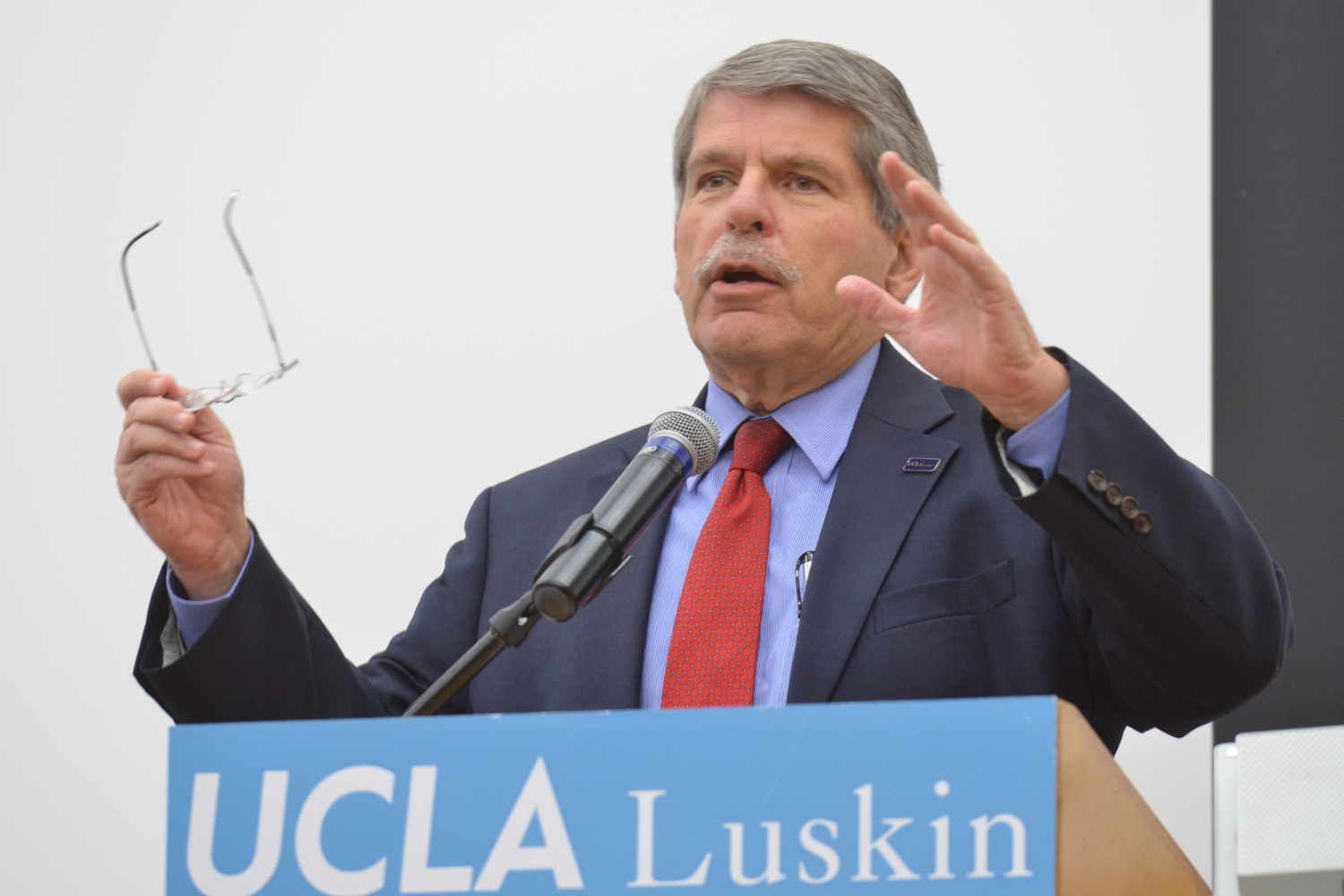
Zev: Legendary L.A. Politico Retires From UCLA Luskin Faculty Yaroslavsky used his real-world experience grappling with the region's knottiest problems to teach and mentor UCLA Luskin students

August 28, 2024/0 Comments/in Education, For Faculty, For Policymakers, For Students, For Undergraduates, Politics, Public Policy, Public Policy News, School of Public Affairs Zev Yaroslavsky /by Mary Braswell
UCLA’s Blueprint magazine interviewed Zev Yaroslavsky, who joined the UCLA Luskin faculty after decades serving in elected office in Los Angeles. Yaroslavsky is retiring from teaching this summer but will continue to direct one of the Luskin School’s signature projects, the annual Quality of Life Index measuring Angelenos’ contentment with life in L.A. This article is reprinted with the permission of Blueprint.

By Jean Merl

On the eve of a Jewish holiday last fall, Zev Yaroslavsky was standing in the front yard of his Los Angeles home when a neighbor he hadn’t seen for a while walked by on his way to the synagogue. The man stopped to greet Yaroslavsky and posed a question that gladdened the former longtime elected official.

“‘Is it my imagination, or has the homeless situation gotten better around here?’” Yaroslavsky recalled the man asking.

“It’s not your imagination,” Yaroslavsky responded, adding details about at least two area homeless encampments that were cleared when their inhabitants had been housed and offered services under Mayor Karen Bass’ Inside Safe program.

“It took time, but they housed them,” Yaroslavsky, 75, said in a far-ranging interview as he prepared to retire this spring from his second career, teaching at UCLA’s Luskin School of Public Affairs. “They didn’t just sweep them to another street. They housed them. It’s not easy, but you can do it.”

Yaroslavsky knows his subject. He served nearly four decades as an elected official: on the Los Angeles City Council from 1975 to 1994, when he was elected to the county Board of Supervisors. Term limits required him to retire from that post in 2014. Until then, he had wrestled with — and helped shape responses to — nearly every major issue in the region: health care, land development, open space preservation, police reform, public transportation, cultural development. And homelessness.

Soon after leaving the Board of Supervisors, Yaroslavsky was invited to return to UCLA, where he had earned bachelor’s and master’s degrees before leaving a doctoral program to pursue a calling to social activism and politics. He eschewed a common path for retiring politicians — a corporate position or a lobbying or consulting gig — in favor of joining his alma mater, a public university where he could continue his life of service.

“I wanted to bring a real-world perspective to students,” he said. “And I wanted to learn from them.”

From elected office to academia

Yaroslavsky’s decade at the Luskin School has placed him squarely at the intersection of public policy and academia. He has taught classes on public policy and directed the Los Angeles Initiative, which conducts the Quality of Life Index, an annual survey of county residents’ satisfaction levels in several categories, including housing costs and homelessness.

He has helped steer bright young students into careers in public service, including Assemblyman Isaac Bryan (D-Los Angeles). In the spring of 2020, at the height of the COVID-19 lockdowns, he turned his class into a crash course in crisis management by inviting various public officials to talk — via Zoom — about how they were responding to the pandemic.

Although academics and politicians often don’t speak the same language, Yaroslavsky said it is important that they listen to and learn from one another.

“I do think there is a functional role between academia and government,” he said, noting that think tanks and researchers provide data and reports for policymakers to use in their attempts to find solutions to pressing problems. “It’s important,” he adds, “for academics to understand the pressure politicians are under from constituents and for politicians to know what the facts are.”

Paying attention to the research helps policymakers find solutions and avoid mistakes. “We can’t live without it,” he said.

A history of homelessness

In his role as an academic, Yaroslavsky was one of the authors of a comprehensive study of homelessness in the region, published in 2021 by the Luskin Center for History and Policy. “The Making of a Crisis: A History of Homelessness in Los Angeles” detailed some 120 years of ebbs and flows in the problem, including causes and recommendations.

Earlier, during his time as a county supervisor, Yaroslavsky led an effort to take a comprehensive approach to homelessness, a problem he compares to a Rubik’s Cube — a complicated puzzle that can’t be solved quickly or easily.

In 2007, he spearheaded Project 50, a two-year county pilot project that focused on Skid Row people who were deemed the most vulnerable. The project got them into housing and offered them services to help with the issues that had caused them to be homeless, including addiction and mental health problems. It was based on a successful program in New York City, and it pioneered what is now the standard thinking about ways to combat homelessness — first, provide a home, then address underlying problems to keep people from falling back into life on the streets. The process can be costly and time-consuming, and its success depends in part on removing such stumbling blocks as housing costs, racial discrimination and poor education. But advocates of this approach say the social and financial costs of not solving what has become a crisis are much higher.

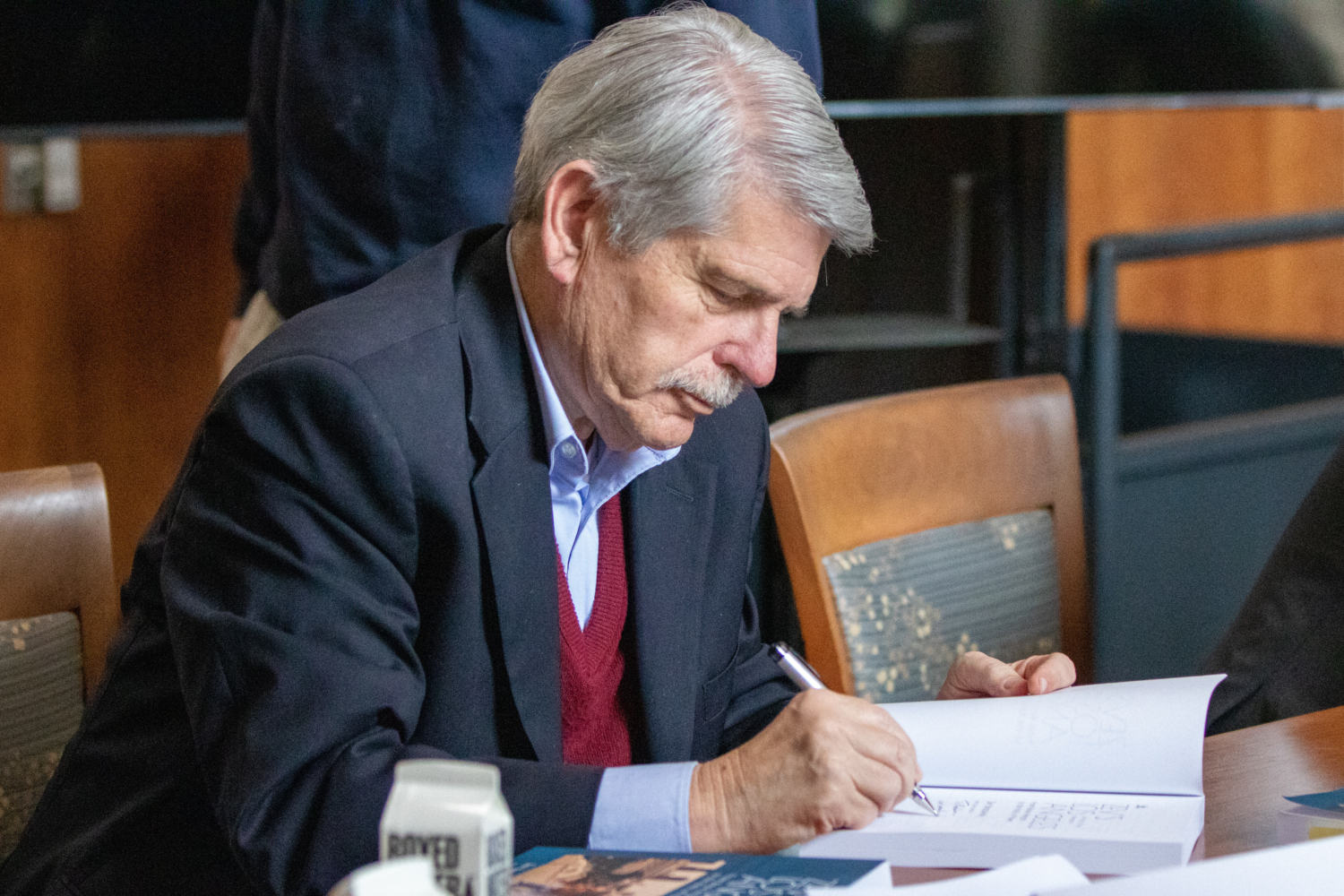
Man seated and autographing bookYaroslavsky signs a copy of his memoir “Zev’s Los Angeles” at a UCLA book event in 2023. Photo by Mary Braswell
Man seated and autographing book
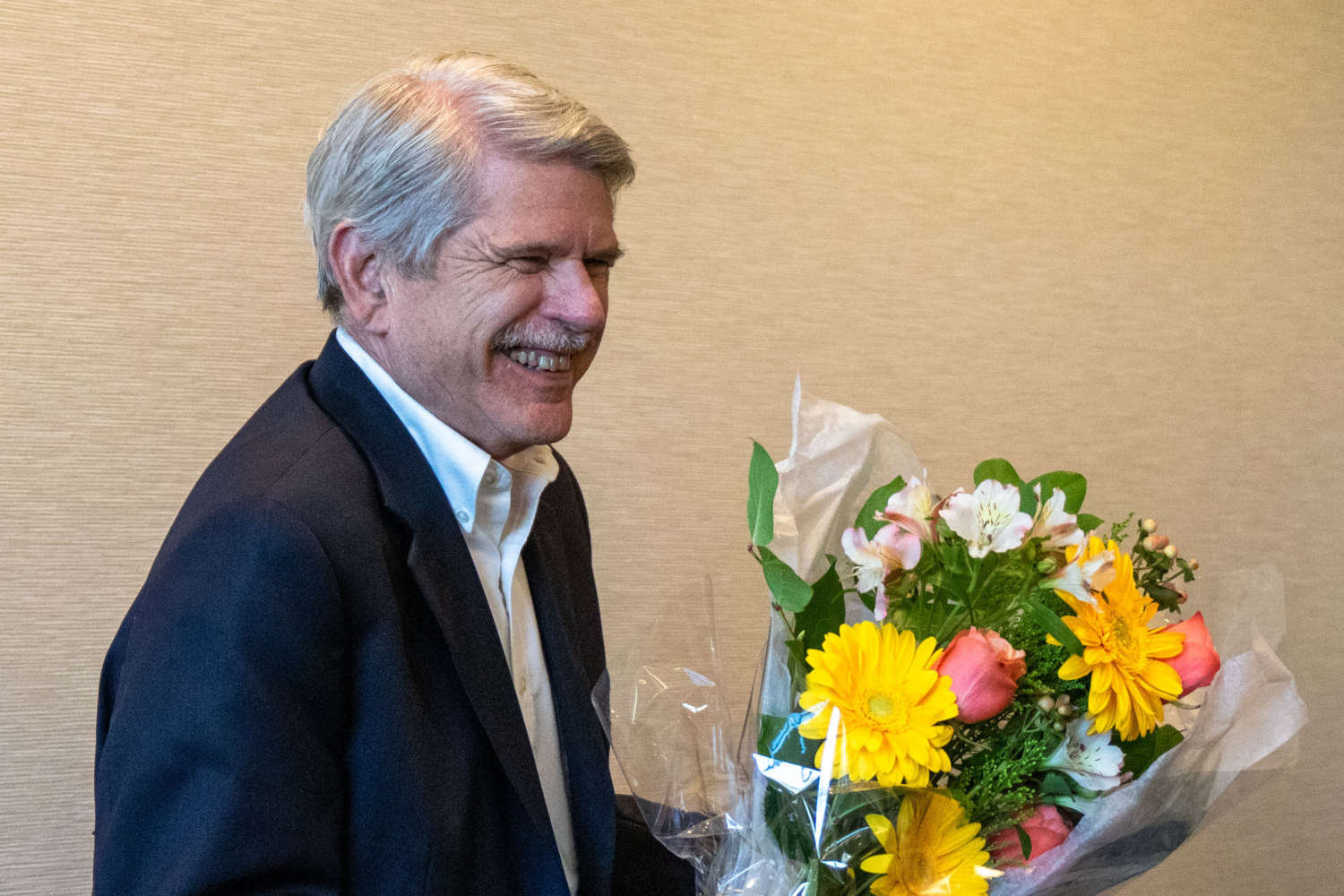
Man with bouquet of flowers

For years, Yaroslavsky said, he had behaved like most other politicians. Stay away from homelessness, was the standard political advice, because it’s intractable and costly and you will be branded a failure if your efforts fall short. And it was easier back then to ignore homelessness because it was largely confined to Skid Row and not the crisis that has spread throughout many communities and spilled into pricy, middle-class neighborhoods today.

He said this began to change in 2002, when his daughter, then in graduate school and living in the Bay Area, urged him to pay attention to the issue. He hired a deputy to work on homelessness in 2005. She told him about a pioneering “housing first” program in New York City. On a visit there to attend his son’s law school graduation in 2007, Yaroslavsky toured the program, Common Ground, based in the converted Times Square Hotel, and met with its founder. He pushed for something similar in Los Angeles.

Project 50 worked well for a time. Clients stayed housed and accepted support services, and budget officials found the costs were more than made up by the savings in emergency room visits, arrests and other consequences of life on the streets. A county analysis showed the program cost $2.2 million but saved $2.4 million. As the pilot program was nearing its end in 2009, Yaroslavsky proposed extending and expanding it to 500, then to 5,000, taking it countywide. But he couldn’t get a second from any of the other four supervisors. Yaroslavsky put smaller projects based on the Project 50 model into his own district, but the countywide version died.

Since then, homelessness has exploded into a region-wide crisis that no longer can be ignored, Yaroslavsky said, lamenting that the failure to expand Project 50 in 2009 “basically cost us almost a decade” in solving the problem.

In 2016, voters in the city of Los Angeles approved Proposition HHH, a $1.2 billion bond measure for permanent supportive housing, and the following year, county voters approved Measure H, which enacted a 1⁄4-cent increase on the sales tax for 10 years to alleviate homelessness. Bass won the mayor’s office in November 2022 after a campaign that centered around combating homelessness. Her first official act was to declare a state of emergency because of homelessness. County supervisors followed suit a month later.

Reflections on service and politics

Yaroslavsky, in his 2023 memoir, “Zev’s Los Angeles: From Boyle Heights to the Halls of Power,” called homelessness “the moral challenge of our time” and outlined ways to meet it. His experiences naturally have informed his views on Bass’ attempts. He gives her high marks while acknowledging there is still a long way to go. Other circumstances, ranging from income disparity to the lack of an elected executive in the power-diffused county, also pose considerable obstacles, he added.

A Los Angeles Times analysis of Bass’ program late last year found significant progress in her goal to find shelter for those living on the streets and clear the encampments that had sprung up along public rights of way. But the campaign to find or build permanent affordable housing remained a tough challenge. Bass called improving the system of support services, including substance addiction treatment, a “top, top issue” as the program headed into its second year.

Yaroslavsky praised Bass for her comprehensive approach and willingness to put herself in charge of the program and accept responsibility for it.

“I’m a cheerleader for her,” Yaroslavsky said. “I think she’s doing the right thing.”

But he’s realistic, too. “I’ve said from the start that [homelessness] was not created overnight and it’s not going to be solved overnight. But she’s making progress, and she has created a sense of possibility and is publicly committed to solving the problem.”

Bass also is well suited to the task because of her collaborative manner and her background as a physician’s assistant and community activist before being elected to the state Assembly and then Congress, Yaroslavsky said. He also touted her commitment to Los Angeles.

“She has made it clear she is not interested” in running for another office and probably has eight years to work on the issue, said Yaroslavsky, who expects Bass will serve a second term.

But one of the toughest obstacles to overcoming the problem is an acute shortage of affordable housing.

Increasingly, people are at risk of falling into homelessness, not because they are drug or alcohol abusers or mentally ill, but because they can no longer afford their rent on the wages they earn, Yaroslavsky said. Remedying that will take government intervention, including but not limited to housing subsidies, so that “the people who provide the backbone of the labor market here can afford to live here and not be forced out onto the street” where they eventually develop other problems.

“There’s a structural inequity in our housing economy that creates this homelessness problem,” Yaroslavsky said, “and we’ve got to deal with it.”

Luskin School Adds 2 Tenure-Track Faculty Social Welfare scholar focuses on health equity and race, while Urban Planning addition has experience in real estate development and land use policy

July 9, 2024/0 Comments/in For Faculty, For Policymakers, For Students, For Undergraduates, School of Public Affairs, Social Welfare, Social Welfare News, Urban Planning Sicong (Summer) Sun /by Stan Paul

By Stan Paul

Two new additions have joined UCLA Luskin’s faculty this summer, bringing research experience and teaching expertise to its graduate and undergraduate programs.

Sicong “Summer” Sun, most recently at the School of Social Welfare at the University of Kansas, is UCLA Luskin Social Welfare’s newest assistant professor. Minjee Kim, previously in Florida State University’s department of urban and regional planning, is a new assistant professor in urban planning.

Laura Abrams, professor and outgoing chair of Social Welfare, announced Sun’s appointment. “Summer is conducting critical work on the intersections of poverty, race and health and will add greatly to our mission of advancing knowledge, practice and policy for a just society,” she said.

Sun studied at the Brown School at Washington University in St. Louis, earning a doctorate and a master’s degree in social welfare, with a concentration in social and economic development and a specialization in research.

Their areas of interest include health equity and social determinants of health, race, ethnicity and immigration, as well as poverty, inequality and social mobility. One example of Sun’s work — the subject of their dissertation — is racial and ethnic differences in the relationship between wealth and health.

“My recent projects have been investigating how the relationship between wealth and health differ by race and ethnicity, how structural conditions shape people’s differential access to resources, thereby impacting their health and well-being,” Sun explained.

In addition to doing research, Sun will be teaching a graduate course this fall on the foundations of social welfare policy, followed in winter with a course on human behavior in the social environment focused on theoretical perspectives in social work and social welfare.

“I’m excited to expand my research, collaborate with colleagues across disciplines, and work with and learn from local community partners. I’m also looking forward to teaching and mentoring students,” Sun said. “I heard UCLA students are very passionate and smart, with many ideas to change the world. I’m eager to engage with them in the classroom, and support their research, practice and careers.”

Kim previously worked as an architect in Korea on projects from offices and buildings to parks, pavilions and master plans for new towns, turning to a career in academia upon developing an interest in public policy and planning. She earned master’s and doctoral degrees in urban planning at MIT.

“I really wanted to have a greater influence than standalone buildings or projects, which is what really got me interested in public policy as well as planning,” she said.

While pursuing her graduate degrees, she worked for the city of Cambridge as a research associate for the Community Development Department, and then at the development review unit at Boston’s Planning and Development Agency.

Kim began to realize how planning and real estate can have a synergistic relationship when working in these city departments. “I observed first-hand that when planners have an understanding of the real estate development process and the economics of it, they can use the tools under their belts to collaborate and negotiate with developers to identify solutions that can push real estate development towards more equitable outcomes,” Kim said.

Michael Manville, professor and chair of Urban Planning, said Kim’s diverse skill set will add value to the Design and Development concentration within Luskin Urban Planning, as well as to the new Master of Real Estate Development (MRED) program.

Kim’s vision for real estate development brings about positive change to historically marginalized communities. This is an approach that stands in sharp contrast to the historical practice of real estate development, which had been a tool for race and class exclusion, displacement and residential segregation. A new breed of equitable and socially responsible projects, Kim said, “can reduce the existing socioeconomic inequalities that have been created and perpetuated by past real estate development practices.”

Fittingly, Kim will be teaching graduate courses on public/private development and site planning, which will be about how planners, urban designers and developers can work together to identify creative solutions for building equitable, socially responsive and redemptive development projects. She will also teach a graduate course on zoning for equity, which she has taught previously as part of a multi-campus course in conjunction with Paavo Monkkonen, a UCLA Luskin professor of urban planning and public policy. In addition to these graduate courses, Kim will instruct students in the undergraduate major in public affairs.

“Minjee has already established herself as a productive scholar working at the intersection of land use regulation, real estate development and housing, so we’re thrilled to bring her on board,” Manville said.

Leadership Transition at UCLA Institute of Transportation Studies After more than two decades guiding research center's growth, Brian Taylor hands reins to Adam Millard-Ball

July 2, 2024/0 Comments/in For Faculty, For Policymakers, For Students, For Undergraduates, Public Policy, Public Policy News, School of Public Affairs, Urban Planning Adam Millard-Ball, Brian D. Taylor /by Mary Braswell

After 23 years at the helm, Brian D. Taylor has stepped down as director of the UCLA Institute of Transportation Studies, effective July 1. His successor is Adam Millard-Ball, professor of urban planning at UCLA Luskin.

Taylor has led UCLA ITS since 2001, playing a critical role in its expansion. Under his tenure, the institute has transformed from a small operation with limited staff and resources into a nationally influential research center with more than 75 scholars and staff conducting cutting-edge research in eight program areas. It has also established partnerships in several consortia, most recently being named the lead in a five-year, $7.5 million federally funded Center of Excellence on New Mobility and Automated Vehicles.

“I am honored to have collaborated with so many talented and motivated students, staff and faculty in building the UCLA Institute of Transportation Studies into the productive and influential transportation research center it is today,” Taylor said. “And I am confident that the institute will continue to effectively tackle our most pressing environmental, equity and technological transportation challenges in the years ahead.”

In recent years, UCLA ITS has

  • Joined the ITS branches at Berkeley, Davis and Irvine in 2016 to form a four-campus University of California Institute of Transportation Studies consortium;
  • Significantly expanded its California-focused transportation policy research in 2017 due to substantially increased annual state funding through the Road Repair and Accountability Act (SB 1);
  • Supported five graduate transportation degree programs in three UCLA Luskin academic departments that have recently climbed in their most widely recognized national rankings — Civil & Environmental Engineering (#12), Public Policy (#14) and Urban Planning (#1);
  • Supported the recruitment of three transportation engineering faculty since 2020 and the creation of master’s and doctoral degrees in transportation engineering.
  • Directed more than $3 million in funding to support graduate students;
  • Supported more than 20 former transportation students who have moved on to tenured or tenure-track faculty positions at leading universities around the world, including Harvard, UC Berkeley, UC San Diego and University of Virginia;
  • Broadened research focus areas to include access to opportunities, the environment, new mobility, parking, public transit, traffic, transportation & communities, and transportation finance.
Taylor’s Leadership Roles

Taylor worked professionally as a transportation planner/analyst for the Metropolitan Transportation Commission before pursuing a PhD in urban planning under the mentorship of Martin Wachs at UCLA. Taylor’s academic focus on transportation finance and governance made him a natural fit for policy engagement.

He began his academic career as an assistant professor at the University of North Carolina at Chapel Hill. In 1994, Taylor joined the UCLA faculty, one year after Wachs re-established the institute on campus. When Professor Wachs moved to UC Berkeley in 1996, Taylor became the only faculty member on campus dedicated primarily to transportation teaching and research. That same year, he became associate director under Donald Shoup, who had replaced Wachs as UCLA ITS director.

In addition to serving as UCLA ITS director since 2001, Taylor is a professor of urban planning and public policy. He also chaired the Urban Planning department for three years and was the director of the Lewis Center for Regional Policy Studies for seven years. In recent years he has been an associate director of the Pacific Southwest Region 9 University Transportation Center and this year was chair of the council of directors for the four-campus UC ITS.

Building on Two Decades of Momentum

New director Adam Millard-Ball brings a wealth of experience in data science and climate change policy.

Incoming director Millard-Ball brings a wealth of experience in data science and climate change policy. He joined UCLA Luskin in 2021, and served as acting director of UCLA ITS during the 2022-23 academic year. In that time, Millard-Ball oversaw TRACtion: Transformative Research and Collaboration, an initiative that brought together academic researchers and community advocates to identify barriers to a just and sustainable future for Los Angeles.”I’m thrilled to lead UCLA ITS, which Professor Taylor has led and built up with his colleagues for more than two decades,” Millard-Ball said. “I hope to maintain our contributions to research and policy for our local community in Los Angeles, for California and across the U.S., and increasingly internationally as we confront the global challenges of climate change.”

The future for UCLA ITS holds more collaboration with engineering scholars at UCLA, exploration of climate issues in relation to transportation, work on equity and community engagement, and integration of innovative methods in data science.

As for Taylor’s future, he’s not going very far.

“I plan to remain active in transportation scholarship and policy, and look forward to devoting more time to research, teaching and mentoring in the years ahead,” he said.

‘Tell Your Story in Your Own Words, So That No One Tells It For You’ A commencement message of empathy and resilience for UCLA Luskin’s Class of 2024

June 20, 2024/1 Comment/in Alumni, For Faculty, For Policymakers, For Students, For Undergraduates, Public Policy, Public Policy News, School of Public Affairs, Social Welfare, Social Welfare News, Urban Planning /by Mary Braswell

“If you want to go fast, go alone. If you want to go far, let’s go together.”

Paco Retana, a leading voice in community mental health, invoked this African proverb as he called on UCLA Luskin’s Class of 2024 to embrace a spirit of compassion and collaboration as they set out to put their educations to work.

“In a world increasingly divided by conflict, inequality and environmental crisis, love and respect are more essential than ever before,” Retana told the gathered graduates at two commencement ceremonies on June 14.

“Together, you have the potential to create a tapestry of positive change that is richer and more vibrant than anything you could achieve alone.”

Retana spoke to public policy, social welfare and urban planning scholars earning master’s and doctoral degrees at a morning ceremony at UCLA’s Royce Hall. Later in the day, he addressed students awarded the bachelor of public affairs at the Grand Ballroom in Ackerman Union.

“The superpower you all have — resilience, corazon, heart — has been the key to navigating life’s inevitable challenges and setbacks,” said Retana, who shared his own background to underscore the point.

Born in Pico Rivera to working-class parents who emigrated from Mexico and Costa Rica, Retana was labeled an underperformer in school. But he went on to become the first in his family to attend college, earning two UCLA degrees: a bachelor’s in psychology in 1987 and a master’s in social welfare in 1990.

For more than three decades, Retana has served Los Angeles’ vulnerable youth and marginalized communities and is now chief program officer at the nonprofit Wellnest. He mentors graduate students as part of UCLA Luskin’s Senior Fellows career leadership program, and he will soon become president of the UCLA Alumni Association.

Retana credited his family for their unshakable support and thanked all the loved ones who were present to cheer on the graduates. “Families are the quiet towers of strength that support us in ways we often take for granted,” he said.

Like many of the day’s speakers, Retana acknowledged that the Class of 2024 pursued their degrees during an often painful era.

For the undergraduates, this included beginning their college careers in 2020 as COVID-19 took lives, strained finances and kept people apart. Political polarization, a reckoning with racism and labor strife followed, and the schisms grew deeper this academic year with the devastating loss of life in the Middle East and protests that have divided campuses across the country, including UCLA.

“Today, we gather to celebrate the achievements and the bright futures of our graduating class. Yet we cannot ignore the recent conflicts and violence that have affected our universities, including our beloved UCLA,” Retana said.

“These events remind us of the critical importance of fostering environments where respect, empathy and dialogue are important.”

Students chosen by their peers to deliver commencement remarks also spoke of this difficult moment, calling for moral courage and solidarity. At the graduate ceremony, members of the audience were invited to leave the ceremony to join a pro-Palestinian rally outside.

Retana urged the entire Class of 2024 to “tell your story in your own words, so that no one tells it for you.”

“Your resilience and your heart not only help you to survive hardships, but also to thrive and reach your full potential, turning life’s trials into stepping stones for success.”

View photos of the graduate commencement

2024 UCLA Luskin School of Public Affairs Graduate Commencement

Watch the graduate commencement ceremony


View photos of the undergraduate commencement

UCLA Luskin School of Public Affairs 2024 Undergraduate Commencement

Watch the undergraduate commencement ceremony


Blazing Trails for Asian American Health and Well-Being Social Welfare alumni Bill Watanabe and Yasuko Sakamoto are honored for legacy of leadership

June 18, 2024/0 Comments/in Alumni, For Faculty, For Students, School of Public Affairs, Social Welfare, Social Welfare News Erin Nakamura, Susan Lares-Nakaoka, W. Toby Hur /by Mary Braswell

By Mary Braswell

Alumni, faculty, staff and friends of UCLA Luskin Social Welfare gathered in Little Tokyo this month to celebrate two trailblazers whose life’s work centered on making the Asian American and Pacific Islander community thrive, in Los Angeles and beyond.

Bill Watanabe MSW ’72 and Yasuko Sakamoto MSW ’83 were recognized as the Joseph A. Nunn Social Welfare Alumni of the Year for their decades of leadership in strengthening ethnic neighborhoods and training generations of social workers who would carry on a legacy of service.

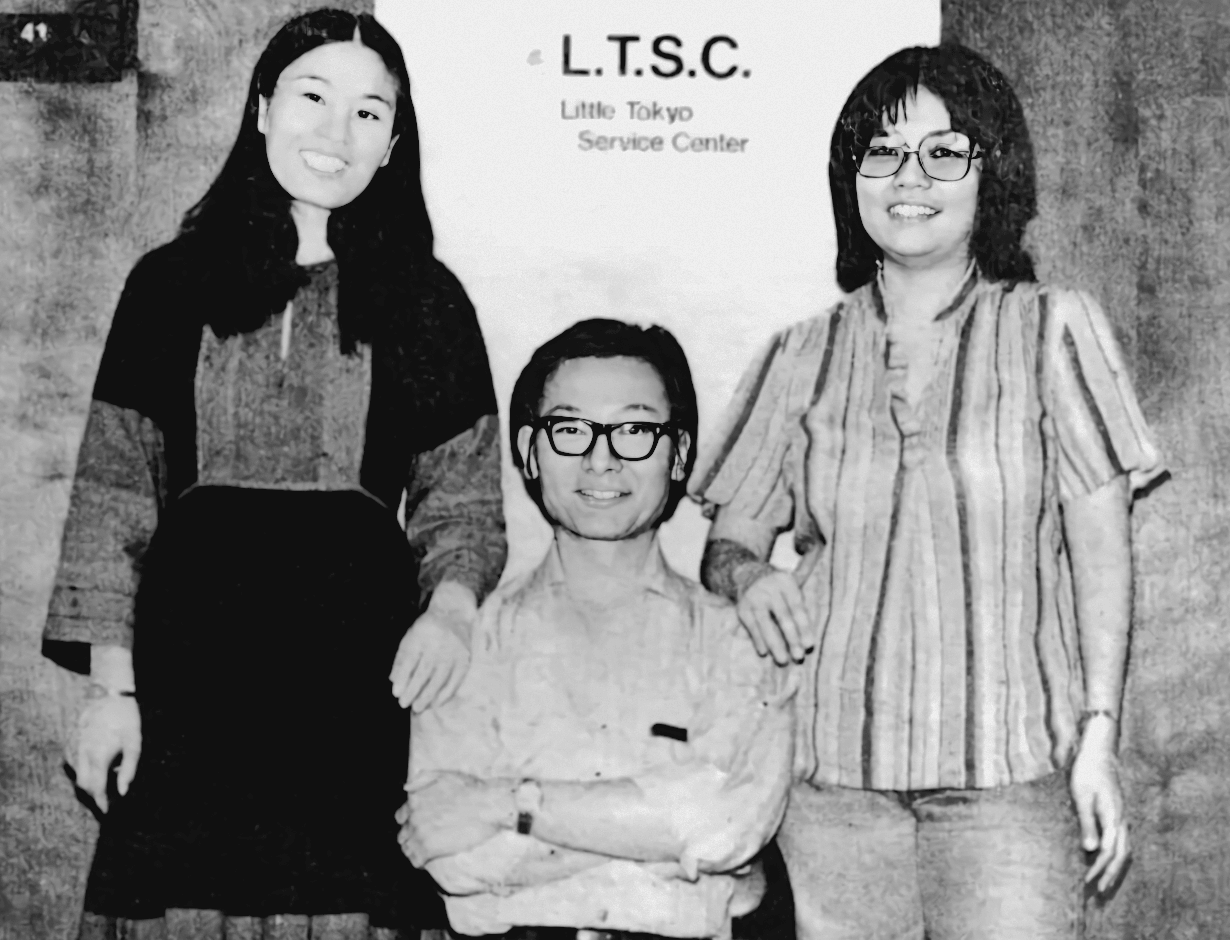
Watanabe and Sakamoto were two of the three original staff members of the Little Tokyo Service Center (LTSC) when it opened in 1980, and they served together for more than three decades.

The nonprofit now employs more than 150 people, providing culturally sensitive social services, affordable housing, support for small businesses, and programs for children, families and seniors. The June 8 alumni celebration took place in the recently opened Terasaki Budokan, a community sports and activity center 30 years in the making.

Over the years, the service center has also served as a learning site for more than 120 social welfare interns, 60 from UCLA — including three current  faculty, Susan Lares-Nakaoka MSW ’99 UP PhD ’14, director of field education; Toby Hur MSW ’93 and Erin Nakamura MSW ’12.

A group of former interns nominated Watanabe and Sakamoto for this year’s award, and many delivered moving tributes to their mentors.

“Bill was well-known for his visionary leadership, unwavering ethics and persistence in pursuing social justice goals … and also, the way he just always does the right thing,” Lares-Nakaoka said of Watanabe, who served as the center’s founding executive director for 32 years before retiring in 2012.

three young people in historic B&W photo

LTSC’s three original staffers: Yasuko Sakamoto, left, Bill Watanabe and Evelyn Yoshimura. Photo courtesy of the Little Tokyo Service Center

Born in the Manzanar incarceration camp during World War II, Watanabe went on to complete his education and rise to several leadership positions at organizations that serve marginalized populations and fund community development. His efforts to save and restore historic places significant to the AAPI community earned him a “hero award” from the National Trust for Historic Preservation. And as a past UCLA Luskin Senior Fellow, he has mentored graduate students in leadership and career development.

“You can see his massive reach, both locally and nationally,” Lares-Nakaoka said.

Alumna Hiroko Murakami MSW ’09 spoke of Sakamoto’s lasting impact as LTSC’s director of social services until her retirement in 2016. Programs to provide counseling, reach out to isolated members of the community, support families dealing with Alzheimer’s and provide transitional housing to survivors of domestic abuse are among those designed and launched by Sakamoto.

Murakami said Sakamoto was a creative leader, even initiating a series of tofu cookbooks “to introduce healthy eating to a wide audience, with the funds raised going to emergency services and domestic violence counseling.”

Sakamoto advocated on behalf of new immigrants and reparations for detained Japanese Americans, and has been a frequent speaker in both the United States and Japan, where she was born. She has received a commendation from the Consulate General of Japan in Los Angeles.

Despite numerous accolades over the decades, the two honorees never prioritized building up egos or empires, instead keeping their focus on community needs, the afternoon’s speakers noted. That outlook was evident in their comments to the gathering.

“This recognition is due to a collective effort, not just Bill and me,” Sakamoto said. She expressed gratitude to Evelyn Yoshimura, the third original LTSC staffer, and other employees, volunteers, partner agencies and places of learning like UCLA that sent budding social workers into the heart of Little Tokyo.

“Personally, I have always felt the student interns who I worked with were my great teacher. … They guided me to become a better social worker and effective supervisor,” she said.

Watanabe personally thanked Nunn, a UCLA Luskin professor emeritus who is the namesake of the annual alumni award and was present at the celebration.

“The name of Joe Nunn is a very highly honored name in the school of social welfare at UCLA,” he said. “And so to receive this recognition in his name is a very, very big deal for Yasuko and myself.”

He said UCLA was “perhaps the most courageous school of social work in the country” for opening its doors to him in the 1970s.

“I wrote a heartfelt autobiographical statement basically saying, if I get accepted, I commit myself and dedicate myself to work in this community to try to make a change,” Watanabe said.

“So I want to thank UCLA for taking a chance and allowing people like myself and Yasuko — who was much more qualified than I — to be able to be trained and educated so that we can serve the community.”

View photos from the celebration

Social Welfare Alumni Awards 2024

Page 4 of 36«‹23456›»

Recent Posts

  • Kaplan on the Social Media Ban for Minors in Florida December 17, 2025
  • How DemocraShe Builds Civic Engagement for All December 17, 2025
  • Yaroslavsky on Rob Reiner’s Legacy of Progressive Advocacy December 17, 2025
  • How Rising Debt and Eroding Governance Threaten Long-Term Stability in Five Countries December 16, 2025
  • The Facts on School Violence: Q&A with UCLA Luskin’s Ron Avi Astor December 15, 2025

Contact

UCLA Luskin School of Public Affairs

3250 Public Affairs Building - Box 951656
Los Angeles, CA 90095-1656

Campus Resources

  • Maps, Directions, Parking
  • Directory
  • Contact
  • Academic Calendar
  • Careers
  • Diversity
  • University of California
  • Terms of Use

Follow

The statements on this page represent the views of people affiliated with the Luskin School of Public Affairs and do not necessarily represent the views of the University of California, or UCLA or its Chancellor.

Posts and comments by individuals at UCLA on social media channels may not reflect the opinions or policies of UCLA, the University of California or the Luskin School, nor its benefactors and academic partners.

Scroll to top