• Public Policy
  • Social Welfare
  • Real Estate Development
  • Urban Planning
  • Luskin Home
  • Undergraduate Program
  • Contact Us
  • Events Calendar
  • Give Now
  • About
    • Our Dean
    • Board of Advisors
    • Contact Us
    • Visit Us
    • Diversity, Disparities and Difference
    • Communications
      • UCLA Luskin in the News
      • Luskin Forum Online
  • Apply
    • Master of Public Policy
    • Master of Social Welfare
    • Master of Urban Planning
    • Master of Real Estate Development
    • PhD in Social Welfare
    • PhD in Urban Planning
    • Undergraduate
  • Departments
    • Public Policy
    • Urban Planning
    • Social Welfare
    • Real Estate Development
    • Undergraduate Program
  • Faculty
    • All
    • Public Policy
    • Social Welfare
    • Urban Planning
    • Real Estate Development
    • Faculty Executive Committee
    • Open Positions
  • Student Affairs & Alumni
    • Career Services
      • Employers
      • Fellowships
    • Student Support
    • Graduate Resource Library
    • Alumni Relations
  • Support
  • Programs
    • Research Centers & Affiliated Research
    • CA Title IV-E Education Program
    • Data Analytics Certificate
    • Luskin Lecture Series
    • Luskin Summit
    • UCLA Luskin California Policy Briefing
    • Commencement
  • Administration
    • Financial Services
    • Events Office
    • Information Technology
  • Click to open the search input field Click to open the search input field Search
  • Menu Menu
  • About
    • Our Dean
    • Board of Advisors
    • Contact Us
    • Visit Us
    • Diversity, Disparities and Difference
    • Communications
      • UCLA Luskin in the News
      • Luskin Forum Online
  • Apply
    • Master of Public Policy
    • Master of Social Welfare
    • Master of Urban Planning
    • Master of Real Estate Development
    • PhD in Social Welfare
    • PhD in Urban Planning
    • Undergraduate
  • Departments
    • Public Policy
    • Urban Planning
    • Social Welfare
    • Real Estate Development
    • Undergraduate Program
  • Faculty
    • All
    • Public Policy
    • Social Welfare
    • Urban Planning
    • Real Estate Development
    • Faculty Executive Committee
    • Open Positions
  • Student Affairs & Alumni
    • Career Services
      • Employers
      • Fellowships
    • Student Support
    • Graduate Resource Library
    • Alumni Relations
  • Support
  • Programs
    • Research Centers & Affiliated Research
    • CA Title IV-E Education Program
    • Data Analytics Certificate
    • Luskin Lecture Series
    • Luskin Summit
    • UCLA Luskin California Policy Briefing
    • Commencement
  • Administration
    • Financial Services
    • Events Office
    • Information Technology

Archive for category: Social Welfare

UC Regent and Former Assembly Speaker John A. Pérez Delivers Commencement Address The ‘lifelong advocate for the people of California’ honors UCLA Luskin graduates at a virtual celebration

May 15, 2020/0 Comments/in Diversity, Education, For Faculty, For Policymakers, For Students, For Undergraduates, Politics, Public Policy, Public Policy News, School of Public Affairs, Social Welfare, Social Welfare News, Urban Planning Gary Segura /by Mary Braswell

John A. Pérez, a leader in California politics, labor and higher education, was the keynote speaker for UCLA Luskin’s 2020 virtual Commencement celebration.

Pérez, chair of the University of California Board of Regents and former speaker of the state Assembly, addressed graduates at the June 12 ceremony, moved online in light of health concerns related to COVID-19.

“John Pérez is a lifelong advocate for the people of California,” said Gary Segura, dean of the Luskin School. “From his days as a labor leader fighting for working families to his pathbreaking tenure in Sacramento, he has distinguished himself as a public servant who represents every member of this gloriously diverse state.

“John is now at the helm of the nation’s premier public university system at a time of unprecedented challenge,” Segura said. “I am eager to hear his insights on the path forward for higher education.”

The Luskin School’s virtual celebration invited graduates, families and friends to view Pérez’s address as well as remarks from student speakers, department chairs and Dean Segura.

Each graduate was celebrated individually with a slide, photograph and brief video greeting before the conferral of degrees. A separate “Kudoboard” featured congratulatory messages to the Class of 2020 from families, alumni and the rest of the UCLA Luskin community.

The virtual Commencement ceremony commenced at 9 a.m. and will remain available for viewing through May 2021.

Pérez’s priorities as a UC Regent include providing an elite education without elitist barriers that keep qualified students out, making sure the UC student body better reflects the people of California and keeping the cost of education affordable, equitable and predictable.

A native Angeleno, Pérez has long been active in the labor movement and Democratic politics. Elected to the state Assembly in 2008, he rose to the speaker’s post in 2010, becoming the state legislature’s first openly LGBTQ leader. He held the top post for more than four years.

In the Assembly, Pérez made affordability and accessibility of higher education a statewide priority. Among his legislative achievements was passage of the Middle Class Scholarship Act, which has provided tuition relief for nearly 100,000 UC and California State University students.

He also worked with legislative colleagues and then-Gov. Jerry Brown to end California’s era of chronic budget deficits. During his tenure, the legislature passed back-to-back balanced, on-time budgets that improved the state’s credit rating.

In 2014, Brown appointed Pérez to the UC Board of Regents; his one-year term as chair began in July 2019. In addition to exercising approval of university policies, financial affairs, and tuition and fees, the regents appoint the president of the university. In September 2019, Pérez named a special committee to lead a search for a successor to UC President Janet Napolitano, who plans to step down in August.

Pérez is an advocate for the LGBTQ community and in the fight against HIV/AIDS. In addition to leadership positions with AIDS Project Los Angeles and the Latino Coalition Against AIDS, he served on the President’s Commission on HIV/AIDS under Presidents Bill Clinton and George W. Bush.

The longtime member of the Democratic National Committee has also served as political director of the California Labor Federation. In 2012, fellow speakers from across the nation elected him president of the National Speakers Conference.

Jerry Brown Speaks Out on Curbing Coronavirus and Building a Strong Future Former governor's conversation with biographer Jim Newton draws virtual audience of more than 1,300

May 13, 2020/2 Comments/in Climate Change, Education, Environment, For Policymakers, Health Care, Politics, Public Policy, Public Policy News, School of Public Affairs, Social Welfare, Social Welfare News, Transportation, Urban Planning Jim Newton /by Mary Braswell

By Mary Braswell

Former Gov. Jerry Brown shared his views on stepping up the fight against COVID-19 and repairing the rifts that divide Americans during an expansive conversation with Jim Newton, editor of UCLA’s Blueprint magazine and author of a new book on the California statesman’s life.

More than 1,300 viewers tuned in to the May 12 webinar to hear insights from Brown, who built a reputation as both pragmatist and visionary in his half-century of public service, including four terms at the state’s helm.

The virtual audience had the opportunity to pose questions during the hour-long session, organized by the Los Angeles World Affairs Council & Town Hall and the nonprofit Writers Bloc, in partnership with the 2020 UCLA Luskin Summit.

The webinar took place amid a nationwide debate about how best to contain the novel coronavirus. Newton, author of the new biography “Man of Tomorrow: The Relentless Life of Jerry Brown,” asked the former governor how he would balance the dueling imperatives of protecting the nation’s health and reviving its economy.

Singling out Taiwan as a nation that acted swiftly and effectively to curb the virus’ spread, Brown urged that anyone infected be quarantined away from their families. The urgency of widespread coronavirus testing cannot be underestimated, he said, faulting the federal government for failing to mobilize the nation’s resources to fight the virus.

“This is a great manufacturing powerhouse, we’re a great biotech innovative powerhouse as well,” he said. “So the fact that we don’t have the tests we need, not by the hundreds of thousands but by the tens of millions every day, is leading to the problem we’re now at.

“The longer you wait, the harder it is, the more people get sick, suffer and die,” Brown said.

To rebuild the economy, the former governor invoked the words of Franklin Delano Roosevelt, who called for “bold, persistent experimentation” in his New Deal package of relief and reforms following the Great Depression.

“We need that. Not partisan rancor, not petty politics, not halfway measures. To get this economy going with so many people sequestered at home requires massive federal spending and investment,” Brown said.

He called for the immediate launch of ambitious infrastructure projects to reopen hospitals, bring internet access to rural areas, and build roads, highways and high-speed rail. The projects, he said, would be staffed through a jobs program that would provide a livelihood for millions of Americans now facing prolonged unemployment.

“I would call this really a Rooseveltian moment. And it ought to take into account all the problems that we have. Whether it’s the maldistribution of income and opportunity, whether it’s the pending challenge of climate disruption, all these things are on the table,” he said. “Unfortunately, if we can’t do them right in calmer days, it’s going to be very difficult.”

Known for sprinkling his comments with historical references, Brown cited Roosevelt numerous times and also namechecked economists John Maynard Keynes and Friedrich August Hayek, inventor and architect Buckminster Fuller, and Supreme Court Justice Edward Douglass White, who served in the early 20th Century.

But the names most cited were Donald Trump and Mitch McConnell, the president and Senate majority leader whom Brown held accountable for both an inadequate COVID-19 response and a fractured populace.

“If the choice is Trump for another four years … all these problems, from my vantage point, are going to get much, much worse, dangerously so,” Brown said, looking ahead to the November election.

“We have a lot of challenges and probably the biggest is building trust in our leadership, which is now being done better by our governors than by those occupying a power pole position in Washington,” he said.

Brown, a longtime Democrat whose own presidential aspirations fell short, predicted that an era of greater national unity lies ahead — but it requires abandoning far-reaching proposals from both the political left and right.

“I think we do need a unifier. I know we need polarization to activate the electorate, but in governing we need someone who reaches beyond the particular issues that are currently the stuff of campaigning,” Brown said.

“And that’s why politics is not all that satisfying and why politicians are not enduringly popular.”

Fielding audience questions, Brown weighed in on a range of topics.

On the future of financing higher education in California, he said, “We need to change the university from being an arms race of amenities to one that will be more limited but also fully creative. … The current course is not sustainable without a rising burden put on students, and I think that would be very wrong.”

On his signature issue, combating climate change, he called for an era of “planetary realism” and noted that the coronavirus emergency offers a sober lesson: “If you delay, if you don’t seize the moment when you can, you pay a much bigger price.”

And on maintaining hope amid an array of global threats, Brown took a poetic turn:

“I look out the window here and the wind is blowing on the walnut tree in front of me, the oak trees, the leaves, they’re flourishing” even amid drought, he said. “The rabbits are running around, the dogs are chasing the squirrels, the coyotes are howling at night. …

“Life — just to be here and be part of it — is quite a lot. So to worry, to think about down the road how it’s going to turn out? That’s fortune telling. That’s ouija board stuff.

“Do what you can do in the moment that you have. And God will take care of the rest.”


Parts of L.A. Hit Hardest by COVID-19 Also Among Those Where Census Response Lags 2010 UCLA analysis shows ‘extreme undercount’ shaping up in low-income and minority neighborhoods

May 12, 2020/2 Comments/in Development and Housing, Diversity, For Faculty, For Policymakers, For Students, For Undergraduates, Health Care, Latinos, Politics, Public Policy, Public Policy News, Research Projects, School of Public Affairs, Social Welfare, Social Welfare News, Urban Planning ong /by Les Dunseith
By Les Dunseith

An analysis by UCLA researchers has found that many of the areas in Los Angeles County with the lowest response rates to the 2020 U.S. Census are also among the locations with the most cases of COVID-19.

In the 2010 census, about 63% of Los Angeles County households responded by mail. This year, according to Paul Ong, a UCLA research professor, the county is on pace for just 52% of households to report their information.

Ong, who also is director of the UCLA Center for Neighborhood Knowledge, spearheaded the analysis of census responses through April 30, which found that the differences in response rate between 2020 and 2010 vary widely by census tract throughout the county. While the response rate for 2020 is about 11 percentage points below what it was in 2010 for the county overall, in many parts of the county the rate is lagging 2010 rates by 21.6% or more.

The communities whose 2020 response rates are lagging 2010 rates the most — 29 percentage points on average — include lower-income neighborhoods in Boyle Heights and East Los Angeles, a majority of South Los Angeles, the Harbor area and Van Nuys. When the researchers compared the census response data to the Los Angeles County Department of Public Health’s tally of COVID-19 cases, they found those immigrant-rich areas are also among the places with the greatest numbers of people with coronavirus.

The census is currently in its self-reporting phase, in which officials are encouraging everyone to participate on their own — whether by mail, phone or online. That phase had been scheduled to end July 31, but officials have pushed the deadline back to Oct. 31 amid the pandemic. Under normal circumstances, the census bureau addresses low response rates in specific neighborhoods by sending census takers to conduct in-person interviews. But with the coronavirus pandemic, that approach will be difficult in 2020.

“As things stand now, the only way to prevent an extreme undercount in some areas of the county would be for a horde of in-person census takers to descend on parts of the city with the greatest chance of coronavirus transmission,” Ong said. “Given the ongoing health concerns, it remains to be seen whether in-person interviews will even be viable during the current census.”

The countywide lag is roughly the same as a national lag of 11 percentage points reported in a related study published by the same researchers on April 30.

The decennial census is required so that congressional seats can be reapportioned to account for geographic shifts in the population, and it is used for redrawing electoral district boundaries for congressional, state legislative and local jurisdictions, and for allocating public funds, which makes an accurate count particularly important.

Ong, who has served as an adviser to the U.S. Census Bureau as part of his scholarly activities at the UCLA Luskin School of Public Affairs, said Los Angeles County is facing an unprecedented challenge in completing the 2020 count. The difficulty is magnified by the COVID-19 crisis, but several other factors contribute to the problem.

First, although making online responses an option for the first time should make participation easier for some, internet access is a barrier for many people — particularly those in areas with the lowest response rates, including the urban cores of Los Angeles and other local cities such as Long Beach. Language and cultural differences also may lower self-response rates.

In general, response rates have been highest in more affluent neighborhoods with significant percentages of white residents, but the analysis found some exceptions. For example, a few affluent tracts of Los Angeles County have rates of response that are well behind 2010, including the Santa Monica Hills and some coastal areas. Ong said increases in vacancies and seasonal housing, or the conversion of some residences to vacation and short-term rentals in those areas could partly explain those changes. A census tract with fewer permanent residents today than in 2010 would logically have fewer census responses this year, he noted.

The UCLA study urges public officials to take additional actions to mitigate the direct and indirect effects of COVID-19 on the census count.

The researchers noted that efforts could be made to lessen the impact of incompatible data sets when comparing census data to COVID-19 cases, for example. They also said that monitoring census responses at the tract level in real time could help in targeting communication to some neighborhoods, particularly low-income and predominantly minority communities that have historically been among the most difficult to accurately count.

“It is critical to quickly understand what is happening on the ground so adjustments can be made rapidly,” according to the report. “The amount of time left to fairly and accurately complete the 2020 census is very short, too short to wait for the normal slow institutional turnaround time.”

Paul Ong also is a founder of Ong & Associates, an economic and policy analysis consulting firm specializing in public interest issues, which provided services pro bono for the study. The study’s other co-authors are Jonathan and Elena Ong.

Listening to — and Learning From — Urban Youth of Color New research by UCLA Luskin faculty finds young people who are actively engaged in civic improvement and eager to be heard about solutions

May 12, 2020/0 Comments/in Diversity, Education, For Faculty, For Policymakers, For Students, Research Projects, School of Public Affairs, Social Welfare, Social Welfare News Laura Abrams, Laura Wray-Lake /by Les Dunseith

By Les Dunseith

In places where exposure to violence is prevalent, those seeking to advance causes on behalf of urban youth of color should start by listening to the young people themselves, according to a new publication from two UCLA faculty members.

What do such youth say about violence in their neighborhoods?

“You see it everywhere. You could ride down the street, you would see somebody arguing. You go down another street, see somebody fighting,” said Justin, a 17-year-old black and Asian youth.

“I don’t like it. It’s too many killings. … I can’t choose, I can’t do nothing about it. I’m still young,” said Salome, a 16-year-old Latina.

So, what can be done — and by whom?

“We all have to communicate and cooperate. …  I just feel like if everybody just came together and put their minds together about what the community should be and how it should be, I think the community would probably be much better place for kids to grow up,” said Jamal, a 17-year-old black youth.

“Why we got a mouth?” asked Kendra, a 15-year-old black youth. “Our opinions do matter. It can even change the world.”

These four interviewees were among 87 youth living in high-poverty neighborhoods in Rochester, New York, who spoke with Associate Professor Laura Wray-Lake for a qualitative study of youth engagement. She was joined in analyzing the information by co-author Laura S. Abrams, professor and chair of UCLA Luskin Social Welfare. Their monograph — essentially an eight-chapter book on one topic — was made available online May 12 by Monographs for the Society of Research on Child Development, a respected quarterly journal.

“The purpose of the study was to understand how civic engagement is defined and experienced by these youth of color in their own words and from their own perspectives. We also wanted to know what assets and adversities young people experienced that shaped their civic engagement,” Wray-Lake said of the publication, “Pathways to Civic Engagement Among Urban Youth of Color.”

The monograph, which is accompanied online by teaching and outreach materials, is based on data collected by Wray-Lake in 2015-16 when she was on the faculty at University of Rochester. The interviewees ranged in age from 12 to 19, and were mostly black (61%) or multiracial black (27%). A majority (60%) were male. About one-quarter had parents who had completed high school, and 36% had a parent who attended at least some college.

The study participants did more than just express strong opinions. Many took action to benefit others. The most common type of civic engagement was helping out in the community — mentoring younger children at the recreation center, for example, or participating in an annual community cleanup. Some youth helped their neighbors by mowing lawns or shoveling snow.

“Some youth were civically engaged by intervening to protect others from harm, and this was a form of civic engagement not often recognized in the literature,” Wray-Lake said. “A number of youth described helping to stop or break up fights to protect a friend, or talking a friend out of joining a gang.”

Although political engagement was much less common among the youth she interviewed, Wray-Lake said a few talked about sharing posts on social media to speak out against injustice or joining marches or protests against gun violence.

The monograph is based upon work funded by the Corporation for National and Community Service (CNCS). Wray-Lake sees value in publishing it during a time when the COVID-19 pandemic has radically changed the ways that youth can connect with others, navigate community spaces and participate in civic life.

“In this time when people are confined to their homes, we hope this work contributes to conversations about reimaging community spaces for youth that are safe, supportive and prioritize their voices,” Wray-Lake said.

She and Abrams believe the findings can lead to more-informed policies related to investing in safe spaces and community-led anti-violence initiatives for urban youth of color.

Civic empowerment was one of two key factors that influenced the level of engagement among study participants.

The other?

Feeling heard and supported by adults.


Opinions About Quality of Life in L.A. Vary Sharply Across Generations Annual UCLA survey finds less optimism among young and economically stressed residents

April 23, 2020/0 Comments/in Development and Housing, For Faculty, For Policymakers, For Students, For Undergraduates, Public Policy, Public Policy News, Research Projects, School of Public Affairs, Social Welfare, Transportation, Urban Planning Zev Yaroslavsky /by Les Dunseith

By Les Dunseith

Residents felt slightly better than last year about life in Los Angeles County, according to UCLA’s fifth annual Quality of Life Index, which was conducted just as the coronavirus crisis descended on the region last month. Ratings increased in all categories, with the exception of the two most directly affected by the pandemic — health, and jobs and the economy.

The overall quality-of-life rating rose from 56 to 58 (on a scale of 10 to 100) in the survey, released April 23 by the UCLA Luskin School of Public Affairs. Responses varied dramatically by age and household income, however. The survey took place between March 18 and 26, which coincided with the implementation of strict social distancing measures in the county and state.

“The slight increase in county residents’ satisfaction may be more of a reflection of the past year’s quality of life than of the new reality with which we have all been living for the last six weeks,” said Zev Yaroslavsky, director of the Los Angeles Initiative at UCLA Luskin. “Since then, we have been in uncharted territory, which we will be able to better measure in the months ahead.”

The onset of the COVID-19 crisis may have contributed to a sharp increase in how important health was to respondents when compared with the other survey categories. Sixty-five percent said health was of high importance in rating their quality of life, an 8% increase over the 2019 survey. This was second in importance only to the cost-of-living category, which has been the most salient category of the Quality of Life Index, or QLI, since its inception in 2016.

A telling takeaway from this year’s survey is a growing generational and economic divide among county residents. Respondents were asked whether Los Angeles is a place where people who work hard can get ahead. While 41% answered yes, a majority of 55% said no. That pessimistic outlook was held by 64% of those between the ages of 18 and 39 and 62% of those living in households with annual incomes of less than $60,000.

Housing and the fear of homelessness also remain priority issues for county residents. When asked whether they are worried about losing their home and becoming homeless as a result, 31% of respondents answered yes, an increase of 9% over last year. Thirty-nine percent of those between the ages of 18 and 39 and 48% of those with household incomes of less than $60,000 said they were worried.

“The notion that nearly 2 out of 3 younger and lower-income earners increasingly believe they are at an economic dead-end is a most distressing finding in our survey,” Yaroslavsky said. “When nearly 4 out of 10 young and economically stressed Angelenos go to bed each night worrying about becoming homeless, we are all diminished. This is a troubling trend that continues to plague our society.”

The QLI is a joint project of the UCLA Luskin Los Angeles Initiative and The California Endowment. Researchers ask a cross-section of Los Angeles County residents to rate their quality of life in nine categories and 40 subcategories. Full results are being released April 23 as part of UCLA’s Luskin Summit, which is being held virtually this year because of the ongoing health crisis. The host of that session is Adrienne Alpert of ABC7 in Los Angeles, where she is a reporter and host of a public affairs program, “Eyewitness Newsmakers.”

As in previous years, the 2020 QLI’s categories fell into three distinct tiers in terms of respondents’ level of satisfaction: a bottom tier including cost of living (45), education (50) and transportation and traffic (53); a middle tier including the environment (58), jobs and the economy (59), and public safety (64); and a top tier including health care (69), race relations (71) and neighborhood quality (71).

Overall satisfaction with quality of life rose across all age groups in the 2020 survey. Those aged 40 to 49 matched the index’s average score of 58, but those aged 39 and younger gave a rating of 54. Those older than 50 gave a 61 rating, a significant increase over last year. Older respondents are generally more satisfied with their financial security in retirement, while younger residents are less secure and more concerned.

Other key findings

  • The results of questions directly related to the coronavirus were released publicly on April 8. County residents expressed high concern over the virus’s impact on their health (79%) and economic situation (82%). In addition, 61% gave local public health officials high marks for their response to the pandemic, compared with 39% for federal officials.
  • Almost two-thirds of people surveyed (63%) favor building housing in their neighborhoods to help transition people out of homelessness, as long as the housing includes access to medical and social services and has on-site security.
  • Sixty-two percent of those surveyed had a favorable opinion of Los Angeles Mayor Eric Garcetti. A majority of respondents (53%) had a favorable opinion of the Los Angeles County Sheriff’s Department, but less than one-third (31%) had a favorable view of Sheriff Alex Villanueva, while 34% said they had no opinion and 13% had never heard of Villanueva.
  • Roughly 4 in 5 respondents (79%) expressed satisfaction with race relations in the county, and this strongly positive opinion was reflected across all demographic groups in the survey: Latinos (80%), whites (81%), Asians (77%) and African Americans (77%).

“One year from now, we will be living in a different world,” Yaroslavsky said. “In the past, Los Angeles has faced and overcome great challenges, but we are now in the midst of a crisis we could have never imagined. Next year, we will certainly know more about the extent of our region’s resilience.”

The 2020 UCLA Luskin Quality of Life Index is based on interviews with a random sample of 1,503 county residents conducted in both English and Spanish, with a margin of error of ­­plus or minus 2.5%. The QLI was prepared in partnership with the public opinion research firm Fairbank, Maslin, Maullin, Metz & Associates.


View a PowerPoint presentation about the 2020 L.A. County Quality of Life Index


View additional information about this year’s study and previous studies housed at the UCLA Lewis Center for Regional Policy Studies

‘All of This Is Going to Change Us’: Two Deans on the State of COVID-19 Leaders of UCLA's Public Affairs and Public Health schools launch Luskin Summit 2020

April 23, 2020/0 Comments/in For Faculty, For Policymakers, For Students, For Undergraduates, Health Care, Public Policy, Public Policy News, School of Public Affairs, Social Welfare, Social Welfare News Gary Segura /by Mary Braswell

By Mary Braswell

The opening session of the 2020 UCLA Luskin Summit drew a far-flung virtual audience seeking authoritative, research-based information about the questions on everyone’s mind: What are the prospects of containing COVID-19? When and how should social distancing restrictions be relaxed? What have we learned from this shared global ordeal?

Two UCLA deans, Gary Segura of the Luskin School of Public Affairs and Ron Brookmeyer of the Fielding School of Public Health, drew on their expertise about the pandemic’s health and policy implications at the April 22 event, the first of at least a dozen online sessions that will be offered by the Luskin School in April, May and June.

“COVID has done us one favor,” Segura said. “It’s allowed us to see things more clearly than we did before the crisis,” including the searing depths of inequality in the United States, the importance of a competent government and the discovery that a simpler life can be rewarding.

In terms of slowing the spread of coronavirus, Brookmeyer said, “The current lockdown has bought ourselves some time. The question is, are we making the best use of this time?”

The insights shared by Segura and Brookmeyer came as UCLA Luskin launched the Summit’s second year, wrapping up the School’s 25th anniversary celebration.

Moving from an on-campus location to an online platform in response to the coronavirus’ spread widened the audience for the opening session. More than 400 people watched via Zoom and Facebook Live, from Southern California to New York, Washington, Philadelphia, Houston and Myanmar.

Viewers were invited to pose questions to the deans, whose conversation was moderated by Adrienne Alpert, host of ABC7’s public affairs program Eyewitness Newsmakers. Some asked about prospects for lifting orders to limit social contact.

Brookmeyer called for caution. “If we don’t have the necessary public health infrastructure in place, this thing will just explode again,” said the dean, who has conducted extensive research into the arc of illness and epidemic around the world.

He explained that different models make starkly different predictions about the virus’ march and described the protracted process of testing, manufacturing and administering an effective vaccine — a process he said is bound to take longer than the 12 to 18 months some are estimating.

“Without a vaccine, we may need intermittent periods of physical distancing to avoid overloading the health care facilities,” he said. “If we suppress this first wave, do we have the public health infrastructure in place to contain future waves?”

The eventual relaxation of social distancing restrictions should be gradual, strategic and nuanced, he said, predicting that wearing masks, sanitizing surfaces and closely monitoring the most vulnerable populations will be necessary for some time.

“All of this is going to change us, and it’s not completely clear how,” Brookmeyer said.

“The challenges, and particularly the inequities, are going to be profound,” Segura concurred.

Latino households are particularly hard hit by the coronavirus’ economic impact, he said, citing a nationwide survey. While proposals to institute relief for those unable to pay their rent or mortgage are promising, the number of homeless is bound to rise by the end of the crisis. And the need for computers and broadband access in homes — where K-12 students are now learning remotely — has turned public education into a “luxury good,” Segura said.

Still, both deans found cause for optimism.

Brookmeyer cited the public’s new appreciation for the people and institutions that guard the nation’s health. “The public health infrastructure had been really underfunded, and I think calling attention to this will help us in preparing for future public health emergencies,” he said.

Segura pointed out that “COVID is changing our lives in a million ways,” and not all of them are bad.

One example: “Has anyone noticed the air in Los Angeles? It’s crystal clear,” he said. “Do we want to go back to sitting on the 405 [freeway] for an hour?”

By necessity, telecommuting has been tested across sectors in the past few months, Segura noted. Some employers have found new ways to measure productivity, and some workers have found valuable uses for time once spent commuting.

“These are things that we’ve become used to and that we’ve internalized into our COVID quarantine lives. And I’m not so sure we’re going to be all that happy to give them up,” he said.

“COVID has actually revealed some things that we can do better to improve our quality of life.”

Visit the UCLA Luskin Summit page for a lineup of upcoming sessions, as well as recordings of past sessions as they become available.

Perseverance Amid the Pandemic UCLA Luskin alumni social workers reveal some fear and frustration and a whole lot of dedication

April 15, 2020/0 Comments/in Alumni, Diversity, Education, For Faculty, For Policymakers, For Students, For Undergraduates, Health Care, School of Public Affairs, Social Welfare, Social Welfare News Laura Abrams /by Les Dunseith

By Les Dunseith

Social workers. They are still out there.

They still walk Skid Row despite the COVID-19 pandemic. They still go to homes where children are in need. They still report to work at hospitals where patients die alone and families need to be located and told. It’s their job — their essential job — and they’re still doing it despite extraordinary circumstances that are making already difficult roles even more challenging.

“On a personal level, these social workers are making sacrifices of their own health, and potentially the health of their families, in order to continue to serve,” said Laura Abrams, professor of social welfare. “They know that they’re taking that risk, but they feel like it’s important to them. It’s their responsibility.”

Founded in 1947, the UCLA program is widely known and highly respected, particularly in California, where most of the 90 to 100 graduates each year go to work for city, county or state social services agencies.

Abrams, who is chair of social welfare at the UCLA Luskin School of Public Affairs, knows this because she’s been talking to some of them, connecting with alumni of her program for Zoom calls to find out how they are doing.

What is it like for social workers right now?

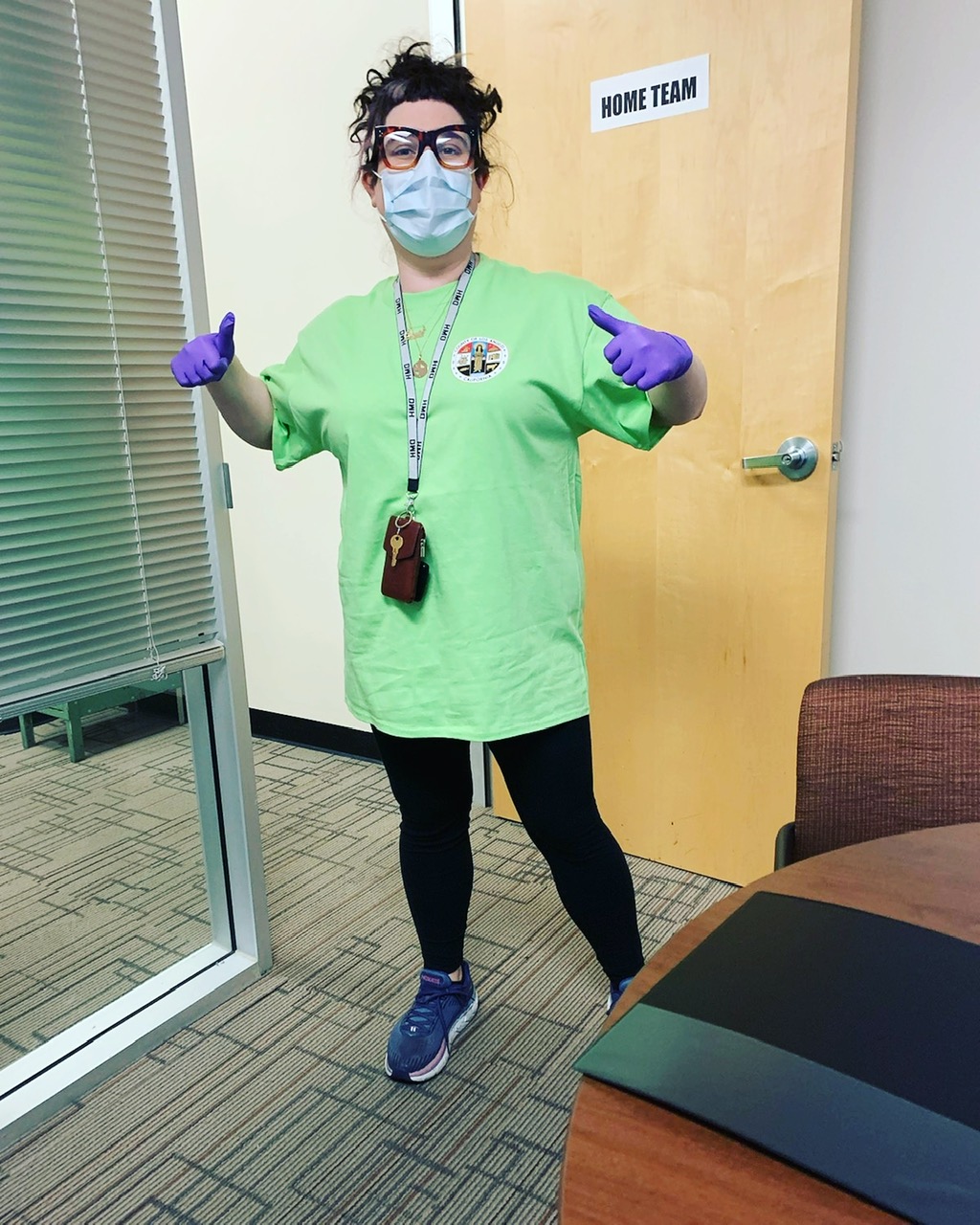
Lavit Maas in her personal protective gear.

Lavit Maas, who graduated in 2010 with her master’s in social welfare, works for the Los Angeles County Department of Mental Health’s Homeless Outreach and Mobility Engagement team, which provides care on Skid Row in downtown Los Angeles for homeless people with severe mental illness. Maas works with people who are among the most vulnerable to COVID-19.

“There’s a lot of elderly on Skid Row,” she told Abrams. “There’s a lot of people with medical conditions. It’s terrifying because we don’t know what to do [for them]. It makes me sad.”

Gabby Peraza, a 2019 master’s in social welfare graduate, works with foster youth as part of her job with the county department of children and family services. Soon after the safer at home order was issued, she encountered a young girl who needed to be transferred to a new placement but was frightened by Peraza’s protective gear. The child cowered in fear, hiding behind a foster parent.

“I had to make the decision. I’m either going to have a kid crying with me — and forcing that kid into a car with me,” Peraza recalled. “I said, ‘All right, I’m going to take this mask off, take these gloves off, and just engage with this kid.’ ”

Abrams has been recording her video interviews, and they are being edited for privacy and clarity before being posted for educational purposes on a showcase page maintained by the Luskin School. [Or scroll to the bottom to view.] So far, eight interviews have been completed and three have been posted publicly. In all, Abrams expects to do at least eight, with interviewees who reflect the broad swath of roles in which social workers are employed.

The idea came to Abrams soon after she and her family moved inside to comply with the social distancing order that was issued March 19 in Los Angeles County.

“I felt very disconnected from what was happening out in the real world,” Abrams said.

A conversation about the impact that the coronavirus pandemic was having on a close friend in a medical career led Abrams to realize that few people were thinking about her former and current students in UCLA’s social welfare program. She knew they were being affected too, but how? So she reached out on Facebook to see if anyone wanted to talk.

“Social workers, they’re playing a vital role in this pandemic,” said Abrams, noting that they interact with people at the margins of society who are often overlooked by the general public and in media reports. “What’s happening out in the community, especially with really vulnerable populations like homeless folks or people in the jails or children in foster care?”

Abrams said she has learned a lot from the Zoom calls. For one thing, the feeling of personal safety varies from person to person and job to job. A social worker in a hospital, for example, said she had access to personal protective equipment and felt safe. But those who work for government agencies, however, said they were fearful about their level of protection from the novel coronavirus.

Many social workers said they are facing unexpected dilemmas, and “working in spaces in which their clients are not getting what they need,” Abrams said. For example, an alumna who works in a correctional facility observed that people being imprisoned there were not given proper access to soap and water so they could comply with orders to frequently wash their hands.

A surprise from her interviews was discovering that some facilities and social services are actually being underutilized at the moment. The number of cases being handled is less than usual for Peraza and for Madison Hayes, another 2019 master’s in social welfare graduate, who works in Sacramento at a shelter for foster youth. For both, the decline in cases mirrors a steep drop-off in calls to crisis hotlines and a lack of referrals from the mandatory reporters at public schools.

“We know that things like abuse and other family problems are probably increasing, but calls … are decreasing so dramatically,” Abrams said. “Child protection is basically falling apart because there’s no window to the outside world.”

Gabby Peraza was a student commencement speaker in 2019.

Talking to social workers in the field has also reminded Abrams of the inequities that always exist in society.

“Access to health care: What does that mean?” Abrams asked. “Access to even having a home, to being sheltered? I am seeing the racial disparities and seeing the ways that the haves and the have-nots have different levels of access at this time.”

The interviews have also reminded Abrams of one other important — and more hopeful — aspect of society. People keep doing their jobs despite the risks involved.

“We all knew coming into this career that there’s always going to be a risk,” Peraza told Abrams about what it’s like to be a social worker during this crisis. “We just didn’t think it was going to be this type of risk.”

Peraza said it’s not about herself, it’s about the children and the families she serves.

Maas acknowledged the risks to her own health and the fear of getting infected and passing the virus along to a colleague or loved one. But there is work to be done.

“I love being a social worker and, to me, service is the only thing that matters,” Maas said. “Of course, you can’t be of service if you can’t protect yourself. I know that. But, especially in a time like this, I have to be of service.


Anxiety About Coronavirus Is Widespread in L.A. County Roughly 4 in 5 residents in new UCLA Luskin survey express deep concern about the health and economic impacts of COVID-19

April 8, 2020/1 Comment/in For Faculty, For Policymakers, Health Care, Politics, Public Policy, Public Policy News, School of Public Affairs, Social Welfare, Social Welfare News Zev Yaroslavsky /by Les Dunseith

By Les Dunseith

An overwhelming percentage (78%) of Los Angeles County residents say they are concerned that they or a member of their family will contract the novel coronavirus, according to a survey conducted between March 18 and 26 and released today by the UCLA Luskin School of Public Affairs.

A solid majority (61%) of respondents expressed confidence in the response by local officials to the pandemic, but only 39% had similar confidence in the federal response.

“There are two clear takeaways,” said Zev Yaroslavsky, director of the Los Angeles Initiative at the UCLA Luskin School of Public Affairs, which conducted the survey as part of an annual project known as the Quality of Life Index, or QLI. “The anxiety levels over contracting the virus and its economic impacts are overwhelming. And it’s a vote of confidence in the local public health agencies, while a vote of no confidence in the federal response.”

The results are based on interviews conducted with about 1,500  county residents during a period that happened to coincide with the implementation of stay-at-home orders in Los Angeles.

The QLI, which is a joint project of the UCLA Luskin Los Angeles Initiative and The California Endowment, is in its fifth year. Researchers poll a cross-section of Los Angeles County residents each year to understand the public’s perception of the quality of their own lives. Full results will be released April 23 as part of a UCLA event known as the Luskin Summit, which will be held virtually this year because of the ongoing health crisis. The survey has a margin of error of plus or minus 2.6%.

Respondents indicated that they were very concerned (49%), somewhat concerned (29%), not too concerned (13%) or not concerned at all (7%) that they or a member of their family would contract the novel coronavirus. Women over the age of 50 expressed the greatest concern (62% were very concerned).

When asked whether the health crisis had or will have a negative economic impact on themselves personally, more than four out of five respondents (83%) said they were concerned, with 56% saying very concerned and 27% saying somewhat concerned. Again, women expressed the most concern, although in this case it was slightly higher among women aged 18 to 49 (61%) than among women aged 50 to 64 (60%).

Two questions were asked about the response of public health and government officials to the COVID-19 pandemic, and the results were almost mirror opposites. When asked if they were confident in the response of officials in Los Angeles County, 61% of respondents said yes and 31% said no, but just 39% said yes and 55% said no when asked if they were confident in the response of officials in the federal government. These results were generally consistent among demographic and geographic groups.

“In virtually no major demographic group did we find less than a majority expressing confidence in local officials,” Yaroslavsky said.

Some of the highest marks for local officials came from those aged 50 to 74 (69%), men aged 50 to 64 (72%) and women 65 and older (70%), as well as Latinos over age 50 (70%). Residents in every L.A. County supervisorial district expressed at least 59% confidence as a whole.

Hardly any major demographic group expressed majority confidence in the federal response. The lowest confidence levels came from 18-to-39-year-olds (33%), African Americans (32%), women aged 18 to 49 (31%), those with annual incomes above $120,000 (30%), whites aged 18 to 49 (23%) and residents of the 3rd Supervisorial District (28%), which encompasses Westside communities such as Santa Monica and Malibu, plus the north and western sections of the San Fernando Valley.

The QLI was prepared in partnership with the public opinion research firm Fairbank, Maslin, Maullin, Metz & Associates.

For 30 Years, Lewis Center Has Responded to L.A. Issues With Ideas All six current and former directors gather to recall the challenges and successes they experienced while leading regional policy research at UCLA

March 25, 2020/0 Comments/in Alumni, Business and the Environment, Climate Change, Development and Housing, Diversity, Education, Electric Vehicles and Alternative Fuels, Environment, For Faculty, For Policymakers, For Students, For Undergraduates, Global Public Affairs, Public Policy, Public Policy News, School of Public Affairs, Social Welfare, Social Welfare News, Sustainable Energy, The Lewis Center, Transportation, Urban Planning Allen J. Scott, Brian D. Taylor, Evelyn Blumenberg, J.R. DeShazo, Paul Ong /by Les Dunseith

By Lauren Hiller

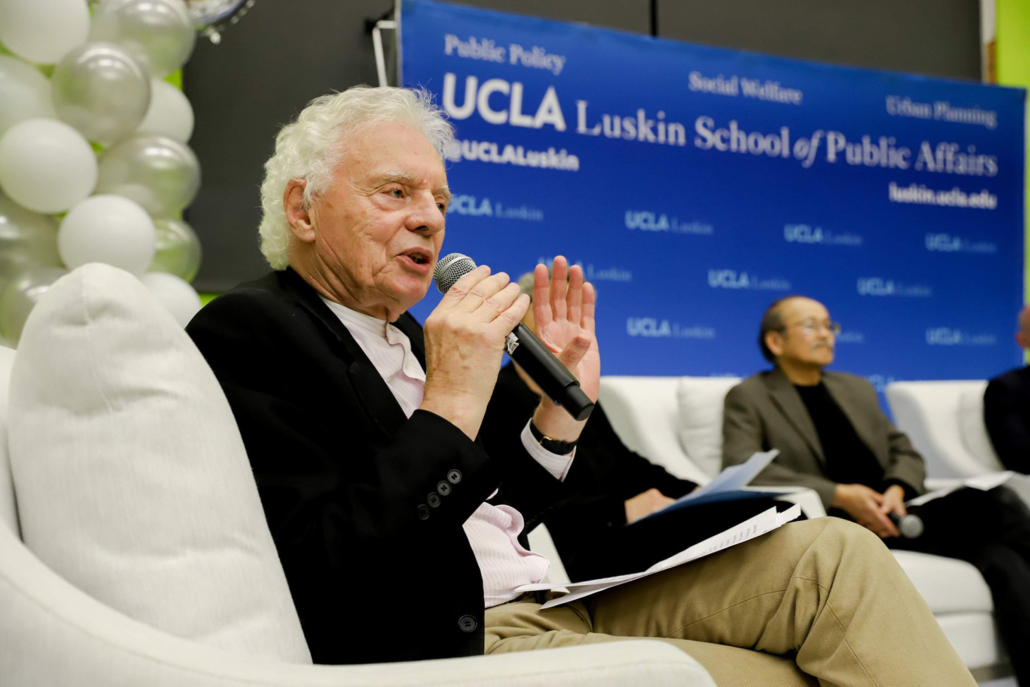
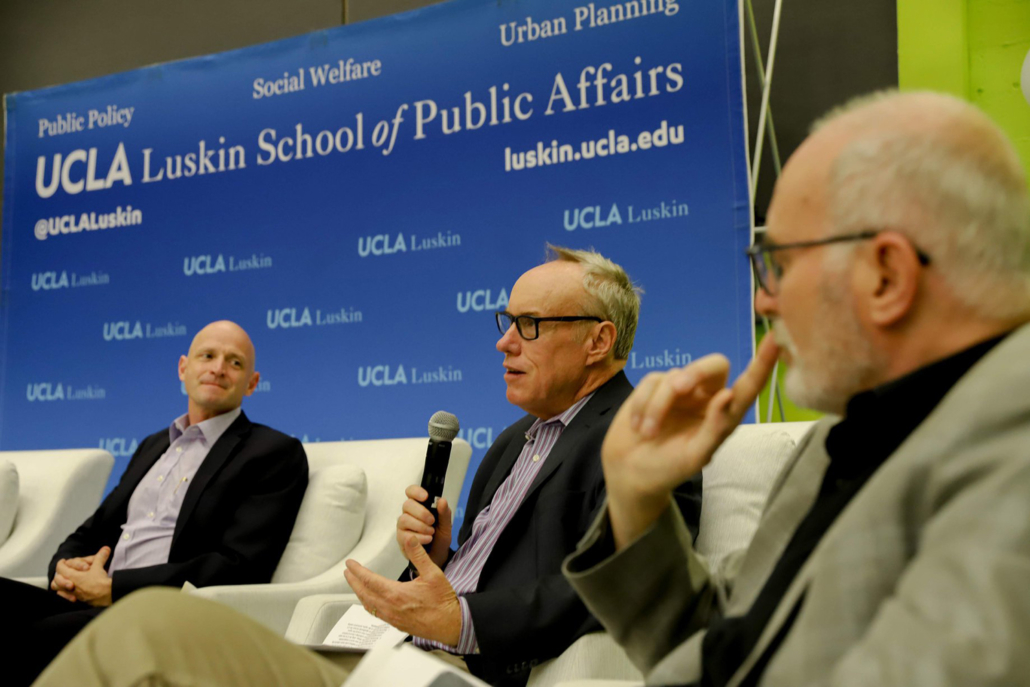
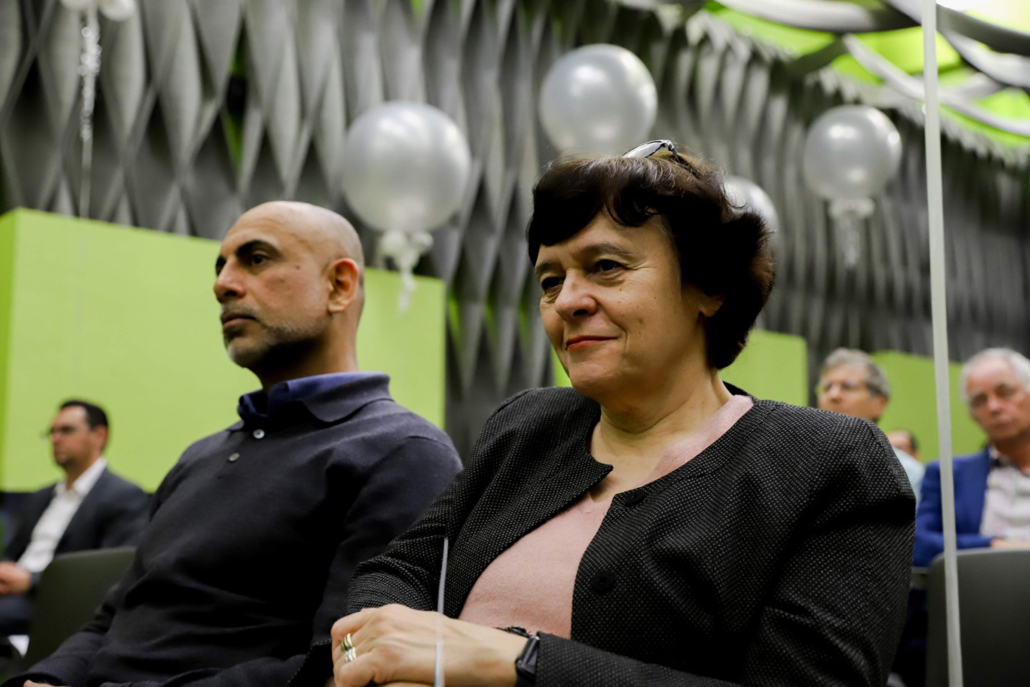
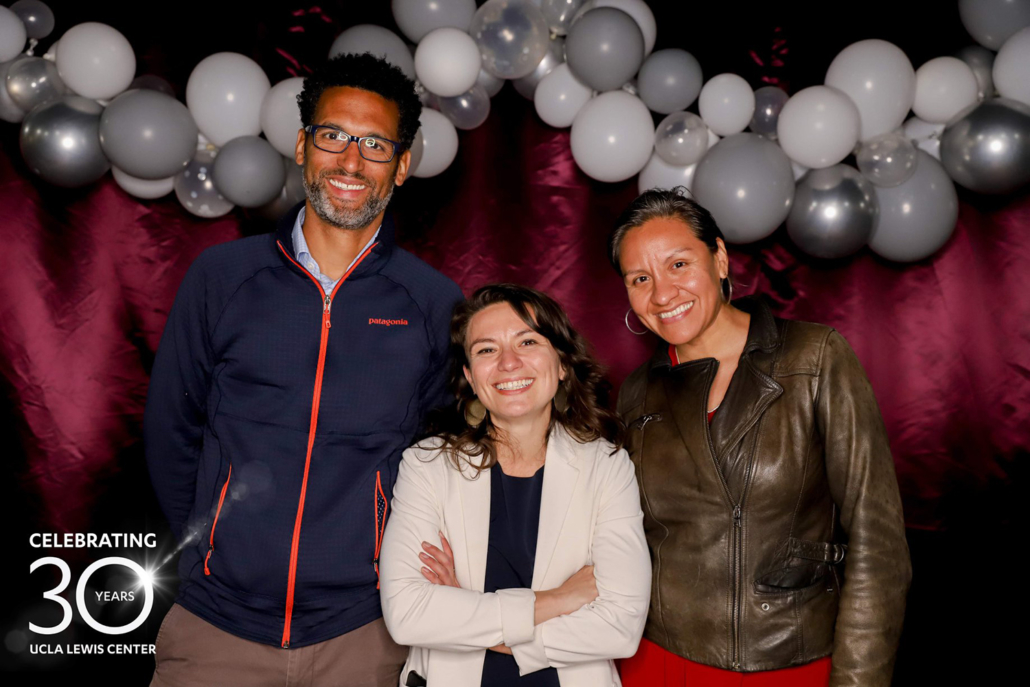
During a gathering March 5 at its first home on the UCLA campus, the Lewis Center for Regional Policy Studies commemorated 30 years of scholarship, public advocacy and leadership on campus and in the community.

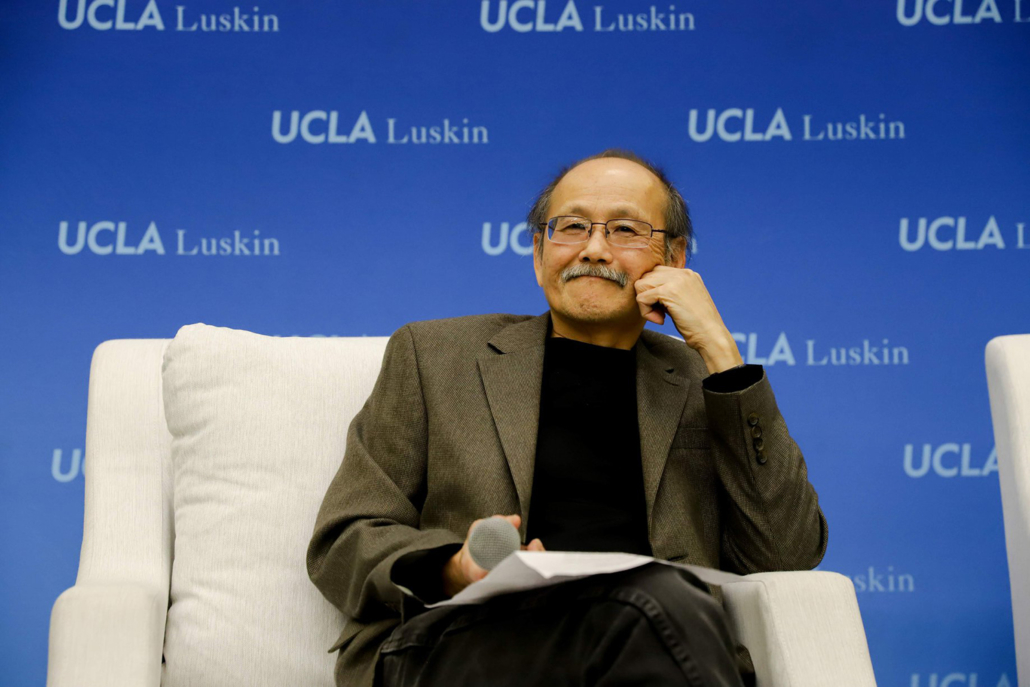
All five former Lewis Center directors — a who’s who of distinguished scholars — joined the current director, Urban Planning Professor Evelyn Blumenberg, at DeCafe Perloff Hall to discuss the milestones and issues facing the region during each person’s tenure. As each director spoke, it was evident that the center’s longevity is rooted in interdisciplinary scholarship and fostering the next generation of scholars.

In 1989, Ralph and Goldy Lewis donated $5 million to endow a research program at UCLA that studied regional policy issues. The following year, the Lewis Center opened its doors in Perloff Hall, the location of what was then known as the School of Architecture and Urban Planning, with founding director Allen J. Scott, distinguished research professor of geography and public policy. Scott was succeeded by Roger Waldinger, distinguished professor of sociology; followed in chronological order by Paul Ong, research professor at the UCLA Luskin School of Public Affairs; J.R. DeShazo, professor of public policy, urban planning and civil and environmental engineering; and Brian D. Taylor, professor of urban planning and public policy.

“My parents both went to UCLA and they believed in the power of public education and need to support the public system,” said Randall Lewis, whose parents were homebuilders and interested in issues of growth, transportation, housing and air quality. “They felt as they were building houses, building communities, that they didn’t want to create problems. They wanted to find solutions.”

Anastasia Loukaitou-Sideris, who joined the UCLA community the same year that Lewis Center was established and received one of its first grants, kicked off the event.

“The Lewis Center best exemplifies the role that we’re asking our research centers to play: push research forward, support the educational mission of the school and its students, and serve as a public forum that disseminates important research-based information and data to a larger public,” said Loukaitou-Sideris, professor of urban planning and associate provost for academic planning.

Allen J. Scott was the founding director of the Lewis Center, which launched during a time of upheaval in Los Angeles in the 1990s.

Launched Amid Regional Turmoil
The early 1990s were a tumultuous time in Los Angeles. The aerospace industry, which was a backbone of the region’s economy, was collapsing. The 1994 Northridge earthquake killed 61 people and caused $6.7 million in damage, crippling major infrastructure like freeways. And civil disturbances fueled by racial injustices, police brutality, and poverty and social marginalization rocked the city.

“Los Angeles looked like, from some points of view, a basket case and getting worse,” Scott recalled. “And so we were, at a very early stage, involved in attempting to build responses to these problems and others.”

Scott and the Lewis Center published a series of working papers focusing on new industry (such as electric vehicles) to replace aerospace and an examination of the nature and causes of the crises in South Los Angeles.

By the time Waldinger took over in 1996, the immigrant population in the Los Angeles region had quadrupled within two decades. Yet, research on the impact of immigration on the Los Angeles region lagged behind frequently studied cities like Chicago and New York. The Lewis Center played an integral role in bringing Los Angeles to the forefront of regional studies with efforts such as Waldinger’s book “Ethnic Los Angeles.” Today, it’s hard to imagine a discussion of immigration and foreign-born individuals without considering L.A.

Waldinger said the center’s early research has transformed California policy. Although immigration policy is a federal issue, immigrant policy can be local, he noted, pointing to state measures that have aided California’s immigrant population.

Ong, the center’s third director, continued the multidisciplinary tradition of the Lewis Center and collaborated with scholars in UCLA Luskin Social Welfare and the natural sciences. As director, he published a seminal report on the undercounting of low-income people and communities of color in the 2000 Census.

Ong’s work also highlighted a core strength of the Lewis Center — its focus on addressing social justice issues for marginalized communities. He said the center also partnered with the County of Los Angeles and L.A. Metro to understand the transit needs of underserved communities.

DeShazo oversaw the Lewis Center during a time when its focus turned to environmental issues. In 2006, California passed the Global Warming Solutions Act (AB 32), promoting ambitious climate solutions that even some legislators doubted could be achieved.

“Those were the days we didn’t even know where greenhouse gases were coming from,” DeShazo remembered. The first step was to identify sources and then to identify solutions to reduce emissions, including electric vehicles, rooftop solar energy and energy-efficient technology.

“Everything that we have today is what people thought was impossible to accomplish. The groundwork for that was laid in the 2006-2012 period,” DeShazo said.

The Lewis Center has also contributed to environmental justice scholarship, especially the designations of disadvantaged communities as a result of identifying where emissions were coming from and where populations vulnerable to those emissions are living.

Taylor next put the focus on housing affordability and transportation in light of large investments in public transit like Measure R, a sales tax that is expected to raise $40 billion over 30 years.

He said the center’s regional lens has a built-in advantage when it comes to studying housing affordability, transportation and access, which play out across a diverse geography.

Taylor’s tenure also overlapped with his role as chair of UCLA Luskin Urban Planning. It was a position that helped him to advocate for the addition of faculty members and scholars who could tackle these regional priorities.

“Housing affordability was not my area of research,” Taylor said. “All I did was try to support and catalyze the intellectual leaders that are helping shape the important debates on this.”

A Legacy of Leadership
Acting as a consistent bridge to marginalized voices, the Lewis Center’s former directors see scholarship and professional development as their enduring legacy. Many onetime students have gone on to become academic leaders in their own right.

“I’m honored to follow in those footsteps,” said Blumenberg MA UP ’90, Ph.D. ’95. She became director in 2018 and has focused on how Angelenos live, move and work in L.A., with a particular interest in pathways out of poverty. The center recently launched the Randall Lewis Housing Initiative.

Has Los Angeles made progress over the last 30 years?

The answer is mixed, Ong said. A commitment to climate change initiatives and equity are highlights, but income inequality and social justice remain daunting issues.

“I’m proud of the fact that the Lewis Center continues to look at issues of inequality,” Ong said. “We’re dedicated to doing the research to find solutions, but it’s like swimming upstream.”

Still, Ong remains hopeful: “I know enough about [Blumenberg’s] history that there will continue to be a commitment from the Lewis Center to accomplish things that will bend us towards justice.”
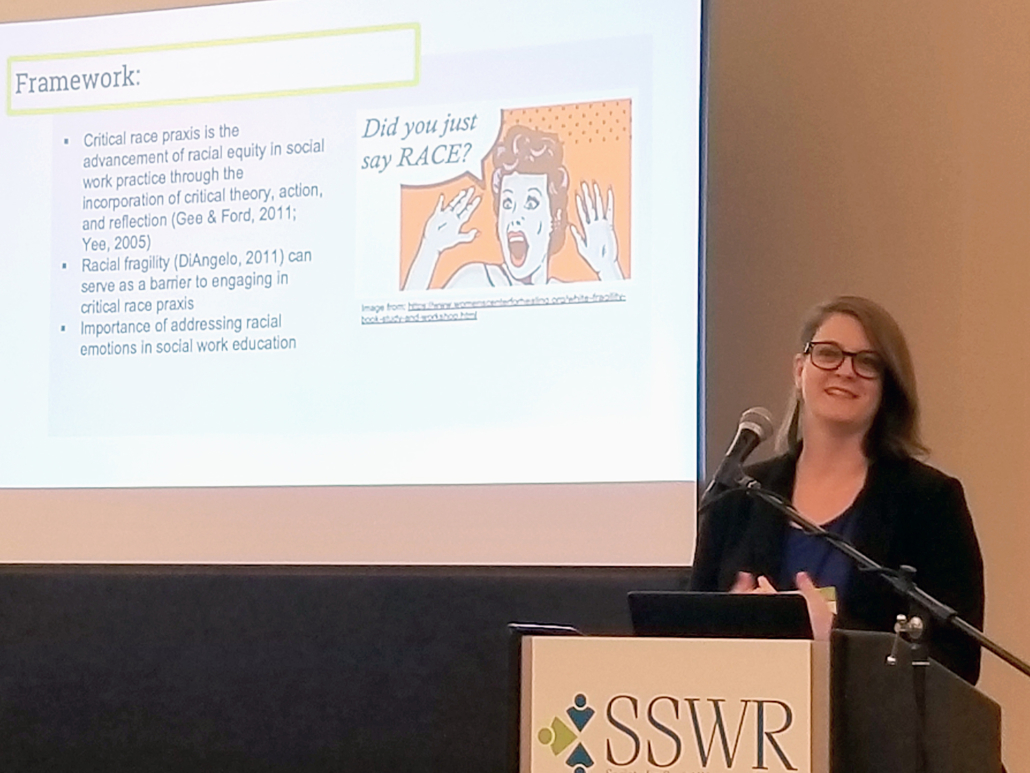
Abrams Wins Prize for Book on Incarcerated Youth Award is one of several Social Welfare accomplishments highlighted at annual conference

January 21, 2020/0 Comments/in Education, For Faculty, For Students, School of Public Affairs, Social Welfare, Social Welfare News, Social Welfare PhD Laura Abrams, Ron Avi Astor /by Mary Braswell

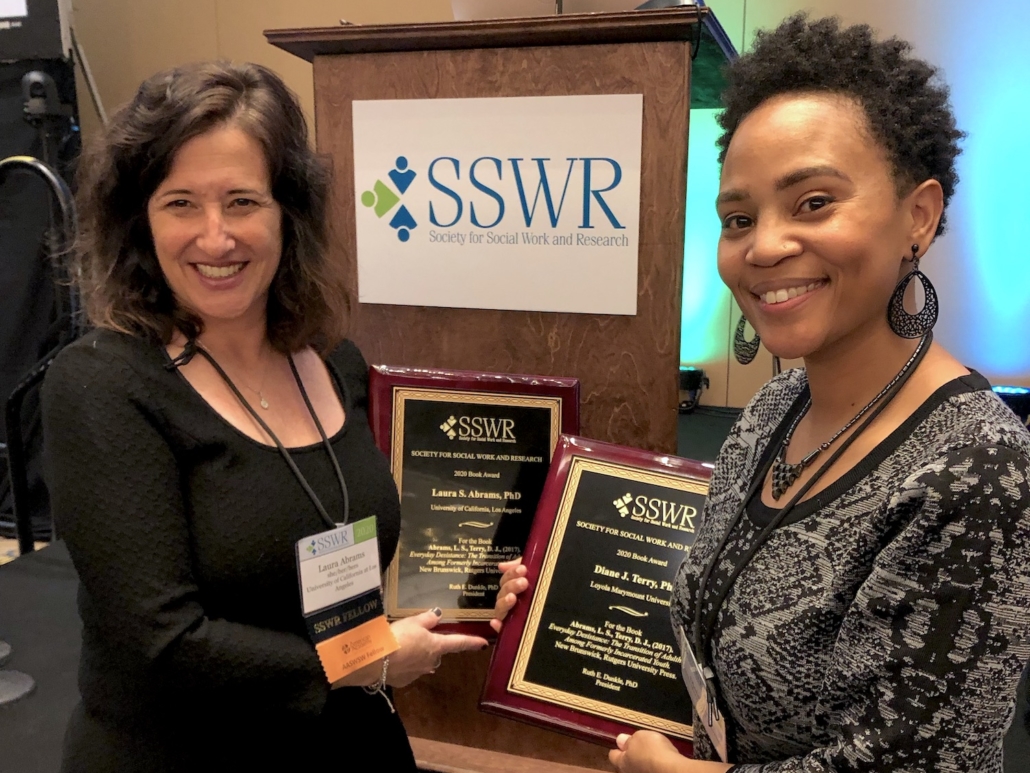
Social Welfare Chair Laura Abrams’ book on the complex lives of youth who transition out of Los Angeles’ juvenile justice system and into adulthood has received the 2020 Society for Social Work and Research Book Award.

“Everyday Desistance: The Transition to Adulthood Among Formerly Incarcerated Youth” was recognized for its outstanding contributions to the advancement of knowledge and resolution of social problems.

Abrams and her co-author, triple Bruin Diane Terry BA ’02 MSW ’04 PhD ’12, received the prestigious award Jan. 18 during the annual conference of the Society for Social Work and Research in Washington, D.C.

This year’s conference highlighted several achievements by UCLA Luskin Social Welfare:

  • MSW students and faculty conducted a roundtable on their experiences providing legal assistance to migrants detained at the U.S.-Mexico border. After a week interviewing women and children held at a detention center in Dilley, Texas, the team created a set of tools for other advocates who are trying to help migrants who have faced trauma.
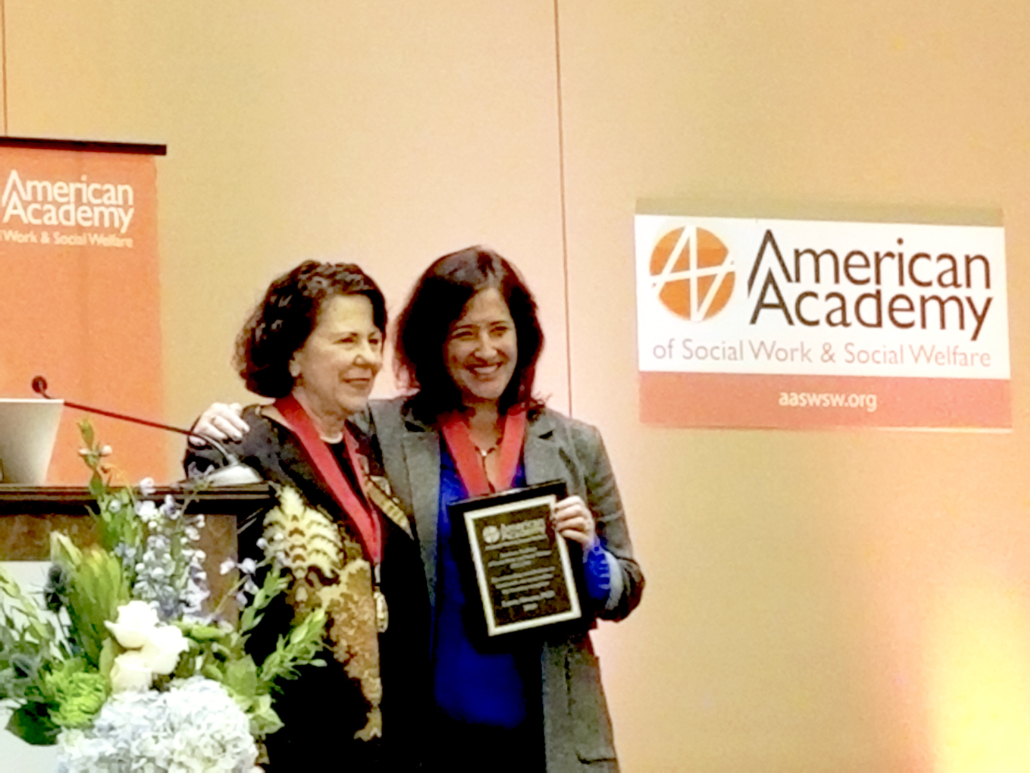
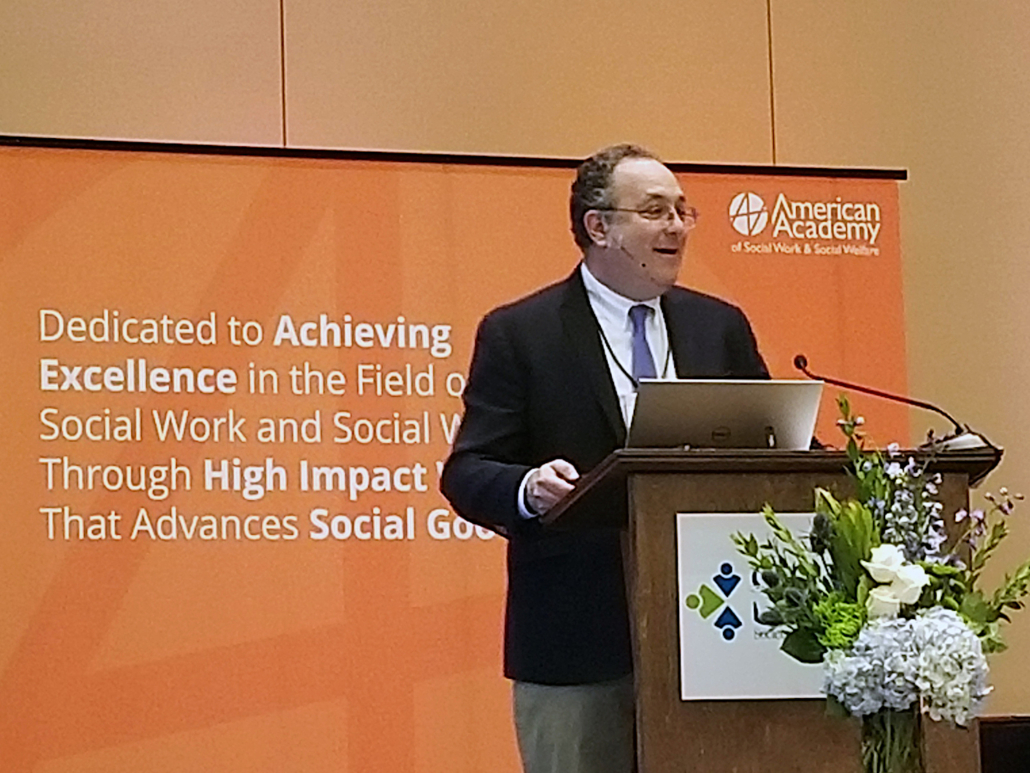
  • Abrams was formally inducted into the American Academy of Social Work and Social Welfare, a national honor society recognizing excellence in the field. Social Welfare Professor Ron Avi Astor, a member of the academy since 2017, delivered the induction address.
  • Maggie Thomas, who will join the Social Welfare faculty as an assistant professor in the fall, received the 2020 Doctoral Fellows Award for her dissertation, “Material Hardship, Public Assistance and Child Wellbeing: A Panel Data Study.”
  • Research by eight faculty, 12 Ph.D. students and four MSW students or recent graduates was presented during the five-day conference’s symposia, workshops, roundtables, and paper and poster presentations.
Co-authors Laura Abrams, left, and Diane Terry receive the 2020 Society for Social Work and Research Book Award.


Page 14 of 38«‹1213141516›»

Recent Posts

  • UCLA Site Planning Studio Reimagines Santa Monica Airport and Business Park Redevelopment July 14, 2026
  • Adam Millard-Ball Explores How Data Can Expand Possibilities for Smarter, More Livable Cities July 10, 2026
  • Zev Yaroslavsky Discusses L.A. County’s Growth and Housing Challenges July 10, 2026
  • UCLA MRED Students Reimagine the Future of Real Estate Through Award-Winning Capstone Project July 8, 2026
  • Herrera Warns in CalMatters Op-Ed on Plastics Risks After Garden Grove Emergency July 7, 2026
Search Search
Search Search

Contact

UCLA Luskin School of Public Affairs

3250 Public Affairs Building - Box 951656
Los Angeles, CA 90095-1656

Campus Resources

  • Maps, Directions, Parking
  • Directory
  • Contact
  • Academic Calendar
  • Careers
  • Diversity
  • University of California
  • Terms of Use

Follow

The statements on this page represent the views of people affiliated with the Luskin School of Public Affairs and do not necessarily represent the views of the University of California, or UCLA or its Chancellor.

Posts and comments by individuals at UCLA on social media channels may not reflect the opinions or policies of UCLA, the University of California or the Luskin School, nor its benefactors and academic partners.

Scroll to top Scroll to top Scroll to top