• Public Policy
  • Social Welfare
  • Real Estate Development
  • Urban Planning
  • Luskin Home
  • Undergraduate Program
  • Stay in Touch
  • Events Calendar
  • Give Now
  • About
    • Our Dean
    • Board of Advisors
    • Contact Us
    • Visit Us
    • Diversity, Disparities and Difference
    • Communications
      • UCLA Luskin in the News
      • Luskin Forum Online
  • Departments
    • Public Policy
    • Real Estate Development
    • Social Welfare
    • Undergraduate Program
    • Urban Planning
  • Apply
    • Master of Public Policy
    • Master of Real Estate Development
    • Master of Social Welfare
    • Master of Urban and Regional Planning
      • Double Degree With Sciences Po
    • PhD in Social Welfare
    • PhD in Urban Planning
    • Undergraduate Programs
  • Faculty
    • All
    • Public Policy
    • Social Welfare
    • Urban Planning
    • Real Estate Development
    • Faculty Executive Committee
    • Open Positions
  • Student Affairs & Alumni
    • Career Services
      • Employers
      • Fellowships
    • Student Support
    • Graduate Resource Library
    • Alumni Relations
  • Support
  • Programs
    • Research Centers & Affiliated Research
    • CA Title IV-E Education Program
    • Global Public Affairs (GPA)
    • Data Analytics Certificate
    • Luskin Lecture Series
    • Luskin Summit
    • UCLA Luskin California Policy Briefing
    • Public Service Weekend
    • Commencement
  • Administration
    • Financial Services
    • Events Office
    • Information Technology
  • Search
  • Menu Menu

Archive for category: Public Policy News

Bruin Excellence in Civic Engagement Awards Recognize Public Service Leadership Eight with ties to the Luskin School are among 40 honored by the UCLA Alumni Association

November 27, 2023/0 Comments/in Alumni, For Faculty, For Policymakers, For Students, For Undergraduates, Public Policy, Public Policy News, School of Public Affairs, Urban Planning /by Mary Braswell
By Madeline Adamo

A week to the day after starting her new role as Los Angeles Mayor Karen Bass’s chief housing and homelessness officer, UCLA alumna Lourdes Castro Ramírez traveled to campus for an occasion of utmost importance to the public servant of 30 years.

To say the double Bruin had a packed schedule that day might be an understatement. Besides being a week into her new job, Castro Ramírez was in the midst of relocation, having picked up her life in Sacramento to move to Los Angeles.

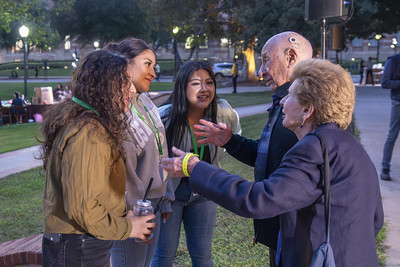
Castro Ramírez, one of 40 awardees being recognized by the UCLA Alumni Association for distinctions in public service, said despite her circumstances, she wasn’t about to miss the ceremony and networking reception for the Bruin Excellence in Civic Engagement awards.

“I’m really proud to be part of this first cohort with a number of distinguished alumni,” said Castro Ramírez, who had been serving as Gov. Gavin Newsom’s appointed secretary for the California Business, Consumer Services and Housing Agency since March 2020. “For me, the focus on civic leadership is really important.”

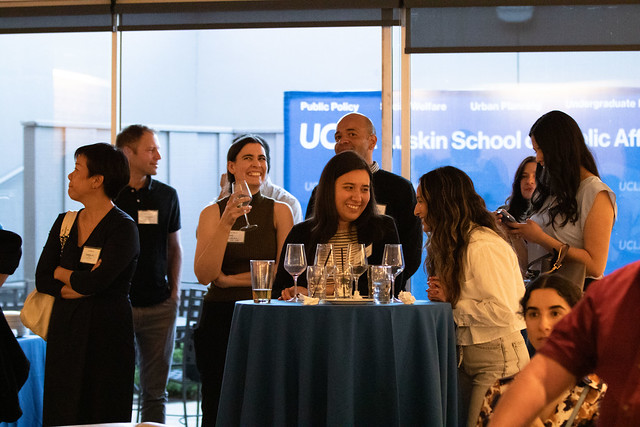
The award reception, which took place Nov. 13, included a certificate presentation and remarks from the association’s leadership. Darnell Hunt, the executive vice chancellor and provost at UCLA, also was in attendance. The honorees included eight Luskin School alumni: Castro Ramírez MURP ’96, Norma E. Fernandez MURP ’06, Oceana R. Gilliam MPP ’19, Rayne Laborde Ruiz MURP ’21, Teresa Magula MPP ’04, Veronica Melvin MPP ’01, Aaron Ordower MURP ’15 and Regina Wallace-Jones MPP ’99. Wallace-Jones was presented with her award during a speaking engagement on campus the week before.

‘Once you go to Luskin, you’re family for life.’ — Oceana R. Gilliam MPP ’19

The Bruin Excellence in Civic Engagement awards, which will be awarded to a new class annually, is the brainchild of UCLA Alumni Association board member Matt Kaczmarek. He said he was inspired by the association’s Bruin 100 awards, launched in 2022, which recognize alumni fostering positive social change in the private sector. Kaczmarek felt a comparable program for civic service was needed.

“People who devote their careers to public service generally don’t seek recognition for their work, even though their impact can be significant,” said Kaczmarek, who earned a bachelor’s degree in geography and political science with a minor in public affairs in 2005.

Having held senior appointments in the administration of former President Barack Obama and in the international finance division of the U.S. Treasury Department, Kaczmarek knows the gravitas of being in public service. He also served as White House liaison for John Kerry during the politician’s term as secretary of state.

“As a student at UCLA, I learned the opportunity to have the greatest impact comes through dialogue, listening and pragmatic problem solving,” Kaczmarek, now a director and global head of market strategy and sustainable investing for the asset management firm BlackRock. “I’ve met Bruins at all levels of government who consistently excel based on those same values.”

One of those Bruins is Gilliam, chief of staff for Tennessee state Rep. Justin J. Pearson. The Democrat gained national attention in April, when he and Rep. Justin Jones protested on the chamber floor in support of stricter gun-control regulations. A few months prior, Gilliam had led Pearson’s campaign to victory, focusing on policies to eradicate gun violence, alleviate poverty and enhance community safety.

Gilliam wears many hats in the civic realm, including serving as senior program manager for the Center for Justice Innovation, a nonprofit that strives for a more equitable criminal legal system. She’s proud of the work she does at the center, building alternatives to incarceration.

“Even at a young age, I’ve always had this servant leader’s heart,” said Gilliam, whose next endeavor is law school, a step toward fulfilling her childhood dream of being a criminal court judge. Gilliam said her family’s involvement with the criminal justice system has informed her career trajectory.

She was honored to be named an award recipient last month. Though she had planned to return to Tennessee following a business trip, she changed her flights to ensure a stop in Los Angeles for the reception.

“Once you go to Luskin, you’re family for life,” Gilliam said. It still strikes her when she’s on a video call with Los Angeles County for work — and she sees the face of one of her Luskin School peers on the other end.

“This recognition program not only brings more awareness to what UCLA grads or Luskin grads are doing, but what so many other people are doing in the field of public service and civic engagement,” she said.

At the reception, Gilliam caught up with fellow alumna Castro Ramírez, who earned her master’s degree in urban and regional planning from the Luskin School in 1996. Castro Ramírez has sustained a strong connection with the school, sitting on its advisory board as co-chair of the Equity, Diversity and Inclusion Subcommittee, where she helps students get support with fellowships.

“I benefited tremendously from the support that I received as a student,” said Castro Ramírez, who was the first in her family to attend college when she earned her bachelor’s degree in political science and Chicano studies at UCLA in 1994. “I think it’s important for us to continue understanding the needs and the support that is necessary for students of color and students of underprivileged or underrepresented backgrounds.”

Read the full story.

Learn more about all 40 recipients of the inaugural Bruin Excellent in Civic Engagement awards and stay up to date about 2024 nomination submissions. 

A Festive Welcome to UCLA Luskin The entire School community comes together to make connections and celebrate the launch of a new academic year

October 2, 2023/0 Comments/in Alumni, Diversity, Education, For Faculty, For Students, For Undergraduates, Public Policy, Public Policy News, School of Public Affairs, Social Welfare, Social Welfare News, Urban Planning /by Mary Braswell

Students, alumni, faculty, staff and friends of UCLA Luskin connected at a series of events kicking off the 2023-2024 academic year.

An orientation for graduate students brought public policy, social welfare and urban planning students together to learn about resources provided by the university and the Luskin School.

The undergraduate program hosted a luncheon for majors, pre-majors and students interested in learning more about the bachelor of arts in public affairs.

And the Block Party tradition continued for the 12th year, with the entire UCLA Luskin community gathering to make connections, learn about opportunities and organizations, enjoy the flavors of Los Angeles, and greet the School’s benefactors, Meyer and Renee Luskin.

View photos from:

Graduate Student Orientation

Graduate Student Orientation 2023

Undergraduate Open House 

Undergraduate Open House 2023

12th Annual UCLA Luskin Block Party

Block Party 2023


For access to the Block Party 360 Videos and Roamer Booth images, contact events@luskin.edu. 

UC Grant Will Fund EV Research by UCLA Luskin Center for Innovation Team led by a Fielding School professor gets nearly $2 million to pursue an equitable model for electrical vehicle charger placement

September 6, 2023/0 Comments/in Alumni, Climate Change, Electric Vehicles and Alternative Fuels, Environment, For Faculty, For Policymakers, For Students, For Undergraduates, Luskin Center, Public Policy, Public Policy News, Research Projects, School of Public Affairs, Social Welfare News, Sustainable Energy, Transportation, Urban Planning Gregory Pierce /by Les Dunseith

The UCLA Luskin Center for Innovation will be a key contributor to research recently funded through a partnership between the University of California and the state intended to spur real-world solutions relating to climate change in California.

A team from the Center for Innovation, or LCI, will focus on community engagement relating to a project led by Yifang Zhu, professor of environmental health sciences at the UCLA Fielding School of Public Health, that will look at how efforts to reduce greenhouse gases can better enable residents of disadvantaged communities to adopt electric vehicles more readily. 

A $1.99 million grant under Zhu’s direction will fund the study of EV usage in communities that have historically lacked access to charging stations. The LCI researchers will work with local residents and community-based organizations to identify barriers, improve knowledge and awareness of EVs, and design plans for deploying and installing charging stations in underserved areas. 

To date, the siting of EV chargers has been a top-down process driven by business priorities rather than community needs and preferences. Gregory Pierce, adjunct associate professor of urban planning and co-executive director of LCI, said researchers will partner with three community-based organizations in the Los Angeles area to co-design the first-ever procedurally equitable process for placement of EV chargers. 

“We hope that this project leads to a new community co-designed model for placing electric vehicle charging stations throughout California that can accelerate our transition to a zero-emissions transportation future,” Pierce said. 

The UCLA Luskin-affiliated team will be co-led by Rachel Connolly, project director for air quality and environmental equity research at LCI. The effort will include surveys and a three-part workshop process relating to the siting of EV chargers and future investments in coordination with the Los Angeles Department of Water and Power and other partners. Connolly, who earned doctorate and master’s degrees in environmental health sciences from UCLA, has been working at LCI since 2017. 

In all, $83.1 million in California Climate Action grants were awarded to a total of 38 projects involving researchers from across the UC system, as well as California State University campuses, private universities and community, industry, tribal and public agencies. The two-year grants are part of $185 million allocated by the state for UC climate initiatives that advance progress toward California’s climate goals.

Read about other UCLA research funded by California Climate Action grants

The Heat Is Rising, and UCLA Luskin Research Is Helping L.A. Respond Environmental justice has been the cornerstone of Luskin School efforts related to the city’s hot weather policies

August 17, 2023/0 Comments/in Alumni, Climate Change, Environment, For Faculty, For Policymakers, For Students, Luskin Center, Public Policy News, School of Public Affairs, Urban Planning Gregory Pierce, V. Kelly Turner /by Les Dunseith

By Les Dunseith

As Southern California braces for more heat waves this summer, the city of Los Angeles has launched its most comprehensive and equitable response ever, thanks in part to partnerships with student, faculty and staff researchers from UCLA Luskin.

Interactive mapping tools co-developed by Luskin School-affiliated scholars and the Public Health Alliance of Southern California, for instance, are helping government officials and social services providers better visualize the neighborhoods most in danger from extreme heat. And research has helped ensure that city resources like cooling centers are being deployed in areas with high numbers of low-income residents and communities of color — groups that tend to be disproportionately affected by hot weather but whom previous heat-mitigation efforts often failed to reach.

Heat as an Equity Issue

While California has not historically viewed hot weather in the context of social equity, heat’s disparate impact on the state’s various populations has been a central focus of Luskin School and other UCLA research.

“Heat is an equity issue. Neighborhood by neighborhood, we’re going to be experiencing heat differently,” said Colleen Callahan, co-executive director of the Luskin Center for Innovation and co-author of the center’s three-part series on California’s Extreme Heat Action Plan. “That’s why it’s important to identify where protections are most needed and where they’ll have the biggest impact.”

Among those equitable protections is providing shade from the heat, said V. Kelly Turner, an associate professor of urban planning and point person for the Luskin Center for Innovation’s climate adaptation and resilience research. In a July 2023 commentary in the journal Nature, Turner detailed how a lack of shade affects urban residents — particularly those from low-income and marginalized communities, who tend to live in heat-prone areas that lack air-conditioning and tree cover — and stressed the need for cities to remove regulatory restrictions that make it difficult to build shade infrastructure.

“It’s going to take a setting-by-setting approach, whole of government approach, where we look at all the regulations that make it really hard to do the right thing,” she recently told LAist.

A related recent capstone effort at the Luskin School involved graduate students in public policy. Their research (PDF) explored historical inequities in Los Angeles and included a survey to assess how the city can create an equitable heat policy with long-term resilience for vulnerable communities.

It’s the hope of Callahan, Turner and many other UCLA scholars that their research will spur the city of Los Angeles and its Climate Emergency Mobilization Office to continue to implement equitable and forward-thinking responses to extreme heat.

Finding CEMO

Twitter:
CEMO_EJ4LA

Facebook:
facebook.com/EJ4LA

Instagram:
CEMO_EJ4LA

Email:
CEMO-Office@lacity.org 
www.climate4la.org

These and other UCLA contributions are informing the city’s equity-based approach to the threat posed by climate change and rising temperatures, said Marta Segura, Los Angeles’ first chief heat officer and director of the city’s Climate Emergency Mobilization Office. Launched in 2021, CEMO is responsible for coordinating across agencies to create a cohesive response to extreme heat.

“It’s my belief that in focusing on equitable climate solutions and investing first and foremost in the historically disinvested communities, we will accelerate climate solutions for everybody,” Segura, a UCLA Public Health alumna, said during a May panel discussion at UCLA organized by the UCLA Luskin Center for Innovation.

Using data gathered in partnership with UCLA scholars, CEMO was able to identify which cooling centers received a lot of use in previous years, which didn’t and where the need was greatest. This summer, the number of city-coordinated facilities offering heat relief — including air-conditioned recreation centers and public libraries that stay open beyond regular hours — has expanded significantly.

Among those helping the city evolve its hot weather response were 13 students who earned their master’s degrees in urban and regional planning this past June. As participants in the UCLA Luskin Urban Planning 2022-23 Comprehensive Project class, they prepared a report on heat equity for CEMO under the direction of Gregory Pierce, adjunct associate professor of urban planning and co-executive director of the Luskin Center for Innovation.
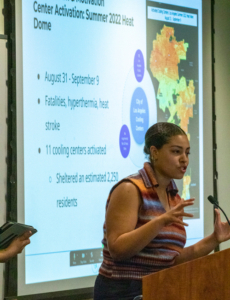
woman in striped top speaks at podium while map is projected on a screen behind her

Corinne Odom discusses the importance of cooling centers at the Comprehensive Project’s June 2023 presentation. Photo by Les Dunseith

The students focused on three areas — cooling centers, emergency response and bus shelters. Their final report (PDF), released in June, commended Los Angeles for being at the forefront of government efforts on extreme heat but noted room for improvement to ensure public safety and equitable distribution of resources.

Corinne Odom was among the students who looked at cooling centers. She and her classmates spoke with staff members at libraries who were eager to help but frustrated that people in danger didn’t seem to know these facilities were available.

“Visitor counts at cooling center locations last summer were low,” Odom said. “So, really informing people that they’re available is important, and that’s something that CEMO is prioritizing.”

Odom and her classmates were supportive of the city’s efforts to create “resiliency centers” by offering a broader range of social services programs and heat-related amenities at locations like recreation centers and public libraries that traditionally serve as cooling centers. They also noted that CEMO’s communication efforts also recommend informal locations where residents can duck in quickly to escape extreme heat.

“A mall could be a cooling center,” Odom said, “or a movie theater.”

A particularly difficult challenge for city officials is reaching the people in the most danger — the unhoused population.

Michelle Gallarza, a Comprehensive Project participant who contributed to Luskin Center for Innovation research on heat and housing insecurity, noted that the unhoused population’s lack of shelter makes them particularly vulnerable during heat waves.

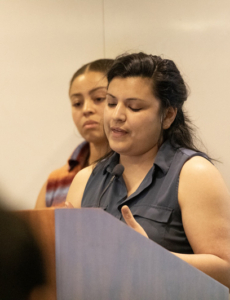
woman in dark shirt without sleeves speaks at a podium

Michelle Gallarza, shown here talking about the Comprehensive Project’s findings, remembers the lights being left off during heat waves in her Los Angeles grade school that lacked air conditioning. “The same thing would happen when I would go home,” she said. “We’d just have fans blowing and no lights on.” Photo by Les Dunseith

“These people are more likely to suffer from the extreme aspects of heat and a really increased likelihood for illness and, unfortunately, death,” she said.

In Los Angeles County, unhoused people accounted for 42% of heat-related deaths in 2022, even though they make up less than 1% of the population. Beyond having less access to indoor cooling than the general population and facing challenges getting information about emergency resources, they may not always feel comfortable in city-provided facilities, said Gallarza, who spoke with an unhoused person who said cooling centers have not felt very welcoming.

“In our sensitivity and vulnerability analysis,” Odom said, “we thought that there should be more specific solutions catered to that community, especially in collaboration with organizations that are trusted and knowingly support unhoused communities.”

Generally speaking, Segura said, a person in danger doesn’t need to be out of the heat for long to benefit, and this is where resilience centers, particularly smaller ones, can help. She and other city officials hope to persuade, for example, local fast-food restaurants to serve as centers for unhoused people and others on hot days.

“With just three or four hours of refuge and recovery, you can make it to the next day,” she said. “People don’t need to stay there 24 hours.”

Waiting for the bus: The need for transit shelters

Other Comprehensive Project students focused on Los Angeles’ Sidewalk and Transit Amenities Program, recently established to support the expansion of transit shelters in a city where only 26% of Metro bus stops currently offer shade.

Project participant Miguel Miguel said he was surprised to discover that the city’s shelter placement decisions were often related more to political and commercial considerations, like advertising potential, than protecting people from heat. “We never suspected that would be such a driving factor,” he said. “We finally realized that the contract explicitly said that [shelter providers] needed to maintain advertising revenue to support the operations of the program.”

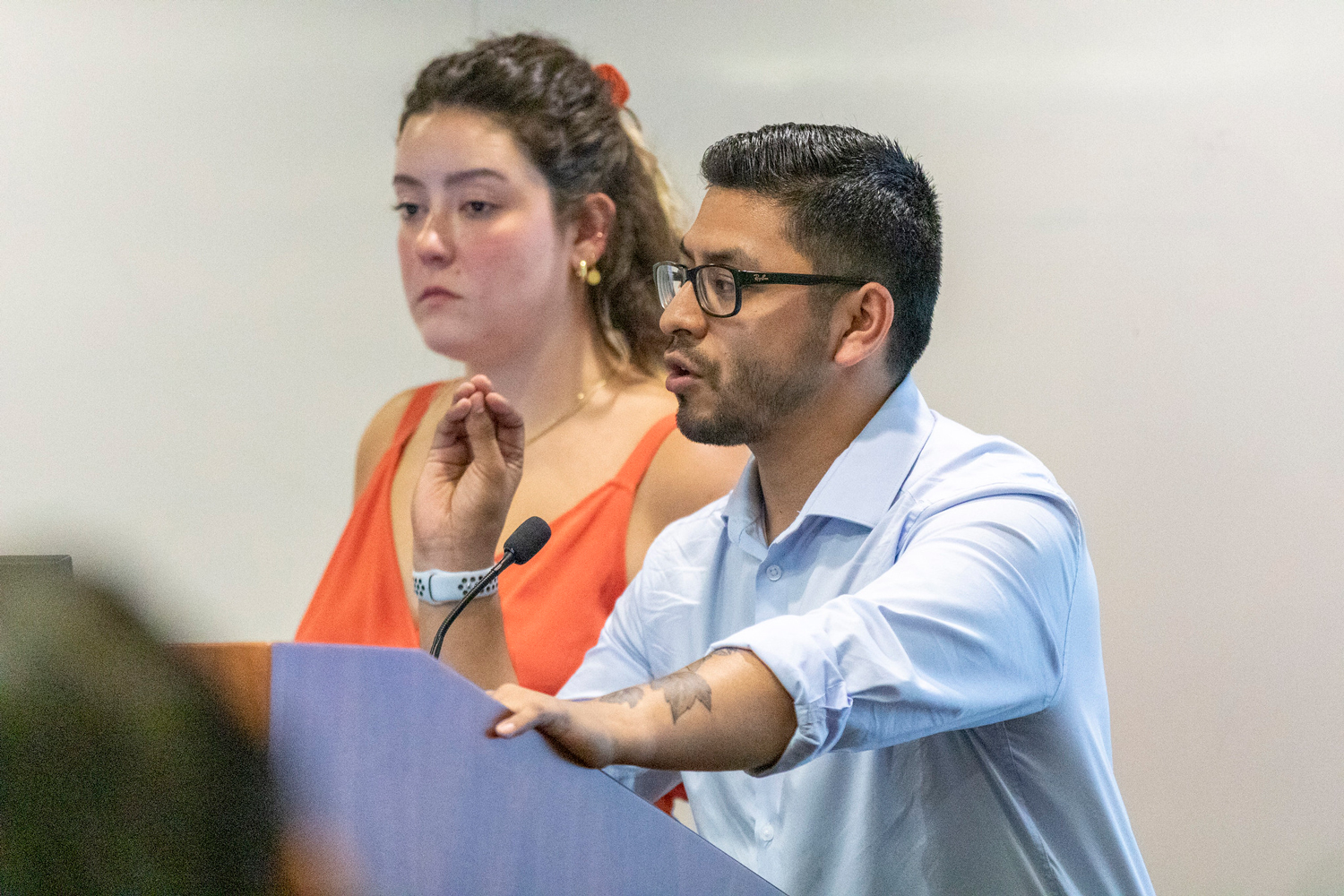
man in blue shirt and glasses gestures at a podium while a woman listens int he background

Miguel Miguel delivers findings from the Comprehensive Project’s final report. Miguel, a San Fernando Valley resident who has seen the impact of dangerously high temperatures on communities without adequate heat protection, said, “It was really important for me to be involved and to bring lived experience and emotional compassion into this [research].”  Photo by Les Dunseith

In the end, the students recommended prioritizing bus shelter development on geographic equity, with a focus on the Harbor Gateway area near San Pedro and parts of the San Fernando Valley area that have high ridership and where historically underserved populations frequently experience extreme temperatures. The final report of the Comprehensive Project class recommended revising criteria for heat emergencies and heat warnings, setting lower thresholds than previous city policy. And their emergency response analysis found a statistically significant correlation between 911 call volumes and heat across the city but no similar spike in calls to the 311 system, which connects residents to city services, including heat mitigation. More outreach is thus needed to ensure that people seek help before it’s too late.

Segura said in May at UCLA that the city had developed an equity index to guide policy decisions, but it didn’t yet have a strong climate equity focus. Now, Los Angeles has begun ts climate vulnerability assessment and fully developing its heat action plan.

“This information that the UCLA researchers are bringing to us is going to be part of the consideration and the development of those plans,” she said. “So, the timing couldn’t have been more perfect.”

Read more about UCLA’s efforts to combat the effects of extreme heat

‘Have the Courage to Create the World We All Deserve to Live In’ Commencement speaker Michael Tubbs challenges UCLA Luskin's Class of 2023 to use their education for the greater good

June 21, 2023/0 Comments/in Alumni, Diversity, Education, For Faculty, For Policymakers, For Students, For Undergraduates, Politics, Public Policy, Public Policy News, School of Public Affairs, Social Welfare, Social Welfare News, Social Welfare PhD, Urban Planning Anastasia Loukaitou-Sideris /by Mary Braswell

By Mary Braswell

Savor the moment, then get to work.

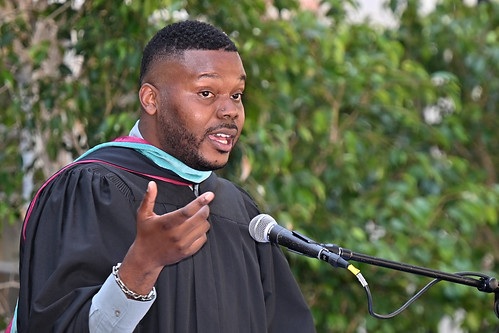
That was the Commencement Day message from anti-poverty advocate Michael Tubbs, who called on UCLA Luskin’s Class of 2023 to use their education and training to restructure society from the ground up, with justice as a guide.

“We’re here not because of what you’ve done but who you will become and how you will use the precious gift of this UCLA education,” Tubbs said. “We need you all to have the courage to imagine and create the world we all deserve to live in.”

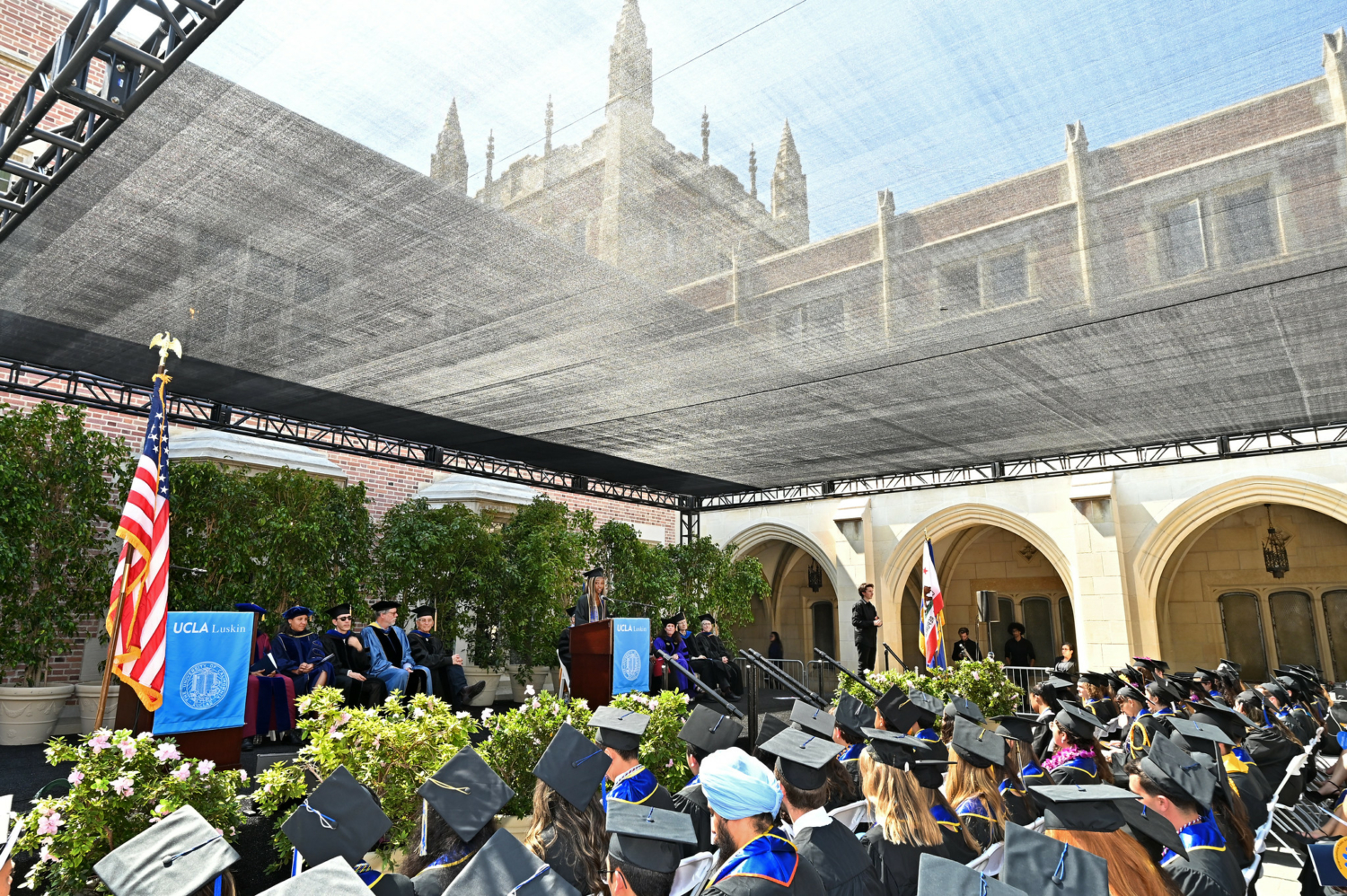
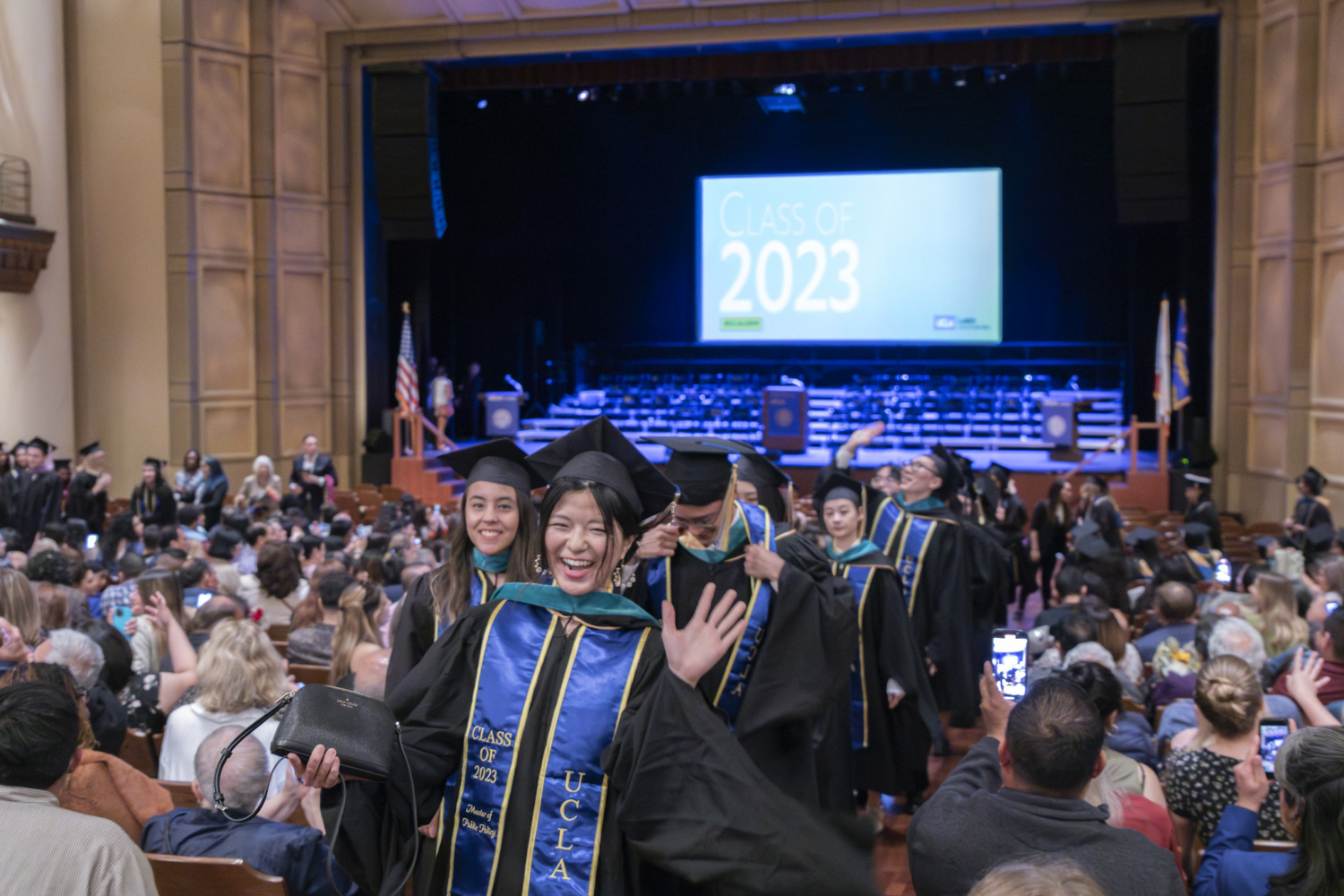
Tubbs spoke to public policy, social welfare and urban planning scholars earning advanced degrees at a morning ceremony on June 16 at UCLA’s Royce Hall. In the afternoon, he addressed students awarded the bachelor of public affairs at a festive gathering on the patio of Kerckhoff Hall.

Tubbs made history in 2016 when he was elected the first Black mayor of Stockton, California, at age 26. He recalled his own educational journey as a first-generation graduate of Stanford University, and offered this reminder to UCLA Luskin’s newly minted BAs, MPPs, MSWs, MURPs and PhDs:

“The alphabets behind your names don’t mean you’re better than people … and dare I say they don’t even mean you’re smarter than the people who raised you,” he said. “But what it does mean is that you’re better equipped to serve. It does mean you’re better able to self-actualize. It does mean you’re better positioned to use your privilege and your access to do some good.”

Students who earned the bachelor of public affairs receive their degrees on the patio of Kerckhoff Hall. Photo by Todd Cheney

This year, more than 420 students earned bachelors, master’s and doctoral degrees from UCLA Luskin. Interim Dean Anastasia Loukaitou-Sideris offered congratulations while also underscoring the stakes at play as the national election cycle is now picking up steam.

“You are taking your places in the workforce during a critical time not just for America but for the entire world. Who are we as a people? What are our values? Will we make the right decisions to better all of society? …

“As I look at you, I take comfort. I know you have been well prepared,” Loukaitou-Sideris said. “I trust that you will remain dedicated to a future in which geography, income, gender or race have little bearing on an individual’s ability to access opportunity and have a fulfilling life. I can’t wait to see all that you will accomplish.”

At each commencement ceremony, students delivered greetings in different languages, 16 in all, a reflection of the School’s cultural diversity. Four students were selected by their peers to offer words of inspiration: Chinyere Nwonye of Public Policy, Jhorna Islam of Social Welfare, Antonia Izuoga of Urban Planning and Mina Anochie of the Undergraduate Program.

In his remarks, Tubbs urged the graduates to make the most of both the triumphs and the inevitable disappointments in life. As Stockton’s mayor, he led a program of reforms to reduce poverty, provide scholarships to students, bring down the homicide rate and improve the city’s fiscal health — yet his bid for reelection in 2020 failed.

The defeat ultimately led to an important realization: “Your job, your title, your accolades — that’s a means to an end … but your purpose remains the same.”

Tubbs went on to join the administration of Gov. Gavin Newsom as special advisor for economic mobility and opportunity, and is widely viewed as a rising star in progressive politics. He is a leading advocate for a guaranteed basic income to provide stability to American households, and last year he founded End Poverty in California, a nonprofit devoted to breaking the cycle of income inequality.

“Today is such a wonderful day because it’s a mountaintop day. It’s one of those days where everything comes together,” Tubbs told the graduates. “But I submit to you, over the course of the next several decades of your life, every day won’t feel like this day. …

“As you figure out what it is you want to do, maybe your purpose, maybe part of what you’re supposed to do, will be found in the pain you’ve experienced, in the things that make you angry, in the things that feel unfair, in the things your parents had to experience.”

Tubbs advised the students to take the long view as they work toward change. As a younger man, he had the privilege of meeting Bob Singleton, a UCLA alumnus and one of the original Freedom Riders, civil rights activists who boarded buses to Southern states to challenge segregation. Singleton was arrested for his actions on June 4, 1961. The same day, Barack Obama was born.

“He said he had no idea that the choice he made as a 21-year-old UCLA graduate to do something to change the world would pave the way so that 50 years later a child born with no opportunity would have the chance to be president,” Tubbs said.

“Class of 2023, the question before you all today as you get your degrees is what are you prepared to do today, tomorrow and next week so that 50 years from now, we’re not having the same conversation? So that 50 years from now we don’t have hundreds of thousands of people in our state sleeping in tents right next to luxury apartments and mansions? … So that 50 years from now, we live in a country that’s deserving of your talent, of your time and of your treasure?”

View photos and video from the UCLA Luskin undergraduate commencement ceremony:

Commencement 2023: Undergraduate

View photos and video from the UCLA Luskin master’s and doctoral commencement ceremony:

Commencement 2023: Graduate


Opening Doors of Opportunity for Undocumented Students Spearheaded by two UCLA Luskin master's students, a campaign to establish the right to work puts public policy coursework into action

June 14, 2023/0 Comments/in Alumni, Diversity, Education, For Faculty, For Policymakers, For Students, For Undergraduates, Politics, Public Policy, Public Policy News, School of Public Affairs /by Mary Braswell

By Mary Braswell

Two UCLA Luskin master’s students are putting their public policy education into action to advocate for equal opportunities for undocumented students — and their work is already paying off.

Last fall, Carlos Alarcon and Karely Amaya spearheaded a campaign known as Opportunity for All, which called on the University of California to remove hiring restrictions for all students, regardless of immigration status.

Backed by labor, legal and education experts across the nation, the campaign laid out a strategy that upended prevailing interpretations of a 1986 federal law that had blocked employment opportunities for undocumented immigrants.

In May, hundreds of students from up and down California carpooled to UCLA to show their support at a rally during a meeting of the UC Regents. During a public comment period the following day, speakers donned Opportunity for All T-shirts to stand in solidarity.

“Just to see the sea of blue — it was beautiful,” said Amaya, who delivered an impassioned statement to the regents that day, along with Alarcon and other advocates.

At the close of the session, the board voted unanimously to find a pathway to enact the groundbreaking policy. It established a working group that set out to tackle the legal and political ramifications within six months.

“Absolutely, it is our intention to find a way to allow employment opportunities for all our students, regardless of their immigration status,” Regent John A. Pérez said after the meeting. “This is too important to get wrong.”

‘This could set a huge precedent for what happens next.’ — Student leader Karely Amaya

Alarcon and Amaya credited the vast array of forces that came together to create a campaign that ended in “yes.” The UCLA Labor Center and UCLA Law were key allies that provided expertise and resources, and endorsed the strategy of letting undocumented students’ voices lead the way.

“The beauty of our campaign was that we weren’t looking at this just through the lens of student organizing. We weren’t looking at it just through a lens of the law and immigration and labor law,” Alarcon said. “We were also looking at it through the lens of politics,” aware that the window of opportunity to act on immigrant rights would be impacted by the 2024 U.S. presidential contest.

Lessons learned in their public policy coursework helped shape the campaign, the students said.

“This showcases the incredible policy work our students are engaging in outside of the classroom,” said Kevin Franco, director of student affairs for UCLA Luskin Public Policy. “The work that Carlos and Karely are doing is crucial.”

The student leaders, each of whom came to the United States as young children, had been speaking out on behalf of the undocumented population for years. Their paths first crossed when they were undergraduates, Alarcon at UC Riverside and Amaya at UCLA.

Both were part of the 2021 Dream Summer fellowship program, hosted by the UCLA Labor Center’s Dream Resource Center to empower immigrant youth to address the needs of their community. And both were accepted into the Master of Public Policy program at UCLA Luskin, Amaya in her first year and Alarcon preparing to graduate this week.

At UCLA, they launched the Undocumented Student-Led Network, uniting peers from across the UC campuses, and settled on their top priority: allowing students to work so that they could sustain themselves, pay tuition and continue their education.

“Our message was, ‘Hey, we’re your students. You accepted us into this prestigious university. You put us on your brochures. But I don’t have the same opportunities as my classmates,’” Amaya said.

As a participant in the Deferred Action for Childhood Arrivals program, Alarcon is eligible for a work permit. But Amaya is one of tens of thousands of California students who were shut out of DACA after it was halted during the Trump administration and remains tied up in the courts. As a result, she said, she was unable to accept an offer to work as a graduate student researcher, which would have fully covered her tuition.

The Undocumented Student-Led Network set out to address that inequity, and quickly learned that UCLA Law was already on the case. Its Center for Immigration Law and Policy had developed a novel legal theory arguing that individual states are not bound by the decades-old federal law barring the hiring of undocumented residents.

Twenty-nine respected immigration and constitutional law professors from universities around the country signed a letter endorsing the legal analysis, a pivotal part of the campaign’s multi-pronged approach.

“We realized that it’s going to take a whole strategy, an implementation plan,” Amaya said. “We’re going to organize undocumented students. We’re going to build power. We’re going to continue reaching out to the media to report on this, and we’re going to meet with state legislators, nonprofits, different actors. We need all of our allies to show up for this.”

Their efforts paid off. The October launch of the campaign was accompanied by a New York Times piece laying out the issues. A nonprofit donated $30,000, allowing the team to purchase shirts, banners and other campaign materials aimed at underscoring their message and building community. Momentum grew, leading to the UC Regents’ action on May 18, which made headlines across the country.

The vote means the students’ work will continue. Representatives from the Undocumented Student-Led Network and other student organizations plan to meet regularly with the regents’ working group. And Alarcon and Amaya have high hopes that California will be a model for action that eventually opens the door of opportunity for students beyond its borders.

“This could set a huge precedent for what happens next,” said Amaya.

Capstone Projects Tackle Complex Social Issues Clients explore tough policy decisions with help from graduating UCLA Luskin students, including those in Urban Planning 

June 12, 2023/0 Comments/in Alumni, Climate Change, Development and Housing, Diversity, Education, Electric Vehicles and Alternative Fuels, Environment, For Faculty, For Policymakers, For Students, For Undergraduates, Latinos, Politics, Public Policy, Public Policy News, Research Projects, School of Public Affairs, Social Welfare, Social Welfare News, Social Welfare PhD, Sustainable Energy, The Lewis Center, Transportation, Urban Planning /by Les Dunseith

By Les Dunseith  

Antonia Izuogu, a second-year urban planning student, came to UCLA with an interest in affordable housing, and as a Bohnett Foundation fellow, she has had an opportunity to participate in initiatives relating to homelessness for the Los Angeles mayor’s office. 

“I was homeless at one point, actually twice, within my childhood,” Izuogu said. 

But when the time came to choose a topic for her required capstone research project, Izuogu chose to pursue an emerging interest in the community development side of urban planning, particularly work cooperatives. She ended up doing a feasibility study for a partner group of the Downtown Crenshaw Rising community organization. 

“My capstone and my mayor’s work didn’t really touch each other — they’re just two passions of mine that I was able to work on this past year,” Izuogu said.

Read about Graham Rossmore’s capstone on al fresco dining and its influence on policy in L.A.

Throughout the UCLA Luskin School of Public Affairs, soon-to-graduate students pursue monthslong deep dives into pressing policy issues with social relevance. In the Master of Urban and Regional Planning (MURP) program, the capstone experience may involve individual students like Izuogu working with community groups, government officials or public agencies to investigate real-world policy issues.

Other MURP candidates work in small teams or participate in one of two longstanding group-learning opportunities — the Community Collaborative and the Comprehensive Project classes.

The Community Collaborative is a unique pairing of students with community-based organizations in need of the expertise that academic researchers can provide. In turn, the students benefit from the insights of activists and others with lived experiences, fostering a mutual learning experience. 

This year’s Spatial Justice Community Collaborative course was taught by Professor Ananya Roy, and it focused on issues relating to life in homeless encampments. Class participants included individuals who had been among the unhoused populations at encampments forcibly cleared by law enforcement.  

The second group option is the Comprehensive Project class, which is a more traditional group project experience led by a faculty member who directs student researchers through an examination of a complex policy issue. Interested students had to apply nearly a year in advance to be admitted to the class, which this year focused on heat equity under the direction of Gregory Pierce BA ’07, MURP ’11, PhD ’15, an adjunct associate professor of urban planning and co-director at the UCLA Luskin Center for Innovation.

The client for the class of 13 MURP students was Marta Segura, chief heat officer and director of the city of Los Angeles’ Climate Emergency Mobilization Office, which is known informally as CEMO. Segura and her staff are developing strategies for Los Angeles’ efforts to deal with rising heat from climate change in an equitable manner. 

“The work that CEMO is doing is really important, and they have a huge mandate, particularly on heat,” Pierce said. “But they have very little actual staff capacity to do a lot of the research they need to do.”

The office’s agenda is driven by nonprofit and community-based organizations, which “aligns with the social justice orientation of the Luskin School, for sure,” Pierce said. 

The students, whose research has also been guided by Ruth Engel, project manager for environmental data science at the Luskin Center for Innovation, have divided the task into three subtopics — cooling centers, emergency response and bus shelters. Their final report was due to CEMO on June 9, just one week before UCLA Luskin’s commencement. 

Pierce said the report commends Los Angeles for being at the forefront of government efforts on extreme heat, but it notes room for improvement in terms of action and having systems in place to ensure public safety and equitable distribution of resources. 

“This is a pretty new space for a lot of cities, so it’s in its early days,” Pierce said of the strategic planning. “But there’s a lot of work to do to really follow through on what needs to be done as it gets hotter all the time.”

Among the students’ recommendations: 

  • increasing cooling center density in underserved areas of the San Fernando Valley and Harbor Gateway;
  • developing heat responses in cooperation with unhoused residents and their advocates to better meet their needs; 
  • utilizing more expansive definitions of heat emergencies and heat warnings, with lower heat thresholds than existing city policy;
  • shifting the priority for bus shelter development — often guided in the past by political considerations or the revenue potential of shelter advertisements —  toward geographic equity, thus prioritizing the placement of shelters in hotter neighborhoods with high numbers of bus riders.

Among the bus shelter group was Miguel Miguel, a second-year urban planning student who grew up in an area of the San Fernando Valley that often sees dangerously high temperatures. 

“I grew up seeing people suffer from what happens without adequate heat protection. It was really important for me to be involved, and to bring lived experience and emotional compassion into this project,” Miguel said. He said the capstone experience helped position him to play a role in shaping the nature of environmental justice in Los Angeles moving forward.
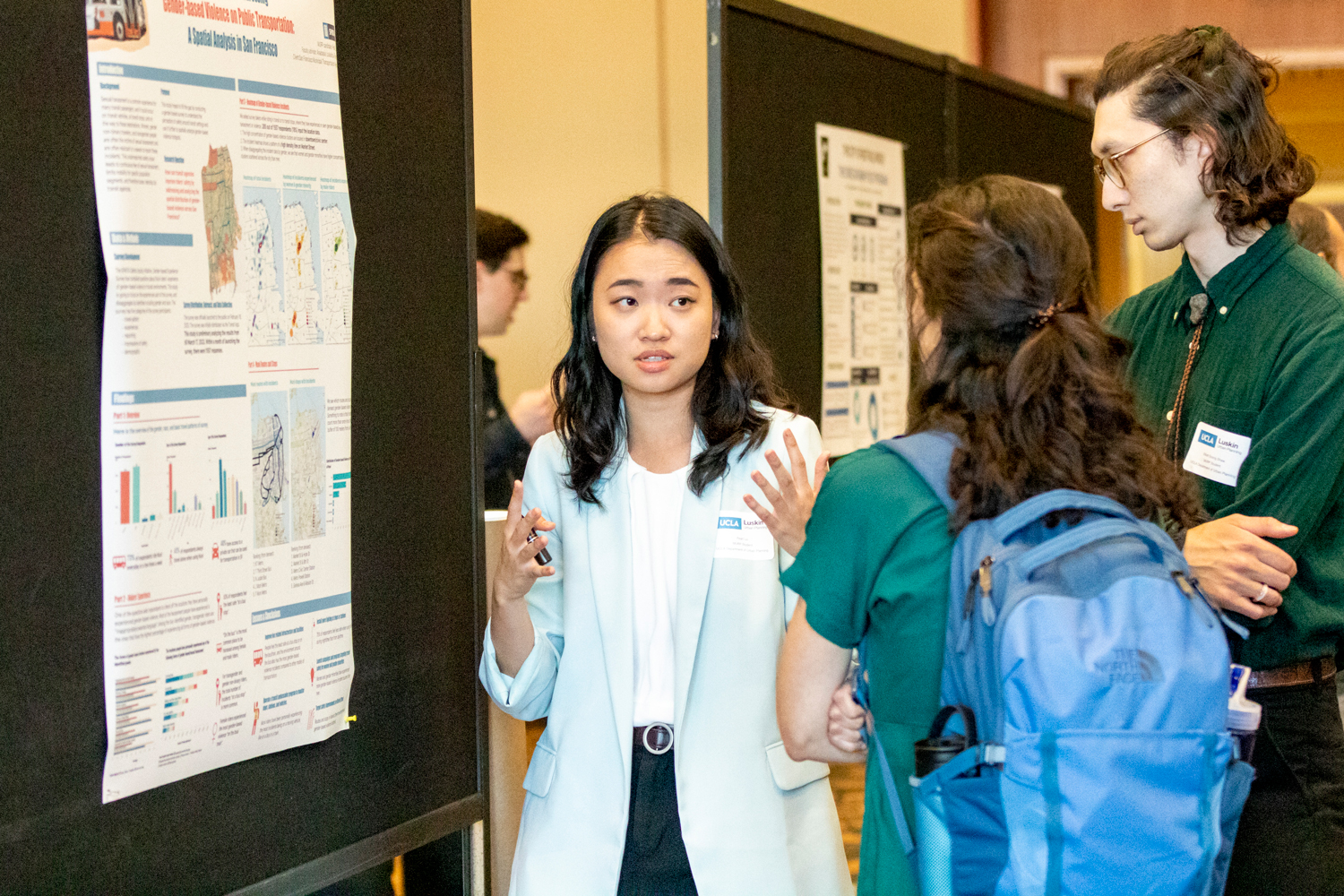
young woman in blue jacket gestures while talking about research shown on poster to her right

Pearl Liu’s capstone research looked into safety issues on public transit in San Francisco. Photo by Les Dunseith

Equity was a foundational element of many urban planning capstone projects completed this year, including one by Pearl Liu. Her capstone project focused on public transit safety issues among women and gender minorities.

An international student, Liu was accustomed to getting around her home city of Taipai, Taiwan, via ready access to a clean, safe public transit system. She didn’t find the same conditions in Los Angeles or San Francisco, where she did an internship with the San Francisco Municipal Transportation Agency, or SFMTA. 

“As a woman, and living without a car at all for two years in L.A. and also in S.F., I totally understand how women feel when they travel,” Liu said. “I have all these struggles. I have all this … built-up anger and complaints. I hope to change all these things as a transportation planner.”

At SFMTA, she had an opportunity to become familiar with a grant-funded gender equity initiative. During the internship, she started building a transit safety survey that eventually led to her capstone project.

The survey was launched through the Transit app for riders of San Francisco’s public transportation system, known as the Muni. Within a month of launching, a total of 1,613 people had filled out the survey. 

“Sexual harassment is a very common experience for many transit passengers, but especially to women and gender minorities  —  transgender people and those with non-binary gender identities,” Liu said. 

Another MURP, Greer Cowan, worked with Liu on the survey about Muni usage and travel patterns among women and gender minorities in San Francisco, with special attention paid to riders’ experiences. Gender-based violence can include inappropriate swearing or leering, as well as physical assaults. Were the survey respondents victims? If not, had they witnessed it? If so, where? When? Was it on a train, a streetcar or a bus? While riding or while waiting for a ride? Night or day? And so on.

Cowen focused on the reporting of incidents, noting that many people only tell their friends or family, so authorities have insufficient data to take action. Liu’s capstone focuses more heavily on how respondents feel about their safety, and where incidents occurred.

Among gender minorities, more than half of respondents felt the least safe at a bus stop, for example. But for male and female transit users, harassment and the fear of it happening was more intense during transit rides, particularly on buses. 

She did a spatial analysis of the data, overlaying the incident maps with the transit lines and transit stops, and produced a “heat map” to determine places with higher concentrations of incidents of gender-based violence. The bus system showed the most problems.

“It is mostly happening in the downtown area,” she found. “A lot of it was on Market Street,” in the financial core of San Francisco.  

Therefore, her capstone recommends that safety and equity initiatives by the SFMTA focus heavily on bus routes near Market Street. She also advocates for a safety toolkit for women and gender minorities. A transit ambassador program to monitor stops, stations and vehicles could focus more attention on buses. And the No. 1 suggestion to benefit women and gender-minority riders? Install more lighting.

“That always — always — is something that we’re pushing for,” Liu said. “Most people … feel at least somewhat safe during the daytime or when a station is well-lit.”

Liu said the capstone project helped refine her career aspiration. 

“This project … it really sparked an interest in me in how safety is so important in public transit,” Liu said, “and I feel like that has given me a passion to want to work in this area in the future.”

In some cases, the capstone projects serve as a reality check for the client organizations. Such was the case for Izuogu’s research for Downtown Crenshaw Rising. 

Her capstone project focuses on cooperative ownership, or co-ops, as a means to foster economic development in lower-income areas. The project was built on work that had been done by the previous year’s Community Collaborative class  — a project that ended up being recognized by the American Planning Association’s Economic Development Division for its Student Project Award. 

That project had recommended several possible ways to improve economic conditions in the Crenshaw area of Los Angeles, and her client was interested in the possibility of creating a cooperatively owned manufacturing facility in the area. 

Izuogu is a native of North Carolina who had gotten her undergraduate degree at Spelman College, a historically Black college in Atlanta, Georgia. She was excited for an opportunity to familiarize herself with a neighborhood like Crenshaw with a sizable Black population and do work that might benefit its residents.

“I was like, ‘That sounds really interesting, and I want to work with Black communities, too,’” Izuogu remembered thinking. 
two Black women pose in front of a poster about a research project

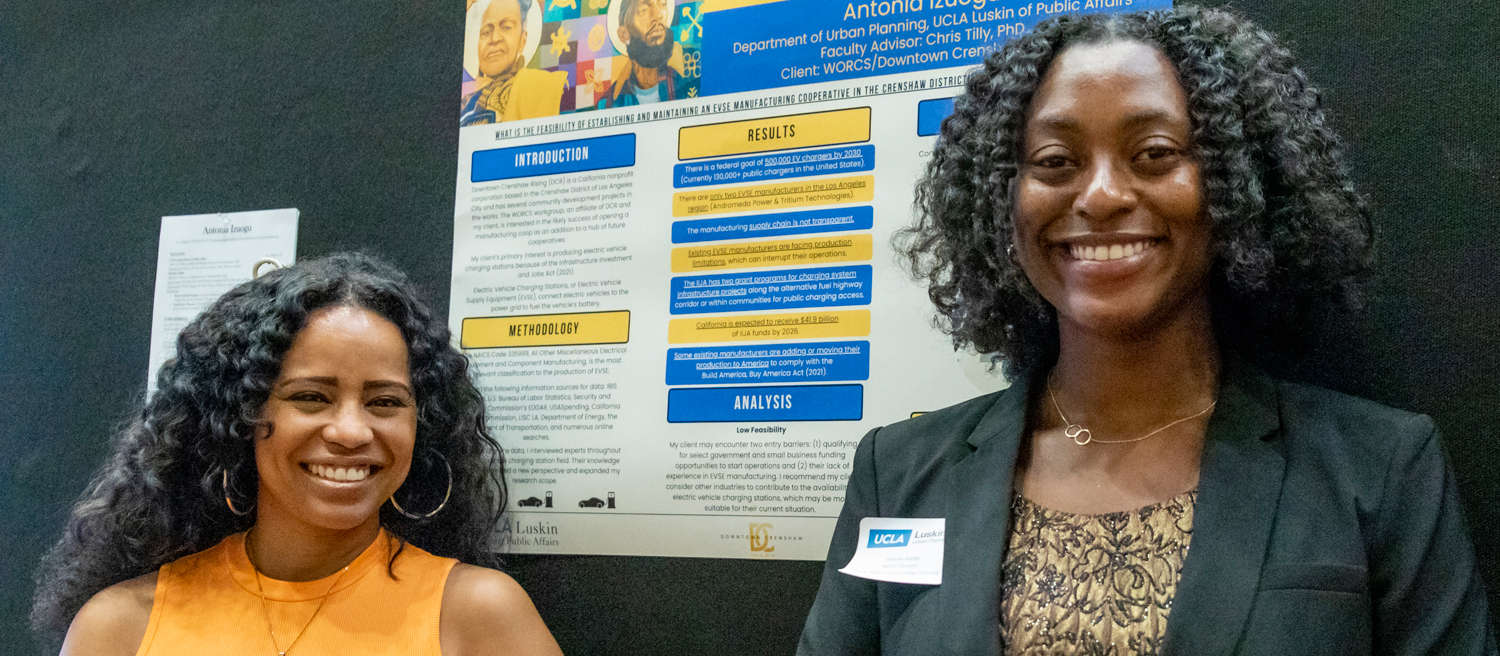
Antonia Izuogu, right, had an opportunity to discuss her research with Eve Fouché, who represented the project’s client during the poster event at UCLA. Photo by Les Dunseith

Her feasibility study reflects the Crenshaw group’s interest in launching an eco-friendly manufacturing site for electric vehicle charging stations to take advantage of incentives created by the federal Infrastructure Investment and Jobs Act that President Biden initiated in 2021.

“I didn’t know much about clean energy before coming [to UCLA] or about working with co-ops. At the same time, I’ve been taking economic development classes,” she said, “so everything was … fleshing out well together.”

Once she delved into the data, however, it became apparent to Izuogu that manufacturing electric vehicle charging stations was not the best option for the group. They lacked startup financing. No one in the group had experience building charging stations, nor connections within the industry. That led to the reality check. 

“As a consultant, I’m saying that maybe we should take a pause on that,” Izuogu said. Her capstone report suggests that the group instead create a co-op to install such stations and maintain them as part of a long-term strategic plan that would start small — a bakery/restaurant co-op is already in the works — and build over time into a hub for economic activity. 

Izuogu said her client expressed gratitude for her insights. 

“They like the idea that I didn’t stop and just say, ‘OK, this is not a good idea. Goodbye,’” said Izuogu, who has urged the group to think beyond Year 1. “Let’s go further than that. And they’ve been very appreciative of the information.”

The capstone project also helped inform Izuogu’s future plans. She will be pursuing a law degree, envisioning a career focusing on “solidarity economy lawyering,” helping small businesses and worker co-ops organize, drafting contracts and successfully navigating government regulations. 

Izuogu is a big fan of the UCLA capstone requirement.

“I love how they’re community-based, and this is not just a theory, but we’re actually applying what we’re learning in the classroom,” she said. “I love that I had the opportunity — even though I’m not from L.A. — to benefit the residents here. And getting to know their names and, basically, that we’re continuing this connection between academic institutions and the residents around them.”

View photos of other individual capstone projects in Urban Planning in this Flickr album:
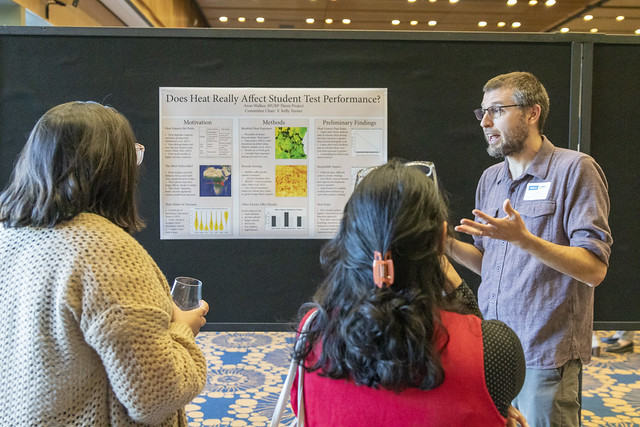
Careers, Capstones and Conversations 2023

Click the links below to view photos from the numerous other capstone project presentations at UCLA Luskin this year:

Comprehensive Project class

Community Collaborative class

Public Policy’s Applied Policy Presentations

Master of Social Welfare capstones

Undergraduate Public Affairs capstones

Click here and enter “capstone projects” to find stories from previous years and other information about student research at UCLA Luskin.


L.A. County Supervisor Advocates ‘Poverty Disruption’ at Luskin Lecture Holly Mitchell wants to reweave the social safety net with an equity focus in the wake of COVID-19 and the stark inequalities it exposed 

May 9, 2023/0 Comments/in Diversity, Education, For Faculty, For Policymakers, For Students, For Undergraduates, Public Policy, Public Policy News, School of Public Affairs, Social Welfare, Social Welfare News, Social Welfare PhD Judith Perrigo, Laura Abrams /by Les Dunseith

By Les Dunseith

Poverty has been a cornerstone of the professional life of Los Angeles County Supervisor Holly Mitchell as an elected official and in her prior work within child and family welfare organizations. Today, she is at the forefront of next-generation approaches that she thinks could fundamentally dismantle poverty in our society.

Speaking on the UCLA campus during a May 3 Luskin Lecture organized by the Luskin School of Public Affairs, Mitchell urged a crowd of faculty, staff, alumni and students to rally behind a current movement that goes beyond simply strengthening the social safety net.

“I think we have to reweave it, reimagine it and remake it to serve with equality, inclusion and humanity,” Mitchell said. “We have got to be as intentional about equity as previous generations have been intentional about exclusion.”
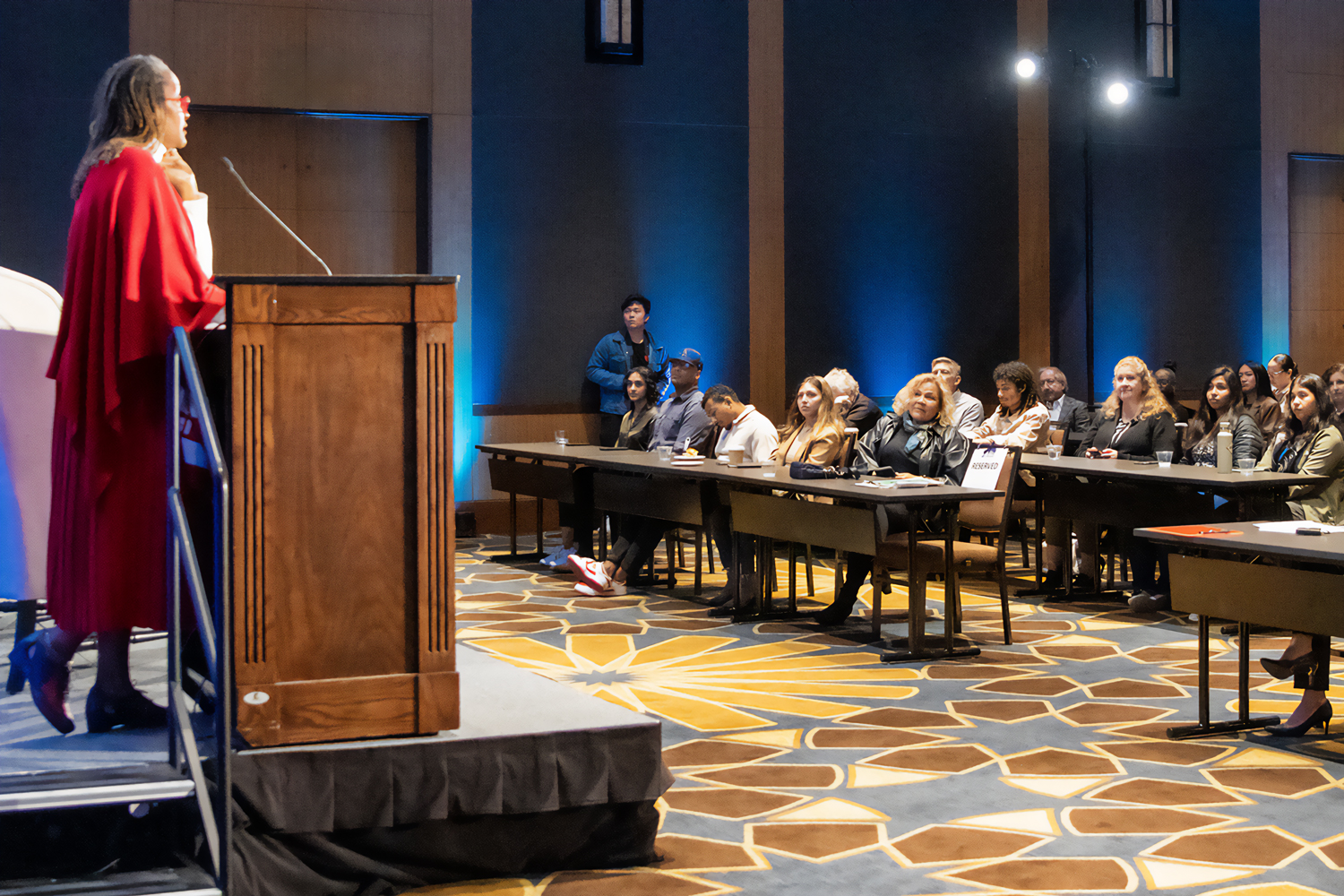
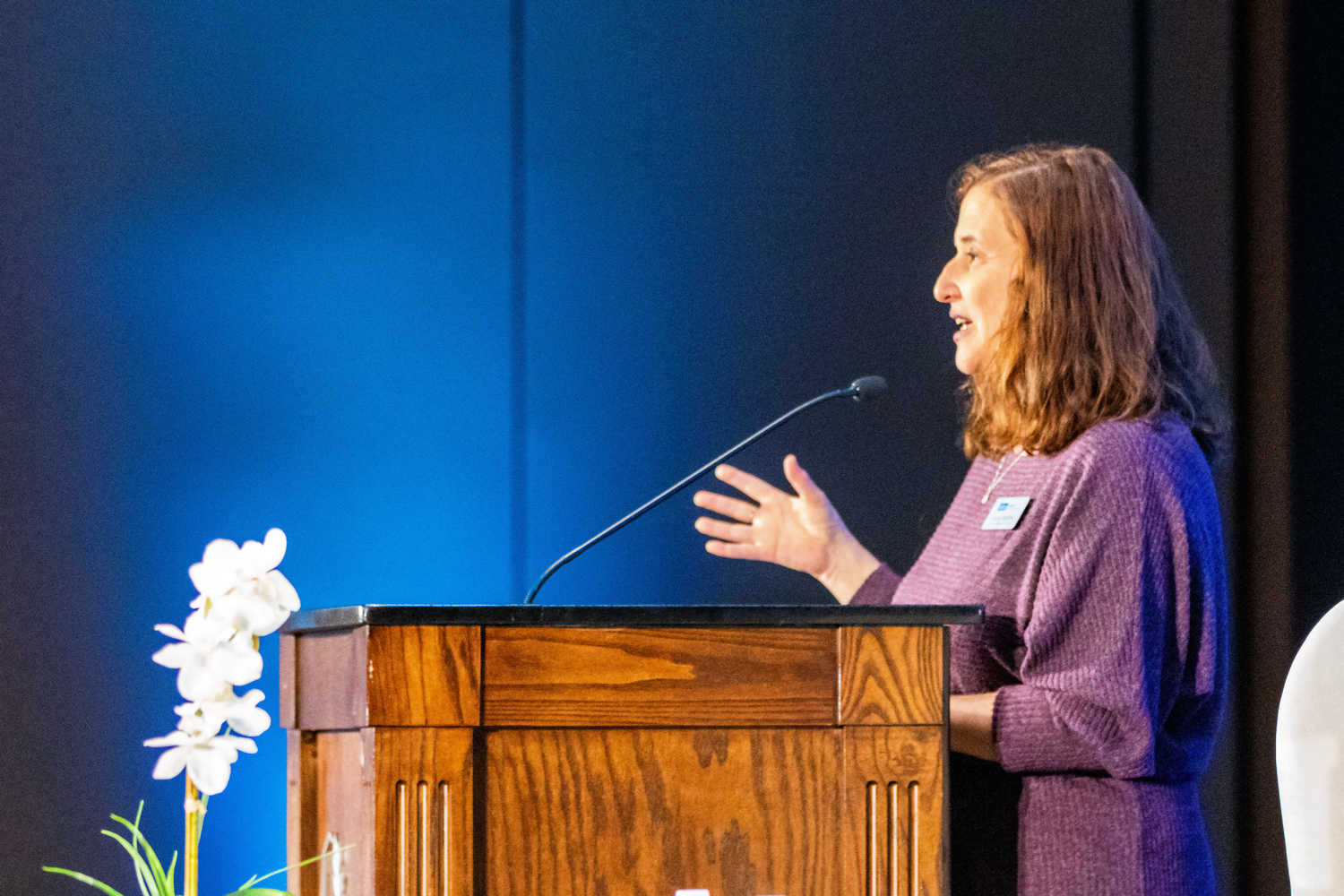
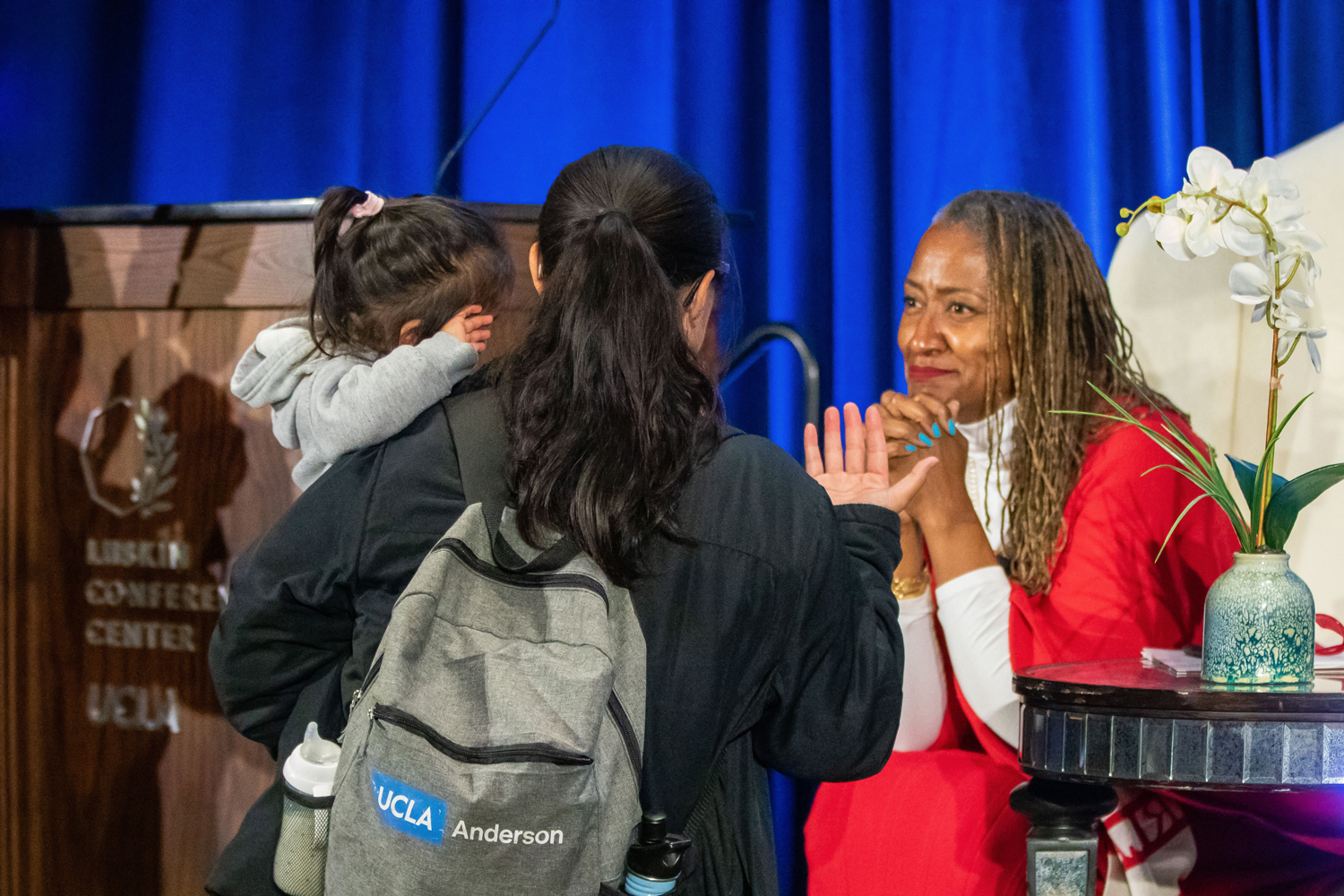
Organized in conjunction with a yearlong 75th-anniversary celebration of social work education at UCLA,  Mitchell was invited to speak because her focus on poverty coincides with the Luskin School’s mission.   

Social work was born as a profession to respond to poverty and inequality in society, said Laura Abrams, professor of social welfare and department chair, in her introductory remarks. Yet, social services programs like welfare and food stamps “have too often been coercive and judgmental, [with] caste stigma and population stereotypes racialized and inflicting harm on communities.”

Since being elected as a supervisor in 2020, Mitchell has pushed help for disadvantaged communities as a countywide priority, and her office’s effort to ensure that equity is a centerpiece of the local COVID-19 recovery plan has been held up as a national model.

In the wake of the pandemic, public officials have access to what Mitchell described as a “once-in-a-generation onslaught of public funds called COVID-19 recovery dollars.” Past tradition in L.A. County would have meant simply splitting those dollars equally among the five supervisorial districts. That made no sense to Mitchell. 

“From my perspective, it’s really pretty simple math: Those who have been disenfranchised and hit the hardest deserve the disproportionate investment in their recovery,” she said. 

This led to the creation of the first-ever countywide equity formula and public dashboard to ensure that federal dollars reach those most impacted by the pandemic. The L.A. County formula incorporates economic, social and environmental factors to identify the communities with the highest need, so far allocating $1.9 billion to 120 projects from the Antelope Valley to East L.A. to South L.A. and beyond. 

“For many of these neighborhoods, it’s the first time that government puts them at the front of the line for investments,” said Mitchell, who led one of the largest private, nonprofit child care and development corportations in California, Crystal Stairs, before entering politics and going on to serve in the California Assembly and Senate.

‘The era of invasive and patronizing social welfare in L.A. County is over,’ says Holly Mitchell.

A centerpiece of her policy history has been fighting against so-called benefit cliffs — eligibility restrictions on social services benefits that can trap people into cycles of poverty just to remain eligible for public assistance.

During her time at Crystal Stairs, Mitchell said, “my most painful days” related to working mothers faced with the prospect of losing public assistance because a work promotion would put them “pennies, literally, over the eligibility limit. And they were having to decide whether to walk away. ‘Do I keep this $3,000-a-month childcare voucher? Or do I take this promotion at work?’” 

Eliminating such dilemmas requires radically new approaches, Mitchell said.

“The era of invasive and patronizing social welfare in L.A. County is over. I’ll put the final nail in that coffin right now,” she said, prompting supportive applause from the UCLA audience.

“Research has shown us that things like work requirements and impossible barriers to eligibility do nothing to truly address poverty. It just continues to criminalize poverty,” Mitchell said. “We’ve got to go beyond, in my humble opinion, poverty alleviation and focus on poverty disruption.”

Central to her poverty disruption agenda for L.A. County is a pilot program called Breathe L.A., which is one of the largest guaranteed income programs in the nation. Since March 2022, it has been providing 1,000 Angelenos with $1,000 a month. The payment will continue for three years, no strings attached, for randomly selected participants who are 18 years or older and have been negatively affected by the pandemic.

Assistant Professor Judith Perrigo is among the researchers at UCLA Luskin helping to evaluate Breathe L.A., joining scholars currently evaluating similar guaranteed income efforts across the nation and around the world. 

Mitchell said that early results of that research belie the misguided perception put forth by opponents attempting to cast doubt on whether recipients will spend the money wisely.

“What’s the No. 1 thing participants in Breathe L.A. have spent the money on?” Mitchell asked the crowd, pausing a moment to let her listeners think about an answer. “It’s food. Food and basic necessities to feed their families. And making sure one less child is going to bed hungry, I believe that’s a good thing.”

people seated at tables in a conference room watch a speaker at the front of the room speak at a podiumHolly Mitchell spoke about her career to a packed room in the Luskin Conference Center at UCLA.
people seated at tables in a conference room watch a speaker at the front of the room speak at a podium
woman in purple dress gestures at podium
Black woman leans forward as a woman holding a child speaks with her
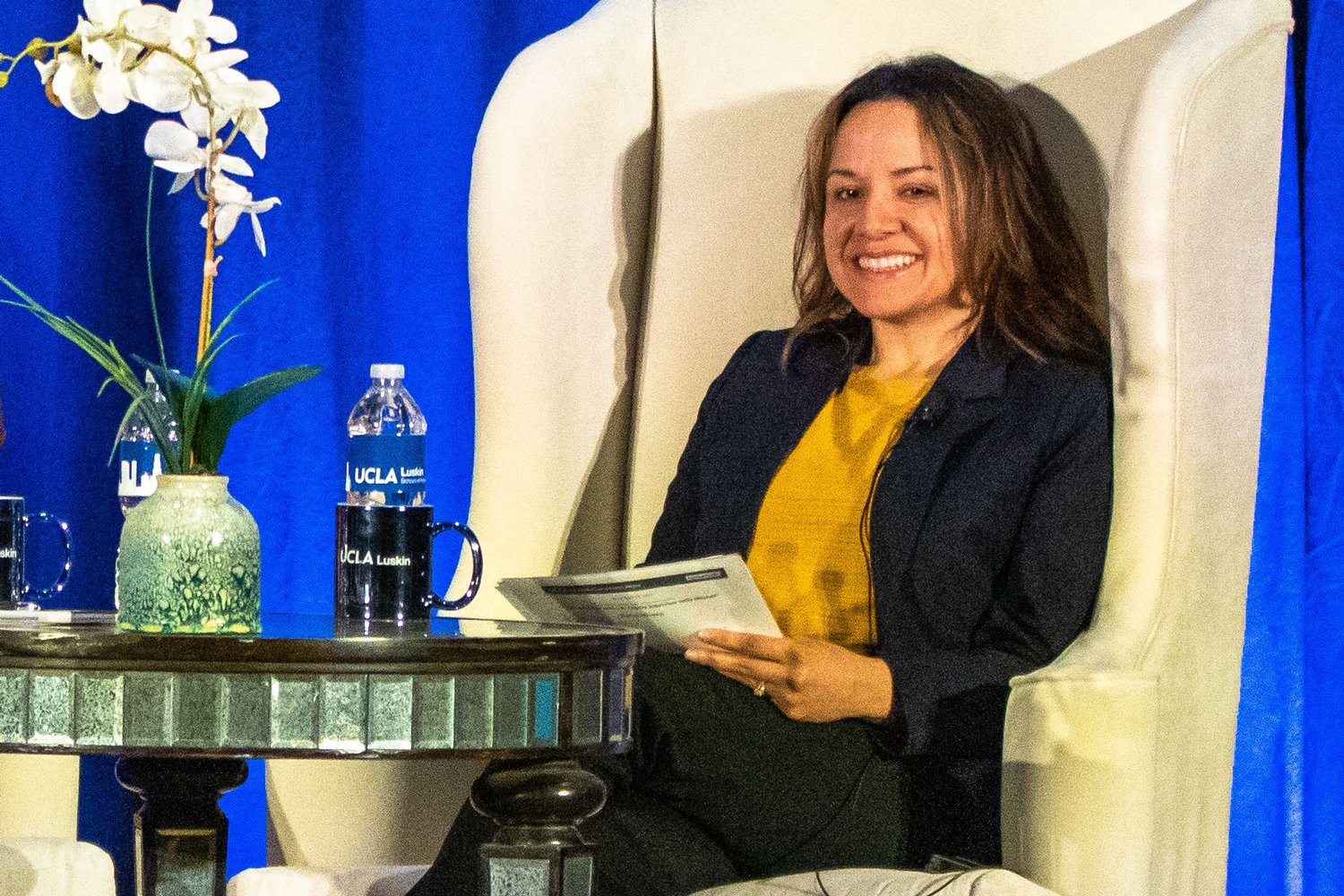
woman in dark jacket and yellow top sits in chair

After her prepared remarks, Mitchell was joined on stage by Perrigo for a Q&A session. “You have fire inside of you,” Perrigo told Mitchell, then invited her to describe where she finds the courage to advocate for poverty approaches like guaranteed income that have a history as political lightning rods.

Mitchell stressed the public servant aspect of her role, saying she thinks about the new mothers among her constituency who dream of creating a better life for their children. 

“Everyone has the right to have that dream. And the role of our society is to not create barriers to lift those possibilities,” Mitchell said. “When I think about things like that, it gives me the courage to go against the grain and fight.”

She recalled her effort in Sacramento to do away with a state provision that penalized low-income families receiving cash aid for having another child. After three frustrating defeats, she found success on the fourth try.

It will take similar perseverance to make guaranteed income a cornerstone of social services policy. 

“It’s a righteous fight,” said Mitchell, urging supporters in the audience to look at the gradual rollout of guaranteed income efforts as “an opportunity to expand your warrior base of people who will fight.”

She noted that the basic idea of guaranteed income is not new — Martin Luther King Jr. was a proponent, in fact. Decades later, it’s only now taking hold.

“It’s a movement,” said Mitchell, comparing Breathe L.A. to today’s bedrock public aid programs like Medicare and Social Security. 

“Those were, in their time, cutting-edge, innovative concepts around income security,” she said. “When I think about those game-changing, life-saving policy initiatives that I’m sure had a very rough start also, I believe we can get there.” 

The name, Breathe L.A., implies providing the means to weather a crisis — a little time to breathe — directly to people facing financial hardship.

Perrigo noted the popularity of the idea among lower-income, underserved communities and their advocates. But how will policymakers like Mitchell persuade skeptical taxpayers? 

 “If we are able to create healthier communities, safer communities, everybody benefits,” Mitchell said. 

Public education is also necessary. 

“It’s trying to acknowledge and help [skeptics] understand they started out 10 steps ahead, and this other community is trying to catch up. I think it’s important to have those kinds of conversations,” she said, “because that’s the honest truth.”

Mitchell is also a board member of LA Metro, and in response to a question from the audience, she said her priority for public transportation in the county is bus service “because that’s what a lot of our poor rely on.”

Eventually, she said, her goal is an entirely fareless bus system. For now, she takes heart in the success of Metro’s GoPass pilot program, which has provided more than 241,000 youths a free transit pass since it launched as a pandemic recovery measure in October 2021.

“The data … on school attendance is mind-blowing,” Mitchell said. “For some of us, it may be hard to imagine that $1.75 can stop a lot of people from going to school, but it can. Our K-12 ridership is double the pre-pandemic numbers.” 

Much of Mitchell’s presentation focused on touting accomplishments, but she acknowledged that L.A. County has no shortage of problems yet to be solved. Homelessness is a primary ongoing concern, “and we are 500,000 housing units short in L.A. County,” she said. “So, we have to build.”

Mitchell acknowledged that reality leads to difficult conversations. Want to stir up a political hornet’s nest? There’s no surer way in Los Angeles than going to a community homeowners association and talking about building more densely in neighborhoods zoned for single-family homes, she said.   

“People will roll up on me, and it’s, ‘What do you do about the homeless?’ And I say, ‘Well, as soon as you tell me how you are willing to have the composition of your own block change, I’ll tell you what I’ll do about the homeless,’” Mitchell said. 

“It is our moral dilemma,” she said. “And only when we have decided that we are sick and tired of being sick and tired — and that we’re not going to allow people to live like this anymore — can [developers, public agencies and governments] expand and build the diversity of housing that people need.”

View additional photos on Flickr:

UCLA Luskin Lecture With Holly Mitchell

UCLA Public Policy Community Celebrates Exceptional Alumni and Students Reception highlights the 'incredible, influential, important, world-transforming things our alumni are doing'

May 8, 2023/0 Comments/in Alumni, For Faculty, For Policymakers, For Students, Public Policy, Public Policy News, School of Public Affairs Mark A. Peterson /by Mary Braswell

The UCLA Luskin Public Policy community came together this spring to connect and reconnect with one another and honor selected students and alumni for their outstanding achievements.

The April 20 reception at the UCLA Faculty Club gave Master of Public Policy students, graduates, faculty and staff the opportunity to network face-to-face for the first time since before the COVID-19 pandemic.

In his welcoming remarks, interim chair and Professor Mark Peterson said that hearing updates about the work of former students leaves him “simply dazzled — not just by the numbers, but by the incredible, influential, important, world-transforming things our alumni are doing.”

During the pandemic, individuals honored as UCLA Luskin Public Policy Alumni of the Year were announced virtually. This year’s reception put a long-awaited public spotlight on award recipients from the past four years:

Regina Wallace-Jones MPP ’99 is Alumna of the Year for 2023. With a background in engineering and policy, Wallace-Jones ascended to several prominent Silicon Valley positions, culminating in her selection this year as CEO and president of ActBlue, the tech nonprofit that facilitates online donations to progressive organizations and candidates. She has also served in public office as a city councilwoman, vice mayor and mayor in East Palo Alto.

Sandeep Prasanna MPP/JD ’15 is Alumnus of the Year for 2022. After serving in staff positions in the U.S. Congress and Department of Justice, Prasanna recently completed work as investigative counsel on the U.S. House of Representatives Select Committee to Investigate the January 6th Attack on the U.S. Capitol. “Working to preserve democracy is quite a good gig for an MPP alum,” Peterson remarked. Prasanna is now a senior advisor with the law firm Miller & Chevalier Chartered.

Isaac Bryan MPP ’18 is Alumnus of the Year for 2021. Bryan turned his record of effective advocacy and community leadership in Los Angeles into a successful bid for the California Assembly in 2021. Since taking office, he has authored over 24 bills and co-authored over 300 bills and resolutions. Bryan’s chief of staff is former classmate Caleb Rabinowitz MPP ’18.

Max Gomberg MPP ’07 is Alumnus of the Year for 2020. Gomberg was selected for his work mapping out strategies for climate change mitigation for the California State Water Resources Control Board. He has since resigned the post, publicly accusing the state of being unwilling to adopt transformational policies. Gomberg now works as an independent consultant on water policy. “Max took a bold step when he resigned from his position in protest,” Peterson said. “Sometimes standing out means really standing up.”

Bryan accepted his award in person. Addressing current students and recent graduates at the reception, he said, “The dreams you have about how you can make a difference in the world, the things that you want to do for the community, for society, for your family, for whatever drove you to a program like this, instead of an MBA or something else — you can make that difference and you can make it as quickly as you need to.

“Just stay focused, stay hungry and build the kind of relationships like the ones in this room, to do good work together.”

Also honored at the reception were students who received the Alumni Leadership and Service Fellowships, made possible by donations from MPP alumni. The awards recognize public service, resilience and leadership at UCLA and in the community. The 2022-23 recipients are Lana Zimmerman and Donald Zelaya, and the 2023-24 recipients are Samuel Newman and Sydney Smanpongse.

Peterson reminded those at the reception of the many paths students can take to make an impact after graduation.

“Just take in that range of alumni careers: federal, state and local government. Legislative and executive branches. Appointed and elective offices. Nonprofit organizations on the front edge of the tech revolution. All making a difference,” he said. “That’s what is on your horizons, current MPP students!”

View photos from the UCLA Luskin Public Policy reception on Flickr.

UCLA Luskin Public Policy Alumni Reception

Robert Fairlie Appointed Chair of Public Policy at UCLA Luskin Distinguished scholar has nearly three decades of teaching and research in the University of California system

May 4, 2023/0 Comments/in For Faculty, For Policymakers, For Students, For Undergraduates, Public Policy, Public Policy News, School of Public Affairs Anastasia Loukaitou-Sideris, Mark A. Peterson /by Mary Braswell

By Stan Paul

Robert Fairlie, longtime professor of economics at UC Santa Cruz and a distinguished senior scholar, has been recruited to serve as the next chair of UCLA Luskin Public Policy.

Fairlie, a member of the National Bureau of Economic Research (NBER), is a “prominent and prolific scholar who brings with him a strong portfolio of research interests, a record of policy-relevant and impactful research findings, and an overall commitment to social justice,” said Interim Dean Anastasia Loukaitou-Sideris in announcing his appointment.

“Robert Fairlie is one of the most productive and most cited economists in the world,” said Mark A. Peterson, a past chair and current interim chair. “He personifies the ideal public policy faculty member, generating robust evidence on major issues of the day using sophisticated and innovative research and communicating directly with policymakers to inform their decision-making.” Peterson is a professor of public policy, political science and law.

Fairlie’s research has been published in leading economic and policy-related journals. Topics include public policy, entrepreneurship, education, information technology, labor economics, developing countries and immigration, typically with close attention to the implications for racial, ethnic and gender inequality.

He has strong ties to the state, arriving in California at age 2 and growing up in San Jose. He attended Stanford University, earning a bachelor’s in economics. He previously held visiting academic positions at Stanford and UC Berkeley. He also serves on the Faculty Council of the UC Sacramento Center.

Outside California, he has held visiting appointments at Yale and Australian National University. He earned his master’s and doctoral degrees from Northwestern University.

A new book on entrepreneurial job creation and survival — seven years in the making — will soon be published with MIT Press. Fairlie and his co-authors at the U.S. Census Bureau created a new dataset to track the universe of startups in the country — the Comprehensive Startup Panel, or CSP.

“We find that startups, on average, create fewer jobs and have lower survival rates than previously documented,” Fairlie said.

The COVID-19 pandemic also has determined the direction of some of his research, which has had substantial academic and policy influence.

“At the start of the pandemic I realized that, from all the work that I had done in the past, I was in a good position to compile and analyze data on the first impacts of COVID-19 on racial and gender inequality in business ownership, unemployment and work effort,” he said.

As the pandemic progressed, Fairlie said he also became interested in the $800 billion Paycheck Protection Program (PPP), examining whether PPP funds were distributed proportionately to communities of color and finding delays in equitable distribution.

Fairlie said he recently has been routinely contacted by both the U.S. President’s Office and Vice President’s Office for an update on his research findings amid the pandemic’s continued impact on racial inequality in entrepreneurship.

“My latest research that goes through December 2022 shows promising improvement in the number of Black, Latinx and Asian business owners,” he said. “For all three groups, business owner levels are higher now than where they were at before the pandemic started. In contrast, the number of white business owners is down from pre-pandemic levels.”

Fairlie’s award-winning research and efforts to inform policymakers in California have also garnered recognition. He has provided testimony before the California State Legislature on several occasions. A joint resolution from the State Assembly and State Senate commended his “innumerable achievements and meritorious service to the State of California and beyond.”

On the national stage, Fairlie has testified before the U.S. Senate, U.S. House of Representatives and U.S. Department of the Treasury. He has received funding from the National Science Foundation, National Academies and Russell Sage Foundation, as well as numerous government agencies and foundations. Most recently, his work was cited in the 2023 edition of the “Economic Report of the President.”

Fairlie is regularly interviewed by print and online media about economic, education, small business, inequality and policy issues.

Fairlie’s scholarly work will continue when he takes his new post this summer.

“Luskin is an amazing place with so much timely and important research going on. I look forward to contributing to those efforts as part of the team,” he said. “I am also looking forward to working at one of best and most exciting universities in the world.”

Page 3 of 25‹12345›»

Recent Posts

  • Stoll on the Factors Influencing Migration Patterns within the U.S. January 9, 2026
  • Northern California Maintains Nation’s Lowest ICE Arrest Rate Despite National Surge January 9, 2026
  • One Year After the Fires, Recovery Remains Uneven January 8, 2026
  • Oil and Gas Companies Sacrificing Plastic-Burdened Communities January 7, 2026
  • A sixth-generation Altadena resident presents a community recovery roadmap after the fires January 7, 2026

Contact

UCLA Luskin School of Public Affairs

3250 Public Affairs Building - Box 951656
Los Angeles, CA 90095-1656

Campus Resources

  • Maps, Directions, Parking
  • Directory
  • Contact
  • Academic Calendar
  • Careers
  • Diversity
  • University of California
  • Terms of Use

Follow

The statements on this page represent the views of people affiliated with the Luskin School of Public Affairs and do not necessarily represent the views of the University of California, or UCLA or its Chancellor.

Posts and comments by individuals at UCLA on social media channels may not reflect the opinions or policies of UCLA, the University of California or the Luskin School, nor its benefactors and academic partners.

Scroll to top