• Public Policy
  • Social Welfare
  • Real Estate Development
  • Urban Planning
  • Luskin Home
  • Undergraduate Program
  • Stay in Touch
  • Events Calendar
  • Give Now
  • About
    • Our Dean
    • Board of Advisors
    • Contact Us
    • Visit Us
    • Diversity, Disparities and Difference
    • Communications
      • UCLA Luskin in the News
      • Luskin Forum Online
  • Departments
    • Public Policy
    • Real Estate Development
    • Social Welfare
    • Undergraduate Program
    • Urban Planning
  • Apply
    • Master of Public Policy
    • Master of Real Estate Development
    • Master of Social Welfare
    • Master of Urban and Regional Planning
      • Double Degree With Sciences Po
    • PhD in Social Welfare
    • PhD in Urban Planning
    • Undergraduate Programs
  • Faculty
    • All
    • Public Policy
    • Social Welfare
    • Urban Planning
    • Real Estate Development
    • Faculty Executive Committee
  • Student Affairs & Alumni
    • Career Services
      • Employers
      • Fellowships
    • Student Support
    • Graduate Resource Library
    • Alumni Relations
  • Support
  • Programs
    • Research Centers & Affiliated Research
    • CA Title IV-E Education Program
    • Global Public Affairs (GPA)
    • Data Analytics Certificate
    • Luskin Lecture Series
    • Luskin Summit
    • UCLA Luskin California Policy Briefing
    • Public Service Weekend
    • Commencement
  • Administration
    • Financial Services
    • Events Office
    • Information Technology
  • Search
  • Menu Menu

Archive for category: Public Policy News

Segura to Step Down as Dean, Remain on Faculty His six years leading the Luskin School has been marked by a deep commitment to equity, diversity and academic excellence

December 1, 2022/0 Comments/in For Faculty, For Policymakers, For Students, For Undergraduates, Public Policy, Public Policy News, School of Public Affairs, Social Welfare, Social Welfare News, Urban Planning Gary Segura /by Mary Braswell

Gary Segura has decided to end his time as dean of the Luskin School for personal reasons. Here is a message sent to the UCLA Luskin staff and faculty by UCLA Executive Vice Chancellor and Provost Darnell Hunt:

Dear Colleagues:

I write to share the news that Dean Gary Segura, who has led the Luskin School of Public Affairs since January of 2017, has informed me of his decision to step down as dean and return to the faculty. His last day will be Dec. 31, 2022. We will share plans for interim leadership of the school as soon as they are in place.

In his nearly six years as dean, Dean Segura has fostered within the Luskin School a deep commitment to academic excellence and to equity, diversity and inclusion. Under his leadership, the school has enrolled an accomplished and highly diverse group of students in its programs and appointed renowned scholars in areas such as poverty and inequality, immigration, criminal justice, education policy and more.

Dean Segura has helped to cement the Luskin School’s status as a leader in research, teaching and practice across the areas of social welfare, urban planning and public policy. Recognizing growing demand for the Luskin School’s programs, in 2018 he led the development of the undergraduate major in public affairs, which provides a multidisciplinary foundation in social science theories, data collection and analysis. Additionally, the school launched a certificate program in data analytics in fall 2021 and added a new dual master’s degree program offered jointly by our Urban Planning Department and the Urban School of Sciences Po in Paris.

Dean Segura also co-founded the UCLA Latino Policy and Politics Institute in 2017 to address inequities and spread awareness of the most critical domestic policy challenges facing Latinos and other communities of color.

Chancellor Block and I are grateful to Dean Segura for advancing the public affairs disciplines at UCLA and for his work to deepen the Luskin School’s impact on communities near and far. Please join me in thanking Dean Segura for his leadership and wishing him well on his next chapter.

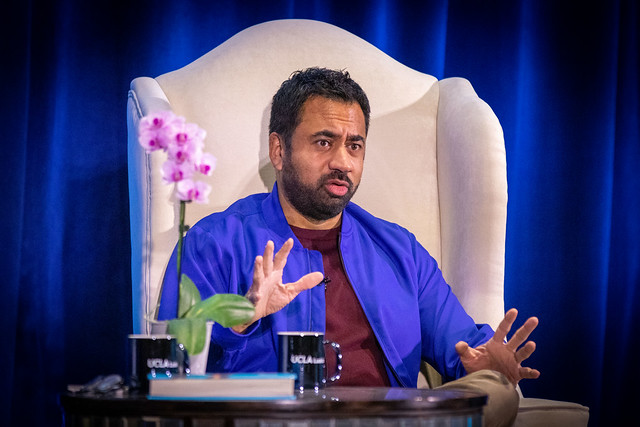
Kal Penn on Working for Change in Hollywood and Politics The actor, author, public servant and UCLA alumnus shares his multilayered life story with a Luskin Lecture audience

November 9, 2022/0 Comments/in Diversity, For Faculty, For Policymakers, For Students, For Undergraduates, Politics, Public Policy, Public Policy News, School of Public Affairs Anastasia Loukaitou-Sideris, Jim Newton /by Mary Braswell

By Mary Braswell

To understand the folly of viewing people through a one-dimensional lens, just look at Kal Penn’s resume.

The UCLA alumnus has played stoners, doctors and Santa Claus on the big and small screens. As part of the Obama White House, he mobilized voters, helped shape policy and advocated for the arts. Now, he’s added a new entry to his list of achievements: bestselling author.

Penn published his darkly funny memoir “You Can’t Be Serious” in 2021, and he returned to campus on Nov. 3 to share tales from his circuitous life journey as part of the UCLA Meyer and Renee Luskin Lecture Series.

Penn, a familiar face to viewers of “House,” “Designated Survivor” and the “Harold & Kumar” stoner movie franchise, was moved to write the book during the COVID-19 pandemic, when many people were re-examining their career choices and life priorities.

“Maybe I do have a story to tell,” he realized. “Maybe now is the time to share how you can have the blessing and privilege of working in two totally different careers.”

His story begins in New Jersey, where he grew up as the child of Indian immigrants — two scientists who fretted about their son’s desire to make a living as an actor. His career arc started on a middle school stage, when Penn brought down the house as the Tin Man in “The Wiz,” even breaking through to boys who had bullied the drama kids.

“I just thought, wow, what an incredible experience, that something as simple as a school play and a joke that was improvised made somebody change their minds,” he remembered.

“There’s a magic to this in terms of having a captive audience and being able to introduce them to characters and perceptions that are different from theirs. And that really motivated me to want to be an actor.”

After graduating from UCLA in 2000 with degrees in sociology and theater, film and television, Penn tried to make his way in an entertainment industry that, despite its broad reputation as a bastion of liberal values, clung to all forms of racism.

In some roles that he auditioned for, a brown face and Indian accent were the top criteria, not the talent, humor and heart needed to develop a believable character.

Penn recalled his attempts to persuade a sitcom director that the character he was playing would be much funnier if he didn’t descend into South Asian stereotypes — and that it would mean a lot to his young cousins, fans of the show.

“‘This is not a conversation we’re having,’” Penn said he was told. “‘Your little cousins should feel lucky that you’re allowed to be on TV to begin with. And so should you.’”

Woman receives copy of book in outdoor settingA member of the audience receives a complimentary copy of Penn’s memoir, “You Cant Be Serious.” Photos by Les Dunseith
Woman receives copy of book in outdoor setting
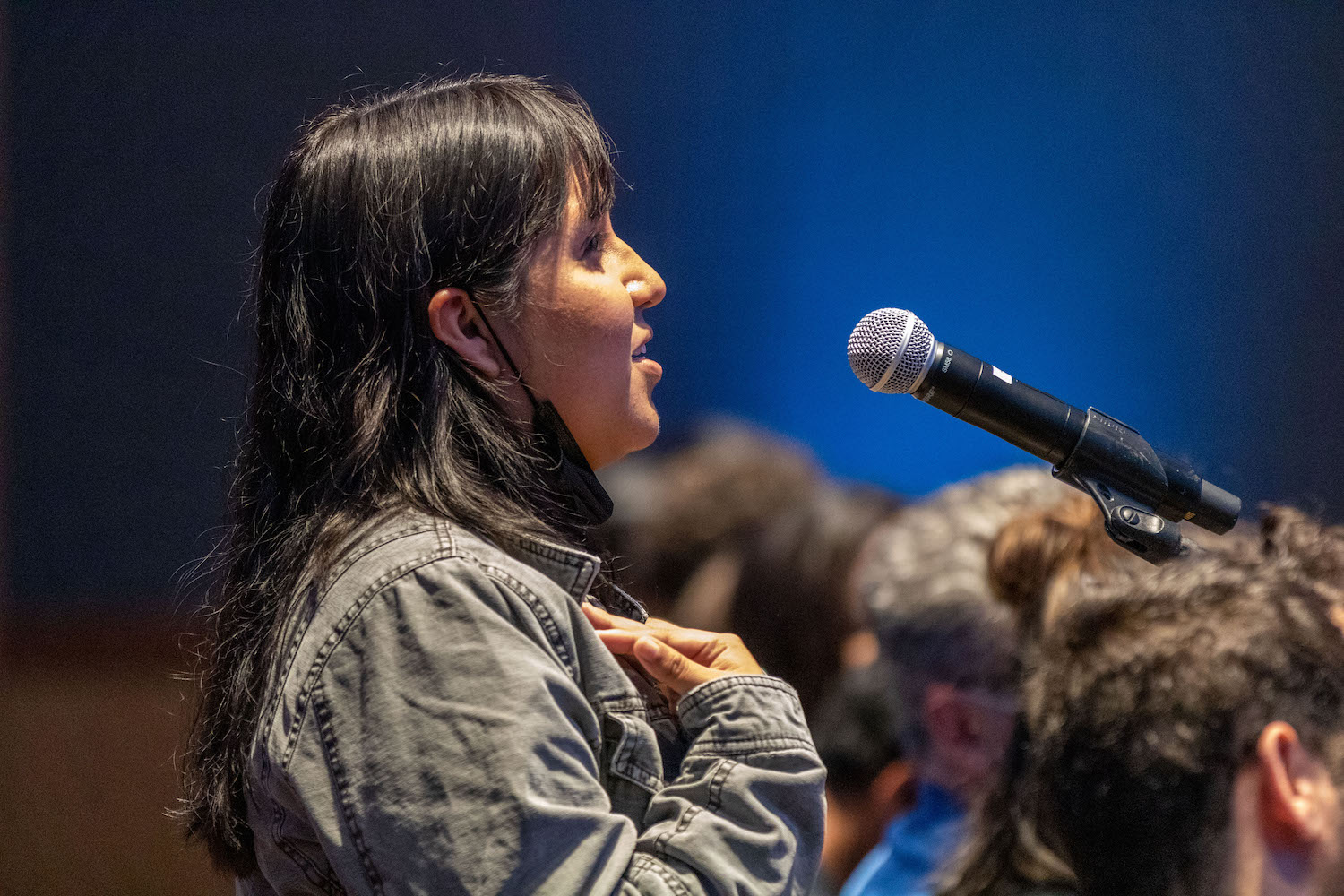
Young woman at microphone
Man at desk signing books in conference center lobby

Despite such tales of entrenched bigotry, Penn assured the UCLA audience that change, though slow, can definitely be measured. Sometimes it’s for business reasons, he said, citing the diversity of programming in the era of streaming platforms, which are funded through subscriptions rather than ad revenues that have a chilling effect on risk-taking.

Penn jumped from Hollywood to national politics during the Obama administration, when he served as White House liaison to young Americans, Asian Americans and the arts community and worked on policy matters including health care, immigration and LGBTQ rights. He was a national co-chair for the Obama/Biden reelection campaign in 2012 and served on the President’s Committee for the Arts and Humanities.

With that insider perspective on politics and governance, Penn weighed in on the current state of civil discourse in America. Speaking days before the contentious midterm elections, he acknowledged, “It is a dark time.”

One member of the audience, a student pursuing a master of public policy, sought Penn’s advice to young people called to public service but experiencing frustration and fear that they won’t be able to make a difference.

Don’t lose sight of important gains that have already been made, Penn counseled.

“When I do university lectures, a lot of times the tone of certain questions is like, ‘I can’t believe you worked for a moderate like Barack Obama.’ To me, what a great benchmark of progress, because at the time he was a progressive president.”

The notion that a generation of Americans now takes for granted the passage of the Affordable Care Act, repeal of “Don’t Ask, Don’t Tell” and protections extended to DACA students is a sure sign of progress, Penn said. Just this year, a landmark climate bill passed “because so many young people were pushing the White House to do something.”

During the on-stage conversation moderated by Jim Newton, editor of UCLA’s policy-oriented magazine Blueprint, more nuances of Penn’s humanness came through. Many of his loved ones are private by nature, so not until his memoir was published did some readers learn that Penn is gay and engaged to his partner, Josh. His proudest accomplishment is earning a graduate certificate in international security from Stanford University, and he aspires to one day serve his country as a U.S. ambassador. And in answer to a question from the audience, Penn revealed that his favorite soup is matzo ball.

Penn’s appearance was part of the UCLA Luskin School of Public Affairs’ signature Luskin Lecture Series, aimed at igniting dialogue on the most pressing policy challenges of our time.

Following the conversation, audience members snaked around the Centennial Ballroom at UCLA’s Luskin Conference Center, waiting to speak with Penn as he signed copies of his autobiography, complimentary to those who had registered to attend. They included students from the worlds of theater, film, global studies and public affairs, and Penn had a universal charge for each of them:

“Complacency is the greatest danger. … Just because things have progressed doesn’t mean they’re not going to slide back in any way, both in terms of diversity and career but also in terms of democracy.

“When you’re complacent, the other side will absolutely win.”

View photos from the lecture on Flickr.

Kal Penn Luskin Lecture

Jim Newton Receives 2022 Carey McWilliams Award Editor-in-chief of UCLA Blueprint magazine receives honor recognizing journalistic contributions to society’s understanding of politics  

September 15, 2022/0 Comments/in Diversity, Education, Environment, For Faculty, For Policymakers, For Students, For Undergraduates, Health Care, Politics, Public Policy, Public Policy News, School of Public Affairs Jim Newton /by Les Dunseith

By Les Dunseith

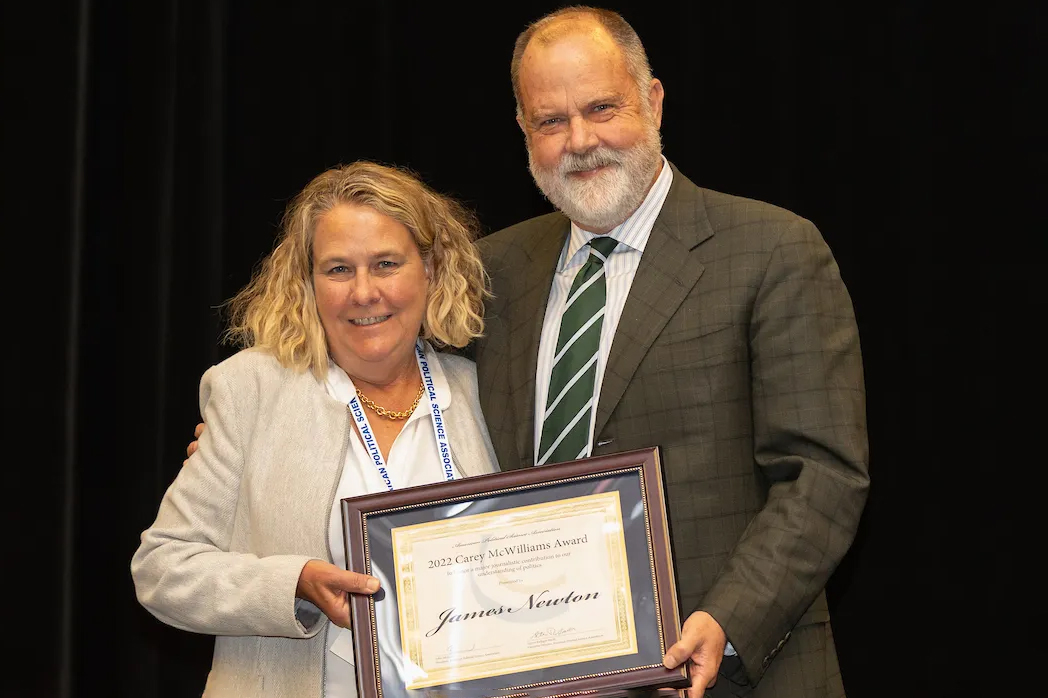
UCLA’s Jim Newton is the winner of the Carey McWilliams Award, which honors a journalist or organization each year for intellectual forthrightness and political independence.

Newton is the founding editor-in-chief of Blueprint magazine, which is based at the UCLA Luskin School of Public Affairs. He’s also a lecturer in the departments of public policy and communications studies.

The McWilliams Award has been given since 1982 by the American Political Science Association in memory of a California lawyer who became an influential political leader, author and editor. McWilliams edited The Nation magazine from 1955 to 1975 and wrote landmark books that focused on migrant farm workers in California and the World War II internment of Japanese Americans.

“I’m deeply honored by this prize and especially by the thought that it binds my name, in some small way, to that of McWilliams, who has long been a personal polestar of integrity and wisdom,” Newton said.

The award, which recognizes Newton’s work at UCLA and other accomplishments, was officially presented Sept. 14 in Montreal at the association’s annual meeting. He has written several books about historical figures of political importance with a California connection, including former CIA chief and Secretary of Defense Leon Panetta, Supreme Court Justice Earl Warren and former Gov. Jerry Brown. At the Los Angeles Times, he was a reporter, editor, columnist, bureau chief, editorial page editor and editor-at-large.

Past recipients of the award include well-known broadcast journalists such as Judy Woodruff, Bill Moyers, Lesley Stahl and Nina Totenberg; other respected newspaper writers such as Seymour Hersh, Molly Ivins and Ronald Brownstein; authors and professors; plus chroniclers of political discourse from a diverse array of outlets that includes the New York Times, Washington Post, Cook Political Report, the Congressional Quarterly, National Public Radio and the Huffington Post.

UCLA Luskin colleague Zev Yaroslavsky first became aware of Newton’s tough-but-fair journalistic approach during his time as an elected official in Los Angeles.

“Jim’s coverage of the LAPD — and the reforms spawned by the Rodney King beating and the Rampart scandal — is still the gold standard” for news reporting in Los Angeles, Yaroslavsky wrote in a letter recommending Newton for the McWilliams award.

Henry Weinstein, a former L.A. Times colleague who is now on the faculty at UC Irvine Law, also wrote an award nomination letter. “He is a potent and graceful practitioner of what I call ‘the Journalism of Illumination’ — articles and books that take a reader deep into important subjects, regardless of whether they occurred yesterday or 75 years ago — just as McWilliams did in an earlier era.”

A third recommendation letter came from a former Times colleague who has continued to work with Newton as a frequent writer for UCLA Blueprint, Lisa Fung. She praised Newton’s ability to build connections among the worlds of politics, journalism and academia.

“It’s become increasingly difficult to understand the motivations of government and policy officials, but through his work as a writer, editor, author and educator, Jim is leading the charge to bring about change and to show people why they should care,” Fung wrote.

Newton said his appreciation of McWilliams grew while writing his book about Warren, the former chief justice of the United States. In fact, as governor of California, Warren clashed with McWilliams and actually fired him from a government job in part because he was an outspoken critic of the internment of Japanese Americans during World War II.

“McWilliams is the only principled person at the time who stood up and said, ‘This is a bad idea,’” Newton said.

He founded Blueprint magazine, which is based at the Luskin School and distributed online and in print twice yearly, as a way to connect intellectuals to policymakers in light of what he perceives as a growing need.

“The policy universe, in particular, had really been stripped of a lot of its research apparatus just over the time that I had been covering it,” Newton said. “It’s true at the city, county and state levels — legislative analysts just don’t have the firepower they once did.”

Filling that gap was the germinating notion of Blueprint, which often highlights academic researchers who are tackling policy questions.

“Let’s make policymakers aware of the research that might inform policy, and let’s also engage researchers in what’s going on in the policy universe,” Newton said.

He imagines an elected official facing a difficult policy issue and eager to find a fresh, independent perspective.

“Instead of just listening to labor or business, you realize that there’s some thoughtful, nonpartisan research that’s being done that can help guide you to a good answer,” said Newton, whose goal is making scholarly research accessible to a non-academic audience.

 “We don’t want it to be an academic journal,” he explained. “That’s why it’s brightly colored, and it’s designed the way it is, with illustrations and graphical presentations in print and online.”

UCLA scholars are often featured, but the magazine’s focus extends beyond the university.

“So, we write about Norman Lear or David Axelrod or Joe Stiglitz or Jerry Brown — people who are broadly interesting and who are concerned with culture and politics and civic life,” Newton said.

Blueprint’s press run has been reduced in recent years amid financial constraints, and a plan to publish quarterly instead of twice-yearly was shelved in part because of pandemic-related challenges. But Newton is hopeful for a return to the magazine’s full reach — and even expansion. Meanwhile, production has endured, and reporting for the fall edition is currently underway.

“It’s themed around fear,” said Newton, who noted that fear can be constructive when it drives urgency of action around issues like homelessness or climate change. But, of course, fear also has the potential for harm as a tool for some politicians.

“Immigration would be a good example of the kind of illogical fear of other people that results in policy that’s profoundly misguided,” he said.

The theme is particularly timely with political rhetoric heating up as midterm Congressional elections and races for mayor of Los Angeles and the governor of California loom in November. Fear not, the next edition of Blueprint will be available in mid- to late-October to shed light on the political shadows. 

UCLA’s Jim Newton receives the Carey McWilliams Award from Lisa Martin, president-elect of the American Political Science Association. Photo from APSA


Weekend Event Harnesses the Power of Service Public Policy hosts aspiring public servants from across America for workshops focusing on policy issues and solutions

August 25, 2022/0 Comments/in Alumni, Business and the Environment, Climate Change, Development and Housing, Education, Environment, For Students, For Undergraduates, Luskin Center, Public Policy, Public Policy News, School of Public Affairs Kenya Covington /by Les Dunseith

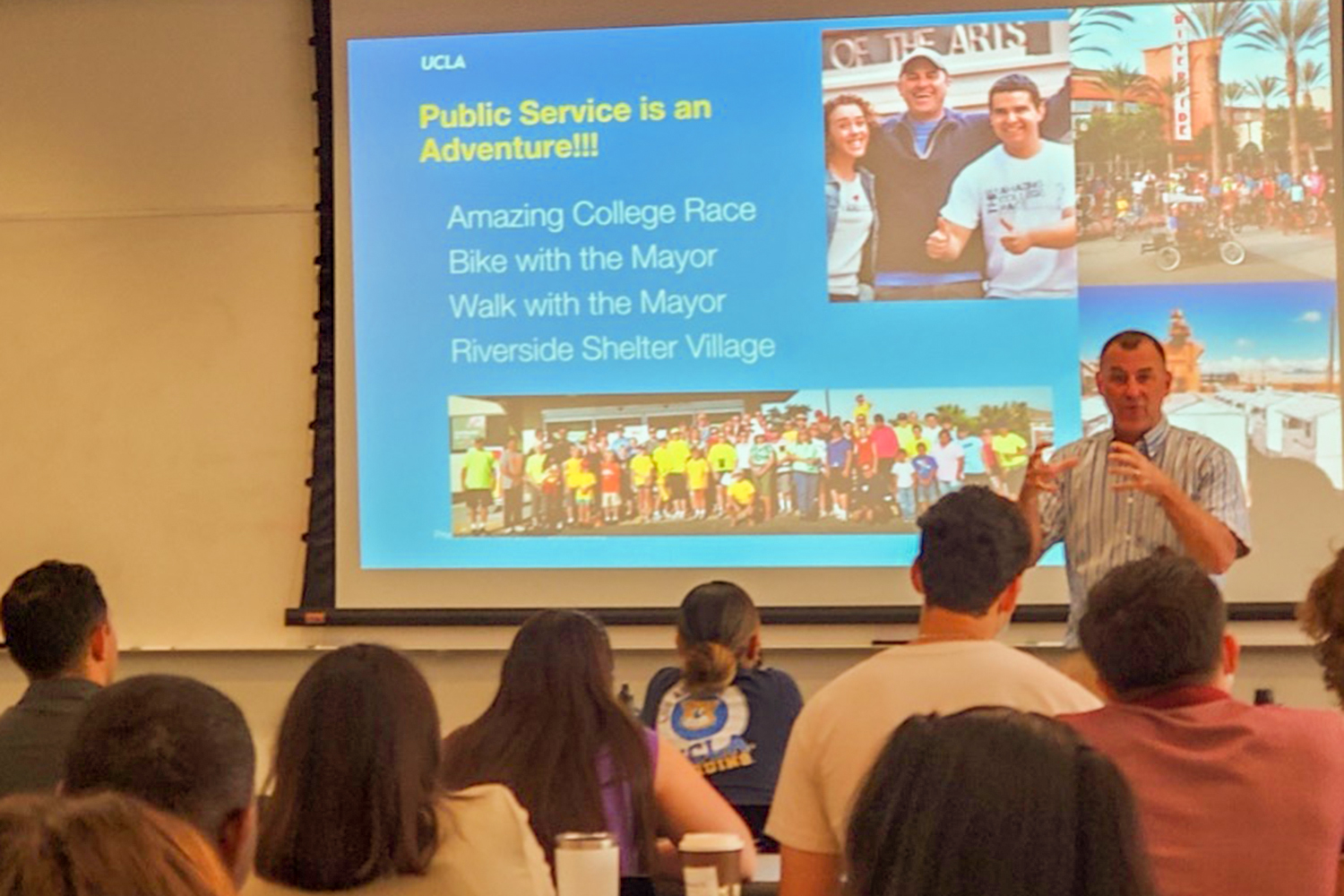
Twenty-nine undergraduates from across the nation came to UCLA in mid-August for three days of study and discussion as UCLA Luskin Public Policy returned to in-person programming for its third Public Service Weekend.

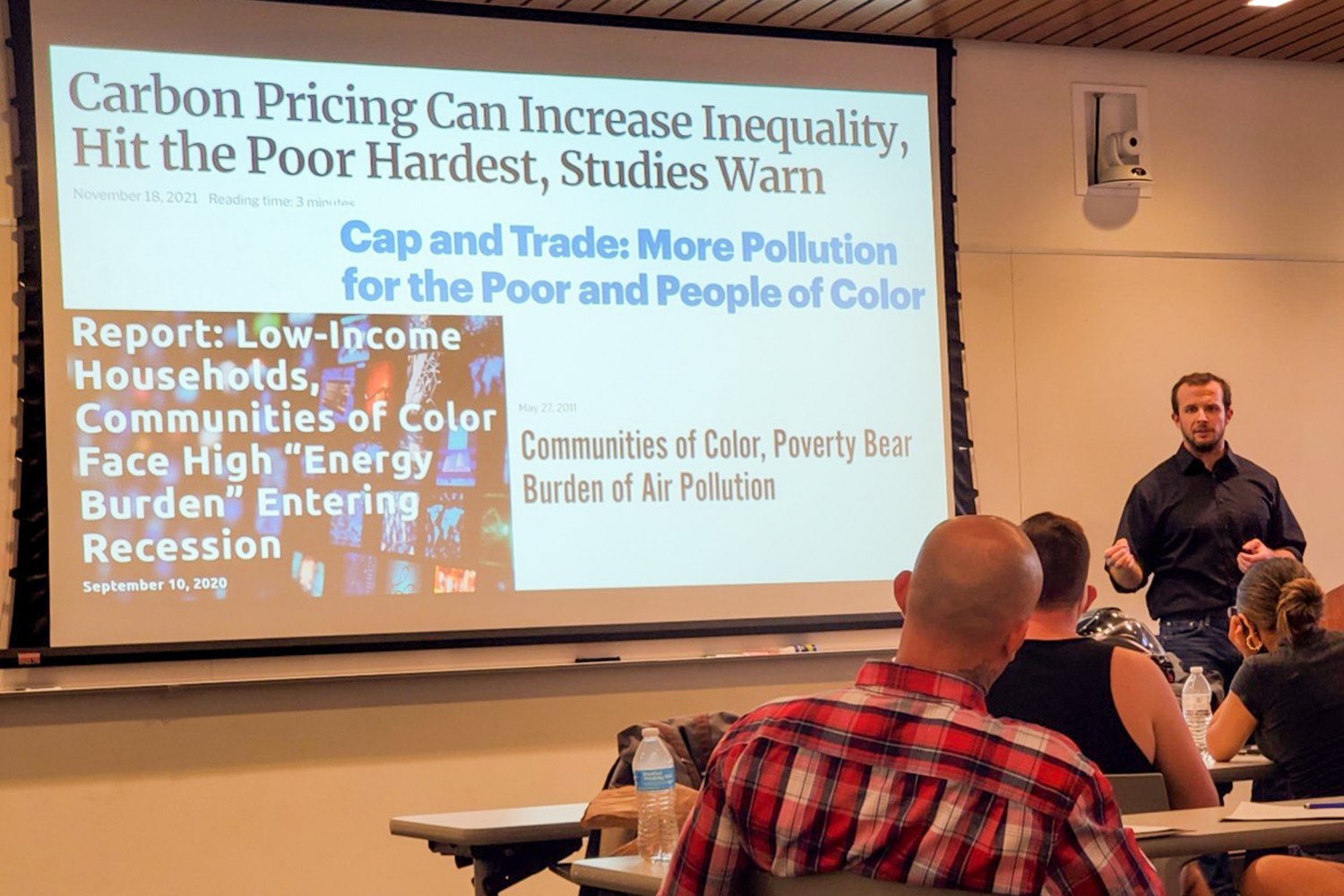
“Harness the Power of Action-Oriented Public Service” provided aspiring public servants an in-depth look at a diverse array of career opportunities, policy developments, and social issues such as environmental justice, inequality, homelessness and immigration reform.

The program, which was produced in cooperation with the not-for-profit Public Policy and International Affairs (PPIA) organization, included a tour of a Los Angeles clean technology site and workshops conducted by UCLA faculty, alumni and staff.

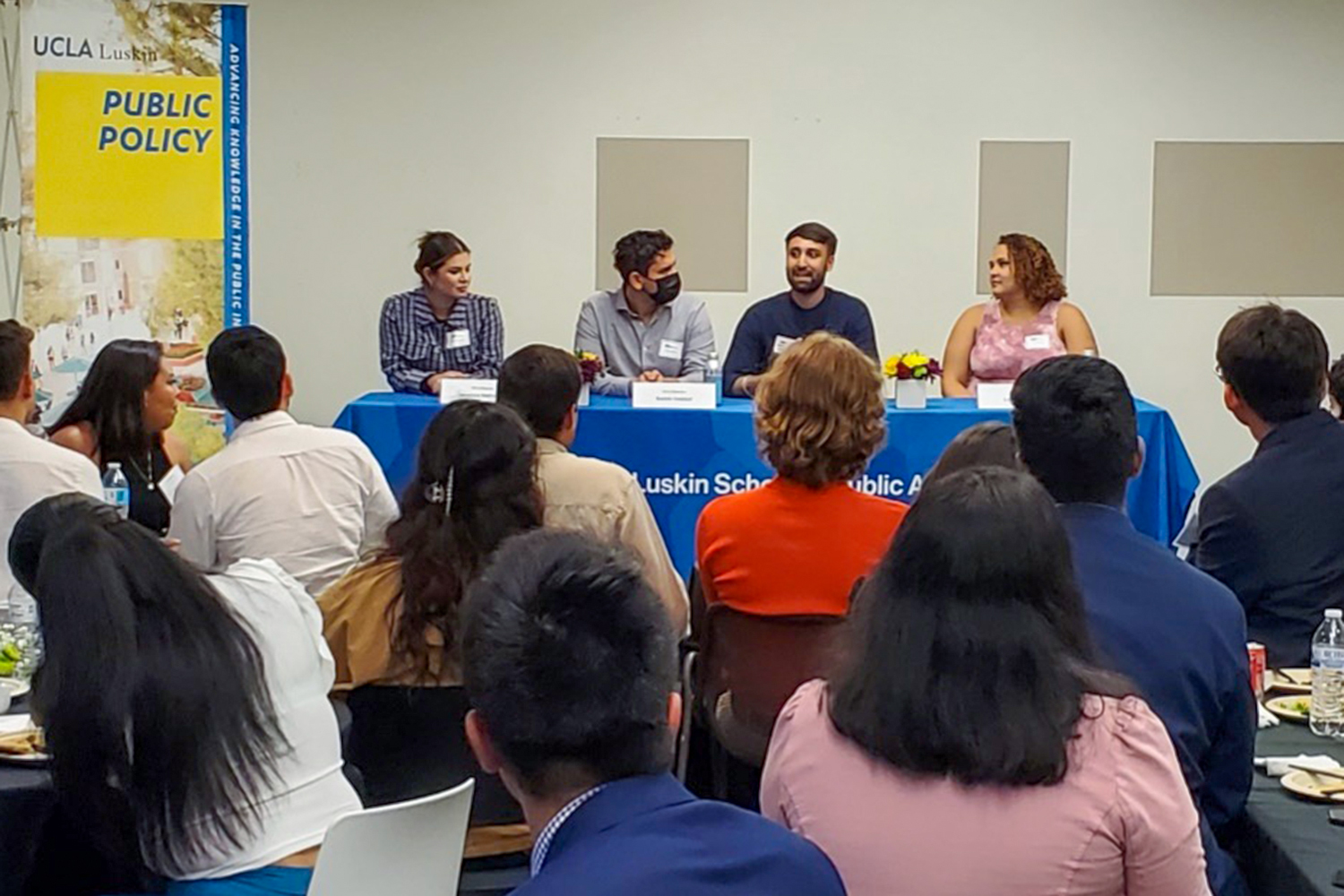
“Additionally, we aimed to inspire students by sharing the life stories and successes of UCLA graduate students, alumni, policymakers and faculty doing the work on the front lines of advocating for policy reform and social change,” said Kenya Covington, a senior lecturer at UCLA Luskin who coordinated the program.

Speakers included Dean Gary Segura, as well as alumni William “Rusty” Bailey, the former mayor of Riverside, and Dan Coffee, a project manager for the UCLA Luskin Center for Innovation. Second-year MPP student Elliot Woods, chair of the School’s Black Student Caucus, shared educational and personal insights. He said experiences with the foster care system early in life have sharpened his determination to improve society through a career in public service.

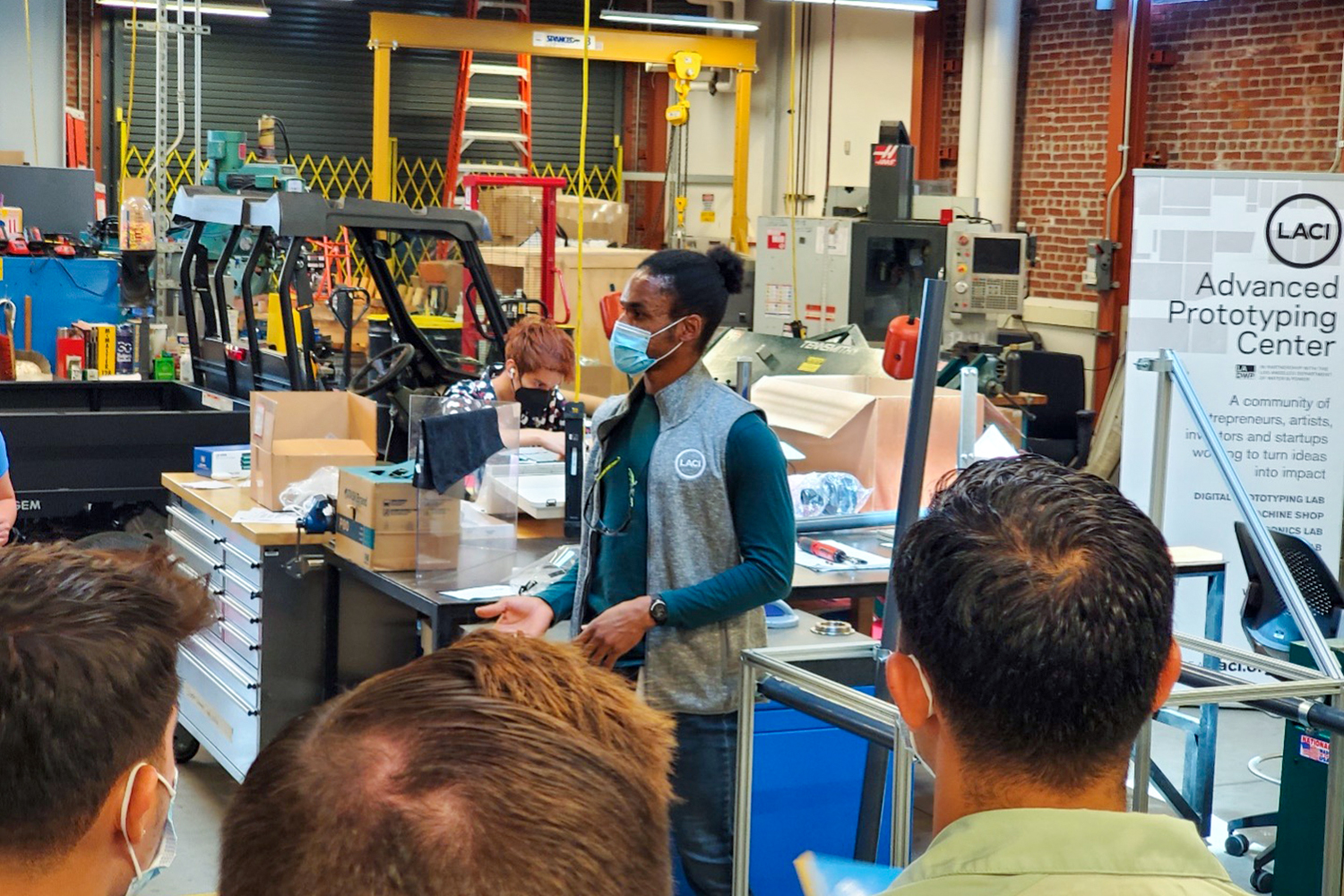
man in industrial workplacePilot projects at the La Kretz Innovation Campus focus on green tech efforts to mitigate climate change.
man in industrial workplace
man gestures in front of screen showing photos
man speaks at front of classroom with presentation slide behind him
man at podium speaks to group
four people sit at a table in the front of a classroom at UCLA

A site tour of the La Kretz Innovation Campus exposed participants to creative clean technology ideas seeking to decrease the emissions that cause climate change. Participants learned about pilot projects involving lithium battery recycling, for example, and they witnessed how welding workspaces, 3D printing technology and chemistry labs can all play a role in developing green technology solutions.

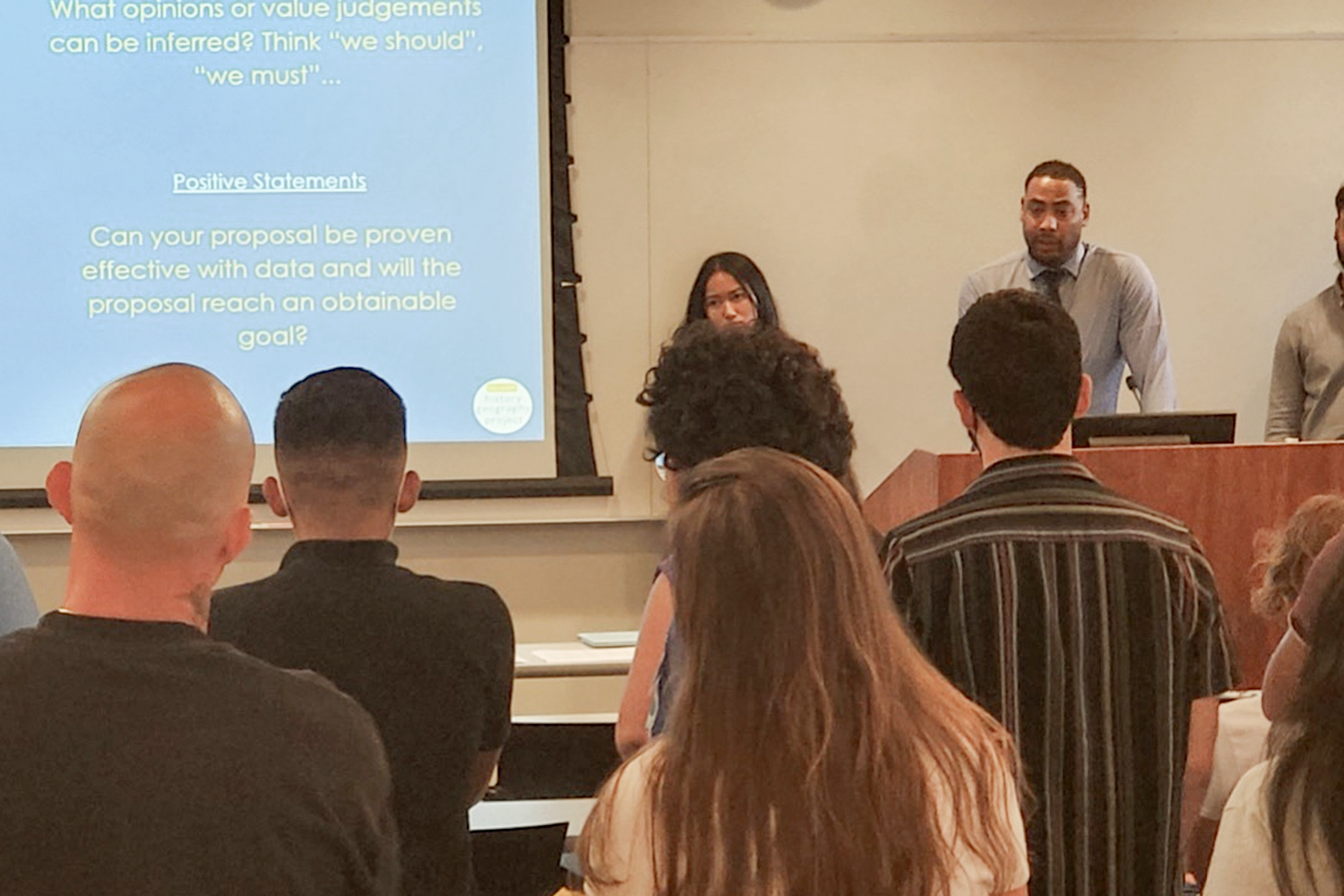
The student participants were challenged by Covington to identify pressing societal problems, and faculty and staff facilitated learning exercises that helped them to define values that have been violated and the scale of problems to be addressed. The students wrapped up the Public Service Weekend with mock professional presentations that focused on potential solutions.

“The presentations were impressive,” Covington said. “Future social change depends largely on the development of leaders capable of taking on the most pressing social problems that we face in the world. With partners like PPIA, the Luskin School is doing just that.”

View photos on Flickr:

Public Service Weekend 2022

Nancy Pelosi and George Takei Deliver Calls to Action to Class of 2022 The House speaker and the actor-activist appear at UCLA Luskin's dual commencement ceremonies

June 13, 2022/0 Comments/in For Faculty, For Students, For Undergraduates, Public Policy, Public Policy News, School of Public Affairs, Social Welfare, Social Welfare News, Social Welfare PhD, Urban Planning Gary Segura /by Mary Braswell

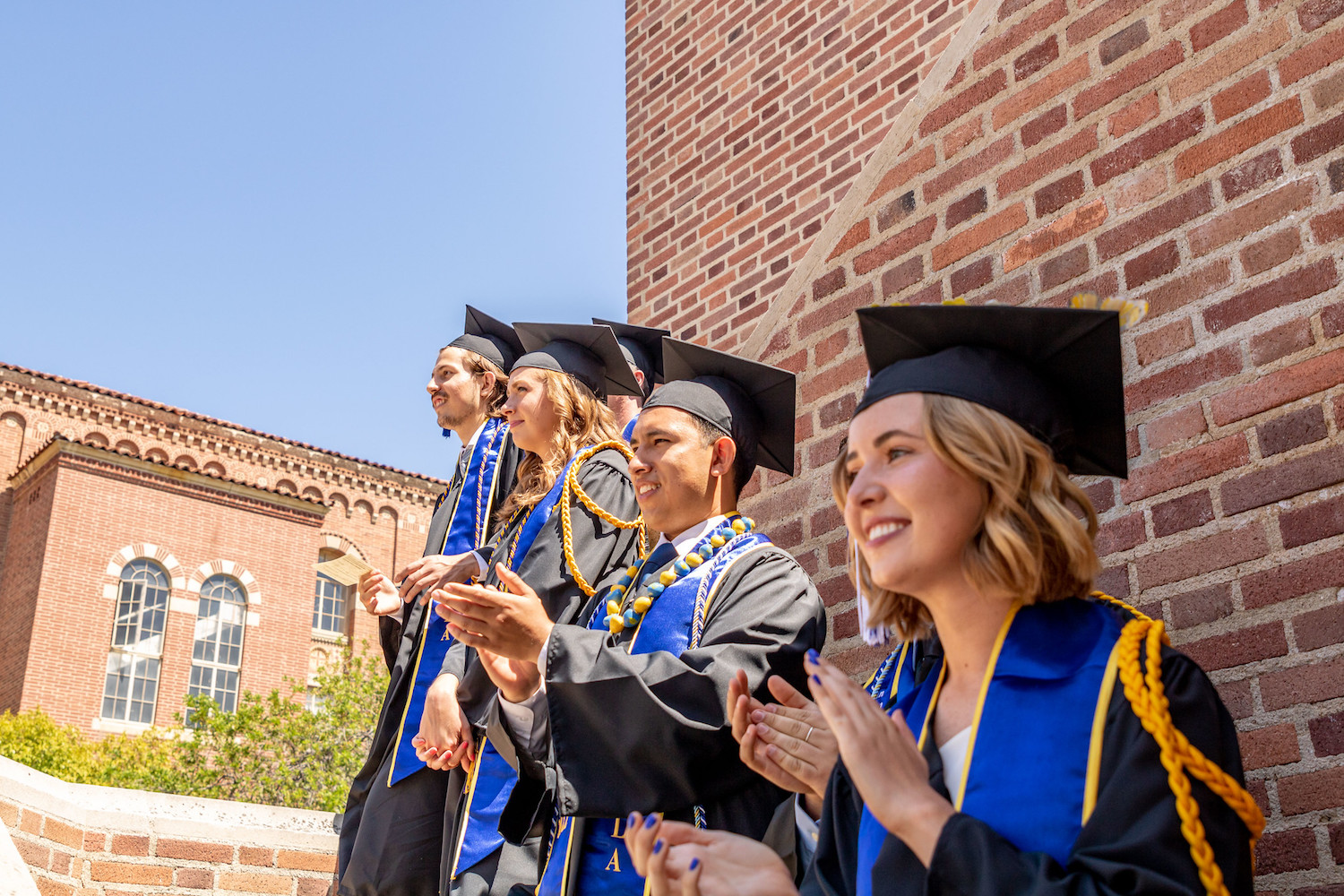
UCLA Luskin celebrated its Class of 2022 with two commencement ceremonies on June 10, one for public policy, social welfare and urban planning scholars earning advanced degrees and a second honoring students awarded the bachelor’s in public affairs.

U.S. Speaker of the House Nancy Pelosi spoke to undergraduates on the patio of UCLA’s Kerckhoff Hall, and actor and social justice activist George Takei addressed students earning master’s and Ph.D. degrees in UCLA’s Royce Hall.

Each of the speakers issued a call to action to graduates who are entering a troubled world. They shared a message of empowerment, encouraging students to look within themselves, identify their unique gifts and use them to make a difference.

“Recognize who you are, what your strengths are, because our nation needs you, you, you, you,” Pelosi said, pointing to individual graduates.

Takei, too, called on his audience to tap into the primal urges that move them to action.

“Let us seek out our own human essence,” he said. ‘You are all infinite in diversity, working together in infinite combinations. And yet you are one, all aligned to contribute to making this a better society.”

The speakers were introduced by UCLA Luskin Dean Gary Segura, who had his own charge to the Class of 2022.

“We are in a critical moment in the history of this nation and of this society,” Segura said. “We’re deciding who we are as a people, what values matter to us as Americans, what is our role in human history. …

“So beyond merely congratulating you, I want to thank you, perhaps prematurely, for all that we expect you to do with what you have learned.”

Segura acknowledged that the graduates’ time at UCLA was upended by the COVID-19 pandemic, a theme echoed in speeches from students selected to represent their programs: Anahi Cruz of Public Policy, Vanessa Rochelle Warri of Social Welfare, Paola Tirado Escareño of Urban Planning and  Samantha Danielle Schwartz of the undergraduate Public Affairs program.

Following each ceremony, graduates and guests gathered at outdoor receptions to take photos and offer congratulations before entering the ranks of UCLA Luskin alumni.

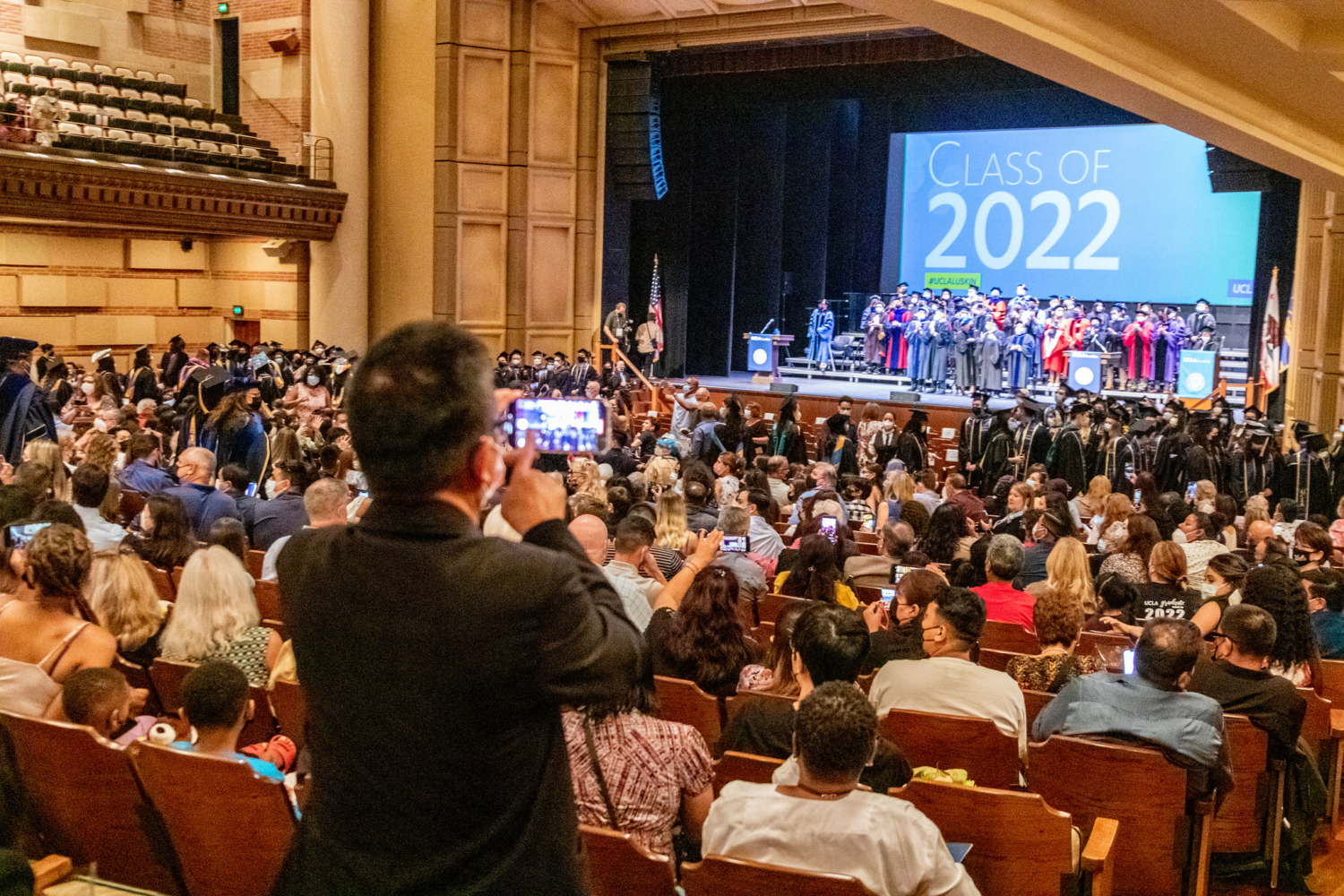
Capturing the moment at the UCLA Luskin commencement ceremony in Royce Hall. Photo by Les Dunseith

The two Class of 2022 commencement speakers are known for blazing trails in their fields.

Pelosi, a member of Congress for more than three decades, made history in 2007 as the first woman elected to serve as speaker of the House. She has championed legislation that has helped to lower health care costs, increase workers’ pay and promote the nation’s economic growth. In 2013, Pelosi was inducted into the National Women’s Hall of Fame at a ceremony in Seneca Falls, New York, the birthplace of the American women’s rights movement. 

Takei is best known for his role as Lt. Hikaru Sulu in “Star Trek,” the groundbreaking sci-fi series that featured a multiethnic cast and a plot centered on peace among all peoples. He is also a bestselling author with an immense social media following, which he has used as platform to advocate for the LGBTQ and Asian American communities and educate his audience about U.S. internment camps for Japanese Americans, where he and his family were held during World War II.

Both speakers described the tumultuous era awaiting the Class of 2022, one of political division, racial hatred, gun violence, housing injustice, a climate emergency and a battle to defend democracy at home and abroad.

“When people ask me, ‘What gives you hope for the future?’ I always say the same thing: young people,” Pelosi said.

Since the nation’s founding, “It has been young people who have refused to remain silent, led the civil rights movement, taking to the streets, casting ballots, making change happen. …

“So right now, you and your peers, you’ve seized the torch in so many ways, marching for our lives, your lives, sounding the alarm on climate, demanding justice, justice, justice for all.”

Pelosi had a special message for the women in the audience: “I want you to know your power. … And I want you to be ready.

“You don’t know what’s around the next corner, and that applies to all of you but especially to the women. Because nothing is more wholesome to the politics and the government and any other subject you can name than the increased participation of women.”

To those considering entering public office, she advised. “You have to be able to take a punch, and you have to be able to throw a punch. For the children, always for the children.”

Takei called on the graduates to use 21st Century tools to “create a new version of our future.

“You today live in an incredibly complicated universe, empowered by technology that can extend to the outer reaches of space as well as penetrate down to the very core of this planet,” he said. “Perhaps, just perhaps, might we have developed an overabundance of tools and know-how?”

He recalled the unexpected silver lining of the devastating COVID-19 pandemic: the blue sky, crystal-clear air and restoration of nature as cars, trucks, trains and planes were stilled.

“Our planet was new again. And this was not virtual, it was breathtakingly real,” Takei said.

“Can we reprioritize our goals to reclaim our planet? We look to you, the high-tech generation, the urban planners, the policymakers, those who work to better the welfare of our society, to seize this moment.”

A double Bruin who earned bachelor’s and master’s degrees at UCLA in the 1960s, Takei reminded his audience of the long line of dignitaries from science, politics and the arts who had taken the Royce Hall stage: Albert Einstein, John F. Kennedy, Ralph Bunche, Marian Anderson, George Gershwin and many more.

“All these notables made history,” Takei said. “They transformed their times. They confronted the world they found and made it better with their brilliance, their vision, their talent and their humanity. …

“You, the graduating class of 2022 of the Luskin School of Public Affairs, are the heirs to their legacy. Take their accomplishments as your inspiration.”

View a video of the UCLA Luskin undergraduate commencement ceremony featuring House speaker Nancy Pelosi.

View pictures from the UCLA Luskin undergraduate commencement celebration.

View pictures from the UCLA Luskin graduate commencement celebration.

 

Public Policy Students Take On the Health Care Digital Divide Effort to widen access to telemedicine is one of 15 immersive projects aimed at developing policy solutions for real-world clients

June 6, 2022/0 Comments/in For Faculty, For Policymakers, For Students, For Undergraduates, Health Care, Public Policy, Public Policy News, School of Public Affairs Martin Gilens, Wesley Yin /by Mary Braswell

By Mary Braswell

When Sophia Li decided to apply to graduate school to pursue her interest in health policy, she could not have known that the field would soon be upended by a protracted global health emergency.

Along with most of her peers in the UCLA Luskin School of Public Affairs’ master of public policy program, Li began her studies in September 2020, when COVID-19 had already taken more than 1 million lives worldwide and the arrival of vaccines was still months away.

When the time came to embark on the public policy program’s exacting capstone project, Li chose to focus on an inequity brought into sharp focus by the pandemic: As they isolated in their homes, more people turned to telemedicine for their health care needs — but that option was not available to people who lacked computers, smart phones and internet service.

“The pandemic really did shine a light on the possibilities that telemedicine brings,” Li said, “but it also showed that, while the upper half are benefiting from this, what does this mean for the lower half that have these barriers to access?”

Li was part of a team that explored this question on behalf of their client, the nonprofit Community Clinic Association of Los Angeles County. On an evening in May, Li and teammates Stacy Songco, who is earning a master of public policy and a doctorate in medicine, Xinyuan Qi, Ziyi Wei and Yixuan Yu boiled down a year’s worth of policy research and analysis into a 20-minute summary.

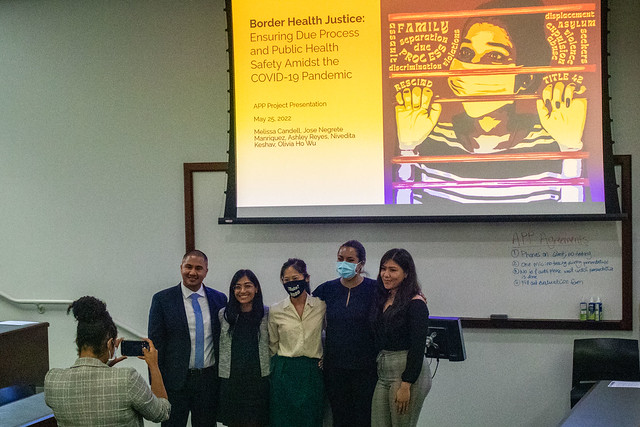
They were among nearly 70 second-year students to complete 15 applied policy projects this year, a rite of passage before receiving their UCLA master of public policy degrees. The capstone projects challenge students to find solutions to real-life policy dilemmas on behalf of clients in Los Angeles, across the state and nation, and around the world.

Networking with UCLA Luskin alumni had connected Li with the Community Clinic Association, which supports 65 neighborhood clinics in underserved areas. At the time, the nonprofit was “just dipping their toes into the digital divide issue,” she said.

The team spent months speaking with medical staff, local policymakers, internet service providers and, of course, the patients themselves. The conversations took place via Zoom because of COVID restrictions, but also in person, to make sure those without the means to gather virtually would be heard.

By year’s end, the team had developed more than a dozen recommendations, including the creation of a new role of digital navigator — a clinic staff member trained to guide individuals through the often-confounding world of broadband access, as well as benefits they may be entitled to, which change from ZIP code to ZIP code.

The students proposed a mechanism to receive federal funds for this new position. They stressed that information should be provided in multiple languages, and not just online but in printable formats, for those unable to access the internet. And they quickly determined that unlocking digital doors would open up a world of services and opportunities beyond telemedicine.

One of their focus groups spoke of their experiences with the California Lifeline program, which provides discounted landline and cell phone services to low-income households. While some found it confusing, “we had one unhoused individual who said, ‘Actually, you know what? I can walk you through all the paperwork, I can talk to you about how to use this,’” Li said.

“If people from the community could tap their experiences to guide others and receive compensation as a digital navigator, imagine the possibilities.”

The project culminated in a full published report for the Community Clinic Association and a formal presentation before Luskin faculty, staff and students, including the team’s advisor, Public Policy chair Martin Gilens.

Other capstone projects completed by the class of 2022 dealt with how to protect the rights of car wash workers, whether to expand the number of seats on the Los Angeles City Council, how to balance public health and humane treatment of asylum seekers at the border, as well as homelessness, mass transit, criminal justice and more.

“It’s an immersive experience. The students value that, and the marketplace also values that,” said Wesley Yin, an associate professor of public policy and economics who has served as coordinator and advisor in the applied policy projects program.

“There’s a professionalism that makes it much more than a class project,” Yin said. “It equips students with the rich experience and knowledge to seamlessly integrate into an organization.”

Li said her team emerged with unexpected areas of expertise. “The digital divide is a really complicated issue that has everything from some little niche funding source that you need to know about, to complex infrastructure issues and these really technical things that you need to understand,” she said.

As she looks toward graduation, Li reflects on the turns in her education that brought her to this point.

She transferred from Chaffey College to UC Merced, where she earned a bachelor’s degree in public health, then managed the rigors of earning her master of public policy at a time of pandemic. Selected as a Presidential Management Fellow, Li will spend the next two years in a program that helps train young scholars to become the next generation of leaders in federal government.

“It’s been a lot of these 90-degree turns that keep putting me on the right path,” Li said. “So let’s go explore new things.”

View photos of this year’s applied policy project presentations on Flickr.

Applied Policy Projects 2022

Declines in Accountability Among U.S., Asian Governments Since 2000 Highlighted Berggruen Governance Index assesses the quality of democracy and measures quality of life in 134 nations

June 1, 2022/0 Comments/in Education, For Policymakers, For Students, For Undergraduates, Global Public Affairs, Public Policy, Public Policy News, Research Projects, School of Public Affairs, Social Welfare, Social Welfare News, Urban Planning Helmut Anheier /by Stan Paul

By Stan Paul

It started as a conversation about democracy and why some countries enjoy a higher quality of life than others, and it culminated in the release of a groundbreaking analysis of more than 130 governments around the world.

The 2022 Berggruen Governance Index, unveiled June 1 during a gathering at UCLA’s Kerckhoff Grand Salon, found a dramatic drop in the quality of government and quality of democracy in the United States over the past 20 years.

At the same time, several African nations showed measurable improvements in their provision of public goods like education, health care and environmental protection.

The collaborative project of UCLA Luskin and the Los Angeles-based Berggruen Institute is now available online on the index’s website as a report, plus links that allow researchers to search and sort the data for themselves.

“We had this fundamental concern that governance itself was poorly understood,” said Dawn Nakagawa, executive vice president of the Berggruen Institute, recalling the origins of the index during a “chaotic and concerning time” for democracy in the U.S. and other parts of the world.

The index was compiled by researchers from UCLA Luskin and the Hertie School in Berlin. It draws on data from sources that included the United Nations, statistical offices and research institutes from  2000 through 2019.

“And these have been a really consequential 20 years for democracy,” said Nakagawa, who spoke during the launch event, as did UCLA Luskin Dean Gary Segura.

Leading the day’s discussion was principal investigator Helmut Anheier, UCLA adjunct professor of social welfare and former president of the Hertie School in Germany, along with Markus Lang, a researcher at the Hertie School and the University of Heidelberg in Germany.

Anheier noted that although research and literature on governance have existed for some time, it has focused on various singular aspects of governance or democracy. He and his co-authors took a different, multipronged approach to understanding governance.

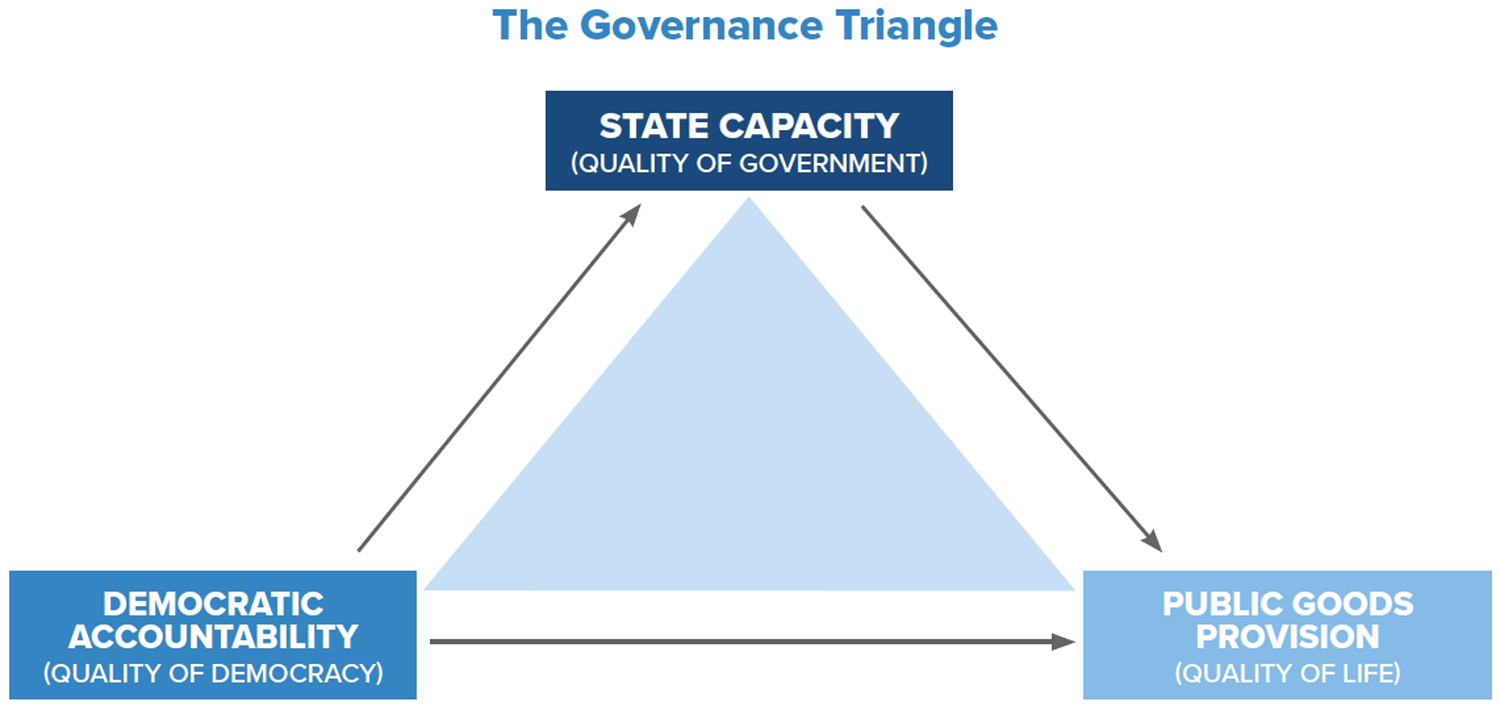
“We say governance is finding the balance among three components,” Anheier said.

The researchers scored selected national governments on an array of individual measures, grouping findings into three overarching categories:

  • Quality of democracy, which is based on the effectiveness of checks and balances between branches of government, and officials’ accountability to voters and society.
  • Quality of government, which considers governments’ abilities to generate revenue, function administratively and execute policies.
  • Quality of life, which considers governments’ ability to provide social, economic and environmental public goods.

“Rather than saying there is one number that represents governance performance, we see a lot of insight that had been gained by looking at the tension and relationship among these components, and that is expressed by something we call the governance triangle,” Anheier said.

illustration of a triangle illustrates the three key measurement areas of the report

The rankings evaluate quality of government, quality of democracy and quality of life measures, which the researchers call the “governance triangle.”

“It really does break open the black box of governance, looks inside, and allows us to see these three very important components interact,” Nakagawa said.

A major finding was the dramatic drop in the quality of government and quality of democracy in the United States, which was the only Western power with a declining score in those categories. The U.S. quality of life score improved, but only slightly.

Additional findings:

  • Although the U.S. score for quality of government remains far above the global average, its decline on that measure since 2000 was one of the world’s largest, on par with declines in Haiti, Hong Kong and Hungary.
  • The 10 countries with the greatest improvements in quality of life measures all are in Africa. However, as a whole, Africa still ranks well below other regions in terms of quality of life factors.
  • Quality of democracy scores retreated in several Asian nations, including in Bangladesh, China, India, the Philippines and Thailand. Many nations in the Americas also saw declines in those measures.

The day’s program also included a discussion of democracy, public policy and global challenges featuring UCLA experts. Moderated by Anheier, the panel featured Steve Zipperstein, an attorney and lecturer in global studies at UCLA;  Veronica Herrera, an associate professor of urban planning who studies political development in the Global South; Cesi Cruz, an assistant professor whose research intersects political science and economics; and Zachary Steinert-Threlkeld, an assistant professor of public policy focusing on subnational conflict, statistics and advanced data analysis.

Closing comments were provided by Michael Storper, distinguished professor of regional and international development in urban planning at UCLA Luskin, and Andrew Apter, a professor of history and anthropology at UCLA.

“One of the most important indicators of successful research is … surprising results,” said Apter, who complimented his longtime colleague Anheier on fulfilling that ideal.

Storper, who also serves as director of Global Public Affairs at UCLA Luskin, took a comparative view of the results. Democracy in the United States is very different from the federal governments in nations such as France and Germany that fared better in the analysis.

“European governmental setups are really different than what we have here in the United States,” he said. Several European countries have more modern constitutions, he noted, than the older, more rigid U.S. constitution.

“The index is going to allow us … to do more and more of this, I would say, comparative, evolutionary thinking,” Storper said. “Thanks for doing this work and actually bringing it to UCLA.”

UCLA produces and disseminates the index thanks to a $3 million gift from the Berggruen Institute. Researchers plan to publish the next Berggruen Governance Index in 2024. In the meantime, they will present the work at key institutions in the U.S., Europe and elsewhere, culminating in an international conference hosted on campus by UCLA Luskin on Oct. 10-11.


View photos from the launch event on Flickr:

Berggruen Governance Index Release


Watch a recording of the launch event on Vimeo:

Inaugural Latino Applied Policy Research Awards Announced Grants from the UCLA Latino Policy and Politics Initiative support projects targeting inequities that impact communities of color

May 25, 2022/0 Comments/in For Faculty, For Policymakers, For Students, For Undergraduates, Latinos, Public Policy, Public Policy News, Research Projects, School of Public Affairs Sonja Diaz /by Mary Braswell
The UCLA Latino Policy and Politics Initiative (LPPI) has awarded a total of $150,000 to six Latino-led applied research projects at UCLA aimed at developing policy solutions to challenges facing Latino communities in California.

The inaugural Latino Applied Policy Research Awards provide yearlong funding for the six research groups, including two all-Latina teams, whose projects will focus on topics such as homelessness, the impact of public art on policy, and the relationship between immigration and educational equity.

The awards also support the training of future Latino academics by giving UCLA students the opportunity to participate in the projects under the tutelage of expert faculty and scholars.

“The Latino Policy and Politics Initiative is investing in our future with these grants,” said Sonja Diaz, founding director of LPPI. “We are not only helping to develop the next generation of researchers, we are pushing the value of applied research as a means to continue driving tailored policies and achieving real-time impacts that lead to increased and sustained meaningful opportunities for Latino communities.”

Over the next year, the six teams of researchers will examine:

  • How a public art exhibition at the U.S.–Mexico border raised public awareness and fueled criticism of federal immigration policy.
  • How immigration enforcement actions affect Latino students’ educational attainment.
  • Why homelessness counts underestimate the number of unhoused Latinos and how this affects the allocation of resources that could help stem the problem.
  • How wildfire and disaster planning policies impact Latino immigrants and Indigenous people.
  • How to strengthen labor and health protections in the sport of boxing.
  • How to build more effective, powerful political coalitions among Latinos and other people of color.

“The projects we are funding focus on the ways in which inequity persists within Latino communities and aim to provide real solutions,” said Silvia González, the initiative’s co-director of research. “We are proud to work with researchers who are pushing the envelope and using their expertise to develop the critical analysis needed to drive better policy on a breadth of issues.”

The Latino Applied Policy Research Awards are made possible by $3 million in ongoing funding from the California Legislature to LPPI to conduct research and develop policy solutions that address inequities that disproportionately impact Latinos and other communities of color.

“While the knowledge produced in academia often remains divorced from policy debates, the insights provided through rigorous scientific inquiry should inform policymaking to reduce inequities that afflict communities of color,” said co-director of research Rodrigo Dominguez-Villegas. “Our applied research grants will act as an essential tool to translate the work of academic institutions into on-the-ground solutions in real-time.”

Full descriptions of each research project can be accessed here.

Connecting the Dots on Climate Change Environmental scholar Robert Bullard charts a path to a more equitable future — if America can avoid repeating past mistakes  

May 17, 2022/0 Comments/in Alumni, Climate Change, Development and Housing, Diversity, Education, Environment, For Faculty, For Policymakers, For Students, For Undergraduates, Global Public Affairs, Public Policy News, School of Public Affairs, Social Welfare News, Social Welfare PhD, Urban Planning Susanna Hecht /by Les Dunseith

By Les Dunseith

Robert Bullard has been called professor, dean, author, policy influencer, important thinker, movement starter and the father of environmental justice. But that’s not how he chose to describe himself during a May 12 talk at UCLA.

“I do what’s scientifically called kick-ass sociology,” Bullard said playfully in his opening remarks to a roomful of students, faculty, staff and other interested parties, plus an online audience. “And what I’ve tried to do is to make it simple, make it plain, make it real and connect the dots.”

The renowned scholar from Texas Southern University has written 17 books. “But it’s really just one book — don’t tell anybody,” Bullard said slyly. “The central glue that connects all of those volumes? Fairness, justice and equity.”

He often blended humor into his discussion of serious topics such as America’s history of racial discrimination and the growing global climate crisis. Titled “The Quest for Environmental and Climate Justice,” Bullard spoke and took audience questions for more than an hour in the Bruin Viewpoint Room of Ackerman Union as part of the UCLA Luskin Lecture series. It was presented in conjunction with the Harvey S. Perloff Environmental Thinkers Series and UCLA Urban Planning’s 50th anniversary celebration.

In his introductory remarks, Dean Gary Segura of the UCLA Luskin School of Public Affairs said, “At the Luskin School, we try to have conversations about things that actually matter — climate degradation, environmental degradation and its impact on working class and poor people of color — and for which there is a desperate need for solutions.”

Bullard is known for his courage and “his insights into how questions of race figure into environmental justice,” said the evening’s emcee, Susanna Hecht, a geographer and professor of urban planning who also serves as director of the Brazilian Studies Center at UCLA.

“He is a person who has a broad perspective and broad horizons,” Hecht said. “His work has expanded to embrace a range of topics that evolved at the center of environmental, civil rights, human rights and the question of race and vulnerability under climate change, as well as patterns of pollution in both urban and industrial landscapes.”

So, what is environmental justice?

Bullard sees it as an essential notion that all people and communities are entitled to equal protection to ensure they have adequate housing, quality health care, and access to the energy and transportation they need in their daily lives. Civil rights and human rights.

The reality rarely matches the ideal, however. He cited as an example a study that showed government relief after a natural disaster going primarily to wealthier, predominantly white communities rather than to poorer, predominantly Black areas.

“We know that all communities are not created equal,” Bullard said. “There are some that are more equal than others.”

Without action, disparities are likely to grow as industrial pollution further degrades our planet, he said.

“Climate change will make it worse on the populations that are already suffering,” Bullard said. “Those who have contributed the least to the problem will suffer the most. That’s the inequity that we’re talking about. You can’t have your basic human rights if even the right to breathe has been taken away from you.”

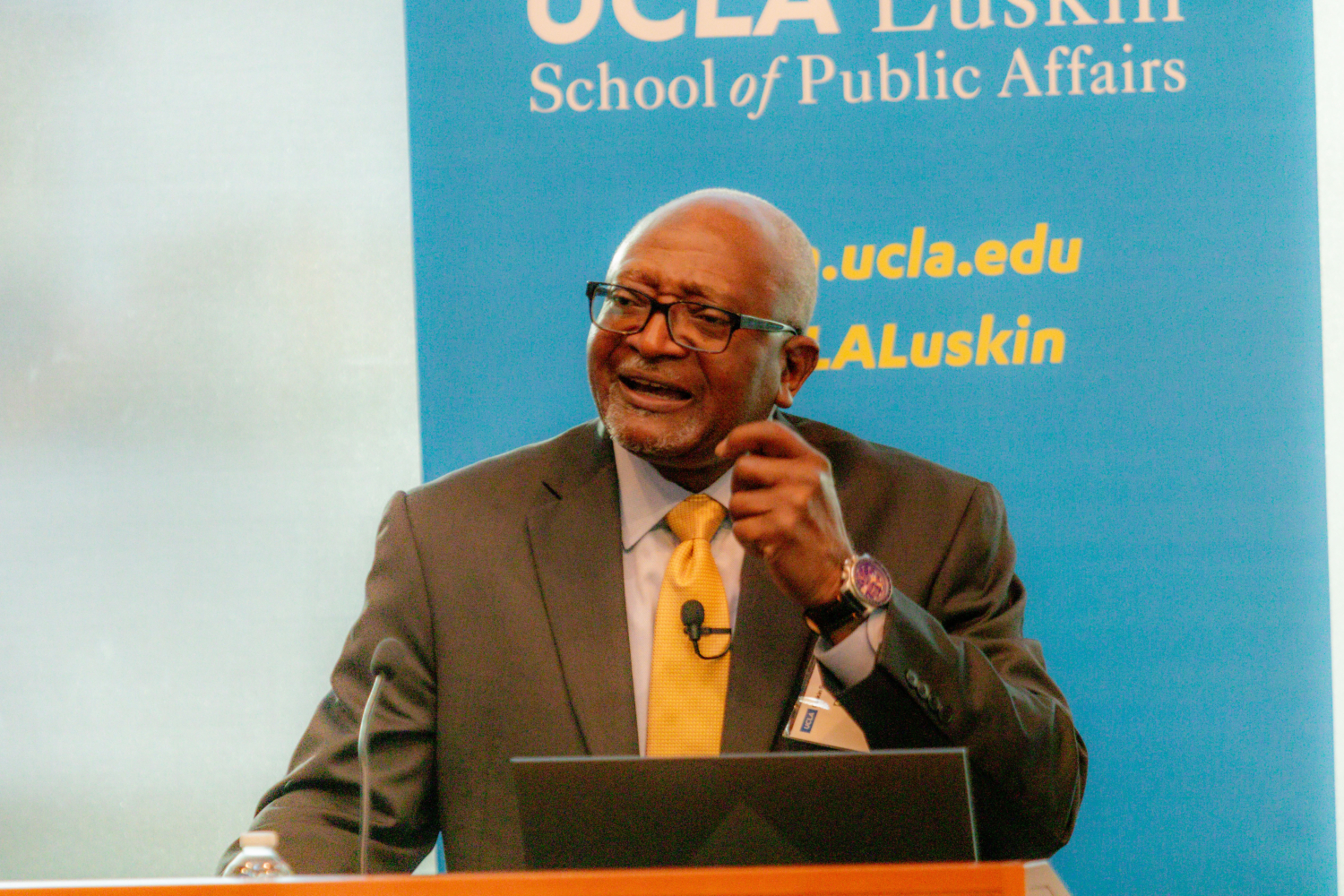
closeup of the face of speaker Robert BullardCalifornia is a leader in environmental equity and climate change responses, Robert Bullard told the audience during his UCLA Luskin Lecture on May 12.
closeup of the face of speaker Robert Bullard
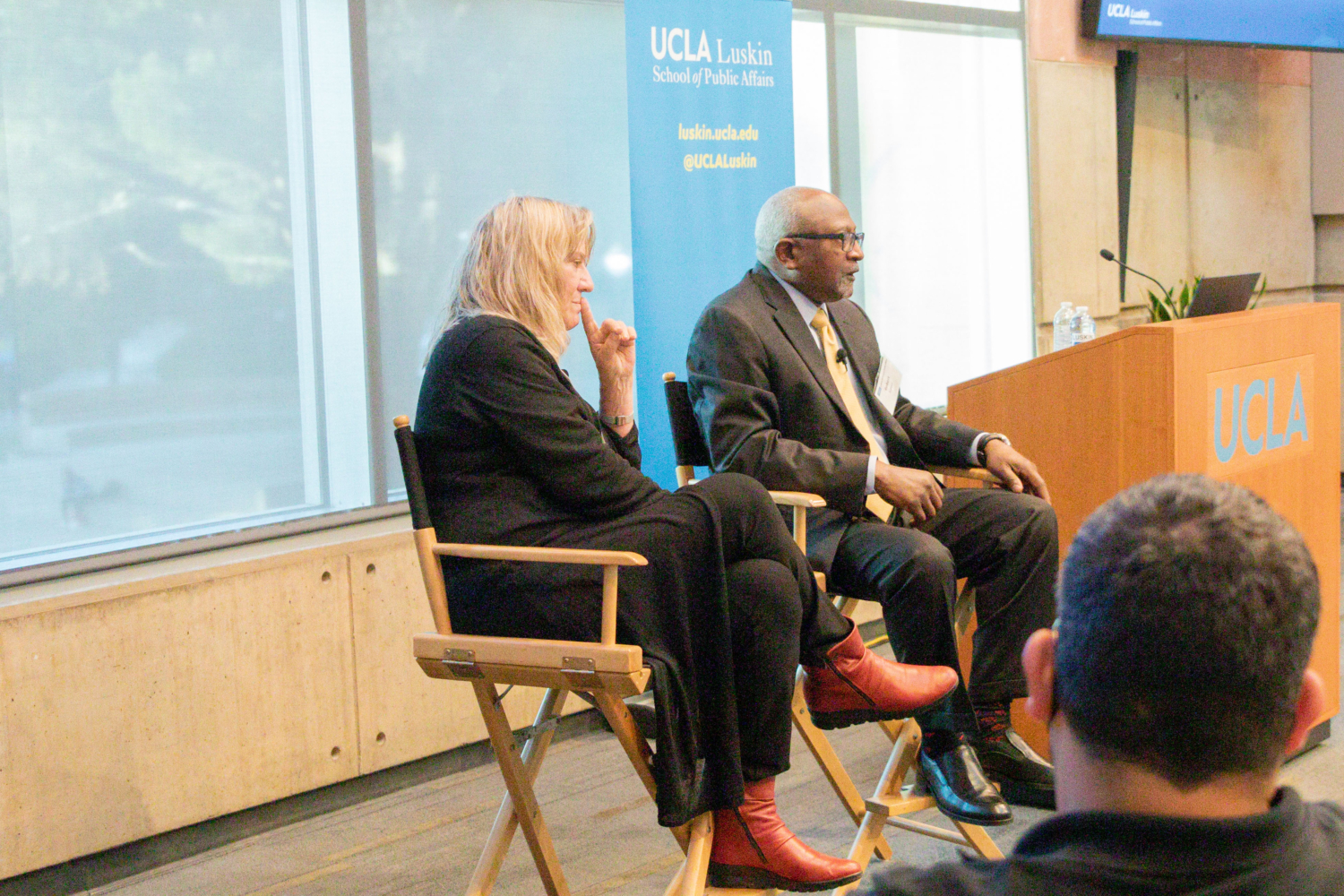
a female professor from UCLA and a male professor from Texas sit in the front of a lecture room after a lecture at UCLA
a crowd of people sit in chairs in a lecture room

Despite decades of experience documenting human nature at its worst, Bullard has not given in to despair.

“I’m hopeful and optimistic that we can get this right. I’ve been working on this for 40 years, but we don’t have another 40 years. We only have, maybe, a dozen to get this right,” Bullard said.

He cited California as a leader in environmental equity and climate change responses and noted the state’s history of finding out-of-the-box solutions in technology and government, as well as its highly regarded universities.

“Let California be California. That’s my answer. Push the envelope as far as you can,” Bullard said.

“And so, I’m looking to young people. I’m looking at your faces,” he told his audience of mostly young scholars. “You are the majority now. I’m a boomer and proud of it. But millennials, zoomers, Gen X, Y and Z — you outnumber my generation. Take the power.”

—

View photos from the event on Flickr.

Robert Bullard Luskin Lecture

Message From the Dean: Grappling With the Tragedy in Buffalo Some thoughts in the aftermath of a mass shooting in which Black people at a supermarket in Buffalo, New York, were targeted

May 15, 2022/0 Comments/in Alumni, Luskin Center, Public Policy, Public Policy News, School of Public Affairs, Social Welfare News, Urban Planning /by Les Dunseith

To the Luskin Community:

Let me echo the Chancellor’s comments in this BruinPost regarding the events in Buffalo. More than a dozen people shot, 10 killed, in another explicitly racist attack by a gunman intent on killing African Americans. And let me augment the chancellor’s remarks by reminding us all that just three days earlier, in Dallas’ Koreatown, three Asian women were injured in a mass shooting that is now ruled part of a string of anti-Asian hate attacks on Asian-run businesses across Dallas, and a growing record of anti-Asian hate up more than 300% in the last year.

These attacks occur at the intersection of two of America’s most grievous plagues — the ongoing scar of racism in too many forms to count, and the seemingly endless capacity for gun violence. I am angry. Perhaps you are too. I am angry because neither of these struggles is occurring by chance, in a social vacuum, emerging un-prompted from other social phenomena. Rather, these emerge from explicit ideologies of white supremacy and entitlement to the means of deadly force which are promoted — previously with a wink and a nod and increasingly with shameless embrace — by political forces who think they can manipulate these evils to their own political gain.

I will not stay silent in these moments. The parroting of racist conspiracy theories by elected officials inspire, encourage, and provide emotional justification for the evil and the disturbed in our society to carry out these attacks. They are not isolated social phenomena and we should never treat them as such.

I do not have the right words of comfort here, other than to remind you that there are services available on campus (see links in the Chancellor’s message) for those of you grappling with these events. And I want you to take comfort in each other in knowing that the forces of light — those of us who would resist, battle, engage the forces of divisiveness and hate — are stronger. The good outweighs the bad, those motivated to peace and coexistence have right on our side. Our work at Luskin is explicitly dedicated to empowering those with solutions and stopping those interested only in destruction and nursing their resentments. Meet violence with determination for change. Speak out. Shout out. Work harder to create justice.

In solidarity and sadness,

— Gary

Gary M. Segura
Professor and Dean


Page 5 of 25«‹34567›»

Recent Posts

  • Fugitive Sanctuaries: Ananya Roy on Migration, Solidarity, and Sanctuary February 13, 2026
  • Building the “Anti-Amazon” in Echo Park February 12, 2026
  • Welcoming the 2026 UCLA Activists-in-Residence February 11, 2026
  • Growth Without Freedom: Bangladesh’s Precarious Path to the 2026 Election February 10, 2026
  • Seeing Local Policy in Action at Luskin’s Annual City Hall Day February 9, 2026

Contact

UCLA Luskin School of Public Affairs

3250 Public Affairs Building - Box 951656
Los Angeles, CA 90095-1656

Campus Resources

  • Maps, Directions, Parking
  • Directory
  • Contact
  • Academic Calendar
  • Careers
  • Diversity
  • University of California
  • Terms of Use

Follow

The statements on this page represent the views of people affiliated with the Luskin School of Public Affairs and do not necessarily represent the views of the University of California, or UCLA or its Chancellor.

Posts and comments by individuals at UCLA on social media channels may not reflect the opinions or policies of UCLA, the University of California or the Luskin School, nor its benefactors and academic partners.

Scroll to top