• Public Policy
  • Social Welfare
  • Real Estate Development
  • Urban Planning
  • Luskin Home
  • Undergraduate Program
  • Stay in Touch
  • Events Calendar
  • Give Now
  • About
    • Our Dean
    • Board of Advisors
    • Contact Us
    • Visit Us
    • Diversity, Disparities and Difference
    • Communications
      • UCLA Luskin in the News
      • Luskin Forum Online
  • Departments
    • Public Policy
    • Real Estate Development
    • Social Welfare
    • Undergraduate Program
    • Urban Planning
  • Apply
    • Master of Public Policy
    • Master of Real Estate Development
    • Master of Social Welfare
    • Master of Urban and Regional Planning
      • Double Degree With Sciences Po
    • PhD in Social Welfare
    • PhD in Urban Planning
    • Undergraduate Programs
  • Faculty
    • All
    • Public Policy
    • Social Welfare
    • Urban Planning
    • Real Estate Development
    • Faculty Executive Committee
    • Open Positions
  • Student Affairs & Alumni
    • Career Services
      • Employers
      • Fellowships
    • Student Support
    • Graduate Resource Library
    • Alumni Relations
  • Support
  • Programs
    • Research Centers & Affiliated Research
    • CA Title IV-E Education Program
    • Global Public Affairs (GPA)
    • Data Analytics Certificate
    • Luskin Lecture Series
    • Luskin Summit
    • UCLA Luskin California Policy Briefing
    • Public Service Weekend
    • Commencement
  • Administration
    • Financial Services
    • Events Office
    • Information Technology
  • Search
  • Menu Menu

Archive for category: Social Welfare News

School Rises to Top 12 — and Top 10 for Social Work — in U.S. News Graduate Ranking Enhanced reputation is an indicator of ongoing work to meet and exceed high expectations for Luskin School and its Social Welfare programs.

March 29, 2022/0 Comments/in For Faculty, For Students, For Undergraduates, School of Public Affairs, Social Welfare News Gary Segura, Laura Abrams /by Stan Paul

UCLA Luskin’s overall ranking is in the top dozen among public affairs graduate schools in the nation based on the latest U.S. News & World Report ratings released today, including a Top 10 ranking in the social work category.

The School tied with other prestigious programs — Princeton, NYU, Georgetown and Carnegie Mellon at No. 12 and at No. 9 in social work with Case Western Reserve University.

“I am proud of the work that the Luskin School has done and continues to do. This ranking among national public affairs schools is just one indicator of the Luskin School’s continued growth and ongoing work to maintain and exceed our high expectations,” Dean Gary Segura said. “And the leap into the Top 10 for Social Welfare is a gigantic achievement! These reputational enhancements reflection the hard work and the continuing commitment of, and to, our UCLA and UCLA Luskin community, faculty, students, staff and all those that support and contribute to our mission,” he said.

“I am thrilled that our peers have rated us one of the top 10 social work programs in the nation,” said Laura Abrams, chair and professor of social welfare. “In the last five years, we have streamlined our Master of Social Welfare curriculum into three areas of concentration and incorporated several new elements, such as Intergroup Dialogue and the second-year capstone research projects.”

Abrams also noted the recruitment of new faculty members who are doing cutting-edge teaching, scholarship and community-based work.

“Dean Segura has been incredibly supportive of our expansion and increasing our visibility on the national stage. I couldn’t be more pleased to see our MSW program being honored in this way,” Abrams said.

Among public universities, the UCLA Luskin Social Welfare program is now one of the top six nationwide and the top two in California.

The School — with graduate departments in Public Policy, Social Welfare and Urban Planning, and a Public Affairs undergraduate program — also received high marks for subcategories that include urban policy (No. 7), social policy (No. 7), public policy analysis (No. 13) and health policy and management (No. 12).

The 2023 rankings of public affairs programs are published in 2022 based on peer assessment survey results from fall 2021 and early 2022. U.S. News surveyed deans, directors and department chairs representing 270 master’s programs in public affairs and administration, and 298 social work programs accredited by the Commission on Accreditation of the Council on Social Work Education. The National Association of Deans and Directors of Schools of Social Work supplied U.S. News with the lists of accredited social work schools and programs, plus the respondents’ names.

See the full list of the 2023 U.S. News & World Report Best Graduate Schools, published today.

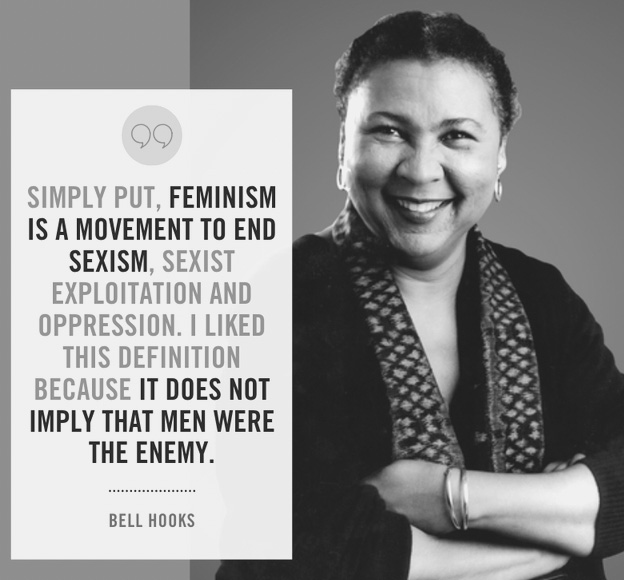
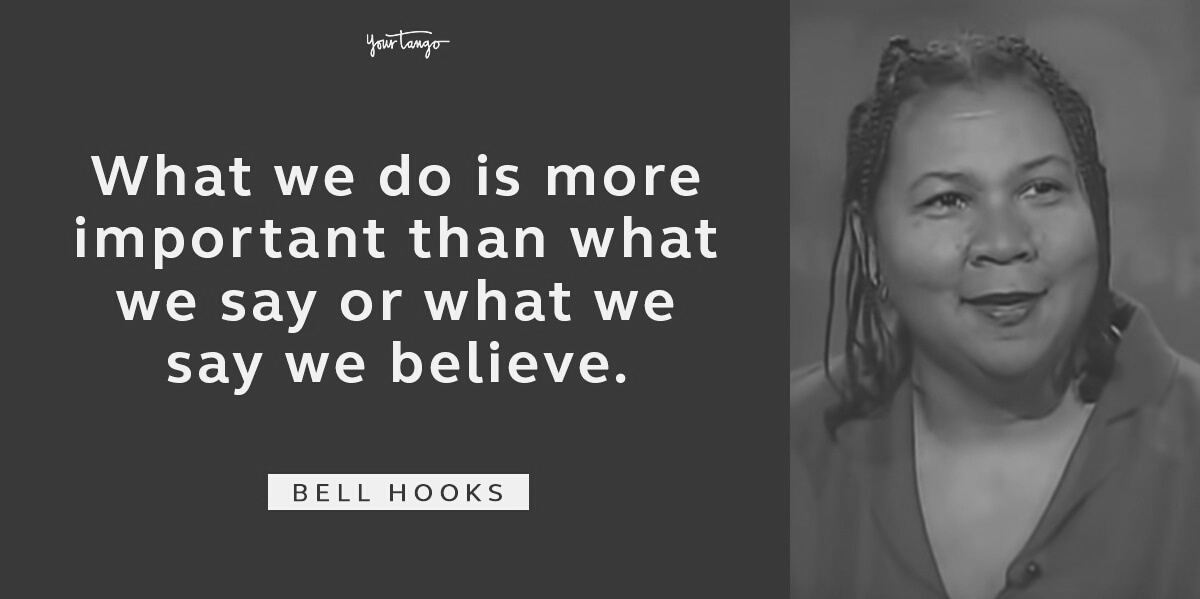
Luskin Social Welfare Remembers Bell Hooks A tribute by professor Michelle Talley

February 14, 2022/0 Comments/in Social Welfare, Social Welfare News Michelle Talley /by Brianna Miller

“It is obvious that many women have appropriated feminism to serve their own ends, especially those white women who have been at the forefront of the movement; but rather than resigning myself to this appropriation I choose to re-appropriate the term ‘feminism’, to focus on the fact that to be ‘feminist’ in any authentic sense of the term is to want for all people, female and male, liberation from sexist role patterns, domination, and oppression.” – “Ain’t I a Woman,”  by bell hooks


bell hooks (Gloria Jean Watkins) was an American scholar, Black feminist, author, and social activist, and African American woman born September 25, 1952 and died December 15, 2021. Her work examined the connections between race, gender, and class. She explored the perceptions of Black women and black women writers and the development of feminist identities.

Her writings focused on the intersectionality of race, gender, and capitalism. She gave so many people the language and the ability to challenge oppression, patriarchal system through her work. She will always be remembered as a scholar and activist that gave Black women a voice and called it out when not. Today we honor bell hooks, her work, and what she stood for.

Writings

Feminist Theory from Margin to Center (1984)

Talking Back: Thinking Feminist, Thinking Black (1989)

Black Looks: Race and Representation (1992)

Killing Rage: Ending Racism (1995)

Reel to Real: Race, Sex, and Class at the Movies (1996) Remembered Rapture: The Writer at Work (1999) Where We Stand: Class Matters (2000)

Communion: The Female Search for Love (2002)

We Real Cool: Black Men and Masculinity (2003)

The Will to Change: Men, Masculinity, and Love (2004) Writing Beyond Race: Living Theory and Practice was published in 2012.

She also wrote a number of autobiographical works, such as Bone Black: Memories of Girlhood (1996) and Wounds of Passion: A Writing Life (1997).

Quotes

“Think of all the women you know who will not allow themselves to be seen without makeup. I often wonder how they feel about themselves at night when they are climbing into bed with intimate partners. Are they overwhelmed with secret shame that someone sees them as they really are? Or do they sleep with rage that who they really are can be celebrated or cared for only in secret?”― bell hooks, Communion: The Female Search for Love

“The function of art is to do more than tell it like it is-it’s to imagine what is possible.” ― bell hooks

“Love is an action, never simply a feeling.” ― bell hooks

“I want there to be a place in the world where people can engage in one another’s differences in a way that is redemptive, full of hope and possibility. Not this “In order to love you, I must make you something else”. That’s what domination is all about, that in order to be close to you, I must possess you, remake and recast you.” ― bell hooks, Reel to Real: Race, Sex, and Class at the Movies

“Contrary to what we may have been taught to think, unnecessary and unchosen suffering wounds us but need not scar us for life. It does mark us. What we allow the mark of our suffering to become is in our own hands.”

“I am passionate about everything in my life–first and foremost, passionate about ideas. And that’s a dangerous person to be in this society, not just because I’m a woman, but because it’s such a fundamentally

anti-intellectual, anti-critical thinking society. ― bell hooks

“Being oppressed means the absence of choices.” ― bell hooks

Short videos of her work


In closing

Bell Hooks was an inspiring, strong, and courageous woman who stood for equity for all. She has touched the lives of countless individuals, communities, and the universe. She is a model of what it means to be selfless, loving, and determined to make the world place where all identities matter.

Let us remember her and keep her legacy alive as we strive to create a more equitable world where everyone thrives.

― Michelle Talley


In Memoriam: Karen Lee, Former Field Faculty Member A co-founder of a national consortium focusing on geriatric social work, she educated and mentored hundreds of students during 12 years at UCLA

January 28, 2022/0 Comments/in Alumni, Education, For Faculty, For Policymakers, For Students, For Undergraduates, School of Public Affairs, Social Welfare, Social Welfare News Gerardo P. Laviña, Laura Alongi Brinderson, Michelle Talley /by Les Dunseith

Former UCLA faculty member Karen Lee died of cancer Jan. 25 at her home in Eugene, Oregon. 

Lee’s tenure at UCLA Luskin Social Welfare began in 2002 as a member of the field education faculty, and she later served as associate director of the Master of Social Welfare program. She retired in 2014.

Known for fostering student interest in geriatric social work, Lee represented UCLA as a founding member of the Geriatric Social Work Education Consortium, or GSWEC. Twenty years later, the consortium continues to flourish, and the partnership of universities and centers of excellence has expanded. 

Lee is fondly remembered for her passion and guidance by many, including her former colleagues in Social Welfare.     

“I truly considered her a role model in the way she interacted with students and taught in the classroom,” Laura Alongi Brinderson said. “Her sweet smile and infectious laughter will not be forgotten.”

Michelle Talley recalled being assigned to work with Lee when she first arrived at UCLA, shadowing her and learning how to teach and manage a classroom. “It really helped me to understand the role,” Talley said.    

“Karen Lee will be missed by our Social Welfare community at UCLA and beyond,” said former colleague Gerry Laviña, director of field faculty at UCLA Luskin.

Laviña recalled that the “Advanced Practice in Aging” course taught by Lee was highly evaluated, and she was known to be a readily accessible field liaison who touched the lives of many students.

As news of Lee’s death spread on social media, several alumni and friends posted remembrances on the Social Welfare alumni page on Facebook saying they viewed her as a pivotal mentor during their time as MSW students and as someone who continued to make an impact in their personal and professional lives well after graduation.   

“She was more than a teacher — she was friend, mentor, cheerleader, and all around mensch,” wrote Charlie Padow MSW ’07. “I am not alone. She touched countless lives as an educator and a friend.”

Jean Dorsky wrote: “As a gerontology specialist, Karen was pivotal in my career choice. I will always remember her as being honest, fair, and funny and insightful.”

“This is such a surprise. … Karen was a mentor in more ways than one,” wrote Brittany Leigh, who continued to say that Lee cared not only “about what we did at school, but really cared about me as an individual.”

She is survived by her husband, Joseph “Joe” Lee, and sister, Eileen. The family has requested that donations in her name be made to Food for Lane County, a nonprofit food bank near their home. 

Mayoral Roundtable Highlights Launch of Luskin Summit 2022 With a theme of “Research in Action,” the fourth annual series resumes with five webinars spotlighting UCLA’s role in understanding and solving issues of current public concern 

January 19, 2022/0 Comments/in Business and the Environment, Climate Change, Development and Housing, Diversity, Education, Environment, For Faculty, For Policymakers, For Students, For Undergraduates, Global Public Affairs, Health Care, Latinos, Politics, Public Policy, Public Policy News, Research Projects, School of Public Affairs, Social Welfare, Social Welfare News, Social Welfare PhD, Transportation, Urban Planning /by Les Dunseith

By Les Dunseith

A roundtable discussion about the upcoming election of a new mayor in Los Angeles and four other sessions focusing on timely policy issues made up the agenda when the UCLA Luskin School of Public Affairs launched its fourth annual Luskin Summit.

Of the 10 currently declared mayoral candidates, U.S. Rep. Karen Bass has the advantage of name recognition and national political experience, panelists agreed. But City Councilman Kevin de León was also cited as a favorite of many voters based on his prior experience in Sacramento and name recognition from an unsuccessful 2018 bid for U.S. Senate. 

The panelists included Steve Soboroff and Wendy Greuel, former mayoral candidates themselves. 

Soboroff, who ran for mayor in 2001 in a race won by James K. Hahn, said, “At this point, I think it’s Karen, plus one. And everybody else is trying to be that one.”

He cited Bass’ experience as an elected official at both the state and national levels. “A lot has to do with bringing resources from D.C. and from Sacramento to Los Angeles. And she has the best chance of bringing resources that the others can’t.”

Greuel, who ran for mayor in 2013 in a race won by Eric Garcetti, sees this year’s mayoral election as very close, with even greater uncertainty because of COVID-19 and its ever-evolving impact on society and public opinion. 

“Normally, if you were ahead [in polls] five months out, you’re good, you know, and it’s not going to change,” Greuel said about speculating on a political candidate’s prospects for victory. “Now, it changes on a weekly basis.”

Like the mayor’s race, the Luskin Summit was impacted by COVID-19, with the launch event taking place on a remote platform after having been originally planned as an in-person conference. This year’s theme is “Research in Action,” and the sessions include recent research from the Luskin School that relates to current policy issues. The Summit series will continue through April.

The other sessions on Jan. 19 were moderated by faculty members at UCLA Luskin whose areas of expertise include housing policy, climate change, transportation, and class and racial inequality. Recordings of all five sessions are available online.

Author and UCLA Luskin faculty member Jim Newton, the editor of UCLA Blueprint magazine, led the questioning during the mayoral panel. The panelists were Soboroff, Greuel, longtime officeholder and current UCLA faculty member Zev Yaroslavsky and Antonia Hernandez, the president and CEO of the California Community Foundation.

They agreed that homelessness is likely to remain a dominant issue as the mayoral candidates vie for voter attention and approval prior to the June 7 primary and a likely Nov. 8 runoff election.

“I think in every public opinion survey that’s been done in town for candidates … homelessness is No. 1 and nothing else comes close,” Yaroslavsky said. “But it’s more than just homelessness. From my point of view, many people just feel that the wheels are coming off the city and it’s just not working.”

Hernandez said voters are eager for leadership and trustworthiness. 

“They want to have a sense of the person —  not the political person but the real person. You’re electing a whole package, a whole human being,” she said. “I think the public is really tired of platitudes, you know: ‘I’m going to solve homelessness in the first year.’ Well, it took us 40 years to get to where we are.”

Yaroslavsky said candidates also must navigate sometimes unrealistic voter expectations. 

“It’s better to underpromise and overdeliver,” he said. “You’ve got to be honest with the people. One of the lessons I learned in 40 years in politics is that the electorate has a very sensitive BS-sniffing meter. They know when they’re being conned.”

Hernandez expressed similar thoughts:  “If it’s not honest, it’s not realistic, then the platitudes aren’t going to get you any votes,” she said.

Homelessness was also the focus of the Luskin Summit session led by Ananya Roy, a professor of urban planning, social welfare and geography who is director of the UCLA Luskin Institute on Inequality and Democracy.

In opening remarks, Miguel Santana of the Weingart Foundation set the stage for a discussion about expanding housing security for L.A.’s unhoused population without losing sight of each individual’s right to self-determination. 

“The thing that’s been missing at the heart of homeless service solutions are the actual voices of the people who have been impacted,” said UCLA alumna Ashley Bennett, a founding member of the community organization Ground Game LA. 

Joining Roy and Bennett was Gary Blasi, a UCLA professor emeritus of law whose scholarship has shed light on the plight of renters in California. 

“Homelessness begins with eviction,” he said. “These are not two separate things, they’re tightly linked.”   

A third session taking place during the Summit launch event focused on another issue of huge current public concern: climate change. The session zeroed in on the dangers of rising heat.

Climate change has increased the frequency and lethality of wildfires, floods and hurricanes, said moderator Kirsten Schwarz, associate professor of urban planning. “This session will explore design and policy interventions that can create more livable and resilient cities, specifically focusing on interventions aimed at protecting the most vulnerable populations,” she said.

Among the panelists was Kelly Turner, assistant professor of urban planning and the interim co-director of the Luskin Center for Innovation at UCLA. She spoke about possible mitigation strategies and the importance of partnering with communities that are most vulnerable to extreme heat.

“The burden of heat is incredibly inequitable,” Turner said. “We learn more from talking to the community members about all the pernicious ways heat can impact people and their daily lives. Involving these community groups is going to be essential to any solution.”

Other panelists were Veronica Padilla-Campos MURP ’06, executive director of the nonprofit Pacoima Beautiful; Kristen Torres Pawling MURP ’12, sustainability program director at the Los Angeles County Chief Sustainability Office, and Helen Dowling, data manager for the Public Health Alliance of Southern California. 

The Luskin School of Public Affairs is well-known for its research on transportation issues, and Adam Millard-Ball, associate professor of urban planning, moderated a session that included new research on the widespread impact of Uber, Lyft and other ride-hailing companies on a community’s economic, environmental and equity goals.

 “How can ride-hailing best serve the public interest?” he asked. “Certainly, on the positive side, ride-hailing is an important mobility option, particularly for people who don’t have a car or perhaps people who can’t drive. But at the same time Uber and Lyft mean more traffic and more local air pollution.”

About a fifth of drivers simply drive around, burning more gasoline and creating more congestion and pollution, according to Millard-Ball and fellow presenter Joe Castiglione, deputy director for technology, data and analysis at the San Francisco County Transportation Authority. 

Also participating in this panel was Saba Waheed, research director at the UCLA Labor Center, who noted that gig workers have few employment protections.

The fifth panel discussion of the Summit launch event focused on the impacts of the COVID-19 pandemic on systemic class and racial inequality.

Paul Ong, research professor and director of the Center for Neighborhood Knowledge at UCLA Luskin, was joined by Silvia González, a former colleague at CNK who now works with the UCLA Latino Policy and Politics Initiative; Karen Umemoto, a professor of urban planning and director of the UCLA Asian American Studies Center; and Vickie Mays, a professor of psychology and health services at UCLA.

“Clearly we all understand the last two years has transformed the way we live, work and socialize,” Ong said. “The pandemic has been a once-in-a-century public health crisis, but beyond that, it’s also a pandemic that has generated dramatic economic disruption.”

He noted that racial disruption has been another byproduct, including a rise in hate crimes directed at Asians and health disparities experienced by other races.

The panelists also discussed the so-called digital divide and how unequal access to high-speed internet connections have impacted education, social and racial relationships during the pandemic. 

“I think one of the things that we don’t really know exactly the impact of yet is the impact on children for those who don’t have internet access,” Umemoto said.  

Leading the city toward solutions to such issues is an expectation of the Los Angeles mayor. Among voters’ biggest concerns is rising crime and how the LAPD should approach it. Los Angeles is among the cities increasingly turning to community policing tactics. 

“It’s preventative policing. It’s getting involved with the communities. It’s having a hundred different programs to keep kids from submitting to gangs and submitting to the influences that make them break laws,” said Soboroff, a longtime member of L.A.’s Board of Police Commissioners. “A candidate needs to understand that.”

Yaroslavsky, whose legacy as an officeholder includes police reform, is interested in seeing how the mayoral candidates talk about crime. 

“How will the candidates frame it? Are you going to land on one end or the other?” he asked. “I’ve always maintained that good community and police relations, and public safety, are not mutually exclusive.”

The choice of mayor is important, the panelists said, even though the mayor of Los Angeles has limited authority to enact unilateral change.

“In Los Angeles, we have 21 people — 15 council members, one mayor and five supervisors — that control everything,” Soboroff said. “The issue is not about taking power; it’s about giving up power … so something can get done.” 

Hernandez said candidates like Bass, de León, City Attorney Mike Feuer and City Councilman Joe Buscaino all have solid records as public servants. 

“They are good, decent people. They have served in different positions in government, and … you know that they care deeply about the place,” she said. “So, the real issue is how are they going to bring us together and make us believe that government can work for the people.”

Greuel, whose deep public service experience includes being the current chair of the Board of Advisors at UCLA Luskin, said winning the San Fernando Valley remains pivotal to the mayor’s race. Yaroslavsky agreed, but noted that changing demographics in the Valley, and throughout Los Angeles, mean that strategies that won past elections may not hold true anymore.

“It’s a much more complicated electorate now,” he said. 

The Luskin Summit is scheduled to resume Feb. 15 with a session focusing on voter suppression attempts. Sessions to follow will look at policy issues from a global perspective. Details about the Luskin Summit series can be found online, and interested parties may register at this link. 

Luskin Summit 2022 will close April 22 with a two-session event focusing on the Quality of Life Index, a project under the direction of Yaroslavsky in his role with the Los Angeles Initiative at UCLA, and a roundtable discussion about the importance of governors in California moderated by Newton. It will be presented both virtually and in-person on the UCLA campus if COVID-19 protocols allow. 

This year’s Luskin Summit sponsors are the Weingart Foundation, the Wasserman Foundation, the David Bohnett Foundation, the California Wellness Foundation and the Los Angeles Rams. The media partner is ABC7 in Los Angeles.

Stan Paul and Mary Braswell also contributed to this story.
Changing the Unhoused Narrative, One Story at a Time L.A.-based educator and podcast host is chosen as Activist-in-Residence by the UCLA Luskin Institute on Inequality and Democracy

January 10, 2022/0 Comments/in Development and Housing, For Faculty, For Policymakers, For Students, For Undergraduates, School of Public Affairs, Social Welfare, Social Welfare News, Urban Planning Ananya Roy /by Stan Paul

By Stan Paul

Theo Henderson, the founder of the “We the Unhoused” podcast and himself a person who has experienced homelessness for several years in Los Angeles, has been raising awareness of the unhoused for the last two years on his podcast. For the next few months, he’ll lend his experiences to UCLA as Activist-in-Residence at the Luskin Institute on Inequality and Democracy.

Ananya Roy, director of the institute, said that through his work, Henderson has already had a significant impact on the public’s understanding of homelessness in Los Angeles.

“Rooted in his own experience of becoming unhoused, his podcast is a decisive intervention in how we understand housing insecurity and housing solutions,” said Roy, also a professor of urban planning, social welfare and geography. “Mr. Henderson constantly draws our attention to the structural causes of poverty, including racism, and reminds us of the social and policy shifts needed to address such issues.”

Now in its fifth year, the program based at the UCLA Luskin School of Public Affairs brings artists, activists and public intellectuals to campus in an effort to further academic understanding of social justice issues such as housing. “[Henderson] joins an illustrious set of previous Activists-in-Residence and was selected for this appointment from among an exceptionally strong pool of applicants,” Roy said.

Henderson said his podcast was small but effective in its early stages — and, literally, a grassroots effort.

“I created ‘We the Unhoused’ living out in the park, and I wanted to uplift the stories of unhoused people in a larger setting,” said Henderson, who has been recording his podcast interviews and commentary on his cellphone. “Many of the institutions of higher learning are not really plugged into that kind of conversation from the lived experience experts.”

Originally from Chicago, Henderson, 48, is college-educated and had a job as a schoolteacher in Los Angeles at the time of the Great Recession. A medical crisis and loss of his job were followed by eviction and search for stable shelter. He ended up unhoused and living in a park.

Henderson, who has spoken to classes and in other academic settings, including several times at UCLA, says one of the central “civil rights issues of our time is houselessness.”

A major problem with the narrative around housing issues is that it has been — and remains — guided by people who are housed, Henderson said.

“It is erasing unhoused people from view. That experience motivated me to tell my story on my own terms and give voice to the voiceless,” he said.

“I emphasize different things that are really important or because of what I’ve seen with mainstream news,” Henderson said. An example would be a crime story that involves an unhoused person, whether a victim or otherwise, in which “housing status became a little large in the headlines.”

He wanted to push back. So, Henderson launched his podcast, just prior to the pandemic.  COVID-19 has exacerbated the problem and made it more difficult for the unhoused, he said.

“I made it a point to make different podcasts about experiences of the unhoused during COVID because people forget that, when shelter-in-place happened, the world literally stopped,” he said. “It’s a real situation. I think the world needed to know. But COVID happened … you forget about the unhoused; they have to survive as well.”

At UCLA, Henderson said he hopes to utilize the academic setting and his residency to open the door to more active, mobile research methods and see how theories play out in real-world scenarios.

Henderson is also looking to impart knowledge that can be applied to settings that he might not otherwise be able to access, including business, politics and higher learning. He also plans to engage with students through workshops and class discussions, as well as participating in community events and visiting sites both on and off the campus.

In his application for the residency, Henderson wrote, “Students have the power to make change, but they need to be armed with the necessary knowledge to do so. In order to make an impact, future leaders need to build connections with people dealing with the realities of houselessness.”

“Mr. Henderson is a lifelong educator. He has not allowed the condition of becoming unhoused to end his teaching. Instead, he has created new pedagogies that reflect the condition of being unhoused,” Roy said. “I anticipate that he will be a terrific educator for UCLA Luskin faculty and students.”

It’s an honor to be chosen as the next Activist-in-Residence and to return to the UCLA campus, Henderson said. “I’ve been there so much. I used to joke, ‘I might as well have a spot here.’ ”

Dean’s Messages on Remote Instruction to Start Winter Quarter UCLA Luskin modifies operations as part of COVID-19 health and safety efforts on campus amid the rapid spread of Omicron variant

December 31, 2021/0 Comments/in Public Policy, Public Policy News, School of Public Affairs, Social Welfare, Social Welfare News, Urban Planning Gary Segura /by Les Dunseith

January 10 update:

Friends:

I hope this note finds you all safe and well.

On Friday, you received the campuswide Bruin Post extending our period of remote instruction through Friday, Jan. 28, with our return to campus on Monday, Jan. 31. In my meeting with senior Luskin School leadership Wednesday, we anticipated such a development this week, but the chancellor opted to act sooner as case rates and circumstances made the 18th implausible and unadvisable. Even without a full complement of students on campus last week, the case numbers were shocking. This is the right decision.

For staff or faculty who need to come to campus, please follow the directions of the university with respect to masking, vaccination boosters, testing and so forth, and complete the daily symptom monitoring.  If you come to campus for any reason, please use that opportunity to submit a test to the campus system.

In the interim, our policy of suspending in-person events is extended up to the Jan. 31 return. Planning for all events AFTER Jan. 31 should continue, but always with a cautious eye toward deadlines, financial implications and the changing public health circumstances.

As always, I deeply appreciate your fortitude and resilience during this very challenging period for the School and for the globe.

—

Dec. 30 email to the UCLA Luskin community:

Friends:

By now you’ve likely seen the Bruin Post sent last Tuesday, informing us all that the winter quarter will begin with remote instruction through the Martin Luther King Holiday. As of now, we will return to the classroom on Jan. 18, 2022.  This date, of course, is dependent on evolving public health conditions. Staff working remotely should continue to do so. Staff working in person or hybrid should speak directly with their supervisor regarding School and departmental needs and each unit’s plans.

Please note the new testing and vaccination requirements detailed on UCLA’s COVID-19 resources page.  In brief, everyone should receive the booster as soon as eligible, all personnel (students, faculty and staff) will require a baseline test before returning to campus, and all will require once or twice weekly testing through UCLA testing systems. More details are available on the linked web pages.

Some thoughts:

I am as disappointed as you that we have once again had to step back from the normal (or nearly normal) conduct of university business and our daily lives. Our primary concern at this moment is the health and safety of our team and our students. We have succeeded in the last year beyond our wildest imaginations despite the many challenges presented by the epidemic — thanks to your creativity, your adaptability, your perseverance, and your hard work. We have admitted and trained more students, won more extramural grants, and we have spread the word of our important work to our largest audience ever.

I know this has come at a cost … all of us are stressed and tired. And I am sorry to say that I have to ask you to take on this challenge again, at least until we can return.

Here is how I’d like to proceed in the interim:

Instructors: I think a sober assessment of the current public health information suggests that we should prepare for a period of remote instruction that lasts beyond Jan. 18.

  • Exceptions to the in-person suspension are allowed under guidance provided in a follow-up Bruin Post of Dec. 28.
  • Additional guidance for course instructors is available in a separate Bruin Post sent Dec. 30.

Staff: As I suggested, you should confer with your manager regarding safeguards. However, I am instructing staff managers to use remote work to the fullest extent possible. The campus has NOT closed and we will require minimal staffing in the building unless it does, but we should meet only the most urgent needs with in-person work.

Meetings: Same as the fall, any meeting which CAN be held remotely SHOULD be held remotely. We are all accustomed to Zoom meetings now.

Events: Guidance from the campus has allowed events to continue but imposed a more restrictive safety protocol.  On my own authority, all UCLA Luskin in-person events should be canceled (or re-platformed) through Jan. 17. Assuming the return to in-person instruction on Jan. 18, we will follow the campus’ new guidance, which includes testing, masks and an indoor eating ban. We will reconsider event plans after Jan. 18 as new information becomes available.  The new campus safety protocols include:

  • One of the following testing options is acceptable upon onsite check-in.
    • Proof of negative antigen test within 24 hours
    • Proof of negative PCR test within 48 hours
    • On-site negative rapid test (we have the supplies)
  • Masks are required.  Recommend surgical/procedure or N95/KN95 masks (we have the supplies)
  • Indoor eating should be avoided, when feasible.

Research: Since the campus is not closed, there is no suspension of research activity at this time, though restrictions on in-person meetings apply. Research center and institute leaders are encouraged to consider the reinstatement of remote work for any research or administrative staff whose effectiveness should allow for remote working.

Students: Just so you know, the campus would like students to return by Jan. 9 and would welcome their return Jan. 3. The leadership feels like we will have a better handle on the public health issues and vaccine/testing compliance among students when they are in residence, and steps have been taken to assure the availability of quarantine beds should they be necessary.

My first concern remains our collective safety and well-being, and I want all of you to know how deeply I appreciate your great work.

All these headaches notwithstanding, I hope all of you and your families enjoy a joyous and SAFE new year, and I will see you soon.

All the best,

Gary

Gary M. Segura
Professor and Dean
UCLA Luskin School of Public Affairs

Report Focuses on Deaths of Unhoused People During Pandemic Luskin Institute on Inequality and Democracy analysis delves into coroner’s data between March 2020 and July 2021

December 2, 2021/0 Comments/in Development and Housing, For Faculty, For Policymakers, For Students, For Undergraduates, Health Care, Public Policy, Public Policy News, Research Projects, School of Public Affairs, Social Welfare, Social Welfare News, Urban Planning Ananya Roy /by Les Dunseith

By Les Dunseith

A newly released report from the UCLA Luskin Institute on Inequality and Democracy examines coroner’s data to provide a detailed profile of people in Los Angeles County who may have been unhoused when they died during the worst months of the COVID-19 pandemic. 

The report looks at publicly available data from the Los Angeles County Examiner-Coroner’s website and filters it based on locations of death closely affiliated with unhoused status. Researchers identified 1,493 persons who may have been unhoused when they passed away on Los Angeles County’s streets or in outdoor spaces between March 2020 and July 2021. 

Researchers looked separately at the 418 deaths that occurred in L.A. County hotel or motel rooms during the same time period. The report argues that these deaths should also be examined because such locations served as a primary site of residency for the unhoused amid the pandemic as part of the state’s COVID-19 response targeting the homeless population, known as Project Roomkey, or because these persons were likely experiencing dire housing precarity and relied on hotel and motel rooms as housing of last resort.

Nearly half of those who died in hotel/motel locations were white and almost 30% were women. Roughly 3 in 5 of the deaths were attributed by the coroner to drug or alcohol overdose.

At a time when public concern about overdoses is growing, the report calls for a deeper understanding, viewing such deaths “not as individual acts of overdose but rather as a collective condition of suffering caused by displacement.” The report also includes profiles of two unhoused community members who died during this time, Tony Goodwin and Salvy Chic. 

Institute Director Ananya Roy, professor of urban planning, social welfare and geography, wrote in the report: “We have felt the imperative to present this analysis of coroner’s data because it provides an understanding of key patterns and trends that are of direct relevance to the struggle for justice and freedom in Los Angeles.” 

Other key findings include: 

  • Over 35% of the deaths were at locations designated as sidewalks.
  • The average age at the time of death was 47.
  • The coroner attributed nearly half to an accidental manner of death, with less than one-fifth attributed to natural causes. Among the accidental deaths, almost 40% were attributed by the coroner to drug or alcohol overdose. 

Chloe Rosenstock, a UCLA undergraduate student and Street Watch LA organizer, was a co-author of the report, which is titled, “We Do Not Forget: Stolen Lives of L.A.’s Unhoused Residents During the COVID-19 Pandemic.” It was prepared in cooperation with the After Echo Park Lake research collective led by Roy, with guidance from Unhoused Tenants Against Carceral Housing (UTACH) and organizers in Street Watch LA and Ground Game LA.

Endowed Chair Awarded in Honor of Former Dean Gilliam New chair in social justice will benefit the research of Manisha Shah, a professor whose global policy focus includes child health and intimate partner violence

November 15, 2021/0 Comments/in Alumni, Diversity, Environment, For Faculty, For Policymakers, For Students, For Undergraduates, Global Public Affairs, Health Care, Politics, Public Policy, Public Policy News, School of Public Affairs, Social Welfare News Gary Segura, Manisha Shah /by Les Dunseith

By Les Dunseith

The Luskin School of Public Affairs presented its newest endowed chair to Professor Manisha Shah on Nov. 9 with the chair’s namesake, former Dean Frank Gilliam, and its benefactors, Meyer and Renee Luskin, in attendance.

The Franklin D. Gilliam, Jr. Chair in Social Justice, which was created by the Luskins as part of their naming gift to the Luskin School in 2011, will provide financial support for Shah’s research throughout a five-year term as holder of the chair. She is a professor of public policy who joined the UCLA Luskin faculty in 2013.

Gilliam’s long tenure at UCLA as a professor and then dean ended in 2015 when he became the chancellor of the University of North Carolina at Greensboro. He said it is an honor to have his name attached to an award focusing on social justice.

“I am extremely humbled and honored that the Luskins have created an endowed professorship in my name,” Gilliam told an audience of about 75 invited guests who assembled on the festively redecorated third-floor rooftop of the Public Affairs Building.

The social justice focus of the endowment was particularly meaningful for Gilliam. “These are issues I’ve spent my entire professional and personal life working on and I continue to do so today,” he said.

As the holder of the endowed chair, Shah said she plans to further her attempts to understand the barriers that prevent women and girls around the world from living their best lives, an issue that led her to found the Global Lab for Research in Action at UCLA in 2019.

“What do we do at the lab? Through a gender lens, we focus on hard-to-reach populations, understudied populations, and we look at groups like adolescents and sex workers and low-income women. We study critical issues related to child health and intimate partner violence and sexual health,” Shah said during her remarks. “Ultimately, the idea is that we’d like to shift public conversation and eventually shift some of the social norms.”

Gilliam, who first hired Shah to join the faculty at UCLA, expressed pride and excitement that she had been chosen as the inaugural holder of the chair in his name.

“She is a remarkable person, a remarkable intellect,” Gilliam said. “Her work is so important. It spans disciplines like economics and public policy and really social welfare, quite frankly. She focuses on the most understudied topics and the most overlooked populations. … This is big stuff.”

Current Dean Gary Segura noted the pivotal role that Gilliam played in bringing social justice to the forefront during his time as dean, shaping the sometimes-disparate disciplines within the Luskin School into a unifying vision.

“Frank Gilliam, perhaps more than any single other leader in the School’s history, shaped the social justice mission and identity of the Luskin School of Public Affairs,” Segura said.

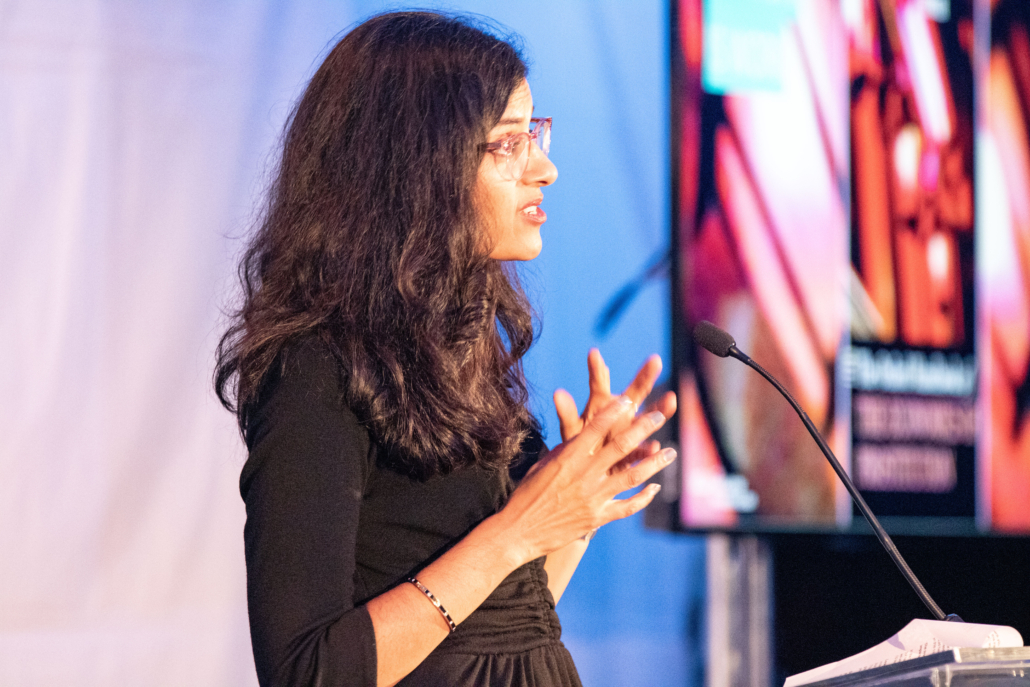
Professor Manisha Shah describes her scholarship, which focuses on women and girls around the world. Photo by Les Dunseith

In his remarks, Meyer Luskin said his observations of Gilliam’s leadership and priorities helped lead him toward making the $50 million naming gift to the Luskin School a decade earlier.

“I saw dedication, courage, morality and ethics, empathy, much resourcefulness, strength and kindness, intelligence, hard-working, visionary, loyalty, a great sense of humor, and a man most devotedly committed to justice and equality,” he said.

Segura thanked the Luskins for their foresight and generosity in endowing the new chair, plus three other previously awarded chairs benefitting professors at UCLA Luskin.

Gilliam said their selflessness is well-represented among people associated with the professions of social work, public affairs and urban planning that are taught at the Luskin School.

“The people who work in your area often go unnoticed. They don’t do it for the fame, they don’t do it for the fortune,” he said. “This is hard work, it’s complicated work. It’s real work … on the ground, dealing with real-world policy problems that affect the society.”

Gilliam surveyed the crowd of family, friends and former colleagues who had gathered to celebrate Shah and recognize an endowment that will forever carry his name. Ultimately, said the former professor, dean and current chancellor, it’s about passion for the cause, the mission, embodied for Gilliam in the words spoken by Meyer Luskin when they first met:

“My goal in life is to make the world a better place.”

View additional photos:

Gilliam Endowed Chair

Gas Bill Debt Disproportionately Burdens Low-Income Neighborhoods As California’s utility shutoff ban ends, UCLA research shows where unpaid gas utility bills proliferated amid the pandemic

November 1, 2021/0 Comments/in Business and the Environment, Climate Change, For Faculty, For Policymakers, For Students, For Undergraduates, Latinos, Luskin Center, Public Policy, Public Policy News, Research Projects, Resources, School of Public Affairs, Social Welfare, Social Welfare News, Urban Planning /by webteam

By Lauren Dunlap

Unpaid bills for heating and cooking gas are unevenly distributed among Californians, according to a new report from the Center for Neighborhood Knowledge at UCLA Luskin in partnership with the Latino Policy and Politics Initiative (LPPI) and the Luskin Center for Innovation.

Since Oct. 1, customers who are behind on utility bills are no longer protected from shutoffs by a statewide order enacted in April 2020 in response to the COVID-19 pandemic. The study reveals clear patterns of inequity: Neighborhoods with high gas bill debt rates also have higher poverty rates, lower incomes, more renters than homeowners and higher proportions of Black and Latinx residents than the average neighborhood served by Southern California Gas.

The research team analyzed data from the utility, which provides gas service to about 50% of California residents. The team found that, as of February 28, 2021, 1 in 5 customers were at least 30 days behind on their gas bill payments, and almost 1 in 10 were at least 90 days behind. 

The report provides several lessons for policymakers to equitably relieve the burden of utility debt on customers. The authors recommend improving the data available on utility debt and shutoffs to lead to better-informed decisions. They also note the importance of targeting relief aid at the most affected, lowest-income households. 

The co-authors also emphasize a connection between their findings and the growing movement toward building electrification. Transitioning residential buildings to run on electricity alone is significant to avoid greenhouse gas emissions — especially since natural gas is composed primarily of methane, a major contributor to climate change. But this transition may impose high costs on people who already face utility debt. 

“When higher-income households stop using gas, lower-income households may be saddled with higher and higher gas costs,” said Silvia González ’09, MURP ’13, UP PhD ’20, director of research at LPPI. “It is essential to make electrification equitable, which means households don’t get left behind or stuck with increasingly unmanageable energy costs.” 

Because lower-income households could be negatively impacted by the fixed costs of gas service — the costs that don’t go down when there are fewer customers — the researchers advise that more research is needed to understand and mitigate this impact. 

This study is the third and final in a series examining utility debt inequity during the COVID-19 pandemic. Previous policy briefs focused on unpaid utility bills among Los Angeles Department of Water and Power and Pacific Gas and Electric Company customers. 


Where 2020 Census Undercounts Were Most Likely in L.A. County Neighborhoods with lower incomes, more immigrants were less likely to be accurately counted, CNK analysis finds

August 19, 2021/0 Comments/in Diversity, For Faculty, For Policymakers, For Students, For Undergraduates, Latinos, Politics, Public Policy, Public Policy News, School of Public Affairs, Social Welfare, Social Welfare News, Urban Planning Paul Ong /by Les Dunseith

By Les Dunseith

Prior to the 2020 U.S. census, many observers feared that large segments of the population would be undercounted. Those fears appear to have been realized, according to a UCLA analysis of the census data.

The study, conducted by the UCLA Center for Neighborhood Knowledge, found that in Los Angeles County, residents in some neighborhoods were much more likely than others to be excluded from the 2020 census. Specifically, the research (PDF) concluded that — at the census-tract level — undercounts were most likely in areas where the majority of residents are Hispanic or Asian, have lower incomes, rent their homes or were born outside of the U.S.

Paul Ong, a research professor at the UCLA Luskin School of Public Affairs, and Jonathan Ong of Ong and Associates, a public-interest consulting firm, combed through data published Aug. 12 by the U.S. Census Bureau.

“The results are, unfortunately, consistent with our worst fear that the 2020 enumeration faced numerous potentially insurmountable barriers to a complete and accurate count,” Paul Ong said.

The research team compared the information to earlier population estimates drawn from the census bureau’s American Community Survey to determine whether and where the 2020 enumeration appeared to undercount or overcount the population within each neighborhood in Los Angeles County.

A key difference between the American Community Survey and the 2020 census, Paul Ong said, is that the COVID-19 pandemic severely affected data collection for the census. Previous research showed that disruption was particularly pronounced in disadvantaged neighborhoods. That appears to have created a “differential undercount,” meaning that some populations were more likely than other groups not to be counted. That, in turn, means that the scope of ethnic diversity and demographic change in cities like Los Angeles could be significantly underestimated, he said.

Graphic courtesy of UCLA Center for Neighborhood Knowledge

Based on comparisons between the latest census data and the most recent American Community Survey estimates, the UCLA study found that in Los Angeles County:

  • Predominantly Hispanic neighborhoods are most likely to have the largest undercounts in the census.
  • Neighborhoods with the greatest percentage of people living below the poverty line were most likely to have undercounts.
  • Neighborhoods with larger percentages of renters, as opposed to homeowners, were more likely to have undercounts.
  • Census tracts in which most people are U.S.-born were more likely to be accurately counted than predominantly immigrant neighborhoods.

The pandemic wasn’t the only factor that hampered data collection for the 2020 census. The effort was also adversely affected by the Trump administration’s highly publicized push to include a citizenship question on the questionnaire. Although that effort was ultimately unsuccessful, Paul Ong said the controversy may have depressed participation among immigrants, whether they were undocumented or not.

“The findings indicate that the needless politicization of the 2020 enumeration seriously dampened participation by those targeted by the Trump administration,” he said.

Problems with the self-reporting aspect of the census placed greater pressure on the subsequent on-the-ground outreach in which census-takers canvassed nonresponding households. The success of that follow-up drive will not be known until a post-census analysis is conducted, which is scheduled for 2022.

The UCLA analysis is consistent with results from previous studies that have shown undercounts likelier to occur in disadvantaged communities. How residents are counted is important because census results influence legislative redistricting and government spending, which means the results can have serious political and economic implications.

“Given the analysis, it is imperative that we address the inequality in the census to ensure fair political representation in redistricting,” Paul Ong said.

Unlike previous corrective efforts, which address census undercounts based on national statistics and results from a comparatively small number of districts, the UCLA research relied on data specific to each neighborhood. As a result, Paul Ong said, the new approach should be more accurate and precise, and it could ultimately help officials understand how to adjust population statistics to account for the differential bias in completing the 2020 census and future counts.

Graphic courtesy of UCLA Center for Neighborhood Knowledge

Undercounts are of most concern, but the technique could also help identify overcounts, which are rarer but can occur. Military redeployments may lead to overcounts, for example; other situations include some students who get counted twice while splitting time between home and college, and miscounts of people with second homes or people who experience a stay in a nursing home while also holding a permanent residence.

Ong & Associates, of which Paul Ong is the founder, provided services pro bono for the study.

Page 7 of 23«‹56789›»

Recent Posts

  • Stoll on the Factors Influencing Migration Patterns within the U.S. January 9, 2026
  • Northern California Maintains Nation’s Lowest ICE Arrest Rate Despite National Surge January 9, 2026
  • One Year After the Fires, Recovery Remains Uneven January 8, 2026
  • Oil and Gas Companies Sacrificing Plastic-Burdened Communities January 7, 2026
  • A sixth-generation Altadena resident presents a community recovery roadmap after the fires January 7, 2026

Contact

UCLA Luskin School of Public Affairs

3250 Public Affairs Building - Box 951656
Los Angeles, CA 90095-1656

Campus Resources

  • Maps, Directions, Parking
  • Directory
  • Contact
  • Academic Calendar
  • Careers
  • Diversity
  • University of California
  • Terms of Use

Follow

The statements on this page represent the views of people affiliated with the Luskin School of Public Affairs and do not necessarily represent the views of the University of California, or UCLA or its Chancellor.

Posts and comments by individuals at UCLA on social media channels may not reflect the opinions or policies of UCLA, the University of California or the Luskin School, nor its benefactors and academic partners.

Scroll to top