• Public Policy
  • Social Welfare
  • Real Estate Development
  • Urban Planning
  • Luskin Home
  • Undergraduate Program
  • Stay in Touch
  • Events Calendar
  • Give Now
  • About
    • Our Dean
    • Board of Advisors
    • Contact Us
    • Visit Us
    • Diversity, Disparities and Difference
    • Communications
      • UCLA Luskin in the News
      • Luskin Forum Online
  • Departments
    • Public Policy
    • Real Estate Development
    • Social Welfare
    • Undergraduate Program
    • Urban Planning
  • Apply
    • Master of Public Policy
    • Master of Real Estate Development
    • Master of Social Welfare
    • Master of Urban and Regional Planning
      • Double Degree With Sciences Po
    • PhD in Social Welfare
    • PhD in Urban Planning
    • Undergraduate Programs
  • Faculty
    • All
    • Public Policy
    • Social Welfare
    • Urban Planning
    • Real Estate Development
    • Faculty Executive Committee
    • Open Positions
  • Student Affairs & Alumni
    • Career Services
      • Employers
      • Fellowships
    • Student Support
    • Graduate Resource Library
    • Alumni Relations
  • Support
  • Programs
    • Research Centers & Affiliated Research
    • CA Title IV-E Education Program
    • Global Public Affairs (GPA)
    • Data Analytics Certificate
    • Luskin Lecture Series
    • Luskin Summit
    • UCLA Luskin California Policy Briefing
    • Public Service Weekend
    • Commencement
  • Administration
    • Financial Services
    • Events Office
    • Information Technology
  • Search
  • Menu Menu

Archive for category: Social Welfare News

Nearly Half of L.A. Tenants Owe Back Rent Lewis Center-USC survey shows many renters missing out on government assistance

July 29, 2021/0 Comments/in Development and Housing, Diversity, For Faculty, For Policymakers, For Students, Public Policy, Public Policy News, Research Projects, School of Public Affairs, Social Welfare, Social Welfare News, The Lewis Center, Urban Planning Michael Lens, Michael Manville, Paavo Monkkonen /by Les Dunseith
By Les Dunseith

In a new survey of Los Angeles County renters, 49% of households reported that they were unable to pay all of their rent during the pandemic.

The study, by researchers from UCLA and the University of Southern California, found the median amount renters owe their landlords is $2,800. That suggests that countywide, tenants owe landlords upwards of $3 billion.

The findings are from one of a pair of surveys of 1,000 renters each — one conducted in July 2020, which focused on renters’ ability to pay rent in the short term, and another in March 2021, asking about their ability to pay over the entirety of the pandemic.

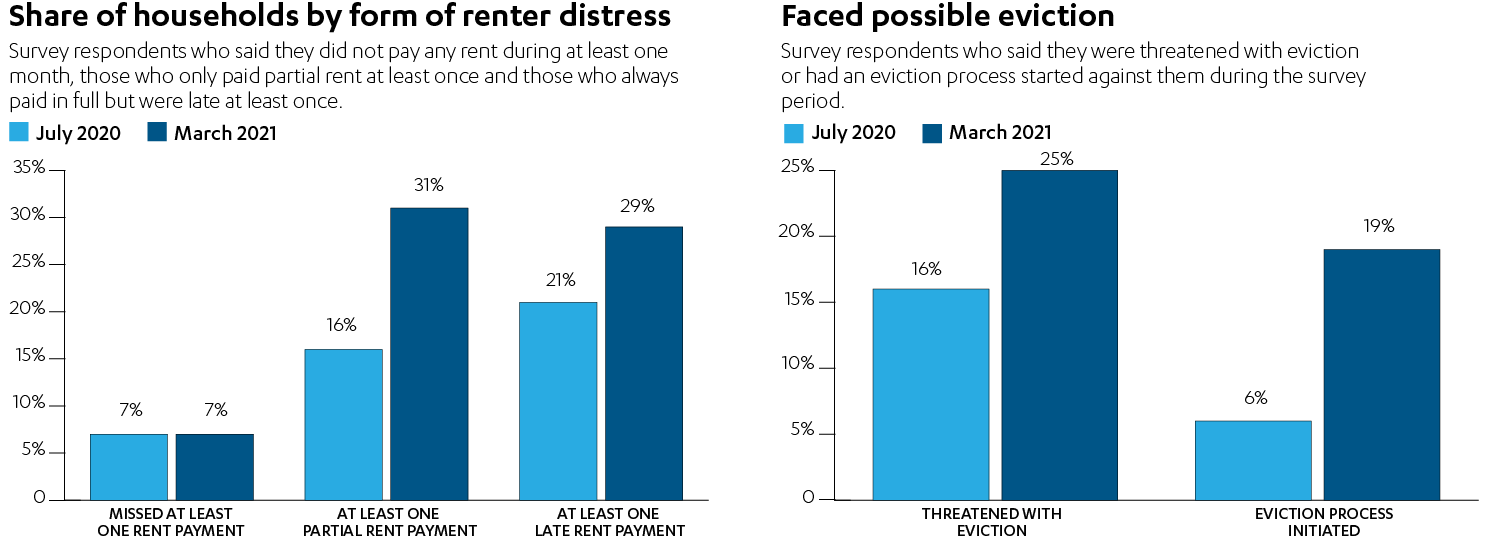
The preliminary results show that in both surveys, about 7% of renters missed a full rent payment in at least one of the three months before the study was conducted. But by the time the second survey was conducted, the share of renters paying less than the full amount to a landlord at least once during the crisis had almost doubled to 31%, up from 17% in July 2020.

The study was co-authored by Michael Manville, Paavo Monkkonen and Michael Lens, associate professors at the UCLA Luskin School of Public Affairs; and Richard Green, director of the USC Lusk Center for Real Estate.
A slight majority of respondents reported paying their rent on time and in full, and many of those who owe rent said they were behind by less than a month. But other renters are emerging from the COVID-19 emergency in a financial hole they will struggle to climb out of on their own, the authors write in a research brief published today.

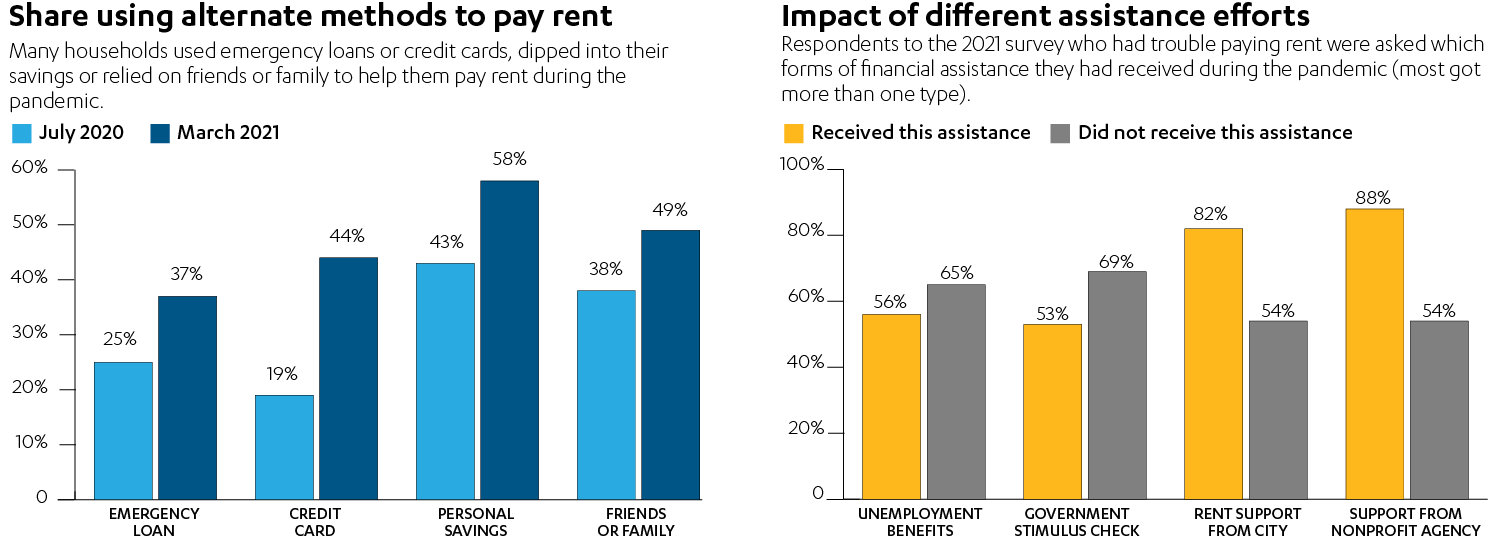
Of particular concern is evidence from the surveys that renters’ debt rose sharply as the COVID-19 crisis dragged on. Only about 6% of Los Angeles tenants reported using a credit card to pay their rent prior to the pandemic. That figure rose to 19% of respondents in the early days of the emergency, and to 44% in the latest survey. Also in the 2021 survey, 49% said they turned to friends and family to help them pay rent, 58% dipped into their savings and another 37% reported taking out an emergency or payday loan.

The overall share of renters taking on debt reached 45% in the second survey, up from 32% in the first.

Other findings include:

  • Just over 15% of tenants who were behind on their rent payments in 2020 had been threatened with eviction; that figure increased to 25% in the 2021 survey. Although an eviction moratorium is still in effect in Los Angeles County, tenants can still be threatened with evictions or have evictions initiated against them; a court won’t act until the moratorium ends.
  • Similarly, 6% reported in 2020 that an eviction had been initiated against them. In 2021, that percentage tripled to 18%.
  • In the 2021 survey, about 68% of all respondents said they had received federal aid during the pandemic, and about 15% reported getting local aid.
California’s eviction moratorium will remain in place through at least September, and the brief notes that the state has committed to helping renters pay the back rent they owe. Through existing rental assistance programs, which generally require that both landlords and tenants agree to participate, the state or city pays landlords on behalf of tenants who qualify for assistance.

The problem? The data show that many tenants owe money to people or institutions other than their landlords, and the researchers write that many may be in that position precisely because they were deeply concerned about their housing security.

The report suggests a solution often advocated by economists as the best way to help people facing financial trouble: Just give people money. Distributing cash to tenants who are financially distressed would allow them to pay back whomever is owed the money — a landlord, another creditor or a family member.

“Programs where the government pays a landlord are sometimes justified as ways to prevent fraud or misuse,” Manville said. “And we should certainly be concerned about fraud. But we need to weigh those concerns against the possibility that an overly cautious program will deny needed assistance to some people who are in real financial trouble.”

To allay concerns about fraudulent claims — which in most government redistribution programs are very rare — the authors suggest ways the state could ask for evidence of debt, lost work or income.

The 2021 survey was funded and produced by the UCLA Lewis Center for Regional Policy Studies in partnership with the USC Lusk Center for Real Estate, the UCLA Luskin School of Public Affairs and the Committee for Greater LA.
High Temperatures Increase Workers’ Injury Risk, Whether They’re Outdoors or Inside The finding reflects another consequence of climate change, according to new study led by R. Jisung Park of UCLA Luskin Public Policy

July 16, 2021/1 Comment/in Business and the Environment, Climate Change, Environment, For Faculty, For Policymakers, For Students, For Undergraduates, Global Public Affairs, Health Care, Latinos, Luskin Center, Politics, Public Policy, Public Policy News, Research Projects, Resources, School of Public Affairs, Social Welfare, Social Welfare News, Urban Planning Jisung Park /by Les Dunseith

A UCLA study published today shows that hot weather significantly increases the risk of accidents and injuries on the job, regardless of whether the work takes place in an indoor or outdoor setting.

The report is based on data from California’s workers’ compensation system, the nation’s largest.

“The incidence of heat illnesses like heat exhaustion and heat stroke definitely go up on hotter days,” said the study’s lead researcher R. Jisung Park, an assistant professor of public policy at UCLA Luskin. “But what we found is that ostensibly unrelated incidents — like falling off a ladder or being hit by a moving truck or getting your hand caught in a machine — tend to occur more frequently on hotter days, too.”

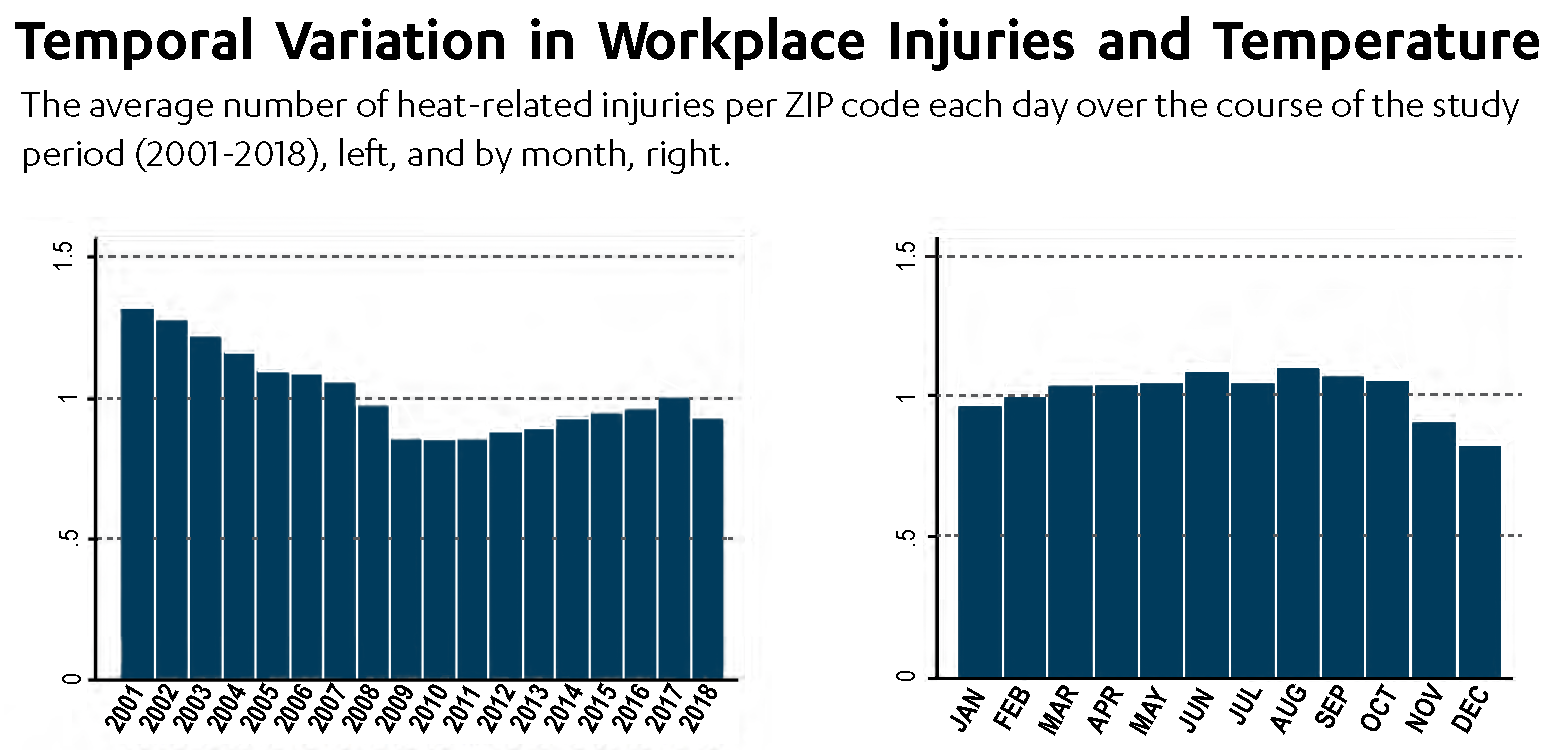
By comparing records from more than 11 million California workers’ compensation claims from 2001 to 2018 to high-frequency local weather data, Park and his co-authors isolated the impact of hotter days on the number of injury claims.

The study shows that on days with high temperature above 90 degrees Fahrenheit, workers have a 6% to 9% higher risk of injuries than they do on days with high temperatures in the 50s or 60s. When the thermometer tops 100, the risk of injuries increases by 10% to 15%.

Those findings are particularly alarming in the context of climate change, which is expected to produce more high-temperature days each year. The researchers estimate that high temperatures already cause about 15,000 injuries per year in California.

“Heat is sometimes described as a silent killer,” said Nora Pankratz, a UCLA postdoctoral scholar. “But if you look into the data and do the statistical analysis, you find that heat has a significant impact on mortality and health outcomes.”


It’s not surprising that hot weather would lead to injuries and illness among workers in predominantly outdoor industries such as agriculture, utilities and construction. But the data consistently show that industries in which most people work indoors are affected as well. In manufacturing, for example, days with high temperatures above 95 degrees have an injury risk that is approximately 7% higher than days with high temperatures in the low 60s.

“A lot of manufacturing facilities are not air conditioned,” said Stanford University postdoctoral scholar A. Patrick Behrer, the study’s other co-author. “Because you’re inside, you don’t necessarily think about the temperature as being a major threat.”

The reality is that overheated workers face numerous risks, regardless of where the work occurs.

“Heat affects your physiology,” Park said. “It affects your cognition. It affects your body’s ability to cope. It seems possible that what we’re observing in the data for these workers is that they’re more likely to make mistakes or errors in judgment.”

The researchers found that heat-related workplace injuries are more likely to be suffered by men and lower-income workers. In addition, younger people suffer more heat-related injuries, possibly in part because they’re more likely to hold jobs with greater physical risks on construction sites, in manufacturing plants or at warehouses.

For an office worker at a computer desk, nodding off on a hot summer afternoon is unlikely to cause an injury. “But if you have a huge chainsaw in your hand, you’re not in a great situation,” Park said.

Among the paper’s other conclusions:

  • The number of heat-related injuries actually declined after 2005, when California became the first state to implement mandatory heat illness prevention measures for outdoor workplaces on days when temperatures exceed 95 degrees.
  • The financial costs of heat-related injuries may be between $750 million and $1.25 billion per year in California alone, considering health care expenditures, lost wages and productivity, and disability claims.
  • Inequalities in the labor market are exacerbated in part by the fact that low-income communities tend to be situated in hotter parts of the state. People in the state’s lowest household income tier are approximately five times more likely to be affected by heat-related illness or injury on the job than those in the top income tier, the study found.

The UCLA Luskin Center for Innovation, where Park is associate director of economic research, provided funding for the study. It is available now through the Institute of Labor Economics, which disseminates working versions of potentially influential research prior to publication in academic journals. Park previewed the findings  July 15 during testimony at a Congressional hearing organized by the House Select Committee on the Climate Crisis.

The new study echoes the results of a 2019 study that focused on how extreme temperatures raise injury risk in Texas and in the U.S. mining industry. Park, whose prior research includes a finding that student learning is negatively impacted by warm temperatures, said there has been “an explosion of research just in the last five to 10 years that illustrates, using data, the serious consequences of climate change for health, productivity and economic growth. This likely adds to that urgency of reducing greenhouse gas emissions now.”

Pankratz got involved in the study while working at UCLA Luskin as a postdoctoral scholar, having previously researched the impact of heat on businesses while working toward her Ph.D. in the Netherlands. 

Worldwide, she said, there is growing interest in the concept of adaptation — the pragmatic changes that can be made by governments and businesses to cope with the reality of climate change.

“For a long time, the focus has been on mitigation — what can we do to prevent climate change,” she said. “But as it becomes more and more obvious that there is policy inertia on mitigation, it’s important to think about what we can do to adapt and to work as well as possible in a warmer world.”

The study authors, all of whom have backgrounds in economics, realize that the desire to protect workers from heat may be complicated by economic reality. 

Behrer said policymakers could stipulate that workers not be exposed to the heat on days above 100 degrees, for example, without proscribing a specific strategy to be used by individual business owners.

“Then firms have the option either to use air conditioning or come up with some other method of climate control for their facilities,” he said, noting that some might change work hours or shorten the work day during heat waves. “It allows them to decide the most cost-effective way for them to meet the objective of reducing workplace injuries.”


Now or Never for Immigration Reform? Congressman from Texas opens LPPI webinar by expressing optimism that progress can be achieved with Democrats in power in Washington — if they act quickly

May 6, 2021/0 Comments/in Diversity, For Faculty, For Policymakers, For Students, For Undergraduates, Latinos, Politics, Public Policy, Public Policy News, School of Public Affairs, Social Welfare, Social Welfare News, Urban Planning /by Les Dunseith

By Kassandra Hernandez and Les Dunseith

U.S. Rep. Joaquin Castro of Texas sees Democrats in power in Washington, D.C., and thinks the time may finally have arrived for comprehensive reform of U.S. immigration policy.

“It’s not very often that Democrats have control of the presidency and both chambers of the Congress,” Castro said during a May 4 webinar hosted by the UCLA Latino Policy and Politics Initiative. “There’s a real opportunity here to pass comprehensive immigration reform and put 11 million undocumented folks — many of whom are ‘Dreamers’ or others, like their parents, who have been here for generations — on a path to citizenship.”

Castro, who introduced one of four immigration-related bills currently making their way through the political process in Washington, knows it won’t be easy, given the narrow Democratic majorities in both houses and longstanding GOP opposition to immigration reform that includes citizenship. Still, waiting too long could doom the effort.

As the 2022 midterm elections draw closer, elected officials will become “very cautious about the votes that they take,” Castro noted. “So, there’s got to be a lot of momentum and a big push to get immigration reform done this year.”

Castro’s comments came during a 10-minute live interview with webinar moderator Russell Contreras, a justice and race reporter at Axios, that set the tone for a panel discussion with scholars and political experts focusing on the challenges and opportunities for U.S. immigration reform.

During the interview, Castro spoke about why immigration policy reform is so important to him. He represents a district in the San Antonio area that is home to many Mexican Americans like himself.

“In our community, there’s an incredible sense of fairness, there’s obviously an incredible sense of family,” said Castro, whose mother is a renowned community activist and whose twin brother is former presidential candidate Julian Castro.

“There is a permanent class of conservative politicians … who want to use the immigration issue as a way to scare Americans and make them think that there is a lot of brown people who are going to come into the country and harm them,” Castro said. “But you see Mexican American communities being very favorable toward giving immigrants a path to citizenship because they understand that experience. To them, [an immigrant] was their parent or their grandparent. So, when they hear all of the fear-mongering, most of the time, they don’t buy into that.”

Castro said he hopes an umbrella bill that includes comprehensive immigration reform can be passed during this session of Congress, although it has not yet come to a vote. He noted that two other immigration bills have already made it through the House, however, and he urged the U.S. Senate to move forward with that legislation.

Cecilia Menjívar, a professor of sociology at UCLA who is an expert on immigration issues, argued that such piecemeal reform probably has a greater chance of success. Although the current social and political environment is unlike any in recent history, she said systemic barriers are likely to continue to impede sweeping immigration reform efforts.

Joining Menjívar on the virtual panel were Angélica Salas, executive director of the Coalition for Humane Immigrant Rights, Los Angeles (CHIRLA), and Andrew Selee, president of the Migration Policy Institute. All the speakers agreed that the national stance must recognize the complexities of the issue beyond border security and militarization.

Immigration reform is deeply interconnected with labor rights, access to education, health care and violence in other countries, they noted.

“You can legalize the people in the U.S., but if you don’t deal with the system that keeps us out and kicks us out, then you are not doing service to our community,” Salas said.

The so-called border crisis is actually a regional international policy problem, Selee said. “If you have lots of people coming in an irregular fashion, we need to rethink how we facilitate a legal path to immigration.”

Salas called for an urgent change in enforcement. “The detention system is a for-profit system,” she said. “Too many corporations [make] money off of the detention of our people.”

U.S. immigration policy also needs to account for the economic contributions made by the millions of undocumented workers throughout the country, Selee said.

Menjívar cautioned that immigrants should be recognized in a manner that avoids “reducing them to a dollar sign,” noting the many “social and cultural contributions [immigrants] have made to this country over decades.”

Selee pointed out that almost half of immigrants today have college degrees, representing potential talent that can help catalyze economic recovery in the wake of COVID-19.

“Unlock that potential, [and] it would fit in really well in a moment where we are trying to recover economically,” he said.

View a recording of the webinar


Unpaid Utility Bills Are Disproportionately Piling Up in L.A. Study shows 25-30% of Angelenos have unpaid energy and water bills, with debts unevenly impacting people of color

May 4, 2021/0 Comments/in Climate Change, Diversity, Environment, For Faculty, For Policymakers, For Students, For Undergraduates, Latinos, Public Policy, Public Policy News, Resources, School of Public Affairs, Smart Water Systems, Social Welfare, Social Welfare News, Urban Planning /by webteam

A new report authored by the UCLA Luskin Center for Innovation and Center for Neighborhood Knowledge measures the extent of utility debt accumulation among customers served by the Los Angeles Department of Water and Power. 

Disparities in unpaid bills predate COVID-19 but have deepened since the pandemic’s outbreak. Using data from a November 2020 California State Water Resources Control Board survey, the researchers found one-quarter to one-third of all Los Angeles households faced financial difficulties paying for their utilities. 

“We didn’t expect the magnitude to be this big,” said Silvia R. González, co-author of the study and a senior researcher at the Luskin Center for Innovation. “For many families, this means choosing between keeping their lights on or skipping meals or medical treatment.”

The debt burden is unevenly distributed across Los Angeles — 64% of the population in severely affected neighborhoods are Latino. Black communities also face disproportionate debt, and racial disparities persist even after accounting for socioeconomic characteristics. Further, the study found that lower-income neighborhoods, residents with limited English proficiency and renters face unequal debt burdens. 

Early on in the pandemic, Gov. Gavin Newsom suspended water and energy utility shut-offs, which has provided continued utility access for households in California. But accumulating debt has not been forgiven, and this crisis will need to be resolved once the suspension is lifted. 

Researchers said they hope to guide policymakers and utility operators in formulating targeted debt-relief programs, and calls for financial support from COVID-19-related aid to ensure that vulnerable Angelenos will still have access to water and energy after the pandemic.  

“We need an equitable relief plan,” González said. “These communities are already historically underserved areas and they’ve been left behind more broadly during the pandemic. These debts will be impossible for many families to repay.”

Serious Impacts of Coronavirus Felt Broadly Across Los Angeles County UCLA Luskin survey details effect of falling incomes, COVID-19 health issues and pandemic-related restrictions on Angelenos’ quality of life

April 19, 2021/0 Comments/in Development and Housing, Digital Technologies, Diversity, Education, Environment, For Faculty, For Policymakers, For Students, For Undergraduates, Health Care, Latinos, Politics, Public Policy, Public Policy News, Research Projects, School of Public Affairs, Social Welfare, Social Welfare News, Social Welfare PhD, The Lewis Center, Urban Planning Zev Yaroslavsky /by Les Dunseith

By Les Dunseith

Residents of Los Angeles County have been deeply affected by the COVID-19 crisis, with significant numbers citing the pandemic’s adverse impact on their finances, health and children’s education, according to UCLA’s sixth annual Quality of Life Index.

“A year ago we speculated about how resilient our region would be in the year to follow,” said Zev Yaroslavsky, director of the Los Angeles Initiative at the UCLA Luskin School of Public Affairs, who oversees the index. “We now know that Los Angeles County has demonstrated robust resilience, but a significant toll has been exacted on our residents by the tumultuous events. Many of our residents — especially younger ones — are anxious, angry and steadily losing hope about their future in Los Angeles.”

This year’s Quality of Life Index, or QLI, was based on interviews with 1,434 county residents over a 20-day period beginning on March 3, just as vaccinations were beginning to fuel optimism about a possible return to more normal life. Last year’s survey, conducted in the earliest stages of the pandemic, found high levels of anxiety about the possible impacts of COVID-19. Twelve months later, respondents said many of those fears had come to pass:

  • More than half of those surveyed (54%) reported that they or a close family member or friend had tested positive for the coronavirus.
  • Forty percent said their income went down because of the pandemic, with 22% saying it dropped “a lot” and 18% reporting “some” decline. Roughly 1 in 5 (18%) said they had lost their job at some point during the COVID-19 crisis.
  • Three-quarters of parents (76%) with school-age children felt their kids had been “substantially hurt, either academically or socially,” by pandemic-related distance learning and quarantine experiences.

In addition, nearly a fifth (17%) of all respondents reported that their income declined “a lot” in the past year and that they also suffered at least two specific negative impacts, such as a job loss, a wage or salary reduction, a decline in work hours or difficulty paying their rent or mortgage. This group was disproportionately composed of women under age 50, single people, renters, those without college degrees and those with household incomes of less than $60,000.

“These are among the most vulnerable individuals living in our county,” Yaroslavsky said.

The QLI, a joint project of the UCLA Luskin Los Angeles Initiative and The California Endowment with major funding provided by Meyer and Renee Luskin, asks a cross-section of Los Angeles County residents each year to rate their quality of life in nine categories and 40 subcategories. Full results of this year’s survey were made available April 19 as part of UCLA’s Luskin Summit, which is taking place virtually.

Mirroring last year’s result, this year’s overall quality-of-life rating held steady at 58 (on a scale of 10 to 100), which is slightly more positive than negative. But researchers noted that marked changes emerged among specific racial and ethnic groups, especially with younger residents.

Younger Angelenos: Sinking optimism, tempered by race

Reflecting a trend seen in recent QLI surveys, the county’s younger population — those between the ages of 18 and 49 — rated their quality of life lower than older residents, and the pandemic seems to have exacerbated that disparity.

“The varied manifestations of COVID-19,” Yaroslavsky said, “fell most heavily on the shoulders of younger county residents.”

In particular, researchers observed a growing belief by younger Angelenos that the cost of living in the region is threatening their ability to make ends meet, get ahead or gain some sort of financial security.Yet even among this demographic, the survey revealed a distinct divergence in views between Latinos and whites, the two largest racial/ethnic groups in the county. While they have faced demonstrably harder challenges in the region, Latino residents overall were more positive about their quality of life than whites — and this was particularly pronounced among younger residents.

“Repeatedly, younger Latinos are more positive about their own conditions and express greater approval and positivity toward the variety of public officials and governmental entities that affect their lives,” said Paul Maslin, a public opinion and polling expert with Fairbank, Maslin, Maullin, Metz & Associates (FM3 Research) who has overseen the QLI survey process since 2016. “Among younger white residents in Los Angeles County, a greater sense of frustration and even bitterness is apparent.”

The survey uncovered a number of noteworthy differences in these two groups’ views of the pandemic, public officials and the opportunities available in the region:

  • Younger white residents were evenly split over whether the handling of the pandemic had been fair or unfair to “people like them” (48% vs. 49%), whereas younger Latinos reported that it had been fair to them by a 2-to-1 margin (65% vs. 33%).
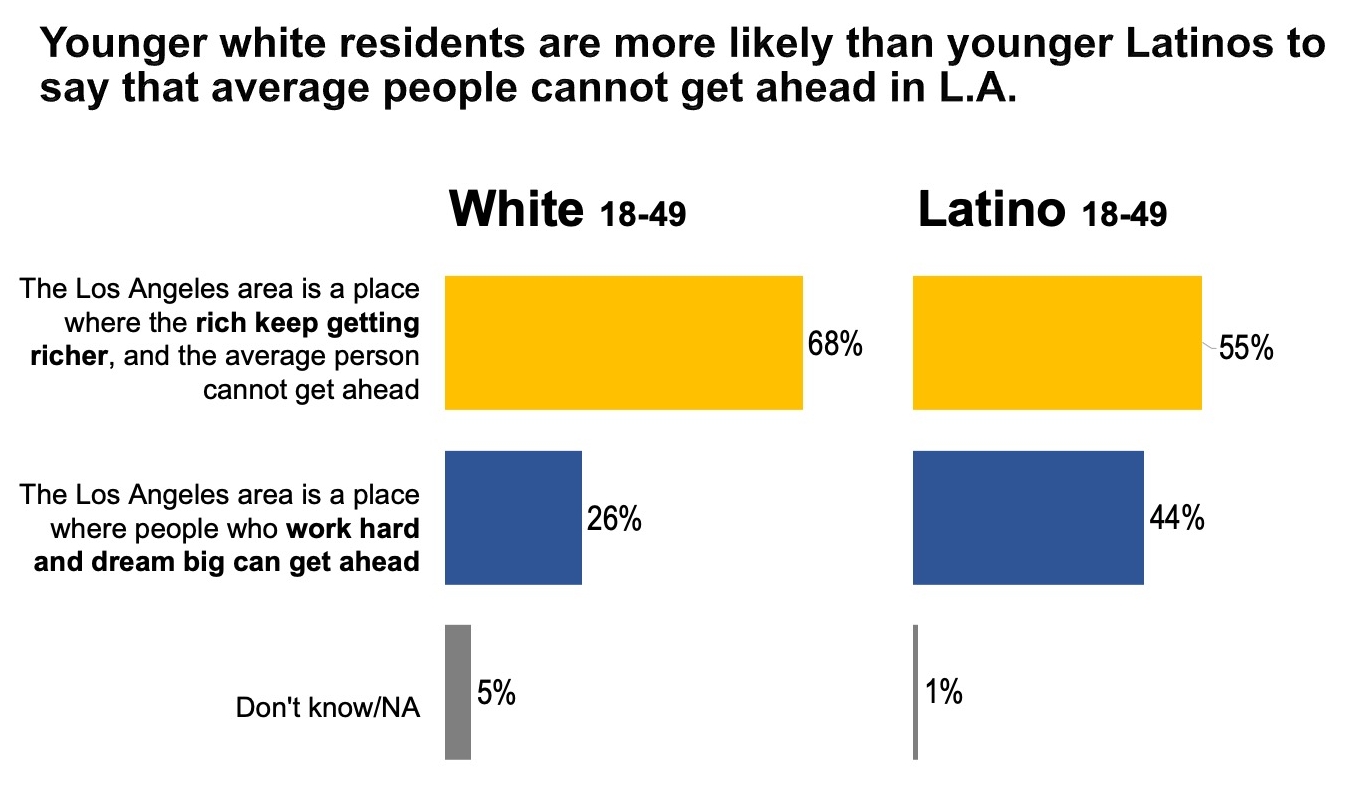
  • About two-thirds (68%) of younger whites believe the Los Angeles area is a place where the rich get richer and the average person can’t get ahead, compared with only 55% of younger Latinos.
  • Younger Latinos had more favorable views of Los Angeles Mayor Eric Garcetti (57%) and Gov. Gavin Newsom (53%) than younger whites, 57% of whom had unfavorable views of Garcetti and 62% unfavorable views of Newsom.
  • Younger white residents rated the response to the pandemic — across all levels of government — much more harshly than younger Latinos. Only about a third of whites approved of the response of federal, state and county governments and local school districts. Latinos’ ratings of approval were at least 20 points higher for every level of government and for local school districts.
  • However, in terms of paying their rent, more younger Latinos (43%) reported falling behind than did young whites (31%).

The 2021 QLI: Resilience and change

While this year’s quality-of-life rating remained at 58 overall, reflecting a remarkable resilience among county residents, several significant shifts within the nine major categories that make up the survey tell a different story.

This was most noticeable in the education category, where the satisfaction rating of respondents with children in public schools dropped from 58 last year to 52 this year, one of the most dramatic one-year declines in any category in the QLI’s history.

Satisfaction ratings for public safety also fell over the past year, from 64 to 60, influenced significantly by a growing concern over violent crime. And respondents’ rating of the quality of their neighborhoods dropped from 71 to 68.

On the other hand, satisfaction with transportation and traffic rose from 53 to 56, which researchers attribute to a significant reduction in commuter traffic caused by pandemic-related workplace shutdowns.

With regard to the workplace, 57% of employed respondents said they currently work from home or split time between home and their place of work. As to the future, 77% said they would prefer a mix of working from home and their workplace when the pandemic ends, with just 16% wanting to “almost always work at home.”

The 2021 UCLA Luskin Quality of Life Index is based on interviews with a random sample of residents conducted in both English and Spanish, with a margin of error of plus or minus 2.6%. The QLI was prepared in partnership with the public opinion research firm Fairbank, Maslin, Maullin, Metz & Associates (FM3 Research).  The full reports for 2021 and previous years are posted online by the UCLA Lewis Center for Regional Policy Studies.

Study Focuses on Mental Health of Gay Men Amid Pandemic Feelings of anxiety and loneliness are widespread amid the global isolation caused by COVID-19, UCLA Luskin-led survey shows

February 8, 2021/0 Comments/in Diversity, For Faculty, For Policymakers, For Students, For Undergraduates, Global Public Affairs, Health Care, Public Policy News, Research Projects, School of Public Affairs, Social Welfare, Social Welfare News, Social Welfare PhD, Urban Planning Ian Holloway /by Les Dunseith
Sixty-three percent of men who participated in a new UCLA-led study reported only leaving their home for essentials amid the COVID-19 pandemic. The research suggests being in isolation has contributed to feelings of anxiety and loneliness, and dissatisfaction with their sex life.

The study, by the Gay Sexuality and Social Policy Initiative at UCLA Luskin, was published in the Journal of Homosexuality. It focuses on a group that historically has been disproportionately affected by poor health outcomes. The results are based on responses from more than 10,000 men in 20 countries via a survey conducted in April and May 2020 on Hornet, a social networking app, which also participated in the research.

The paper’s lead author, Ian Holloway, is faculty director of UCLA’s Gay Sexuality and Social Policy Initiative, which is dedicated to understanding the complexities of gay male sexuality. Other authors are from UC San Francisco and the LGBT Foundation in San Francisco.

Participants were asked 58 questions about the impact of stay-at-home orders on their lives. Those who reported not going out or only going out for essentials were categorized as staying in. Everyone else, including essential workers and those who said they continued to go out socially amid the pandemic, were categorized as not staying in.

The study found that those who have stayed in during the pandemic were:

  • 37% more likely to feel anxious than those who haven’t stayed in.
  • 36% more likely to feel lonely.
  • 28% more likely to use text messaging to stay connected with others.
  • 54% more likely to use video calls to connect with others.

“We know that all people are affected by the isolation that can result from physical distancing,” said Holloway, a UCLA associate professor of social welfare. “Our concern is that the harm may be more severe among gay and bisexual men, who face disproportionate rates of poor mental health and sexual health outcomes. COVID-19 has exacerbated stress, anxiety and social isolation within our communities.”

Most of the survey participants were between the ages of 18 and 34 (55.5%), identified as gay (78.6%), were currently employed (67.7%) and had health care coverage (85.4%). In addition, most lived in a large urban center (69.8%) and were not in a relationship at the time of the survey (67.4%).

Social networking apps like Hornet provide an opportunity for people around the world “to connect with one another and cultivate a sense of community,” said Alex Garner, one of the study’s co-authors and senior health innovation strategist at Hornet. “We must invest in interventions that include harm reduction approaches and leverage technology where possible to increase access to necessary health services and strengthen community connections.”

Sean Howell, a co-author of the study and CEO of the LGBT Foundation, noted that many in the LGBTQ community lack the resources to effectively combat COVID-19, and it is especially critical to understand the challenges facing younger gay people.

“They face greater economic jeopardy or have increased exposure to the virus,” Howell said.

Holloway said there will be significant challenges in tracking mental health outcomes for gay men and other vulnerable communities in the coming months and years. “Our study shows us that technology can help us meet the moment.”

Holloway also directs the UCLA Hub for Health Intervention, Policy and Practice, the umbrella organization for the Gay Sexuality and Social Policy Initiative. In addition to producing research, the initiative will conduct policy analysis and participate in community mobilization seeking to empower global gay communities.

Journal Explores Power of Youth to Effect Political Change Special issue featuring UCLA Luskin contributions aims to amplify the voices of youth within a system that often ignores them

February 3, 2021/1 Comment/in Education, For Faculty, For Policymakers, For Students, For Undergraduates, Politics, Public Policy, Public Policy News, School of Public Affairs, Social Welfare, Social Welfare News Carlos Santos, Laura Wray-Lake /by Mary Braswell

A new issue of the Journal of Applied Developmental Psychology sheds light on the power of young people to effect political change even as their contributions are devalued or disregarded.

Published in the wake of the tumultuous 2020 election year, the special issue includes seven research papers and two commentaries that expand our understanding of political engagement among American youth, said Associate Professor of Social Welfare Laura Wray-Lake, who co-edited the issue with Benjamin Oosterhoff of Montana State University.

“Rapid changes in technology, growing political division and persistent experiences of racial injustice create a civic landscape that will have lasting effects on how young people approach politics for years to come,” Wray-Lake and Oosterhoff wrote.

The volume aims to amplify the voices of youth within a system that often ignores them and provide guidance to policymakers seeking to promote civic responsibility.

“Investment in young people’s political development should be an ongoing endeavor to improve the democratic health and functioning of our nation,” the editors wrote.

The special issue includes a commentary by Associate Professor of Social Welfare Carlos Santos, who argued for expanding the use of qualitative research methods to capture lived experiences of youth and “uncover the unique interplay between multiple sources of oppression and privilege.”

Research led by Veronica Terriquez, who will join the Urban Planning faculty this fall, is also featured in the volume. Terriquez’s study of Latino youth in California’s Central Valley shows how peer-to-peer organizing can be effective in mobilizing political movements even in regions hostile to immigrants and other communities of color.

Other contributors weigh in on structural barriers to youth political participation, including voting age restrictions and socioeconomic inequalities; the ability of Black youth to use critical reflection and political action to cope with individual, cultural and structural racism; the different ways that young people are affected by political polarization; and the importance of digital spaces in civic education.

Assembly Speaker Anthony Rendon Opens UCLA Luskin Summit Legislative priorities relating to police reform and climate change are topics of focus in the keynote webinar to begin the third annual conference

January 20, 2021/0 Comments/in Alumni, Business and the Environment, Development and Housing, Diversity, Education, Environment, For Faculty, For Policymakers, For Students, For Undergraduates, Politics, Public Policy, Public Policy News, Resources, School of Public Affairs, Social Welfare, Social Welfare News, Sustainable Energy, Transportation, Urban Planning Gary Segura, Zev Yaroslavsky /by Les Dunseith

By Les Dunseith

California Assembly Speaker Anthony Rendon spoke about California’s policy priorities during remarks Jan. 28 when the UCLA Luskin School of Public Affairs opened its third annual Luskin Summit.

As one of the state’s top political leaders, Rendon outlined his legislative priorities for 2021 — police reform, climate change and broadband internet access —  as the first presenter in a virtual series of discussions set to continue in February, March and April.

Dean Gary Segura said Rendon was invited to open the Summit in part because his background and political views are of interest to UCLA students, faculty and alumni. “In his career as educator, child well-being advocate and policy innovator, Rendon represents the best values of the Luskin School and our mission.”

Addressing the COVID-19 pandemic, Rendon, a Democrat, said Californians are already seeing benefits from the election of Joe Biden as president.

“One thing we can be sure about is the importance of having a plan. Throughout 2020, when COVID first appeared on our radar, we did not have a national plan,” Rendon said. “Biden came in, and he released a plan in his first week.”

He noted the tension that existed on many issues between the Trump administration and California officials, which led state leaders to work independently of the federal government on issues such as immigration and climate change.

“With Biden in the White House … I think we’re going to have a little bit more help and more opportunities to work with this administration instead of against it,” Rendon said.

As a legislative leader, Rendon has stressed inclusion and diversity, and he noted that more women hold committee chairs today in the state assembly than at any time in the past. He also pointed to his appointment of the first Muslim, Imam Mohammad Yasir Khan, to serve as assembly chaplain.

His leadership style emphasizes sharing of responsibility, Rendon told the online audience of more than 100 scholars, social services advocates, philanthropic and public leaders, and other interested parties. 

“I believe that the assembly works best when the individual members of the assembly, particularly the chairs, are able to utilize their skills, to utilize their life experiences,” he said. For example, Rendon said he has sought to embolden the chairs of legislative committees related to health and education whose expertise exceeds his own. “That’s been my philosophy, that I can be the best leader if I’m enabling others to do their jobs.”

In terms of legislative priorities, Rendon acknowledged that California lawmakers “fell short” on police reform in 2020, including failing to pass a bill that would have changed the disciplinary processes for police officers.

“We need to change those processes so that public safety is not just about officer protection,” he said. “Of course, we want to make sure that we’re not endangering the people we trust with patrolling our streets and neighborhoods, but we also have to make sure that they are careful.”

Rendon said California is already a national and international leader in dealing with climate change, but more work can be done.

“We need to ask if our climate change actions benefit disadvantaged communities,” he said, noting that his assembly district includes some of the most densely populated areas in the nation. “Southeast L.A. communities have around 17,000 people per square mile, but we have severe park shortages.”

Parts of his district were once farmland, but when they were developed for housing, the emphasis was placed on building high-density apartment dwellings without retaining open spaces. “Parks and vegetation are really important ways to reduce the heat island effect that drives warming in urban communities,” Rendon said.

His third legislative priority for 2021 also focuses on disadvantaged communities. In the past, discussions about a lack of broadband internet access centered around rural communities in the extreme north and south of the state.

“When COVID happened and when folks started having to go online for schooling, we discovered that there was a lack of broadband access all over the place,” Rendon said. “And those problems really started to manifest themselves, particularly in disadvantaged communities.”

He views the internet today as a critical public utility. “It’s not just a rich and poor issue; not just an urban and rural issue,” Rendon said. “It’s an issue that affects every single part of the state.”

In answer to a question posed by Segura about housing affordability, Rendon talked about visiting a neighborhood where he had once lived and noticing a flurry of housing construction. He reached out to a local official to praise the effort, only to be told to take a closer look at the upper floors of the newly occupied buildings.

“Those are all dark, right? Nobody lives there.”

In Rendon’s view, this example illustrates an ongoing problem in a state in which high-end housing continues to be built without enough pressure being brought on developers to balance their projects with affordable units.

When he first got to Sacramento, Rendon said, he noticed a disconnect in people’s minds between housing and homelessness. Over time, this misconception has slowly changed, in part because of “incredible data that show the number of people who would become homeless if they missed one month of pay, if they missed two months of pay.”

To further illustrate his point, Rendon noted that as assembly speaker he serves on the UC Board of Regents and the Cal State Board of Trustees. The statistics on housing scarcity among university students are staggering, he said, noting that many students can be found sleeping in their cars or couch surfing with friends from one night to the next.

“We know that housing and homelessness are linked,” said Rendon, whose 20 years of work in the nonprofit sphere often leads him to look for solutions in service delivery mechanisms. “I think if we’re going to solve the housing crisis, we need to address homelessness. And if we’re going to address homelessness, we really need to think about comprehensive services for homeless folks and for near-homeless folks.”

Additional information about the Luskin Summit, including previews of other sessions and a registration link, can be found online. Sponsors include the Los Angeles Rams, Gensler, the Weingart Foundation and the California Wellness Foundation. The media partner is ABC7 in Los Angeles.

In late April, the final event of Luskin Summit 2021 will be unveiling of the 6th annual Quality of Life Index, a project at UCLA Luskin that is supported by The California Endowment and Meyer and Renee Luskin under the direction of Zev Yaroslavsky, director of the Los Angeles Initiative. The survey asks county residents to rate their quality of life in a range of categories and to answer questions about important issues. Last year’s survey happened to coincide with the early stages of the pandemic.  

Watch a recording of the keynote session:

Former HUD Secretary Julián Castro on Future of Federal Housing Webinar with the former Democratic presidential candidate includes UCLA Luskin housing experts in a discussion of urgent policy priorities

November 24, 2020/0 Comments/in Development and Housing, Diversity, Education, For Faculty, For Policymakers, For Students, For Undergraduates, Politics, Public Policy, Public Policy News, School of Public Affairs, Social Welfare, Social Welfare News, Urban Planning Michael Lens /by Claudia Bustamante

By Bret Weinberger

Former U.S. Secretary of Housing and Urban Development Julián Castro characterized the seriousness with which American society ought to address the nationwide housing crisis by saying during a recent UCLA virtual event, “All of us have a responsibility to solve this challenge.”

Castro said there is no time to waste in facing this issue, with an eviction crisis looming because of economic fallout from the coronavirus pandemic. The Nov. 5 webinar focused on the future of federal housing policy as part of the Housing, Equity and Community Series, a joint endeavor of the UCLA Lewis Center for Regional Policy Studies and the UCLA Ziman Center for Real Estate.

Castro and Michael Lens, associate faculty director of the Lewis Center, spoke amid uncertainty regarding the nation’s political landscape just days before major news outlets called the race for President-elect Joe Biden. They delved into the interconnectedness of multiple ongoing crises and came ready with policy solutions.

Regarding protections for those who struggle to remain housed, Castro said that local governments should be empowered to enact rent control measures, even if it isn’t a one-size-fits-all remedy. And the federal government should robustly enforce the Fair Housing Act by working with local governments to put together implementation plans, as was the practice when he served in the Obama administration.

Castro, who unsuccessfully ran for president in 2020, also suggested changing the tax code to favor non-homeowners by offering a renters’ tax credit.

When Lens brought up the infusion of racial politics into housing policy, Castro castigated the Trump administration for assuming that racism exists among suburbanites and ignoring the realities of diversifying suburbs. He said their rhetoric translated into policy changes, such as removing protections against housing discrimination and underfunding key programs, that have exacerbated the housing crisis.

Castro raised cause for hope on the topic of homelessness when he said that both parties could agree on tackling veteran homelessness. He shared an experience of visiting Los Angeles’ Skid Row while HUD secretary.

“You can’t tell, just by looking at someone, why they’re there. You can’t stereotype them,” he said.

Lens also joined a second portion of the event that featured a roundtable discussion about topics covered by Castro, joining Cecilia Estolano MA UP ’91, founder and CEO of the urban planning firm Estolano Advisors, and José Loya, assistant professor of urban planning at UCLA Luskin.

“We need to be strategic, and we need to work fast,” Estolano said. She argued that incomes need to rise for people to afford high housing costs. Policies helping minority-owned businesses could have a major impact, she said.

Like Castro, Loya focused on how the tax code could be rewritten to help renters and low-income homeowners. This centered on granting tax credits to these groups rather than to wealthier homeowners.

One theme resonated with all the speakers: The new government, whatever its composition, must face housing head on. Americans — whether rural, suburban or city-dwelling — can’t afford otherwise.

View a video of the session on YouTube:

$3 Million Commitment From Berggruen Institute to Support Research Partnership Gift to Luskin School will advance global understanding of what makes governments effective

November 17, 2020/0 Comments/in Education, For Faculty, For Policymakers, For Students, For Undergraduates, Politics, School of Public Affairs, Social Welfare, Social Welfare News Helmut Anheier /by Stan Paul
By Stan Paul and Les Dunseith

The UCLA Luskin School of Public Affairs has received a $3 million gift from the Berggruen Institute to produce and disseminate the Los Angeles-based think tank’s Berggruen Governance Index, which evaluates countries based on their quality of political and administrative governance.

With the capacity of democratic governance being tested around the world, the index seeks to deepen public understanding of the relationship between democracy, government competence and the provision of public goods.

“The Luskin School is thrilled to partner with the Berggruen Institute on this incredibly important and timely work,” said Dean Gary Segura. “In a period where governments the world over struggle to cope with global crises, including the current pandemic, the effectiveness, transparency and capacity of states to care for the needs of their people is of critical importance. With this gift, the Luskin School can help advance our understanding of what makes government effective.”

For policymakers and policy analysts, the index will serve as a much-needed tool for grasping how governance relates to social and economic progress in various political contexts. A better understanding of these relationships, say UCLA Luskin researchers, is particularly relevant as liberal democracies face increasing threats from autocratic rivals.

“We are excited to deepen our relationships at UCLA through this partnership with the Luskin School,” said Dawn Nakagawa, executive vice president of the Berggruen Institute. “This important collaboration will lead to new insights about how to enhance government capacity in ways that lead to better quality-of-life outcomes.”

“The Berggruen Institute gift allows us to continue exploring the relationship between the quality of democracy and the quality of life — a crucial issue in today’s world.”

— Helmut Anheier 

Led by Helmut Anheier, an adjunct professor of social welfare, the team based at UCLA Luskin will curate, advance and disseminate the Berggruen Governance Index over a five-year period, helping to increase awareness of the index’s findings among policymakers, analysts and the general public through various events and media formats.

“The Berggruen Institute gift allows us to continue exploring the relationship between the quality of democracy and the quality of life — a crucial issue in today’s world,” Anheier said. “Governance is about how effectively we address public problems. The index is designed to reveal how different countries are managing in this regard.”

Anheier, who is also a professor of sociology at the Hertie School in Berlin, where the index originated, noted that other governance indices do not focus on the process of governance that is central to the Berggruen Governance Index, which looks closely at how the delivery of public goods contributes to the quality of life of citizens.

The 2019 Berggruen Governance Index analyzed 25 different aspects of the performance of 38 countries over a 14-year period, tracking national differences in three crucial areas of governance: quality of democracy, quality of government and quality of life.

The Berggruen Institute was founded in 2010 by investor and philanthropist Nicolas Berggruen, and editor Nathan Gardels.

Page 8 of 23«‹678910›»

Recent Posts

  • Stoll on the Factors Influencing Migration Patterns within the U.S. January 9, 2026
  • Northern California Maintains Nation’s Lowest ICE Arrest Rate Despite National Surge January 9, 2026
  • One Year After the Fires, Recovery Remains Uneven January 8, 2026
  • Oil and Gas Companies Sacrificing Plastic-Burdened Communities January 7, 2026
  • A sixth-generation Altadena resident presents a community recovery roadmap after the fires January 7, 2026

Contact

UCLA Luskin School of Public Affairs

3250 Public Affairs Building - Box 951656
Los Angeles, CA 90095-1656

Campus Resources

  • Maps, Directions, Parking
  • Directory
  • Contact
  • Academic Calendar
  • Careers
  • Diversity
  • University of California
  • Terms of Use

Follow

The statements on this page represent the views of people affiliated with the Luskin School of Public Affairs and do not necessarily represent the views of the University of California, or UCLA or its Chancellor.

Posts and comments by individuals at UCLA on social media channels may not reflect the opinions or policies of UCLA, the University of California or the Luskin School, nor its benefactors and academic partners.

Scroll to top