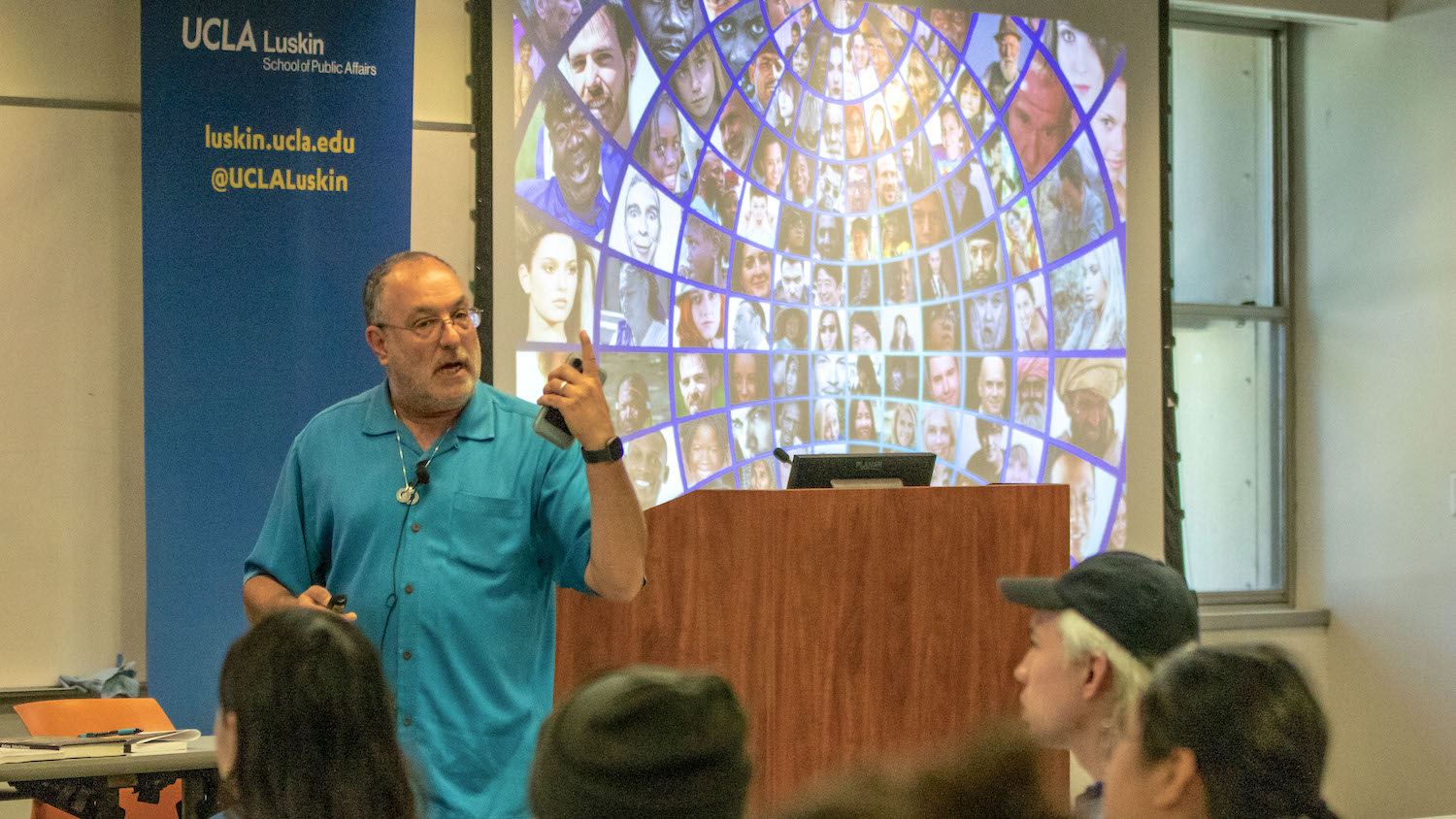
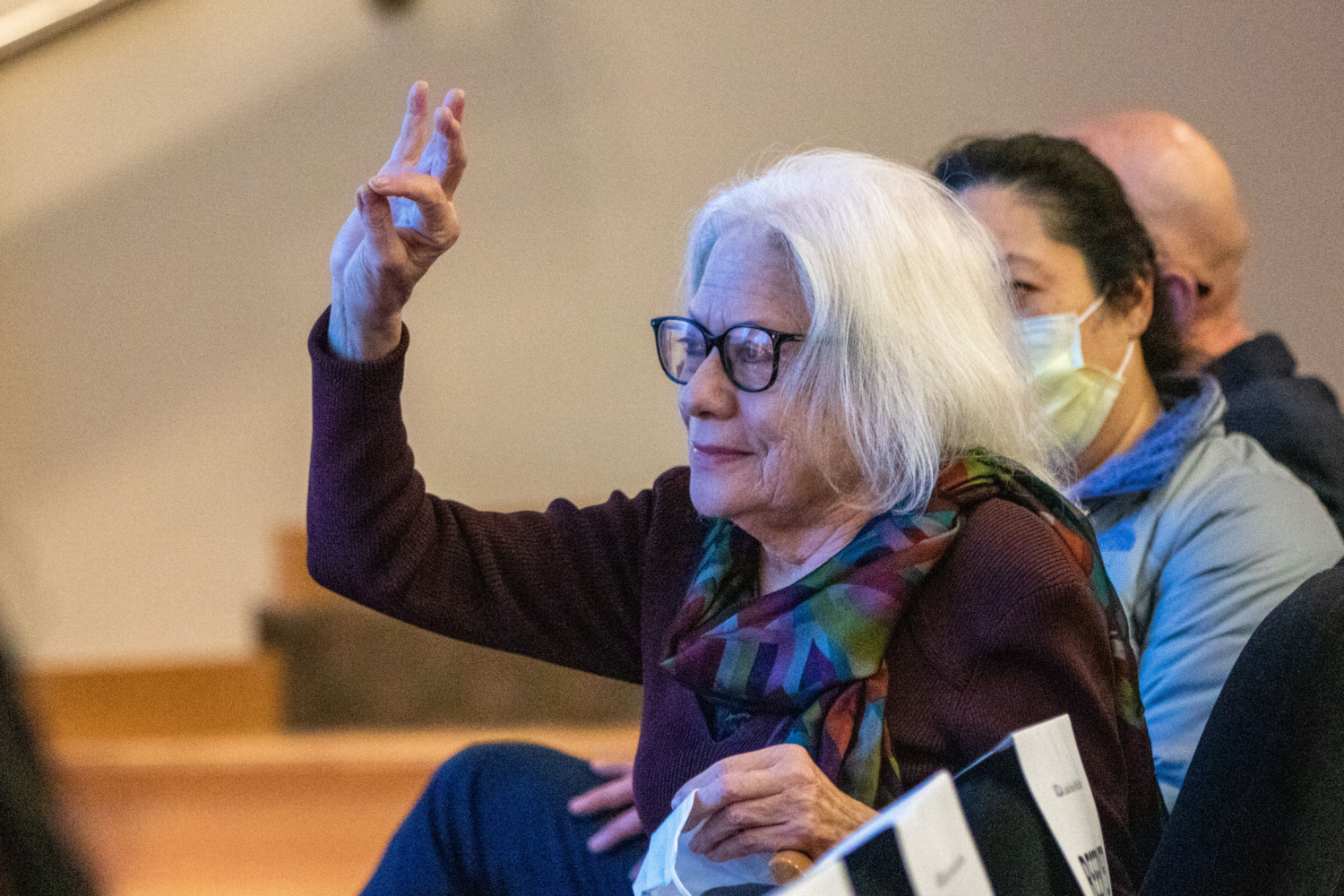
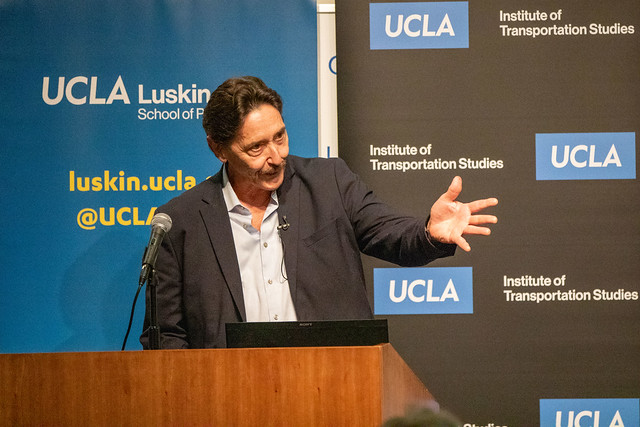
Students from across UCLA gathered at the Luskin School on April 27 to hear school safety expert Ron Avi Astor’s insights on a complex question: If the overall level of violence on California campuses is in steep decline, why do we continue to see mass shootings that take young lives and terrorize communities? After decades of research, Astor has concluded that the two realities should be considered separate phenomena. The shootings, perpetrated by troubled individuals seeking lasting fame, dominate headlines, and Astor shared that he, too, had feared for the safety of his grandchildren when they started preschool. Yet his newly published research analyzing survey responses of more than 6 million California middle and high school students from 2001 to 2019 showed dramatic declines in physical fights and weapons-related behaviors, as well as non-physical types of victimization such as harassment and bullying. Astor pointed to stepped-up investment in improving campus climate over the last two decades, including the placement of more social workers, psychologists, counselors and other service providers on school campuses. These professionals have had a great impact on creating safe and welcoming schools but don’t get credit for all the work they have done to protect children, Astor told the students from UCLA’s social welfare, education, public health, law and other programs. Still, firearms remain in our midst, and Astor suggested that gun safety education, including licensing requirements, is one step communities can take to protect residents. “Let’s not let the school shootings take over the whole story and militarize our schools, which is really my greatest concern,” he said.
Los Angeles County residents are feeling more upbeat today than a year ago — but not by much.
Inflation remains a primary concern as people worry about losing their homes or feeding their families. Many residents said their quality of life had been affected by a homeless encampment. And they believe the pandemic’s impacts on L.A. life will be long-lasting.
Those are just a few of the key takeaways from the latest Quality of Life Index, or QLI, a project of the Los Angeles Initiative at the UCLA Luskin School of Public Affairs that measures county residents’ satisfaction levels in nine categories. The overall rating rose two points to 55, but it was still the second-lowest rating in the eight years of the project. The highest rating of 59 was recorded in 2016 and 2017.
“Last year’s record negativity appears to have bottomed out and made a slight upward turn,” said Zev Yaroslavsky, director of the Los Angeles Initiative, who oversees the index. “But inflation has taken a toll, especially among lower- and middle-income residents.”
In fact, 94% of respondents said they were affected by inflation and the increase in costs of basic needs. And 71% said it had a major impact. Rising housing costs were an issue for 82% of respondents, and 58% said it’s a major concern.
More than a quarter, or 28%, of respondents worried about losing their home and becoming homeless, while 25% were afraid their families will go hungry because they can’t afford the cost of food. Nearly half of people in households earning less than $60,000 were concerned about becoming homeless.
Almost three-quarters of residents, 73%, said their quality of life had been impacted in the last year by a homeless encampment. A major impact was reported by 43% of respondents, with San Fernando Valley and Westside residents at 50% and San Gabriel Valley residents at 28%.
Most respondents, 75%, said life has been fundamentally changed by the COVID-19 pandemic. Only 23% expect life to return to the way it was before.
Of survey respondents who are employed, 49% said they always work away from home, 36% divide their work between home and a workplace, and 14% always work from home. Lower-income residents were far more likely to always work away from home, 61%, than higher-income households, 39%. Hybrid schedules were more common for higher-income workers, 41%, compared to 29% for lower-income households.
Many respondents said their income changed during the pandemic, with 27% saying it went down and 30% saying it went up. More than a third, or 35%, of those with a household income below $60,000 said it declined. Nearly half, or 45%, of respondents with a household income over $120,000, said it rose.
“The income disparities that have defined the Southern California economy for several decades have been exacerbated by COVID, as the rich seem to be getting richer while the poor are getting poorer,” Yaroslavsky said. “County residents whose incomes have not rebounded have less money than they used to, and what they have doesn’t buy what it did before. They’re getting hurt coming and going.”
This year’s QLI was based on interviews conducted with 1,429 county residents over 30 days beginning on Feb. 24. The survey has a margin of error of plus or minus 2.6%.
Ratings were up slightly in all nine categories except health care, which remained the same as 2022 at 66.
Among the other results:
Cost of living, which is always the lowest rated, increased to 41 from 39. White respondents gave it a 37, among the lowest in any category in the survey’s history.
Also scoring below the survey’s midpoint of 55 were education, 48, and transportation and traffic, 53.
Public safety, jobs and the economy, and the environment came in at 58.
Race and ethnic relations, 67, and their neighborhood, 68, were the top-rated categories.
The survey also examined approval ratings for local elected officials. Los Angeles Mayor Karen Bass had the highest favorability, with 46% of all respondents viewing her favorably and 23% unfavorably. City of L.A. respondents were even more positive, with 51% favorable and 17% unfavorable.
Sheriff Robert Luna was rated 37% favorable and 21% unfavorable. Los Angeles Police Chief Michel Moore received a 31% favorable and 22% unfavorable rating.
County Public Health Director Barbara Ferrer was viewed favorably by 34% and unfavorably by 20%, with respondents ages 65 and older giving her a 47% favorable rating. Meanwhile, ratings for District Attorney George Gascón improved somewhat from last year but were still negative — 27% of county residents view him favorably, compared to 40% who view him unfavorably. Last year, the result was 22% favorable, 44% unfavorable.
The Quality of Life Index is funded by the Los Angeles Initiative and Meyer and Renee Luskin. The full report will be released on April 19 as part of UCLA’s Luskin Summit, which is being held in the Faculty Center at UCLA. In addition to a presentation by Yaroslavsky, L.A. City Council President Paul Krekorian will deliver a keynote address. A series of breakout discussions on issues of public concern will precede a closing session on the local homelessness emergency featuring state, county and city officials. The full agenda for Luskin Summit 2023 is available online.
The QLI was prepared in partnership with the public opinion research firm FM3 Research.
View the report and other information about this year’s study, plus previous Quality of Life Indexes, on the website of the UCLA Lewis Center for Regional Policy Studies.
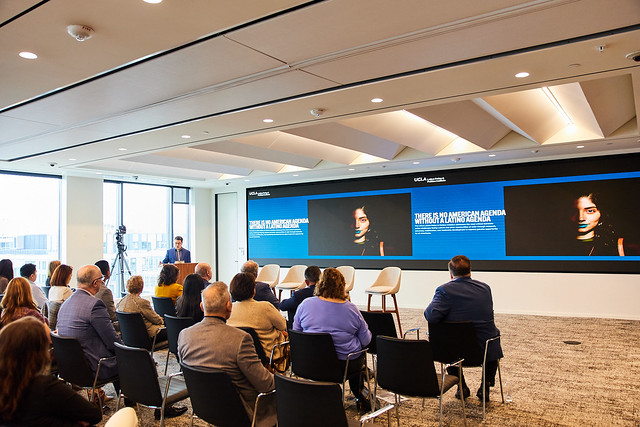
Rodrigo Dominguez-Villegas of the UCLA Latino Policy & Politics Institute (UCLA LPPI) recently presented research about Latino voters in the United States to political campaigners, media stakeholders and advocates meeting in the nation’s capital. During “Majority Makers !Presente!”hosted by TelevisaUnivision at the Washington headquarters of the National Association of Broadcasters, Dominguez-Villegas also previewed the forthcoming U.S. Latino Data Hub. This publicly available web tool will explore Latino well-being across all 50 states in a clear, disaggregated and reliable data platform. “To successfully reach Latino voters, campaign managers and organizers need to understand that there is great dynamism and complexity in the factors that impact Latino voter behavior, and the Latino Data Hub provides a window to understand that diversity and complexity through key indicators like educational attainment, income or health care,” said Dominguez-Villegas, co-director of research for UCLA LPPI. Dominguez-Villegas provided context based on UCLA LPPI research for stakeholders looking to effectively engage with Latinos. He pointed out that political preferences are driven by the rich mosaic of Latino communities and thus more diverse than many assume. Understanding this dynamism is critical in reaching Latino voters, he said. They should be viewed not as monolithic but as a rich and diverse community that has varied, and sometimes rapidly changing, demographic and socioeconomic trends. Another topic of discussion was the deeper level of trust that many Latinos hold for Spanish-language media over other sources. By providing information in Spanish that is culturally and linguistically relevant while addressing issues of importance to Latinos, Spanish-language media can help ensure that Latino voters have the information they need to make informed decisions and meaningfully engage in the political process.
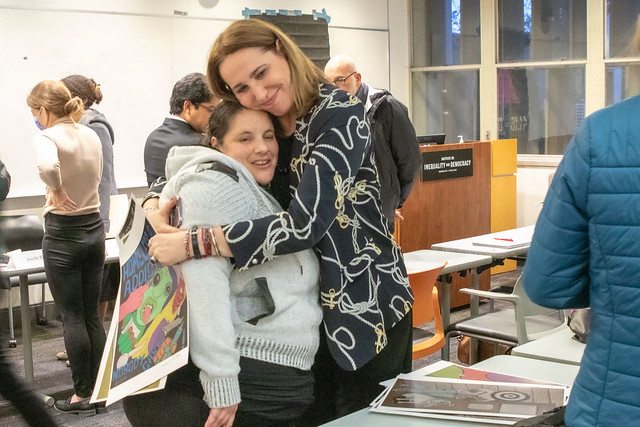
On March 1, the Spatial Justice Community Collaborative class under the direction of UCLA Luskin Professor Ananya Roy joined with the Promise Institute for Human Rightsto host the Inter-American Commission on Human Rights and Soledad García Muñoz, special rapporteur on economic, social, cultural and environmental rights. During a presentation that built on research by the UCLA Luskin Institute on Inequality and Democracy, six presenters affiliated with the class talked about their lived experiences, including the time some had spent living in homeless encampments such as one at Echo Park Lake that had been forcibly cleared by law enforcement two years earlier. García Muñoz and her colleagues, Daniel Norona and Paul Mora, then asked questions and spoke about the importance of such interactions to their mission to investigate allegations of human rights throughout the Americas. García Muñoz also viewed an altar that was built by the class to honor the large number of preventable deaths of unhoused residents in Los Angeles. And she engaged in conversation with panelists such as Jennifer Blake, whose artwork focuses on uplifting people like herself who have experienced homelessness.
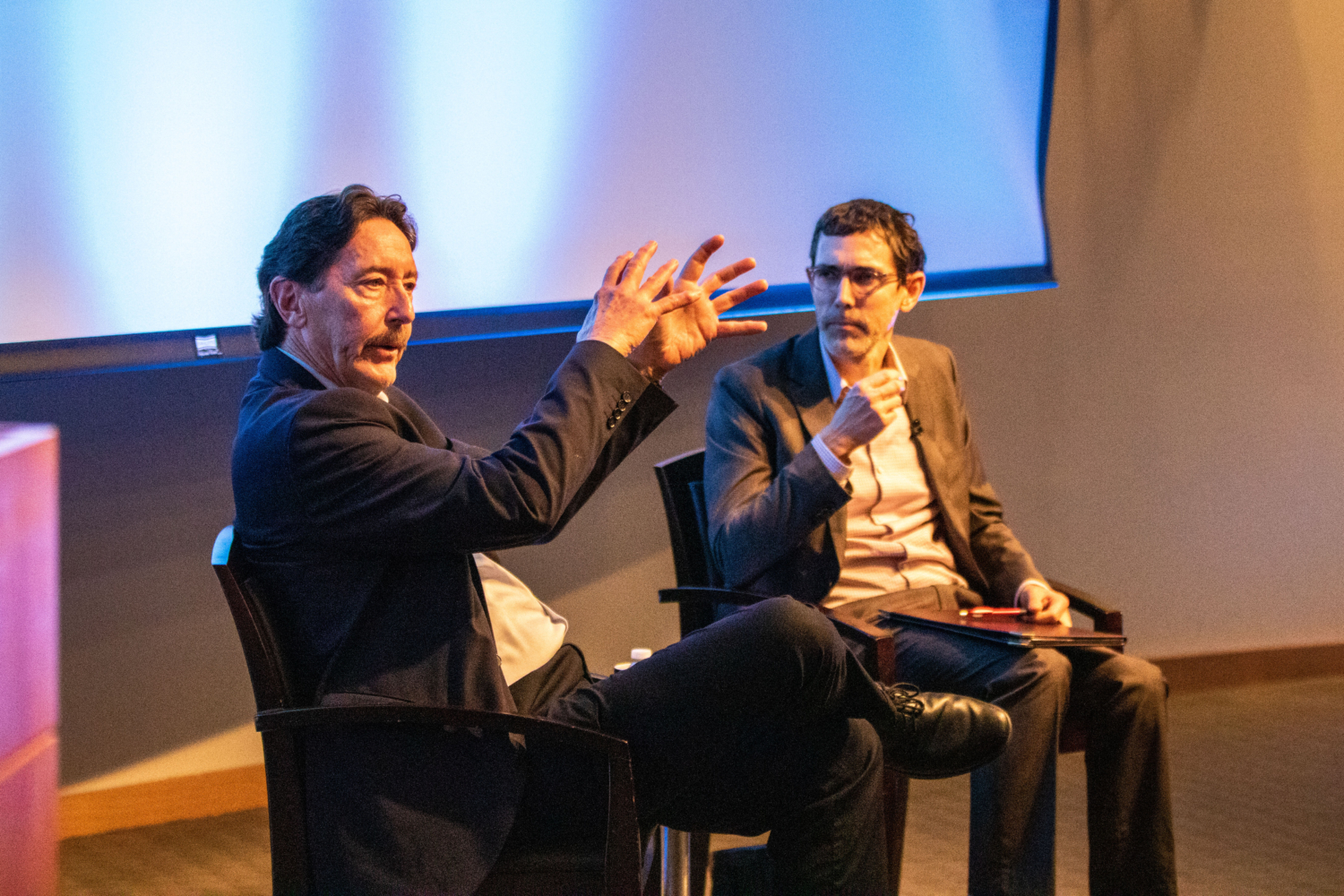
“But it dawned on me that a really important foundational piece of work that was published one-half century ago, 50 years ago, was Marty Wach’s paper on accessibility,” said Cervero during a Feb. 28 presentation in honor of his former urban planning mentor and colleague. “And why don’t I wrap my talk … around the theme of that paper and try to show how it really shaped my own research in this field and, I would suggest, generations of other people as well.”
Titled “Physical Accessibility as a Social Indicator,” the article by Wachs and T. Gordon Kumagai continues to influence planning policy, said Cervero, who earned his doctorate in urban planning at UCLA in 1980 and joined UC Berkeley’s city and regional planning faculty, where he remained until 2016.
“The article really highlights a number of different contexts of which accessibility should really be an overarching principle that guides what we do in this field of urban planning and transportation,” Cervero said.
During introductory remarks, UCLA Luskin Professor Brian Taylor mentioned that the lecture was the first in the series to be presented without Wachs himself in attendance. The longtime urban planning scholar taught at both UCLA and UC Berkeley before his death in 2021. Members of the Wachs family, including his wife, Helen, were in attendance.
Presented in conjunction with the Luskin Lecture Series, Cervero’s talk was titled, “Accessibility, Social Equity, and Contemporary Policy Debates,” and he spoke about how the concepts put forth 50 years before still have relevance today, especially in regard to how access to transportation contributes to the well-being of people living in cities.
“Marty made the point with his co-author that this sensibility happens at multiple scales. It’s regional access to jobs or medical facilities, but it’s also at the micro-scale of ‘Do you have access to, say, a bus?’” said Cervero, who said he built on this notion in his own research about socioeconomic matching in terms of the realities of transportation access. A person might live in a transit-rich area, for example, “but if you’re in a wheelchair, and the buses don’t have wheelchair ramps, then you don’t have great transit access.”
In the 1970s, few scholars prior to Wachs had written about these types of human components to transportation access. “To me, it was truly revolutionary,” Cervero said.
For example, Cervero found that people living in central city neighborhoods often bear disproportionately higher costs for transportation services. Because they make frequent off-peak trips for necessities like groceries, they end up paying a lot more than affluent suburbanites taking fewer trips over longer distances.
The disparity also was apparent when he and other researchers looked at why people who seemed to have public transit options readily available to them choose to rely primarily on their vehicles instead.
“A lot of these individuals were people like working moms who had very complex travel patterns,” Cervero said. “They have a child to drop off at the child care center and then go to their job. They were taking vocational courses at night and had to get there at a time when public transit service was bad. They had split-shift weekend jobs when transit services are notoriously lousy. So, they need a car.”
In looking at the concepts articulated by Wachs so many years before, Cervero also found lessons that can be applied to some of today’s planning and policy debates. One example is the idea of a “15-minute city,” a place designed by planners to ensure that most people have ready access not just to work but to the other necessities of daily life within 15 minutes of their homes.
The idea is laudable, but it has its critics.
“If you really insist on this, you potentially stifle economic competition. Companies don’t want to thinly distribute activities everywhere,” said Cervero, as some in the audience of UCLA faculty, staff, students and alumni nodded their heads in agreement. “So, this idea of a 15-minute city really runs in the face of what economists have long argued are important economic drivers towards the economic growth and performance of a city.”
In his career, Cervero has consulted on transportation and urban planning projects worldwide, including recently in Singapore. “They’ve come up with this idea of the 20-minute town and the 45-minute city. You can reach a lot of things within 20 minutes. But when it comes to employment, when it comes to going to see a sporting event or buying a car or going to a regional hospital with specialized medical care, that’s a 45-minute city. So, I think we’re getting a lot better articulation and sensible policy.”
During a Q&A session after his formal presentation, Cervero spoke with UCLA Professor Adam Millard-Ball and took questions from the audience. When asked to talk more about his global experience, he explained that much of the scholarly work to date has focused on urban life in the United States and Europe.
Some of today’s researchers focus on climate change impacts and how to find “a little more efficiency out of electric mobility or ridesharing or whatever. But in the grand scheme of things, over the next 20 or 30 years, 80% to 90% of urbanization is not going to happen in the Global North. It’s going to be in south Asia and Africa, and whatever happens there is going to swamp any and everything we do here, particularly in the rates of carbon emissions and so forth.”
In the developed world, the focus is often on how to get people from the central cores to jobs in suburbia. That’s less true in places like Mexico, South America, Indonesia and other parts of Asia.
“It’s a totally different landscape. Most of the poor are not in cities but in far-flung suburbs or towns. When you’re talking about lack of access, it’s a two- to three-hour, one-way daily commute,” Cervero said. “The amount of time and resources you have to invest is enormous just getting to and from where you need to be in order to have the earnings to cover basic needs.”
He was also asked about the impact of the COVID-19 pandemic and the resulting rise in remote work.
“Historically, we think of physical proximity,” said Cervero, noting that when workers have highly specialized skill sets they depend on interactions in teams of people with other specialized skills to thrive.
“The whole idea of access being tied to location is being somewhat thrown around by all these rapidly evolving, powerful kinds of technological advances,” he said. “Technology is transforming. The notion of physical proximity as we all know it has long driven the idea of cooperation. But maybe it happens less.”
Established by students, the Wachs Lecture Series features prominent and innovative scholars and policymakers in the field of transportation. The UCLA Luskin Lecture series brings together scholars with local and national leaders to discuss solutions to society’s most pressing problems. This event was organized by UCLA’s Luskin School of Public Affairs and Institute of Transportation Studies, for which Taylor has served as the director and Millard-Ball the interim director. Cervero was the director of UC Berkeley’s counterpart to ITS for many years.
The UCLA Sustainable LA Grand Challenge has launched an initiative called TRACtion — for Transformative Research and Collaboration — that will bring UCLA scholars together with community stakeholders to address key topics related to sustainability: transportation, energy, water and ecosystems. The program will begin with a two-year series of activities and funding opportunities that will tackle the region’s seemingly intractable transportation challenges. Called Transforming Transportation in Los Angeles, this track will tap the expertise of the UCLA Institute of Transportation Studies (ITS), which will work with community-based organizations and advocacy groups to identify barriers to a more equitable transportation system, then fund research to fill some of these gaps. TRACtion organizers held a Jan. 26 kickoff meeting that included California Transportation Secretary Toks Omishakin, UCLA faculty from several disciplines, and community organizations engaged with transportation and environmental justice. “These are voices that will disagree and push each other,” said Adam Millard-Ball, professor of urban planning and acting director of ITS. “If we don’t make some people uncomfortable, I don’t think we’ve pushed people far enough.” He said it is critical that the effort encompass expertise from across numerous disciplines. Involving political scientists, for example, might illuminate how elected officials determine transportation policy; historians could help explain how the car has come to dominate transportation discourse; artists and designers could help ensure that solutions are shared with the public in engaging and culturally relevant ways. “Transportation equity and sustainability are too important to be left to transportation scholars alone, and we need these sophisticated, multidisciplinary perspectives,” he said.
UCLA’s Hub for Health Intervention, Policy and Practice (HHIPP) has been awarded a $1.4 million grant to strengthen and support its efforts to unite sex workers and their advocates with academic investigators, health care providers and social services agencies. Over a four-year period, the grant will benefit research and community-based programming for Sex Work LEARN (Lived Experience Affirming Research Network), a multisector alliance that does not presume sex work is a problem to be solved. The project will focus on transgender women with sex work experience who identify as Black, indigenous or other persons of color. Principal investigator Ayako Miyashita Ochoa, an adjunct professor and co-director of HHIPP, said collaborators will include Social Welfare doctoral students Kimberly Fuentes and Vanessa Warri, and the Williams Institute at UCLA School of Law. Miyashita Ochoa said she is “thrilled to be working with” co-principal investigators Sophia Zamudio-Haas of UC San Francisco and Bamby Salcedo, a leader in the transgender rights movement and president of TransLatin@ Coalition. Other community partners are the Unique Woman’s Coalition and Sex Workers Outreach Project Los Angeles (SWOP LA). “I couldn’t be more proud of our research group and am so appreciative that UCLA Luskin will now serve as a home for this powerful collective,” Miyashita Ochoa said. Funding is from the California HIV/AIDS Research Program, which is awarding similar grants this year to four other research projects in California that center the voices of people affected by HIV.
Four professors associated with UCLA Luskin Social Welfare are among the top 100 contributors to social work scholarship, according to a recently released article in Research on Social Work Practice, a journal published by SAGE journals. Professor Laura Abrams, the current department chair, is listed as the 34th most-cited global contributor to social work scholarship in academic journals. Professors emeriti Duncan Lindsey (52), Robert F. Schilling (84) and Aurora P. Jackson (100) also made the list. “UCLA continues to be a hub for major contributions to the profession,” Abrams said. “I am honored to make the list, but even more importantly to move science toward actionable social change.” The top-cited scholar is Michael Ungar of Dalhousie University in Canada. The article, “Who are the Top 100 Contributors to Social Work Journal Scholarship? A Global Study on Career Impact in the Profession,” was written by David R. Hodge and Patricia R. Turner of Arizona State. They relied on a publicly available database of the world’s leading scientists and extracted all scholars in the social work category. Their ranking of researchers is based on a composite measure of scholarly impact that controls for self-citations and author order. In a summary of the study, the authors write, “Unfortunately, social work has relatively few mechanisms for recognizing major contributions to the profession. This study represents one step toward rectifying this concern within the domain of scholarship.”
In June 2022, UCLA Luskin announced the results of a groundbreaking analysis of the effectiveness of governments in more than 140 nations known as the Berggruen Governance Index, a collaborative project with the Los Angeles-based Berggruen Institute.
Four months later, an international who’s who of governance scholars came to UCLA or weighed in remotely to point out every possible flaw and shortcoming of the index they could find.
And that was exactly the point.
“The Berggruen Governance Index is an ambitious new approach that involves complex data structures and analyses,” said principal investigator Helmut Anheier, UCLA adjunct professor of social welfare and public policy, as well as the former president of the Hertie School in Germany, which also played a role in the report. “Therefore, it was important to invite leading experts on global data systems to come to the Luskin School to review and discuss the index.”
Joining other UCLA, Hertie School and Berggruen Institute representatives at the conference were scholars and data experts from global locations like Austria, Switzerland, Japan, Ghana and Great Britain, and U.S. institutions like Yale, Princeton, Notre Dame and Columbia. Over two days of presentations and panel discussions, they dissected the study methodology. They pondered whether a nation-level perspective is inherently superficial. And they discussed, sometimes in spirited language, whether the whole idea unfairly reflects a pro-democracy, pro-wealthy-nation Western bias.
“It was a very productive meeting that generated many important ideas,” Anheier said. “This was the first time that such a large and diverse groups of experts on global data and indicator systems met to explore how they can work together. The 2022 conference will certainly go down as a landmark event.”
The idea of measuring governance on a global scale is not new to academia, but the specific approach of the index is rooted in efforts at the Berggruen Institute that originated during a “chaotic and concerning time” for democracy in the U.S. and other parts of the world, said Dawn Nakagawa, executive vice president of the Berggruen Institute.
When the institute “began about a dozen years ago, it was with the idea that we will work on issues of governance, because governance matters,” said investor and philanthropist Nicolas Berggruen during a Q&A with UCLA Luskin Dean Gary Segura during the conference.
“I grew up in Europe, then I came to America, and I’ve been very lucky that I’ve been able to travel the world,” Berggruen said. “One of the things that I learned is culture and governance really make a difference to how countries progress and how citizens fare within the countries.”
Berggruen, Nakagawa, Anheier and others directly involved in the project have come to realize that trusting the data can challenge preconceptions.
For example, one might presume the United States and other pro-democracy countries would do well in the analysis. And some do. But the index found a dramatic drop in the quality of government and quality of democracy in the United States over the past 20 years.
At the same time, some nations with less-democratic approaches showed measurable improvements in their provision of public goods like education, health care and environmental protection, particularly in Africa.
After reading the report and exploring the data in an online platform built expressly for that purpose, Berggruen saw that reality does not always match expectations.
“At the end of the day, we almost have to take our ideological hats off and say, ‘Let’s look at the reality of the data and whether governments deliver for citizens as a service.’ And you’ve seen that, in some countries, well, they’ve done better than we would suspect from simply an ideological standpoint.”
Berggruen told the 30 invited attendees to keep in mind that “governance is not just an idea, an ideology or a system of government. We’ve learned through the index how important it is not just to have principles of governance, but also the ability to translate that into reality. That means bringing the resources to a country to execute. That means administration. It means people. It means laws. And it means a culture
at the end.”
Berggruen thanked the assembled scholars for their diligence and their sometimes-blunt analysis. “Perfecting the index is a way we can, hopefully, help countries and governments better serve their citizens.”
Watch a video highlighting the conference and its purpose
Powerful experiences on some of the world’s great rivers deepened Jinglan Lin’s desire to shape the policies that affect the planet.
Two weeks rafting on the Colorado during high school led to summers volunteering on China’s Mekong. Now, she’s in the city on the Seine — Paris, where Lin is spending the year as part of the first group of students accepted to a unique dual-degree program pairing UCLA Luskin Urban Planning with the top European research university Sciences Po.
At the end of the two-year program, Lin will emerge with a master of regional and urban planning from UCLA and a master of governing the large metropolis from Sciences Po’s Urban School. Her concentration is environmental analysis and policy.
“The rafting trip was 14 days on the river without the internet, and it really changed me,” Lin recalled.
With her eyes opened to the beauty of the wild rivers and the environmental perils they face, she planned a course of study that led to the field of urban planning because, she said, “It’s the human activities in cities that are creating all these environmental problems.”
Lin is one of six students completing the dual-degree coursework in Paris after spending a year on the UCLA campus.
The selective program is just one of the study-abroad opportunities available at UCLA Luskin:
This year, public policy students can be found at the Hertie School of Governance in Berlin and the Graduate School of Public Policy at the University of Tokyo.
Seven student fellows traveled to low- or middle-income countries or worked with international agencies in the summer of 2022 in association with Global Public Affairs, which is open to students from all of the School’s graduate programs. Founded in 2014, the Global Public Affairs program typically awards about 20 certificates to graduating master’s degree recipients each year. (Plans are in the works to expand the number of international-focused course offerings, with an associated increase in faculty who focus on global issues.)
And the Public Affairs undergraduate program encourages majors, pre-majors and minors to broaden their perspectives through the UCLA International Education Office. Over the summer, 15 UCLA Luskin undergrads completed internships in Argentina, Colombia, Great Britain, South Africa and Vietnam.
The new partnership between the Luskin School and Sciences Po — the UC system’s first graduate dual-degree program with a foreign university — grew out of a longstanding quarter-long exchange program that is still available to urban planning students.
“Students are able to experience two world-class programs, which are complementary and different, as well as two world cities, which are similar in their economic and world importance but totally different in terms of their ways of life,” said Michael Storper, a distinguished professor of urban planning who has appointments at both campuses.
“Over time, we will build deeper ties of teaching and research, and this will strengthen both of our universities.”
While Lin initially had qualms about joining the dual-degree program in its very first year, she could not pass up such a rare opportunity to immerse herself in two great metropolises.
Lin, whose hometown is Guangzhou, China, is no stranger to study abroad. She attended high school in Northern California and earned her bachelor’s in environmental analysis at Pitzer, one of the Claremont Colleges. As an undergrad, she completed an exchange program at Sciences Po and knew she wanted to return.
The Los Angeles and Paris experiences have been markedly different, Lin said. UCLA’s campus is largely self-contained, whereas attending Sciences Po’s Urban School takes her all around the city. The first-year course load is foundational and rigorous — students must satisfy MURP requirements in a single year. Her classes in Paris are emphatically global in scope, taught by professors with experience on several continents.
All instruction is conducted in English, but Lin is also studying French to fulfill a language requirement and better navigate the streets of Paris.
“I didn’t know what to expect coming into this program. But I did know that Sciences Po and UCLA already had robust planning programs,” Lin said. “I knew that, regardless, I would learn a lot.”