Repercussions From the U.S.’ Plummeting Birth Rate

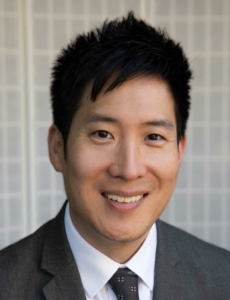
UCLA Luskin’s Michael Lens spoke to KCBS News’ “Ask the Expert” program about repercussions from the plummeting birth rate in the United States.

The trend is caused by several factors. Many women are more financially independent than in past generations and may choose to delay childbearing. Others, however, are deterred from starting a family due to the high cost of living.

“It’s a much more financially daunting landscape for today’s 18- to 30-year-olds starting out in the world than it was 30 years ago,” said Lens, a professor of urban planning and public policy. “It’s a really damaging thing if young people who want to have children feel financially unable to make that work.”

Advanced economies in the modern era often see declining birth rates, and the consequences include fewer people of working age who are able to hold up the social safety net for those who are retired, Lens said.

UCLA Housing Voice Podcast Celebrates 100 Episodes Hosted by Shane Phillips, the podcast continues to bridge the gap between academic research and real-world housing solutions.

The UCLA Housing Voice Podcast, produced by the Randall Lewis Housing Initiative at the UCLA Lewis Center for Regional Policy Studies, will release its 100th episode on October 22. The podcast, a biweekly program managed by Shane Phillips and joined by UCLA Luskin professors Michael Lens, Paavo Monkkonen, and Mike Manville as occasional co-hosts, aims to translate emerging housing research into practical insights for practitioners, policymakers, and the broader public.

Each episode features conversations with housing researchers on topics such as affordability, displacement, land-use policy, and tenant protections. The Randall Lewis Housing Initiative supports this work by producing research and public programming to shape public discourse. 

As a recent review from HousingForward Virginia put it, “What makes this podcast particularly valuable is how Phillips and his co-hosts translate academic jargon into practical insights. They don’t just present findings—they dig into what the research means for practitioners, policymakers, and communities.” 

Since its debut, the podcast has explored a wide range of topics, from California’s Senate Bill 9 duplex law and inclusionary zoning policies to comparative housing laws in countries such as Japan and New Zealand. Across its first 99 episodes, the series has traced the evolving global conversation on housing equity and policy innovation. 

The 100th episode will be available October 22 on all major podcast platforms. 

Two New Faculty Members Join UCLA Luskin Department of Public Policy

This fall, the UCLA Luskin School of Public Affairs welcomes two new assistant professors to its Department of Public Policy: Isaac Opper and Carlo Medici. Both scholars are economists who use empirical research and data-driven methods to explore policy-relevant questions that shape education, labor markets, and public institutions.

“We are excited to have recruited two extremely talented economists who we expect will not only contribute to scholarly research but also contribute to informing policy,” says Robert Fairlie, professor and chair of the public policy department. “They are both studying topics of utmost relevance. Students in our program and more broadly at UCLA will benefit from their expertise in microeconomics, statistics, and policy topics around immigration, labor, education, and other topics.”

Isaac Opper, an applied microeconomist, focuses on education policy and the statistical methods used to evaluate its effectiveness. “My largest body of work studies how education policy can be designed to improve student outcomes,” he said. This year, he will teach required statistics courses for both undergraduate Public Affairs and Master of Public Policy students. Opper added that he’s eager to “move from evaluating specific policy interventions to thinking more broadly about public policy,” continuing a career devoted to evidence-based reform. 

Carlo Medici, whose expertise spans labor economics, political economy, and economic history, studies the interaction between immigration, labor markets, and institutions. “I’m especially looking forward to working with colleagues and students who are passionate about how institutions and policies shape the economy,” Medici said. His research draws on both contemporary and historical data to illuminate the roots of modern policy challenges. 

California vs. Texas: How ICE Enforcement Differs, According to New UCLA Report

ICE arrests in California and Texas look dramatically different, according to new research from the UCLA Center for Neighborhood Knowledge.

While California has a larger immigrant population, Texas experienced arrest rates three to four times higher, reflecting differences in state cooperation with ICE and broader political climates.

The report notes significant variation in the profiles of those detained. In California, fewer individuals had pending criminal charges, and there were fewer transfers from jails and prisons compared with Texas. California also experienced a higher proportion of arrests among immigrants without prior criminal records, suggesting that state-level policies and political orientations heavily shape ICE enforcement outcomes.

These findings highlight the differences in federal immigration enforcement across states and underscores the importance of considering local policy environments when assessing the human and social consequences of ICE operations.

UCLA Center for Neighborhood Knowledge Reports Surge in ICE Detentions of Asians

The UCLA Center for Neighborhood Knowledge and the UCLA Asian American Studies Center released a joint research brief, “ICE Detentions of Asians: Increased Numbers and Hardships Under Trump.” The report details the Asian immigrant arrests by ICE surged during the first half of President Trump’s term. From February to July 2025, arrests more than tripled compared to the same period under the Biden administration, rising from 1,054 to 3,705. Arrests spiked in May with Trump’s push for one million deportations annually, peaked in June, and dipped in July under mounting opposition, court rulings, and overworked ICE staff.

Nearly all arrestees (96%) were detained, up from 88% the previous year. Transfers between detention centers also increased, which made it difficult for family members to locate the detainees and to help secure adequate legal counsel. California, Texas, and New York accounted for nearly half of all arrests, with California experiencing a ninefold jump.

Detainee demographics shifted notably: median age rose from 35 to 40, older detainees (55+) doubled their share, and female detainees rose by 471%, climbing from 9% to 14% of the total. Five countries—China, India, Vietnam, Laos, and Nepal—accounted for 82% of Asian detainees.

Despite Trump’s promise to target the “worst of the worst,” most detainees lacked criminal records. By June and July 2025, non-criminal detainees outnumbered those with convictions two to one. The report concludes that “the dragnet is expanding as the Trump administration hires more ICE agents, builds additional detention centers and has a freer hand to make indiscriminate stops that include elements of racial profiling.”

UCLA’s Mark Peterson Receives Inaugural APSA Career Achievement Award in Health Politics and Policy

Mark A. Peterson, UCLA Professor of Public Policy, Political Science, Health Policy and Management, and Law, and Senior Fellow at the UCLA Center for Health Policy Research, has been honored with the inaugural Career Achievement Award from the Health Politics and Policy Section of the American Political Science Association (APSA). The award was presented by Julianna Pacheco, outgoing Section President, during APSA’s annual meeting in Vancouver, Canada, on September 12, 2025.

The award recognizes Peterson’s decades-long contributions to understanding and shaping health policy, his mentorship of younger scholars, and his enduring impact on both the field and public life. A leading scholar on American national institutions, Peterson has focused much of his research on the Presidency, Congress, interest groups, and public opinion, with particular attention to health care policy, Medicare reform, and HIV/AIDS politics. He has authored numerous influential works, including Legislating Together: The White House and Capitol Hill from Eisenhower to Reagan and co-edited volumes for the Annenberg Institutions of American Democracy Project, one of which received APSA’s Richard E. Neustadt Award.

Beyond scholarship, Peterson has shaped policy through advisory roles in Congress and California state agencies, contributed to the Blue Sky Health Initiative, and guided health care reform efforts including the Affordable Care Act.

Reflecting on this recognition, Peterson said,  “Receiving this inaugural Career Achievement Award from the Health Politics and Policy Section of the American Political Science Association was an unexpected honor.  As I said to my colleagues in the Section, now populated by subsequent generations of scores of younger and innovative scholars, it has been exciting to participate in and watch the emergence of the study health politics and policy making, and its real-world influence, become so prominent in the discipline of political science.”  

New Mexico to Become First State Offering Free Universal Child Care

NBC reports that New Mexico will become the first state in the U.S. to provide free universal child care, Gov. Michelle Lujan Grisham announced. The program, expanding an existing initiative, will cover all families starting in November, regardless of income, saving households an average of $12,000 per child per year. The expansion also includes a $13-million fund to build, expand, and renovate child care facilities.

The initiative reflects New Mexico’s ongoing commitment to early childhood education, following the 2019 creation of the Early Childhood Education and Care Departmen.

“New Mexico is creating the conditions for better outcomes in health, learning, and well-being,” said Neal Halfon, UCLA Luskin professor of public policy, calling the program “a model for the nation.”

Centering Youth Voices in Policy: MPP Student Theresa Willmott-McMahon on Her Summer with Young People to the Front

What organization or agency are you working with this summer, and what are your primary responsibilities daytoday? 

This summer I’m working with Young People to the Front (YP2F), a research and policy lab focused on amplifying youth voices and strengthening systems to make youth homelessness as rare and brief as possible. This internship sits perfectly at the intersection of my career interests, combining policy research with the ways we disseminate and consume information as humans, all centered around a social issue I’m passionate about.

My day-to-day responsibilities span several areas. I primarily work on research and policy reports. This includes writing, creating data visualizations, and implementing creative design that help tell compelling stories with the findings. I also contributed to YP2F’s annual impact report and have taken the lead on creating a zine about the inaugural YP2F Youth Homelessness Research Conference. On the communications side, I support media strategy development that makes YP2F’s work accessible to broader audiences.

headshot of theresa willmott-mcmahon

What’s one insight or perspective you’ve gained that surprised you, shifted your thinking, or changed how you approach public policy? 

Working at YP2F has fundamentally shifted how I think about research communication and approachability in policy work. I’ve learned that sharing research effectively means making it truly accessible and tailored to the communities it aims to serve, especially young people. Rather than relying solely on traditional policy reports, YP2F combines narrative with data, using creative formats like zines, social media, and podcasts.

In an era where data and scientific evidence face constant challenges, we must adapt our communication strategies to maintain the foundation of evidence-based policy. Narrative is the most powerful tool for persuasion and YP2F’s model of weaving youth voices throughout every aspect of the research process, not just as subjects but as collaborators and storytellers, has shown me how policy work can be both rigorous and deeply human.

How has this experience shaped your career goals or next steps at Luskin? Any advice for peers seeking similar internships or research opportunities? 

YP2F represents exactly the kind of organization I want to work with long-term because it uniquely combines research, communications, and advocacy. This integrated and community-forward approach to policy work is what I hope to pursue in my career. I first discovered YP2F through their podcast, Young People to the Front (you should check it out). I continued following their work because their approach to policy aligned so well with my goals. When it was time to find an internship, YP2F hadn’t posted any openings, but I reached out directly to their team, secured external funding, and made it work because I knew it would be an ideal fit.

My advice for peers seeking similar opportunities is to be proactive and strategic. Follow organizations in your areas of interest even when they’re not actively recruiting and don’t limit yourself only to posted internship opportunities. If you find an organization with a mission and approach that resonates with you, reach out directly. In my experience, particularly in LA’s homelessness policy space, the community is incredibly connected and collaborative. People genuinely want to help each other, so even if your first contact doesn’t pan out, they might connect you with other opportunities. The key is demonstrating genuine interest in the work and being willing to take initiative to make connections

Theresa stands in a room speaking in front of a group of colleagues at her summer internship.

From the Chicano Moratorium to Today: Zepeda-Millan on Boyle Heights’ Legacy

Chris Zepeda-Millan, UCLA associate professor of public policy and Chicana/o and Central American Studies, emphasized the Chicano Moratorium’s role in shaping immigrant rights activism in a recent article by Boyle Heights Beat. He explained that Boyle Heights–based organizers like Bert Corona and Chole Alatorre developed strategies to defend undocumented communities and trained activists to see migrant rights as human rights.

“Chicanos and Mexican immigrants in Boyle Heights can be credited for laying the foundation for the modern-day national immigrant rights movement,” Zepeda-Millan said, underscoring the community’s pivotal role.

He pointed to young people continuing this legacy: “Today’s activists in Boyle Heights and the broader East L.A. area are carrying on that legacy of fighting to protect and expand the rights of all members of our community, regardless of their citizenship status.”

Designing Patient-Centered Care: Jenny Gao’s Policy Internship with Kaiser Permanente

From classroom to care strategy: A Luskin Public Policy student’s summer at Kaiser Permanente shaping patient-centered health policy.

Where are you working this summer and what are your primary responsibilities or focus areas day-to-day?

I’m working at Kaiser Permanente this summer as a Care Delivery Strategy Intern on the National Clinical Services team. Our team consists of specialists from multiple disciplines to design care that is more personalized, predictive, and coordinated for patients and members. We focus on creating seamless experiences across settings, from prevention and early intervention to acute care and long-term support. Our work spans a range of areas, from kidney care services to national initiatives like improving end-of-life care through the Dignified Journeys program. In my role, I contribute to multiple projects within these portfolios, supporting strategies that advance our goal of ensuring that patients receive the right care at the right time in the right place.

Have you drawn on any skills, concepts, or lessons from your Luskin coursework in your summer role? If so, how have they come into play?

One of the most valuable skills I’ve been able to apply from my Luskin coursework is stakeholder engagement. At Kaiser, this takes on a unique context because the organization is both the insurance plan and the care provider. My projects have involved collaborating with a wide range of stakeholders that include operations leaders, managerial consultants, project managers, physicians, nurses, and more. Through these projects, I’ve gained a deeper understanding of how each stakeholder’s background, training, and responsibilities shape the way they approach challenges. 

Drawing on what I’ve learned at Luskin, I’ve practiced actively listening to their perspectives while identifying common priorities and finding ways to cater towards different viewpoints to move projects forward. I’ve also been able to apply lessons on decision making analysis, particularly around balancing multiple priorities such as efficiency, equity, and cost. Our Luskin coursework has given me the lens to carefully consider how each decision impacts our overall goal of optimizing the quality of care and quality of life for patients and members.

Describe a specific project, interaction, or milestone this summer that made you think, “Yes, this is why I chose this field.” What did you take away from that moment?

One of my goals this summer has been to connect with colleagues across Kaiser and learn from their career journeys. A memorable conversation I had was with a senior operations leader working on a falls prevention initiative. He shared his journey from starting out as a physical therapist to now leading national research and advocacy efforts to reduce falls, while still working directly with complex case management. Hearing the statistics behind this initiative was compelling, for example, in older adults, a serious fall can increase mortality rates by nearly 50%. In more complex cases, families and clinicians face difficult decisions about whether surgery will improve quality of life, given the risks of recovery. What inspired me was how he balances both the individual impact of serving vulnerable patients with the large scale change of shaping policy and strategy within Kaiser. His work showed me that improving care for vulnerable populations requires both empathy and strategy, understanding lived experiences while building solutions that can optimize their quality of life. Witnessing how much meaning he finds in connecting direct patient care with national strategy deeply inspired me and reinforced why I want to dedicate my career to advancing health policy.