Assembly Speaker Anthony Rendon Opens UCLA Luskin Summit Legislative priorities relating to police reform and climate change are topics of focus in the keynote webinar to begin the third annual conference

By Les Dunseith

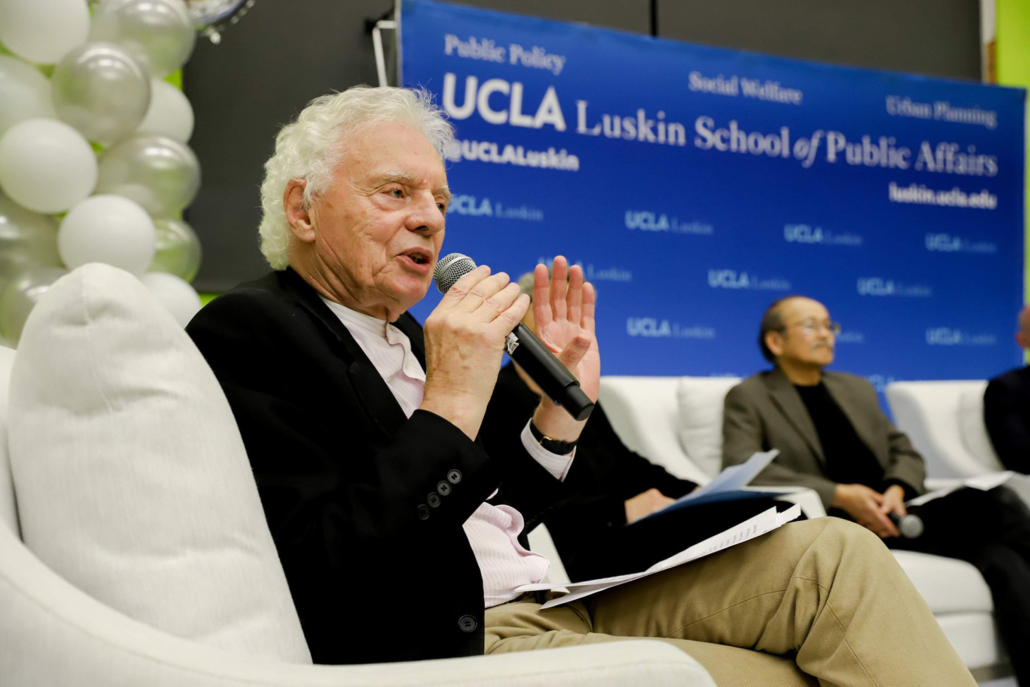
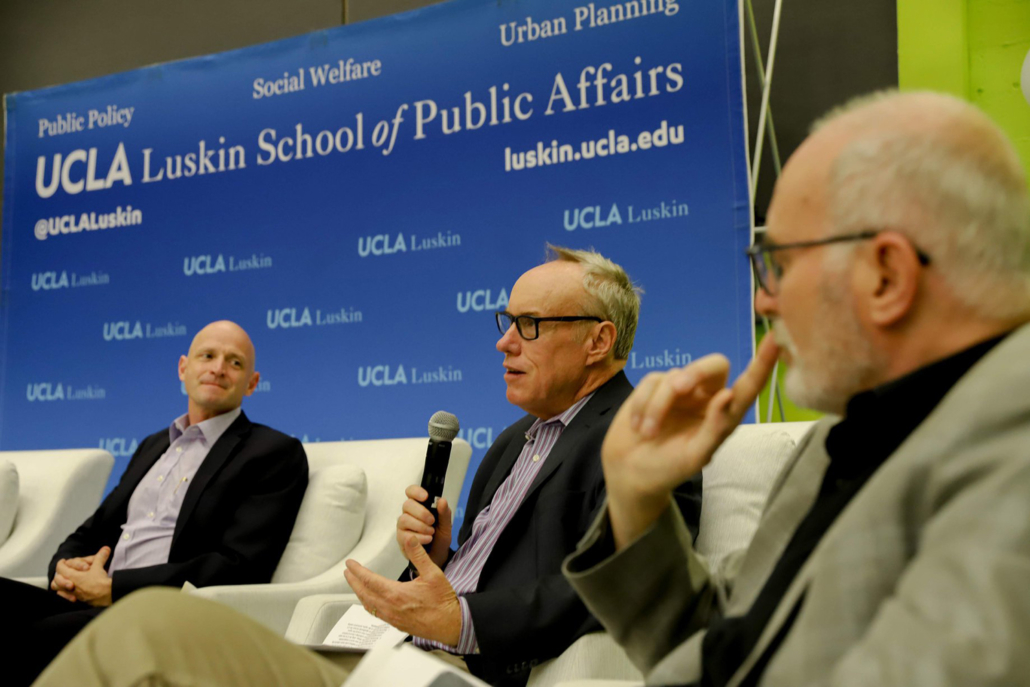
California Assembly Speaker Anthony Rendon spoke about California’s policy priorities during remarks Jan. 28 when the UCLA Luskin School of Public Affairs opened its third annual Luskin Summit.

As one of the state’s top political leaders, Rendon outlined his legislative priorities for 2021 — police reform, climate change and broadband internet access —  as the first presenter in a virtual series of discussions set to continue in February, March and April.

Dean Gary Segura said Rendon was invited to open the Summit in part because his background and political views are of interest to UCLA students, faculty and alumni. “In his career as educator, child well-being advocate and policy innovator, Rendon represents the best values of the Luskin School and our mission.”

Addressing the COVID-19 pandemic, Rendon, a Democrat, said Californians are already seeing benefits from the election of Joe Biden as president.

“One thing we can be sure about is the importance of having a plan. Throughout 2020, when COVID first appeared on our radar, we did not have a national plan,” Rendon said. “Biden came in, and he released a plan in his first week.”

He noted the tension that existed on many issues between the Trump administration and California officials, which led state leaders to work independently of the federal government on issues such as immigration and climate change.

“With Biden in the White House … I think we’re going to have a little bit more help and more opportunities to work with this administration instead of against it,” Rendon said.

As a legislative leader, Rendon has stressed inclusion and diversity, and he noted that more women hold committee chairs today in the state assembly than at any time in the past. He also pointed to his appointment of the first Muslim, Imam Mohammad Yasir Khan, to serve as assembly chaplain.

His leadership style emphasizes sharing of responsibility, Rendon told the online audience of more than 100 scholars, social services advocates, philanthropic and public leaders, and other interested parties. 

“I believe that the assembly works best when the individual members of the assembly, particularly the chairs, are able to utilize their skills, to utilize their life experiences,” he said. For example, Rendon said he has sought to embolden the chairs of legislative committees related to health and education whose expertise exceeds his own. “That’s been my philosophy, that I can be the best leader if I’m enabling others to do their jobs.”

In terms of legislative priorities, Rendon acknowledged that California lawmakers “fell short” on police reform in 2020, including failing to pass a bill that would have changed the disciplinary processes for police officers.

“We need to change those processes so that public safety is not just about officer protection,” he said. “Of course, we want to make sure that we’re not endangering the people we trust with patrolling our streets and neighborhoods, but we also have to make sure that they are careful.”

Rendon said California is already a national and international leader in dealing with climate change, but more work can be done.

“We need to ask if our climate change actions benefit disadvantaged communities,” he said, noting that his assembly district includes some of the most densely populated areas in the nation. “Southeast L.A. communities have around 17,000 people per square mile, but we have severe park shortages.”

Parts of his district were once farmland, but when they were developed for housing, the emphasis was placed on building high-density apartment dwellings without retaining open spaces. “Parks and vegetation are really important ways to reduce the heat island effect that drives warming in urban communities,” Rendon said.

His third legislative priority for 2021 also focuses on disadvantaged communities. In the past, discussions about a lack of broadband internet access centered around rural communities in the extreme north and south of the state.

“When COVID happened and when folks started having to go online for schooling, we discovered that there was a lack of broadband access all over the place,” Rendon said. “And those problems really started to manifest themselves, particularly in disadvantaged communities.”

He views the internet today as a critical public utility. “It’s not just a rich and poor issue; not just an urban and rural issue,” Rendon said. “It’s an issue that affects every single part of the state.”

In answer to a question posed by Segura about housing affordability, Rendon talked about visiting a neighborhood where he had once lived and noticing a flurry of housing construction. He reached out to a local official to praise the effort, only to be told to take a closer look at the upper floors of the newly occupied buildings.

“Those are all dark, right? Nobody lives there.”

In Rendon’s view, this example illustrates an ongoing problem in a state in which high-end housing continues to be built without enough pressure being brought on developers to balance their projects with affordable units.

When he first got to Sacramento, Rendon said, he noticed a disconnect in people’s minds between housing and homelessness. Over time, this misconception has slowly changed, in part because of “incredible data that show the number of people who would become homeless if they missed one month of pay, if they missed two months of pay.”

To further illustrate his point, Rendon noted that as assembly speaker he serves on the UC Board of Regents and the Cal State Board of Trustees. The statistics on housing scarcity among university students are staggering, he said, noting that many students can be found sleeping in their cars or couch surfing with friends from one night to the next.

“We know that housing and homelessness are linked,” said Rendon, whose 20 years of work in the nonprofit sphere often leads him to look for solutions in service delivery mechanisms. “I think if we’re going to solve the housing crisis, we need to address homelessness. And if we’re going to address homelessness, we really need to think about comprehensive services for homeless folks and for near-homeless folks.”

Additional information about the Luskin Summit, including previews of other sessions and a registration link, can be found online. Sponsors include the Los Angeles Rams, Gensler, the Weingart Foundation and the California Wellness Foundation. The media partner is ABC7 in Los Angeles.

In late April, the final event of Luskin Summit 2021 will be unveiling of the 6th annual Quality of Life Index, a project at UCLA Luskin that is supported by The California Endowment and Meyer and Renee Luskin under the direction of Zev Yaroslavsky, director of the Los Angeles Initiative. The survey asks county residents to rate their quality of life in a range of categories and to answer questions about important issues. Last year’s survey happened to coincide with the early stages of the pandemic.  

Watch a recording of the keynote session:
Bruins Play Key Roles in Report Calling for Sweeping Reforms in L.A. Dean Gary Segura and Luskin School students are among the many UCLA contributors to ambitious effort to reimagine life in the region from a racial justice perspective

By Les Dunseith

A new report that lays out a road map for the transformation of the Los Angeles region built on racial equity is rooted in research from the UCLA Luskin School of Public Affairs. The report’s co-authors are Gary Segura, dean of the Luskin School, and Manuel Pastor, director of the University of Southern California’s Equity Research Institute.

The paper, “No Going Back: Together for an Equitable and Inclusive Los Angeles,” was issued Sept. 9 and shared with a UCLA audience Sept. 15 at a virtual salon. At more than 250 pages, the report is a comprehensive examination of the hidden barriers to success that limited many of the city’s residents even before COVID-19, but have been exacerbated since the pandemic began.

A wide swath of the Bruin community contributed to the paper. Numerous faculty and staff members provided new research, offered historical context and analyzed existing data. UCLA alumni serve on the Committee for Greater LA, which developed the report. And a handful of current UCLA students conducted research that fed the recommendations.


Those students, Antonio Elizondo, Dan Flynn, Mariesa Samba and Ellen Schwartz, share a passion for building a new Los Angeles grounded in social justice and racial equity.

Flynn, a second-year graduate student, contributed to the report’s sections on health and homelessness. His experience working with nonprofit agencies has made him acutely aware of the need to think differently about the region’s homelessness crisis.

“You’re looking at 70,000 unhoused people in Los Angeles at any given point,” Flynn said. “There’s no way to look at that issue and describe it as anything other than a failure — and a catastrophic one, with immense human cost. There has been a failure to build systems of accountability and to hold people responsible and accountable.”

Setting forth a strategy to create accountability to end homelessness is among 10 guiding principles (PDF) that underlie the report, which also tackles economic justice, mental and physical health, child and family well-being and other topics.

Samba is pursuing a master’s in social welfare and is a graduate student researcher at the Black Policy Project at UCLA. She contributed to sections of the report that related to children, families, mental health and justice.

“A lot of the work that I do is within the community with folks who are directly impacted by the pandemic,” she said. “Especially with this project, my top-line goal was to uplift those voices and experiences into the research.”

The report builds on the personal insights of the researchers and the people they interviewed to identify social problems, pairing those lived experiences with data to point toward solutions. For example, research findings about the impact of the COVID-19 pandemic on education highlighted the region’s racial disparities. Under Los Angeles’ safer-at-home orders, Black and Latino schoolchildren have been far less likely to be able to engage successfully in remote learning because of a lack of computers and access to high-speed internet connections.

As Segura noted during a Sept. 9 webinar to unveil the report to the general public, public officials are expected to ensure that residents have access to electricity, trash collection and a sewer system — so why not something as vital as the internet?

“The time has come for us to think about the internet as what it has become,” he said. “It is a civil right.”

The opportunity to think about such issues in new ways appealed to the UCLA Luskin students who played a role. Plus, there were practical benefits. For example, Schwartz was happy to work on the transportation section of the report because that’s her area of concentration as an urban planning master’s student. But her biggest takeaway from the experience was the mindset of the project’s leaders.

“What I loved seeing is how the community leaders on the committee really focused on empowerment. That’s something that I want to take with me into my own career,” she said.

“… work remains to be done to prevent those long-term effects from being catastrophic.”

—Antonio Elizondo

Elizondo, a master’s student in urban planning, said during the virtual salon that the most impactful aspect of his involvement in the project came during his review of interviews with people impacted by the health crisis and thinking about the repercussions.

“At the moment, it’s an unfolding crisis, so every policy response is a short-term response,” Elizondo said. “This project helped me realize that there will be long-term effects, and how much work remains to be done to prevent those long-term effects from being catastrophic.”

The Committee for Greater LA comprises a diverse group of civic and community leaders and a joint research team from UCLA Luskin and the USC Equity Research Institute. Initially, the committee intended primarily to address the racial disparities exposed by the pandemic, but in the wake of the recent police-involved killings of Black people and the nationwide protests that followed, its focus expanded to encompass a broader understanding of systemic racism.

The UCLA students helped Segura with the policy-related aspects of the report, which cover issues like housing affordability, immigrant rights, alternatives to incarceration, transportation and equitable access to health care, among others. Because of the pandemic, the work had to be coordinated via phone, email and Zoom sessions.

Flynn, who is pursuing a master’s in public policy, said he appreciated the chance to work directly with the dean on a project of such ambition and scope.

“What makes UCLA such a special place is that you have world-class academics and practitioners who are not just interested in generating work but are interested in mentorship and teaching and in giving opportunities to the next generation of policymakers,” he said.

As gratifying as the work was, the students realize the real work is still to come. Schwartz said she’s hopeful that society is ready to adopt the meaningful change advocated in the report.

“We live in a world where people are really isolated and don’t always know what’s going on in the community,” she said. “I hope that this report will just shed some light on issues that people are facing and that it will inspire elected officials to take action and make real, lasting changes to the system.”

Samba said her participation offered a unique opportunity to process her emotions about the extraordinary impact of the COVID-19 crisis, particularly because of how it coincided with the growing racial justice movement — and she sees cause for hope.

“We’re at a point in time where we are trying new things,” Samba said. “We’re able to experiment with our justice system, with our foster care system, with what social services look like, with what community care looks like. I would like to see some of those social experiments — some of those new ideas and visions — become real, and for us not to revert to the status quo. I would love to see us really, actually reimagine what a more racially equitable future looks like for the people of Los Angeles.”

Among the other UCLA connections to the effort: The Committee for Greater LA is chaired by Miguel Santana, a member of the Luskin School’s advisory board, and the project is funded in part by philanthropists who have also supported UCLA.

The Committee for Greater LA has invited interested parties, including policymakers and candidates for elected office, to join in making the #NoGoingBackLA promise, a commitment to build a more equitable and inclusive Los Angeles. Sign up at nogoingback.la.

Seeking Public Housing Solutions for Japan in Los Angeles Urban planning alumna Kimiko Shiki returns to UCLA Luskin as a visiting scholar

By Lauren Hiller

Housing choice vouchers in the United States allow low-income families to move into neighborhoods with greater opportunities and resources. But these vouchers may provide opportunities beyond housing — access to employment, transportation and welfare programs that can improve general economic conditions.

As a visiting scholar this year at the UCLA Lewis Center for Regional Policy Studies, UCLA Luskin alumna Kimiko Shiki MA UP ’01, Ph.D. ’08 will investigate the relationship between housing choice vouchers, residential mobility and opportunities in Los Angeles. The associate professor of policy science at Ritsumeikan University in Osaka, Japan, specializes in the housing-location decisions of low-income households and their spatial access to employment opportunities, transportation and welfare services.

Shiki’s doctoral research at UCLA focused on why low-income households are concentrated in dense communities in U.S. cities. At the Lewis Center, Shiki said she plans to use Department of Housing and Urban Development administrative data to analyze low-income residential mobility in Los Angeles from housing choice voucher recipients.

Unlike in the United States, public housing in Japan is often located in the suburbs because of the scale and cost of construction, but transportation access and employment opportunities are more limited outside an urban core.

“Suburban locations can be good for housing quality,” Shiki said. “But if you want to try out other jobs or use other childcare services, it may not work in the suburbs.”

According to her study in Kyoto, Japan, low-income families tend to apply for public housing near their residences in order to maintain their current jobs and local social support systems, Shiki said. Because public housing supply is highly limited geographically, as well as numerically, this means that many low-income families cannot choose to live in public housing.

Without a rental subsidy program, like housing choice vouchers, these households instead turn to a private market that has little economic support, Shiki said. Her research seeks to show policymakers that affordability is not the only consideration that low-income households must weigh when searching for housing.

“Urban poor often experience a lot of migration and mobility, and their needs for residential location change. They often have to move to other areas to find better opportunities,” Shiki said. Public housing doesn’t provide resources for various needs, she said, “but the private market might give them more options for residential location.”

Shiki said she understands the benefits of public housing and hopes her research will show how Japan can augment its services.

COVID-19 Pandemic Could Cost California Transportation Billions in Revenue New research highlights need for policymakers to prepare for a future shortfall

California could lose up to $20 billion in transportation revenue over the next 10 years because of the COVID-19 pandemic, according to research released May 12 by the Mineta Transportation Institute, or MTI.

Researchers Asha Weinstein Agrawal of MTI at San Jose State University and Hannah King and Martin Wachs of UCLA Luskin projected how much revenue will be generated over the next decade by state taxes on fuel purchases and fees on vehicle ownership. COVID-19 has reduced those revenues substantially because people are driving less and therefore buying less fuel.

Projected total revenue varied according to different economic recovery scenarios examined by the researchers.

“Under a worst-case scenario, a slow economic recovery could cause California to receive 17% less revenue through 2030 than the state would have received without COVID-19,” said Agrawal, the director of MTI’s National Transportation Finance Center. The projected revenue for the slow-recovery scenario is $98 billion, compared to a projected $118 billion without the pandemic.

State policy choices could impact projected revenues, according to the study. The researchers identified a recovery scenario that could generate $121 billion, a 3% gain, thanks to a swift and complete economic recovery coupled with policies to encourage Californians to purchase electric vehicles.

“California policymakers are hastily planning for a future with less-than-anticipated revenue,” said Wachs, a professor emeritus of urban planning at UCLA and a researcher at its Institute of Transportation Studies. “The scenarios in this study are not predictions of what will happen, but with so much uncertainty about the future, they help policymakers ask important ‘what if’ kinds of questions.”

The study focused on transportation revenue collected by the state thanks to a package of taxes and fees established in 2017 by Senate Bill 1. This revenue comes from gasoline and diesel fuel taxes, an annual fee on vehicles with the rate based on vehicle value, and an annual fee for zero-emission vehicles.

The report did not include transportation funds in California that are raised locally through transit fares, tolls, sales taxes and property taxes. Nor did it include any federal funding that would aid in transportation recovery.

A shortfall in state transportation revenue would trickle down to drivers.

“Revenue shortfalls will likely result in both reduced maintenance and delayed capital investments,” Agrawal said. “Drivers will have to wait longer for planned improvements like replacing outdated bridges and rehabilitating freeways.”

The researchers modeled scenarios based on transportation-specific variables that are most likely to be affected by COVID-19, including fuel consumption, the number of registered petroleum-powered and electric vehicles, and the price of cars. They also projected potential revenue from possible government policies to stimulate the market, such as tax credits to encourage vehicle purchases.

Comparing them to a baseline of what was expected before the COVID-19 emergency, the researchers examined five recovery scenarios: 1) slow, 2) moderate, 3) moderate with a stagnated vehicle market, 4) moderate with an electric-vehicle stimulus, and 5) fast with an electric-vehicle stimulus.

The study was funded by the Mineta Transportation Institute at the request of the California Transportation Commission. The researchers were scheduled to present their findings during a virtual webinar on May 14.

The lead author of the study was Agrawal. King is a doctoral student in urban planning at UCLA.

Jerry Brown Speaks Out on Curbing Coronavirus and Building a Strong Future Former governor's conversation with biographer Jim Newton draws virtual audience of more than 1,300

By Mary Braswell

Former Gov. Jerry Brown shared his views on stepping up the fight against COVID-19 and repairing the rifts that divide Americans during an expansive conversation with Jim Newton, editor of UCLA’s Blueprint magazine and author of a new book on the California statesman’s life.

More than 1,300 viewers tuned in to the May 12 webinar to hear insights from Brown, who built a reputation as both pragmatist and visionary in his half-century of public service, including four terms at the state’s helm.

The virtual audience had the opportunity to pose questions during the hour-long session, organized by the Los Angeles World Affairs Council & Town Hall and the nonprofit Writers Bloc, in partnership with the 2020 UCLA Luskin Summit.

The webinar took place amid a nationwide debate about how best to contain the novel coronavirus. Newton, author of the new biography “Man of Tomorrow: The Relentless Life of Jerry Brown,” asked the former governor how he would balance the dueling imperatives of protecting the nation’s health and reviving its economy.

Singling out Taiwan as a nation that acted swiftly and effectively to curb the virus’ spread, Brown urged that anyone infected be quarantined away from their families. The urgency of widespread coronavirus testing cannot be underestimated, he said, faulting the federal government for failing to mobilize the nation’s resources to fight the virus.

“This is a great manufacturing powerhouse, we’re a great biotech innovative powerhouse as well,” he said. “So the fact that we don’t have the tests we need, not by the hundreds of thousands but by the tens of millions every day, is leading to the problem we’re now at.

“The longer you wait, the harder it is, the more people get sick, suffer and die,” Brown said.

To rebuild the economy, the former governor invoked the words of Franklin Delano Roosevelt, who called for “bold, persistent experimentation” in his New Deal package of relief and reforms following the Great Depression.

“We need that. Not partisan rancor, not petty politics, not halfway measures. To get this economy going with so many people sequestered at home requires massive federal spending and investment,” Brown said.

He called for the immediate launch of ambitious infrastructure projects to reopen hospitals, bring internet access to rural areas, and build roads, highways and high-speed rail. The projects, he said, would be staffed through a jobs program that would provide a livelihood for millions of Americans now facing prolonged unemployment.

“I would call this really a Rooseveltian moment. And it ought to take into account all the problems that we have. Whether it’s the maldistribution of income and opportunity, whether it’s the pending challenge of climate disruption, all these things are on the table,” he said. “Unfortunately, if we can’t do them right in calmer days, it’s going to be very difficult.”

Known for sprinkling his comments with historical references, Brown cited Roosevelt numerous times and also namechecked economists John Maynard Keynes and Friedrich August Hayek, inventor and architect Buckminster Fuller, and Supreme Court Justice Edward Douglass White, who served in the early 20th Century.

But the names most cited were Donald Trump and Mitch McConnell, the president and Senate majority leader whom Brown held accountable for both an inadequate COVID-19 response and a fractured populace.

“If the choice is Trump for another four years … all these problems, from my vantage point, are going to get much, much worse, dangerously so,” Brown said, looking ahead to the November election.

“We have a lot of challenges and probably the biggest is building trust in our leadership, which is now being done better by our governors than by those occupying a power pole position in Washington,” he said.

Brown, a longtime Democrat whose own presidential aspirations fell short, predicted that an era of greater national unity lies ahead — but it requires abandoning far-reaching proposals from both the political left and right.

“I think we do need a unifier. I know we need polarization to activate the electorate, but in governing we need someone who reaches beyond the particular issues that are currently the stuff of campaigning,” Brown said.

“And that’s why politics is not all that satisfying and why politicians are not enduringly popular.”

Fielding audience questions, Brown weighed in on a range of topics.

On the future of financing higher education in California, he said, “We need to change the university from being an arms race of amenities to one that will be more limited but also fully creative. … The current course is not sustainable without a rising burden put on students, and I think that would be very wrong.”

On his signature issue, combating climate change, he called for an era of “planetary realism” and noted that the coronavirus emergency offers a sober lesson: “If you delay, if you don’t seize the moment when you can, you pay a much bigger price.”

And on maintaining hope amid an array of global threats, Brown took a poetic turn:

“I look out the window here and the wind is blowing on the walnut tree in front of me, the oak trees, the leaves, they’re flourishing” even amid drought, he said. “The rabbits are running around, the dogs are chasing the squirrels, the coyotes are howling at night. …

“Life — just to be here and be part of it — is quite a lot. So to worry, to think about down the road how it’s going to turn out? That’s fortune telling. That’s ouija board stuff.

“Do what you can do in the moment that you have. And God will take care of the rest.”


Virtual Conference Shines Light on Women’s Transit Safety Issues New UCLA report on transit safety of college students is released during InterActions LA

By Lauren Hiller

A new UCLA study found that being a woman, identifying as LGBTQI, having a long commute, or waiting in poorly lit areas significantly increased the likelihood of being sexually harassed on public transit.

In the UCLA Lewis Center for Regional Policy Studies report, “Transit Safety Among University Students,” Anastasia Loukaitou-Sideris of UCLA Luskin Urban Planning and researchers sought to better understand the characteristics of individuals and circumstances that increased their risk of harassment during their public transit journeys.

Professor Loukaitou-Sideris reported the findings during the Lewis Center’s April 3 InterActions LA conference, which brought together researchers, transit agencies and community activists around the topic of women’s safety in transportation.

The study surveyed 1,284 students from UCLA and the California State University campuses of Los Angeles and Northridge. According to the report, this population was chosen because university students are typically more transit-dependent than the general public, and because their young age may make them more vulnerable to victimization. Los Angeles was one of numerous cities studied as part of a global research project.

Much of the preexisting data on perceived safety and incidents of sexual harassment on transit in Los Angeles did not identify such characteristics as gender, sexuality and race. This study also uniquely delved into when in the course of a transit journey — walking to or from a station, waiting for the bus or train, or on the actual vehicle — sexual harassment occurred.

According to the study, 72% of respondents experienced some form of harassment on a bus, compared to 48% on rail, with women experiencing far more numerous instances than men. However, very few students (10%) reported the experience to either law enforcement or transit agencies. And more than half of women reported changing how they dressed or adjusting their travel patterns, such as riding only during daytime or waiting in well-lit areas.

Because women make up more than half of transit riders in the United States, Loukaitou-Sideris said it’s imperative to prioritize their safety.

“Their safety is an important concern that we need to tackle if we want to have more women riding transit and — for women who are already captive transit riders — riding transit more comfortably and without fear,” she said. “I think everyone deserves that in our transit systems.”

Safe Transit During COVID-19

The challenges that women and vulnerable populations face have only been magnified by the current COVID-19 crisis. Under statewide and local “safer at home” orders, it is frequently low-income women of color who are still traveling to work to provide essential services to the rest of the region, according to the other panelists at the InterActions event, including speakers from Pueblo Planning, Los Angeles Walks and Alliance for Community Transit-Los Angeles (ACT-LA).

“COVID-19 has revealed that our transit system is a lifeline,” said Mariana Huerta Jones, senior coalition and communications manager at ACT-LA, a nonprofit organization dedicated to ensuring equitable access to public transit infrastructure and funds.

During the InterActions presentation, Huerta Jones said public transit is often the only transportation option available to low-income residents working in jobs deemed essential in industries such as grocery stores, hospitals and sanitation.

Ensuring Women’s Safety

Other InterActions speakers like Monique López, founder and social justice planner at Pueblo Planning, spoke about the importance of including the voices of marginalized communities when crafting policy recommendations. And Daisy Villafuerte, advocacy and engagement manager from Los Angeles Walks, discussed grassroots efforts to improve transit experiences.

Presenting the next steps from LA Metro’s recent “Understanding How Women Travel” report, Meghna Khanna, senior director of the Countywide Planning and Development Department, and her team found that safety is still the biggest concern and barrier to riding transit for all women riders. While 60% of women felt safe traveling on Metro during the day, that number decreased to 20% at night.

Khanna and her team at LA Metro found that women frequently mentioned increased police presence as a solution that would help them feel safer on transit; however, not all transit riders agree.

“For many people of our community, more police doesn’t mean more safety. It can actually mean the opposite. It can mean racial profiling, harassment, criminalizing of poor or houseless individuals,” Huerta Jones said.

Solutions beyond policing — such as increased service frequency, improved cleanliness around stations, and the presence of non-police transit ambassadors — are just first steps in ensuring women can use transit without fear.

View a video about transit safety:

Opinions About Quality of Life in L.A. Vary Sharply Across Generations Annual UCLA survey finds less optimism among young and economically stressed residents

By Les Dunseith

Residents felt slightly better than last year about life in Los Angeles County, according to UCLA’s fifth annual Quality of Life Index, which was conducted just as the coronavirus crisis descended on the region last month. Ratings increased in all categories, with the exception of the two most directly affected by the pandemic — health, and jobs and the economy.

The overall quality-of-life rating rose from 56 to 58 (on a scale of 10 to 100) in the survey, released April 23 by the UCLA Luskin School of Public Affairs. Responses varied dramatically by age and household income, however. The survey took place between March 18 and 26, which coincided with the implementation of strict social distancing measures in the county and state.

“The slight increase in county residents’ satisfaction may be more of a reflection of the past year’s quality of life than of the new reality with which we have all been living for the last six weeks,” said Zev Yaroslavsky, director of the Los Angeles Initiative at UCLA Luskin. “Since then, we have been in uncharted territory, which we will be able to better measure in the months ahead.”

The onset of the COVID-19 crisis may have contributed to a sharp increase in how important health was to respondents when compared with the other survey categories. Sixty-five percent said health was of high importance in rating their quality of life, an 8% increase over the 2019 survey. This was second in importance only to the cost-of-living category, which has been the most salient category of the Quality of Life Index, or QLI, since its inception in 2016.

A telling takeaway from this year’s survey is a growing generational and economic divide among county residents. Respondents were asked whether Los Angeles is a place where people who work hard can get ahead. While 41% answered yes, a majority of 55% said no. That pessimistic outlook was held by 64% of those between the ages of 18 and 39 and 62% of those living in households with annual incomes of less than $60,000.

Housing and the fear of homelessness also remain priority issues for county residents. When asked whether they are worried about losing their home and becoming homeless as a result, 31% of respondents answered yes, an increase of 9% over last year. Thirty-nine percent of those between the ages of 18 and 39 and 48% of those with household incomes of less than $60,000 said they were worried.

“The notion that nearly 2 out of 3 younger and lower-income earners increasingly believe they are at an economic dead-end is a most distressing finding in our survey,” Yaroslavsky said. “When nearly 4 out of 10 young and economically stressed Angelenos go to bed each night worrying about becoming homeless, we are all diminished. This is a troubling trend that continues to plague our society.”

The QLI is a joint project of the UCLA Luskin Los Angeles Initiative and The California Endowment. Researchers ask a cross-section of Los Angeles County residents to rate their quality of life in nine categories and 40 subcategories. Full results are being released April 23 as part of UCLA’s Luskin Summit, which is being held virtually this year because of the ongoing health crisis. The host of that session is Adrienne Alpert of ABC7 in Los Angeles, where she is a reporter and host of a public affairs program, “Eyewitness Newsmakers.”

As in previous years, the 2020 QLI’s categories fell into three distinct tiers in terms of respondents’ level of satisfaction: a bottom tier including cost of living (45), education (50) and transportation and traffic (53); a middle tier including the environment (58), jobs and the economy (59), and public safety (64); and a top tier including health care (69), race relations (71) and neighborhood quality (71).

Overall satisfaction with quality of life rose across all age groups in the 2020 survey. Those aged 40 to 49 matched the index’s average score of 58, but those aged 39 and younger gave a rating of 54. Those older than 50 gave a 61 rating, a significant increase over last year. Older respondents are generally more satisfied with their financial security in retirement, while younger residents are less secure and more concerned.

Other key findings

  • The results of questions directly related to the coronavirus were released publicly on April 8. County residents expressed high concern over the virus’s impact on their health (79%) and economic situation (82%). In addition, 61% gave local public health officials high marks for their response to the pandemic, compared with 39% for federal officials.
  • Almost two-thirds of people surveyed (63%) favor building housing in their neighborhoods to help transition people out of homelessness, as long as the housing includes access to medical and social services and has on-site security.
  • Sixty-two percent of those surveyed had a favorable opinion of Los Angeles Mayor Eric Garcetti. A majority of respondents (53%) had a favorable opinion of the Los Angeles County Sheriff’s Department, but less than one-third (31%) had a favorable view of Sheriff Alex Villanueva, while 34% said they had no opinion and 13% had never heard of Villanueva.
  • Roughly 4 in 5 respondents (79%) expressed satisfaction with race relations in the county, and this strongly positive opinion was reflected across all demographic groups in the survey: Latinos (80%), whites (81%), Asians (77%) and African Americans (77%).

“One year from now, we will be living in a different world,” Yaroslavsky said. “In the past, Los Angeles has faced and overcome great challenges, but we are now in the midst of a crisis we could have never imagined. Next year, we will certainly know more about the extent of our region’s resilience.”

The 2020 UCLA Luskin Quality of Life Index is based on interviews with a random sample of 1,503 county residents conducted in both English and Spanish, with a margin of error of ­­plus or minus 2.5%. The QLI was prepared in partnership with the public opinion research firm Fairbank, Maslin, Maullin, Metz & Associates.


View a PowerPoint presentation about the 2020 L.A. County Quality of Life Index


View additional information about this year’s study and previous studies housed at the UCLA Lewis Center for Regional Policy Studies

UCLA Researchers Lead Coronavirus Transportation Response Research projects related to the health crisis will be fast-tracked for funding by the UCLA Institute of Transportation Studies and partners

By Claudia Bustamante

Amid the coronavirus outbreak, the UCLA Institute of Transportation Studies will fast-track funding for research projects related to COVID-19 and its effects on public health, the economy and transportation, with those submissions due by April 19 and funding to be dispersed by June.

As part of its research goals for the next fiscal year, UCLA ITS and sister institutes at UC Berkeley, UC Davis and UC Irvine pivoted priorities to investigate the effect of the novel coronavirus and COVID-19 on transportation in the United States. This quick adjustment will allow researchers across the University of California system to collaborate and harness their collective expertise in transportation engineering, planning and policy.

Transportation and transit use have rapidly shifted in the country due to social distancing recommendations, shelter-in-place restrictions, quarantines and other mitigation efforts meant to slow the spread of the virus.

The collective UC Institute of Transportation Studies will prioritize research projects:

  • looking into the response to the public health emergency, including the mobility needs of essential workers and vital goods;
  • the capacity of both the private and public sectors to meet transportation needs during the crisis;
  • the substitution of technology-enabled access for mobility in response to movement limitations.

It will also fund projects focused on the recovery of transportation services and systems when this public health emergency ebbs, including coping with the backlog of goods and people movement.

Brian Taylor, chair of UC ITS, said the California Legislature and executive branches, as well as regional and local governments and agencies, have come to rely on the statewide institute’s expertise and assistance in times of need.

“We aim to produce research that meaningfully informs public officials in making critical, and sometimes difficult, decisions about California’s transportation systems,” he said. “Now more than ever, UC ITS is committed to supporting the state with data and research to help it respond to and recover from the effects of this terrible pandemic in the weeks, months and years ahead.”

Taylor also serves as director of the UCLA branch and a professor of urban planning and public policy at the UCLA Luskin School of Public Affairs.

Established by the California Legislature in 1947, UC ITS funds about 50 research projects a year that cover a wide variety of topics, including congestion management, performance evaluation for state transportation programs and policies, climate change mitigation strategies, micromobility like scooters and bike share, among others. Over the past 25 years, the four ITS branches collectively have formed one of the world’s preeminent university transportation research centers.

The institute’s annual research program will divvy up about $800,000 among projects tied to state-established priorities, including the COVID-19 response and other topics related to transportation and housing, transportation equity, innovative mobility, travel behavior, aviation, safety, and active transportation.

More information about the COVID-19 response and recovery solicitation is available here.

For 30 Years, Lewis Center Has Responded to L.A. Issues With Ideas All six current and former directors gather to recall the challenges and successes they experienced while leading regional policy research at UCLA

By Lauren Hiller

During a gathering March 5 at its first home on the UCLA campus, the Lewis Center for Regional Policy Studies commemorated 30 years of scholarship, public advocacy and leadership on campus and in the community.

All five former Lewis Center directors — a who’s who of distinguished scholars — joined the current director, Urban Planning Professor Evelyn Blumenberg, at DeCafe Perloff Hall to discuss the milestones and issues facing the region during each person’s tenure. As each director spoke, it was evident that the center’s longevity is rooted in interdisciplinary scholarship and fostering the next generation of scholars.

In 1989, Ralph and Goldy Lewis donated $5 million to endow a research program at UCLA that studied regional policy issues. The following year, the Lewis Center opened its doors in Perloff Hall, the location of what was then known as the School of Architecture and Urban Planning, with founding director Allen J. Scott, distinguished research professor of geography and public policy. Scott was succeeded by Roger Waldinger, distinguished professor of sociology; followed in chronological order by Paul Ong, research professor at the UCLA Luskin School of Public Affairs; J.R. DeShazo, professor of public policy, urban planning and civil and environmental engineering; and Brian D. Taylor, professor of urban planning and public policy.

“My parents both went to UCLA and they believed in the power of public education and need to support the public system,” said Randall Lewis, whose parents were homebuilders and interested in issues of growth, transportation, housing and air quality. “They felt as they were building houses, building communities, that they didn’t want to create problems. They wanted to find solutions.”

Anastasia Loukaitou-Sideris, who joined the UCLA community the same year that Lewis Center was established and received one of its first grants, kicked off the event.

“The Lewis Center best exemplifies the role that we’re asking our research centers to play: push research forward, support the educational mission of the school and its students, and serve as a public forum that disseminates important research-based information and data to a larger public,” said Loukaitou-Sideris, professor of urban planning and associate provost for academic planning.

Launched Amid Regional Turmoil
The early 1990s were a tumultuous time in Los Angeles. The aerospace industry, which was a backbone of the region’s economy, was collapsing. The 1994 Northridge earthquake killed 61 people and caused $6.7 million in damage, crippling major infrastructure like freeways. And civil disturbances fueled by racial injustices, police brutality, and poverty and social marginalization rocked the city.

“Los Angeles looked like, from some points of view, a basket case and getting worse,” Scott recalled. “And so we were, at a very early stage, involved in attempting to build responses to these problems and others.”

Scott and the Lewis Center published a series of working papers focusing on new industry (such as electric vehicles) to replace aerospace and an examination of the nature and causes of the crises in South Los Angeles.

By the time Waldinger took over in 1996, the immigrant population in the Los Angeles region had quadrupled within two decades. Yet, research on the impact of immigration on the Los Angeles region lagged behind frequently studied cities like Chicago and New York. The Lewis Center played an integral role in bringing Los Angeles to the forefront of regional studies with efforts such as Waldinger’s book “Ethnic Los Angeles.” Today, it’s hard to imagine a discussion of immigration and foreign-born individuals without considering L.A.

Waldinger said the center’s early research has transformed California policy. Although immigration policy is a federal issue, immigrant policy can be local, he noted, pointing to state measures that have aided California’s immigrant population.

Ong, the center’s third director, continued the multidisciplinary tradition of the Lewis Center and collaborated with scholars in UCLA Luskin Social Welfare and the natural sciences. As director, he published a seminal report on the undercounting of low-income people and communities of color in the 2000 Census.

Ong’s work also highlighted a core strength of the Lewis Center — its focus on addressing social justice issues for marginalized communities. He said the center also partnered with the County of Los Angeles and L.A. Metro to understand the transit needs of underserved communities.

DeShazo oversaw the Lewis Center during a time when its focus turned to environmental issues. In 2006, California passed the Global Warming Solutions Act (AB 32), promoting ambitious climate solutions that even some legislators doubted could be achieved.

“Those were the days we didn’t even know where greenhouse gases were coming from,” DeShazo remembered. The first step was to identify sources and then to identify solutions to reduce emissions, including electric vehicles, rooftop solar energy and energy-efficient technology.

“Everything that we have today is what people thought was impossible to accomplish. The groundwork for that was laid in the 2006-2012 period,” DeShazo said.

The Lewis Center has also contributed to environmental justice scholarship, especially the designations of disadvantaged communities as a result of identifying where emissions were coming from and where populations vulnerable to those emissions are living.

Taylor next put the focus on housing affordability and transportation in light of large investments in public transit like Measure R, a sales tax that is expected to raise $40 billion over 30 years.

He said the center’s regional lens has a built-in advantage when it comes to studying housing affordability, transportation and access, which play out across a diverse geography.

Taylor’s tenure also overlapped with his role as chair of UCLA Luskin Urban Planning. It was a position that helped him to advocate for the addition of faculty members and scholars who could tackle these regional priorities.

“Housing affordability was not my area of research,” Taylor said. “All I did was try to support and catalyze the intellectual leaders that are helping shape the important debates on this.”

A Legacy of Leadership
Acting as a consistent bridge to marginalized voices, the Lewis Center’s former directors see scholarship and professional development as their enduring legacy. Many onetime students have gone on to become academic leaders in their own right.

“I’m honored to follow in those footsteps,” said Blumenberg MA UP ’90, Ph.D. ’95. She became director in 2018 and has focused on how Angelenos live, move and work in L.A., with a particular interest in pathways out of poverty. The center recently launched the Randall Lewis Housing Initiative.

Has Los Angeles made progress over the last 30 years?

The answer is mixed, Ong said. A commitment to climate change initiatives and equity are highlights, but income inequality and social justice remain daunting issues.

“I’m proud of the fact that the Lewis Center continues to look at issues of inequality,” Ong said. “We’re dedicated to doing the research to find solutions, but it’s like swimming upstream.”

Still, Ong remains hopeful: “I know enough about [Blumenberg’s] history that there will continue to be a commitment from the Lewis Center to accomplish things that will bend us towards justice.”

A Passion for Diversity UCLA Luskin showcases its programs — and its people — who are pushing for all voices to be heard on issues of public concern

By Les Dunseith

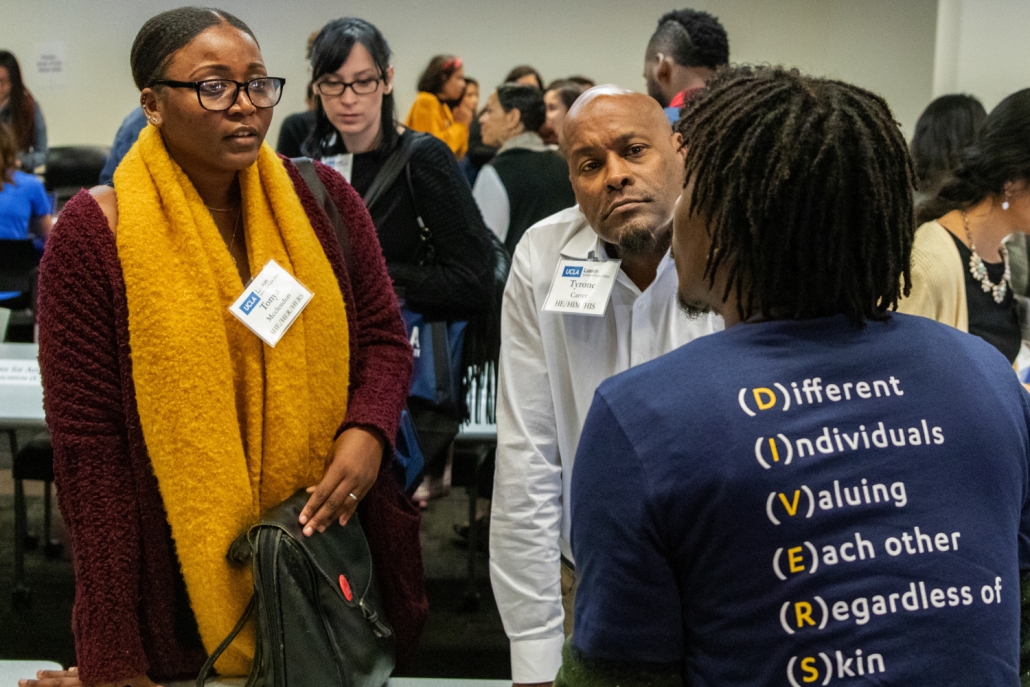
The social justice ethos and commitment to diversity that form the backbone of UCLA Luskin’s graduate degree programs were front and center during the fourth annual Diversity Fair.

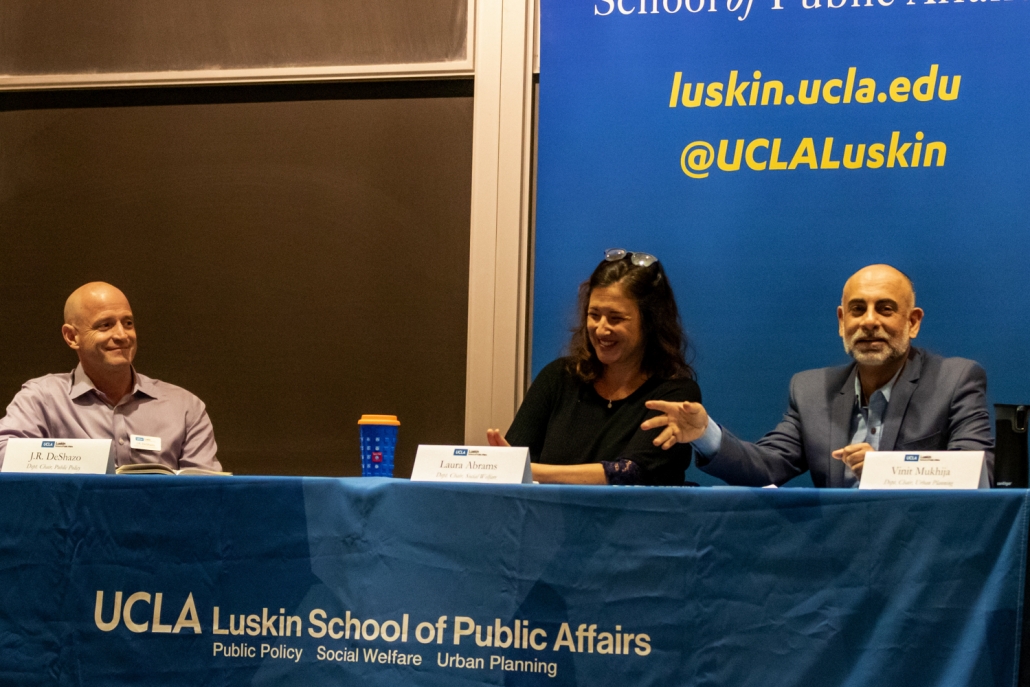
Dozens of graduate student recruits came to campus in November for a full day of discussions and workshops. Key speakers included Dean Gary Segura and the chairs of each graduate department: JR DeShazo of Public Policy, Laura Abrams of Social Welfare and Vinit Mukhija of Urban Planning, all of whom are professors in their respective fields.

A highlight of the day was a panel discussion during which six alumni talked about why they chose UCLA Luskin and offered insightful advice about how the graduate school experience can help people with a passion for change figure out ways to turn their ideals into action.

“How do governments create safe spaces for immigrants? How do we improve the basic services that government provides so that it actually fits the needs of the people who are using them? All of those things were in my mind as I started the program,” said Estafanía Zavala MPP ’18, who is now project lead, digital engagement, for the city of Long Beach. “I feel like the program really helped me gain a good understanding of what was actually going on in the world and how to process it.”

Taylor Holland MURP ’19, assistant project manager at PATH Ventures, a nonprofit agency that works with the homeless population in Los Angeles, said that she chose UCLA in part because of its vast alumni network in Southern California. She said she met “great alumni by coming to events like this. We have super-active alumni who you can really tell are pushing for change in different systems throughout urban planning.”

Several panelists said that UCLA Luskin helped them to further develop a social justice perspective, and they talked about their own efforts to foster inclusiveness.

Ulises Ramirez MSW ’96 is a clinical social worker and therapist in the Adult Outpatient Psychiatric Clinic at Harbor UCLA Medical Center, and he said that mental health service protocols are too often developed only with English-speaking clients in mind.

“The community that we serve at Harbor UCLA is very diverse. We see a lot of Spanish-speaking clients, and my goal there has been to provide top treatment to monolingual, Spanish-speaking clients,” Ramirez said. “It’s an underserved population, and they have nowhere else to go.”

Christina Hernández MSW ’17, community accompaniment coordinator for Freedom for Immigrants in Santa Monica, said her clients come from immigration detention centers.

“They are asylum-seekers; they’re refugees; they’re immigrants. These are people coming from all over the world,” she said. “Our goal is that the documents that we have for English speakers, we also make available for other languages as well.”

The speakers noted that racial minorities and women have traditionally been underrepresented in some of their fields.

“I think our perspectives as folks of color are so important in transportation planning,” said Carolyn “Caro” Vera MURP ’17, who was born and raised in South Los Angeles and now works as a planning consultant. She makes an extra effort to encourage minorities to pursue planning careers.

“If you ever need anything, hit me up,” Vera told the prospective students of color in attendance at the Diversity Fair. “It’s hard to get into the field. It’s daunting. But we need you in that field.”

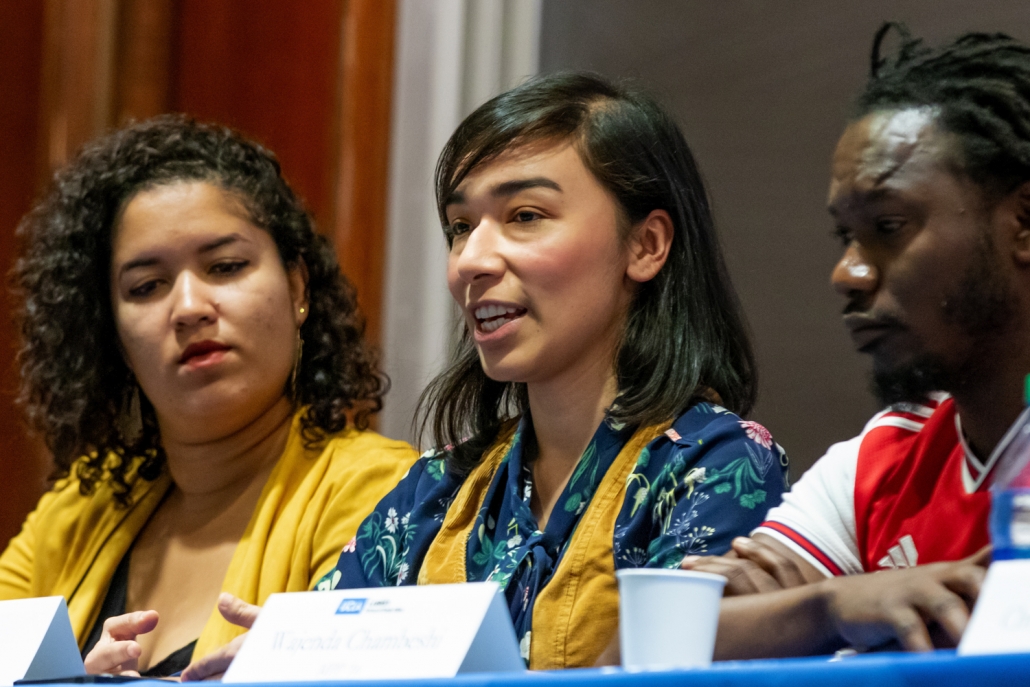
Wajenda Chambeshi MPP ’16, a program manager for the city of Los Angeles, noted that a lack of diversity in some professions starts with decisions by young people from minority communities about which courses of study to pursue.

“Some of these professions that we overlook make really, really important decisions about where funds are going to be allocated, how they are going to be allocated and, ultimately, who receives what. That’s why we need diversity,” Chambeshi said, “so when we graduate, we will be able to filter into those positions that are able to divert resources — or even just rethink how we think about planning and public policy.”

As “the housing person on this panel,” Holland talked about the ethnic component of the homelessness crisis in Los Angeles.

“We have 60,000 people on the streets in L.A. on any given night, and it’s largely a black crisis. We have 9 percent of the city that is black; 40 percent of our homeless population is black,” she said.

Holland said her focus is on chronically homeless people, many of whom are people of color.

“They are … people who have been forgotten about in every aspect of their lives and cannot be pulled up by their bootstraps. Looking at social justice and housing — it’s particularly in a crisis in L.A. right now,” she said, directing her attention to the prospective students of color in the audience. “And we need all of you guys to help out as you can.”

The alumni panelists spoke passionately about the advantages of being actively involved as students, and they urged attendees to build expansive personal and professional networks.

Vera said she battled depression during her time as a UCLA student and suffered a panic attack during an exam that threatened her opportunity to graduate. But friends helped her through.

“Always advocate for yourself. Create peer networks and check in on each other,” she said.

Noting that the pressures of academic life can be especially difficult for first-generation college students from disadvantaged populations such as herself, she continued: “You are more prone to having depression and anxiety when you come into a program that just doesn’t look like what you are accustomed to.”

Building a network as a student was important to Ramirez as well. He cited his involvement in the Latinx Caucus as a particularly beneficial connection, “and 23 years later, we still get together.”

Hernandez echoed those experiences.

“I am a first-generation daughter of immigrants, and navigating these spaces was very difficult for me,” she said. “So networks were a lifesaver.”

Hernandez ticked off the names of UCLA faculty and staff members who helped her as a student and remain close. “It was amazing to have people who look like me, Latinos, as advisors and as supervisors, who I could go to and say, ‘Hey, I’m stuck with this issue.’”

She continued: “That is the beauty of joining this school. Even after you graduate, you still have folks who are going to be there to support you regardless of the situation.”

View more images from the event on Flickr:

Diversity Fair 2019